Isaiah, Chapter 4 (Codex Alexandrinus)
Introduction
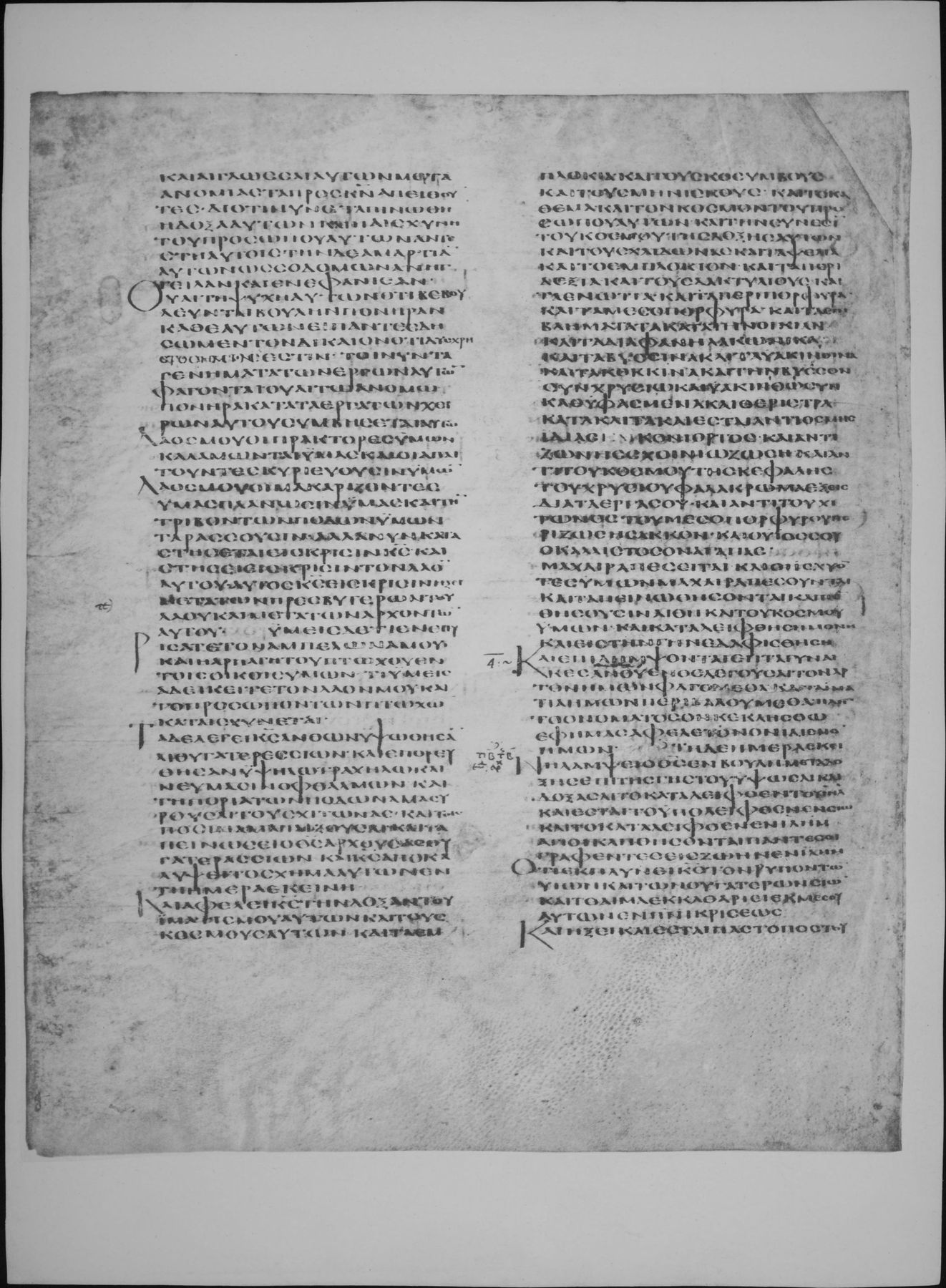
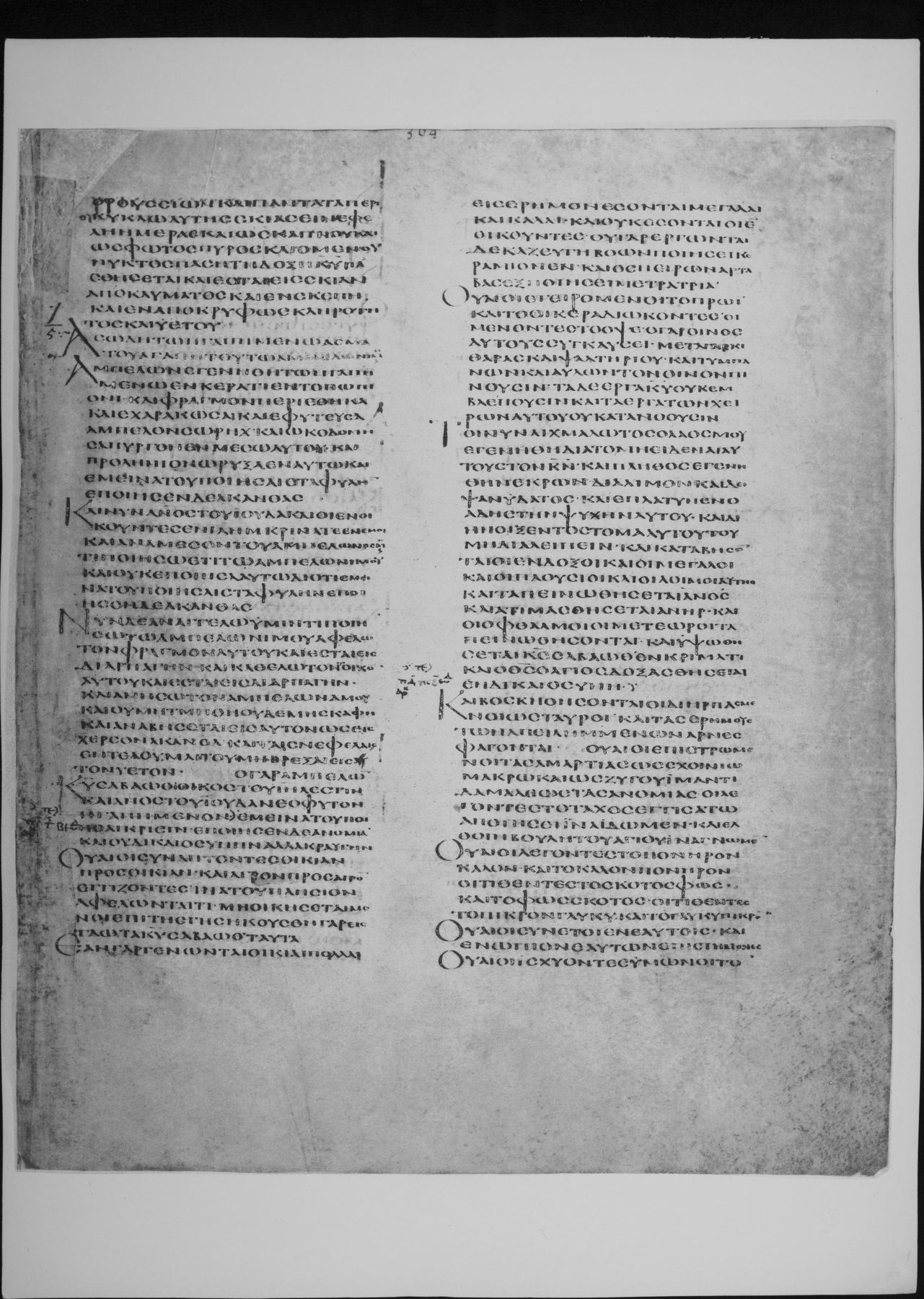
Isaiah 4 in the Greek Old Testament (the Septuagint) as written in Codex Alexandrinus, a Greek Bible copied in the fifth century, probably in Egypt, and now in the British Library (Royal MS 1 D. VI, the second of its four volumes). It is one of the three great early codices of the whole Greek Bible, with Codex Vaticanus and Codex Sinaiticus.
This entry meets the strict three-criteria standard of the Theosis Library:
- Manuscript scan: the pages of Codex Alexandrinus carrying this chapter (fol. 303v, fol. 304r), from the full-size photographic (autotype) facsimile published by the British Museum in 1879-1883, as digitised on the Internet Archive. The verse range of every page comes from the reduced photographic facsimile of 1936, which prints it beneath each plate, and the opening words of every page were read on the plate to confirm the page and the verse it begins with. Each section links to the page or pages that hold its verses. Folio numbers are those written at the head of each leaf and visible on the plates.
- Original text: Swete's edition, which here prints the text of Codex Vaticanus (Vat. gr. 1209), the base of his edition, and gives the readings of Alexandrinus only in his apparatus. The Greek column is therefore Vaticanus' text; where Alexandrinus differs, the plate shows what Alexandrinus reads.
- English translation: Sir Lancelot C. L. Brenton, The Septuagint Version of the Old Testament (1844; 1851 edition), a translation of the Greek, public domain, from the eBible.org text.
How was this verified? (Provenance)
Where on the image
Isaiah 4:1-5 is on fol. 303v (full-size facsimile of 1879-83, Internet Archive codex-alexandrinus leaf 631). The 1936 reduced facsimile prints beneath this page: Is. iii. 8-iv. 5. Checked on the plate: the page begins inside Isaiah 3:8 (first words read: ΚΑΙ Η ΓΛΩΣΣΑ ΑΥΤΩΝ ΜΕΤΑ ΑΝΟΜΙΑΣ ΤΑ ΠΡΟΣ ΚΝ ΑΠΕΙΘΟΥΝΤΕΣ ΔΙΟΤΙ ΝΥΝ ΕΤΑΠΕΙΝΩΘΗ Η ΔΟΞΑ ΑΥΤΩΝ). Isaiah 4:5-6 is on fol. 304r (full-size facsimile of 1879-83, Internet Archive codex-alexandrinus leaf 632). The 1936 reduced facsimile prints beneath this page: Is. iv. 5-v. 22. Checked on the plate: the page begins inside Isaiah 4:5 (first words read: ΤΟ ΟΡΟΣ ΣΙΩΝ ΚΑΙ ΠΑΝΤΑ ΤΑ ΠΕΡΙΚΥΚΛΩ ΑΥΤΗΣ ΣΚΙΑΣΕΙ ΝΕΦΕΛΗ ΗΜΕΡΑΣ).
1καὶ ἐπιλήμψονται ἑπτὰ γυναῖκες ἀνθρώπου ἑνὸς λέγουσαι Τὸν ἄρτον ἡμῶν φαγόμεθα, καὶ τὰ ἱμάτια ἡμῶν περιβαλούμεθα· πλὴν τὸ ὄνομα τὸ σὸν κεκλήσθω ἐφ᾽ ἡμᾶς, ἄφελε τὸν ὀνειδισμὸν ἡμῶν. 2Τῇ δὲ ἡμέρᾳ ἐκείνῃ ἐπιλάμψει ὁ θεὸς ἐν βουλῇ μετὰ δόξης ἐπὶ τῆς γῆς, τοῦ ὑψῶσαι καὶ δοξάσαι τὸ καταλειφθὲν τοῦ Ἰσραήλ· 3καὶ ἔσται τὸ ὑπολειφθὲν ἐν Σειὼν καὶ τὸ καταλειφθὲν ἐν Ἰερουσαλήμ, ἅγιοι κληθήσονται πάντες οἱ γραφέντες εἰς ζωὴν ἐν Ἰερουσαλήμ. 4ὅτι ἐκπλυνεῖ Κύριος τὸν ῥύπον τῶν υἱῶν καὶ τῶν θυγατέρων Σειών, καὶ τὸ αἷμα ἐκκαθαριεῖ ἐκ μέσου αὐτῶν ἐν πνεύματι κρίσεως καὶ πνεύματι καύσεως. 5καὶ ἥξει, καὶ ἔσται πᾶς τόπος τοῦ ὄρους Σειὼν καὶ πάντα τὰ περικύκλῳ αὐτῆς σκιάσει νεφέλη ἡμέρας, καὶ ὡς καπνοῦ καὶ φωτὸς πυρὸς καιομένου νυκτός, καὶ πάσῃ τῇ δόξῃ σκεπασθήσεται· 6καὶ ἔσται εἰς σκιὰν ἀπὸ καύματος, καὶ ἐν σκέπῃ καὶ ἐν ἀποκρύφῳ ἀπὸ σκληρότητος καὶ ὑετοῦ.
1And seven women shall take hold of one man, saying, We will eat our own bread, and wear our own raiment: only let thy name be called upon us, and take away our reproach. 2And in that day God shall shine gloriously in counsel on the earth, to exalt and glorify the remnant of Israel. 3And it shall be, that the remnant left in Sion, and the remnant left in Jerusalem, even all that are appointed to life in Jerusalem, shall be called holy. 4For the Lord shall wash away the filth of the sons and daughters of Sion, and shall purge out the blood from the midst of them, with the spirit of judgment, and the spirit of burning. 5And he shall come, and it shall be with regard to every place of mount Sion, yea, all the region round about it shall a cloud overshadow by day, and there shall be as it were the smoke and light of fire burning by night: and upon all the glory shall be a defence. 6And it shall be for a shadow from the heat, and as a shelter and a hiding-place from inclemency of weather and from rain.
Cite
Sources
- Source: Codex Alexandrinus (British Library Royal MS 1 D. VI) via the British Museum photographic facsimiles of 1879-83 and 1936 (Internet Archive) + Swete's Septuagint + Brenton's English (holding institution)
- Critical edition: H. B. Swete, The Old Testament in Greek according to the Septuagint (1909)
← previous · → next · v cycle view · l back to library