Isaiah, Chapter 47 (Codex Alexandrinus)
Introduction
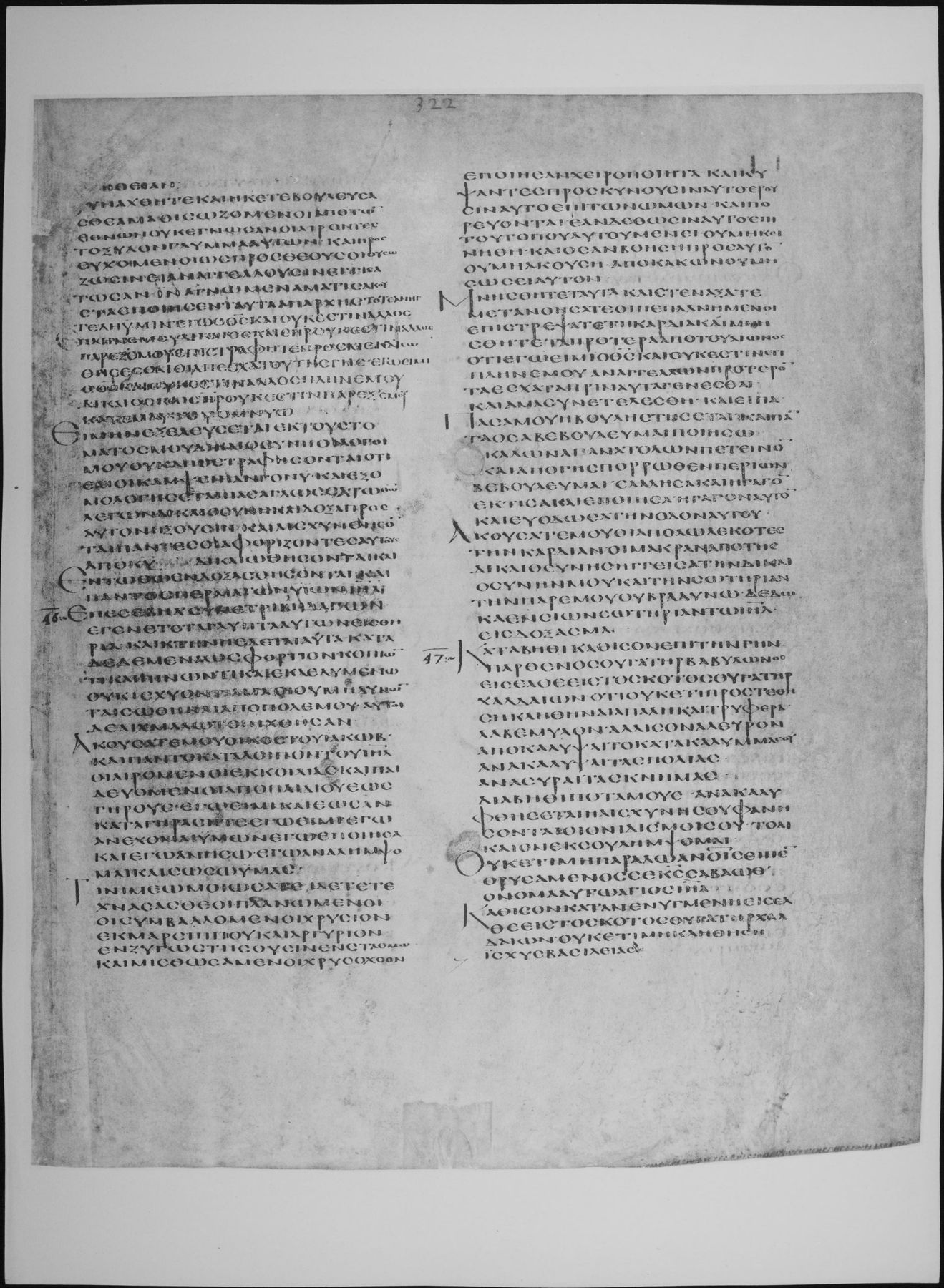
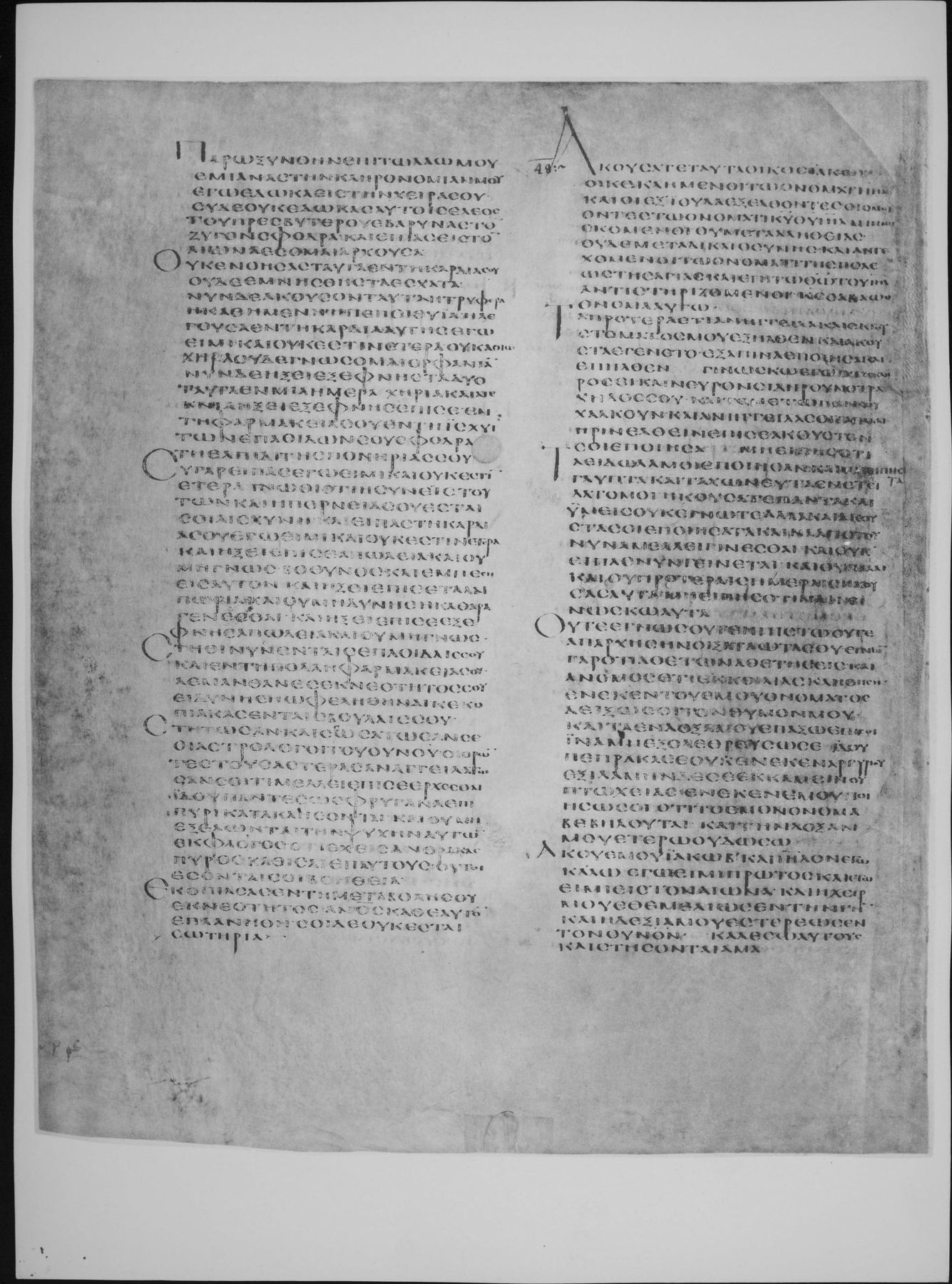
Isaiah 47 in the Greek Old Testament (the Septuagint) as written in Codex Alexandrinus, a Greek Bible copied in the fifth century, probably in Egypt, and now in the British Library (Royal MS 1 D. VI, the second of its four volumes). It is one of the three great early codices of the whole Greek Bible, with Codex Vaticanus and Codex Sinaiticus.
This entry meets the strict three-criteria standard of the Theosis Library:
- Manuscript scan: the pages of Codex Alexandrinus carrying this chapter (fol. 322r, fol. 322v), from the full-size photographic (autotype) facsimile published by the British Museum in 1879-1883, as digitised on the Internet Archive. The verse range of every page comes from the reduced photographic facsimile of 1936, which prints it beneath each plate, and the opening words of every page were read on the plate to confirm the page and the verse it begins with. Each section links to the page or pages that hold its verses. Folio numbers are those written at the head of each leaf and visible on the plates.
- Original text: Swete's edition, which here prints the text of Codex Vaticanus (Vat. gr. 1209), the base of his edition, and gives the readings of Alexandrinus only in his apparatus. The Greek column is therefore Vaticanus' text; where Alexandrinus differs, the plate shows what Alexandrinus reads.
- English translation: Sir Lancelot C. L. Brenton, The Septuagint Version of the Old Testament (1844; 1851 edition), a translation of the Greek, public domain, from the eBible.org text.
How was this verified? (Provenance)
Where on the image
Isaiah 47:1-5 is on fol. 322r (full-size facsimile of 1879-83, Internet Archive codex-alexandrinus leaf 668). The 1936 reduced facsimile prints beneath this page: Is. xlv. 19-xlvii. 5. Checked on the plate: the page begins inside Isaiah 45:19 (first words read: ΛΑΛΩΝ ΔΙΚΑΙΟΣΥΝΗΝ ΚΑΙ ΑΝΑΓΓΕΛΛΩΝ ΑΛΗΘΕΙΑΝ ΣΥΝΑΧΘΗΤΕ ΚΑΙ ΗΚΕΤΕ ΒΟΥΛΕΥΣΑΣΘΕ). Isaiah 47:6-8 is on fol. 322v (full-size facsimile of 1879-83, Internet Archive codex-alexandrinus leaf 669). The 1936 reduced facsimile prints beneath this page: Is. xlvii. 6-xlviii. 13. Checked on the plate: the page begins at the start of Isaiah 47:6 (first words read: ΠΑΡΩΞΥΝΘΗΝ ΕΠΙ ΤΩ ΛΑΩ ΜΟΥ ΕΜΙΑΝΑΣ ΤΗΝ ΚΛΗΡΟΝΟΜΙΑΝ ΜΟΥ ΕΓΩ ΕΔΩΚΑ ΕΙΣ ΤΗΝ ΧΕΙΡΑ ΣΟΥ).
1Κατάβηθι, κάθισον ἐπὶ γῆν, παρθένος θυγάτηρ Βαβυλῶνος· κάθισον εἰς τὴν γῆν, θυγάτηρ Χαλδαίων, ὅτι οὐκέτι προστεθήσῃ κληθῆναι ἁπαλὴ καὶ τρυφερά. 2λάβε μύλον, ἄλεσον ἄλευρον, ἀποκάλυψαι τὸ κατακάλυμμά σου, ἀνακάλυψαι τὰς πολιάς, ἀνάσυραι τὰς κνήμας, διάβηθι ποταμούς· 3ἀνακαλυφθήσεται ἡ αἰσχύνη σου, φανήσονται οἱ ὀνειδισμοί σου· τὸ δίκαιον ἐκ σοῦ λήμψομαι, οὐκέτι μὴ παραδῶ ἀνθρώποις. 4ὁ ῥυσάμενός σε Κύριος σαβαώθ, ὄνομα αὐτῷ ἅγιος Ἰσραήλ. 5κάθισον κατανενυγμένη, εἴσελθε εἰς τὸ σκότος, θυγάτηρ Χαλδαίων, οὐκέτι μὴ κληθήσῃ ἰσχὺς βασιλείας. 6παρωξύνθην ἐπὶ τῷ λαῷ μου, ἐμίανας τὴν κληρονομίαν μου· ἐγὼ ἔδωκα αὐτοὺς εἰς τὴν χεῖρά σου, σὺ δὲ οὐκ ἔδωκας αὐτοῖς ἔλεος, τοῦ πρεσβυτέρου ἐβάρυνας τὸν ζυγὸν σφόδρα, 7καὶ εἶπας Εἰς τὸν αἰῶνα ἔσομαι ἄρχουσα. οὐκ ἐνόησας ταῦτα ἐν τῇ καρδίᾳ σου, οὐδὲ ἐμνήσθης τὰ ἔσχατα. 8Νῦν δὲ ἄκουε ταῦτα, τρυφερά, ἡ καθημένη, ἡ πεποιθυῖα, ἡ λέγουσα ἐν καρδίᾳ αὐτῆς Ἐγώ εἰμι, καὶ οὐκ ἔστιν ἑτέρα, οὐ καθιῶ χήρα οὐδὲ γνώσομαι ὀρφανείαν.
1Come down, sit on the ground, O virgin daughter of Babylon: sit on the ground, O daughter of the Chaldeans: for thou shalt no more be called tender and luxurious. 2Take a millstone, grind meal: remove thy veil, uncover thy white hairs, make bare the leg, pass through the rivers. 3Thy shame shall be uncovered, thy reproaches shall be brought to light: I will exact of thee due vengeance, I will no longer deliver thee to men. 4Thy deliverer is the Lord of hosts, the Holy One of Israel is his name. 5Sit thou down pierced with woe, go into darkness, O daughter of the Chaldeans: thou shalt no more be called the strength of a kingdom. 6I have been provoked with my people; thou hast defiled mine inheritance: I gave them into thy hand, but thou didst not extend mercy to them: thou madest the yoke of the aged man very heavy, 7and saidst, I shall be a princess for ever: thou didst not perceive these things in thine heart, nor didst thou remember the latter end. 8But now hear these words, thou luxurious one, who art the one that sits at ease, that is secure, that says in her heart, I am, and there is not another; I shall not sit a widow, neither shall I know bereavement.
Where on the image
Isaiah 47:9-15 is on fol. 322v (full-size facsimile of 1879-83, Internet Archive codex-alexandrinus leaf 669). The 1936 reduced facsimile prints beneath this page: Is. xlvii. 6-xlviii. 13. Checked on the plate: the page begins at the start of Isaiah 47:6 (first words read: ΠΑΡΩΞΥΝΘΗΝ ΕΠΙ ΤΩ ΛΑΩ ΜΟΥ ΕΜΙΑΝΑΣ ΤΗΝ ΚΛΗΡΟΝΟΜΙΑΝ ΜΟΥ ΕΓΩ ΕΔΩΚΑ ΕΙΣ ΤΗΝ ΧΕΙΡΑ ΣΟΥ).
9νῦν δὲ ἥξει ἐξέφνης ἐπὶ σὲ ἐν τῇ φαρμακίᾳ σου, ἐν τῇ ἰσχύι τῶν ἐπαοιδῶν σου σφόδρα, 10τῇ ἐλπίδι τῆς πονηρίας σου. σὺ γὰρ εἶπας Ἐγώ εἰμι, καὶ οὐκ ἔστιν ἑτέρα· γνῶθι, ἡ σύνεσις τούτων ἔσται καὶ ἡ πορνία σου σοὶ αἰσχύνη· καὶ εἶπας τῇ καρδίᾳ σου Ἐγώ εἰμι, καὶ οὐκ ἔστιν ἑτέρα. 11καὶ ἥξει ἐπὶ σὲ ἀπώλεια καὶ οὐ μὴ γνῷς, βόθυνος, καὶ ἐμπεσῇ εἰς αὐτόν· καὶ ἥξει ἐπὶ σὲ ταλαιπωρία, καὶ οὐ μὴ δυνήσῃ καθαρὰ γενέσθαι· καὶ ἥξει ἐπὶ σὲ ἐξαπίνης ἀπωλία καὶ οὐ γνώσῃ. 12στῆθι νῦν ἐν ταῖς ἐπαοιδαῖς σου καὶ τῇ πολλῇ φαρμακίᾳ σου, ἃ ἐμάνθανες ἐκ νεότητός σου, εἰ δυνήσει ὠφεληθῆναι. 13κεκοπίακας ἐν ταῖς βουλαῖς σου· στήτωσαν καὶ σωσάτωσάν σε οἱ ἀστρολόγοι τοῦ οὐρανοῦ, οἱ ὁρῶντες τοὺς ἀστέρας ἀναγγειλάτωσάν σοι τί μέλλει ἐπὶ σὲ ἔρχεσθαι. 14ἰδοὺ πάντες ὡς φρύγανα ἐπὶ πυρὶ κατακαυθήσονται, καὶ οὐ μὴ ἐξέλωνται τὴν ψυχὴν αὐτῶν ἐκ φλογός· ὅτι ἔχεις ἄνθρακας πυρός, κάθισαι ἐπ᾽ αὐτούς. 15οὗτοι ἔσονταί σοι βοήθεια· ἐκοπίασας ἐν τῇ μεταβολῇ ἐκ νεότητος, ἄνθρωπος καθ᾽ ἑαυτὸν ἐπλανήθη· σοὶ δὲ οὐκ ἔσται σωτηρία.
9But now these two things shall come upon thee suddenly in one day, the loss of children and widowhood shall come suddenly upon thee, for thy sorcery, for the strength of thine enchantments, 10for thy trusting in wickedness: for thou saidst, I am, and there is not another: know thou, the understanding of these things and thy harlotry shall be thy shame; for thou saidst in thy heart, I am, and there is not another. 11And destruction shall come upon thee, and thou shalt not be aware; there shall be a pit, and thou shalt fall into it: and grief shall come upon thee, and thou shalt not be able to be clear; and destruction shall come suddenly upon thee, and thou shalt not know. 12Stand now with thine enchantments, and with the abundance of thy sorcery, which thou hast learned from thy youth; if thou canst be profited. 13Thou art wearied in thy counsels. Let now the astrologers of the heaven stand and deliver thee, let them that see the stars tell thee what is about to come upon thee. 14Behold, they all shall be burnt up as sticks in the fire; neither shall they at all deliver their life from the flame. Because thou hast coals of fire, sit thou upon them; 15these shall be thy help. Thou hast wearied thyself with traffic from thy youth: every man has wandered to his own home, but thou shalt have no deliverance.
Cite
Sources
- Source: Codex Alexandrinus (British Library Royal MS 1 D. VI) via the British Museum photographic facsimiles of 1879-83 and 1936 (Internet Archive) + Swete's Septuagint + Brenton's English (holding institution)
- Critical edition: H. B. Swete, The Old Testament in Greek according to the Septuagint (1909)
← previous · → next · v cycle view · l back to library