Isaiah, Chapter 48 (Codex Alexandrinus)
Introduction
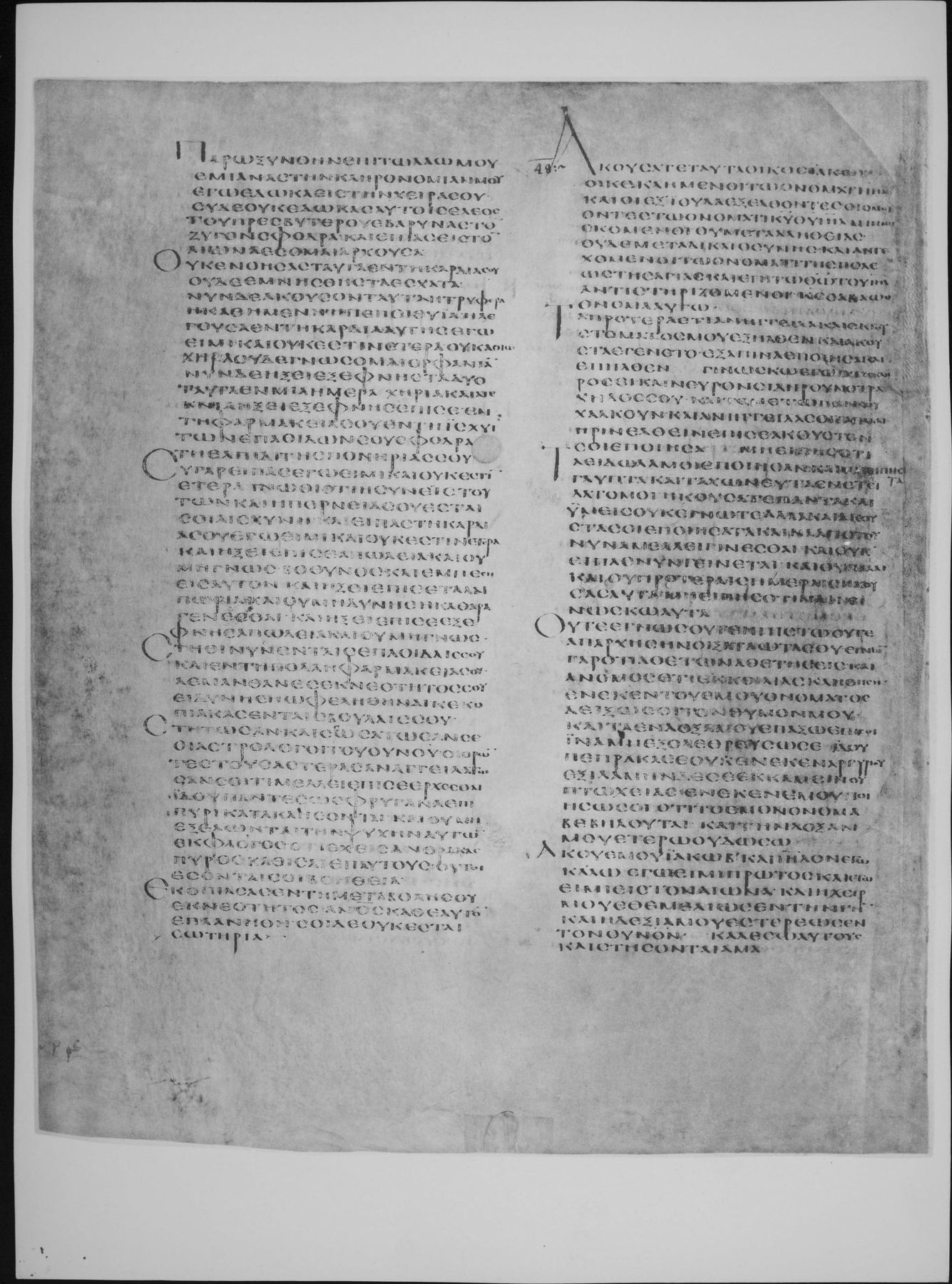
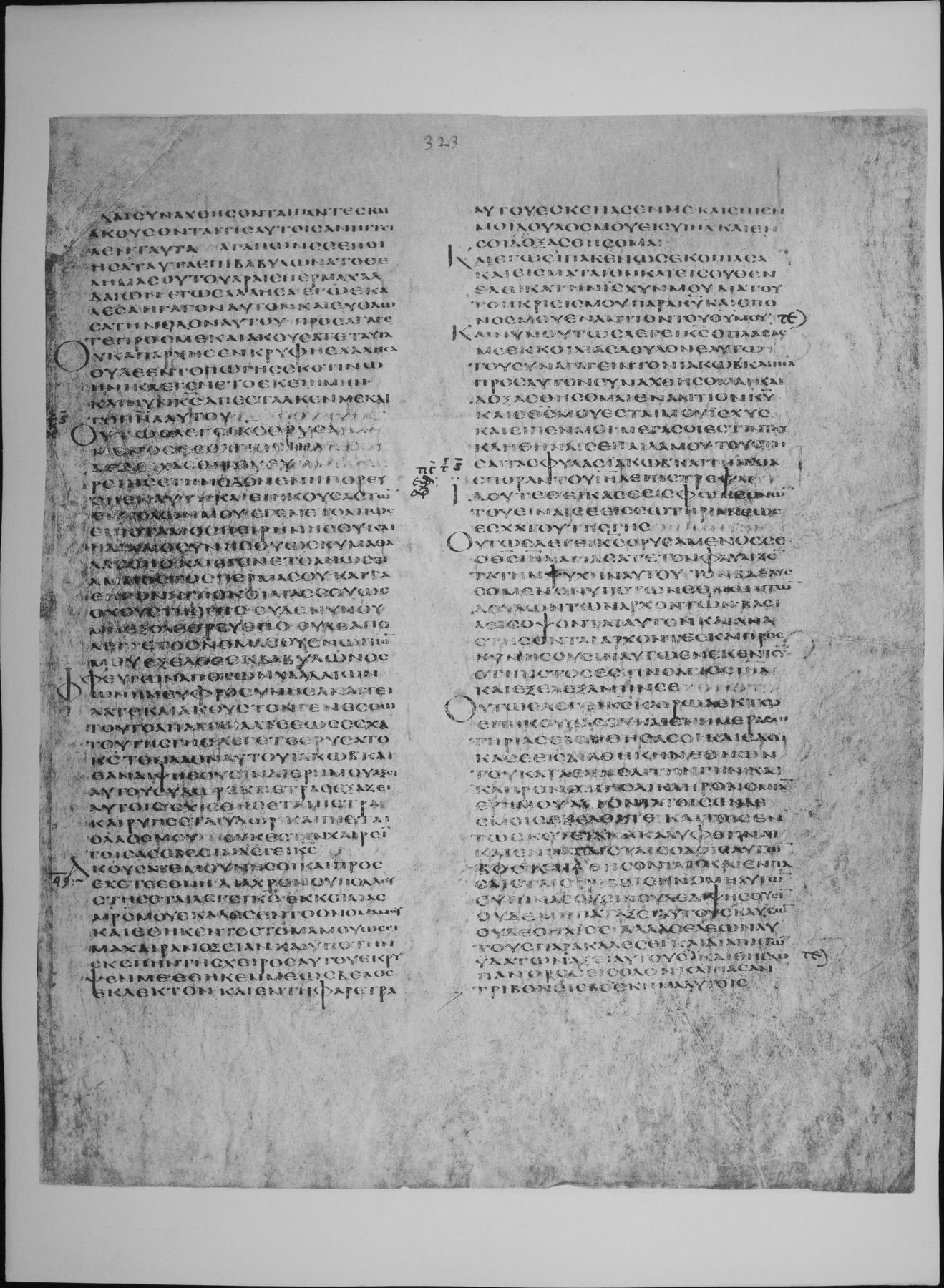
Isaiah 48 in the Greek Old Testament (the Septuagint) as written in Codex Alexandrinus, a Greek Bible copied in the fifth century, probably in Egypt, and now in the British Library (Royal MS 1 D. VI, the second of its four volumes). It is one of the three great early codices of the whole Greek Bible, with Codex Vaticanus and Codex Sinaiticus.
This entry meets the strict three-criteria standard of the Theosis Library:
- Manuscript scan: the pages of Codex Alexandrinus carrying this chapter (fol. 322v, fol. 323r), from the full-size photographic (autotype) facsimile published by the British Museum in 1879-1883, as digitised on the Internet Archive. The verse range of every page comes from the reduced photographic facsimile of 1936, which prints it beneath each plate, and the opening words of every page were read on the plate to confirm the page and the verse it begins with. Each section links to the page or pages that hold its verses. Folio numbers are those written at the head of each leaf and visible on the plates.
- Original text: Swete's edition, which here prints the text of Codex Vaticanus (Vat. gr. 1209), the base of his edition, and gives the readings of Alexandrinus only in his apparatus. The Greek column is therefore Vaticanus' text; where Alexandrinus differs, the plate shows what Alexandrinus reads.
- English translation: Sir Lancelot C. L. Brenton, The Septuagint Version of the Old Testament (1844; 1851 edition), a translation of the Greek, public domain, from the eBible.org text.
How was this verified? (Provenance)
Where on the image
Isaiah 48:1-8 is on fol. 322v (full-size facsimile of 1879-83, Internet Archive codex-alexandrinus leaf 669). The 1936 reduced facsimile prints beneath this page: Is. xlvii. 6-xlviii. 13. Checked on the plate: the page begins at the start of Isaiah 47:6 (first words read: ΠΑΡΩΞΥΝΘΗΝ ΕΠΙ ΤΩ ΛΑΩ ΜΟΥ ΕΜΙΑΝΑΣ ΤΗΝ ΚΛΗΡΟΝΟΜΙΑΝ ΜΟΥ ΕΓΩ ΕΔΩΚΑ ΕΙΣ ΤΗΝ ΧΕΙΡΑ ΣΟΥ).
1Ἀκούσατε ταῦτα, οἶκος Ἰακώβ, οἱ κεκλημένοι ἐπὶ τῷ ὀνόματι Ἰσραὴλ καὶ ἐξ Ἰούδα ἐξελθόντες, οἱ ὀμνύοντες τῷ ὀνόματι Κυρίου θεοῦ Ἰσραήλ, μιμνησκόμενοι οὐ μετὰ ἀληθείας οὐδὲ μετὰ δικαιοσύνης, 2καὶ ἀντεχόμενοι τῷ ὀνόματι τῆς πόλεως τῆς ἁγίας, καὶ ἐπὶ τῷ θεῷ Ἰσραὴλ ἀντιστηριζόμενοι, Κύριος σαβαὼθ ὄνομα αὐτῷ. 3τὰ πρότερα ἔτι ἀνήγγειλα, καὶ ἐκ τοῦ στόματός μου ἐξῆλθεν καὶ ἀκουστὸν ἐγένετο· ἐξάπινα ἐποίησα, καὶ ἐπῆλθεν. 4γινώσκω ὅτι σκληρὸς εἶ, καὶ νεῦρον σιδηροῦν ὁ τράχηλός σου, καὶ τὸ μέτωπόν σου χαλκοῦν. 5καὶ ἀνήγγειλά σοι παλαιὰ πρὶν ἐλθεῖν ἐπὶ σέ· ἀκουστόν σοι ἐποίησα, μή ποτε εἴπῃς ὅτι Τὰ εἴδωλά μοι ἐποίησεν, καὶ εἴπῃς ὅτι Τὰ γλυπτὰ καὶ τὰ χωνευτὰ ἐνετείλατό μοι. 6ἠκούσατε πάντα, καὶ ὑμεῖς οὐκ ἔγνωτε· ἀλλὰ ἀκουστά σοι ἐποίησα τὰ καινὰ ἀπὸ τοῦ νῦν ἃ μέλλει γίνεσθαι· καὶ οὐκ εἶπας 7Νῦν γίνεται καὶ οὐ πάλαι, καὶ οὐ προτέραις ἡμέραις ἤκουσας αὐτά· μὴ εἴπῃς Ναί, γινώσκω αὐτά. 8οὔτε ἔγνως οὔτε ἠπίστω, οὔτε ἀπ᾽ ἀρχῆς ἤνοιξά σου τὰ ὦτα· ἔγνων γὰρ ὅτι ἀθετῶν ἀθετήσεις, καὶ ἄνομος μος ἔτι ἐκ κοιλίας κληθήσῃ.
1Hear these words, ye house of Jacob, who are called by the name of Israel, and have come forth out of Juda, who swear by the name of the Lord God of Israel, making mention of it, but not with truth, nor with righteousness; 2maintaining also the name of the holy city, and staying themselves on the God of Israel: the Lord of hosts is his name. The former things I have already declared; 3and they have proceeded out of my mouth, and it became well known; I wrought suddenly, and the events came to pass. 4I know that thou art stubborn, and thy neck is an iron sinew, and thy forehead brazen. 5And I told thee of old what should be before it came upon thee; I made it known to thee, lest thou shouldest say, My idols have done it for me; and shouldest say, My graven and molten images have commanded me. 6Ye have heard all this, but ye have not known: yet I have made known to thee the new things from henceforth, which are coming to pass, and thou saidst not, 7Now they come to pass, and not formerly: and thou heardest not of them in former days: say not thou, Yea, I know them. 8Thou hast neither known, nor understood, neither from the beginning have I opened thine ears: for I knew that thou wouldest surely deal treacherously, and wouldest be called a transgressor even from the womb.
Where on the image
Isaiah 48:9-13 is on fol. 322v (full-size facsimile of 1879-83, Internet Archive codex-alexandrinus leaf 669). The 1936 reduced facsimile prints beneath this page: Is. xlvii. 6-xlviii. 13. Checked on the plate: the page begins at the start of Isaiah 47:6 (first words read: ΠΑΡΩΞΥΝΘΗΝ ΕΠΙ ΤΩ ΛΑΩ ΜΟΥ ΕΜΙΑΝΑΣ ΤΗΝ ΚΛΗΡΟΝΟΜΙΑΝ ΜΟΥ ΕΓΩ ΕΔΩΚΑ ΕΙΣ ΤΗΝ ΧΕΙΡΑ ΣΟΥ). Isaiah 48:14-16 is on fol. 323r (full-size facsimile of 1879-83, Internet Archive codex-alexandrinus leaf 670). The 1936 reduced facsimile prints beneath this page: Is. xlviii. 14-xlix. 11. Checked on the plate: the page begins at the start of Isaiah 48:14 (first words read: ΚΑΙ ΣΥΝΑΧΘΗΣΟΝΤΑΙ ΠΑΝΤΕΣ ΚΑΙ ΑΚΟΥΣΟΝΤΑΙ ΤΙΣ ΑΥΤΟΙΣ ΑΝΗΓΓΕΙΛΕΝ ΤΑΥΤΑ).
9ἕνεκεν τοῦ ἐμοῦ ὀνόματος δείξω σοι τὸν θυμόν μου, καὶ τὰ ἔνδοξά μου ἐπάξω ἐπὶ σέ, ἵνα μὴ ἐξολεθρεύσω σε. 10ἰδοὺ πέπρακά σε οὐχ ἕνεκεν ἀργυρίου· ἐξειλάμην δέ σε ἐκ καμίνου πτωχείας· 11ἕνεκεν ἐμοῦ ποιήσω σοι, ὅτι τὸ ἐμὸν ὄνομα βεβηλοῦται, καὶ τὴν δόξαν μου ἑτέρῳ οὐ δώσω. 12Ἄκουέ μου, Ἰακώβ, καὶ Ἰσραὴλ ὃν ἐγὼ καλῶ· ἐγώ εἰμι πρῶτος, καὶ ἐγώ εἰμι εἰς τὸν αἰῶνα, 13καὶ ἡ χείρ μου ἐθεμελίωσε τὴν γῆν, καὶ ἡ δεξιά μου ἐστερέωσεν τὸν οὐρανόν· καλέσω αὐτούς, καὶ στήσονται ἅμα, 14καὶ συναχθήσονται πάντες καὶ ἀκούσονται. τίς αὐτοῖς ἀνήγγειλεν ταῦτα; ἀγαπῶν σε ἐποίησα τὸ θέλημά σου ἐπὶ Βαβυλῶνα τοῦ ἆραι σπέρμα Χαλδαίων· 15ἐγὼ ἐλάλησα, ἐγὼ ἐκάλεσα, ἤγαγον αὐτὸν καὶ εὐόδωσα τὴν ὁδὸν αὐτοῦ. 16προσαγάγετε πρὸς μὲ καὶ ἀκούσατε ταῦτα, οὐκ ἀπ᾽ ἀρχῆς ἐν κρυφῇ λελάληκα· ἡνίκα ἐγένετο, ἐκεῖ ἤμην, καὶ νῦν κύριος Κύριος ἀπέστειλέν με καὶ τὸ πνεῦμα αὐτοῦ.
9For mine own sake will I shew thee my wrath, and will bring before thee my glorious acts, that I may not utterly destroy thee. 10Behold, I have sold thee, but not for silver; but I have rescued thee from the furnace of affliction. 11For mine own sake I will do this for thee, because my name is profaned; and I will not give my glory to another. 12Hear me, O Jacob, and Israel whom I call; I am the first, and I endure for ever. 13My hand also has founded the earth, and my right hand has fixed the sky: I will call them, and they shall stand together. 14And all shall be gathered, and shall hear: who has told them these things? Out of love to thee I have fulfilled thy desire on Babylon, to abolish the seed of the Chaldeans. 15I have spoken, I have called, I have brought him, and made his way prosperous. 16Draw nigh to me, and hear ye these words; I have not spoken in secret from the beginning: when it took place, there was I, and now the Lord, even the Lord, and his Spirit, hath sent me.
Where on the image
Isaiah 48:17-22 is on fol. 323r (full-size facsimile of 1879-83, Internet Archive codex-alexandrinus leaf 670). The 1936 reduced facsimile prints beneath this page: Is. xlviii. 14-xlix. 11. Checked on the plate: the page begins at the start of Isaiah 48:14 (first words read: ΚΑΙ ΣΥΝΑΧΘΗΣΟΝΤΑΙ ΠΑΝΤΕΣ ΚΑΙ ΑΚΟΥΣΟΝΤΑΙ ΤΙΣ ΑΥΤΟΙΣ ΑΝΗΓΓΕΙΛΕΝ ΤΑΥΤΑ).
17οὕτως λέγει Κύριος ὁ ῥυσάμενος ἅγιος Ἰσραήλ Ἐγώ εἰμι ὁ θεός σου, δέδειχά σοι τοῦ εὑρεῖν σε τὴν ὁδὸν ἐν ᾗ πορεύσῃ ἐν αὐτῇ. 18καὶ εἰ ἤκουσας τῶν ἐντολῶν μου, ἐγένετο ἂν ὡσεὶ ποταμὸς ἡ εἰρήνη σου, καὶ ἡ δικαιοσύνη σου ὡς κῦμα θαλάσσης· 19καὶ ἐγένετο ἂν ὡς ἡ ἄμμος τὸ σπέρμα σου, καὶ τὰ ἔκγονα τῆς κοιλίας σου ὡς ὁ χοῦς τῆς γῆς· οὐδὲ νῦν οὐ μὴ ἐξολοθρευθῇς, οὐδὲ ἀπολεῖται τὸ ὄνομά σου ἐνώπιον ἐμοῦ. 20Ἔξελθε ἐκ Βαβυλῶνος φεύγων ἀπὸ τῶν Χαλδαίων· φωνὴν εὐφροσύνης ἀναγγείλατε, καὶ ἀκουστὸν γενέσθω τοῦτο, ἀναγγείλατε ἕως ἐσχάτου τῆς γῆς, λέγετε Ἐρρύσατο Κύριος τὸν δοῦλον αὐτοῦ Ἰακώβ· 21καὶ ἐὰν διψήσωσιν, δι᾽ ἐρήμου ἄξει αὐτοῖς ὕδωρ, ἐκ πέτρας ἐξάξει αὐτοῖς, σχισθήσεται πέτρα καὶ ῥυήσεται ὕδωρ, καὶ πίεται ὁ λαός μου. 22οὐκ ἔστιν χαίρειν, λέγει Κύριος, τοῖς ἀσεβέσιν.
17Thus saith the Lord that delivered thee, the Holy One of Israel; I am thy God, I have shewn thee how thou shouldest find the way wherein thou shouldest walk. 18And if thou hadst hearkened to my commandments, then would thy peace have been like a river, and thy righteousness as a wave of the sea. 19Thy seed also would have been as the sand, and the offspring of thy belly as the dust of the ground: neither now shalt thou by any means be utterly destroyed, neither shall thy name perish before me. 20Go forth of Babylon, thou that fleest from the Chaldeans: utter aloud a voice of joy, and let this be made known, proclaim it to the end of the earth; say ye, The Lord hath delivered his servant Jacob. 21And if they shall thirst, he shall lead them through the desert; he shall bring forth water to them out of the rock: the rock shall be cloven, and the water shall flow forth, and my people shall drink. 22There is no joy, saith the Lord, to the ungodly.
Cite
Sources
- Source: Codex Alexandrinus (British Library Royal MS 1 D. VI) via the British Museum photographic facsimiles of 1879-83 and 1936 (Internet Archive) + Swete's Septuagint + Brenton's English (holding institution)
- Critical edition: H. B. Swete, The Old Testament in Greek according to the Septuagint (1909)
← previous · → next · v cycle view · l back to library