Isaiah, Chapter 49 (Codex Alexandrinus)
Introduction
Isaiah 49 in the Greek Old Testament (the Septuagint) as written in Codex Alexandrinus, a Greek Bible copied in the fifth century, probably in Egypt, and now in the British Library (Royal MS 1 D. VI, the second of its four volumes). It is one of the three great early codices of the whole Greek Bible, with Codex Vaticanus and Codex Sinaiticus.
This entry meets the strict three-criteria standard of the Theosis Library:
- Manuscript scan: the pages of Codex Alexandrinus carrying this chapter (fol. 323r, fol. 323v), from the full-size photographic (autotype) facsimile published by the British Museum in 1879-1883, as digitised on the Internet Archive. The verse range of every page comes from the reduced photographic facsimile of 1936, which prints it beneath each plate, and the opening words of every page were read on the plate to confirm the page and the verse it begins with. Each section links to the page or pages that hold its verses. Folio numbers are those written at the head of each leaf and visible on the plates.
- Original text: Swete's edition, which here prints the text of Codex Vaticanus (Vat. gr. 1209), the base of his edition, and gives the readings of Alexandrinus only in his apparatus. The Greek column is therefore Vaticanus' text; where Alexandrinus differs, the plate shows what Alexandrinus reads.
- English translation: Sir Lancelot C. L. Brenton, The Septuagint Version of the Old Testament (1844; 1851 edition), a translation of the Greek, public domain, from the eBible.org text.
How was this verified? (Provenance)
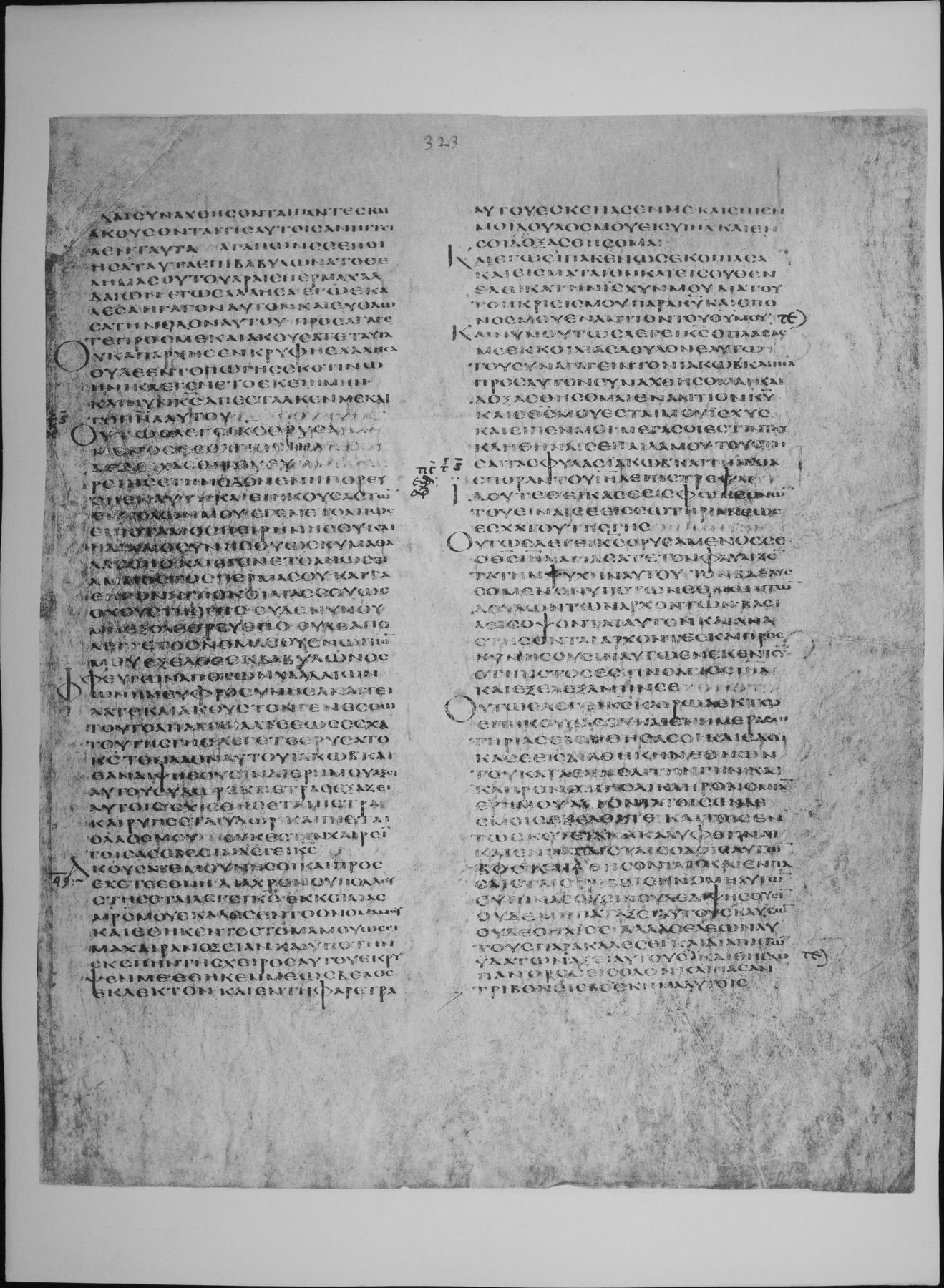
Where on the image
Isaiah 49:1-8 is on fol. 323r (full-size facsimile of 1879-83, Internet Archive codex-alexandrinus leaf 670). The 1936 reduced facsimile prints beneath this page: Is. xlviii. 14-xlix. 11. Checked on the plate: the page begins at the start of Isaiah 48:14 (first words read: ΚΑΙ ΣΥΝΑΧΘΗΣΟΝΤΑΙ ΠΑΝΤΕΣ ΚΑΙ ΑΚΟΥΣΟΝΤΑΙ ΤΙΣ ΑΥΤΟΙΣ ΑΝΗΓΓΕΙΛΕΝ ΤΑΥΤΑ).
1Ἀκούσατέ μου, νῆσοι, καὶ προσέχετε, ἔθνη· διὰ χρόνου πολλοῦ στήσεται, λέγει Κύριος. ἐκ κοιλίας μητρός μου ἐκάλεσε τὸ ὄνομά μου, 2καὶ ἔθηκεν τὸ στόμα μου ὡς μάχαιραν ὀξεῖαν, καὶ ὑπὸ τὴν σκέπην τῆς χειρὸς αὐτοῦ ἔκρυψέν με· ἔθηκέν με ὡς βέλος ἐκλεκτόν, καὶ ἐν τῇ φαρέτρᾳ αὐτοῦ ἔκρυψέν με, 3καὶ εἶπέν μοι Δοῦλός μου εἶ σύ, Ἰσραήλ, καὶ ἐν σοὶ ἐνδοξασθήσομαι. 4καὶ ἐγὼ εἶπα Κενῶς ἐκοπίασα, εἰς μάταιον καὶ εἰς οὐδὲν ἔδωκα τὴν ἰσχύν μου· διὰ τοῦτο ἡ κρίσις μου παρὰ Κυρίῳ, καὶ ὁ πόνος μου ἐναντίον τοῦ θεοῦ μου. 5καὶ νῦν οὕτως λέγει Κύριος ὁ πλάσας με ἐκ κοιλίας δοῦλον ἑαυτῷ τοῦ συναγαγεῖν τὸν Ἰακὼβ πρὸς αὐτὸν καὶ Ἰσραήλ Συναχθήσομαι καὶ δοξασθήσομαι ἐναντίον Κυρίου, καὶ ὁ θεὸς ἔσται μοι ἰσχύς. 6καὶ εἶπέν μοι Μέγα σοί ἐστιν τοῦ κληθῆναί σε παῖδά μου, τοῦ στῆσαι τὰς φυλὰς Ἰακὼβ καὶ τὴν διασπορὰν τοῦ Ἰσραὴλ ἐπιστρέψαι· ἰδοὺ δέδωκά σε εἰς διαθήκην γένους, εἰς φῶς ἐθνῶν, τοῦ εἶναί σε εἰς σωτηρίαν ἕως ἐσχάτου τῆς γῆς. 7οὕτως λέγει Κύριος ὁ ῥυσάμενός σε θεὸς Ἰσραήλ Ἁγιάσατε τὸν φαυλίζοντα τὴν ψυχὴν αὐτοῦ, τὸν βδελυσσόμενον ὑπὸ τῶν ἐθνῶν τῶν δούλων τῶν ἀρχόντων· βασιλεῖς ὄψονται αὐτόν, καὶ ἀναστήσονται ἄρχοντες καὶ προσκυνήσουσιν αὐτῷ ἕνεκεν Κυρίου· ὅτι πιστός ἐστιν ὁ ἅγιος Ἰσραήλ, καὶ ἐξελεξάμην σε. 8οὕτως λέγει Κύριος Καιρῷ δεκτῷ ἐπήκουσά σου, καὶ ἐν ἡμέρᾳ σωτηρίας ἐβοήθησά σοι, καὶ ἔπλασά σε καὶ ἔδωκά σε εἰς διαθήκην ἐθνῶν, τοῦ καταστῆσαι τὴν γῆν καὶ κληρονομῆσαι κληρονομίας ἐρήμους,
1Hearken to me, ye islands; and attend, ye Gentiles; after a long time it shall come to pass, saith the Lord: from my mother's womb he has called my name: 2and he has made my mouth as a sharp sword, and he has hid me under the shadow of his hand; he has made me as a choice shaft, and he has hid me in his quiver; 3and said to me, Thou art my servant, O Israel, and in thee I will be glorified. 4Then I said, I have laboured in vain, I have given my strength for vanity and for nothing: therefore is my judgment with the Lord, and my labour before my God. 5And now, thus saith the Lord that formed me from the womb to be his own servant, to gather Jacob to him and Israel. I shall be gathered and glorified before the Lord, and my God shall be my strength. 6And he said to me, It is a great thing for thee to be called my servant, to establish the tribes of Jacob, and to recover the dispersion of Israel: behold, I have given thee for the covenant of a race, for a light of the Gentiles, that thou shouldest be for salvation to the end of the earth. 7Thus saith the Lord that delivered thee, the God of Israel, Sanctify him that despises his life, him that is abhorred by the nations that are the servants of princes: kings shall behold him, and princes shall arise, and shall worship him, for the Lord's sake: for the Holy One of Israel is faithful, and I have chosen thee. 8Thus saith the Lord, In an acceptable time have I heard thee, and in a day of salvation have I succoured thee: and I have formed thee, and given thee for a covenant of the nations, to establish the earth, and to cause to inherit the desert heritages:
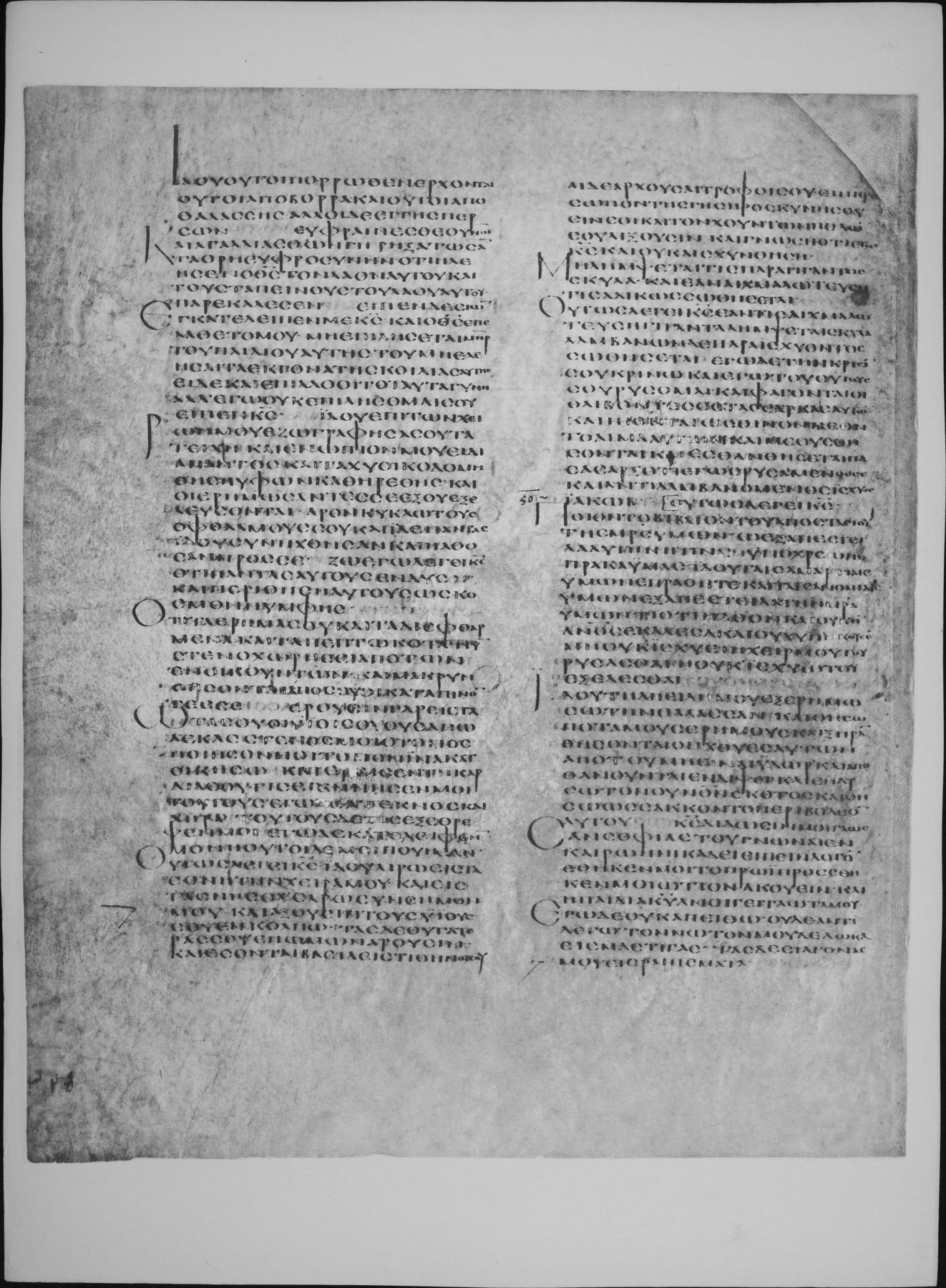
Where on the image
Isaiah 49:9-11 is on fol. 323r (full-size facsimile of 1879-83, Internet Archive codex-alexandrinus leaf 670). The 1936 reduced facsimile prints beneath this page: Is. xlviii. 14-xlix. 11. Checked on the plate: the page begins at the start of Isaiah 48:14 (first words read: ΚΑΙ ΣΥΝΑΧΘΗΣΟΝΤΑΙ ΠΑΝΤΕΣ ΚΑΙ ΑΚΟΥΣΟΝΤΑΙ ΤΙΣ ΑΥΤΟΙΣ ΑΝΗΓΓΕΙΛΕΝ ΤΑΥΤΑ). Isaiah 49:12-16 is on fol. 323v (full-size facsimile of 1879-83, Internet Archive codex-alexandrinus leaf 671). The 1936 reduced facsimile prints beneath this page: Is. xlix. 12-l. 6. Checked on the plate: the page begins at the start of Isaiah 49:12 (first words read: ΙΔΟΥ ΟΥΤΟΙ ΠΟΡΡΩΘΕΝ ΕΡΧΟΝΤΑΙ ΟΥΤΟΙ ΑΠΟ ΒΟΡΡΑ ΚΑΙ ΟΥΤΟΙ ΑΠΟ ΘΑΛΑΣΣΗΣ). Note: the page begins at the start of 49:12, which Codex Alexandrinus words ΕΡΧΟΝΤΑΙ where Swete's text has ἥξουσιν.
9λέγοντα τοῖς ἐν δεσμοῖς Ἐξέλθατε, καὶ τοῖς ἐν τῷ σκότει ἀνακαλυφθῆναι. ἐν πάσαις ταῖς ὁδοῖς βοσκηθήσονται, καὶ ἐν πᾶσιν τρίβοις ἡ νομὴ αὐτῶν· 10οὐ πεινάσουσιν, οὐδὲ διψάσουσιν, οὐδὲ πατάξει αὐτοὺς καύσων οὐδὲ ὁ ἥλιος, ἀλλ᾽ ὁ ἐλεῶν αὐτοὺς παρακαλέσει, καὶ διὰ πηγῶν ὑδάτων ἄξει αὐτούς· 11καὶ θήσω πᾶν ὄρος εἰς ὁδὸν καὶ πᾶσαν τρίβον εἰς βόσκημα αὐτοῖς. 12ἰδοὺ οὗτοι πόρρωθεν ἥξουσιν, οὗτοι ἀπὸ βορρᾶ καὶ θαλάσσης, ἄλλοι δὲ ἐκ γῆς Περσῶν. 13εὐφραίνεσθε, οὐρανοί, καὶ ἀγαλλιάσθω ἡ γῆ, ῥηξάτωσαν τὰ ὄρη εὐφροσύνην, ὅτι ἠλέησεν ὁ θεὸς τὸν λαὸν αὐτοῦ, καὶ τοὺς ταπεινοὺς τοῦ λαοῦ αὐτοῦ παρεκάλεσεν. 14Εἶπεν δὲ Σειών Ἐγκατέλειπέν με Κύριος· καὶ ὅτι Κύριος ἐπελάθετό μου. 15μὴ ἐπιλήσεται γυνὴ τοῦ παιδίου αὐτῆς, ἢ τοῦ μὴ ἐλεῆσαι τὰ ἔκγονα τῆς κοιλίας αὐτῆς; εἰ δὲ καὶ ταῦτα ἐπιλάθοιτο γυνή, ἀλλ᾽ ἐγὼ οὐκ ἐπιλήσομαι σοῦ, εἶπεν Κύριος. 16ἰδοὺ ἐπὶ τῶν χειρῶν μου ἐζωγράφηκά σου τὰ τείχη, καὶ ἐνώπιόν μου εἶ διὰ παντός,
9saying to them that are in bonds, Go forth; and bidding them that are in darkness shew themselves. They shall be fed in all the ways, and in all the paths shall be their pasture. 10They shall not hunger, neither shall they thirst; neither shall the heat nor the sun smite them; but he that has mercy on them shall comfort them, and by fountains of waters shall he lead them. 11And I will make every mountain a way, and every path a pasture to them. 12Behold, these shall come from far: and these from the north and the west, and others from the land of the Persians. 13Rejoice, ye heavens; and let the earth be glad: let the mountains break forth with joy; for the Lord has had mercy on his people, and has comforted the lowly ones of his people. 14But Sion said, The Lord has forsaken me, and, The Lord has forgotten me. 15Will a woman forget her child, so as not to have compassion upon the offspring of her womb? but if a woman should even forget these, yet I will not forget thee, saith the Lord. 16Behold, I have painted thy walls on my hands, and thou art continually before me.
Where on the image
Isaiah 49:17-26 is on fol. 323v (full-size facsimile of 1879-83, Internet Archive codex-alexandrinus leaf 671). The 1936 reduced facsimile prints beneath this page: Is. xlix. 12-l. 6. Checked on the plate: the page begins at the start of Isaiah 49:12 (first words read: ΙΔΟΥ ΟΥΤΟΙ ΠΟΡΡΩΘΕΝ ΕΡΧΟΝΤΑΙ ΟΥΤΟΙ ΑΠΟ ΒΟΡΡΑ ΚΑΙ ΟΥΤΟΙ ΑΠΟ ΘΑΛΑΣΣΗΣ). Note: the page begins at the start of 49:12, which Codex Alexandrinus words ΕΡΧΟΝΤΑΙ where Swete's text has ἥξουσιν.
17καὶ ταχὺ οἰκοδομηθήσῃ ὑφ᾽ ὧν καθῃρέθης, καὶ οἱ ἐρημώσαντές σε ἐκ σοῦ ἐξελεύσονται. 18ἆρον κύκλῳ τοὺς ὀφθαλμούς σου καὶ ἴδε πάντας, ἰδοὺ συνήχθησαν καὶ ἤλθοσαν πρὸς σέ· ζῶ ἐγώ, λέγει Κύριος, ὅτι πάντας αὐτοὺς ὡς κόσμον ἐνδύσῃ, καὶ περιθήσεις αὐτοὺς ὡς κόσμον, ὡς νύμφη. 19ὅτι τὰ ἔρημά σου καὶ τὰ κατεφθαρμένα καὶ τὰ πεπτωκότα, νῦν στενοχωρήσει ἀπὸ τῶν κατοικούντων, καὶ μακρυνθήσονται ἀπὸ σοῦ οἱ καταπίνοντές σε. 20ἐροῦσιν γὰρ εἰς τὰ ὦτά σου οἱ υἱοί σου οὓς ἀπολώλεκας Στενός μοι ὁ τόπος, ποίησόν μοι τόπον ἵνα κατοικήσω. 21καὶ ἐρεῖς ἐν τῇ καρδίᾳ σου Τίς ἐγέννησέν μοι τούτους; ἐγὼ δὲ ἄτεκνος καὶ χήρα, τούτους δὲ τίς ἐξέθρεψέν μοι; ἐγὼ δὲ κατελείφθην μόνη, οὗτοι δέ μοι ποῦ ἦσαν; 22Οὕτως λέγει Κύριος Ἰδοὺ αἴρω εἰς τὰ ἔθνη τὴν χεῖρά μου, καὶ εἰς τὰς νήσους ἀρῶ σύσσημόν μου, καὶ ἄξουσιν τοὺς υἱούς σου ἐν κόλπῳ, τὰς δὲ θυγατέρας σου ἐπ᾽ ὤμων ἀροῦσιν, 23καὶ ἔσονται βασιλεῖς τιθηνοί σου, αἱ δὲ ἄρχουσαι αὐτῶν τροφοί σου· ἐπὶ πρόσωπον τῆς γῆς προσκυνήσουσίν σοι, καὶ τὸν χοῦν τῶν ποδῶν σου λίξουσιν· καὶ γνώσῃ ὅτι ἐγὼ Κύριος, καὶ οὐκ αἰσχυνθήσονται οἱ ὑπομένοντές με. 24μὴ λήμψεταί τις παρὰ γίγαντος σκῦλα; καὶ ἐὰν αἰχμαλωτεύσῃ τις ἀδίκως, σωθήσεται; 25οὕτως λέγει Κύριος Ἐάν τις αἰχμαλωτεύσῃ γίγαντα, λήμψεται σκῦλα· λαμβάνων δὲ παρὰ ἰσχύοντος σωθήσεται· ἐγὼ δὲ τὴν κρίσιν σου κρινῶ, καὶ ἐγὼ τοὺς υἱούς σου ῥύσομαι· 26καὶ φάγονται οἱ θλίψαντές σε τὰς σάρκας αὐτῶν, καὶ πίονται ὡς οἶνον νέον τὸ αἷμα αὐτῶν καὶ μεθυσθήσονται, καὶ αἰσθανθήσεται πᾶσα σὰρξ ὅτι ἐγὼ Κύριος ὁ ῥυσάμενός σε καὶ ἀντιλαμβανόμενος ἰσχύος Ἰακώβ.
17And thou shalt soon be built by those by whom thou wert destroyed, and they that made thee desolate shall go forth of thee. 18Lift up thine eyes round about, and look on them all; behold, they are gathered together, and are come to thee. As I live, saith the Lord, thou shalt clothe thyself with them all as with an ornament, and put them on as a bride her attire. 19For thy desert and marred and ruined places shall now be too narrow by reason of the inhabitants, and they that devoured thee shall be removed far from thee. 20For thy sons whom thou hast lost shall say in thine ears, The place is too narrow for me: make room for me that I may dwell. 21And thou shalt say in thine heart, Who has begotten me these? whereas I was childless, and a widow; but who has brought up these for me? and I was left alone; but whence came these to me? 22Thus saith the Lord, even the Lord, Behold, I lift up mine hand to the nations, and I will lift up my signal to the islands: and they shall bring thy sons in their bosom, and shall bear thy daughters on their shoulders. 23And kings shall be thy nursing-fathers, and their princesses thy nurses, they shall bow down to thee on the face of the earth, and shall lick the dust of thy feet; and thou shalt know that I am the Lord, and they that wait on me shall not be ashamed. 24Will any one take spoils from a giant? and if one should take a man captive unjustly, shall he be delivered? 25For thus saith the Lord, If one should take a giant captive, he shall take spoils, and he who takes them from a mighty man shall be delivered: for I will plead thy cause, and I will deliver thy children. 26And they that afflicted thee shall eat their own flesh; and they shall drink their own blood as new wine, and shall be drunken: and all flesh shall perceive that I am the Lord that delivers thee, and that upholds the strength of Jacob.
Cite
Sources
- Source: Codex Alexandrinus (British Library Royal MS 1 D. VI) via the British Museum photographic facsimiles of 1879-83 and 1936 (Internet Archive) + Swete's Septuagint + Brenton's English (holding institution)
- Critical edition: H. B. Swete, The Old Testament in Greek according to the Septuagint (1909)
← previous · → next · v cycle view · l back to library