Isaiah, Chapter 62 (Codex Alexandrinus)
Introduction
Isaiah 62 in the Greek Old Testament (the Septuagint) as written in Codex Alexandrinus, a Greek Bible copied in the fifth century, probably in Egypt, and now in the British Library (Royal MS 1 D. VI, the second of its four volumes). It is one of the three great early codices of the whole Greek Bible, with Codex Vaticanus and Codex Sinaiticus.
This entry meets the strict three-criteria standard of the Theosis Library:
- Manuscript scan: the pages of Codex Alexandrinus carrying this chapter (fol. 328r, fol. 328v), from the full-size photographic (autotype) facsimile published by the British Museum in 1879-1883, as digitised on the Internet Archive. The verse range of every page comes from the reduced photographic facsimile of 1936, which prints it beneath each plate, and the opening words of every page were read on the plate to confirm the page and the verse it begins with. Each section links to the page or pages that hold its verses. Folio numbers are those written at the head of each leaf and visible on the plates.
- Original text: Swete's edition, which here prints the text of Codex Vaticanus (Vat. gr. 1209), the base of his edition, and gives the readings of Alexandrinus only in his apparatus. The Greek column is therefore Vaticanus' text; where Alexandrinus differs, the plate shows what Alexandrinus reads.
- English translation: Sir Lancelot C. L. Brenton, The Septuagint Version of the Old Testament (1844; 1851 edition), a translation of the Greek, public domain, from the eBible.org text.
How was this verified? (Provenance)
Where on the image
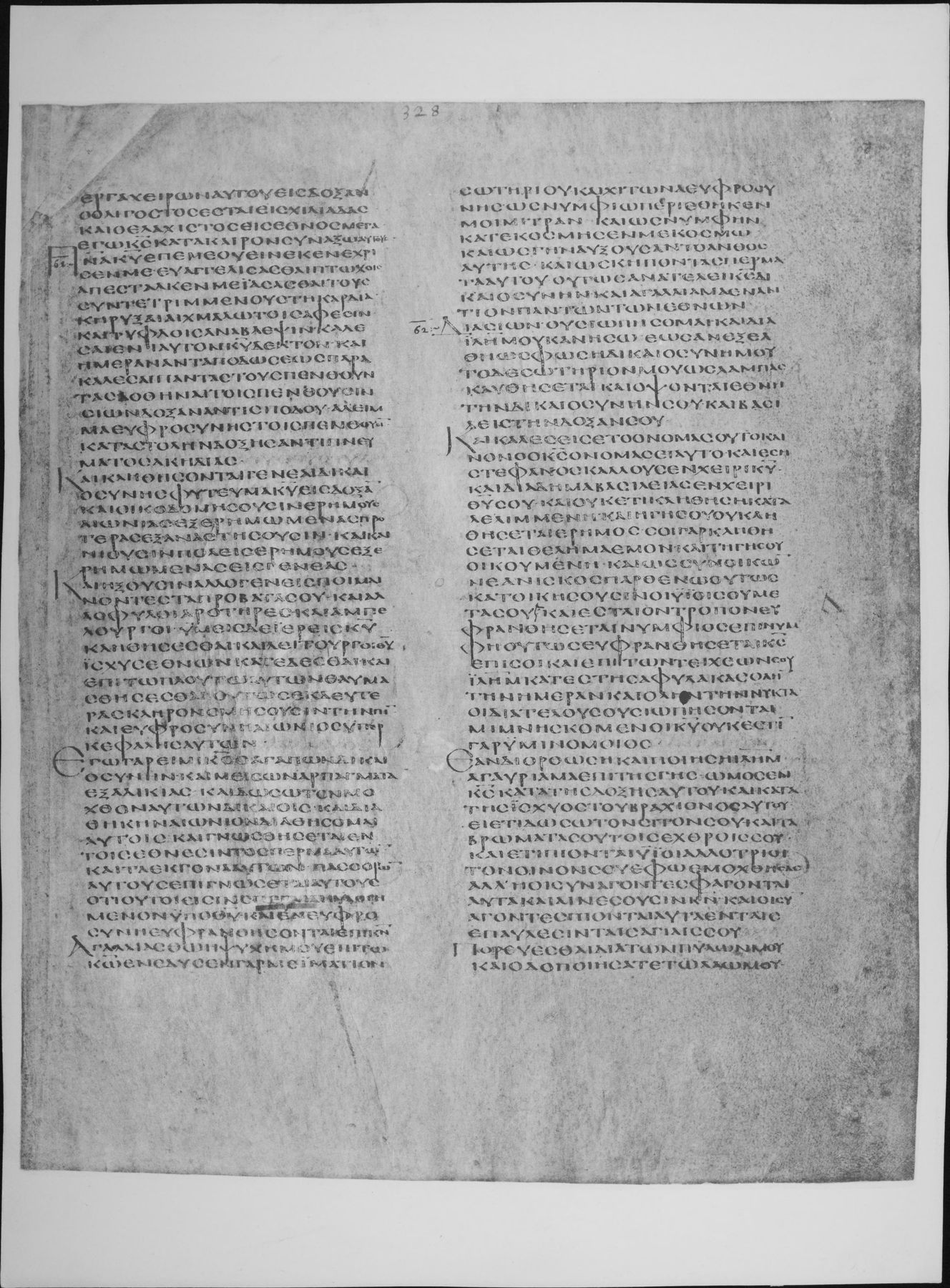
Isaiah 62:1-8 is on fol. 328r (full-size facsimile of 1879-83, Internet Archive codex-alexandrinus leaf 680). The 1936 reduced facsimile prints beneath this page: Is. lx. 21-lxii. 10. Checked on the plate: the page begins inside Isaiah 60:21 (first words read: ΕΡΓΑ ΧΕΙΡΩΝ ΑΥΤΟΥ ΕΙΣ ΔΟΞΑΝ Ο ΟΛΙΓΟΣΤΟΣ ΕΣΤΑΙ ΕΙΣ ΧΙΛΙΑΔΑΣ).
1Διὰ Σειὼν οὐ σιωπήσομαι, καὶ διὰ Ἰερουσαλὴμ οὐκ ἀνήσω, ἕως ἂν ἐξέλθῃ ὡς φῶς ἡ δικαιοσύνη αὐτῆς, τὸ δὲ σωτήριόν μου ὡς λαμπὰς καυθήσεται. 2καὶ ὄψονται ἔθνη τὴν δικαιοσύνην σου καὶ βασιλεῖς τὴν δόξαν σου, καὶ καλέσει σε τὸ ὄνομα τὸ καινὸν ὃ ὁ κύριος ὀνομάσει αὐτό. 3καὶ ἔσῃ στέφανος κάλλους ἐν χειρὶ Κυρίου, καὶ διάδημα βασιλείας ἐν χειρὶ θεοῦ σου. 4καὶ οὐκέτι κληθήσῃ Καταλελιμμένη, καὶ ἡ γῆ σου οὐ κληθήσεται ἔτι Ἔρημος· σοὶ γὰρ κληθήσεται Θέλημα ἐμόν, καὶ τῇ γῇ σου Οἰκουμένη, ὅτι εὐδόκησεν Κύριος ἐν σοί, καὶ ἡ γῆ σου συνοικισθήσεται. 5καὶ ὡς συνοικῶν νεανίσκος παρθένῳ, οὕτως κατοικήσουσιν οἱ υἱοί σου· καὶ ἔσται ὃν τρόπον εὐφρανθήσεται νυμφίος ἐπὶ νύμφῃ, οὕτως εὐφρανθήσεται Κύριος ἐπὶ σοί. 6Καὶ ἐπὶ τῶν τειχῶν σου, Ἰερουσαλήμ, κατέστησα φύλακας ὅλην τὴν ἡμέραν καὶ ὅλην τὴν νύκτα, οἳ διὰ τέλους οὐ σιωπήσονται μιμνησκόμενοι Κυρίου. 7οὐκ ἔστιν γὰρ ὑμῖν ὅμοιος· ἐὰν διορθώσῃ, καὶ ποιήσῃ Ἰερουσαλὴμ ἀγαυρίαμα ἐπὶ τῆς γῆς. 8ὤμοσεν Κύριος κατὰ τῆς δόξης αὐτοῦ καὶ κατὰ τῆς ἰσχύος τοῦ βραχίονος αὐτοῦ Εἰ ἔτι δώσω τὸν σῖτόν σου καὶ τὰ βρώματα τοῖς ἐχθροῖς σου, καὶ εἰ ἔτι πίονται υἱοὶ ἀλλότριοι τὸν οἶνόν σου ἐφ᾽ ᾧ ἐμόχθησας·
1For Sion's sake I will not hold my peace, and for Jerusalem's sake I will not rest, until her righteousness go forth as light, and my salvation burn as a torch. 2And the Gentiles shall see thy righteousness, and kings thy glory: and one shall call thee by a new name, which the Lord shall name. 3And thou shalt be a crown of beauty in the hand of the Lord, and a royal diadem in the hand of thy God. 4And thou shalt no more be called Forsaken; and thy land shall no more be called Desert: for thou shalt be called My Pleasure, and thy land Inhabited: for the Lord has taken pleasure in thee, and thy land shall be inhabited. 5And as a young man lives with a virgin, so shall thy sons dwell in thee: and it shall come to pass that as a bridegroom will rejoice over a bride, so will the Lord rejoice over thee. 6And on thy walls, O Jerusalem, have I set watchmen all day and all night, who shall never cease making mention of the Lord. 7For there is none like you, when he shall have established, and made Jerusalem a praise on the earth. 8For the Lord has sworn by his glory, and by the might of his arm, I will no more give thy corn and thy provisions to thine enemies; nor shall strangers any more drink thy wine, for which thou hast laboured.
Where on the image
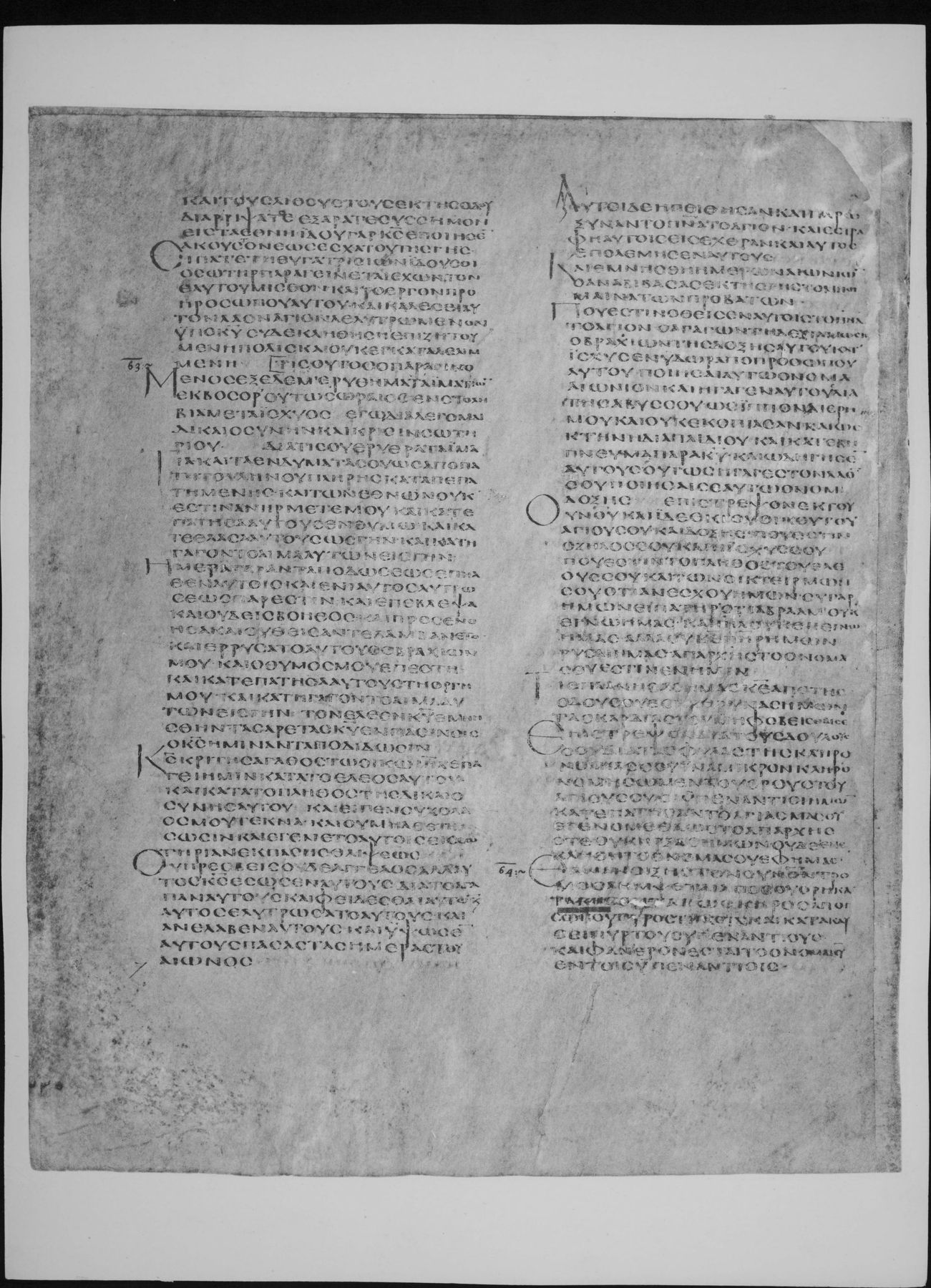
Isaiah 62:9-10 is on fol. 328r (full-size facsimile of 1879-83, Internet Archive codex-alexandrinus leaf 680). The 1936 reduced facsimile prints beneath this page: Is. lx. 21-lxii. 10. Checked on the plate: the page begins inside Isaiah 60:21 (first words read: ΕΡΓΑ ΧΕΙΡΩΝ ΑΥΤΟΥ ΕΙΣ ΔΟΞΑΝ Ο ΟΛΙΓΟΣΤΟΣ ΕΣΤΑΙ ΕΙΣ ΧΙΛΙΑΔΑΣ). Isaiah 62:10-12 is on fol. 328v (full-size facsimile of 1879-83, Internet Archive codex-alexandrinus leaf 681). The 1936 reduced facsimile prints beneath this page: Is. lxii. 10-lxiv. 2. Checked on the plate: the page begins inside Isaiah 62:10 (first words read: ΚΑΙ ΤΟΥΣ ΛΙΘΟΥΣ ΤΟΥΣ ΕΚ ΤΗΣ ΟΔΟΥ ΔΙΑΡΡΙΨΑΤΕ ΕΞΑΡΑΤΕ ΣΥΣΣΗΜΟΝ ΕΙΣ ΤΑ ΕΘΝΗ).
9ἀλλ᾽ οἱ συναγαγόντες φάγονται αὐτὰ καὶ αἰνέσουσιν Κύριον, καὶ οἱ συναγαγόντες πίονται αὐτὰ ἐν ταῖς ἐπαύλεσιν ταῖς ἁγίαις μου. 10πορεύεσθε διὰ τῶν πυλῶν μου καὶ ὁδοποιήσατε τῷ λαῷ μου καὶ τοὺς λίθους ἐκ τῆς ὁδοῦ διαρρίψατε, ἐξάρατε σύσσημον εἰς τὰ ἔθνη. 11ἰδοὺ γὰρ Κύριος ἐποίησεν ἀκουστὸν ἕως ἐσχάτου τῆς γῆς· εἴπατε τῇ θυγατρὶ Σειών Ἰδοὺ ὁ σωτήρ σοι παραγέγονεν ἔχων τὸν ἑαυτοῦ μισθόν, καὶ τὸ ἔργον αὐτοῦ πρὸ προσώπου αὐτοῦ. 12καὶ καλέσει αὐτὸν Λαὸν ἅγιον, λελυτρωμένον ὑπὸ Κυρίου, σὺ δὲ κληθήσῃ Ἐπιζητουμένη πόλις, καὶ Οὐκ ἐγκαταλελιμμένη.
9But they that have gathered them shall eat them, and they shall praise the Lord; and they that have gathered the grapes shall drink thereof in my holy courts. 10Go through my gates, and make a way for my people; and cast the stones out of the way; lift up a standard for the Gentiles. 11For behold, the Lord has proclaimed to the end of the earth, say ye to the daughter of Sion, Behold, thy Saviour has come to thee, having his reward and his work before his face. 12And one shall call them the holy people, the redeemed of the Lord: and thou shalt be called a city sought out, and not forsaken.
Cite
Sources
- Source: Codex Alexandrinus (British Library Royal MS 1 D. VI) via the British Museum photographic facsimiles of 1879-83 and 1936 (Internet Archive) + Swete's Septuagint + Brenton's English (holding institution)
- Critical edition: H. B. Swete, The Old Testament in Greek according to the Septuagint (1909)
← previous · → next · v cycle view · l back to library