Isaiah, Chapter 63 (Codex Alexandrinus)
Introduction
Isaiah 63 in the Greek Old Testament (the Septuagint) as written in Codex Alexandrinus, a Greek Bible copied in the fifth century, probably in Egypt, and now in the British Library (Royal MS 1 D. VI, the second of its four volumes). It is one of the three great early codices of the whole Greek Bible, with Codex Vaticanus and Codex Sinaiticus.
This entry meets the strict three-criteria standard of the Theosis Library:
- Manuscript scan: the page of Codex Alexandrinus carrying this chapter (fol. 328v), from the full-size photographic (autotype) facsimile published by the British Museum in 1879-1883, as digitised on the Internet Archive. The verse range of every page comes from the reduced photographic facsimile of 1936, which prints it beneath each plate, and the opening words of every page were read on the plate to confirm the page and the verse it begins with. Each section links to the page or pages that hold its verses. Folio numbers are those written at the head of each leaf and visible on the plates.
- Original text: Swete's edition, which here prints the text of Codex Vaticanus (Vat. gr. 1209), the base of his edition, and gives the readings of Alexandrinus only in his apparatus. The Greek column is therefore Vaticanus' text; where Alexandrinus differs, the plate shows what Alexandrinus reads.
- English translation: Sir Lancelot C. L. Brenton, The Septuagint Version of the Old Testament (1844; 1851 edition), a translation of the Greek, public domain, from the eBible.org text.
How was this verified? (Provenance)
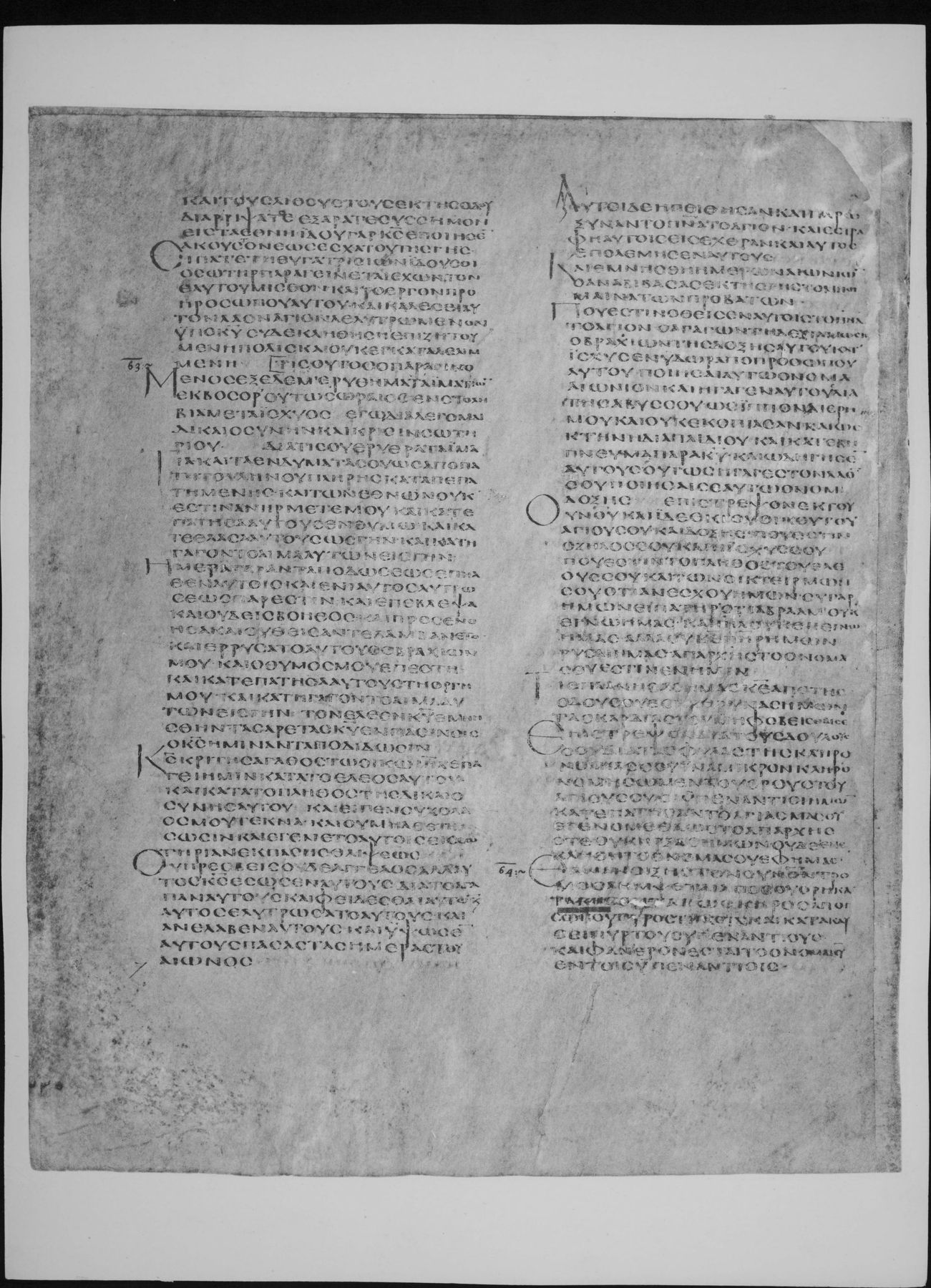
Where on the image
Isaiah 63:1-8 is on fol. 328v (full-size facsimile of 1879-83, Internet Archive codex-alexandrinus leaf 681). The 1936 reduced facsimile prints beneath this page: Is. lxii. 10-lxiv. 2. Checked on the plate: the page begins inside Isaiah 62:10 (first words read: ΚΑΙ ΤΟΥΣ ΛΙΘΟΥΣ ΤΟΥΣ ΕΚ ΤΗΣ ΟΔΟΥ ΔΙΑΡΡΙΨΑΤΕ ΕΞΑΡΑΤΕ ΣΥΣΣΗΜΟΝ ΕΙΣ ΤΑ ΕΘΝΗ).
1Τίς οὗτος ὁ παραγινόμενος ἐξ Ἐδώμ, ἐρύθημα ἱματίων ἐκ Βοσόρ; οὕτως ὡραῖος ἐν στολῇ, βίᾳ μετὰ ἰσχύος; ἐγὼ διαλέγομαι δικαιοσύνην καὶ κρίσιν σωτηρίου. 2διὰ τί σου ἐρυθρὰ τὰ ἱμάτια, καὶ τὰ ἐνδύματά σου ὡς ἀπὸ πατητοῦ ληνοῦ; 3πλήρης καταπεπατημένης, καὶ τῶν ἐθνῶν οὐκ ἔστιν ἀνὴρ μετ᾽ ἐμοῦ, καὶ κατεπάτησα αὐτοὺς ἐν θυμῷ μου, καὶ κατέθλασα αὐτοὺς ὡς γῆν, καὶ κατήγαγον τὸ αἷμα αὐτῶν. 4ἡμέρα γὰρ ἀνταποδόσεως ἦλθεν αὐτοῖς, καὶ ἐνιαυτὸς λυτρώσεως πάρεστιν. 5καὶ ἐπέβλεψα, καὶ οὐκ ἦν βοηθός· καὶ προσενόησα, καὶ οὐθεὶς ἀντελαμβάνετο· καὶ ἐρρύσατο αὐτοὺς ὁ βραχίων μου, καὶ ὁ θυμός μου ἐπέστη. 6καὶ κατεπάτησα αὐτοὺς τῇ ὀργῇ μου, καὶ κατήγαγον τὸ αἷμα αὐτῶν εἰς γῆν. 7Τὸν ἔλεον Κυρίου ἐμνήσθην, τὰς ἀρετὰς Κυρίου ἐν πᾶσιν οἷς ἡμῖν ἀνταποδίδωσιν. Κύριος κριτὴς ἀγαθὸς τῷ οἴκῳ Ἰσραήλ, ἐπάγει ἡμῖν κατὰ τὸ ἔλεος αὐτοῦ καὶ κατὰ τὸ πλῆθος τῆς δικαιοσύνης αὐτοῦ. 8καὶ εἶπεν Οὐχ ὁ λαός μου; τέκνα, οὐ μὴ ἀθετήσωσιν· καὶ ἐγένετο αὐτοῖς εἰς σωτηρίαν
1Who is this that is come from Edom, with red garments from Bosor? thus fair in his apparel, with mighty strength? I speak of righteousness and saving judgment. 2Wherefore are thy garments red, and thy raiment as if fresh from a trodden wine-press? 3I am full of trodden grape, and of the nations there is not a man with me; and I trampled them in my fury, and dashed them to pieces as earth, and brought down their blood to the earth. 4For the day of recompence has come upon them, and the year of redemption is at hand. 5And I looked, and there was no helper; and I observed, and none upheld: therefore my arm delivered them, and mine anger drew nigh. 6And I trampled them in mine anger, and brought down their blood to the earth. 7I remembered the mercy of the Lord, the praises of the Lord in all things wherein he recompenses us. The Lord is a good judge to the house of Israel; he deals with us according to his mercy, and according to the abundance of his righteousness. 8And he said, Is it not my people? the children surely will not be rebellious: and he became to them deliverance
Where on the image
Isaiah 63:9-16 is on fol. 328v (full-size facsimile of 1879-83, Internet Archive codex-alexandrinus leaf 681). The 1936 reduced facsimile prints beneath this page: Is. lxii. 10-lxiv. 2. Checked on the plate: the page begins inside Isaiah 62:10 (first words read: ΚΑΙ ΤΟΥΣ ΛΙΘΟΥΣ ΤΟΥΣ ΕΚ ΤΗΣ ΟΔΟΥ ΔΙΑΡΡΙΨΑΤΕ ΕΞΑΡΑΤΕ ΣΥΣΣΗΜΟΝ ΕΙΣ ΤΑ ΕΘΝΗ).
9ἐκ πάσης θλίψεως αὐτῶν. οὐ πρέσβυς οὐδὲ ἄγγελος, ἀλλ᾽ αὐτὸς ἔσωσεν αὐτούς, διὰ τὸ ἀγαπᾷν αὐτοὺς καὶ φείδεσθαι αὐτῶν· αὐτὸς ἐλυτρώσατο αὐτοὺς καὶ ἀνέλαβεν αὐτούς, καὶ ὕψωσεν αὐτοὺς πάσας τὰς ἡμέρας τοῦ αἰῶνος· 10αὐτοὶ δὲ ἠπείθησαν καὶ παρώξυναν τὸ πνεῦμα τὸ ἅγιον αὐτοῦ· καὶ ἐστράφη αὐτοῖς εἰς ἔχθραν, αὐτὸς ἐπολέμησεν αὐτούς. 11καὶ ἐμνήσθη ἡμερῶν αἰωνίων· ποῦ ὁ ἀναβιβάσας ἐκ τῆς θαλάσσης τὸν ποιμένα τῶν προβάτων; ποῦ ἐστιν ὁ θεὶς ἐν αὐτοῖς τὸ πνεῦμα τὸ ἅγιον; 12ὁ ἀγαγὼν τῇ δεξιᾷ Μωσῆν, ὁ βραχίων τῆς δόξης αὐτοῦ; κατίσχυσεν ὕδωρ ἀπὸ προσώπου αὐτοῦ, ποιῆσαι ἑαυτῷ ὄνομα αἰώνιον. 13ἤγαγεν αὐτοὺς δι᾽ ἀβύσσου ὡς ἵππον δι᾽ ἐρήμου, καὶ οὐκ ἐκοπίασαν, 14καὶ ὡς κτήνη διὰ πεδίου· κατέβη πνεῦμα παρὰ Κυρίου καὶ ὡδήγησεν αὐτούς· οὕτως ἤγαγες τὸν λαόν σου, ποιῆσαι σεαυτῷ ὄνομα δόξης. 15Ἐπίστρεψον ἐκ τοῦ οὐρανοῦ καὶ ἴδε ἐκ τοῦ οἴκου τοῦ ἁγίου σου καὶ δόξης σου· ποῦ ἐστιν ὁ ζῆλός σου καὶ ἡ ἰσχύς σου; ποῦ ἐστιν τὸ πλῆθος τοῦ ἐλέους σου καὶ οἰκτειρμῶν σου, ὅτι ἀνέσχου ἡμῶν; 16σὺ γὰρ εἶ πατὴρ ἡμῶν, ὅτι Ἀβραὰμ οὐκ ἔγνω ἡμᾶς, καὶ Ἰσραὴλ οὐκ ἐπέγνω ἡμᾶς· ἀλλὰ σύ, Κύριε, πατὴρ ἡμῶν· ῥῦσαι ἡμᾶς, ἀπ᾽ ἀρχῆς τὸ ὄνομά σου ἐφ᾽ ἡμᾶς ἐστιν.
9out of all their affliction: not an ambassador, nor a messenger, but himself saved them, because he loved them and spared them: he himself redeemed them, and took them up, and lifted them up all the days of old. 10But they disobeyed, and provoked his Holy Spirit: so he turned to be an enemy, he himself contended against them. 11Then he remembered the ancient days, saying, Where is he that brought up from the sea the shepherd of the sheep? where is he that put his Holy Spirit in them? 12who led Moses with his right hand, the arm of his glory? he forced the water to separate from before him, to make himself an everlasting name. 13He led them through the deep, as a horse through the wilderness, and they fainted not, 14and as cattle through a plain: the Spirit came down from the Lord, and guided them: thus thou leddest thy people, to make thyself a glorious name. 15Turn from heaven, and look from thy holy habitation and from thy glory: where is thy zeal and thy strength? where is the abundance of thy mercy and of thy compassions, that thou hast withholden thyself from us? 16For thou art our Father; for though Abraham knew us not, and Israel did not acknowledge us, yet do thou, O Lord, our Father, deliver us: thy name has been upon us from the beginning.
Where on the image
Isaiah 63:17-19 is on fol. 328v (full-size facsimile of 1879-83, Internet Archive codex-alexandrinus leaf 681). The 1936 reduced facsimile prints beneath this page: Is. lxii. 10-lxiv. 2. Checked on the plate: the page begins inside Isaiah 62:10 (first words read: ΚΑΙ ΤΟΥΣ ΛΙΘΟΥΣ ΤΟΥΣ ΕΚ ΤΗΣ ΟΔΟΥ ΔΙΑΡΡΙΨΑΤΕ ΕΞΑΡΑΤΕ ΣΥΣΣΗΜΟΝ ΕΙΣ ΤΑ ΕΘΝΗ).
17τί ἐπλάνησας ἡμᾶς, Κύριε, ἀπὸ τῆς ὁδοῦ σου; ἐσκλήρυνας τὰς καρδίας ἡμῶν τοῦ μὴ φοβεῖσθαί σε; ἐπίστρεψον διὰ τοὺς δούλους σου, διὰ τὰς φυλὰς τῆς κληρονομίας σου, 18ἵνα μικρὸν κληρονομήσωμεν τοῦ ὄρους τοῦ ἁγίου σου. 19ἐγενόμεθα ὡς τὸ ἀπ᾽ ἀρχῆς, ὅτε οὐκ ἦρξας ἡμῶν οὐδὲ ἐκλήθη τὸ ὄνομά σου ἐφ᾽ ἡμᾶς.
17Why hast thou caused us to err, O Lord, from thy way? and hast hardened our hearts, that we should not fear thee? Return for thy servants' sake, for the sake of the tribes of thine inheritance, 18that we may inherit a small part of thy holy mountain. 19We are become as at the beginning, when thou didst not rule over us, and thy name was not called upon us.
Cite
Sources
- Source: Codex Alexandrinus (British Library Royal MS 1 D. VI) via the British Museum photographic facsimiles of 1879-83 and 1936 (Internet Archive) + Swete's Septuagint + Brenton's English (holding institution)
- Critical edition: H. B. Swete, The Old Testament in Greek according to the Septuagint (1909)
← previous · → next · v cycle view · l back to library