Isaiah, Chapter 64 (Codex Alexandrinus)
Introduction
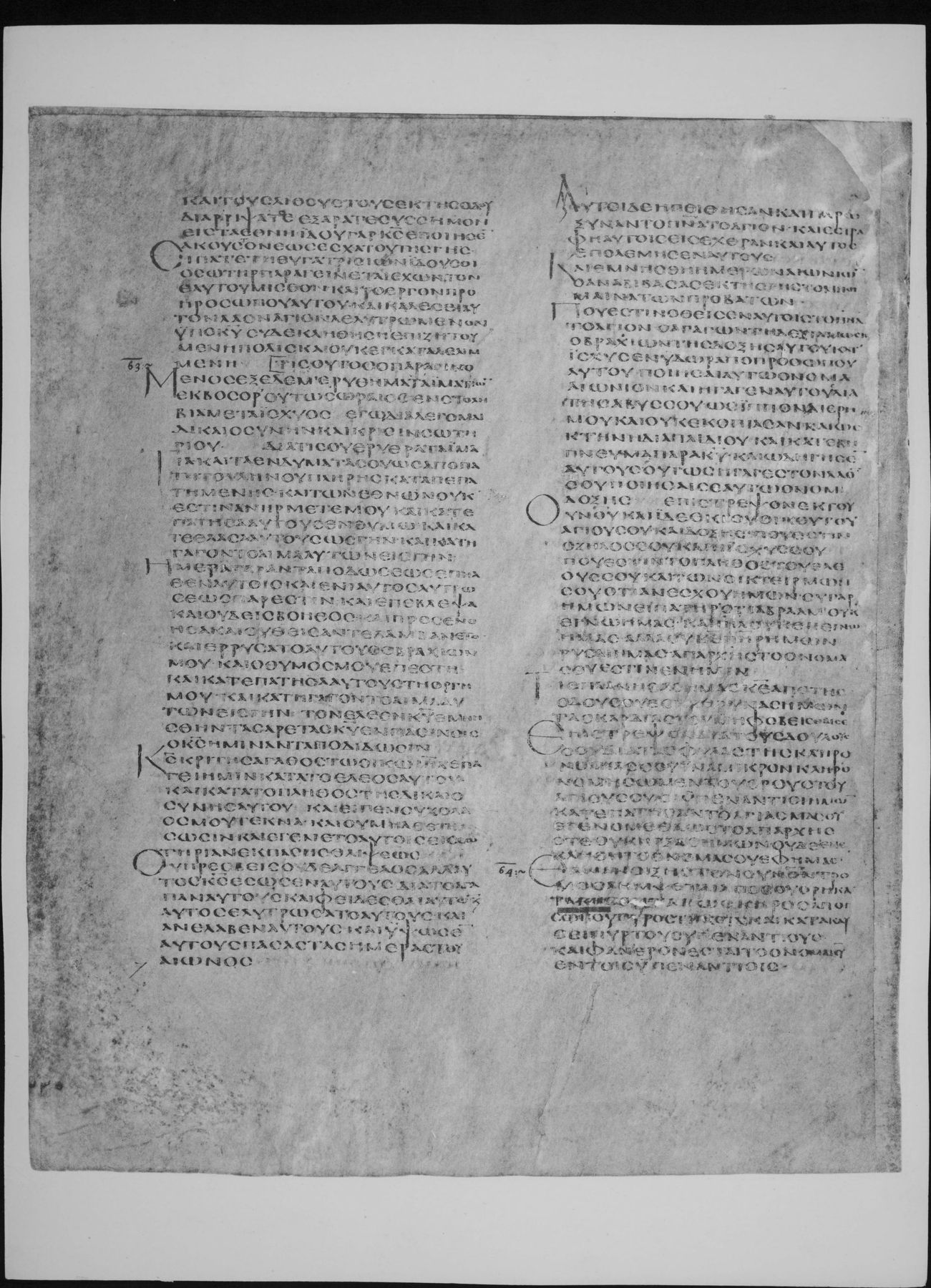
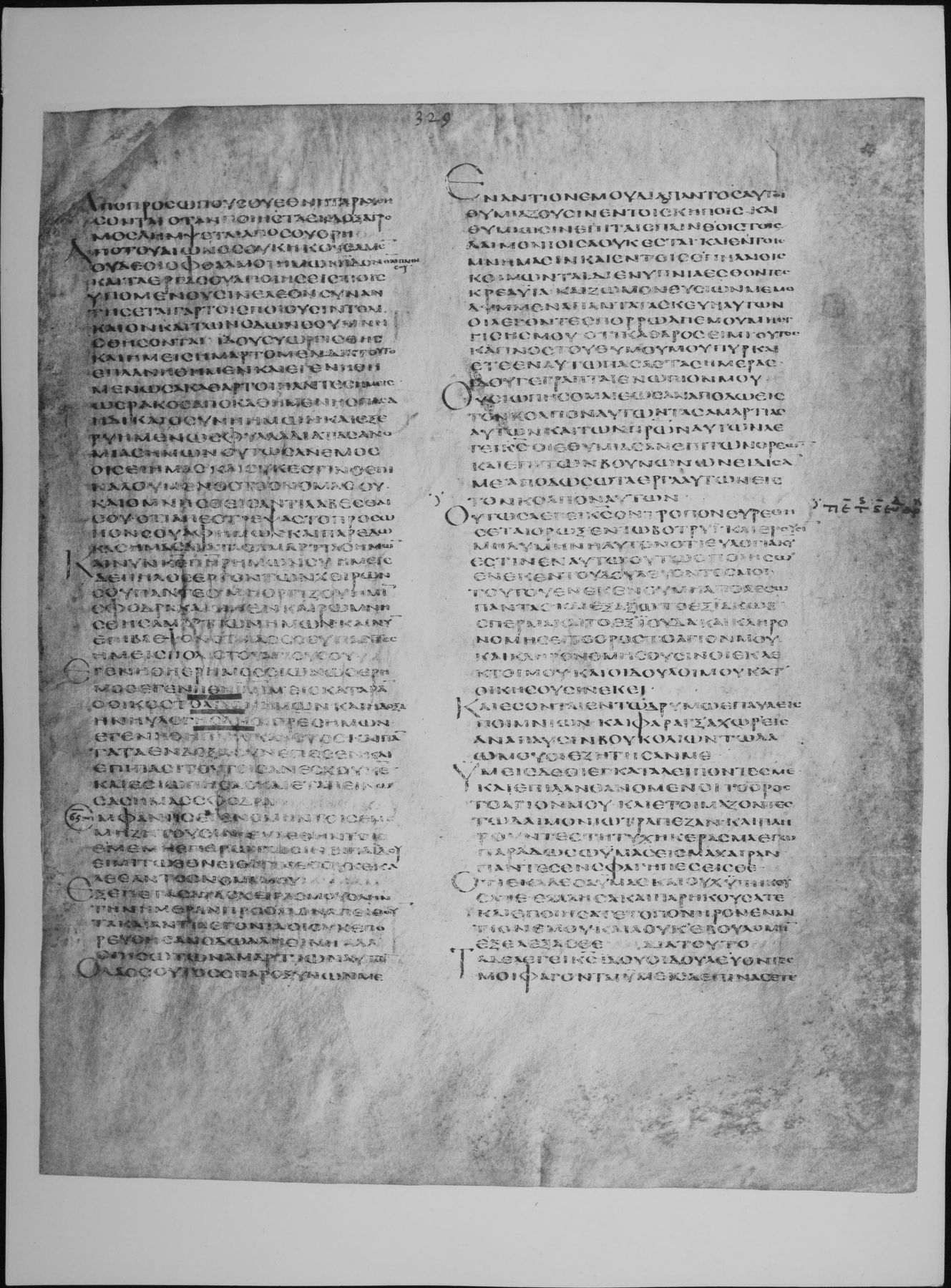
Isaiah 64 in the Greek Old Testament (the Septuagint) as written in Codex Alexandrinus, a Greek Bible copied in the fifth century, probably in Egypt, and now in the British Library (Royal MS 1 D. VI, the second of its four volumes). It is one of the three great early codices of the whole Greek Bible, with Codex Vaticanus and Codex Sinaiticus.
Numbering: Swete's Greek and Brenton's English number or divide some verses of this chapter differently (Swete 64:1-2 = Brenton 64:1; Swete 64:3-12 = Brenton 64:2-11). Each column keeps its own verse numbers, and sections are cut only where the two texts agree, so each section holds the same passage in both languages.
This entry meets the strict three-criteria standard of the Theosis Library:
- Manuscript scan: the pages of Codex Alexandrinus carrying this chapter (fol. 328v, fol. 329r), from the full-size photographic (autotype) facsimile published by the British Museum in 1879-1883, as digitised on the Internet Archive. The verse range of every page comes from the reduced photographic facsimile of 1936, which prints it beneath each plate, and the opening words of every page were read on the plate to confirm the page and the verse it begins with. Each section links to the page or pages that hold its verses. Folio numbers are those written at the head of each leaf and visible on the plates.
- Original text: Swete's edition, which here prints the text of Codex Vaticanus (Vat. gr. 1209), the base of his edition, and gives the readings of Alexandrinus only in his apparatus. The Greek column is therefore Vaticanus' text; where Alexandrinus differs, the plate shows what Alexandrinus reads.
- English translation: Sir Lancelot C. L. Brenton, The Septuagint Version of the Old Testament (1844; 1851 edition), a translation of the Greek, public domain, from the eBible.org text.
How was this verified? (Provenance)
Where on the image
Isaiah 64:1-2 is on fol. 328v (full-size facsimile of 1879-83, Internet Archive codex-alexandrinus leaf 681). The 1936 reduced facsimile prints beneath this page: Is. lxii. 10-lxiv. 2. Checked on the plate: the page begins inside Isaiah 62:10 (first words read: ΚΑΙ ΤΟΥΣ ΛΙΘΟΥΣ ΤΟΥΣ ΕΚ ΤΗΣ ΟΔΟΥ ΔΙΑΡΡΙΨΑΤΕ ΕΞΑΡΑΤΕ ΣΥΣΣΗΜΟΝ ΕΙΣ ΤΑ ΕΘΝΗ). Isaiah 64:2-8 is on fol. 329r (full-size facsimile of 1879-83, Internet Archive codex-alexandrinus leaf 682). The 1936 reduced facsimile prints beneath this page: Is. lxiv. 2-lxv. 13. Checked on the plate: the page begins inside Isaiah 64:2 (first words read: ΑΠΟ ΠΡΟΣΩΠΟΥ ΣΟΥ ΕΘΝΗ ΤΑΡΑΧΘΗΣΟΝΤΑΙ ΟΤΑΝ ΠΟΙΗΣΗΣ ΤΑ ΕΝΔΟΞΑ).
1ἐὰν ἀνοίξῃς τὸν οὐρανόν, τρόμος λήμψεται ἀπὸ σοῦ ὄρη, καὶ τακήσονται 2ὡς κηρὸς ἀπὸ πυρὸς τήκεται, καὶ κατακαύσει πῦρ τοὺς ὑπεναντίους, καὶ φανερὸν ἔσται τὸ ὄνομά σου ἐν τοῖς ὑπεναντίοις· ἀπὸ προσώπου σου ἔθνη ταραχθήσονται, 3ὅταν ποιῇς τὰ ἔνδοξα· τρόμος λήμψεται ἀπὸ σοῦ ὄρη. 4ἀπὸ τοῦ αἰῶνος οὐκ ἠκούσαμεν οὐδὲ οἱ ὀφθαλμοὶ ἡμῶν εἶδον θεὸν πλὴν σοῦ, καὶ τὰ ἔργα σου ἃ ποιήσεις τοῖς ὑπομένουσιν ἔλεον. 5συναντήσεται τοῖς ποιοῦσιν τὸ δίκαιον, καὶ τῶν ὁδῶν σου μνησθήσονται. ἰδοὺ σὺ ὠργίσθης, καὶ ἡμεῖς ἡμάρτομεν· διὰ τοῦτο ἐπλανήθημεν, 6καὶ ἐγενήθημεν ὡς ἀκάθαρτοι πάντες ἡμεῖς, ὡς ῥάκος ἀποκαθημένης πᾶσα ἡ δικαιοσύνη ἡμῶν· καὶ ἐξερύημεν ὡς φύλλα διὰ τὰς ἀνομίας ἡμῶν· οὕτως ἄνεμος οἴσει ἡμᾶς. 7καὶ οὐκ ἔστιν ὁ ἐπικαλούμενος τὸ ὄνομά σου καὶ ὁ μνησθεὶς ἀντιλαβέσθαι σου· ὅτι ἀπέστρεψας τὸ πρόσωπόν σου ἀφ᾽ ἡμῶν, καὶ παρέδωκας ἡμᾶς διὰ τὰς ἁμαρτίας ἡμῶν. 8Καὶ νῦν, Κύριε, πατὴρ ἡμῶν σύ, ἡμεῖς δὲ πηλός, ἔργα τῶν χειρῶν σου πάντες ἡμεῖς.
1as wax melts before the fire; and fire shall burn up the enemies, and thy name shall be manifest among the adversaries: at thy presence the nations shall be troubled, 2whenever thou shalt work gloriously; trembling from thee shall take hold upon the mountains. 3From of old we have not heard, neither have our eyes seen a God beside thee, and thy works which thou wilt perform to them that wait for mercy. 4For these blessings shall happen to them that work righteousness, and they shall remember thy ways: behold, thou wast angry and we have sinned; therefore we have erred, 5and we are all become as unclean, and all our righteousness as a filthy rag: and we have fallen as leaves because of our iniquities; thus the wind shall carry us away. 6And there is none that calls upon thy name, or that remembers to take hold on thee: for thou hast turned thy face away from us, and hast delivered us up because of our sins. 7And now, O Lord, thou art our Father, and we are clay, all of us the work of thine hands.
Where on the image
Isaiah 64:9-12 is on fol. 329r (full-size facsimile of 1879-83, Internet Archive codex-alexandrinus leaf 682). The 1936 reduced facsimile prints beneath this page: Is. lxiv. 2-lxv. 13. Checked on the plate: the page begins inside Isaiah 64:2 (first words read: ΑΠΟ ΠΡΟΣΩΠΟΥ ΣΟΥ ΕΘΝΗ ΤΑΡΑΧΘΗΣΟΝΤΑΙ ΟΤΑΝ ΠΟΙΗΣΗΣ ΤΑ ΕΝΔΟΞΑ).
9μὴ ὀργίζου ἡμῖν σφόδρα, καὶ μὴ ἐν καιρῷ μνησθῇς ἁμαρτιῶν ἡμῶν· καὶ νῦν ἐπίβλεψον, ὅτι λαός σου πάντες ἡμεῖς. 10πόλις τοῦ ἁγίου σου ἐγενήθη ἔρημος Σειών· ὡς ἔρημος ἐγενήθη Ἰερουσαλήμ· εἰς κατάραν 11ὁ οἶκος τὸ ἅγιον ἡμῶν, καὶ ἡ δόξα ἣν εὐλόγησαν οἱ πατέρες ἡμῶν ἐγενήθη πυρίκαυστος, καὶ πάντα ἔνδοξα ἡμῶν συνέπεσε. 12καὶ ἐπὶ πᾶσι τούτοις ἀνέσχου, Κύριε, καὶ ἐσιώπησας, καὶ ἐταπείνωσας ἡμᾶς σφόδρα.
8Be not very wroth with us, and remember not our sins for ever; but now look on us, for we are all thy people. 9The city of thy holiness has become desolate, Sion has become as a wilderness, Jerusalem a curse. 10The house, our sanctuary, and the glory which our fathers blessed, has been burnt with fire: and all our glorious things have gone to ruin. 11And for all these things thou, O Lord, hast withholden thyself, and been silent, and hast brought us very low.
Cite
Sources
- Source: Codex Alexandrinus (British Library Royal MS 1 D. VI) via the British Museum photographic facsimiles of 1879-83 and 1936 (Internet Archive) + Swete's Septuagint + Brenton's English (holding institution)
- Critical edition: H. B. Swete, The Old Testament in Greek according to the Septuagint (1909)
← previous · → next · v cycle view · l back to library