Isaiah, Chapter 8 (Codex Alexandrinus)
Introduction
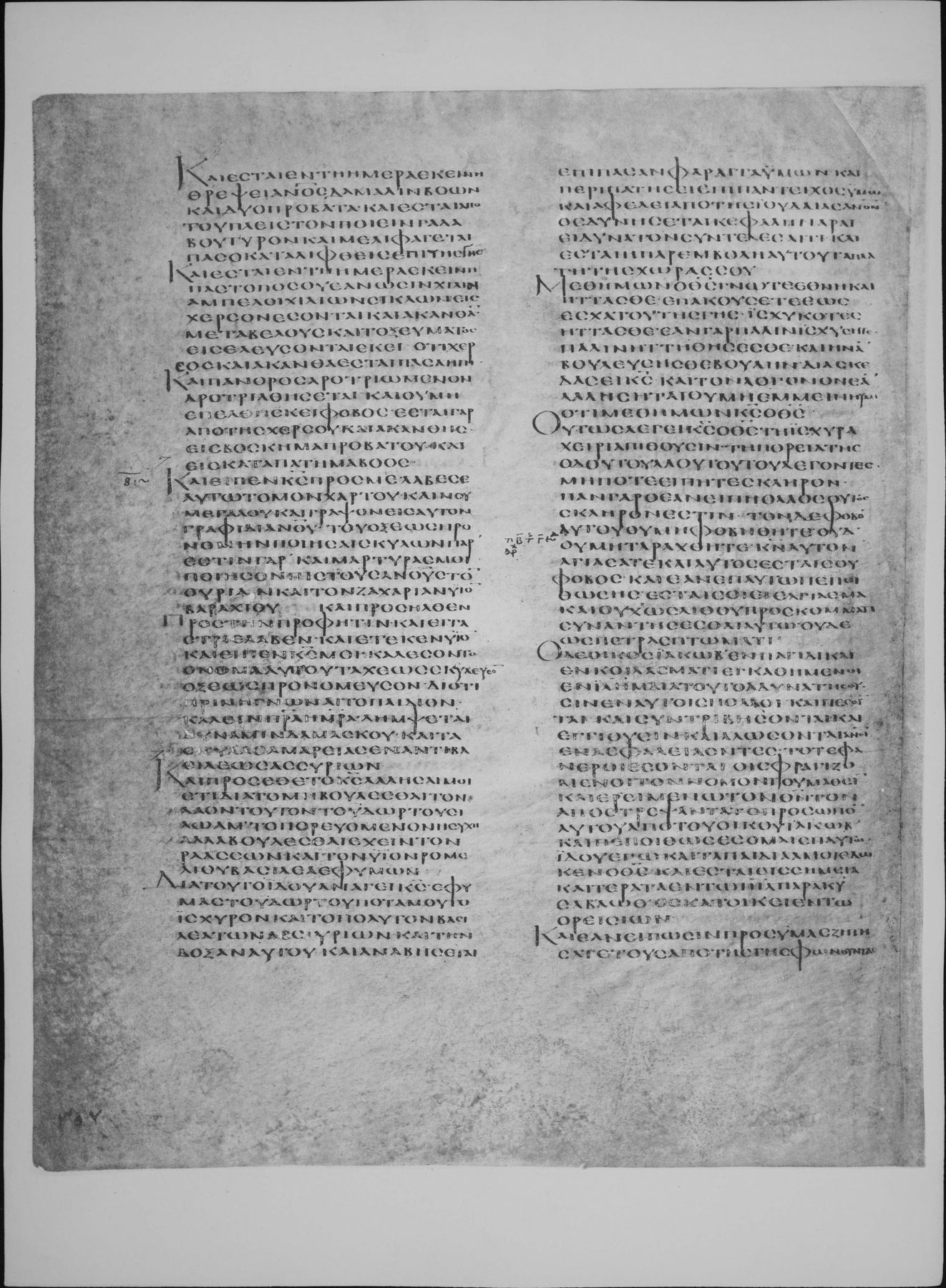
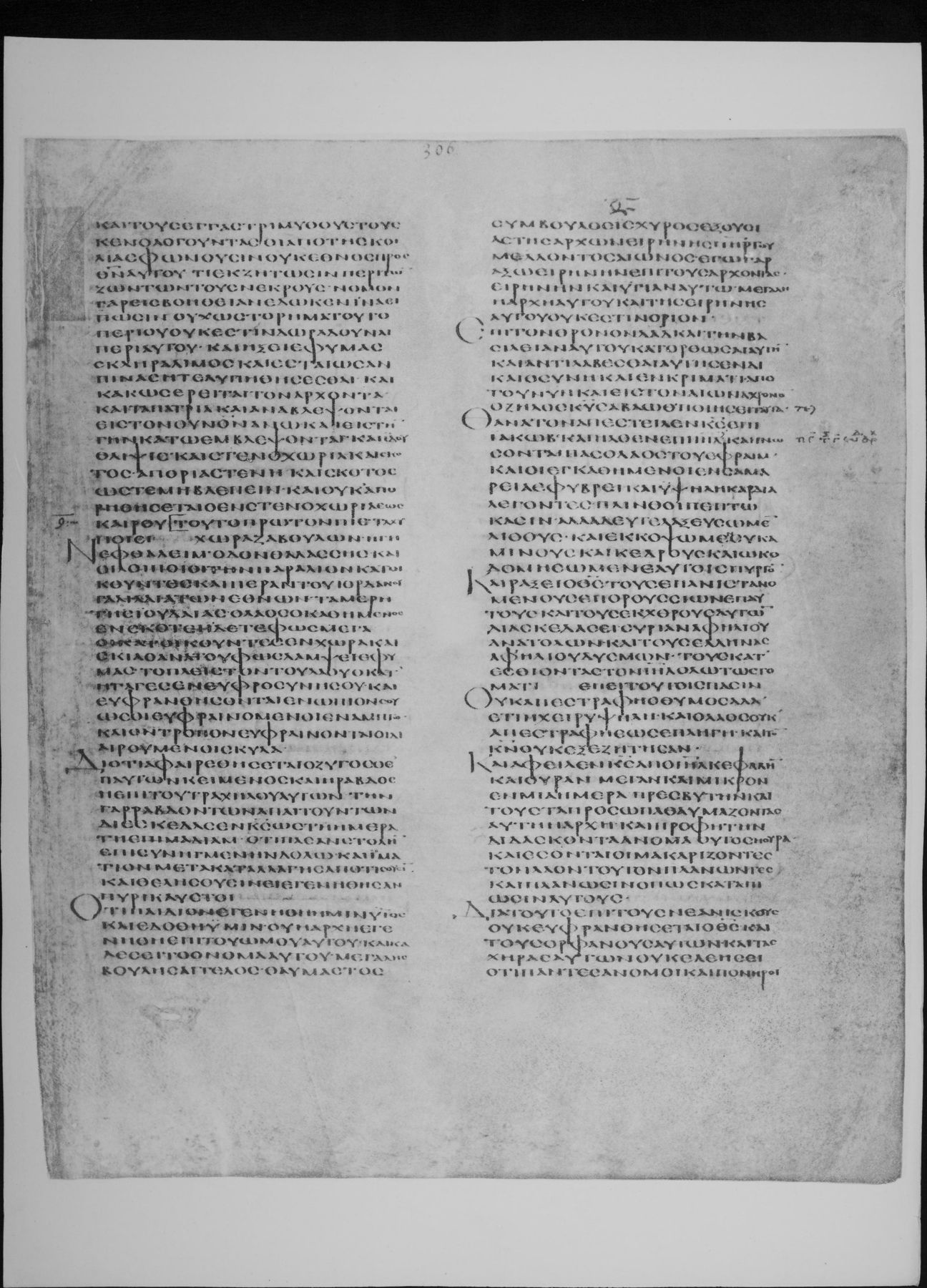
Isaiah 8 in the Greek Old Testament (the Septuagint) as written in Codex Alexandrinus, a Greek Bible copied in the fifth century, probably in Egypt, and now in the British Library (Royal MS 1 D. VI, the second of its four volumes). It is one of the three great early codices of the whole Greek Bible, with Codex Vaticanus and Codex Sinaiticus.
This entry meets the strict three-criteria standard of the Theosis Library:
- Manuscript scan: the pages of Codex Alexandrinus carrying this chapter (fol. 305v, fol. 306r), from the full-size photographic (autotype) facsimile published by the British Museum in 1879-1883, as digitised on the Internet Archive. The verse range of every page comes from the reduced photographic facsimile of 1936, which prints it beneath each plate, and the opening words of every page were read on the plate to confirm the page and the verse it begins with. Each section links to the page or pages that hold its verses. Folio numbers are those written at the head of each leaf and visible on the plates.
- Original text: Swete's edition, which here prints the text of Codex Vaticanus (Vat. gr. 1209), the base of his edition, and gives the readings of Alexandrinus only in his apparatus. The Greek column is therefore Vaticanus' text; where Alexandrinus differs, the plate shows what Alexandrinus reads.
- English translation: Sir Lancelot C. L. Brenton, The Septuagint Version of the Old Testament (1844; 1851 edition), a translation of the Greek, public domain, from the eBible.org text.
How was this verified? (Provenance)
Where on the image
Isaiah 8:1-8 is on fol. 305v (full-size facsimile of 1879-83, Internet Archive codex-alexandrinus leaf 635). The 1936 reduced facsimile prints beneath this page: Is. vii. 21-viii. 19. Checked on the plate: the page begins at the start of Isaiah 7:21 (first words read: ΚΑΙ ΕΣΤΑΙ ΕΝ ΤΗ ΗΜΕΡΑ ΕΚΕΙΝΗ ΘΡΕΨΕΙ ΑΝΘΡΩΠΟΣ ΔΑΜΑΛΙΝ ΒΟΩΝ ΚΑΙ ΔΥΟ ΠΡΟΒΑΤΑ).
1Καὶ εἶπεν Κύριος πρὸς μέ Λάβε σεαυτῷ τόμον καινοῦ μεγάλου, καὶ γράψον εἰς αὐτὸν γραφίδι ἀνθρώπου τοῦ ὀξέως προνομὴν ποιῆσαι σκύλων· πάρεστιν γάρ· 2καὶ μάρτυρὰς μοι ποίησον πιστοὺς ἀνθρώπους, τὸν Οὐρείαν καὶ Ζαχαρίαν υἱὸν Βαραχίου. 3καὶ προσῆλθον πρὸς τὴν προφῆτιν, καὶ ἐν γαστρὶ ἔλαβεν καὶ ἔτεκεν υἱόν. καὶ εἶπεν Κύριός μοι Κάλεσον τὸ ὄνομα αὐτοῦ Ταχέως σκύλευσον, ὀξέως προνόμευσον· 4διότι πρὶν ἢ γνῶναι τὸ παιδίον καλεῖν πατέρα ἢ μητέρα, λήμψεται δύναμιν Δαμασκοῦ καὶ τὰ σκῦλα Σαμαρείας ἔναντι βασιλέως Ἀσσυρίων. 5Καὶ προσέθετο Κύριος λαλῆσαί μοι ἔτι 6Διὰ τὸ μὴ βούλεσθαι τὸν λαὸν τοῦτον τὸ ὕδωρ τοῦ Σειλωὰμ τὸ πορευόμενον ἡσυχῇ, ἀλλὰ βούλεσθαι ἔχειν Ῥασσὼν καὶ τὸν υἱὸν Ῥομελίου βασιλέα ἐφ᾽ ὑμῶν, 7διὰ τοῦτο ἰδοὺ Κύριος ἀνάγει ἐφ᾽ ὑμᾶς τὸ ὕδωρ τοῦ ποταμοῦ τὸ ἰσχυρὸν καὶ τὸ πολύ, τὸν βασιλέα τῶν Ἀσσυρίων καὶ τὴν δόξαν αὐτοῦ· καὶ ἀναβήσεται ἐπὶ πᾶσαν φάραγγα ὑμῶν, καὶ περιπατήσει ἐπὶ πᾶν τεῖχος ὑμῶν, 8καὶ ἀφελεῖ ἀπὸ τῆς Ἰουδαίας ἄνθρωπον ὃς δυνήσεται κεφαλὴν ἆραι ἢ δυνατὸν συντελέσασθαί τι· καὶ ἔσται ἡ παρεμβολὴ αὐτοῦ ὥστε πληρῶσαι τὸ πλάτος τῆς χώρας σου. μεθ᾽ ἡμῶν ὁ θεός.
1And the Lord said to me, Take to thyself a volume of a great new book, and write in it with a man's pen concerning the making a rapid plunder of spoils; for it is near at hand. 2And make me witnesses of faithful men, Urias, and Zacharias the son of Barachias. 3And I went in to the prophetess; and she conceived, and bore a son. And the Lord said to me, Call his name, Spoil quickly, plunder speedily. 4For before the child shall know how to call his father or his mother, one shall take the power of Damascus and the spoils of Samaria before the king of the Assyrians. 5And the Lord spoke to me yet again, saying, 6Because this people chooses not the water of Siloam that goes softly, but wills to have Rassin, and the son of Romelias to be king over you; 7therefore, behold, the Lord brings up upon you the water of the river, strong and abundant, even the king of the Assyrians, and his glory: and he shall come up over every valley of yours, and shall walk over every wall of yours: 8and he shall take away from Juda every man who shall be able to lift up his head, and every one able to accomplish anything; and his camp shall fill the breadth of thy land, O God with us.
Where on the image
Isaiah 8:9-16 is on fol. 305v (full-size facsimile of 1879-83, Internet Archive codex-alexandrinus leaf 635). The 1936 reduced facsimile prints beneath this page: Is. vii. 21-viii. 19. Checked on the plate: the page begins at the start of Isaiah 7:21 (first words read: ΚΑΙ ΕΣΤΑΙ ΕΝ ΤΗ ΗΜΕΡΑ ΕΚΕΙΝΗ ΘΡΕΨΕΙ ΑΝΘΡΩΠΟΣ ΔΑΜΑΛΙΝ ΒΟΩΝ ΚΑΙ ΔΥΟ ΠΡΟΒΑΤΑ).
9γνῶτε ἔθνη καὶ ἡττᾶσθε, ἐπακούσατε ἕως ἐπ᾽ ἐσχάτου τῆς γῆς, ἰσχυκότες ἡττᾶσθε· ἐὰν γὰρ πάλιν ἰσχύσητε, πάλιν ἡττηθήσεσθε. 10καὶ ἣν ἂν βουλεύσησθε βουλὴν διασκεδάσει Κύριος, καὶ λόγον ὃν λαλήσητε οὐ μὴ ἐμμείνῃ ὑμῖν, ὅτι μεθ᾽ ἡμῶν ὁ θεός. 11οὕτως λέγει Κύριος Τῇ ἰσχυρᾷ χειρὶ ἀπειθοῦσιν τῇ πορείᾳ τῆς ὁδοῦ τοῦ λαοῦ τούτου, λέγοντες 12Μή ποτε εἴπωσιν σκληρόν· πᾶν γὰρ ὃ ἂν εἴπῃ ὁ λαὸς οὗτος σκληρόν ἐστιν· τὸν δὲ φόβον αὐτοῦ οὐ μὴ φοβηθῆτε οὐδὲ μὴ ταραχθῆτε· 13Κύριον αὐτὸν ἁγιάσατε, καὶ αὐτὸς ἔσται σου φόβος. 14κἂν ἐπ᾽ αὐτῷ πεποιθὼς ᾖς, ἔσται σοι εἰς ἁγίασμα, καὶ οὐχ ὡς λίθου προσκόμματι συναντήσεσθε οὐδὲ ὡς πέτρας πτώματι. οἱ δὲ οἶκοι Ἰακὼβ ἐν παγίδι, καὶ ἐν κοιλάσματι ἐγκαθήμενοι ἐν Ἰερουσαλήμ· 15διὰ τοῦτο ἀδυνατήσουσιν ἐν αὐτοῖς πολλοί, καὶ πεσοῦνται καὶ συντριβήσονται, καὶ ἐγγιοῦσιν καὶ ἁλώσονται ἄνθρωποι ἐν ἀσφαλείᾳ. 16Τότε φανεροὶ ἔσονται οἱ σφραγιζόμενοι τὸν νόμον τοῦ μὴ μαθεῖν.
9Know, ye Gentiles, and be conquered; hearken ye, even to the extremity of the earth: be conquered, after ye have strengthened yourselves; for even if ye should again strengthen yourselves, ye shall again be conquered. 10And whatsoever counsel ye shall take, the Lord shall bring it to nought; and whatsoever word ye shall speak, it shall not stand among you: for God is with us. 11Thus saith the Lord, With a strong hand they revolt from the course of the way of this people, saying, 12Let them not say, It is hard, for whatsoever this people says, is hard: but fear not ye their fear, neither be dismayed. 13Sanctify ye the Lord himself; and he shall be thy fear. 14And if thou shalt trust in him, he shall be to thee for a sanctuary; and ye shall not come against him as against a stumbling-stone, neither as against the falling of a rock: but the houses of Jacob are in a snare, and the dwellers in Jerusalem in a pit. 15Therefore many among them shall be weak, and fall, and be crushed; and they shall draw nigh, and men shall be taken securely. 16Then shall those who seal themselves that they may not learn the law be made manifest.
Where on the image
Isaiah 8:17-19 is on fol. 305v (full-size facsimile of 1879-83, Internet Archive codex-alexandrinus leaf 635). The 1936 reduced facsimile prints beneath this page: Is. vii. 21-viii. 19. Checked on the plate: the page begins at the start of Isaiah 7:21 (first words read: ΚΑΙ ΕΣΤΑΙ ΕΝ ΤΗ ΗΜΕΡΑ ΕΚΕΙΝΗ ΘΡΕΨΕΙ ΑΝΘΡΩΠΟΣ ΔΑΜΑΛΙΝ ΒΟΩΝ ΚΑΙ ΔΥΟ ΠΡΟΒΑΤΑ). Isaiah 8:19-22 is on fol. 306r (full-size facsimile of 1879-83, Internet Archive codex-alexandrinus leaf 636). The 1936 reduced facsimile prints beneath this page: Is. viii. 19-ix. 17. Checked on the plate: the page begins inside Isaiah 8:19 (first words read: ΚΑΙ ΤΟΥΣ ΕΓΓΑΣΤΡΙΜΥΘΟΥΣ ΤΟΥΣ ΚΕΝΟΛΟΓΟΥΝΤΑΣ ΟΙ ΕΚ ΤΗΣ ΚΟΙΛΙΑΣ ΦΩΝΟΥΣΙΝ). Note: Codex Alexandrinus' wording here differs from Swete's (Codex Vaticanus) text, so the opening words were identified by eye in Alexandrinus' wording of this verse.
17καὶ ἐρεῖ Μενῶ τὸν θεὸν τὸν ἀποστρέψαντα τὸ πρόσωπον αὐτοῦ ἀπὸ τοῦ οἴκου Ἰακώβ, καὶ πεποιθὼς ἔσομαι ἐπ᾽ αὐτῷ. 18ἰδοὺ ἐγὼ καὶ τὰ παιδία ἅ μοι ἔδωκεν ὁ θεός. καὶ ἔσται σημεῖα καὶ τέρατα ἐν τῷ οἴκῳ Ἰσραὴλ παρὰ Κυρίου σαβαώθ, ὃς κατοικεῖ ἐν τῷ ὄρει Σειών. 19καὶ ἐὰν εἴπωσιν πρὸς ὑμᾶς Ζητήσατε τοὺς ἐνγαστριμύθους καὶ τοὺς ἀπὸ τῆς γῆς φωνοῦντας, τοὺς κενολογοῦντας οἳ ἐκ τῆς κοιλίας φωνοῦσιν, οὐκ ἔθνος πρὸς θεὸν αὐτοῦ ἐκζητήσουσιν; τί ἐκζητοῦσιν περὶ τῶν ζώντων τοὺς νεκρούς; 20νόμον γὰρ εἰς βοήθειαν ἔδωκεν, ἵνα εἴπωσιν οὐχ ὡς τὸ ῥῆμα τοῦτο, περὶ οὗ οὐκ ἔστιν δῶρα δοῦναι περὶ αὐτοῦ. 21καὶ ἥξει ἐφ᾽ ὑμᾶς σκληρὰ λιμός, καὶ ἔσται ὡς ἂν πεινάσητε, λυπηθήσεσθε καὶ κακῶς ἐρεῖτε τὸν ἄρχοντα καὶ τὰ πάτρια, καὶ ἀναβλέψονται εἰς τὸν οὐρανὸν ἄνω, 22καὶ εἰς τὴν γῆν κάτω ἐμβλέψονται· καὶ ἰδοὺ ἀπορία στενὴ καὶ σκότος, θλίψις καὶ στενοχωρία καὶ σκότος ὥστε μὴ βλέπειν, καὶ οὐκ ἀπορηθήσεται ὁ ἐν στενοχωρίᾳ ὢν ἕως καιροῦ.
17And one shall say, I will wait for God, who has turned away his face from the house of Jacob, and I will trust in him. 18Behold I and the children which God has given me: and they shall be for signs and wonders in the house of Israel from the Lord of hosts, who dwells in mount Sion. 19And if they should say to you, Seek those who have in them a divining spirit, and them that speak out of the earth, them that speak vain words, who speak out of their belly: shall not a nation diligently seek to their God? why do they seek to the dead concerning the living? 20For he has given the law for a help, that they should not speak according to this word, concerning which there are no gifts to give for it. 21And famine shall come sorely upon you, and it shall come to pass, that when ye shall be hungry, ye shall be grieved, and ye shall speak ill of the prince and your fathers' ordinances: and they shall look up to heaven above, 22and they shall look on the earth below, and behold severe distress, and darkness, affliction, and anguish, and darkness so that one cannot see; and he that is in anguish shall not be distressed only for a time.
Cite
Sources
- Source: Codex Alexandrinus (British Library Royal MS 1 D. VI) via the British Museum photographic facsimiles of 1879-83 and 1936 (Internet Archive) + Swete's Septuagint + Brenton's English (holding institution)
- Critical edition: H. B. Swete, The Old Testament in Greek according to the Septuagint (1909)
← previous · → next · v cycle view · l back to library