Isaiah, Chapter 9 (Codex Alexandrinus)
Introduction
Isaiah 9 in the Greek Old Testament (the Septuagint) as written in Codex Alexandrinus, a Greek Bible copied in the fifth century, probably in Egypt, and now in the British Library (Royal MS 1 D. VI, the second of its four volumes). It is one of the three great early codices of the whole Greek Bible, with Codex Vaticanus and Codex Sinaiticus.
Numbering: Swete's Greek and Brenton's English number or divide some verses of this chapter differently (Swete 9:1 = Brenton 8:23; Swete 9:2-13 = Brenton 9:1-12; Swete 9:14-15 = Brenton 9:13-14; Swete 9:16-21 = Brenton 9:15-20). Each column keeps its own verse numbers, and sections are cut only where the two texts agree, so each section holds the same passage in both languages.
This entry meets the strict three-criteria standard of the Theosis Library:
- Manuscript scan: the pages of Codex Alexandrinus carrying this chapter (fol. 306r, fol. 306v), from the full-size photographic (autotype) facsimile published by the British Museum in 1879-1883, as digitised on the Internet Archive. The verse range of every page comes from the reduced photographic facsimile of 1936, which prints it beneath each plate, and the opening words of every page were read on the plate to confirm the page and the verse it begins with. Each section links to the page or pages that hold its verses. Folio numbers are those written at the head of each leaf and visible on the plates.
- Original text: Swete's edition, which here prints the text of Codex Vaticanus (Vat. gr. 1209), the base of his edition, and gives the readings of Alexandrinus only in his apparatus. The Greek column is therefore Vaticanus' text; where Alexandrinus differs, the plate shows what Alexandrinus reads.
- English translation: Sir Lancelot C. L. Brenton, The Septuagint Version of the Old Testament (1844; 1851 edition), a translation of the Greek, public domain, from the eBible.org text.
How was this verified? (Provenance)
Where on the image
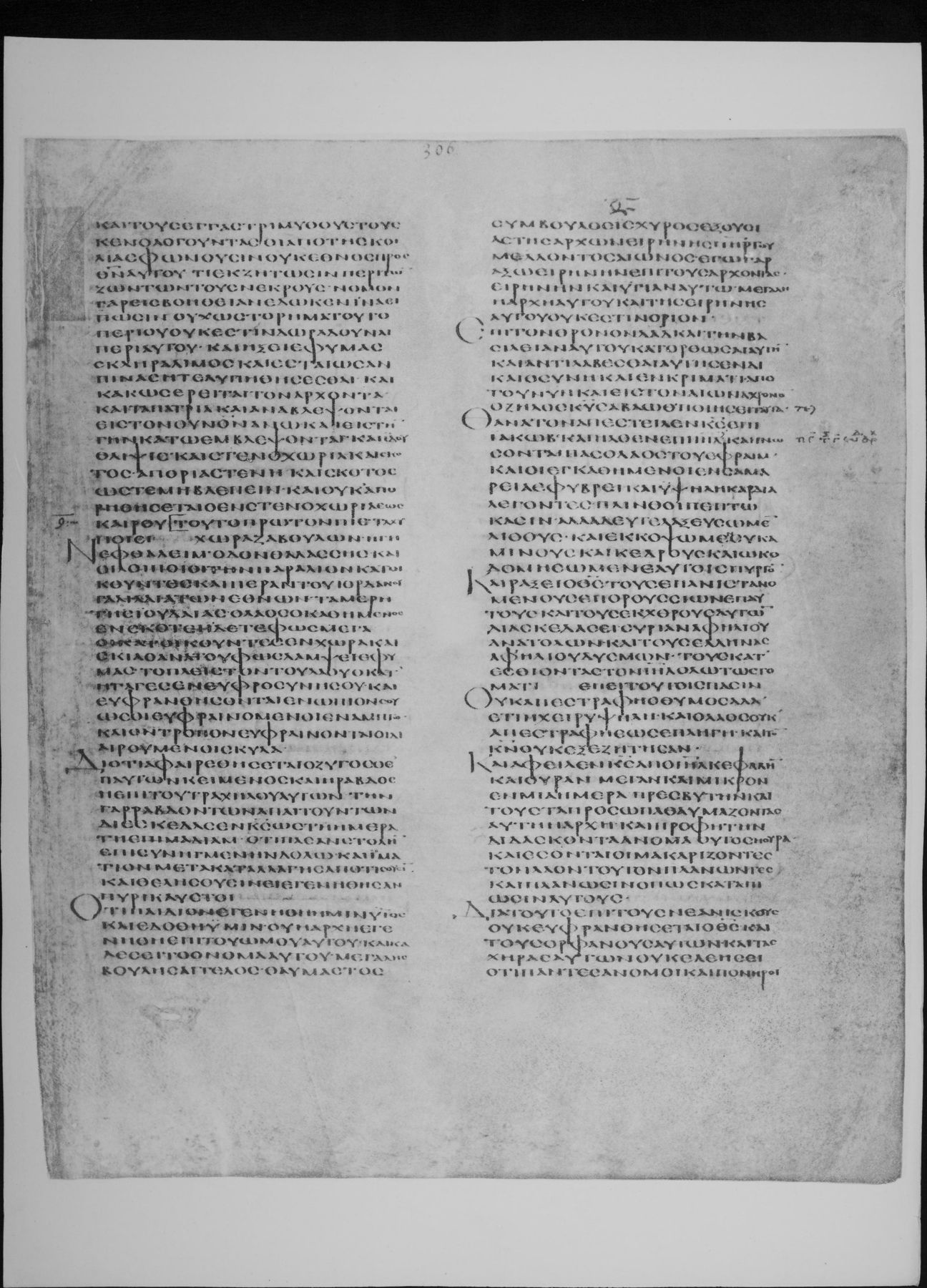
Isaiah 9:1-8 is on fol. 306r (full-size facsimile of 1879-83, Internet Archive codex-alexandrinus leaf 636). The 1936 reduced facsimile prints beneath this page: Is. viii. 19-ix. 17. Checked on the plate: the page begins inside Isaiah 8:19 (first words read: ΚΑΙ ΤΟΥΣ ΕΓΓΑΣΤΡΙΜΥΘΟΥΣ ΤΟΥΣ ΚΕΝΟΛΟΓΟΥΝΤΑΣ ΟΙ ΕΚ ΤΗΣ ΚΟΙΛΙΑΣ ΦΩΝΟΥΣΙΝ). Note: Codex Alexandrinus' wording here differs from Swete's (Codex Vaticanus) text, so the opening words were identified by eye in Alexandrinus' wording of this verse.
1Τοῦτο πρῶτον πίε, ταχὺ ποίει, χώρα Ζαβουλών, ἡ γῆ Νεφθαλείμ, καὶ οἱ λοιποὶ οἱ τὴν παραλίαν καὶ πέραν τοῦ Ἰορδάνου, Γαλειλαία τῶν ἐθνῶν. 2ὁ λαὸς ὁ πορευόμενος ἐν σκότει, ἴδετε φῶς μέγα· οἱ κατοικοῦντες ἐν χώρᾳ σκιᾷ θανάτου, φῶς λάμψει ἐφ᾽ ὑμᾶς. 3τὸ πλεῖστον τοῦ λαοῦ ὃ κατήγαγες ἐν εὐφροσύνῃ σου, καὶ εὐφρανθήσονται ἐνώπιόν σου ὡς οἱ εὐφραινόμενοι ἐν ἀμήτῳ, καὶ ὃν τρόπον οἱ διαιρούμενοι σκῦλα. 4διότι ἀφῄρηται ὁ ζυγὸς ὁ ἐπ᾽ αὐτῶν κείμενος, καὶ ἡ ῥάβδος ἡ ἐπὶ τοῦ τραχήλου αὐτῶν· τὴν γὰρ ῥάβδον τῶν ἀπαιτούντων διεσκέδασεν ὡς τῇ ἡμέρᾳ τῇ ἐπὶ Μαδιάμ. 5ὅτι πᾶσαν στολὴν ἐπισυνηγμένην δόλῳ καὶ ἱμάτιον μετὰ καταλλαγῆς ἀποτίσουσιν, καὶ θελήσουσιν εἰ ἐγένοντο πυρίκαυστοι. 6ὅτι παιδίον ἐγεννήθη ἡμῖν, υἱὸς ἐδόθη ἡμῖν, οὗ ἡ ἀρχὴ ἐγενήθη ἐπὶ τοῦ ὤμου αὐτοῦ, καὶ καλεῖται τὸ ὄνομα αὐτοῦ Μεγάλης βουλῆς ἄγγελος· ἄξω γὰρ εἰρήνην ἐπὶ τοὺς ἄρχοντας καὶ ὑγείαν αὐτῷ. 7μεγάλη ἡ ἀρχὴ αὐτοῦ, καὶ τῆς εἰρήνης αὐτοῦ οὐκ ἔστιν ὅριον, ἐπὶ τὸν θρόνον Δαυεὶδ καὶ τὴν βασιλείαν αὐτοῦ, κατορθῶσαι αὐτὴν καὶ ἀντιλαβέσθαι ἐν κρίματι καὶ ἐν δικαιοσύνῃ, ἀπὸ τοῦ νῦν καὶ εἰς τὸν αἰῶνα· ὁ ζῆλος Κυρίου σαβαὼθ ποιήσει ταῦτα. 8Θάνατον ἀπέστειλεν Κύριος ἐπὶ Ἰακώβ, καὶ ἦλθεν ἐπὶ Ἰσραήλ.
8:23Drink this first. Act quickly, O land of Zabulon, land of Nephthalim, and the rest inhabiting the sea-coast, and the land beyond Jordan, Galilee of the Gentiles. 1O people walking in darkness, behold a great light: ye that dwell in the region and shadow of death, a light shall shine upon you. 2The multitude of the people which thou hast brought down in thy joy, they shall even rejoice before thee as they that rejoice in harvest, and as they that divide the spoil. 3Because the yoke that was laid upon them has been taken away, and the rod that was on their neck: for he has broken the rod of the exactors, as in the day of Madiam. 4For they shall compensate for every garment that has been acquired by deceit, and all raiment with restitution; and they shall be willing, even if they were burnt with fire. 5For a child is born to us, and a son is given to us, whose government is upon his shoulder: and his name is called the Messenger of great counsel: for I will bring peace upon the princes, and health to him. 6His government shall be great, and of his peace there is no end: it shall be upon the throne of David, and upon his kingdom, to establish it, and to support it with judgment and with righteousness, from henceforth and for ever. The zeal of the Lord of hosts shall perform this. 7The Lord has sent death upon Jacob, and it has come upon Israel.
Where on the image
Isaiah 9:9-16 is on fol. 306r (full-size facsimile of 1879-83, Internet Archive codex-alexandrinus leaf 636). The 1936 reduced facsimile prints beneath this page: Is. viii. 19-ix. 17. Checked on the plate: the page begins inside Isaiah 8:19 (first words read: ΚΑΙ ΤΟΥΣ ΕΓΓΑΣΤΡΙΜΥΘΟΥΣ ΤΟΥΣ ΚΕΝΟΛΟΓΟΥΝΤΑΣ ΟΙ ΕΚ ΤΗΣ ΚΟΙΛΙΑΣ ΦΩΝΟΥΣΙΝ). Note: Codex Alexandrinus' wording here differs from Swete's (Codex Vaticanus) text, so the opening words were identified by eye in Alexandrinus' wording of this verse.
9καὶ γνώσονται πᾶς ὁ λαὸς τοῦ Ἐφράιμ καὶ οἱ καθήμενοι ἐν Σαμαρείᾳ, ἐφ᾽ ὕβρει καὶ ὑψηλῇ καρδίᾳ λέγοντες 10Πλίνθοι πεπτώκασιν, ἀλλὰ δεῦτε λαξεύσωμεν λίθους, καὶ κόψωμεν συκαμίνους καὶ κέδρους, καὶ οἰκοδομήσωμεν ἑαυτοῖς πύργον. 11καὶ ῥάξει ὁ θεὸς τοὺς ἐπανισταμένους ἐπὶ ὄρος Σειὼν ἐπ᾽ αὐτόν, καὶ τοὺς ἐχθροὺς διασκεδάσει, 12Συρίαν ἀφ᾽ ἡλίου ἀνατολῶν καὶ τοὺς Ἕλληνας ἀφ᾽ ἡλίου δυσμῶν, τοὺς κατεσθίοντας τὸν Ἰσραὴλ ὅλῳ τῷ στόματι. ἐπὶ τούτοις πᾶσιν οὐκ ἀπεστράφη ὁ θυμός, ἀλλ᾽ ἔτι ἡ χεὶρ ὑψηλή. 13καὶ ὁ λαὸς οὐκ ἐπεστράφη ἕως ἐπλήγη, καὶ τὸν κύριον οὐκ ἐζήτησαν. 14Καὶ ἀφεῖλεν Κύριος ἀπὸ Ἰσραὴλ κεφαλὴν καὶ οὐράν, μέγαν καὶ μικρὸν ἐν μιᾷ ἡμέρᾳ, πρεσβύτην καὶ τοὺς τὰ πρόσωπα θαυμάζοντας, αὕτη ἡ ἀρχή, 15καὶ προφήτην διδάσκοντα ἄνομα, οὗτος ἡ οὐρά. 16καὶ ἔσονται οἱ μακαρίζοντες τὸν λαὸν τοῦτον πλανῶντες, καὶ πλανῶσιν ὅπως καταπίνωσιν αὐτούς.
8And all the people of Ephraim, and they that dwelt in Samaria shall know, who say in their pride and lofty heart, 9The bricks are fallen down, but come, let us hew stones, and cut down sycamores and cedars, and let us build for ourselves a tower. 10And God shall dash down them that rise up against him on mount Sion, and shall scatter his enemies; 11even Syria from the rising of the sun, and the Greeks from the setting of the sun, who devour Israel with open mouth. For all this his anger is not turned away, but still his hand is exalted. 12But the people turned not until they were smitten, and they sought not the Lord. 13So the Lord took away from Israel the head and tail, great and small, in one day: 14the old man, and them that respect persons, this is the head; and the prophet teaching unlawful things, he is the tail. 15And they that pronounce this people blessed shall mislead them; and they mislead them that they may devour them.
Where on the image
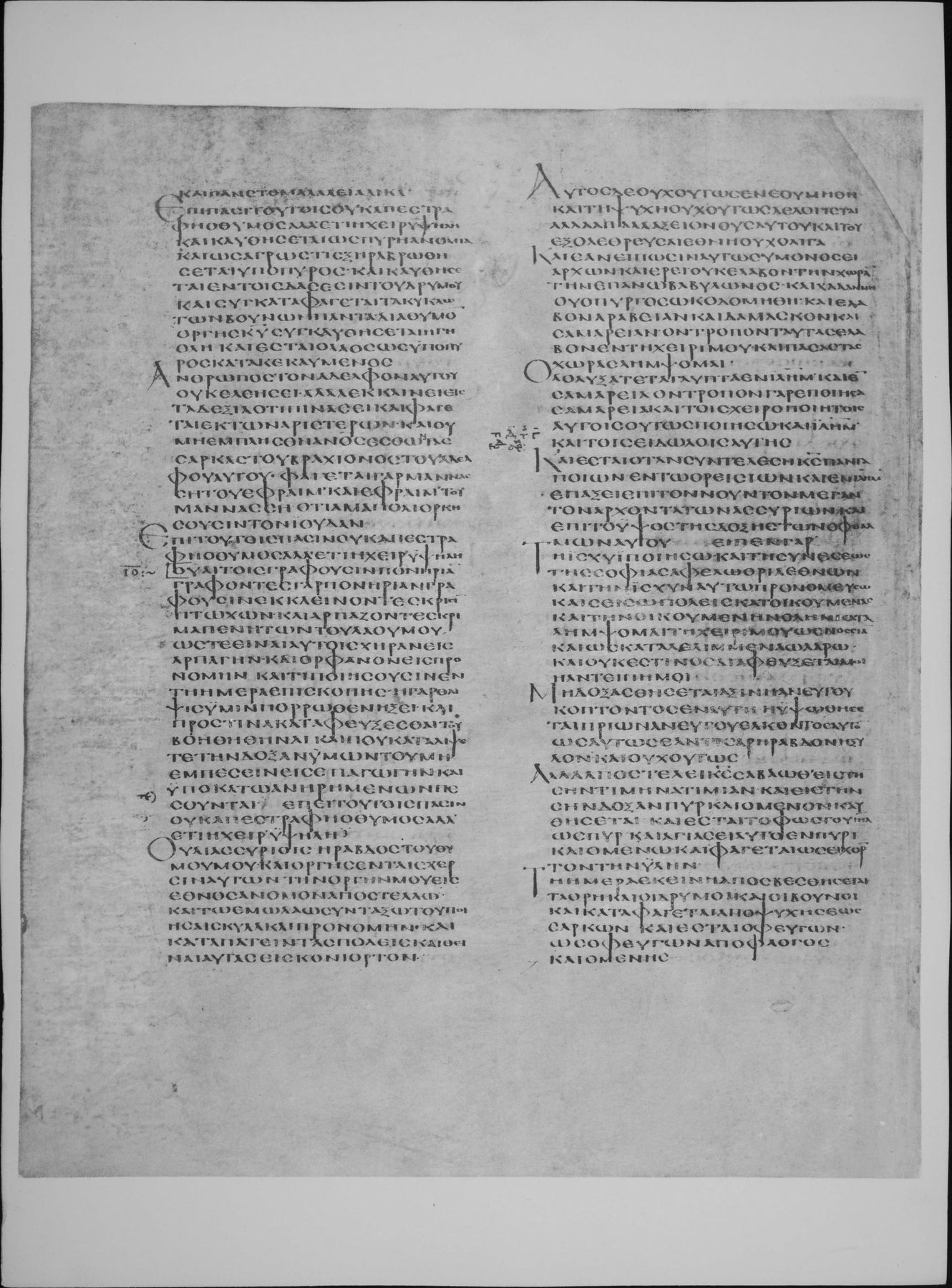
Isaiah 9:17 is on fol. 306r (full-size facsimile of 1879-83, Internet Archive codex-alexandrinus leaf 636). The 1936 reduced facsimile prints beneath this page: Is. viii. 19-ix. 17. Checked on the plate: the page begins inside Isaiah 8:19 (first words read: ΚΑΙ ΤΟΥΣ ΕΓΓΑΣΤΡΙΜΥΘΟΥΣ ΤΟΥΣ ΚΕΝΟΛΟΓΟΥΝΤΑΣ ΟΙ ΕΚ ΤΗΣ ΚΟΙΛΙΑΣ ΦΩΝΟΥΣΙΝ). Note: Codex Alexandrinus' wording here differs from Swete's (Codex Vaticanus) text, so the opening words were identified by eye in Alexandrinus' wording of this verse. Isaiah 9:17-21 is on fol. 306v (full-size facsimile of 1879-83, Internet Archive codex-alexandrinus leaf 637). The 1936 reduced facsimile prints beneath this page: Is. ix. 17-x. 18. Checked on the plate: the page begins inside Isaiah 9:17 (first words read: ΚΑΙ ΠΑΝ ΣΤΟΜΑ ΛΑΛΕΙ ΑΔΙΚΑ ΕΠΙ ΠΑΣΙ ΤΟΥΤΟΙΣ ΟΥΚ ΑΠΕΣΤΡΑΦΗ Ο ΘΥΜΟΣ).
17διὰ τοῦτο ἐπὶ τοὺς νεανίσκους αὐτῶν οὐκ εὐφρανθήσεται ὁ κύριος, καὶ τοὺς ὀρφανοὺς αὐτῶν καὶ τὰς χήρας αὐτῶν οὐκ ἐλεήσει· ὅτι πάντες ἄνομοι καὶ πονηροί, καὶ πᾶν στόμα λαλεῖ ἄδικα. ἐπὶ πᾶσιν τούτοις οὐκ ἀπεστράφη ὁ θυμός, ἀλλ᾽ ἔτι ἡ χεὶρ ὑψηλή. 18Καὶ καυθήσεται ὡς πῦρ ἡ ἀνομία, καὶ ὡς ἄγρωστις ξηρὰ βρωθήσεται ὑπὸ πυρός· καὶ καυθήσεται ἐν τοῖς δάσεσι τοῦ δρυμοῦ, καὶ συνκαταφάγεται τὰ κύκλῳ τῶν βουνῶν πάντα· 19διὰ θυμὸν ὀργῆς Κυρίου συγκέκαυται ἡ γῆ ὅλη, καὶ ἔσται ὁ λαὸς ὡς ὑπὸ πυρὸς κατακεκαυμένος. ἄνθρωπος τὸν ἀδελφὸν αὐτοῦ οὐκ ἐλεήσει, 20ἀλλὰ ἐκκλινεῖ εἰς τὰ δεξιά, ὅτι πεινάσει, καὶ φάγεται ἐκ τῶν ἀριστερῶν, καὶ οὐ μὴ ἐμπλησθῇ ἄνθρωπος ἔσθων τὰς σάρκας τοῦ βραχίονος αὐτοῦ. 21φάγεται γὰρ Μανασσὴ τοῦ Ἐφράιμ, καὶ Ἐφράιμ τοῦ Μανασσή, ὅτι ἅμα πολιορκήσουσιν τὸν Ἰούδαν. ἐπὶ τούτοις πᾶσιν οὐκ ἀπεστράφη ὁ θυμός, ἀλλ᾽ ἔτι ἡ χεὶρ ὑψηλή.
16Therefore the Lord shall not take pleasure in their young men, neither shall he have pity on their orphans or on their widows: for they are all transgressors and wicked, and every mouth speaks unjustly. For all this his anger is not turned away, but his hand is yet exalted. 17And iniquity shall burn as fire, and shall be devoured by fire as dry grass: and it shall burn in the thickets of the wood, and shall devour all that is round about the hills. 18The whole earth is set on fire because of the fierce anger of the Lord, and the people shall be as men burnt by fire: no man shall pity his brother. 19But one shall turn aside to the right hand, for he shall be hungry; and shall eat on the left, and a man shall by no means be satisfied with eating the flesh of his own arm. 20For Manasses shall eat the flesh of Ephraim, and Ephraim the flesh of Manasses; for they shall besiege Juda together. For all this his anger is not turned away, but his hand is yet exalted.
Cite
Sources
- Source: Codex Alexandrinus (British Library Royal MS 1 D. VI) via the British Museum photographic facsimiles of 1879-83 and 1936 (Internet Archive) + Swete's Septuagint + Brenton's English (holding institution)
- Critical edition: H. B. Swete, The Old Testament in Greek according to the Septuagint (1909)
← previous · → next · v cycle view · l back to library