Jeremiah, Chapter 10 (Codex Alexandrinus)
Introduction
Jeremiah 10 in the Greek Old Testament (the Septuagint) as written in Codex Alexandrinus, a Greek Bible copied in the fifth century, probably in Egypt, and now in the British Library (Royal MS 1 D. VI, the second of its four volumes). It is one of the three great early codices of the whole Greek Bible, with Codex Vaticanus and Codex Sinaiticus.
Numbering: Swete's Greek and Brenton's English number or divide some verses of this chapter differently (Swete 10:5-9 = Brenton 10:5-9). Each column keeps its own verse numbers, and sections are cut only where the two texts agree, so each section holds the same passage in both languages.
This entry meets the strict three-criteria standard of the Theosis Library:
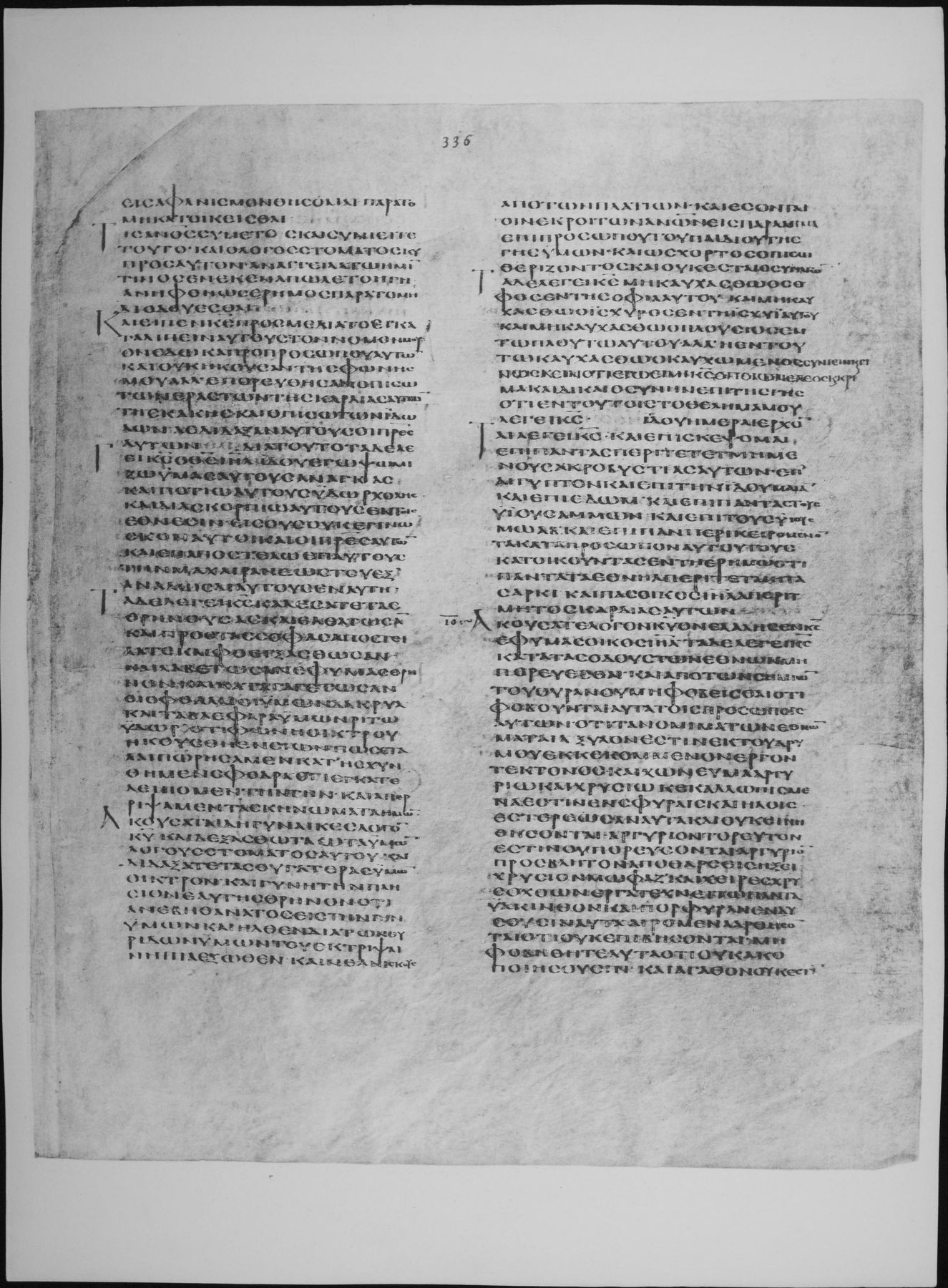
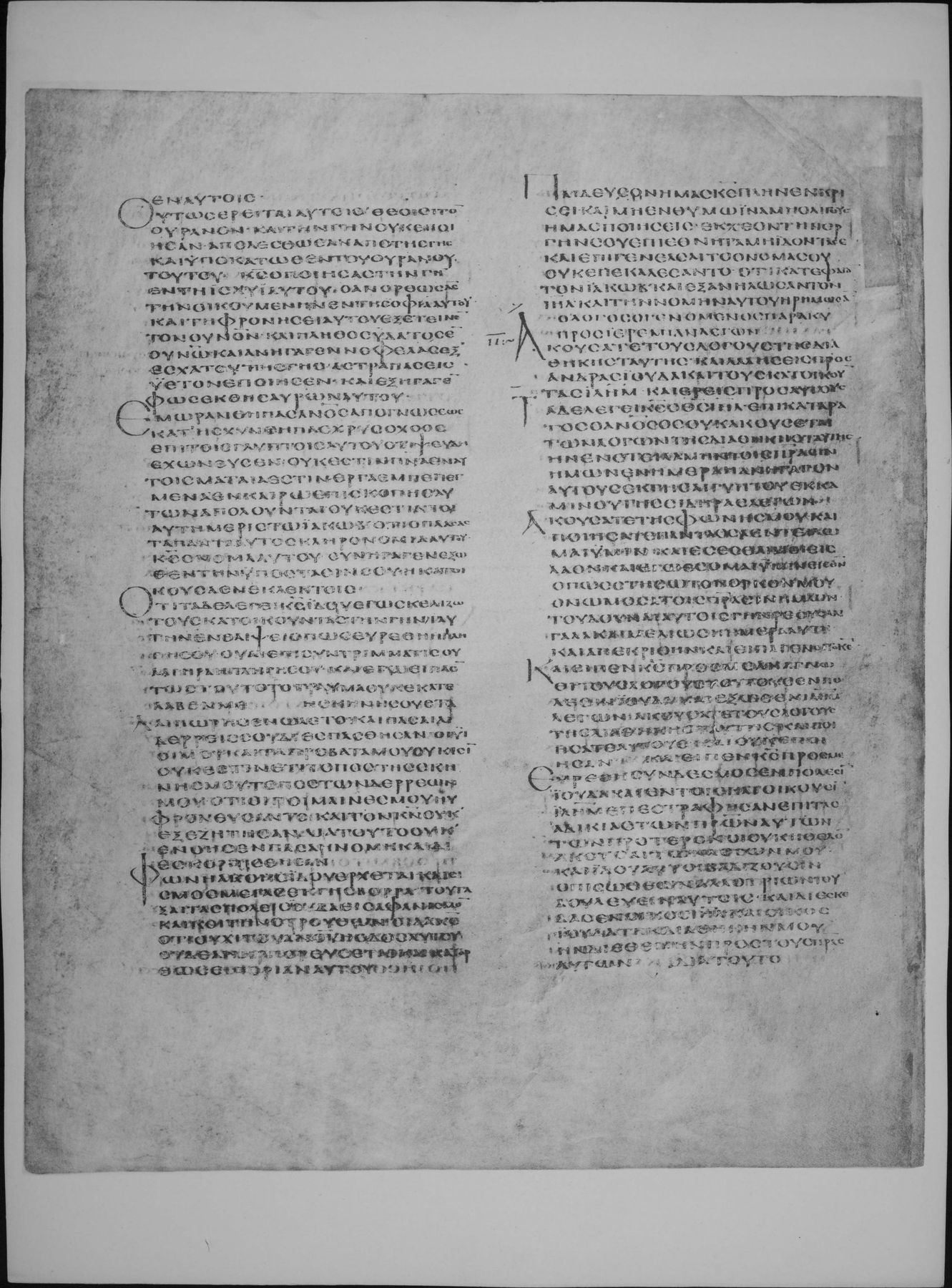
- Manuscript scan: the pages of Codex Alexandrinus carrying this chapter (fol. 336r, fol. 336v), from the full-size photographic (autotype) facsimile published by the British Museum in 1879-1883, as digitised on the Internet Archive. The verse range of every page comes from the reduced photographic facsimile of 1936, which prints it beneath each plate, and the opening words of every page were read on the plate to confirm the page and the verse it begins with. Each section links to the page or pages that hold its verses. Folio numbers are those written at the head of each leaf and visible on the plates.
- Original text: Swete's edition, which here prints the text of Codex Vaticanus (Vat. gr. 1209), the base of his edition, and gives the readings of Alexandrinus only in his apparatus. The Greek column is therefore Vaticanus' text; where Alexandrinus differs, the plate shows what Alexandrinus reads.
- English translation: Sir Lancelot C. L. Brenton, The Septuagint Version of the Old Testament (1844; 1851 edition), a translation of the Greek, public domain, from the eBible.org text.
How was this verified? (Provenance)
Where on the image
Jeremiah 10:1-9 is on fol. 336r (full-size facsimile of 1879-83, Internet Archive codex-alexandrinus leaf 696). The 1936 reduced facsimile prints beneath this page: Jer. ix. 11-x. 10. Checked on the plate: the page begins inside Jeremiah 9:11 (first words read: ΕΙΣ ΑΦΑΝΙΣΜΟΝ ΘΗΣΟΜΑΙ ΠΑΡΑ ΤΟ ΜΗ ΚΑΤΟΙΚΕΙΣΘΑΙ ΤΙΣ Ο ΑΝΘΡΩΠΟΣ Ο ΣΥΝΕΤΟΣ). Jeremiah 10:11-12 is on fol. 336v (full-size facsimile of 1879-83, Internet Archive codex-alexandrinus leaf 697). The 1936 reduced facsimile prints beneath this page: Jer. x. 10-xi. 11. Checked on the plate: the page begins at the start of Jeremiah 10:11 (first words read: ΕΝ ΑΥΤΟΙΣ ΟΥΤΩΣ ΕΡΕΙΤΕ ΑΥΤΟΙΣ ΘΕΟΙ ΟΙ ΤΟΝ ΟΥΡΑΝΟΝ ΚΑΙ ΤΗΝ ΓΗΝ ΟΥΚ ΕΠΟΙΗΣΑΝ ΑΠΟΛΕΣΘΩΣΑΝ). Note: the first line (ΕΝ ΑΥΤΟΙΣ) is the end of 10:10, a verse that Codex Alexandrinus has and Swete's text (Codex Vaticanus) lacks, as the caption (x. 10) shows; Swete's text resumes with 10:11 on the second line.
1Ἀκούσατε τὸν λόγον Κυρίου ὃν ἐλάλησεν ἐφ᾽ ὑμᾶς, οἶκος Ἰσραήλ. 2τάδε λέγει Κύριος Κατὰ τὰς ὁδοὺς τῶν ἐθνῶν μὴ μανθάνετε, καὶ ἀπὸ τῶν σημείων τοῦ οὐρανοῦ μὴ φοβεῖσθε, ὅτι φοβοῦνται αὐτὰ τοῖς προσώποις αὐτῶν. 3ὅτι τὰ νόμιμα τῶν ἐθνῶν μάταια· ξύλον ἐστὶν ἐκ τοῦ δρυμοῦ ἐκκεκομμένον, ἔργον τέκτονος καὶ χώνευμα, 4ἀργυρίῳ καὶ χρυσίῳ κεκαλλωπισμένα· ἐν σφύραις καὶ ἥλοις ἐστερέωσαν αὐτά· 5θήσουσιν αὐτὰ καὶ οὐ κινηθήσονται· ἀργύριον τορευτόν ἐστιν, οὐ πορεύσονται, αἰρόμενα ἀρθήσονται, ὅτι οὐκ ἐπιβήσονται. μὴ φοβηθῆτε αὐτά, ὅτι οὐ μὴ κακοποιήσωσιν, καὶ ἀγαθὸν οὐκ ἔστιν ἐν αὐτοῖς. 9ἀργύριον προσβλητὸν ἀπὸ Θαρσεὶς ἥξει, χρυσίον Μωφάζ, καὶ χεὶρ χρυσοχόων, ἔργα τεχνιτῶν πάντα· ὑάκινθον καὶ πορφύραν ἐνδύσουσιν αὐτά. 11Οὕτως ἐρεῖτε αὐτοῖς Θεοὶ οἳ τὸν οὐρανὸν καὶ τὴν γῆν οὐκ ἐποίησαν ἀπολέσθωσαν ἀπὸ τῆς γῆς καὶ ὑποκάτωθεν τοῦ οὐρανοῦ τούτου. 12Κύριος ὁ ποιήσας τὴν γῆν ἐν τῇ ἰσχύι αὐτοῦ, ὁ ἀνορθώσας τὴν οἰκουμένην ἐν τῇ σοφίᾳ αὐτοῦ, καὶ τῇ φρονήσει αὐτοῦ ἐξέτεινεν τὸν οὐρανὸν
1Hear ye the word of the Lord, which he has spoken to you, O house of Israel. 2Thus saith the Lord, Learn ye not the ways of the heathen, and be not alarmed at the signs of the sky; for they are alarmed at them, falling on their faces. 3For the customs of the nations are vain; it is a tree cut out of the forest, the work of the carpenter, or a molten image. 4They are beautified with silver and gold, they fix them with hammers and nails; 5they will set them up that they may not move; it is wrought silver, they will not walk, 9it is forged silver brought from Tharsis, gold will come from Mophaz, and the work of goldsmiths: they are all the works of craftsmen, they will clothe themselves with blue and scarlet. They must certainly be borne, for they cannot ride of themselves. Fear them not; for they cannot do any evil, and there is no good in them. 11Thus shall ye say to them, Let the gods which have not made heaven and earth perish from off the earth, and from under this sky. 12It is the Lord that made the earth by his strength, who set up the world by his wisdom, and by his understanding stretched out the sky,
Where on the image
Jeremiah 10:13-20 is on fol. 336v (full-size facsimile of 1879-83, Internet Archive codex-alexandrinus leaf 697). The 1936 reduced facsimile prints beneath this page: Jer. x. 10-xi. 11. Checked on the plate: the page begins at the start of Jeremiah 10:11 (first words read: ΕΝ ΑΥΤΟΙΣ ΟΥΤΩΣ ΕΡΕΙΤΕ ΑΥΤΟΙΣ ΘΕΟΙ ΟΙ ΤΟΝ ΟΥΡΑΝΟΝ ΚΑΙ ΤΗΝ ΓΗΝ ΟΥΚ ΕΠΟΙΗΣΑΝ ΑΠΟΛΕΣΘΩΣΑΝ). Note: the first line (ΕΝ ΑΥΤΟΙΣ) is the end of 10:10, a verse that Codex Alexandrinus has and Swete's text (Codex Vaticanus) lacks, as the caption (x. 10) shows; Swete's text resumes with 10:11 on the second line.
13καὶ πλῆθος ὕδατος ἐν οὐρανῷ, καὶ ἀνήγαγεν νεφέλας ἐξ ἐσχάτου τῆς γῆς· ἀστραπὰς εἰς ὑετὸν ἐποίησεν, καὶ ἐξήγαγεν φῶς ἐκ θησαυρῶν αὐτοῦ. 14ἐμωράνθη πᾶς ἄνθρωπος ἀπὸ γνώσεως, κατῃσχύνθη πᾶς χρυσοχόος ἐπὶ τοῖς γλυπτοῖς αὐτοῦ, ὅτι ψευδῆ ἐχώνευσεν, οὐκ ἔστιν πνεῦμα ἐν αὐτοῖς. 15μάταιά ἐστιν ἔργα ἐνπεπαιγμένα, ἐν καιρῷ ἐπισκοπῆς αὐτῶν ἀπολοῦνται. 16οὐκ ἔστιν τοιαύτη μερὶς τῷ Ἰακώβ, ὅτι ὁ πλάσας τὰ πάντα αὐτὸς κληρονομία αὐτοῦ, Κύριος ὄνομα αὐτῷ. 17Συνήγαγεν ἔξωθεν τὴν ὑπόστασίν σου, κατοικοῦσα ἐν ἐκλεκτοῖς. 18ὅτι τάδε λέγει Κύριος Ἰδοὺ ἐγὼ σκελίζω τοὺς κατοικοῦντας τὴν γῆν ταύτην ἐν θλίψει ὅπως εὑρεθῇ ἡ πληγή σου. 19οὐαὶ ἐπὶ συντρίμματί σου, ἀλγηρὰ ἡ πληγή σου. κἀγὼ εἶπα Ὄντως τοῦτο τὸ τραῦμά σου, καὶ κατέλαβέν σε. 20ἡ σκηνή σου ἐταλαιπώρησεν, ὤλετο, καὶ πᾶσαι αἱ δέρρεις σου διεσπάσθησαν· οἱ υἱοί μου καὶ τὰ πρόβατά μου οὐκ εἰσίν, οὐκ ἔστιν ἔτι τόπος τῆς σκηνῆς μου, τόπος τῶν δέρρεών μου.
13and set abundance of waters in the sky, and brought up clouds from the ends of the earth; he made lightnings for the rain, and brought forth light out of his treasures. 14Every man is deprived of knowledge, every goldsmith is confounded because of his graven images; for he has cast false gods, there is no breath in them. 15They are vain works, wrought in mockery; in the time of their visitation they shall perish. 16Such is not the portion of Jacob; for he that formed all things, he is his inheritance; the Lord is his name. 17He has gathered thy substance from without that lodged in choice vessels. 18For thus saith the Lord, Behold, I will overthrow the inhabitants of this land with affliction, that thy plague may be discovered. 19Alas for thy ruin! thy plague is grievous: and I said, Surely this is thy wound, and it has overtaken thee. 20Thy tabernacle is in a ruinous state, it has perished; and all thy curtains have been torn asunder: my children and my cattle are no more: there is no more any place for my tabernacle, nor place for my curtains.
Where on the image
Jeremiah 10:21-25 is on fol. 336v (full-size facsimile of 1879-83, Internet Archive codex-alexandrinus leaf 697). The 1936 reduced facsimile prints beneath this page: Jer. x. 10-xi. 11. Checked on the plate: the page begins at the start of Jeremiah 10:11 (first words read: ΕΝ ΑΥΤΟΙΣ ΟΥΤΩΣ ΕΡΕΙΤΕ ΑΥΤΟΙΣ ΘΕΟΙ ΟΙ ΤΟΝ ΟΥΡΑΝΟΝ ΚΑΙ ΤΗΝ ΓΗΝ ΟΥΚ ΕΠΟΙΗΣΑΝ ΑΠΟΛΕΣΘΩΣΑΝ). Note: the first line (ΕΝ ΑΥΤΟΙΣ) is the end of 10:10, a verse that Codex Alexandrinus has and Swete's text (Codex Vaticanus) lacks, as the caption (x. 10) shows; Swete's text resumes with 10:11 on the second line.
21ὅτι οἱ ποιμένες ἠφρονεύσαντο, καὶ τὸν κύριον οὐκ ἐζήτησαν· διὰ τοῦτο οὐκ ἐνόησεν πᾶσα ἡ νομή, καὶ διεσκορπίσθησαν. 22φωνὴ ἀκοῆς ἰδοὺ ἔρχεται καὶ σεισμὸς μέγας ἐκ γῆς βορρᾶ τοῦ τάξαι τὰς πόλεις Ἰούδα εἰς ἀφανισμὸν καὶ κοίτην στρουθῶν. 23οἶδα, Κύριε, ὅτι οὐχὶ τοῦ ἀνθρώπου ἡ ὁδὸς αὐτοῦ, οὐδὲ ἀνὴρ πορεύσεται καὶ κατορθώσει πορείαν αὐτοῦ. 24παίδευσον ἡμᾶς, Κύριε, πλὴν ἐν κρίσει καὶ μὴ ἐν θυμῷ, ἵνα μὴ ὀλίγους ἡμᾶς ποιήσῃς. 25ἔκχεον τὸν θυμόν σου ἐπὶ ἔθνη τὰ μὴ εἰδότα σε καὶ ἐπὶ γενεάς αἳ τὸ ὄνομά σου οὐκ ἐπεκαλέσαντο. ὅτι κατέφαγον τὸν Ἰακὼβ καὶ ἐξανήλωσαν αὐτόν, καὶ τὴν νομὴν αὐτοῦ ἠρήμωσαν.
21For the shepherds have become foolish, and have not sought the Lord; therefore the whole pasture has failed, and the sheep have been scattered. 22Behold, there comes a sound of a noise, and a great earthquake from the land of the north, to make the cities of Juda a desolation, and a resting-place for ostriches. 23I know, O Lord, that man's way is not his own; neither shall a man go, and direct his going. 24Chasten us, O Lord, but with judgment; and not in wrath, lest thou make us few. 25Pour out thy wrath upon the nations that have not known thee, and upon the families that have not called upon thy name: for they have devoured Jacob, and consumed him, and have made his pasture desolate.
Cite
Sources
- Source: Codex Alexandrinus (British Library Royal MS 1 D. VI) via the British Museum photographic facsimiles of 1879-83 and 1936 (Internet Archive) + Swete's Septuagint + Brenton's English (holding institution)
- Critical edition: H. B. Swete, The Old Testament in Greek according to the Septuagint (1909)
← previous · → next · v cycle view · l back to library