Jeremiah, Chapter 13 (Codex Alexandrinus)
Introduction
Jeremiah 13 in the Greek Old Testament (the Septuagint) as written in Codex Alexandrinus, a Greek Bible copied in the fifth century, probably in Egypt, and now in the British Library (Royal MS 1 D. VI, the second of its four volumes). It is one of the three great early codices of the whole Greek Bible, with Codex Vaticanus and Codex Sinaiticus.
This entry meets the strict three-criteria standard of the Theosis Library:
- Manuscript scan: the pages of Codex Alexandrinus carrying this chapter (fol. 337v, fol. 338r), from the full-size photographic (autotype) facsimile published by the British Museum in 1879-1883, as digitised on the Internet Archive. The verse range of every page comes from the reduced photographic facsimile of 1936, which prints it beneath each plate, and the opening words of every page were read on the plate to confirm the page and the verse it begins with. Each section links to the page or pages that hold its verses. Folio numbers are those written at the head of each leaf and visible on the plates.
- Original text: Swete's edition, which here prints the text of Codex Vaticanus (Vat. gr. 1209), the base of his edition, and gives the readings of Alexandrinus only in his apparatus. The Greek column is therefore Vaticanus' text; where Alexandrinus differs, the plate shows what Alexandrinus reads.
- English translation: Sir Lancelot C. L. Brenton, The Septuagint Version of the Old Testament (1844; 1851 edition), a translation of the Greek, public domain, from the eBible.org text.
How was this verified? (Provenance)
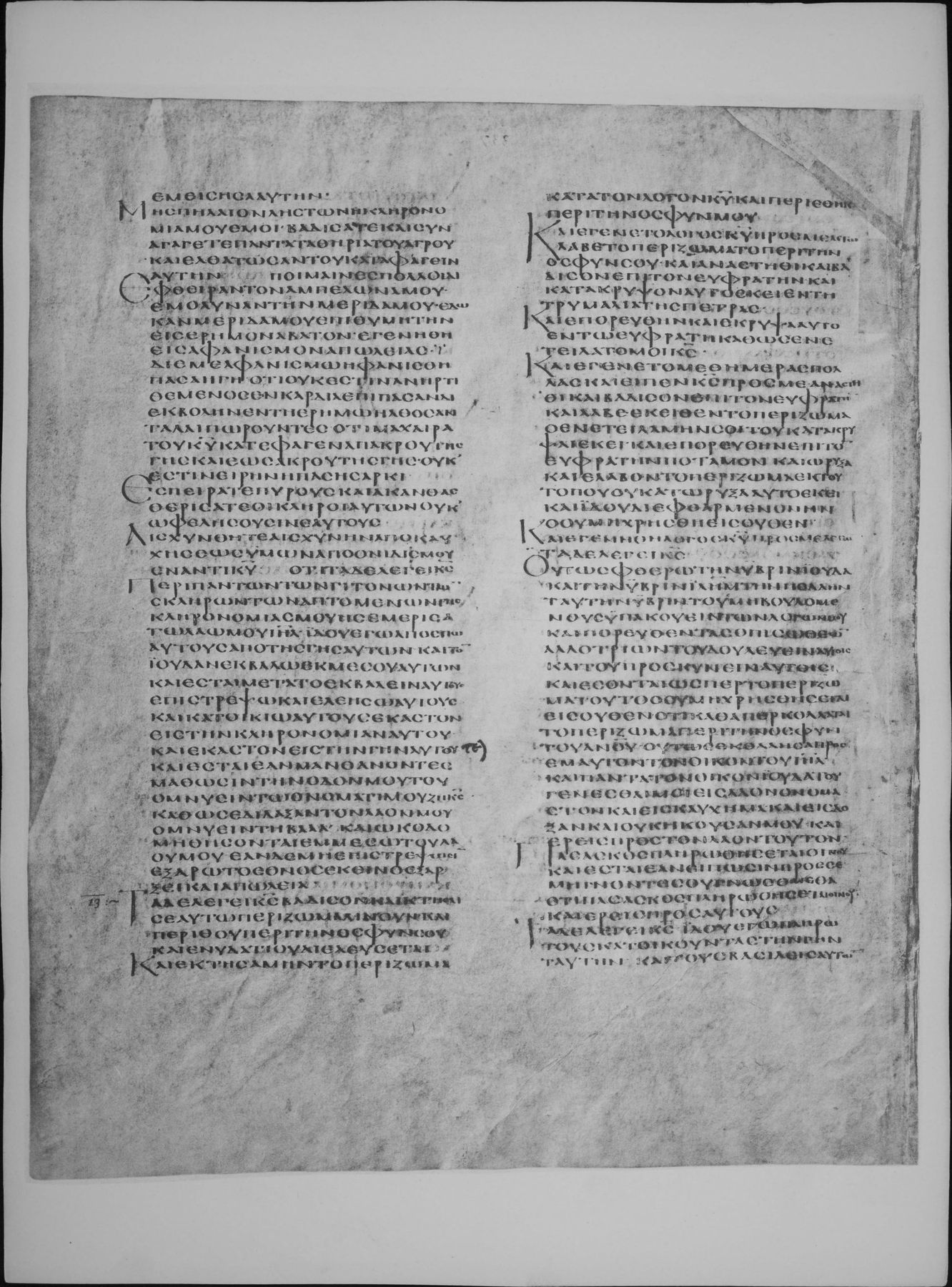
Where on the image
Jeremiah 13:1-8 is on fol. 337v (full-size facsimile of 1879-83, Internet Archive codex-alexandrinus leaf 699). The 1936 reduced facsimile prints beneath this page: Jer. xii. 8-xiii. 13. Checked on the plate: the page begins inside Jeremiah 12:8 (first words read: ΔΙΑ ΤΟΥΤΟ ΕΜΙΣΗΣΑ ΑΥΤΗΝ ΜΗ ΣΠΗΛΑΙΟΝ ΥΑΙΝΗΣ Η ΚΛΗΡΟΝΟΜΙΑ ΜΟΥ ΕΜΟΙ).
1Τὰδε λέγει Κύριος Βάδισον καὶ κτῆσαι σεαυτῷ περίζωμα λινοῦν καὶ περίθου περὶ τὴν ὀσφύν σου, καὶ ἐν ὕδατι οὐ διελεύσεται. 2καὶ ἐκτησάμην τὸ περίζωμα κατὰ τὸν λόγον Κυρίου καὶ περιέθηκα περὶ τὴν ὀσφύν μου. 3καὶ ἐγενήθη λόγος Κυρίου πρὸς μὲ λέγων 4Λάβε τὸ περίζωμα τὸ περὶ τὴν ὀσφύν σου, καὶ ἀνάστηθι καὶ βάδισον ἐπὶ τὸν Εὐφράτην, καὶ κατάκρυψον αὐτὸ ἐκεῖ ἐν τῇ τρυμαλιᾷ τῆς πέτρας. 5καὶ ἐπορεύθην καὶ ἔκρυψα αὐτὸ ἐν τῷ Εὐφράτῃ, καθὼς ἐνετείλατό μοι Κύριος. 6καὶ ἐγένετο μεθ᾽ ἡμέρας πολλὰς καὶ εἶπεν Κύριος πρὸς μέ Ἀνάστηθι βάδισον ἐπὶ τὸν Εὐφράτην, καὶ λάβε ἐκεῖθεν τὸ περίζωμα ὃ ἐνετειλάμην σοι τοῦ κατακρύψαι ἐκεῖ. 7καὶ ἐπορεύθην ἐπὶ τὸν Εὐφράτην ποταμὸν καὶ ὤρυξα, καὶ ἔλαβον τὸ περίζωμα ἐκ τοῦ τόπου οὗ κατώρυξα αὐτὸ ἐκεῖ, καὶ ἰδοὺ διεφθαρμένον ἦν, ὃ οὐ μὴ χρησθῇ εἰς οὐθέν. 8καὶ ἐγενήθη λόγος Κυρίου πρὸς μὲ λέγων Τάδε λέγει Κύριος
1Thus saith the Lord, Go and procure for thyself a linen girdle, and put it about thy loins, and let it not be put in water. 2So I procured the girdle according to the word of the Lord, and put it about my loins. 3And the word of the Lord came to me, saying, 4Take the girdle that is upon thy loins, and arise, and go to the Euphrates, and hide it there in a hole of the rock. 5So I went, and hid it by the Euphrates, as the Lord commanded me. 6And it came to pass after many days, that the Lord said to me, Arise, go to the Euphrates, and take thence the girdle, which I commanded thee to hide there. 7So I went to the river Euphrates, and dug, and took the girdle out of the place where I had buried it: and, behold, it was rotten, utterly good for nothing. 8And the word of the Lord came to me, saying, Thus saith the Lord,
Where on the image
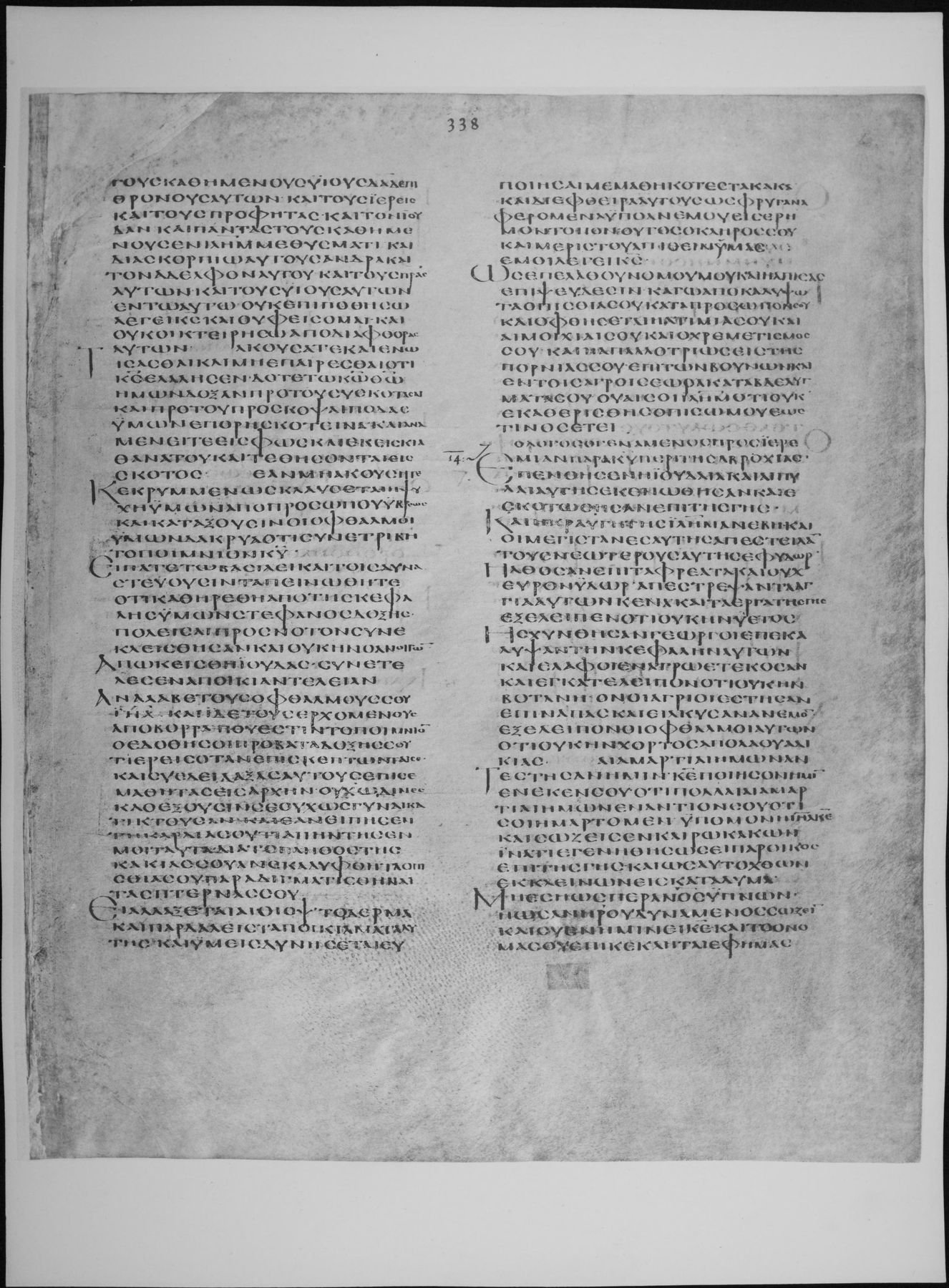
Jeremiah 13:9-13 is on fol. 337v (full-size facsimile of 1879-83, Internet Archive codex-alexandrinus leaf 699). The 1936 reduced facsimile prints beneath this page: Jer. xii. 8-xiii. 13. Checked on the plate: the page begins inside Jeremiah 12:8 (first words read: ΔΙΑ ΤΟΥΤΟ ΕΜΙΣΗΣΑ ΑΥΤΗΝ ΜΗ ΣΠΗΛΑΙΟΝ ΥΑΙΝΗΣ Η ΚΛΗΡΟΝΟΜΙΑ ΜΟΥ ΕΜΟΙ). Jeremiah 13:13-16 is on fol. 338r (full-size facsimile of 1879-83, Internet Archive codex-alexandrinus leaf 700). The 1936 reduced facsimile prints beneath this page: Jer. xiii. 13-xiv. 9. Checked on the plate: the page begins inside Jeremiah 13:13 (first words read: ΤΟΥΣ ΚΑΘΗΜΕΝΟΥΣ ΥΙΟΥΣ ΔΑΥΕΙΔ ΕΠΙ ΘΡΟΝΟΥΣ ΑΥΤΩΝ ΚΑΙ ΤΟΥΣ ΙΕΡΕΙΣ ΚΑΙ ΤΟΥΣ ΠΡΟΦΗΤΑΣ).
9Οὕτω φθερῶ τὴν ὕβριν Ἰούδα καὶ τὴν ὕβριν Ἰερουσαλήμ, 10τὴν πολλὴν ταύτην ὕβριν, τοὺς μὴ βουλομένους ὑπακούειν τῶν λόγων μου, καὶ πορευθέντας ὀπίσω θεῶν ἀλλοτρίων τοῦ δουλεύειν αὐτοῖς καὶ τοῦ προσκυνεῖν αὐτοῖς· καὶ ἔσονται ὥσπερ τὸ περίζωμα τοῦτο, ὃ οὐ χρησθήσεται εἰς οὐθέν. 11ὅτι καθάπερ κολλᾶται τὸ περίζωμα περὶ τὴν ὀσφὺν τοῦ ἀνθρώπου, οὕτως ἐκόλλησα πρὸς ἐμαυτὸν τὸν οἶκον τοῦ Ἰσραὴλ καὶ πᾶν οἶκον Ἰούδα, τοῦ γενέσθαι μοι εἰς λαὸν ὀνομαστὸν καὶ εἰς καύχημα καὶ εἰς δόξαν· καὶ οὐκ εἰσήκουσάν μου. 12καὶ ἐρεῖς πρὸς τὸν λαὸν τοῦτον Πᾶς ἀσκὸς πληρωθήσεται οἴνου· καὶ ἔσται ἐὰν εἴπωσιν πρὸς σέ Μὴ γνόντες οὐ γνωσόμεθα ὅτι πᾶς ἀσκὸς πληρωθήσεται οἴνου; 13καὶ ἐρεῖς πρὸς αὐτούς Τάδε λέγει Κύριος Ἰδοὺ ἐγὼ πληρῶ τοὺς κατοικοῦντας τὴν γῆν ταύτην καὶ τοὺς βασιλεῖς αὐτῶν τοὺς καθημένους υἱοὺς τοῦ Δαυεὶδ ἐπὶ τοῦ θρόνου αὐτῶν καὶ τοὺς ἱερεῖς καὶ τοὺς προφήτας καὶ τὸν Ἰούδαν καὶ πάντας τοὺς κατοικοῦντας ἐν Ἰερουσαλὴμ μεθύσματι, 14καὶ διασκορπιῶ αὐτοὺς ἄνδρα καὶ τὸν ἀδελφὸν αὐτοῦ, καὶ τοὺς πατέρας αὐτῶν καὶ τοὺς υἱοὺς αὐτῶν ἐν τῷ αὐτῷ· οὐκ ἐπιποθήσω, λέγει Κύριος, καὶ οὐ φείσομαι καὶ οὐκ οἰκτειρήσω ἀπὸ διαφθορᾶς αὐτῶν. 15Ἀκούσατε καὶ ἐνωτίσασθε, καὶ μὴ ἐπαίρεσθε, ὅτι Κύριος ἐλάλησεν· 16δότε τῷ κυρίῳ θεῷ ὑμῶν δόξαν πρὸ τοῦ συσκοτάσαι καὶ πρὸ τοῦ προσκόψαι πόδας ὑμῶν ἐπ᾽ ὄρη σκοτινά· καὶ ἀναμενεῖτε εἰς φῶς, καὶ ἐκεῖ σκιὰ θανάτου, καὶ τεθήσονται εἰς σκότος.
9Thus will I mar the pride of Juda, and the pride of Jerusalem; 10even this great pride of the men that will not hearken to my words, and have gone after strange gods, to serve them, and to worship them: and they shall be as this girdle, which can be used for nothing. 11For as a girdle cleaves about the loins of a man, so have I caused to cleave to myself the house of Israel, and the whole house of Juda; that they might be to me a famous people, and a praise, and a glory: but they did not hearken to me. 12And thou shalt say to this people, Every bottle shall be filled with wine: and it shall come to pass, if they shall say to thee, Shall we not certainly know that every bottle shall be filled with wine? that thou shalt say to them, 13Thus saith the Lord, Behold, I will fill the inhabitants of this land, and their kings the sons of David that sit upon their throne, and the priests, and the prophets, and Juda and all the dwellers in Jerusalem, with strong drink. 14And I will scatter them a man and his brother, and their fathers and their sons together: I will not have compassion, saith the Lord, and I will not spare, neither will I pity to save them from destruction. 15Hear ye, and give ear, and be not proud: for the Lord has spoken. 16Give glory to the Lord your God, before he cause darkness, and before your feet stumble on the dark mountains, and ye shall wait for light, and behold the shadow of death, and they shall be brought into darkness.
Where on the image
Jeremiah 13:17-24 is on fol. 338r (full-size facsimile of 1879-83, Internet Archive codex-alexandrinus leaf 700). The 1936 reduced facsimile prints beneath this page: Jer. xiii. 13-xiv. 9. Checked on the plate: the page begins inside Jeremiah 13:13 (first words read: ΤΟΥΣ ΚΑΘΗΜΕΝΟΥΣ ΥΙΟΥΣ ΔΑΥΕΙΔ ΕΠΙ ΘΡΟΝΟΥΣ ΑΥΤΩΝ ΚΑΙ ΤΟΥΣ ΙΕΡΕΙΣ ΚΑΙ ΤΟΥΣ ΠΡΟΦΗΤΑΣ).
17ἐὰν δὲ μὴ ἀκούσητε, κεκρυμμένως κλαύσεται ἡ ψυχὴ ὑμῶν ἀπὸ προσώπου ὕβρεως, καὶ κατάξουσιν οἱ ὀφθαλμοὶ ὑμῶν δάκρυα, ὅτι συνετρίβη τὸ ποίμνιον Κυρίου. 18εἴπατε τῷ βασιλεῖ καὶ τοῖς δυναστεύουσιν Ταπεινώθητε καὶ καθίσατε, ὅτι καθῃρέθη ἀπὸ κεφαλῆς ὑμῶν στέφανος δόξης ὑμῶν. 19πόλεις αἱ πρὸς νότον συνεκλείσθησαν, καὶ οὐκ ἦν ὁ ἀνοίγων· ἀποικίσθη Ἰούδας, συνετέλεσαν ἀποικίαν τελείαν. 20Ἀνάλαβε ὀφθαλμούς σου, Ἰερουσαλήμ, καὶ ἴδε τοὺς ἐρχομένους ἀπὸ βορρᾶ· ποῦ ἐστιν τὸ ποίμνιον ὃ ἐδόθη σοι, πρόβατα δόξης σου; 21τί ἐρεῖς ὅταν ἐπισκέπτωνταί σε; καὶ σὺ ἐδίδαξας αὐτοὺς ἐπὶ σὲ μαθήματα εἰς ἀρχήν· οὐκ ὠδῖνες καθέξουσίν σε καθὼς γυναῖκα τίκτουσαν; 22καὶ ἐὰν εἴπῃς ἐν τῇ καρδίᾳ σου Διὰ τί ἀπήντησέν μοι ταῦτα; διὰ τὸ πλῆθος τῆς ἀδικίας σου ἀνεκαλύφθη τὰ ὀπίσθιά σου, παραδειγματισθῆναι τὰς πτέρνας σου. 23εἰ ἀλλάξεται Αἰθίοψ τὸ δέρμα αὐτοῦ καὶ πάρδαλις τὰ ποικίλματα αὐτῆς; καὶ ὑμεῖς δυνήσεσθε εὖ ποιῆσαι μεμαθηκότες τὰ κακά. 24καὶ διέσπειρα αὐτοὺς ὡς φρύγανα φερόμενα ἀπὸ ἀνέμου εἰς ἔρημον.
17But if ye will not hearken, your soul shall weep in secret because of pride, and your eyes shall pour down tears, because the Lord's flock is sorely bruised. 18Say ye to the king and the princes, Humble yourselves, and sit down; for your crown of glory is removed from your head. 19The cities toward the south were shut, and there was none to open them: Juda is removed into captivity, they have suffered a complete removal. 20Lift up thine eyes, O Jerusalem, and behold them that come from the north; where is the flock that was given thee, the sheep of thy glory? 21What wilt thou say when they shall visit thee, for thou didst teach them lessons for rule against thyself; shall not pangs seize thee as a woman in travail? 22And if thou shouldest say in thine heart, Wherefore have these things happened to me? Because of the abundance of thine iniquity have thy skirts been discovered, that thine heels might be exposed. 23If the Ethiopian shall change his skin, or the leopardess her spots, then shall ye be able to do good, having learnt evil. 24So I scattered them as sticks carried by the wind into the wilderness.
Where on the image
Jeremiah 13:25-27 is on fol. 338r (full-size facsimile of 1879-83, Internet Archive codex-alexandrinus leaf 700). The 1936 reduced facsimile prints beneath this page: Jer. xiii. 13-xiv. 9. Checked on the plate: the page begins inside Jeremiah 13:13 (first words read: ΤΟΥΣ ΚΑΘΗΜΕΝΟΥΣ ΥΙΟΥΣ ΔΑΥΕΙΔ ΕΠΙ ΘΡΟΝΟΥΣ ΑΥΤΩΝ ΚΑΙ ΤΟΥΣ ΙΕΡΕΙΣ ΚΑΙ ΤΟΥΣ ΠΡΟΦΗΤΑΣ).
25οὗτος ὁ κλῆρός σου καὶ μερὶς τοῦ ἀπειθεῖν ὑμᾶς ἐμοί, λέγει Κύριος· ὡς ἐπελάθου μου καὶ ἤλπισας ἐπὶ ψεύδεσιν, 26κἀγὼ ἀποκαλύψω τὰ ὀπίσω σου ἐπὶ τὸ πρόσωπόν σου, καὶ ὀφθήσεται ἡ ἀτιμία σου 27καὶ ἡ μοιχεία σου καὶ χρεμετισμός σου καὶ ἡ ἀπαλλοτρίωσις τῆς πορνείας σου· ἐπὶ τῶν βουνῶν καὶ ἐν τοῖς ἀγροῖς ἑώρακα τὰ βδελύγματά σου. οὐαί σοι, Ἰερουσαλήμ, ὅτι οὐκ ἐκαθαρίσθης ὀπίσω μου, ἕως τίνος ἔτι;
25Thus is thy lot, and the reward of your disobedience to me, saith the Lord; as thou didst forget me, and trust in lies, 26I also will expose thy skirts upon thy face, and thy shame shall be seen; 27thine adultery also, and thy neighing, and the looseness of thy fornication: on the hills and in the fields I have seen thine abominations. Woe to thee, O Jerusalem, for thou hast not been purified so as to follow me; how long yet shall it be?
Cite
Sources
- Source: Codex Alexandrinus (British Library Royal MS 1 D. VI) via the British Museum photographic facsimiles of 1879-83 and 1936 (Internet Archive) + Swete's Septuagint + Brenton's English (holding institution)
- Critical edition: H. B. Swete, The Old Testament in Greek according to the Septuagint (1909)
← previous · → next · v cycle view · l back to library