Jeremiah, Chapter 14 (Codex Alexandrinus)
Introduction
Jeremiah 14 in the Greek Old Testament (the Septuagint) as written in Codex Alexandrinus, a Greek Bible copied in the fifth century, probably in Egypt, and now in the British Library (Royal MS 1 D. VI, the second of its four volumes). It is one of the three great early codices of the whole Greek Bible, with Codex Vaticanus and Codex Sinaiticus.
This entry meets the strict three-criteria standard of the Theosis Library:
- Manuscript scan: the pages of Codex Alexandrinus carrying this chapter (fol. 338r, fol. 338v), from the full-size photographic (autotype) facsimile published by the British Museum in 1879-1883, as digitised on the Internet Archive. The verse range of every page comes from the reduced photographic facsimile of 1936, which prints it beneath each plate, and the opening words of every page were read on the plate to confirm the page and the verse it begins with. Each section links to the page or pages that hold its verses. Folio numbers are those written at the head of each leaf and visible on the plates.
- Original text: Swete's edition, which here prints the text of Codex Vaticanus (Vat. gr. 1209), the base of his edition, and gives the readings of Alexandrinus only in his apparatus. The Greek column is therefore Vaticanus' text; where Alexandrinus differs, the plate shows what Alexandrinus reads.
- English translation: Sir Lancelot C. L. Brenton, The Septuagint Version of the Old Testament (1844; 1851 edition), a translation of the Greek, public domain, from the eBible.org text.
How was this verified? (Provenance)
Where on the image
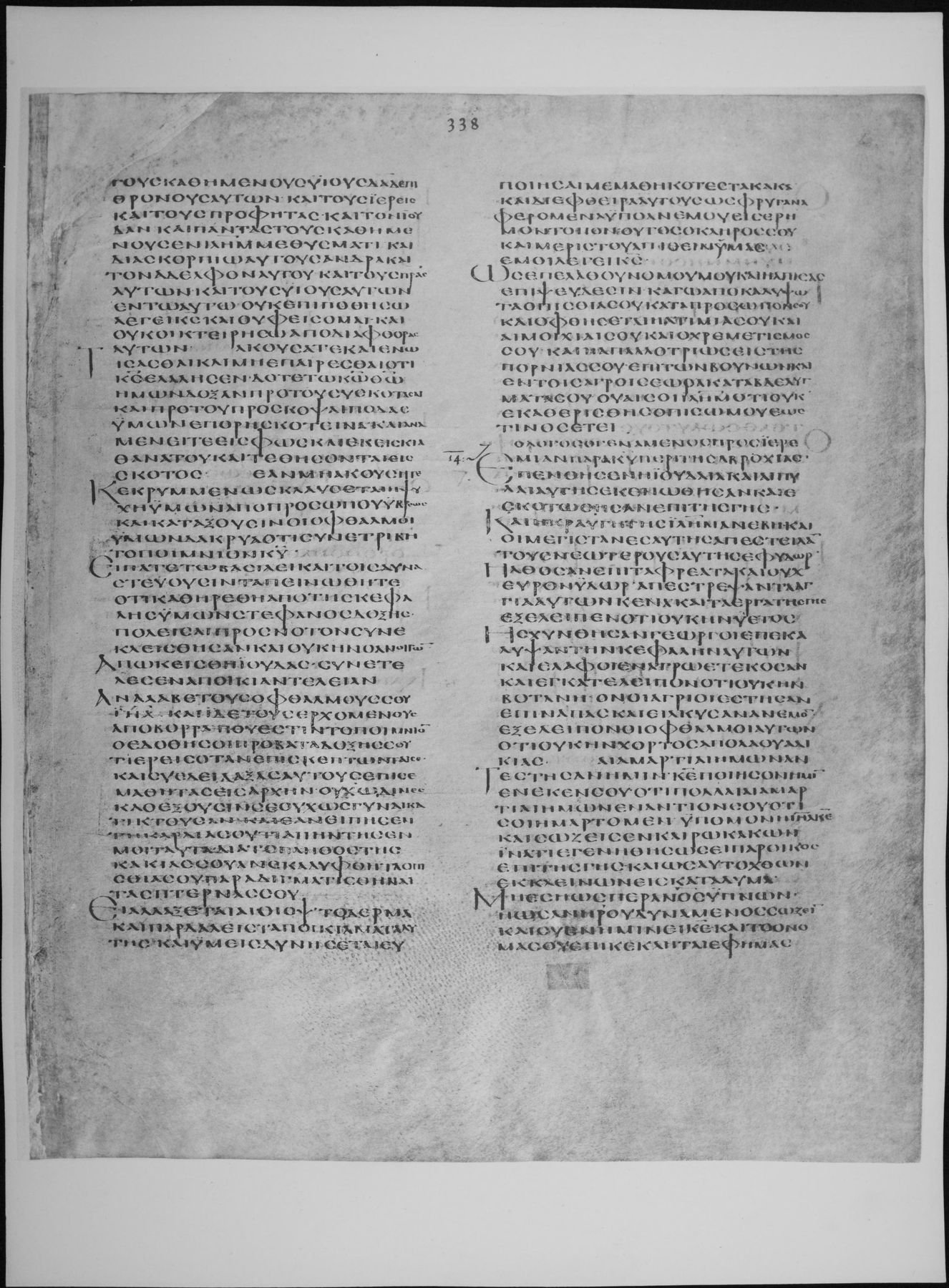
Jeremiah 14:1-8 is on fol. 338r (full-size facsimile of 1879-83, Internet Archive codex-alexandrinus leaf 700). The 1936 reduced facsimile prints beneath this page: Jer. xiii. 13-xiv. 9. Checked on the plate: the page begins inside Jeremiah 13:13 (first words read: ΤΟΥΣ ΚΑΘΗΜΕΝΟΥΣ ΥΙΟΥΣ ΔΑΥΕΙΔ ΕΠΙ ΘΡΟΝΟΥΣ ΑΥΤΩΝ ΚΑΙ ΤΟΥΣ ΙΕΡΕΙΣ ΚΑΙ ΤΟΥΣ ΠΡΟΦΗΤΑΣ).
1Καὶ ἐγένετο λόγος Κυρίου πρὸς Ἰερεμίαν περὶ τῆς ἀβροχίας. 2Ἐπένθησεν ἡ Ἰουδαία, καὶ αἱ πύλαι αὐτῆς ἐκενώθησαν, καὶ ἐσκοτώθησαν ἐπὶ τῆς γῆς, καὶ ἡ κραυγὴ τῆς Ἰερουσαλὴμ ἀνέβη, 3καὶ οἱ μεγιστᾶνες αὐτῆς ἀπέστειλαν τοὺς νεωτέρους αὐτῶν ἐφ᾽ ὕδωρ· ἤλθοσαν ἐπὶ τὰ φρέατα, καὶ οὐχ εὕροσαν ὕδωρ, καὶ ἀπέστρεψαν τὰ ἄγγια αὐτῶν κενά. 4καὶ τὰ ἔργα τῆς γῆς ἐξέλιπεν, ὅτι οὐκ ἦν ὑετός· ᾐσχύνθησαν οἱ γεωργοί, ἐπεκάλυψαν τὰς κεφαλὰς αὐτῶν. 5καὶ ἔλαφοι ἐν ἀγρῷ ἔτεκον καὶ ἐνκατέλιπον, ὅτι οὐκ ἦν βοτάνη. 6ὄνοι ἄγριοι ἔστησαν ἐπὶ νάπας· εἵλκυσαν ἄνεμον, ἐξέλιπον οἱ ὀφθαλμοὶ αὐτῶν, ὅτι οὐκ ἦν χόρτος. 7Αἱ ἁμαρτίαι ἡμῶν ἀντέστησαν ἡμῖν· Κύριε, ποίησον ἡμῖν ἕνεκεν σοῦ, ὅτι πολλαὶ αἱ ἁμαρτίαι ἡμῶν ἐναντίον σοῦ, ὅτι σοὶ ἡμάρτομεν. 8ὑπομονὴ Ἰσραήλ, Κύριε, καὶ σώζεις ἐν καιρῷ κακῶν· ἳνα τί ἐγενήθης ὡσεὶ πάροικος ἐπὶ τῆς γῆς καὶ ὡς αὐτόχθων ἐκκλίνων εἰς κατάλυμα;
1And the Word of the Lord came to Jeremias concerning the Drought. 2Judea has mourned, and her gates are emptied, and are darkened upon the earth; and the cry of Jerusalem is gone up. 3And her nobles have sent their little ones to the water: they came to the wells, and found no water: and brought back their vessels empty. 4And the labours of the land failed, because there was no rain: the husbandmen were ashamed, they covered their heads. 5And hinds calved in the field, and forsook it, because there was no grass. 6The wild asses stood by the forests, and snuffed up the wind; their eyes failed, because there was no grass. 7Our sins have risen up against us: O Lord, do thou for us for thine own sake; for our sins are many before thee; for we have sinned against thee. 8O Lord, thou art the hope of Israel, and deliverest us in time of troubles; why art thou become as a sojourner upon the land, or as one born in the land, yet turning aside for a resting-place?
Where on the image
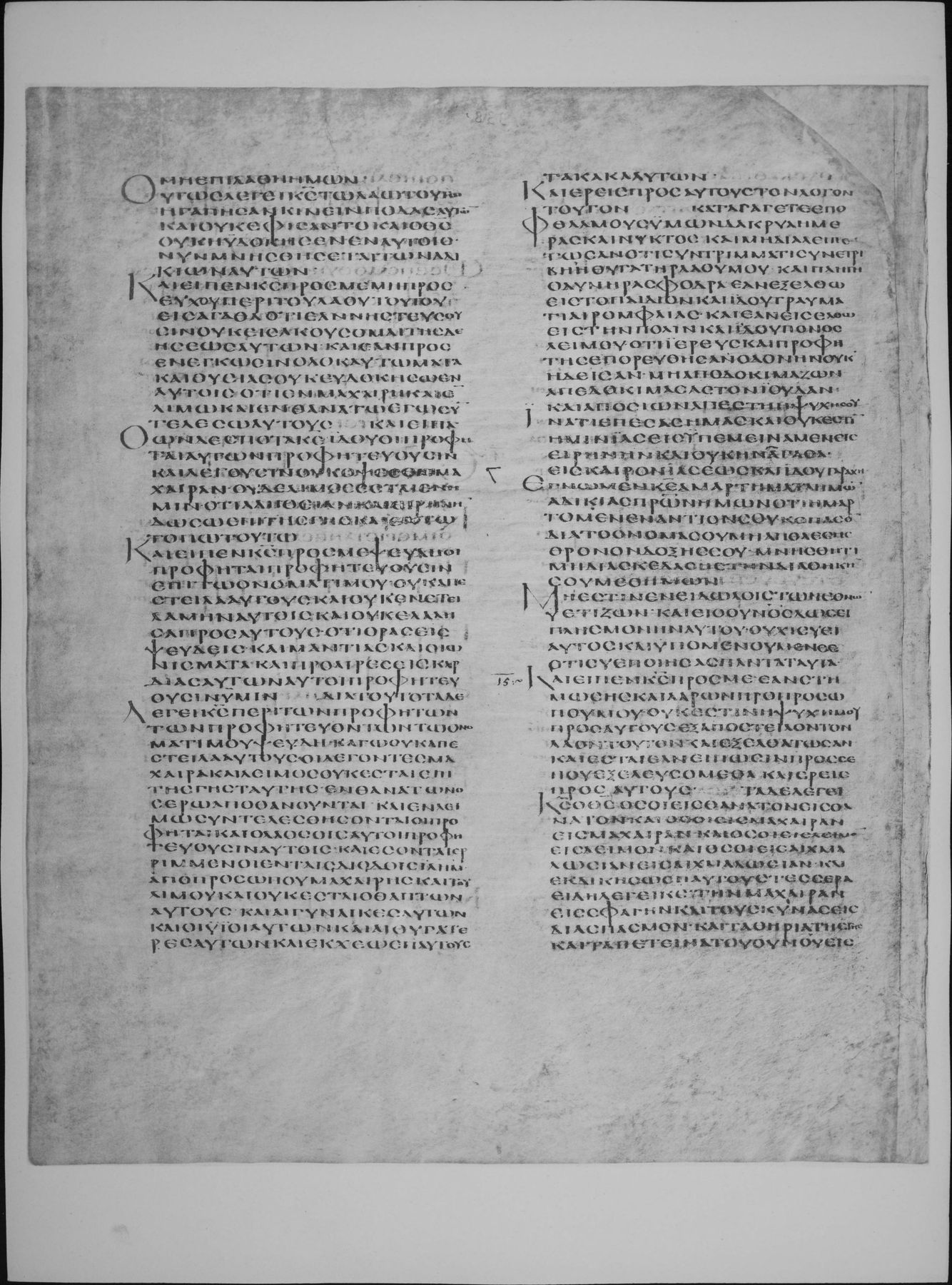
Jeremiah 14:9 is on fol. 338r (full-size facsimile of 1879-83, Internet Archive codex-alexandrinus leaf 700). The 1936 reduced facsimile prints beneath this page: Jer. xiii. 13-xiv. 9. Checked on the plate: the page begins inside Jeremiah 13:13 (first words read: ΤΟΥΣ ΚΑΘΗΜΕΝΟΥΣ ΥΙΟΥΣ ΔΑΥΕΙΔ ΕΠΙ ΘΡΟΝΟΥΣ ΑΥΤΩΝ ΚΑΙ ΤΟΥΣ ΙΕΡΕΙΣ ΚΑΙ ΤΟΥΣ ΠΡΟΦΗΤΑΣ). Jeremiah 14:9-16 is on fol. 338v (full-size facsimile of 1879-83, Internet Archive codex-alexandrinus leaf 701). The 1936 reduced facsimile prints beneath this page: Jer. xiv. 9-xv. 3. Checked on the plate: the page begins inside Jeremiah 14:9 (first words read: ΜΗ ΕΠΙΛΑΘΗ ΗΜΩΝ ΟΥΤΩΣ ΛΕΓΕΙ ΚΣ ΤΩ ΛΑΩ ΤΟΥΤΩ ΗΓΑΠΗΣΑΝ ΚΙΝΕΙΝ ΠΟΔΑΣ ΑΥΤΩΝ).
9μὴ ἔσῃ ὥσπερ ἄνθρωπος ὑπνῶν ἢ ὡς ἀνὴρ οὐ δυνάμενος σώζειν; καὶ σὺ ἐν ἡμῖν εἶ, Κύριε, καὶ τὸ ὄνομά σου ἐπικέκληται ἐφ᾽ ἡμᾶς· μὴ ἐπιλάθῃ ἡμῶν. 10Οὕτως λέγει Κύριος τῷ λαῷ τούτῳ Ἠγάπησαν κινεῖν πόδας αὐτῶν καὶ οὐκ ἐφείσαντο, καὶ ὁ θεὸς οὐκ εὐόδωσεν ἐν αὐτοῖς· νῦν μνησθήσεται τῆς ἀδικίας αὐτῶν. 11καὶ εἶπεν Κύριος πρὸς μέ Μὴ προσεύχου περὶ τοῦ λαοῦ τούτου εἰς ἀγαθά, 12ὅτι ἐὰν νηστεύσωσιν, οὐκ εἰσακούσομαι τῆς δεήσεως αὐτῶν, καὶ ἐὰν προσενέγκωσιν ὁλοκαυτώματα καὶ θυσίας, οὐκ εὐδοκήσω ἐν αὐτοῖς, ὅτι ἐν μαχαίρᾳ καὶ ἐν λιμῷ καὶ ἐν θανάτῳ ἐγὼ συντελέσω αὐτούς. 13καὶ εἶπα Ὁ ὤν, Κύριε, ἰδοὺ οἱ προφῆται αὐτῶν προφητεύουσιν καὶ λέγουσιν Οὐκ ὄψεσθε μάχαιραν, οὐδὲ λιμὸς ἔσται ἐν ὑμῖν, ὅτι ἀλήθειαν καὶ εἰρήνην δώσω ἐπὶ τῆς γῆς καὶ ἐν τῷ τόπω τούτῳ. 14καὶ εἶπεν Κύριος πρὸς μέ ψευδῆ οἱ προφῆται προφητεύουσιν ἐπὶ τῷ ὀνόματί μου, οὐκ ἀπέστειλα αὐτοὺς καὶ οὐκ ἐνετειλάμην αὐτοῖς καὶ οὐκ ἐλάλησα πρὸς αὐτούς· ὅτι ὁράσεις ψευδεῖς καὶ μαντείας καὶ οἰωνίσματα καὶ προαιρέσεις καρδίας αὐτῶν αὐτοὶ προφητεύουσιν ὑμῖν. 15διὰ τοῦτο τάδε λέγει Κύριος περὶ τῶν προφητῶν, τῶν προφητῶν τῶν προφητευόντων ἐπὶ τῷ ὀνόματί μου ψευδῆ, καὶ ἐγὼ οὐκ ἀπέστειλα αὐτούς, οἳ λέγουσιν Μάχαιρα καὶ λιμὸς οὐκ ἔσται ἐπὶ τῆς γῆς ταύτης Ἐν θανάτῳ νοσερῷ ἀποθανοῦνται, καὶ ἐν λιμῷ συντελεσθήσονται οἱ προφῆται 16καὶ ὁ λαὸς οἷς αὐτοὶ προφητεύουσιν αὐτοῖς, καὶ ἔσονται ἐριμμένοι ἐν ταῖς ὁδοῖς Ἰερουσαλὴμ ἀπὸ προσώπου μαχαίρας καὶ τοῦ λιμοῦ, καὶ οὐκ ἔσται ὁ θάπτων αὐτούς, καὶ αἱ γυναῖκες αὐτῶν καὶ οἱ υἱοὶ αὐτῶν καὶ αἱ θυγατέρες αὐτῶν, καὶ ἐκχεῶ ἐπ᾽ αὐτοὺς τὰ κακὰ αὐτῶν.
9Wilt thou be as a man asleep, or as a strong man that cannot save? yet thou art among us, O Lord, and thy name is called upon us; forget us not. 10Thus saith the Lord to this people, They have loved to wander, and they have not spared, therefore God has not prospered them; now will he remember their iniquity. 11And the Lord said to me, Pray not for this people for their good: 12for though they fast, I will not hear their supplication; and though they offer whole-burnt-offerings and sacrifices, I will take no pleasure in them: for I will consume them with sword, and with famine, and with pestilence. 13And I said, O ever living Lord! behold, their prophets prophesy, and say, Ye shall not see a sword, nor shall famine be among you; for I will give truth and peace on the land, and in this place. 14Then the Lord said to me, The prophets prophesy lies in my name: I sent them not, and I commanded them not, and I spoke not to them: for they prophesy to you false visions, and divinations, and auguries, and devices of their own heart. 15Therefore thus saith the Lord concerning the prophets that prophesy lies in my name, and I sent them not, who say, Sword and famine shall not be upon this land; they shall die by a grievous death, and the prophets shall be consumed by famine. 16And the people to whom they prophesy, they also shall be cast out in the streets of Jerusalem, because of the sword and famine; and there shall be none to bury them: their wives also, and their sons, and their daughters shall die thus; and I will pour out their wickedness upon them.
Where on the image
Jeremiah 14:17-22 is on fol. 338v (full-size facsimile of 1879-83, Internet Archive codex-alexandrinus leaf 701). The 1936 reduced facsimile prints beneath this page: Jer. xiv. 9-xv. 3. Checked on the plate: the page begins inside Jeremiah 14:9 (first words read: ΜΗ ΕΠΙΛΑΘΗ ΗΜΩΝ ΟΥΤΩΣ ΛΕΓΕΙ ΚΣ ΤΩ ΛΑΩ ΤΟΥΤΩ ΗΓΑΠΗΣΑΝ ΚΙΝΕΙΝ ΠΟΔΑΣ ΑΥΤΩΝ).
17καὶ ἐρεῖς πρὸς αὐτοὺς τὸν λόγον τοῦτον Καταγάγετε ἐπ᾽ ὀφθαλμοὺς ὑμῶν δάκρυα ἡμέρας καὶ νυκτὸς καὶ μὴ διαλιπέτωσαν, ὅτι συντρίμματι συνετρίβη θυγάτηρ λαοῦ μου, καὶ πληγῇ ὀδυνηρᾷ σφόδρα. 18ἐὰν ἐξέλθω εἰς τὸ πεδίον, καὶ ἰδοὺ τραυματίαι μαχαίρας, καὶ ἐὰν εἰσέλθω εἰς τὴν πόλιν, καὶ ἰδοὺ πόνος λιμοῦ, ὅτι ἱερεὺς καὶ προφήτης ἐπορεύθησαν εἰς γῆν ἣν οὐκ ᾔδεισαν. 19Μὴ ἀποδοκιμάζων ἀπεδοκίμασας τὸν Ἰούδαν, καὶ ἀπὸ Σειὼν ἀπέστη ἡ ψυχή σου; ἵνα τί ἔπαισας ἡμᾶς καὶ οὐκ ἔστιν ἡμῖν ἴασις; ὑπεμείναμεν εἰς εἰρήνην, καὶ οὐκ ἦν ἀγαθά· εἰς καιρὸν ἰάσεως, καὶ ἰδοὺ ταραχή. 20ἔγνωμεν, Κύριε, ἁμαρτήματα ἡμῶν, ἀδικίας πατέρων ἡμῶν, ὅτι ἡμάρτομεν ἐναντίον σου. 21κόπασον διὰ τὸ ὄνομά σου, μὴ ἀπολέσῃς θρόνον δόξης σου· μνήσθητι, μὴ διασκεδάσῃς τὴν διαθήκην σου τὴν μεθ᾽ ἡμῶν· 22μὴ ἔστιν ἐν εἰδώλοις τῶν ἐθνῶν ὑετίζων; καὶ εἰ ὁ οὐρανὸς δώσει πλησμονὴν αὐτοῦ; οὐχὶ σὺ εἶ αὐτός; καὶ ὑπομενοῦμέν σε, Κύριε, ὅτι σὺ ἐποίησας πάντα ταῦτα.
17And thou shalt speak this word to them; Let your eyes shed tears day and night, and let them not cease: for the daughter of my people has been sorely bruised, and her plague is very grievous. 18If I go forth into the plain, then behold the slain by the sword! and if I enter into the city, then behold the distress of famine! for priest and prophet have gone to a land which they knew not. 19Hast thou utterly rejected Juda? and has thy soul departed from Sion? wherefore hast thou smitten us, and there is no healing for us? we waited for peace, but there was no prosperity; for a time of healing, and behold trouble! 20We know, O Lord, our sins, and the iniquities of our fathers: for we have sinned before thee. 21Refrain for thy name's sake, destroy not the throne of thy glory: remember, break not thy covenant with us. 22Is there any one among the idols of the Gentiles that can give rain? and will the sky yield his fulness at their bidding? Art not thou he? we will even wait on thee, O Lord: for thou hast made all these things.
Cite
Sources
- Source: Codex Alexandrinus (British Library Royal MS 1 D. VI) via the British Museum photographic facsimiles of 1879-83 and 1936 (Internet Archive) + Swete's Septuagint + Brenton's English (holding institution)
- Critical edition: H. B. Swete, The Old Testament in Greek according to the Septuagint (1909)
← previous · → next · v cycle view · l back to library