Jeremiah, Chapter 29 (Codex Alexandrinus)
Introduction
Jeremiah 29 in the Greek Old Testament (the Septuagint) as written in Codex Alexandrinus, a Greek Bible copied in the fifth century, probably in Egypt, and now in the British Library (Royal MS 1 D. VI, the second of its four volumes). It is one of the three great early codices of the whole Greek Bible, with Codex Vaticanus and Codex Sinaiticus.
Numbering: Swete's Greek and Brenton's English number or divide some verses of this chapter differently (Swete 29:8-23 = Brenton 30:1-16). Each column keeps its own verse numbers, and sections are cut only where the two texts agree, so each section holds the same passage in both languages.
This entry meets the strict three-criteria standard of the Theosis Library:
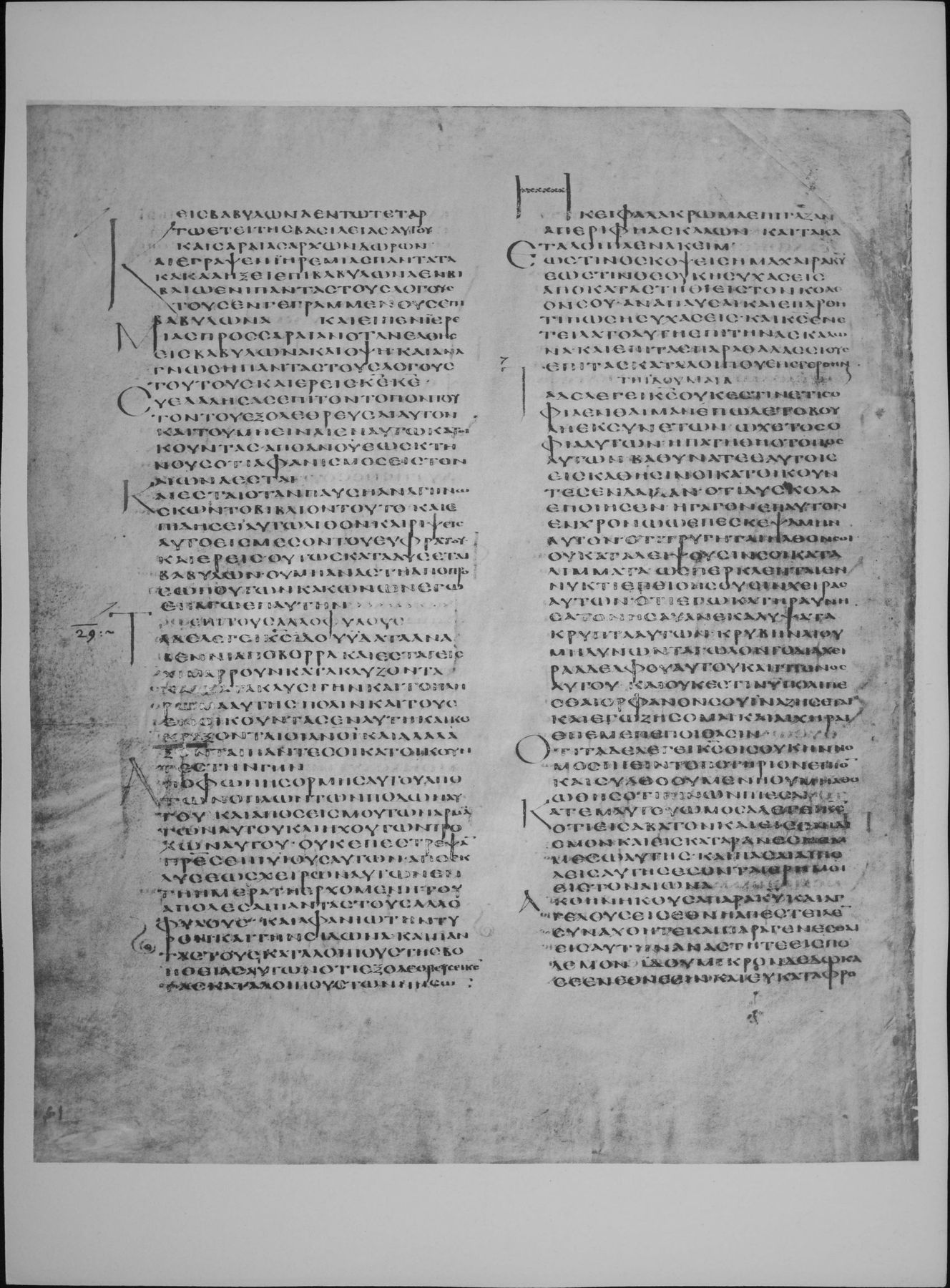
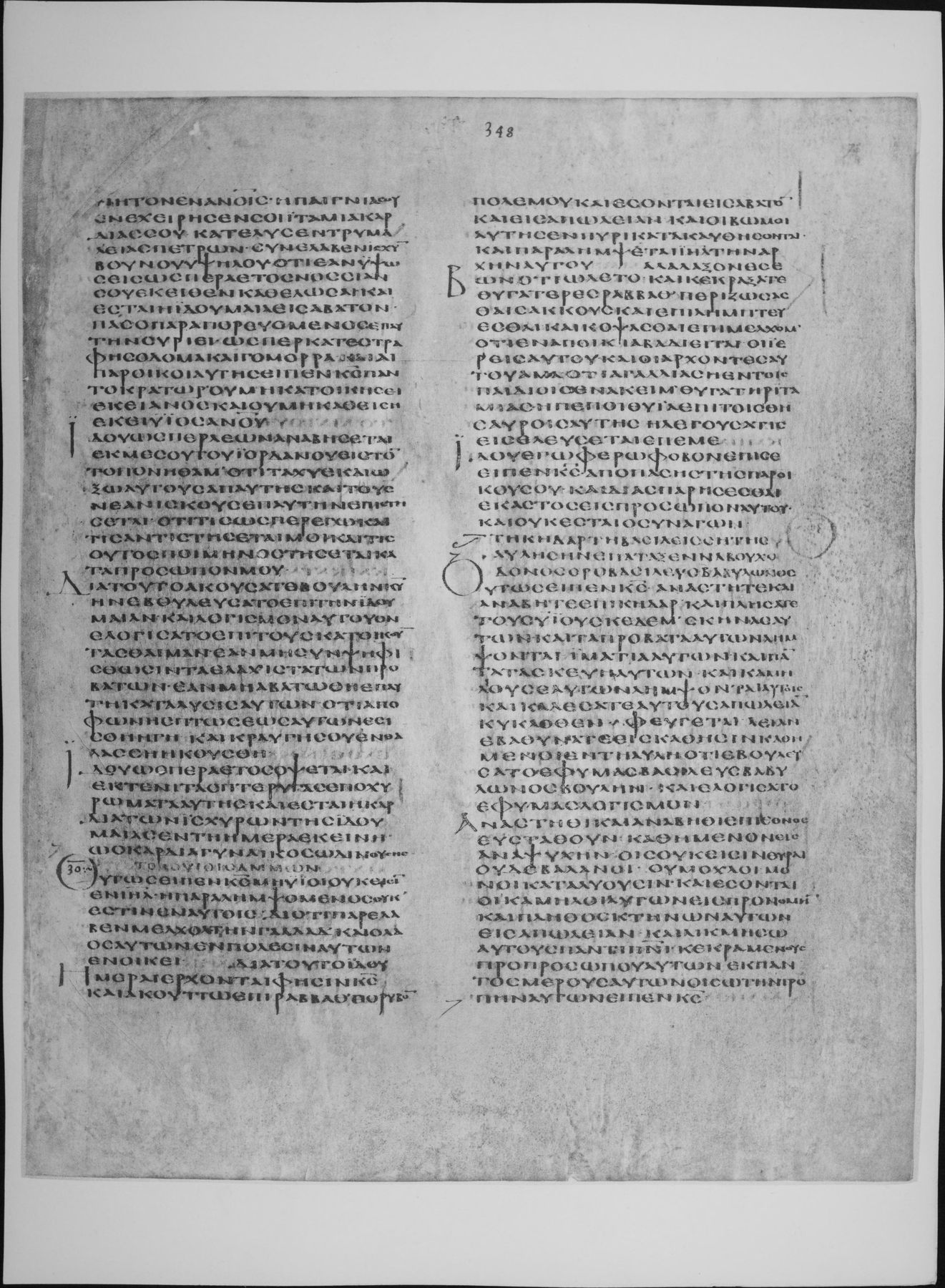
- Manuscript scan: the pages of Codex Alexandrinus carrying this chapter (fol. 347v, fol. 348r), from the full-size photographic (autotype) facsimile published by the British Museum in 1879-1883, as digitised on the Internet Archive. The verse range of every page comes from the reduced photographic facsimile of 1936, which prints it beneath each plate, and the opening words of every page were read on the plate to confirm the page and the verse it begins with. Each section links to the page or pages that hold its verses. Folio numbers are those written at the head of each leaf and visible on the plates.
- Original text: Swete's edition, which here prints the text of Codex Vaticanus (Vat. gr. 1209), the base of his edition, and gives the readings of Alexandrinus only in his apparatus. The Greek column is therefore Vaticanus' text; where Alexandrinus differs, the plate shows what Alexandrinus reads.
- English translation: Sir Lancelot C. L. Brenton, The Septuagint Version of the Old Testament (1844; 1851 edition), a translation of the Greek, public domain, from the eBible.org text.
How was this verified? (Provenance)
Where on the image
Jeremiah 29:1-8 is on fol. 347v (full-size facsimile of 1879-83, Internet Archive codex-alexandrinus leaf 719). The 1936 reduced facsimile prints beneath this page: Jer. xxviii. 59-xxix. 16. Checked on the plate: the page begins inside Jeremiah 28:59 (first words read: ΕΙΣ ΒΑΒΥΛΩΝΑ ΕΝ ΤΩ ΤΕΤΑΡΤΩ ΕΤΕΙ ΤΗΣ ΒΑΣΙΛΕΙΑΣ ΑΥΤΟΥ ΚΑΙ ΣΑΡΑΙΑΣ ΑΡΧΩΝ ΔΩΡΩΝ).
1Ἐπὶ τοὺς ἀλλοφύλους. Τάδε λέγει Κύριος 2Ἰδοὺ ὕδατα ἀναβαίνει ἀπὸ βορρᾶ, καὶ ἔσται εἰς χειμάρρουν κατακλύζοντα, καὶ κατακλύσει γῆν καὶ τὸ πλήρωμα αὐτῆς, πόλιν καὶ τοὺς κατοικοῦντας ἐν αὐτῇ· καὶ κεκράξονται οἱ ἄνθρωποι, καὶ ἀλαλάξουσιν ἅπαντες οἱ κατοικοῦντες τὴν γῆν 3ἀπὸ φωνῆς ὁρμῆς αὐτοῦ, ἀπὸ τῶν ὁπλῶν τῶν ποδῶν αὐτοῦ καὶ ἀπὸ σεισμοῦ τῶν ἁρμάτων αὐτοῦ, ἤχου τροχῶν αὐτοῦ. οὐκ ἐπέστρεψαν πατέρες ἐφ᾽ υἱοὺς αὐτῶν ἀπὸ ἐκλύσεως χειρῶν αὐτῶν, 4ἐν τῇ ἡμέρᾳ τῇ ἐπερχομένῃ τοῦ ἀπολέσαι πάντας τοὺς ἀλλοφύλους. καὶ ἀφανιῶ τὴν Τύρον καὶ τὴν Σειδῶνα καὶ πάντας τοὺς καταλοίπους τῆς βοηθείας αὐτῶν, ὅτι ἐξολεθρεύσει Κύριος τοὺς καταλοίπους τῶν νήσων. 5ἥκει φαλάκρωμα ἐπὶ Γάζαν, ἀπερίφη Ἀσκάλων καὶ οἱ κατάλοιποι Ἐνακείμ. 6ἕως τίνος κόψεις, ἡ μάχαιρα τοῦ κυρίου; ἕως τίνος οὐχ ἡσυχάσεις; ἀποκατάστηθι εἰς τὸν κολεόν σου, ἀνάπαυσαι καὶ ἐπάρθητι. 7πῶς ἡσυχάσει; καὶ Κύριος ἐνετείλατο αὐτῇ ἐπὶ τὴν Ἀσκάλωνα καὶ ἐπὶ τὰς παραθαλασσίους, ἐπὶ τὰς καταλοίπους, ἐπεγερθῆναι. 8Τῇ Ἰδουμαίᾳ. Τάδε λέγει Κύριος Οὐκ ἔστιν ἔτι σοφία ἐν Θαιμάν, ἀπώλετο βουλὴ ἐκ συνετῶν, ὤχετο σοφία αὐτῶν,
1Thus saith the Lord against the Philistines; 2Behold, waters come up from the north, and shall become a sweeping torrent, and it shall sweep away the land, and its fulness; the city, and them that dwell in it: and men shall cry and all that dwell in the land shall howl, 3at the sound of his rushing, at the sound of his hoofs, and at the rattling of his chariots, at the noise of his wheels: the fathers turned not to their children because of the weakness of their hands, 4in the day that is coming to destroy all the Philistines: and I will utterly destroy Tyre and Sidon, and all the rest of their allies: for the Lord will destroy the remaining inhabitants of the islands. 5Baldness is come upon Gaza; Ascalon is cast away, and the remnant of the Enakim. 6How long wilt thou smite, O sword of the Lord? how long will it be ere thou art quiet? return into thy sheath, rest, and be removed. 7How shall it be quiet, whereas the Lord has given it a commission against Ascalon, and against the regions on the sea-coast, to awake against the remaining countries! 30:1Concerning Idumea, thus saith the Lord; There is no longer wisdom in Thæman, counsel has perished from the wise ones, their wisdom is gone,
Where on the image
Jeremiah 29:9-16 is on fol. 347v (full-size facsimile of 1879-83, Internet Archive codex-alexandrinus leaf 719). The 1936 reduced facsimile prints beneath this page: Jer. xxviii. 59-xxix. 16. Checked on the plate: the page begins inside Jeremiah 28:59 (first words read: ΕΙΣ ΒΑΒΥΛΩΝΑ ΕΝ ΤΩ ΤΕΤΑΡΤΩ ΕΤΕΙ ΤΗΣ ΒΑΣΙΛΕΙΑΣ ΑΥΤΟΥ ΚΑΙ ΣΑΡΑΙΑΣ ΑΡΧΩΝ ΔΩΡΩΝ). Jeremiah 29:16 is on fol. 348r (full-size facsimile of 1879-83, Internet Archive codex-alexandrinus leaf 720). The 1936 reduced facsimile prints beneath this page: Jer. xxix. 16-xxx. 10. Checked on the plate: the page begins inside Jeremiah 29:16 (first words read: ΤΟΝ ΕΝ ΑΝΘΡΩΠΟΙΣ Η ΠΑΙΓΝΙΑ ΣΟΥ ΕΝΕΧΕΙΡΗΣΕΝ ΣΟΙ ΙΤΑΜΙΑ ΚΑΡΔΙΑΣ ΣΟΥ ΚΑΤΕΛΥΣΕΝ ΤΡΥΜΑΛΙΑΣ ΠΕΤΡΩΝ).
9ἠπατήθη ὁ τόπος αὐτῶν· βαθύνατε εἰς κάθισιν οἱ κατοικοῦντες ἐν Δαιδάμ, ὅτι δύσκολα ἐποίησεν· ἤγαγον ἐπ᾽ αὐτὸν ἐν χρόνῳ ᾧ ἐπεσκεψάμην ἐπ᾽ αὐτόν. 10ὅτι τρυγηταὶ ἦλθον οἳ οὐ καταλείψουσίν σοι κατάλιμμα· ὡς κλέπται ἐν νυκτὶ ἐπιθήσουσιν χεῖρα αὐτῶν. 11ὅτι ἐγὼ κατέσυρα τὸν Ἠσαύ, ἀνεκάλυψα τὰ κρυπτὰ αὐτῶν, κρυβῆναι οὐ μὴ δύνωνται· ὤλοντο διὰ χεῖρα ἀδελφοῦ αὐτοῦ γείτονός μου, καὶ οὐκ ἔστιν 12ὑπολιπέσθαι ὀρφανόν σου ἵνα ζήσεται· καὶ ἐγὼ ζήσομαι, καὶ χῆραι ἐπ᾽ ἐμὲ πεποίθασιν. 13ὅτι τάδε εἶπεν Κύριος Οἷς οὐκ ἦν νόμος πιεῖν τὸ ποτήριον, ἔπιον· καὶ σὺ ἀθῳωμένη οὐ μὴ ἀθῳωθῇς, 14ὅτι κατ᾽ ἐμαυτοῦ ὤμοσα, λέγει Κύριος, ὅτι εἰς ἄβατον καὶ εἰς ὀνειδισμὸν καὶ εἰς κατάρασιν ἔσῃ ἐν μέσῳ αὐτῆς, καὶ πᾶσαι αἱ πόλεις αὐτῆς ἔσονται ἔρημοι εἰς αἰῶνα. 15ἀκοὴν ἤκουσα παρὰ Κυρίου, καὶ ἀγγέλους εἰς ἔθνη ἀπέστειλεν Συνάχθητε καὶ παραγένεσθε εἰς αὐτήν, ἀνάστητε εἰς πόλεμον. 16μικρὸν ἔδωκά σε ἐν ἔθνεσιν, εὐκαταφρόνητον ἐν ἀνθρώποις.
30:2their place has been deceived. Dig deep for a dwelling, ye that inhabit Dædam, for he has wrought grievously: I brought trouble upon him in the time at which I visited him. 30:3For grape-gatherers are come, who shall not leave thee a remnant; as thieves by night, they shall lay their hand upon thy possessions. 30:4For I have stripped Esau, I have uncovered their secret places; they shall have no power to hide themselves, they have perished each by the hand of his brother, my neighbour, and it is impossible 30:5for thy fatherless one to be left to live, but I shall live, and the widows trust in me. 30:6For thus saith the Lord; They who were not appointed to drink the cup have drunk it; and thou shalt by no means be cleared: 30:7for by myself I have sworn, saith the Lord, that thou shalt be in the midst of her an impassable land, and a reproach, and a curse; and all her cities shall be desert for ever. 30:8I have heard a report from the Lord, and he has sent messengers to the nations, saying, Assemble yourselves, and come against her; rise ye up to war. 30:9I have made thee small among the nations, utterly contemptible among men.
Where on the image
Jeremiah 29:17-23 is on fol. 348r (full-size facsimile of 1879-83, Internet Archive codex-alexandrinus leaf 720). The 1936 reduced facsimile prints beneath this page: Jer. xxix. 16-xxx. 10. Checked on the plate: the page begins inside Jeremiah 29:16 (first words read: ΤΟΝ ΕΝ ΑΝΘΡΩΠΟΙΣ Η ΠΑΙΓΝΙΑ ΣΟΥ ΕΝΕΧΕΙΡΗΣΕΝ ΣΟΙ ΙΤΑΜΙΑ ΚΑΡΔΙΑΣ ΣΟΥ ΚΑΤΕΛΥΣΕΝ ΤΡΥΜΑΛΙΑΣ ΠΕΤΡΩΝ).
17ἡ παιγνία σου ἐνεχείρησέν σοι, ἰταμία καρδίας σου κατέλυσεν τρυμαλιὰς πετρῶν, συνέλαβεν ἰσχὺν βουνοῦ ὑψηλοῦ· ὅτι ὕψωσεν ὥσπερ ἀετὸς νοσσιὰν αὐτοῦ, ἐκεῖθεν καθελῶ σε. 18καὶ ἔσται ἡ Ἰδουμαία εἰς ἄβατον, πᾶς ὁ παραπορευόμενος ἐπ᾽ αὐτὴν συριεῖ. 19ὥσπερ κατεστράφη Σόδομα καὶ Γόμορρα καὶ αἱ πάροικοι αὐτῆς, εἶπεν Κύριος Παντοκράτωρ, οὐ μὴ καθίσῃ ἐκεῖ ἄνθρωπος, καὶ οὐ μὴ ἐνοικήσει ἐκεῖ υἱὸς ἀνθρώπου. 20ἰδοὺ ὥσπερ λέων ἀναβήσεται ἐκ μέσου τοῦ Ἰορδάνου εἰς τόπον Αἰθάμ, ὅτι ταχὺ ἐκδιώξω αὐτοὺς ἀπ᾽ αὐτῆς· καὶ τοὺς νεανίσκους ἐπ᾽ αὐτὴν ἐπιστήσατε. ὅτι τίς ὥσπερ ἐγώ; καὶ τίς ἀντιστήσεταί μοι; καὶ τίς οὗτος ποιμὴν ὃς στήσεται κατὰ πρόσωπόν μου; 21διὰ τοῦτο ἀκούσατε βουλὴν Κυρίου ἣν ἐβουλεύσατο ἐπὶ τὴν Ἰδουμαίαν, καὶ λογισμὸν αὐτοῦ ὃν ἐλογίσατο ἐπὶ τοὺς κατοικοῦντας Θαιμάν Ἐὰν μὴ συνψηθῶσιν τὰ ἐλάχιστα τῶν προβάτων, ἐὰν μὴ ἀβατωθῇ ἐπ᾽ αὐτὴν κατάλυσις αὐτῶν· 22ὅτι ἀπὸ φωνῆς πτώσεως αὐτῶν ἐφοβήθη ἡ γῆ, καὶ κραυγὴ θαλάσσης οὐκ ἠκούσθη. 23ἰδοὺ ὥσπερ ἀετὸς ὄψεται καὶ ἐκτείνει τὰς πτέρυγας ἐπ᾽ ὀχυρώματα αὐτῆς· καὶ ἔσται ἡ καρδία τῶν ἰσχυρῶν τῆς Ἰδουμαίας ἐν τῇ ἡμέρᾳ ἐκείνῃ ὡς καρδία γυναικὸς ὠδινούσης.
30:10Thine insolence has risen up against thee, the fierceness of thine heart has burst the holes of the rocks, it has seized upon the strength of a lofty hill; for as an eagle he set his nest on high: thence will I bring thee down. 30:11And Idumea shall be a desert: every one that passes by shall hiss at it. 30:12As Sodom was overthrown and Gomorrha and they that sojourned in her, saith the Lord Almighty, no man shall dwell there, nor shall any son of man inhabit there. 30:13Behold, he shall come up as a lion out of the midst of Jordan to the place of Ætham: for I will speedily drive them from it, and do ye set the young men against her: for who is like me? and who will withstand me? and who is this shepherd, who shall confront me? 30:14Therefore hear ye the counsel of the Lord, which he has framed against Idumea; and his device, which he has devised against the inhabitants of Thæman: surely the least of the sheep shall be swept off; surely their dwelling shall be made desolate for them. 30:15For at the sound of their fall the earth was scared, and the cry of the sea was not heard. 30:16Behold, he shall look upon her as an eagle, and spread forth his wings over her strongholds; and the heart of the mighty men of Idumea shall be in that day as the heart of a woman in her pangs.
Cite
Sources
- Source: Codex Alexandrinus (British Library Royal MS 1 D. VI) via the British Museum photographic facsimiles of 1879-83 and 1936 (Internet Archive) + Swete's Septuagint + Brenton's English (holding institution)
- Critical edition: H. B. Swete, The Old Testament in Greek according to the Septuagint (1909)
← previous · → next · v cycle view · l back to library