Jeremiah, Chapter 30 (Codex Alexandrinus)
Introduction
Jeremiah 30 in the Greek Old Testament (the Septuagint) as written in Codex Alexandrinus, a Greek Bible copied in the fifth century, probably in Egypt, and now in the British Library (Royal MS 1 D. VI, the second of its four volumes). It is one of the three great early codices of the whole Greek Bible, with Codex Vaticanus and Codex Sinaiticus.
Numbering: Swete's Greek and Brenton's English number or divide some verses of this chapter differently (Swete 30:1-5 = Brenton 30:17-21; Swete 30:6-16 = Brenton 30:23-33). Each column keeps its own verse numbers, and sections are cut only where the two texts agree, so each section holds the same passage in both languages.
This entry meets the strict three-criteria standard of the Theosis Library:
- Manuscript scan: the pages of Codex Alexandrinus carrying this chapter (fol. 348r, fol. 348v), from the full-size photographic (autotype) facsimile published by the British Museum in 1879-1883, as digitised on the Internet Archive. The verse range of every page comes from the reduced photographic facsimile of 1936, which prints it beneath each plate, and the opening words of every page were read on the plate to confirm the page and the verse it begins with. Each section links to the page or pages that hold its verses. Folio numbers are those written at the head of each leaf and visible on the plates.
- Original text: Swete's edition, which here prints the text of Codex Vaticanus (Vat. gr. 1209), the base of his edition, and gives the readings of Alexandrinus only in his apparatus. The Greek column is therefore Vaticanus' text; where Alexandrinus differs, the plate shows what Alexandrinus reads.
- English translation: Sir Lancelot C. L. Brenton, The Septuagint Version of the Old Testament (1844; 1851 edition), a translation of the Greek, public domain, from the eBible.org text.
How was this verified? (Provenance)
Where on the image
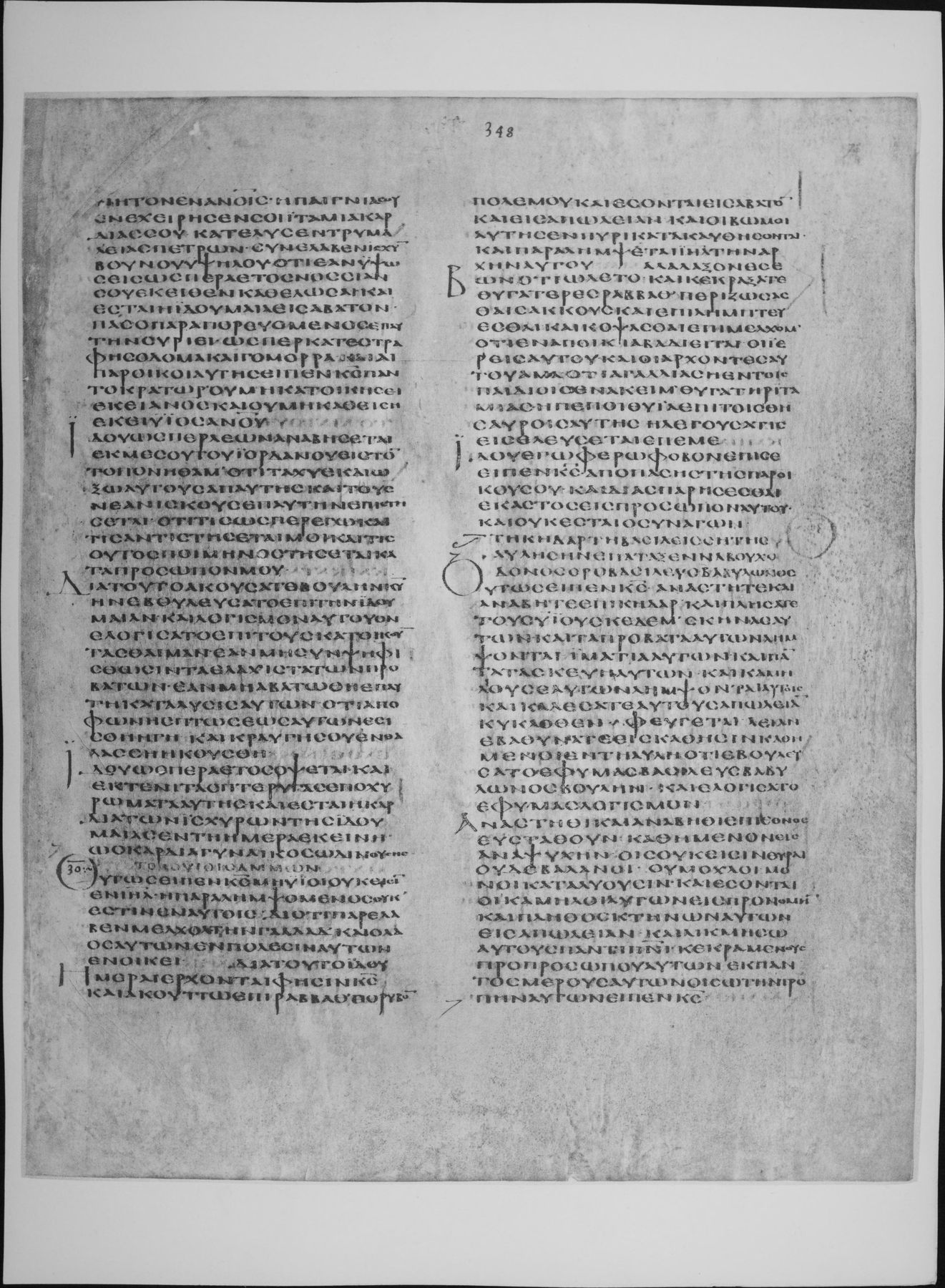
Jeremiah 30:1-8 is on fol. 348r (full-size facsimile of 1879-83, Internet Archive codex-alexandrinus leaf 720). The 1936 reduced facsimile prints beneath this page: Jer. xxix. 16-xxx. 10. Checked on the plate: the page begins inside Jeremiah 29:16 (first words read: ΤΟΝ ΕΝ ΑΝΘΡΩΠΟΙΣ Η ΠΑΙΓΝΙΑ ΣΟΥ ΕΝΕΧΕΙΡΗΣΕΝ ΣΟΙ ΙΤΑΜΙΑ ΚΑΡΔΙΑΣ ΣΟΥ ΚΑΤΕΛΥΣΕΝ ΤΡΥΜΑΛΙΑΣ ΠΕΤΡΩΝ).
1Τοῖς υἱοῖς Ἀμμών. Οὕτως εἶπεν Κύριος Μὴ υἱοὶ οὐκ εἰσὶν ἐν Ἰσραήλ, ἢ παραλημψόμενος οὐκ ἔστιν αὐτοῖς; διὰ τί παρέλαβεν Μελχὸλ τὴν Γαλαάδ, καὶ ὁ λαὸς αὐτῶν ἐν πόλεσιν αὐτῶν ἐνοικήσει; 2διὰ τοῦτο ἰδοὺ ἡμέραι ἔρχονται, φησὶν Κύριος, καὶ ἀκουτιῶ ἐπὶ Ῥαββὰθ θόρυβον πολέμων, καὶ ἔσονται εἰς ἄβατον καὶ εἰς ἀπώλειαν, καὶ βωμοὶ αὐτῆς ἐν πυρὶ κατακαυθήσονται, καὶ παραλήμψεται Ἰσραὴλ τὴν ἀρχὴν αὐτοῦ. 3ἀλάλαξον, Ἑσεβών, ὅτι ὤλετο· κεκράξατε θυγατέρες Ῥαββάθ, περιζώσασθε σάκκους καὶ κόψασθε, ὅτι Μελχὸλ ἐν ἀποικίᾳ βαδιεῖται, οἱ ἱερεῖς αὐτοῦ καὶ οἱ ἄρχοντες αὐτοῦ ἅμα. 4τί ἀγαλλιᾶσθε ἐν τοῖς πεδίοις Ἐνακείμ; θύγατερ ἰταμίας, ἡ πεποιθυῖα ἐπὶ θησαυροῖς αὐτῆς, ἡ λέγουσα Τίς εἰσελεύσεται ἐπ᾽ ἐμέ; 5ἰδοὺ ἐγὼ φέρω φόβον ἐπὶ σέ, εἶπεν Κύριος, ἀπὸ πάσης τῆς περιοίκου σου, καὶ διασπαρήσεσθε ἕκαστος εἰς πρόσωπον αὐτοῦ· οὐκ ἔστιν ὁ συνάγων. 6Τῇ Κηδὰρ βασιλίσσῃ τῆς αὐλῆς, ἣν ἐπάταξεν Ναβουχοδονοσὸρ βασιλεὺς Βαβυλῶνος. Οὕτως εἶπεν Κύριος Ἀνάστητε καὶ ἀνάβητε ἐπὶ Κηδάρ, καὶ πλήσατε τοὺς υἱοὺς Κέδεμ. 7σκηνὰς αὐτῶν καὶ πρόβατα αὐτῶν λήμψονται· ἱμάτια αὐτῶν καὶ πάντα τὰ σκεύη αὐτῶν καὶ καμήλους αὐτῶν λήμψονται ἑαυτοῖς· καὶ καλέσατε ἐπ᾽ αὐτοὺς ἀπώλειαν κυκλόθεν. 8φεύγετε, λίαν ἐβαθύνατε εἰς κάθισιν, καθήμενοι ἐν τῇ αὐλῇ, ὅτι ἐβουλεύσατο ἐφ᾽ ὑμᾶς βασιλεὺς Βαβυλῶνος βουλὴν καὶ ἐλογίσατο λογισμόν.
17Concerning the sons of Ammon thus saith the Lord, Are there no sons in Israel? or have they no one to succeed them? wherefore has Melchol inherited Galaad, and why shall their people dwell in their cities? 18Therefore, behold, the days come, saith the Lord, when I will cause to be heard in Rabbath a tumult of wars; and they shall become a waste and ruined place, and her altars shall be burned with fire; then shall Israel succeed to his dominion. 19Howl, O Esebon, for Gai has perished; cry, ye daughters of Rabbath, gird yourselves with sackclothes, and lament; for Melchol shall go into banishment, his priests and his princes together. 20Why do ye exult in the plains of the Enakim, thou haughty daughter, that trustest in thy treasures, that sayest, Who shall come in to me? 21Behold, I will bring terror upon thee, saith the Lord, from all the country round about thee; and ye shall be scattered every one right before him, and there is none to gather you. 23Concerning Kedar the Queen of the Palace, whom Nabuchodonosor King of Babylon smote, thus saith the Lord; 24They shall take their tents and their sheep, they shall take for themselves their garments, and all their baggage and their camels; and summon ye destruction against them from every side. 25Flee ye, dig very deep for a dwelling-place, ye that dwell in the palace; for the king of Babylon has framed a counsel, and devised a device against you.
Where on the image
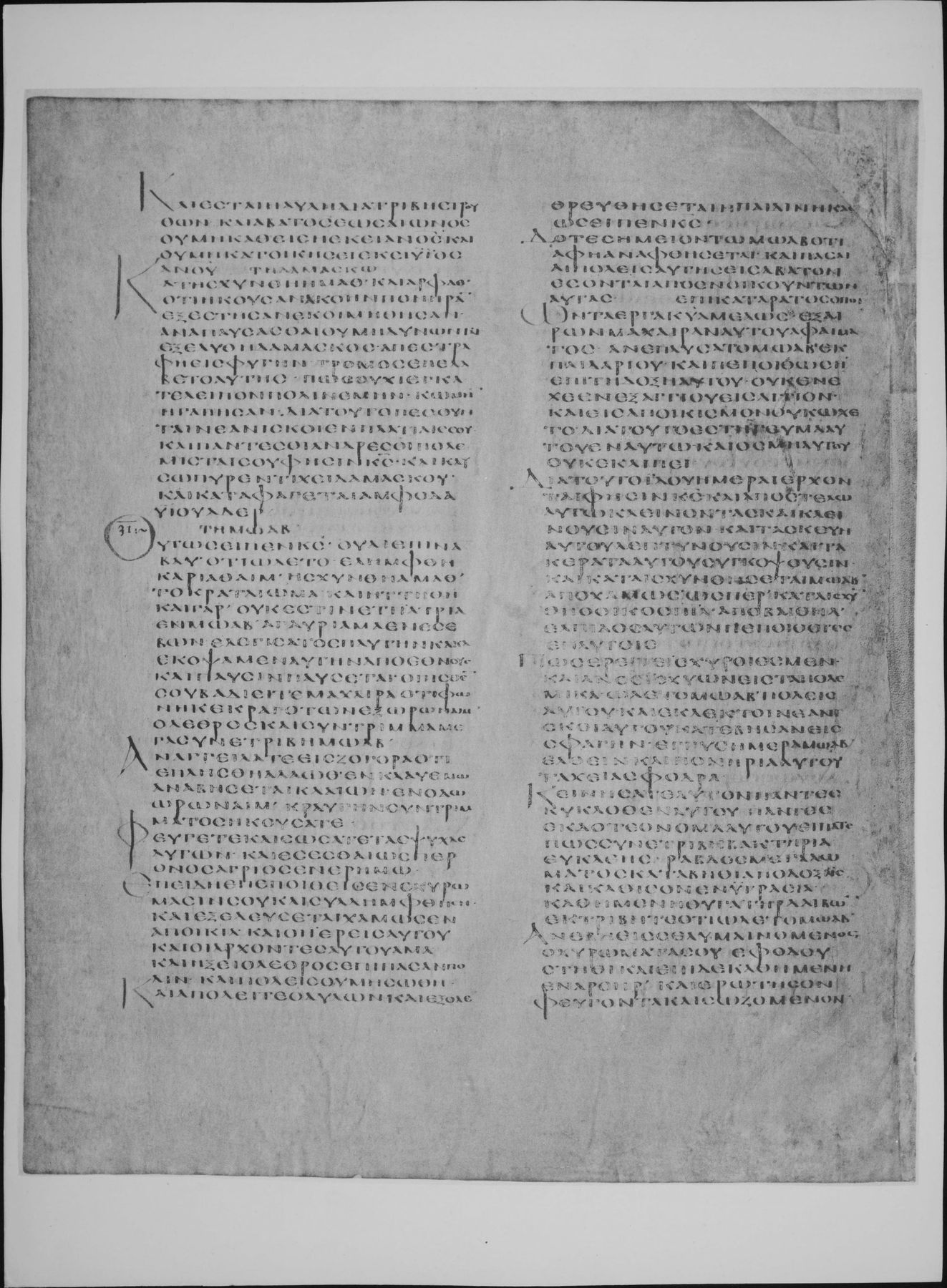
Jeremiah 30:9-10 is on fol. 348r (full-size facsimile of 1879-83, Internet Archive codex-alexandrinus leaf 720). The 1936 reduced facsimile prints beneath this page: Jer. xxix. 16-xxx. 10. Checked on the plate: the page begins inside Jeremiah 29:16 (first words read: ΤΟΝ ΕΝ ΑΝΘΡΩΠΟΙΣ Η ΠΑΙΓΝΙΑ ΣΟΥ ΕΝΕΧΕΙΡΗΣΕΝ ΣΟΙ ΙΤΑΜΙΑ ΚΑΡΔΙΑΣ ΣΟΥ ΚΑΤΕΛΥΣΕΝ ΤΡΥΜΑΛΙΑΣ ΠΕΤΡΩΝ). Jeremiah 30:11-16 is on fol. 348v (full-size facsimile of 1879-83, Internet Archive codex-alexandrinus leaf 721). The 1936 reduced facsimile prints beneath this page: Jer. xxx. 11-xxxi. 19. Checked on the plate: the page begins at the start of Jeremiah 30:11 (first words read: ΚΑΙ ΕΣΤΑΙ Η ΑΥΛΗ ΔΙΑΤΡΙΒΗ ΣΕΙΡΗΝΩΝ ΚΑΙ ΑΒΑΤΟΣ ΕΩΣ ΑΙΩΝΟΣ ΟΥ ΜΗ ΚΑΘΙΣΗ ΕΚΕΙ ΑΝΘΡΩΠΟΣ).
9ἀνάστηθι καὶ ἀνάβηθι ἐπ᾽ ἔθνος εὐσταθοῦν καθήμενον εἰς ἀναψυχήν, οἷς οὐκ εἰσὶν θύραι, οὐ βάλανοι, οὐ μοχλοί· μόνοι καταλύουσιν. 10καὶ ἔσονται κάμηλοι αὐτῶν εἰς προνομὴν καὶ πλῆθος κτηνῶν αὐτῶν εἰς ἀπώλειαν, καὶ λικμήσω αὐτοὺς παντὶ πνεύματι κεκραμένους πρὸ προσώπου αὐτῶν, ἐκ παντὸς πέραν αὐτῶν οἴσω τὴν τροπὴν αὐτῶν, εἶπεν Κύριος. 11καὶ ἔσται ἡ αὐλὴ διατριβὴ στρουθῶν καὶ ἄβατος ἕως αἰῶνος, οὐ μὴ καθίσῃ ἐκεῖ ἄνθρωπος, καὶ οὐ μὴ κατοικήσει ἐκεῖ υἱὸς ἀνθρώπου. 12Τῇ Δαμασκῷ. Κατῃσχύνθη Θημὰρ καὶ Ἀρφάδ, ὅτι ἤκουσαν ἀκοὴν πονηράν· ἐξέστησαν, ἐθυμώθησαν, ἀναπαύσασθαι οὐ μὴ δύνωνται. 13ἐξελύθη Δαμασκός, ἀπεστράφη εἰς φυγήν, τρόμος ἐπελάβετο αὐτῆς. 14πῶς οὐχὶ ἐνκατέλιπεν πόλιν ἐμήν; κώμην ἠγάπησαν. 15διὰ τοῦτο πεσοῦνται νεανίσκοι ἐν πλατείαις σου, καὶ πάντες οἱ ἄνδρες οἱ πολεμισταί σου πεσοῦνται, φησὶν Κύριος, 16καὶ καύσω πῦρ ἐν τείχει Δαμασκοῦ καὶ καταφάγεται ἄμφοδα υἱοῦ Ἁδέρ.
26Rise up, and go up against a nation settled and dwelling at ease, who have no doors, nor bolts, nor bars, who dwell alone. 27And their camels shall be a spoil, and the multitude of their cattle shall be destroyed: and I will scatter them as chaff with every wind, having their hair cut about their foreheads, I will bring on their overthrow from all sides, saith the Lord. 28And the palace shall be a resting-place for ostriches, and desolate for ever: no man shall abide there, and no son of man shall dwell there. 29Concerning Damascus. Emath is brought to shame, and Arphath: for they have heard an evil report: they are amazed, they are angry, they shall be utterly unable to rest. 30Damascus is utterly weakened, she is put to flight; trembling has seized upon her. 31How has she not left my city, they have loved the village? 32Therefore shall the young men fall in thy streets, and all thy warriors shall fall, saith the Lord. 33And I will kindle a fire in the wall of Damascus, and it shall devour the streets of the son of Ader.
Cite
Sources
- Source: Codex Alexandrinus (British Library Royal MS 1 D. VI) via the British Museum photographic facsimiles of 1879-83 and 1936 (Internet Archive) + Swete's Septuagint + Brenton's English (holding institution)
- Critical edition: H. B. Swete, The Old Testament in Greek according to the Septuagint (1909)
← previous · → next · v cycle view · l back to library