Jeremiah, Chapter 5 (Codex Alexandrinus)
Introduction
Jeremiah 5 in the Greek Old Testament (the Septuagint) as written in Codex Alexandrinus, a Greek Bible copied in the fifth century, probably in Egypt, and now in the British Library (Royal MS 1 D. VI, the second of its four volumes). It is one of the three great early codices of the whole Greek Bible, with Codex Vaticanus and Codex Sinaiticus.
This entry meets the strict three-criteria standard of the Theosis Library:
- Manuscript scan: the pages of Codex Alexandrinus carrying this chapter (fol. 333r, fol. 333v), from the full-size photographic (autotype) facsimile published by the British Museum in 1879-1883, as digitised on the Internet Archive. The verse range of every page comes from the reduced photographic facsimile of 1936, which prints it beneath each plate, and the opening words of every page were read on the plate to confirm the page and the verse it begins with. Each section links to the page or pages that hold its verses. Folio numbers are those written at the head of each leaf and visible on the plates.
- Original text: Swete's edition, which here prints the text of Codex Vaticanus (Vat. gr. 1209), the base of his edition, and gives the readings of Alexandrinus only in his apparatus. The Greek column is therefore Vaticanus' text; where Alexandrinus differs, the plate shows what Alexandrinus reads.
- English translation: Sir Lancelot C. L. Brenton, The Septuagint Version of the Old Testament (1844; 1851 edition), a translation of the Greek, public domain, from the eBible.org text.
How was this verified? (Provenance)
Where on the image
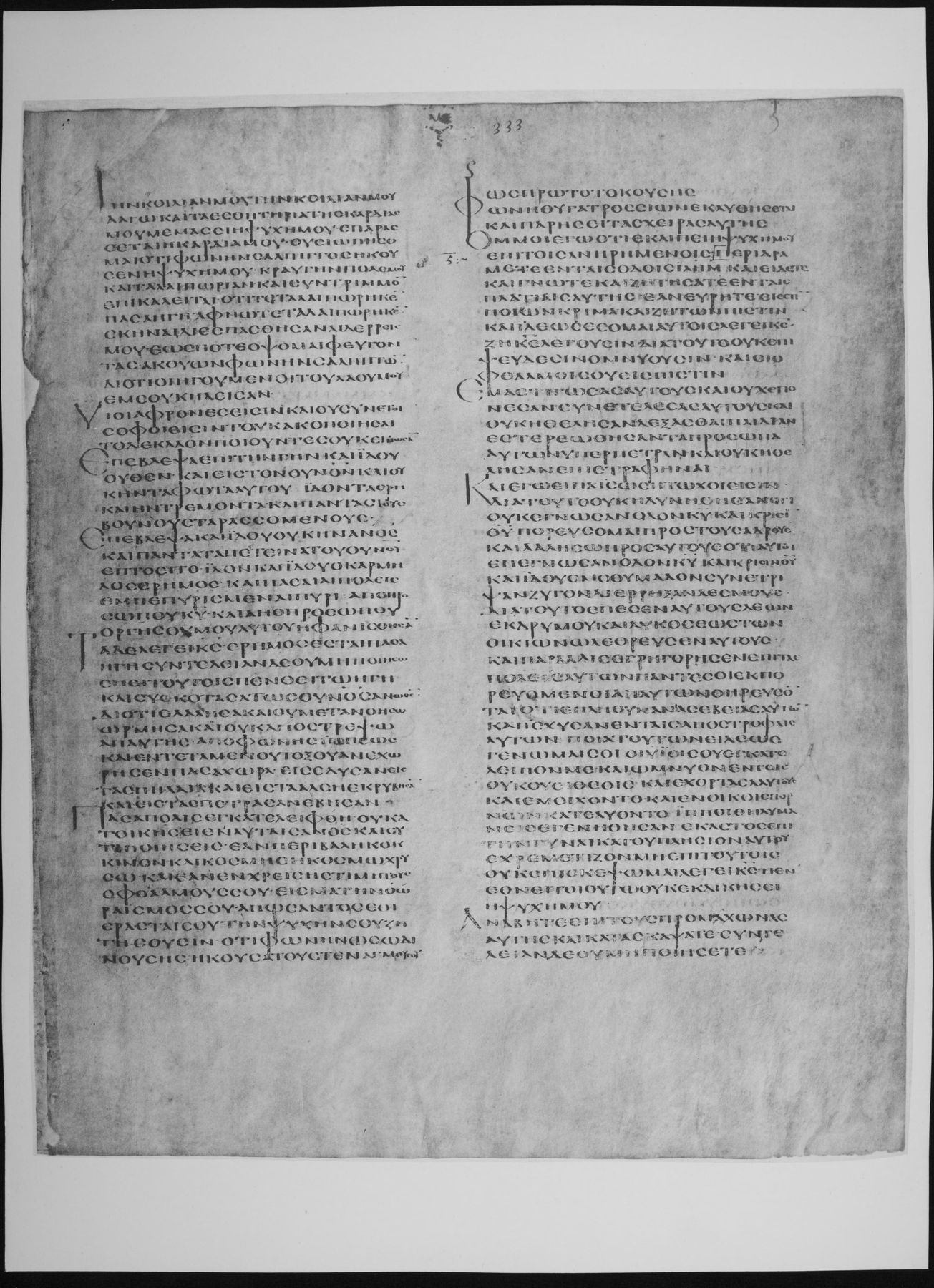
Jeremiah 5:1-8 is on fol. 333r (full-size facsimile of 1879-83, Internet Archive codex-alexandrinus leaf 690). The 1936 reduced facsimile prints beneath this page: Jer. iv. 19-v. 10. Checked on the plate: the page begins at the start of Jeremiah 4:19 (first words read: ΤΗΝ ΚΟΙΛΙΑΝ ΜΟΥ ΤΗΝ ΚΟΙΛΙΑΝ ΜΟΥ ΑΛΓΩ ΚΑΙ ΤΑ ΑΙΣΘΗΤΗΡΙΑ ΤΗΣ ΚΑΡΔΙΑΣ ΜΟΥ). Note: the page begins at the start of Jer. 4:19 (ΤΗΝ ΚΟΙΛΙΑΝ ΜΟΥ), as the captions show (iv. 18 ends the preceding page).
1Περιδράμετε ἐν ταῖς ὁδοῖς Ἰερουσαλήμ, καὶ ἴδετε καὶ γνῶτε καὶ ζητήσατε ἐν ταῖς πλατείαις αὐτῆς, ἐὰν εὕρητε, εἰ ἔστιν ποιῶν κρίμα καὶ ζητῶν πίστιν, καὶ ἵλεως ἔσομαι αὐτοῖς, λέγει Κύριος. 2Ζῇ Κύριος, λέγουσιν· διὰ τοῦτο οὐκ ἐν ψεύδεσιν ὀμνύουσιν; 3Κύριε, οἱ ὀφθαλμοί σου εἰς πίστιν· ἐμαστίγωσας αὐτοὺς καὶ οὐκ ἐπόνεσαν, συνετέλεσας αὐτοὺς καὶ οὐκ ἠθέλησαν δέξασθαι παιδείαν, ἐστερέωσαν τὰ πρόσωπα αὐτῶν ὑπὲρ πέτραν καὶ οὐκ ἠθέλησαν ἐπιστραφῆναι. 4καὶ ἐγὼ εἶπα Ἴσως πτωχοί εἰσιν, διότι οὐκ ἐδυνάσθησαν, ὅτι οὐκ ἔγνωσαν ὁδὸν Κυρίου καὶ κρίσιν θεοῦ· 5πορεύσομαι πρὸς τοὺς ἁδροὺς καὶ λαλήσω αὐτοῖς, ὅτι αὐτοὶ ἐπέγνωσαν ὁδὸν Κυρίου καὶ κρίσιν θεοῦ· καὶ ἰδοὺ ὁμοθυμαδὸν συνέτριψαν ζυγόν, διέρρηξαν δεσμούς. 6διὰ τοῦτο ἔπαισεν αὐτοὺς λέων ἐκ τοῦ δρυμοῦ, καὶ λύκος ἕως τῶν οἰκιῶν ὠλόθρευσεν αὐτούς, καὶ πάρδαλις ἐγρηγόρησεν ἐπὶ τὰς πόλεις αὐτῶν · πάντες οἱ ἐκπορευόμενοι ἀπ᾽ αὐτῶν θηρευθήσονται, ὅτι ἐπλήθυναν ἀσεβείας αὐτῶν, ἴσχυσαν ἐν ταῖς ἀποστροφαῖς αὐτῶν. 7ποίᾳ τούτων ἵλεως γένωμαί σοι; οἱ υἱοί σου ἐνκατέλιπόν με καὶ ὤμνυον ἐν τοῖς οὐκ οὖσιν θεοῖς· καὶ ἐχόρτασα αὐτούς, καὶ ἐμοιχῶντο καὶ ἐν οἴκοις πορνῶν κατέλυον. 8ἵπποι θηλυμανεῖς ἐγενήθησαν, ἕκαστος ἐπὶ τὴν γυναῖκα τοῦ πλησίον αὐτοῦ ἐχρεμέτιζεν.
1Run ye about in the streets of Jerusalem, and see, and know, and seek in her broad places, if ye can find one, if there is any one that does judgment, and seeks faithfulness; and I will pardon them, saith the Lord. 2The Lord lives, they say; do they not therefore swear falsely? 3O Lord, thine eyes are upon faithfulness: thou hast scourged them, but they have not grieved; thou hast consumed them; but they would not receive correction: they have made their faces harder than a rock; and they would not return. 4Then I said, It may be they are poor; for they are weak, for they know not the way of the Lord, or the judgment of God. 5I will go to the rich men, and will speak to them; for they have known the way of the Lord, and the judgment of God: but, behold, with one consent they have broken the yoke, they have burst the bonds. 6Therefore has a lion out of the forest smitten them, and a wolf has destroyed them even to their houses, and a leopard has watched against their cities: all that go forth from them shall be hunted: for they have multiplied their ungodliness, they have strengthened themselves in their revoltings. 7In what way shall I forgive thee for these things? Thy sons have forsaken me, and sworn by them that are no gods: and I fed them to the full, and they committed adultery, and lodged in harlots' houses. 8They became as wanton horses: they neighed each one after his neighbour's wife.
Where on the image
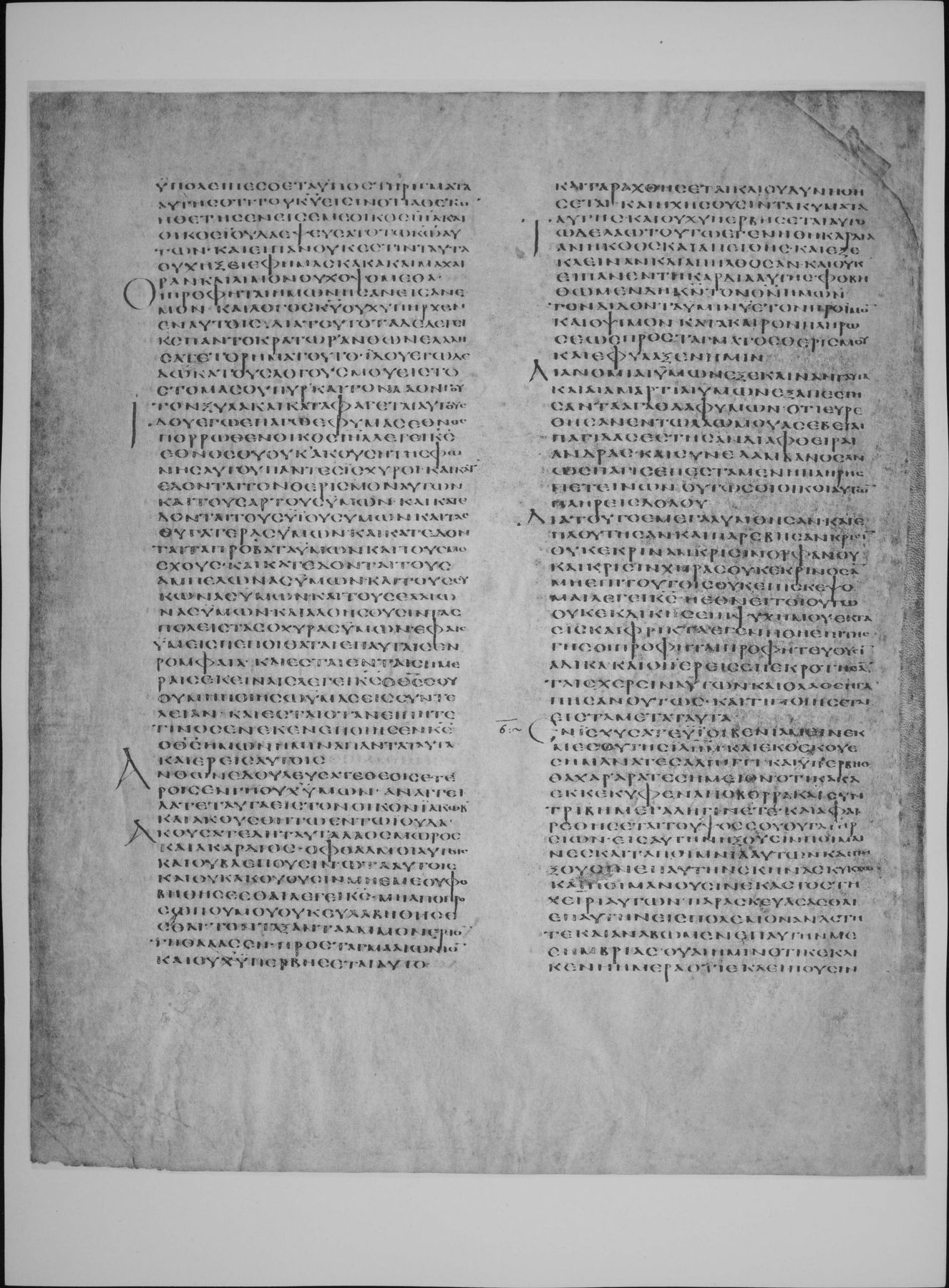
Jeremiah 5:9-10 is on fol. 333r (full-size facsimile of 1879-83, Internet Archive codex-alexandrinus leaf 690). The 1936 reduced facsimile prints beneath this page: Jer. iv. 19-v. 10. Checked on the plate: the page begins at the start of Jeremiah 4:19 (first words read: ΤΗΝ ΚΟΙΛΙΑΝ ΜΟΥ ΤΗΝ ΚΟΙΛΙΑΝ ΜΟΥ ΑΛΓΩ ΚΑΙ ΤΑ ΑΙΣΘΗΤΗΡΙΑ ΤΗΣ ΚΑΡΔΙΑΣ ΜΟΥ). Note: the page begins at the start of Jer. 4:19 (ΤΗΝ ΚΟΙΛΙΑΝ ΜΟΥ), as the captions show (iv. 18 ends the preceding page). Jeremiah 5:10-16 is on fol. 333v (full-size facsimile of 1879-83, Internet Archive codex-alexandrinus leaf 691). The 1936 reduced facsimile prints beneath this page: Jer. v. 10-vi. 4. Checked on the plate: the page begins inside Jeremiah 5:10 (first words read: ΟΤΙ ΤΟΥ ΚΥ ΕΙΣΙΝ ΟΤΙ ΑΘΕΤΩΝ ΗΘΕΤΗΣΕΝ ΕΙΣ ΕΜΕ ΟΙΚΟΣ ΙΣΡΑΗΛ ΚΑΙ ΟΙΚΟΣ ΙΟΥΔΑ).
9μὴ ἐπὶ τούτοις οὐκ ἐπισκέψομαι; λέγει Κύριος· ἢ ἐν ἔθνει τοιούτῳ οὐκ ἐκδικήσει ἡ ψυχή μου; 10Ἀνάβητε ἐπὶ τοὺς προμαχῶνας αὐτῆς καὶ κατασκάψατε, συντέλειαν δὲ μὴ ποιήσητε· ὑπολίπεσθε τὰ ὑποστηρίγματα αὐτῆς, ὅτι τοῦ κυρίου εἰσίν. 11ὅτι ἀθετῶν ἠθέτησεν εἰς ἐμέ, λέγει Κύριος, οἶκος Ἰσραήλ, καὶ οἶκος Ἰούδα 12ἐψεύσατο τῷ κυρίῳ ἑαυτῶν, καὶ εἶπαν Οὐκ ἔστιν ταῦτα· οὐχ ἥξει ἐφ᾽ ἡμᾶς κακά, καὶ μάχαιραν καὶ λιμὸν οὐκ ὀψόμεθα· 13οἱ προφῆται ἡμῶν ἦσαν εἰς ἄνεμον, καὶ λόγος Κυρίου οὐχ ὑπῆρχεν ἐν αὐτοῖς· οὕτως ἔσται αὐτοῖς. 14διὰ τοῦτο τάδε λέγει Κύριος Παντοκράτωρ Ἀνθ᾽ ὧν ἐλαλήσατε τὸ ῥῆμα τοῦτο ἰδοὺ ἐγὼ δέδωκα τοὺς λόγους μου εἰς τὸ στόμα σου πῦρ, καὶ τὸν λαὸν τοῦτον ξύλα, καὶ καταφάγεται αὐτούς. 15ἰδοὺ ἐγὼ ἐπάγω ἐφ᾽ ὑμᾶς ἔθνος πόρρωθεν, οἶκος Ἰσραήλ, λέγει Κύριος, ἔθνος οὗ οὐκ ἀκούσει τῆς φωνῆς τῆς γλώσσης αὐτοῦ· 16πάντες ἰσχυροί, καὶ κατέδονται τὸν θερισμὸν ὑμῶν
9Shall I not visit for these things? saith the Lord: and shall not my soul be avenged on such a nation as this. 10Go up upon her battlements, and break them down; but make not a full end: leave her buttresses; for they are the Lord's. 11For the house of Israel have indeed dealt treacherously against me, saith the Lord: the house of Juda also 12have lied to their Lord, and they have said, These things are not so; no evils shall come upon us; and we shall not see sword or famine. 13Our prophets became wind, and the word of the Lord was not in them. 14Therefore thus saith the Lord Almighty, Because ye have spoken this word, behold, I have made my words in thy mouth fire, and this people wood, and it shall devour them. 15Behold, I will bring upon you a nation from far, O house of Israel, saith the Lord; a nation the sound of whose language one shall not understand. 16They are all mighty men:
Where on the image
Jeremiah 5:17-24 is on fol. 333v (full-size facsimile of 1879-83, Internet Archive codex-alexandrinus leaf 691). The 1936 reduced facsimile prints beneath this page: Jer. v. 10-vi. 4. Checked on the plate: the page begins inside Jeremiah 5:10 (first words read: ΟΤΙ ΤΟΥ ΚΥ ΕΙΣΙΝ ΟΤΙ ΑΘΕΤΩΝ ΗΘΕΤΗΣΕΝ ΕΙΣ ΕΜΕ ΟΙΚΟΣ ΙΣΡΑΗΛ ΚΑΙ ΟΙΚΟΣ ΙΟΥΔΑ).
17καὶ τοὺς ἄρτους ὑμῶν, καὶ κατέδονται τοὺς υἱοὺς ὑμῶν καὶ τὰς θυγατέρας ὑμῶν, καὶ κατέδονται τὰ πρόβατα ὑμῶν καὶ τοὺς μόσχους ὑμῶν, καὶ κατέδονται τοὺς ἀμπελῶνας ὑμῶν καὶ τοὺς συκῶνας ὑμῶν καὶ τοὺς ἐλαιῶνας ὑμῶν· καὶ ἀλοήσουσιν τὰς πόλεις, τὰς πόλεις τὰς ὀχυρὰς ὑμῶν, ἐφ᾽ αἷς ὑμεῖς πεποίθατε ἐπ᾽ αὐταῖς, ἐν ῥομφαίᾳ. 18καὶ ἔσται ἐν ταῖς ἡμέραις ἐκείναις, λέγει Κύριος ὁ θεός σου, οὐ μὴ ποιήσω ὑμᾶς εἰς συντέλειαν. 19καὶ ἔσται ὅταν εἴπητε Τίνος ἕνεκεν ἐποίησεν Κύριος ὁ θεὸς ἡμῶν ἡμῖν πάντα ταῦτα; καὶ ἐρεῖς αὐτοῖς Ἀνθ᾽ ὧν ἐδουλεύσατε θεοῖς ἀλλοτρίοις ἐν τῇ γῇ ὑμῶν, οὕτως δουλεύσετε ἀλλοτρίοις ἐν γῇ οὐχ ὑμῶν. 20Ἀναγγείλατε ταῦτα εἰς τὸν οἶκον Ἰακώβ, καὶ ἀκουσθήτω ἐν τῷ Ἰούδᾳ. 21ἀκούσατε δὴ ταῦτα, λαὸς μωρὸς καὶ ἀκάρδιος· ὀφθαλμοὶ αὐτοῖς καὶ οὐ βλέπουσιν, ὦτα αὐτοῖς καὶ οὐκ ἀκούουσιν. 22μὴ ἐμὲ οὐ φοβηθήσεσθε; λέγει Κύριος, ἢ ἀπὸ προσώπου μου οὐκ εὐλαβηθήσεσθε; τὸν τάξαντα ἄμμον ὅριον τῇ θαλάσσῃ, πρόσταγμα αἰώνιον, καὶ οὐχ ὑπερβήσεται αὐτό, καὶ ταραχθήσεται, καὶ οὐ δυνήσεται, καὶ ἠχήσουσιν τὰ κύματα αὐτῆς καὶ οὐχ ὑπερβήσεται αὐτό. 23τῷ δὲ λαῷ τούτῳ ἐγενήθη καρδία ἀνήκοος καὶ ἀπειθής, καὶ ἐξέκλιναν καὶ ἀπήλθοσαν. 24καὶ οὐκ εἶπον ἐν τῇ καρδίᾳ αὐτῶν Φοβηθῶμεν δὴ Κύριον τὸν θεὸν ἡμῶν, τὸν διδόντα ἡμῖν ὑετὸν πρόιμον καὶ ὄψιμον κατὰ καιρὸν πληρώσεως προστάγματος θερισμοῦ, καὶ ἐφύλαξεν ἡμῖν.
17and they shall devour your harvest, and your bread; and shall devour your sons, and your daughters; and they shall devour your sheep, and your calves, and devour your vineyards, and your fig-plantations, and your olive yards: and they shall utterly destroy your strong cities, wherein ye trusted, with the sword. 18And it shall come to pass in those days, saith the Lord thy God, that I will not utterly destroy you. 19And it shall come to pass, when ye shall say, Wherefore has the Lord our God done all these things to us? that thou shalt say to them, Because ye served strange gods in your land, so shall ye serve strangers in a land that is not yours. 20Proclaim these things to the house of Jacob, and let them be heard in the house of Juda. 21Hear ye now these things, O foolish and senseless people; who have eyes, and see not; and have ears, and hear not: 22will ye not be afraid of me? saith the Lord; and will ye not fear before me, who have set the sand for a bound to the sea, as a perpetual ordinance, and it shall not pass it: yea, it shall rage, but not prevail; and its waves shall roar, but not pass over it. 23But this people has a disobedient and rebellious heart; and they have turned aside and gone back: 24and they have not said in their heart, Let us fear now the Lord our God, who gives us the early and latter rain, according to the season of the fulfilment of the ordinance of harvest, and has preserved it for us.
Where on the image
Jeremiah 5:25-31 is on fol. 333v (full-size facsimile of 1879-83, Internet Archive codex-alexandrinus leaf 691). The 1936 reduced facsimile prints beneath this page: Jer. v. 10-vi. 4. Checked on the plate: the page begins inside Jeremiah 5:10 (first words read: ΟΤΙ ΤΟΥ ΚΥ ΕΙΣΙΝ ΟΤΙ ΑΘΕΤΩΝ ΗΘΕΤΗΣΕΝ ΕΙΣ ΕΜΕ ΟΙΚΟΣ ΙΣΡΑΗΛ ΚΑΙ ΟΙΚΟΣ ΙΟΥΔΑ).
25αἱ ἀνομίαι ὑμῶν ἐξέκλιναν ταῦτα, καὶ αἱ ἁμαρτίαι ὑμῶν ἀπέστησαν τὰ ἀγαθὰ ἀφ᾽ ὑμῶν. 26ὅτι εὑρέθησαν ἐν τῷ λαῷ μου ἀσεβεῖς, καὶ παγίδας ἔστησαν τοῦ διαφθεῖραι ἄνδρας, καὶ συνελαμβάνοσαν. 27ὡς παγὶς ἐφεσταμένη πλήρης πετεινῶν, οὕτως οἱ οἶκοι αὐτῶν πλήρεις δόλου· διὰ τοῦτο ἐμεγαλύνθησαν καὶ ἐπλούτησαν, 28καὶ παρέβησαν κρίσιν, οὐκ ἔκριναν κρίσιν ὀρφανοῦ, καὶ κρίσιν χήρας οὐκ ἐκρίνοσαν. 29μὴ ἐπὶ τούτοις οὐκ ἐπισκέψομαι; λέγει Κύριος, ἢ ἐν ἔθνει τῷ τοιούτῳ οὐκ ἐκδικήσει ἡ ψυχή μου; 30Ἔκστασις καὶ φρικτὰ ἐγενήθη ἐπὶ τῆς γῆς. 31οἱ προφῆται προφητεύουσιν ἄδικα, καὶ οἱ ἱερεῖς ἐπεκρότησαν ταῖς χερσὶν αὐτῶν, καὶ ὁ λαός μου ἠγάπησεν οὕτως· καὶ τί ποιήσητε εἰς τὰ μετὰ ταῦτα;
25Your transgressions have turned away these things, and your sins have removed good things from you. 26For among my people were found ungodly men; and they have set snares to destroy men, and have caught them. 27As a snare which has been set is full of birds, so are their houses full of deceit: therefore have they grown great, and become rich: 28and they have transgressed the rule of judgment; they have not judged the cause of the orphan, nor have they judged the cause of the widow. 29Shall I not visit for these things? saith the Lord: and shall not my soul be avenged on such a nation as this? 30Shocking and horrible deeds have been done on the land; 31the prophets utter unrighteous prophecies, and the priests have clapped their hands: and my people has loved to have it thus: and what will ye do for the future?
Cite
Sources
- Source: Codex Alexandrinus (British Library Royal MS 1 D. VI) via the British Museum photographic facsimiles of 1879-83 and 1936 (Internet Archive) + Swete's Septuagint + Brenton's English (holding institution)
- Critical edition: H. B. Swete, The Old Testament in Greek according to the Septuagint (1909)
← previous · → next · v cycle view · l back to library