Jeremiah, Chapter 51 (Codex Alexandrinus)
Introduction
Jeremiah 51 in the Greek Old Testament (the Septuagint) as written in Codex Alexandrinus, a Greek Bible copied in the fifth century, probably in Egypt, and now in the British Library (Royal MS 1 D. VI, the second of its four volumes). It is one of the three great early codices of the whole Greek Bible, with Codex Vaticanus and Codex Sinaiticus.
This entry meets the strict three-criteria standard of the Theosis Library:
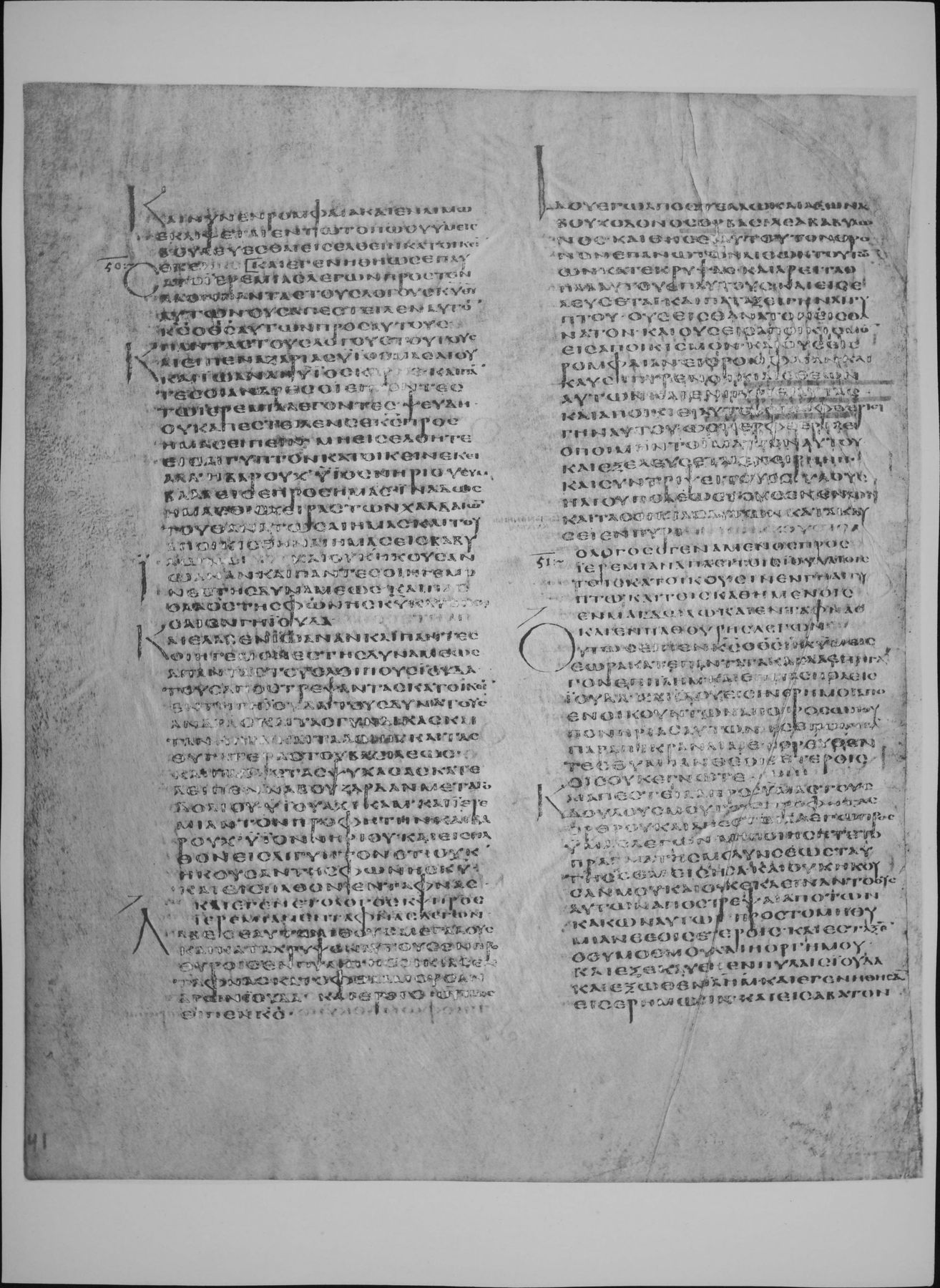
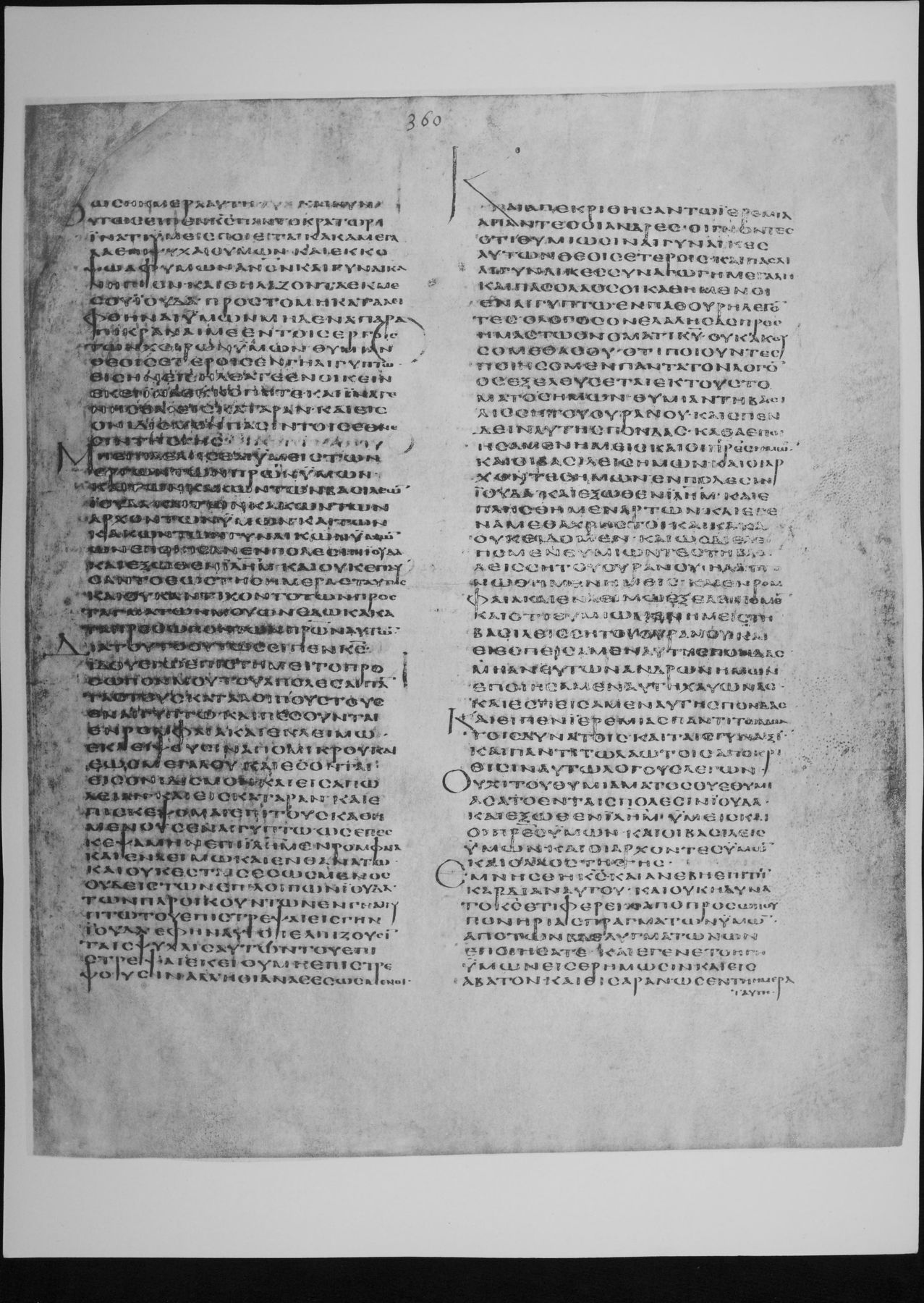
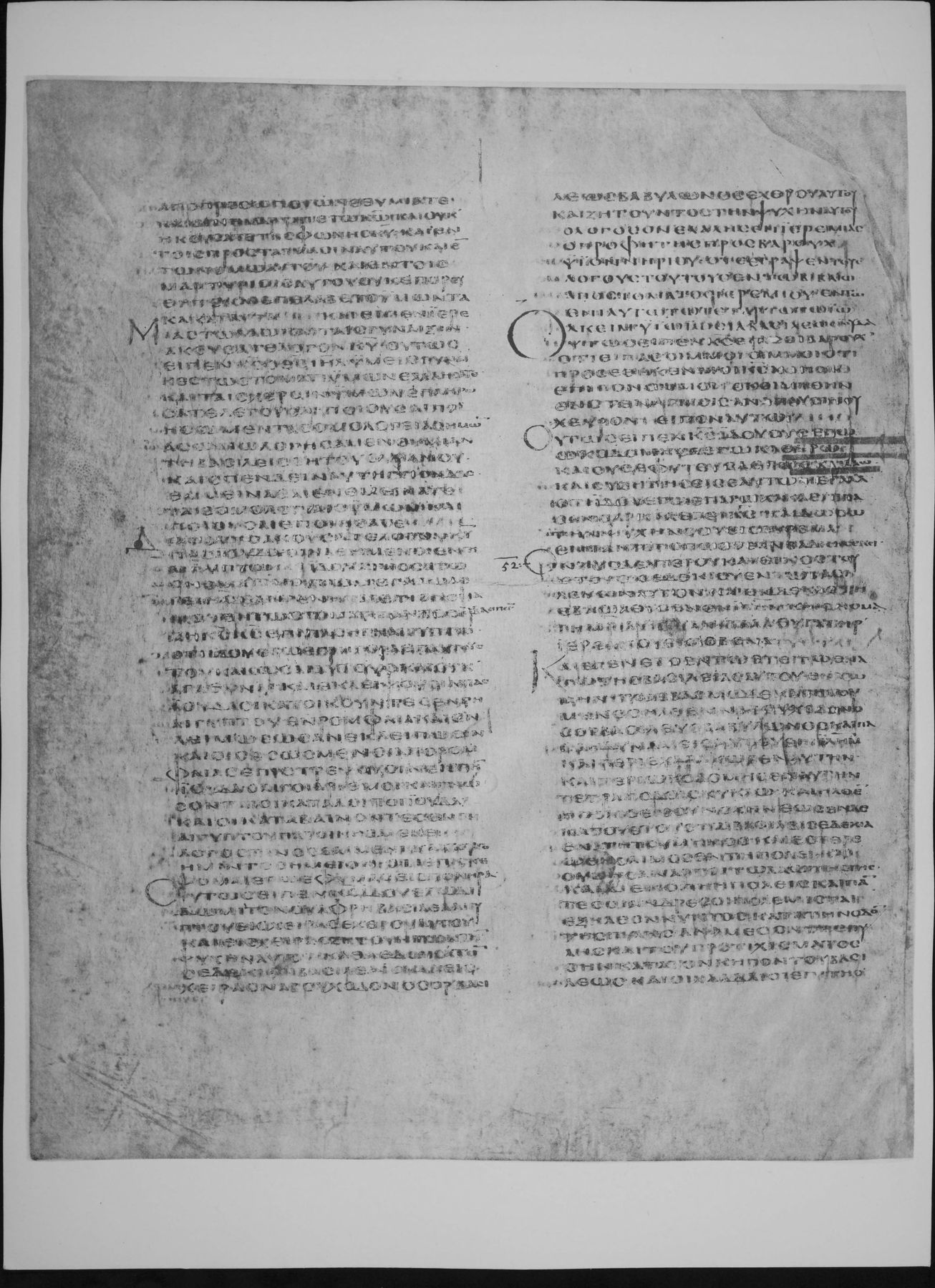
- Manuscript scan: the pages of Codex Alexandrinus carrying this chapter (fol. 359v, fol. 360r, fol. 360v), from the full-size photographic (autotype) facsimile published by the British Museum in 1879-1883, as digitised on the Internet Archive. The verse range of every page comes from the reduced photographic facsimile of 1936, which prints it beneath each plate, and the opening words of every page were read on the plate to confirm the page and the verse it begins with. Each section links to the page or pages that hold its verses. Folio numbers are those written at the head of each leaf and visible on the plates.
- Original text: Swete's edition, which here prints the text of Codex Vaticanus (Vat. gr. 1209), the base of his edition, and gives the readings of Alexandrinus only in his apparatus. The Greek column is therefore Vaticanus' text; where Alexandrinus differs, the plate shows what Alexandrinus reads.
- English translation: Sir Lancelot C. L. Brenton, The Septuagint Version of the Old Testament (1844; 1851 edition), a translation of the Greek, public domain, from the eBible.org text.
How was this verified? (Provenance)
Where on the image
Jeremiah 51:1-6 is on fol. 359v (full-size facsimile of 1879-83, Internet Archive codex-alexandrinus leaf 743). The 1936 reduced facsimile prints beneath this page: Jer. xlix. 22-li. 6. Checked on the plate: the page begins at the start of Jeremiah 49:22 (first words read: ΚΑΙ ΝΥΝ ΕΝ ΡΟΜΦΑΙΑ ΚΑΙ ΕΝ ΛΙΜΩ ΕΚΛΕΙΨΕΤΕ ΕΝ ΤΩ ΤΟΠΩ ΟΥ ΥΜΕΙΣ ΒΟΥΛΕΣΘΕ ΕΙΣΕΛΘΕΙΝ). Jeremiah 51:6-8 is on fol. 360r (full-size facsimile of 1879-83, Internet Archive codex-alexandrinus leaf 744). The 1936 reduced facsimile prints beneath this page: Jer. li. 6-22. Checked on the plate: the page begins inside Jeremiah 51:6 (first words read: ΩΣ Η ΗΜΕΡΑ ΑΥΤΗ ΚΑΙ ΝΥΝ ΟΥΤΩΣ ΕΙΠΕΝ ΚΣ ΙΝΑ ΤΙ ΥΜΕΙΣ ΠΟΙΕΙΤΕ ΚΑΚΑ ΜΕΓΑΛΑ).
1Ὁ λόγος ὁ γενόμενος πρὸς Ἰερεμίαν ἅπασιν τοῖς Ἰουδαίοις τοῖς κατοικοῦσιν ἐν γῇ Αἰγύπτου καὶ τοῖς καθημένοις ἐν Μαγδώλῳ καὶ ἐν Ταφνὰς καὶ ἐν γῇ Παθούρης λέγων 2Οὕτως εἶπεν Κύριος ὁ θεὸς Ἰσραήλ Ὑμεῖς ἑωράκατε πάντα τὰ κακὰ ἃ ἐπήγαγον ἐπὶ Ἰερουσαλὴμ καὶ ἐπὶ τὰς πόλεις Ἰούδα· καὶ ἰδού εἰσιν ἔρημοι ἀπὸ ἐνοίκων 3ἀπὸ προσώπου πονηρίας αὐτῶν ἧς ἐποίησαν παραπικρᾶναί με, πορευθέντες θυμιᾷν θεοῖς ἑτέροις οἷς οὐκ ἔγνωτε. 4καὶ ἀπέστειλα πρὸς ὑμᾶς τοὺς παῖδάς μου τοὺς προφήτας ὄρθρου, καὶ ἀπέστειλα λέγων Μὴ ποιήσητε τὸ πρᾶγμα τῆς μολύνσεως ταύτης ἧς ἐμίσησα. 5καὶ οὐκ ἤκουσαν καὶ οὐκ ἔκλιναν τὸ οὖς αὐτῶν ἀποστρέψαι ἀπὸ τῶν κακῶν αὐτῶν πρὸς τὸ μὴ θυμιᾷν θεοῖς ἑτέροις. 6καὶ ἔσταξεν ἡ ὀργή μου καὶ ὁ θυμός μου, καὶ ἐξεκαύθη ἐν πύλαις Ἰούδα καὶ ἔξωθεν Ἰερουσαλήμ, καὶ ἐγενήθησαν εἰς ἐρήμωσιν καὶ εἰς ἄβατον ὡς ἡ ἡμέρα αὕτη. 7καὶ νῦν οὕτως εἶπεν Κύριος Παντοκράτωρ Ἵνα τί ὑμεῖς ποιεῖτε κακὰ μεγάλα ἐπὶ ψυχαῖς ὑμῶν ἐκκόψαι ὑμῶν ἄνθρωπον καὶ γυναῖκα, νήπιον καὶ θηλάζοντα ἐκ μέσου Ἰούδα, πρὸς τὸ μὴ καταλειφθῆναι ὑμῶν μηδένα, 8παραπικρᾶναί με ἐν τοῖς ἔργοις τῶν χειρῶν ὑμῶν, θυμιᾷν θεοῖς ἑτέροις ἐν γῇ Αἰγύπτῳ εἰς ἣν ἤλθατε κατοικεῖν ἐκεῖ, ἵνα ἐκκοπῆτε καὶ ἵνα γένησθε εἰς κατάραν καὶ εἰς ὀνειδισμὸν ἐν πᾶσιν τοῖς ἔθνεσιν τῆς γῆς;
1The Word that came to Jeremias for all the Jews dwelling in the land of Egypt, and for those settled in Magdolo and in Taphnas, and in the land of Pathura, saying, 2Thus has the Lord God of Israel said; Ye have seen all the evils which I have brought upon Jerusalem, and upon the cities of Juda; and, behold, they are desolate without inhabitants, 3because of their wickedness, which they have wrought to provoke me, by going to burn incense to other gods, whom ye knew not. 4Yet I sent to you my servants the prophets early in the morning, and I sent, saying, Do not ye this abominable thing which I hate. 5But they hearkened not to me, and inclined not their ear to turn from their wickedness, so as not to burn incense to strange gods. 6So mine anger and my wrath dropped upon them, and was kindled in the gates of Juda, and in the streets of Jerusalem; and they became a desolation and a waste, as at this day. 7And now thus has the Lord Almighty said, Wherefore do ye commit these great evils against your souls? to cut off man and woman of you, infant and suckling from the midst of Juda, to the end that not one of you should be left; 8by provoking me with the works of your hands, to burn incense to other gods in the land of Egypt, into which ye entered to dwell there, that ye might be cut off, and that ye might become a curse and a reproach among all the nations of the earth?
Where on the image
Jeremiah 51:9-16 is on fol. 360r (full-size facsimile of 1879-83, Internet Archive codex-alexandrinus leaf 744). The 1936 reduced facsimile prints beneath this page: Jer. li. 6-22. Checked on the plate: the page begins inside Jeremiah 51:6 (first words read: ΩΣ Η ΗΜΕΡΑ ΑΥΤΗ ΚΑΙ ΝΥΝ ΟΥΤΩΣ ΕΙΠΕΝ ΚΣ ΙΝΑ ΤΙ ΥΜΕΙΣ ΠΟΙΕΙΤΕ ΚΑΚΑ ΜΕΓΑΛΑ).
9μὴ ἐπιλέλησθε ὑμεῖς τῶν κακῶν τῶν πατέρων ὑμῶν καὶ τῶν κακῶν τῶν βασιλέων Ἰούδα καὶ τῶν κακῶν τῶν ἀρχόντων ὑμῶν καὶ τῶν κακῶν τῶν γυναικῶν ὑμῶν, ὧν ἐποίησαν ἐν γῇ Ἰούδα καὶ ἔξωθεν Ἰερουσαλήμ; 10καὶ οὐκ ἐπαύσαντο ἕως τῆς ἡμέρας ταύτης, καὶ οὐκ ἀντείχοντο τῶν προσταγμάτων μου ὧν ἔδωκα κατὰ πρόσωπον τῶν πατέρων αὐτῶν. 11διὰ τοῦτο οὕτως εἶπεν Κύριος Ἰδοὺ ἐγὼ ἐφίστημι τὸ πρόσωπόν μου 12τοῦ ἀπολέσαι πάντας τοὺς καταλοίπους τοὺς ἐν Αἰγύπτῳ, καὶ πεσοῦνται ἐν ῥομφαίᾳ καὶ ἐν λιμῷ, καὶ ἐκλείψουσιν ἀπὸ μικροῦ ἕως μεγάλου καὶ ἔσονται εἰς ὀνειδισμὸν καὶ εἰς ἀπώλειαν καὶ εἰς κατάραν. 13καὶ ἐπισκέψομαι ἐπὶ τοὺς καθημένους ἐν γῇ Αἰγύπτῳ ὡς ἐπεσκεψάμην ἐπὶ Ἰερουσαλὴμ ἐν ῥομφαίᾳ καὶ ἐν λιμῷ, 14καὶ οὐκ ἔσται σεσωσμένος οὐθεὶς τῶν ἐπιλοίπων Ἰούδα τῶν παροικούντων ἐν γῇ Αἰγύπτῳ τοῦ ἐπιστρέψαι εἰς γῆν Ἰούδα, ἐφ᾽ ἣν αὐτοὶ ἐλπίζουσιν ταῖς ψυχαῖς αὐτῶν τοῦ ἐπιστρέψαι ἐκεῖ· οὐ μὴ ἐπιστρέψωσιν ἀλλ᾽ ἢ οἱ ἀνασεσωμένοι. 15καὶ ἀπεκρίθησαν τῷ Ἰερεμίᾳ πάντες οἱ ἄνδρες οἱ γνόντες ὅτι θυμιῶσιν αἱ γυναῖκες αὐτῶν καὶ πᾶσαι αἱ γυναῖκες, συναγωγὴ μεγάλη, καὶ πᾶς ὁ λαὸς οἱ καθήμενοι ἐν γῇ Αἰγύπτῳ, ἐν Παθούρῃ, λέγοντες 16Ὁ λόγος ὃν ἐλάλησας πρὸς ἡμᾶς τῷ ὀνόματι Κυρίου, οὐκ ἀκούσομέν σου·
9Have ye forgotten the sins of your fathers, and the sins of the kings of Juda, and the sins of your princes, and the sins of your wives, which they wrought in the land of Juda, and in the streets of Jerusalem? 10And have not ceased even to this day, and they have not kept to my ordinances, which I set before their fathers. 11Therefore thus saith the Lord; Behold, I do set my face against you 12to destroy all the remnant that are in Egypt; and they shall fall by the sword, and by famine, and shall be consumed small and great: and they shall be for reproach, and for destruction, and for a curse. 13And I will visit them that dwell in the land of Egypt, as I have visited Jerusalem, with sword and with famine: 14and there shall not one be preserved of the remnant of Juda that sojourn in the land of Egypt, to return to the land of Juda, to which they hope in their hearts to return: they shall not return, but only they that escape. 15Then all the men that knew that their wives burned incense, and all the women, a great multitude, and all the people that dwelt in the land of Egypt, in Pathura, answered Jeremias, saying, 16As for the word which thou hast spoken to us in the name of the Lord, we will not hearken to thee.
Where on the image
Jeremiah 51:17-22 is on fol. 360r (full-size facsimile of 1879-83, Internet Archive codex-alexandrinus leaf 744). The 1936 reduced facsimile prints beneath this page: Jer. li. 6-22. Checked on the plate: the page begins inside Jeremiah 51:6 (first words read: ΩΣ Η ΗΜΕΡΑ ΑΥΤΗ ΚΑΙ ΝΥΝ ΟΥΤΩΣ ΕΙΠΕΝ ΚΣ ΙΝΑ ΤΙ ΥΜΕΙΣ ΠΟΙΕΙΤΕ ΚΑΚΑ ΜΕΓΑΛΑ). Jeremiah 51:23-24 is on fol. 360v (full-size facsimile of 1879-83, Internet Archive codex-alexandrinus leaf 745). The 1936 reduced facsimile prints beneath this page: Jer. li. 23-lii. 7. Checked on the plate: the page begins at the start of Jeremiah 51:23 (first words read: ΕΘΥΜΙΑΤΕ ΚΑΙ ΩΝ ΗΜΑΡΤΕΤΕ ΤΩ ΚΩ ΚΑΙ ΟΥΚ ΗΚΟΥΣΑΤΕ ΤΗΣ ΦΩΝΗΣ ΚΥ). Note: the page begins at the start of Jer. 51:23 (ΑΠΟ ΠΡΟΣΩΠΟΥ ΩΝ ΕΘΥΜΙΑΤΕ), as the captions show (li. 22 ends the preceding page).
17ὅτι ποιοῦντες ποιήσομεν πάντα τὸν λόγον ὃς ἐξελεύσεται ἐκ τοῦ στόματος ἡμῶν, θυμιᾷν τῇ βασιλίσσῃ τοῦ οὐρανοῦ καὶ σπένδειν αὐτῇ σπονδάς, καθὰ ἐποιήσαμεν ἡμεῖς καὶ οἱ πατέρες ἡμῶν καὶ οἱ βασιλεῖς ἡμῶν καὶ οἱ ἄρχοντες ἡμῶν ἐν πόλεσιν Ἰούδα καὶ ἔξωθεν Ἰερουσαλήμ· καὶ ἐπλήσθημεν ἄρτων καὶ ἐγενόμεθα χρηστοί, καὶ κακὰ οὐκ εἴδομεν. 18καὶ ὡς διελίπομεν θυμιῶντες τῇ βασιλίσσῃ τοῦ οὐρανοῦ, ἠλαττώθημεν πάντες, καὶ ἐν ῥομφαίᾳ καὶ ἐν λιμῷ ἐξελίπομεν. 19καὶ ὅτι ἡμεῖς θυμιῶμεν τῇ βασιλίσσῃ τοῦ οὐρανοῦ καὶ ἐσπείσαμεν αὐτῇ σπονδάς, μὴ ἄνευ τῶν ἀνδρῶν ἡμῶν ἐποιήσαμεν αὐτῇ χαυῶνας καὶ ἐσπείσαμεν σπονδὰς αὐτῇ; 20καὶ εἶπεν Ἰερεμίας παντὶ τῷ λαῷ τοῖς δυνατοῖς καὶ ταῖς γυναιξὶν καὶ παντὶ τῷ λαῷ τοῖς ἀποκριθεῖσιν αὐτῷ λόγους, λέγων 21Οὐχὶ τοῦ θυμιάματος οὗ ἐθυμιάσαμεν ἐν ταῖς πόλεσιν Ἰούδα καὶ ἔξωθεν Ἰερουσαλήμ, ὑμεῖς καὶ οἱ πατέρες ὑμῶν καὶ οἱ βασιλεῖς ὑμῶν καὶ οἱ ἄρχοντες ὑμῶν καὶ ὁ λαὸς τῆς γῆς, ἐμνήσθη Κύριος καὶ ἀνέβη ἐπὶ τὴν καρδίαν αὐτοῦ; 22καὶ οὐκ ἠδύνατο Κύριος ἔτι φέρειν ἀπὸ προσώπου πονηρίας πραγμάτων ὑμῶν καὶ ἀπὸ τῶν βδελυγμάτων ὧν ἐποιήσατε· καὶ ἐγενήθη ἡ γῆ ὑμῶν εἰς ἐρήμωσιν καὶ εἰς ἄβατον καὶ εἰς ἀρὰν ὡς ἐν τῇ ἡμέρᾳ ταύτῃ, 23ἀπὸ προσώπου ὧν ἐθυμιᾶτε καὶ ὧν ἡμάρτετε τῷ κυρίῳ· καὶ οὐκ ἠκούσατε τῆς φωνῆς Κυρίου, καὶ ἐν τοῖς προστάγμασιν αὐτοῦ καὶ ἐν τῷ νόμῳ καὶ ἐν τοῖς μαρτυρίοις αὐτοῦ οὐκ ἐπορεύθητε, καὶ ἐπελάβετο ὑμῶν τὰ κακὰ ταῦτα. 24καὶ εἶπεν Ἰερεμίας τῷ λαῷ καὶ ταῖς γυναιξίν Ἀκούσατε τὸν λόγον Κυρίου.
17For we will surely perform every word that shall proceed out of our mouth, to burn incense to the queen of heaven, and to pour drink-offerings to her, as we and our fathers have done, and our kings and princes, in the cities of Juda, and in the streets of Jerusalem: and so we were filled with bread, and were well, and saw no evils. 18But since we left off to burn incense to the queen of heaven, we have all been brought low, and have been consumed by sword and by famine. 19And whereas we burned incense to the queen of heaven, and poured drink-offerings to her, did we make cakes to her, and pour drink-offerings to her, without our husbands? 20Then Jeremias answered all the people, the mighty men, and the women, and all the people that returned him these words for answer, saying, 21Did not the Lord remember the incense which ye burned in the cities of Juda, and in the streets of Jerusalem, ye, and your fathers, and your kings, and your princes, and the people of the land? and came it not into his heart? 22And the Lord could no longer bear you, because of the wickedness of your doings, and because of your abominations which ye wrought; and so your land became a desolation and a waste, and a curse, as at this day; 23because of your burning incense, and because of the things wherein ye sinned against the Lord: and ye have not hearkened to the voice of the Lord, and have not walked in his ordinances, and in his law, and in his testimonies; and so these evils have come upon you. 24And Jeremias said to the people, and to the women, Hear ye the word of the Lord.
Where on the image
Jeremiah 51:25-32 is on fol. 360v (full-size facsimile of 1879-83, Internet Archive codex-alexandrinus leaf 745). The 1936 reduced facsimile prints beneath this page: Jer. li. 23-lii. 7. Checked on the plate: the page begins at the start of Jeremiah 51:23 (first words read: ΕΘΥΜΙΑΤΕ ΚΑΙ ΩΝ ΗΜΑΡΤΕΤΕ ΤΩ ΚΩ ΚΑΙ ΟΥΚ ΗΚΟΥΣΑΤΕ ΤΗΣ ΦΩΝΗΣ ΚΥ). Note: the page begins at the start of Jer. 51:23 (ΑΠΟ ΠΡΟΣΩΠΟΥ ΩΝ ΕΘΥΜΙΑΤΕ), as the captions show (li. 22 ends the preceding page).
25οὕτως εἶπεν Κύριος ὁ θεὸς Ἰσραήλ Ὑμεῖς γυναῖκες τῷ στόματι ὑμῶν ἐλαλήσατε, καὶ ταῖς χερσὶν ὑμῶν ἐπληρώσατε, λέγουσαι Ποιοῦσαι ποιήσομεν τὰς ὁμολογίας ἡμῶν ἃς ὡμολογήκαμεν, θυμιᾷν τῇ βασιλίσσῃ τοῦ οὐρανοῦ καὶ σπένδειν αὐτῇ σπονδάς· ἐνμείνασαι ἐνεμείνατε ταῖς ὁμολογίαις ὑμῶν, καὶ ποιοῦσαι ἐποιήσατε. 26διὰ τοῦτο ἀκούσατε λόγον Κυρίου, πᾶς Ἰουδὰ οἱ καθήμενοι ἐν γῇ Αἰγύπτῳ Ἰδοὺ ὤμοσα τῷ ὀνόματί μου τῷ μεγάλῳ, εἶπεν Κύριος, ἐὰν γένηται ἔτι ὄνομά μου ἐν τῷ στόματι παντὸς Ἰούδα εἰπεῖν Ζῇ Κύριος, ἐπὶ πάσῃ γῇ Αἰγύπτῳ. 27ὅτι ἐγὼ ἐγρήγορα ἐπ᾽ αὐτοὺς τοῦ κακῶσαι αὐτοὺς καὶ οὐκ ἀγαθῶσαι, καὶ ἐκλείψουσιν πᾶς Ἰουδὰ οἱ κατοικοῦντες ἐν γῇ Αἰγύπτῳ ἐν ῥομφαίᾳ καὶ ἐν λιμῷ, ἐὰν ἐκλίπωσιν. 28καὶ οἱ σεσωσμένοι ἀπὸ ῥομφαίας ἐπιστρέψουσιν εἰς γῆν Ἰούδα ὀλίγοι ἀριθμῷ, καὶ γνώσονται οἱ κατάλοιποι Ἰούδα οἱ καταστάντες ἐν γῇ Αἰγύπτῳ κατοικῆσαι ἐκεῖ, λόγος τίνος ἐνμενεῖ. 29καὶ τοῦτο ὑμῖν τὸ σημεῖον ὅτι ἐπισκέψομαι ἐγὼ ἐφ᾽ ὑμᾶς εἰς πονηρά· 30οὕτως εἶπεν Κύριος Ἰδοὺ ἐγὼ δίδωμι τὸν Οὑαφρὴ βασιλέα Αἰγύπτου εἰς χεῖρας ἐχθροῦ αὐτοῦ καὶ εἰς χεῖρας ζητούντων τὴν ψυχὴν αὐτοῦ, καθὰ ἔδωκα τὸν Σεδεκίαν βασιλέα Ἰούδα εἰς χεῖρας Ναβουχοδονοσὸρ βασιλέως Βαβυλῶνος ἐχθροῦ αὐτοῦ καὶ ζητοῦντος τὴν ψυχὴν αὐτοῦ. 31Ὁ λόγος ὃν ἐλάλησεν Ἰερεμίας ὁ προφήτης πρὸς Βαροὺχ υἱὸν Νηρίου, ὃτε ἔγραφεν τοὺς λόγους τούτους ἐν τῷ βιβλίῳ ἀπὸ στόματος Ἰερεμίου, ἐν τῷ ἐνιαυτῷ τῷ τετάρτῳ Ἰωακεὶμ υἱῷ Ἰωσία βασιλέως Ἰούδα. 32Οὕτως εἶπεν Κύριος ἐπὶ σοί, Βαρούχ,
25Thus has the Lord God of Israel said; Ye women have spoken with your mouth, and ye fulfilled it with your hands, saying, We will surely perform our vows that we have vowed, to burn incense to the queen of heaven, and to pour drink-offerings to her: full well did ye keep to your vows, and ye have indeed performed them. 26Therefore hear ye the word of the Lord, all Jews dwelling in the land of Egypt; Behold, I have sworn by my great name, saith the Lord, my name shall no longer be in the mouth of every Jew to say, The Lord lives, in all the land of Egypt. 27For I have watched over them, to hurt them, and not to do them good: and all the Jews dwelling in the land of Egypt shall perish by sword and by famine, until they are utterly consumed. 28And they that escape the sword shall return to the land of Juda few in number, and the remnant of Juda, who have continued in the land of Egypt to dwell there, shall know whose word shall stand. 29And this shall be a sign to you, that I will visit you for evil. 30Thus said the Lord; Behold, I will give Uaphres king of Egypt into the hands of his enemy, and into the hands of one that seeks his life; as I gave Sedekias king of Juda into the hands of Nabuchodonosor king of Babylon, his enemy, and who sought his life. 31The Word which Jeremias the Prophet spoke to Baruch son of Nerias, when he wrote these words in the book from the mouth of Jeremias, in the fourth year of Joakim the son of Josias king of Juda. 32Thus has the Lord said to thee, O Baruch.
Where on the image
Jeremiah 51:33-35 is on fol. 360v (full-size facsimile of 1879-83, Internet Archive codex-alexandrinus leaf 745). The 1936 reduced facsimile prints beneath this page: Jer. li. 23-lii. 7. Checked on the plate: the page begins at the start of Jeremiah 51:23 (first words read: ΕΘΥΜΙΑΤΕ ΚΑΙ ΩΝ ΗΜΑΡΤΕΤΕ ΤΩ ΚΩ ΚΑΙ ΟΥΚ ΗΚΟΥΣΑΤΕ ΤΗΣ ΦΩΝΗΣ ΚΥ). Note: the page begins at the start of Jer. 51:23 (ΑΠΟ ΠΡΟΣΩΠΟΥ ΩΝ ΕΘΥΜΙΑΤΕ), as the captions show (li. 22 ends the preceding page).
33ὅτι εἶπας Οἴμοι οἴμοι, ὅτι προσέθηκεν Κύριος κόπον ἐπὶ πόνον μοι, ἐκοιμήθην ἐν στεναγμοῖς, ἀνάπαυσιν οὐχ εὗρον· 34εἰπὸν αὐτῷ Οὕτως εἶπεν Κύριος Ἰδοὺ οὓς ἐγὼ ὠκοδόμησα, ἐγὼ καθαιρῶ· καὶ οὓς ἐγὼ ἐφύτευσα, ἐγὼ ἐκτίλλω. 35καὶ σὺ ζητήσεις σεαυτῷ μεγάλα; μὴ ζητήσῃς, ὅτι ἰδοὺ ἐγὼ ἐπάγω κακὰ ἐπὶ πᾶσαν σάρκα, λέγει Κύριος, καὶ δώσω τὴν ψυχήν σου εἰς εὕρεμα ἐν παντὶ τόπῳ οὗ ἐὰν βαδίσῃς ἐκεῖ.
33Whereas thou hast said, Alas! alas! for the Lord has laid a grievous trouble upon me; I lay down in groaning, I found no rest; 34say thou to him, Thus saith the Lord; Behold, I pull down those whom I have built up, and I pluck up those whom I have planted. 35And wilt thou seek great things for thyself? seek them not: for, behold, I bring evil upon all flesh, saith the Lord: but I will give to thee thy life for a spoil in every place whither thou shalt go.
Cite
Sources
- Source: Codex Alexandrinus (British Library Royal MS 1 D. VI) via the British Museum photographic facsimiles of 1879-83 and 1936 (Internet Archive) + Swete's Septuagint + Brenton's English (holding institution)
- Critical edition: H. B. Swete, The Old Testament in Greek according to the Septuagint (1909)
← previous · → next · v cycle view · l back to library