Judith, Chapter 1 (Codex Alexandrinus)
Introduction
Judith 1 in the Greek Old Testament (the Septuagint) as written in Codex Alexandrinus, a Greek Bible copied in the fifth century, probably in Egypt, and now in the British Library (Royal MS 1 D. VI, the second of its four volumes). It is one of the three great early codices of the whole Greek Bible, with Codex Vaticanus and Codex Sinaiticus.
This entry meets the strict three-criteria standard of the Theosis Library:
- Manuscript scan: the pages of Codex Alexandrinus carrying this chapter (fol. 429r, fol. 429v), from the full-size photographic (autotype) facsimile published by the British Museum in 1879-1883, as digitised on the Internet Archive. The verse range of every page comes from the reduced photographic facsimile of 1936, which prints it beneath each plate, and the opening words of every page were read on the plate to confirm the page and the verse it begins with. Each section links to the page or pages that hold its verses. Folio numbers are those written at the head of each leaf and visible on the plates.
- Original text: Swete's edition, which here prints the text of Codex Vaticanus (Vat. gr. 1209), the base of his edition, and gives the readings of Alexandrinus only in his apparatus. The Greek column is therefore Vaticanus' text; where Alexandrinus differs, the plate shows what Alexandrinus reads.
- English translation: Sir Lancelot C. L. Brenton, The Septuagint Version of the Old Testament (1844; 1851 edition), a translation of the Greek, public domain, from the eBible.org text.
How was this verified? (Provenance)
Where on the image
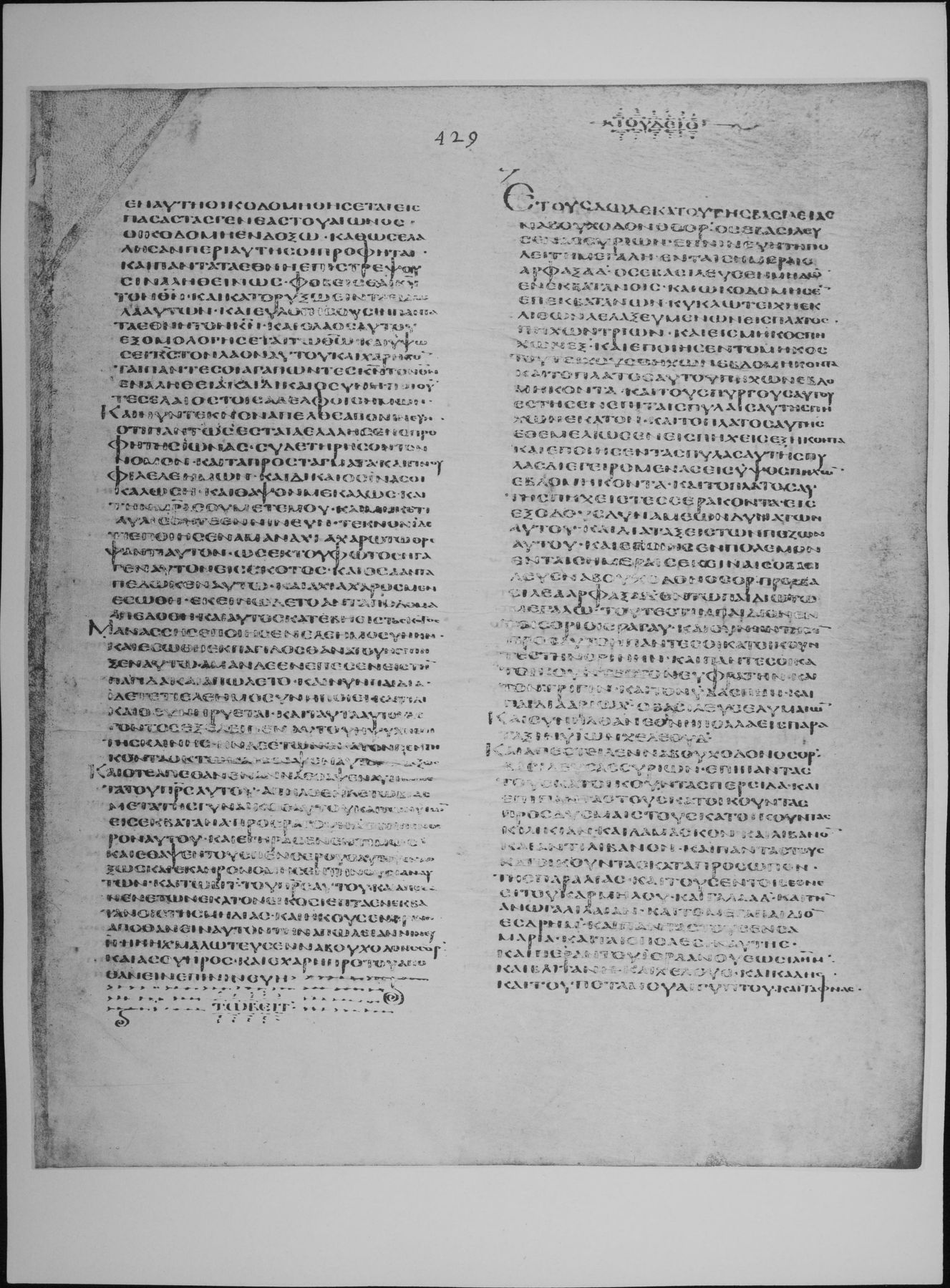
Judith 1:1-8 is on fol. 429r (full-size facsimile of 1879-83, Internet Archive codex-alexandrinus leaf 882). The 1936 reduced facsimile prints beneath this page: Tobit xiv. 5-15, Judith i. 1-9. Checked on the plate: the page begins inside Tob 14:5 (first words read: ΕΝ ΑΥΤΗ ΟΙΚΟΔΟΜΗΘΗΣΕΤΑΙ ΕΙΣ ΠΑΣΑΣ ΤΑΣ ΓΕΝΕΑΣ ΤΟΥ ΑΙΩΝΟΣ ΟΙΚΟΔΟΜΗ ΕΝΔΟΞΩ). Note: Codex Alexandrinus' wording here differs from Swete's (Codex Vaticanus) text: after ΕΝ ΑΥΤΗ ΟΙΚΟΔΟΜΗΘΗΣΕΤΑΙ (Tob. 14:5) it reads ΕΙΣ ΠΑΣΑΣ ΤΑΣ ΓΕΝΕΑΣ ΤΟΥ ΑΙΩΝΟΣ ΟΙΚΟΔΟΜΗ ΕΝΔΟΞΩ where Swete has ἐνδόξως.
1ΕΤΟΥΣ δωδεκάτου τῆς βασιλείας Ναβουχοδονοσόρ, ὃς ἐβασίλευσεν Ἀσσυρίων ἐν Νινευὴ τῇ πόλει τῇ μεγάλῃ, ἐν ταῖς ἡμέραις Ἀρφαξάδ, ὃς ἐβασίλευσεν Μήδων ἐν Ἐκβατάνοις 2καὶ ᾠκοδόμησεν ἐπ᾽ Ἐκβατάνων καὶ κύκλῳ τείχη ἐκ λίθων λελαξευμένων, εἰς πλάτος πηχῶν τριῶν καὶ εἰς μῆκος πηχῶν ἕξ, καὶ ἐποίησεν τὸ ὕψος τοῦ τείχους πηχῶν ἑβδομήκοντα καὶ τὸ πλάτος αὐτοῦ πηχῶν πεντήκοντα· 3καὶ τοὺς πύργους αὐτοῦ ἔστησεν ἐπὶ ταῖς πύλαις αὐτῆς πηχῶν ἑκατόν, καὶ τὸ πλάτος αὐτῆς ἐθεμελίωσεν εἰς πήχεις ἑξήκοντα· 4καὶ ἐποίησεν τὰς πύλας αὐτῆς πύλας διεγειρομένας εἰς ὕψος πηχῶν ἑβδομήκοντα, καὶ τὸ πλάτος αὐτῆς πήχεις τεσσεράκοντα, εἰς ἐξόδους δυνάμεως δυνατῶν αὐτοῦ καὶ διατάξεις τῶν πεζῶν αὐτοῦ· 5καὶ ἐποίησεν πόλεμον ἐν ταῖς ἡμέραις ἐκείναις βασιλεὺς Ναβουχοδονοσὸρ πρὸς βασιλέα Ἀρφαξὰδ ἐν τῷ πεδίῳ τῷ μεγάλῳ, τοῦτό ἐστιν τοῖς ὁρίοις Ῥαγαύ. 6καὶ συνήντησαν πρὸς αὐτὸν πάντες οἱ κατοικοῦντες τὴν ὀρινήν, καὶ πάντες οἱ κατοικοῦντες τὸν Εὐφράτην καὶ τὸν Τίγριν καὶ τὸν Ὑδάσπην, καὶ πεδίῳ Ἀριὼχ ὁ βασιλεὺς Ἐλυμαίων· καὶ συνῆλθον ἔθνη πολλὰ εἰς παράταξιν υἱῶν Χελεούλ. 7Καὶ ἀπέστειλεν Ναβουχοδονοσὸρ βασιλεὺς Ἀσσυρίων ἐπὶ πάντας τοὺς κατοικοῦντας τὴν Περσίδα καὶ ἐπὶ πάντας τοὺς κατοικοῦντας πρὸς δυσμαῖς, τοὺς κατοικοῦντας τὴν Κιλικίαν καὶ Δαμασκόν, τὸν Λίβανον καὶ Ἀντιλίβανον, καὶ πάντας τοὺς κατοικοῦντας κατὰ πρόσωπον παραλίας, 8καὶ τοὺς ἐν τοῖς ἔθνεσι τοῦ Καρμήλου καὶ Γαλαὰδ καὶ τὴν ἄνω Γαλειλαίαν καὶ τὸ μέγα πεδίον Ἐσρήμ,
1In the twelfth year of the reign of Nabuchodonosor, who reigned in Nineve, the great city; in the days of Arphaxad, which reigned over the Medes in Ecbatane, 2and built in Ecbatane walls round about of stones hewn three cubits broad and six cubits long, and made the height of the wall seventy cubits, and the breadth thereof fifty cubits: 3and set the towers thereof upon the gates of it, an hundred cubits high, and the breadth thereof in the foundation threescore cubits: 4and he made the gates thereof, even gates that were raised to the height of seventy cubits, and the breadth of them was forty cubits, for the going forth of his mighty armies, and for the setting in array of his footmen: 5Even in those days king Nabuchodonosor made war with king Arphaxad in the great plain, which is the plain in the borders of Ragau. 6And there came unto him all they that dwelt in the hill country, and all that dwelt by Euphrates, and Tigris, and Hydaspes, and the plain of Arioch the king of the Elymeans, and very many nations of the sons of Cheleul, assembled themselves to the battle. 7Then Nabuchodonosor king of the Assyrians sent unto all that dwelt in Persia, and to all that dwelt westward, and to those that dwelt in Cilicia, and Damascus, and Libanus, and Antilibanus, and to all that dwelt upon the sea coast, 8and to those among the nations that were of Carmel, and Galaad, and the higher Galilee, and the great plain of Esdrelom,
Where on the image
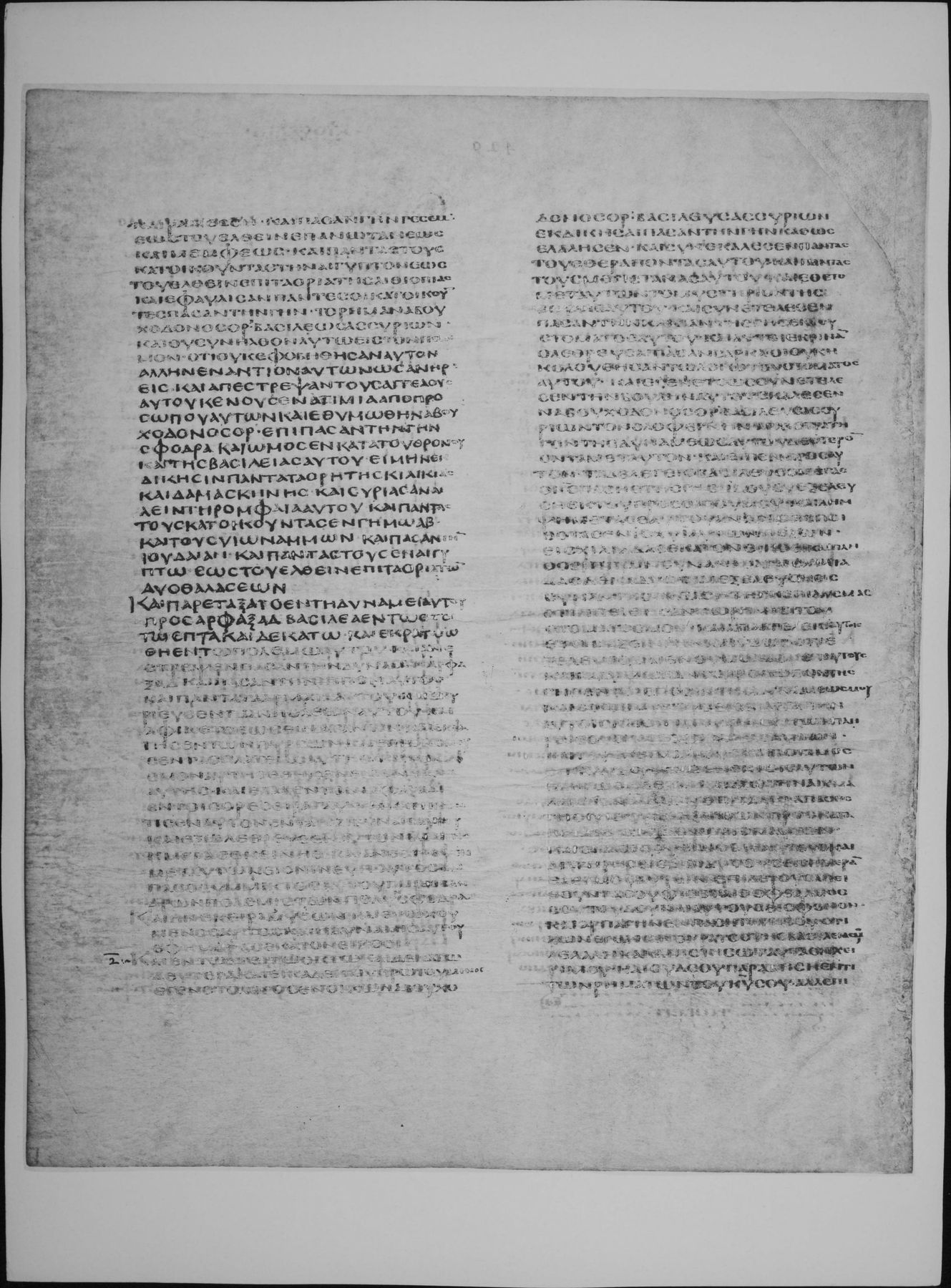
Judith 1:9 is on fol. 429r (full-size facsimile of 1879-83, Internet Archive codex-alexandrinus leaf 882). The 1936 reduced facsimile prints beneath this page: Tobit xiv. 5-15, Judith i. 1-9. Checked on the plate: the page begins inside Tob 14:5 (first words read: ΕΝ ΑΥΤΗ ΟΙΚΟΔΟΜΗΘΗΣΕΤΑΙ ΕΙΣ ΠΑΣΑΣ ΤΑΣ ΓΕΝΕΑΣ ΤΟΥ ΑΙΩΝΟΣ ΟΙΚΟΔΟΜΗ ΕΝΔΟΞΩ). Note: Codex Alexandrinus' wording here differs from Swete's (Codex Vaticanus) text: after ΕΝ ΑΥΤΗ ΟΙΚΟΔΟΜΗΘΗΣΕΤΑΙ (Tob. 14:5) it reads ΕΙΣ ΠΑΣΑΣ ΤΑΣ ΓΕΝΕΑΣ ΤΟΥ ΑΙΩΝΟΣ ΟΙΚΟΔΟΜΗ ΕΝΔΟΞΩ where Swete has ἐνδόξως. Judith 1:9-16 is on fol. 429v (full-size facsimile of 1879-83, Internet Archive codex-alexandrinus leaf 883). The 1936 reduced facsimile prints beneath this page: Judith i. 9-ii. 13. Checked on the plate: the page begins inside Judith 1:9 (first words read: ΚΑΙ ΠΑΣΑΝ ΓΗΝ ΓΕΣΕΜ ΕΩΣ ΤΟΥ ΕΛΘΕΙΝ ΕΠΑΝΩ ΤΑΝΕΩΣ ΚΑΙ ΜΕΜΦΕΩΣ ΚΑΙ ΠΑΝΤΑΣ ΤΟΥΣ). Note: the first word of the column is faint on the plate.
9καὶ πάντας τοὺς ἐν Σαμαρείᾳ καὶ ταῖς πόλεσιν αὐτῆς, καὶ πέραν τοῦ Ἰορδάνου ἕως Ἰερουσαλὴμ καὶ Βαιτανὴ καὶ Χελοὺς καὶ Κάδης καὶ τοῦ ποταμοῦ Αἰγύπτου, καὶ Ταφνὰς καὶ Ῥαμεσσὴ καὶ πᾶσαν γῆν Γέσεμ 10ἕως τοῦ ἐλθεῖν ἐπάνω Τάνεως καὶ Μέμφεως, καὶ πάντας τοὺς κατοικοῦντας τὴν Αἴγυπτον ἕως τοῦ ἐλθεῖν ἐπὶ τὰ ὅρια τῆς Αἰθιοπίας. 11καὶ ἐφαύλισαν πάντες οἱ κατοικοῦντες πᾶσαν τὴν γῆν τὸ ῥῆμα Ναβουχοδονοσὸρ βασιλέως Ἀσσυρίων καὶ οὐ συνῆλθον αὐτῷ εἰς τὸν πόλεμον, ὅτι οὐκ ἐφοβήθησαν αὐτὸν ἀλλ᾽ ἦν ἐναντίον αὐτῶν ὡς ἀνὴρ ἴσος, καὶ ἀνέστρεψαν τοὺς ἀγγέλους αὐτοῦ κενοὺς ἐν ἀτιμίᾳ πρὸ προσώπου αὐτῶν. 12Καὶ ἐθυμώθη Ναβουχοδονοσὸρ ἐπὶ πᾶσαν τὴν γῆν ταύτην σφόδρα, καὶ ὤμοσε κατὰ τοῦ θρόνου καὶ τῆς βασιλείας αὐτοῦ, εἰ μὴν ἐκδικήσειν πάντα τὰ ὅρια τῆς Κιλικίας καὶ Δαμασκηνῆς καὶ Συρίας, ἀνελεῖν τῇ ῥομφαίᾳ αὐτοὺς καὶ πάντας τοὺς κατοικοῦντας ἐν τῇ Μωὰβ καὶ τοὺς υἱοὺς Ἀμμὼν καὶ πᾶσαν τὴν Ἰδουμαίαν καὶ πάντας τοὺς ἐν Αἰγύπτῳ ἕως τοῦ ἐλθεῖν ἐπὶ τὰ ὅρια τῶν δύο θαλασσῶν. 13καὶ παρετάξατο ἐν τῇ δυνάμει αὐτοῦ πρὸς Ἀρφαξὰδ βασιλέα ἐν τῷ ἔτει τῷ ἑπτακαιδεκάτῳ· καὶ ἐκραταιώθη ἐν τῷ πολέμῳ αὐτοῦ, καὶ ἀνέστρεψεν πᾶσαν τὴν δύναμιν Ἀρφαξὰδ καὶ πᾶσαν τὴν ἵππον αὐτοῦ καὶ πάντα τὰ ἅρματα αὐτοῦ, 14καὶ ἐκυρίευσε τῶν πόλεων αὐτοῦ· καὶ ἀφίκετο ἕως Ἐκβατάνων, καὶ ἐκράτησε τῶν πύργων καὶ ἐπρονόμευσε τὰς πλατείας αὐτῆς, καὶ τὸν κόσμον αὐτῆς ἔθηκεν εἰς ὄνειδος αὐτῆς· 15καὶ ἔλαβε τὸν Ἀρφαξὰδ ἐν τοῖς ὄρεσι Ῥαγαύ, καὶ κατηκόντισεν αὐτὸν ἐν ταῖς σιβύναις αὐτοῦ, καὶ ἐξωλέθρευσεν αὐτὸν ἕως τῆς ἡμέρας ἐκείνης. 16καὶ ἀνέστρεψεν μετ᾽ αὐτῶν αὐτὸς καὶ ἡ δύναμις αὐτοῦ ἐφ᾽ ἡμέρας ἑκατὸν εἴκοσι.
9and to all that were in Samaria and the cities thereof, and beyond Jordan unto Jerusalem, and Betane, and Chellus, and Kades, and the river of Egypt, and Taphnes, and Ramesse, and all the land of Gesem, 10until ye come beyond Tanis and Memphis, and to all the inhabitants of Egypt, until ye come to the borders of Ethiopia. 11But all the inhabitants of the land made light of the commandment of Nabuchodonosor king of the Assyrians, neither went they with him to the battle; for they were not afraid of him: yea, he was before them as one man, and they sent away his ambassadors from them without effect, and with disgrace. 12Therefore Nabuchodonosor was very angry with all this country, and sware by his throne and kingdom, that he would surely be avenged upon all those coasts of Cilicia, and Damascus, and Syria, and that he would slay with the sword all the inhabitants of the land of Moab, and the children of Ammon, and all Judea, and all that were in Egypt, till ye come to the borders of the two seas. 13Then he marched in battle array with his power against king Arphaxad in the seventeenth year, and he prevailed in his battle: for he overthrew all the power of Arphaxad, and all his horsemen, and all his chariots, 14and became lord of his cities, and came unto Ecbatane, and took the towers, and spoiled the streets thereof, and turned the beauty thereof into shame. 15He took also Arphaxad in the mountains of Ragau, and smote him through with his darts, and destroyed him utterly that day. 16So he returned afterward to Nineve, both he and all his company of sundry nations, being a very great multitude of men of war, and there he took his ease, and banqueted, both he and his army, an hundred and twenty days.
Cite
Sources
- Source: Codex Alexandrinus (British Library Royal MS 1 D. VI) via the British Museum photographic facsimiles of 1879-83 and 1936 (Internet Archive) + Swete's Septuagint + Brenton's English (holding institution)
- Critical edition: H. B. Swete, The Old Testament in Greek according to the Septuagint (1909)
← previous · → next · v cycle view · l back to library