Judith, Chapter 2 (Codex Alexandrinus)
Introduction
Judith 2 in the Greek Old Testament (the Septuagint) as written in Codex Alexandrinus, a Greek Bible copied in the fifth century, probably in Egypt, and now in the British Library (Royal MS 1 D. VI, the second of its four volumes). It is one of the three great early codices of the whole Greek Bible, with Codex Vaticanus and Codex Sinaiticus.
This entry meets the strict three-criteria standard of the Theosis Library:
- Manuscript scan: the pages of Codex Alexandrinus carrying this chapter (fol. 429v, fol. 430r), from the full-size photographic (autotype) facsimile published by the British Museum in 1879-1883, as digitised on the Internet Archive. The verse range of every page comes from the reduced photographic facsimile of 1936, which prints it beneath each plate, and the opening words of every page were read on the plate to confirm the page and the verse it begins with. Each section links to the page or pages that hold its verses. Folio numbers are those written at the head of each leaf and visible on the plates.
- Original text: Swete's edition, which here prints the text of Codex Vaticanus (Vat. gr. 1209), the base of his edition, and gives the readings of Alexandrinus only in his apparatus. The Greek column is therefore Vaticanus' text; where Alexandrinus differs, the plate shows what Alexandrinus reads.
- English translation: Sir Lancelot C. L. Brenton, The Septuagint Version of the Old Testament (1844; 1851 edition), a translation of the Greek, public domain, from the eBible.org text.
How was this verified? (Provenance)
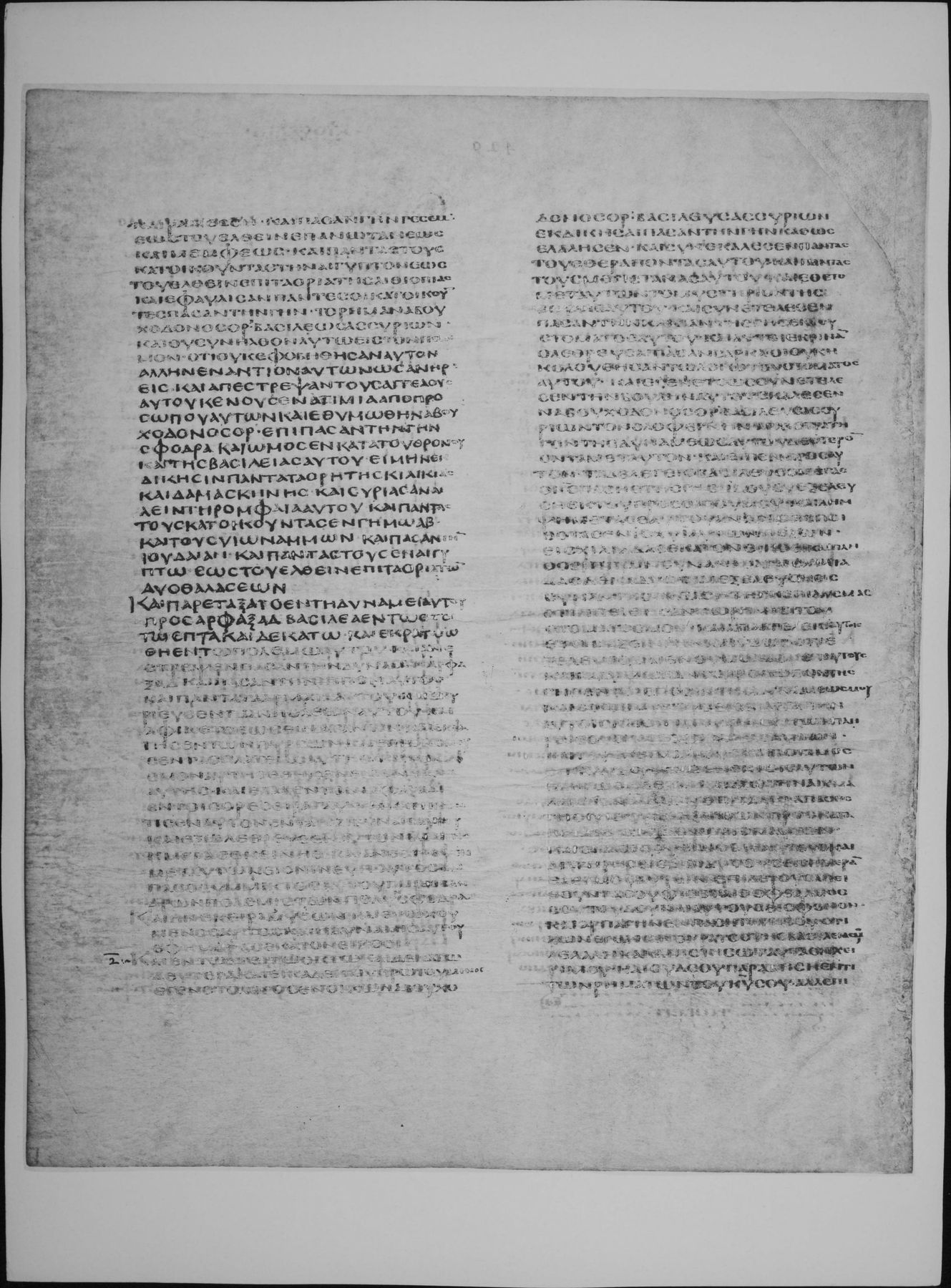
Where on the image
Judith 2:1-8 is on fol. 429v (full-size facsimile of 1879-83, Internet Archive codex-alexandrinus leaf 883). The 1936 reduced facsimile prints beneath this page: Judith i. 9-ii. 13. Checked on the plate: the page begins inside Judith 1:9 (first words read: ΚΑΙ ΠΑΣΑΝ ΓΗΝ ΓΕΣΕΜ ΕΩΣ ΤΟΥ ΕΛΘΕΙΝ ΕΠΑΝΩ ΤΑΝΕΩΣ ΚΑΙ ΜΕΜΦΕΩΣ ΚΑΙ ΠΑΝΤΑΣ ΤΟΥΣ). Note: the first word of the column is faint on the plate.
1Καὶ ἐν τῷ ἔτει τῷ ὀκτωκαιδεκάτῳ, δευτέρᾳ καὶ εἰκάδι τοῦ πρώτου μηνός, ἐγένετο λόγος ἐν οἴκῳ Ναβουχοδονοσὸρ βασιλέως Ἀσσυρίων ἐκδικῆσαι πᾶσαν τὴν γῆν καθὼς ἐλάλησεν. 2καὶ συνεκάλεσεν πάντας τοὺς θεράποντας αὐτοῦ καὶ πάντας τοὺς μεγιστᾶνας αὐτοῦ, καὶ ἔθετο μετ᾽ αὐτῶν τὸ μυστήριον τῆς βουλῆς αὐτοῦ, καὶ συνετέλεσεν πᾶσαν τὴν κακίαν τῆς γῆς ἐκ τοῦ στόματος αὐτοῦ· 3καὶ αὐτοὶ ἔκριναν ὀλεθρεῦσαι πᾶσαν σάρκα οἳ οὐκ ἠκολούθησαν τῷ λόγῳ τοῦ στόματος αὐτοῦ. 4καὶ ἐγένετο ὡς συνετέλεσεν τὴν βουλὴν αὐτοῦ, ἐκάλεσεν Ναβουχοδονοσὸρ βασιλεὺς Ἀσσυρίων τὸν Ὀλοφέρνην ἀρχιστράτηγον τῆς δυνάμεως αὐτοῦ, δεύτερον ὄντα μετ᾽ αὐτόν, καὶ εἶπεν πρὸς αὐτόν 5Τάδε λέγει ὁ βασιλεὺς ὁ μέγας, ὁ κύριος πάσης τῆς γῆς Ἰδοὺ σὺ ἐξελεύσῃ ἐκ τοῦ προσώπου μου, καὶ λήμψῃ μετὰ σεαυτοῦ ἄνδρας πεποιθότας ἐν ἰσχύι αὐτῶν, πεζῶν εἰς χιλιάδας ἑκατὸν εἴκοσι καὶ πλῆθος ἵππων σὺν ἀναβάταις μυριάδας δέκα δύο, 6καὶ ἐξελεύσῃ εἰς συνάντησιν πάσῃ τῇ γῇ ἐπὶ δυσμάς, ὅτι ἠπείθησαν τῷ ῥήματι τοῦ στόματός μου· 7καὶ ἑτοιμάζειν γῆν καὶ ὕδωρ, ὅτι ἐξελεύσομαι ἐν θυμῷ μου ἐπ᾽ αὐτούς, καὶ καλύψω πᾶν τὸ πρόσωπον τῆς γῆς ἐν τοῖς ποσὶν τῆς δυνάμεώς μου, καὶ δώσω αὐτοὺς εἰς διαρπαγὴν αὐτοῖς· 8καὶ οἱ τραυματίαι αὐτῶν πληρώσουσιν τὰς φάραγγας αὐτῶν καὶ τοὺς χειμάρρους, καὶ ποταμὸς ἐπικλύζων τοῖς νεκροῖς αὐτῶν πληρωθήσεται·
1And in the eighteenth year, the two and twentieth day of the first month, there was talk in the house of Nabuchodonosor king of the Assyrians, that he should, as he said, avenge himself on all the earth. 2So he called unto him all his officers, and all his nobles, and communicated with them his secret counsel, and concluded the afflicting of the whole earth out of his own mouth. 3Then they decreed to destroy all flesh, that did not obey the commandment of his mouth. 4And when he had ended his counsel, Nabuchodonosor king of the Assyrians called Holofernes the chief captain of his army, which was next unto him, and said unto him, 5Thus saith the great king, the lord of the whole earth, Behold, thou shalt go forth from my presence, and take with thee men that trust in their own strength, of footmen an hundred and twenty thousand; and the number of horses with their riders twelve thousand. 6And thou shalt go against all the west country, because they disobeyed my commandment: 7and thou shalt declare unto them, that they prepare for me earth and water: for I will go forth in my wrath against them, and will cover the whole face of the earth with the feet of mine army, and I will give them for a spoil unto them: 8so that their slain shall fill their valleys and brooks, and the river shall be filled with their dead, till it overflow:
Where on the image
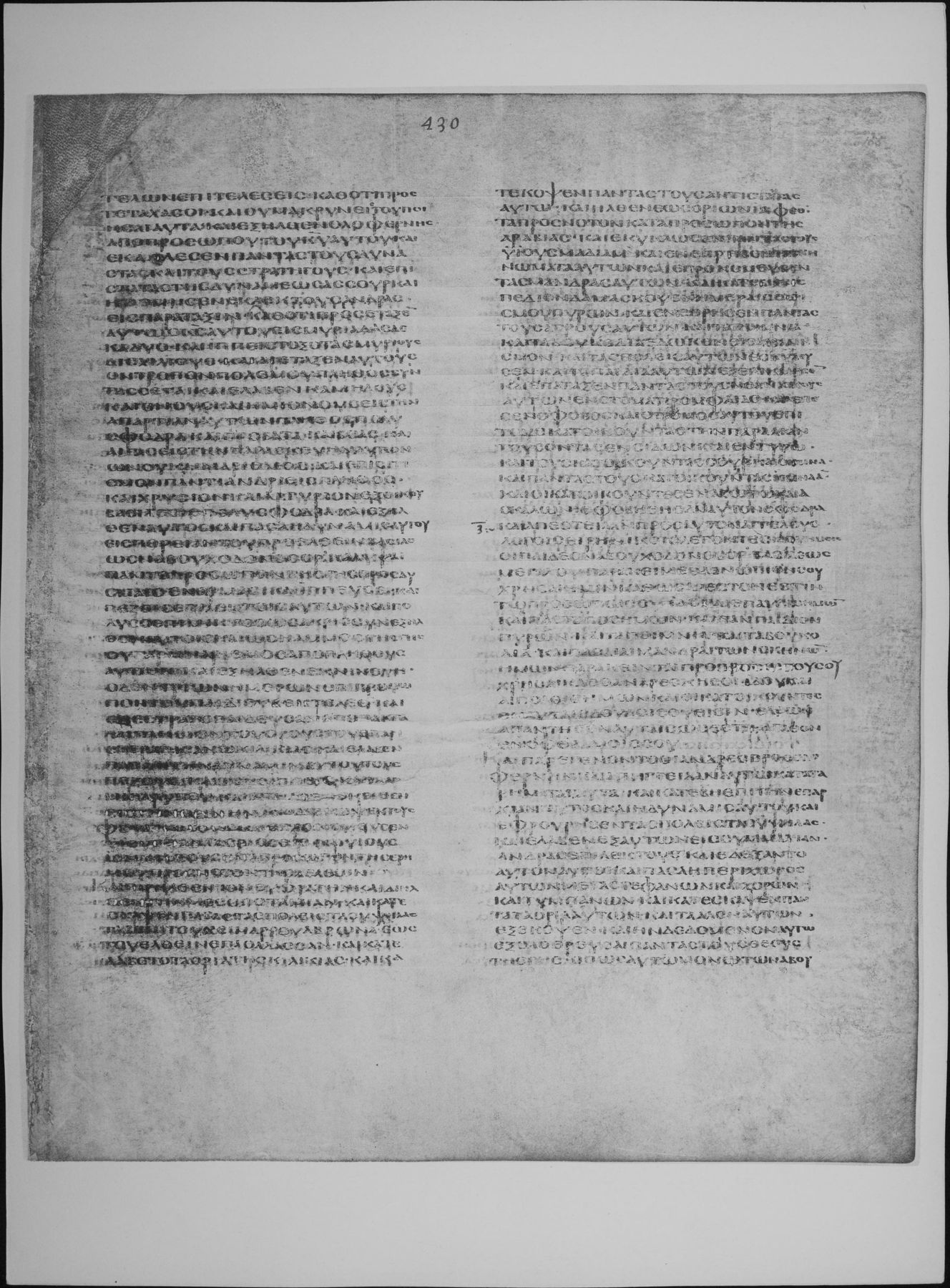
Judith 2:9-13 is on fol. 429v (full-size facsimile of 1879-83, Internet Archive codex-alexandrinus leaf 883). The 1936 reduced facsimile prints beneath this page: Judith i. 9-ii. 13. Checked on the plate: the page begins inside Judith 1:9 (first words read: ΚΑΙ ΠΑΣΑΝ ΓΗΝ ΓΕΣΕΜ ΕΩΣ ΤΟΥ ΕΛΘΕΙΝ ΕΠΑΝΩ ΤΑΝΕΩΣ ΚΑΙ ΜΕΜΦΕΩΣ ΚΑΙ ΠΑΝΤΑΣ ΤΟΥΣ). Note: the first word of the column is faint on the plate. Judith 2:13-16 is on fol. 430r (full-size facsimile of 1879-83, Internet Archive codex-alexandrinus leaf 884). The 1936 reduced facsimile prints beneath this page: Judith ii. 13-iii. 8. Checked on the plate: the page begins inside Judith 2:13 (first words read: ΤΕΛΩΣ ΕΠΙΤΕΛΕΣΕΙΣ ΚΑΘΟΤΙ ΠΡΟΣΤΕΤΑΧΑ ΣΟΙ ΚΑΙ ΟΥ ΜΗ ΑΝΑΒΑΛΗ ΤΟΥ ΠΟΙΗΣΑΙ ΑΥΤΑ).
9καὶ ἄξω τὴν αἰχμαλωσίαν αὐτῶν ἐπὶ τὰ ἄκρα πάσης τῆς γῆς. 10σὺ δὲ ἐξελθὼν προκαταλήμψῃ μοι πᾶν ὅριον αὐτῶν, καὶ ἐκδώσουσίν σοι ἑαυτούς, καὶ διατηρήσεις ἐμοὶ αὐτοὺς εἰς ἡμέραν ἐλεγμοῦ αὐτῶν· 11ἐπὶ δὲ τοὺς ἀπειθοῦντας οὐ φείσεται ὁ ὀφθαλμός σου, δοῦναι αὐτοὺς εἰς φόνον καὶ ἁρπαγὴν ἐν πάσῃ τῇ γῇ σου. 12ὅτι ζῶν ἐγὼ καὶ τὸ κράτος τῆς βασιλείας μου, λελάληκα καὶ ποιήσω ταῦτα ἐν χειρί μου. 13καὶ σὺ δὲ οὐ παραβήσῃ ἕν τι τῶν ῥημάτων τοῦ κυρίου σου, ἀλλὰ ἐπιτελῶν ἐπιτελέσεις καθότι προστέταχά σοι, καὶ οὐ μακρυνεῖς τοῦ ποιῆσαι αὐτά. 14Καὶ ἐξῆλθεν Ὀλοφέρνης ἀπὸ προσώπου τοῦ κυρίου αὐτοῦ, καὶ ἐκάλεσεν πάντας τοὺς δυνάστας καὶ τοὺς στρατηγοὺς καὶ ἐπιστάτας τῆς δυνάμεως Ἀσσούρ, 15καὶ ἠρίθμησεν ἐκλεκτοὺς ἄνδρας εἰς παράταξιν, καθότι ἐκέλευσεν αὐτῷ ὁ κύριος αὐτοῦ, εἰς μυριάδας δέκα δύο καὶ ἱππεῖς τοξότας μυρίους δισχιλίους, 16καὶ διέταξεν αὐτοὺς ὃν τρόπον πολέμου πλῆθος συντάσσεται.
9and I will lead them captives to the utmost parts of all the earth. 10Thou therefore shalt go forth, and take beforehand for me all their coasts: and if they will yield themselves unto thee, thou shalt reserve them for me till the day of their punishment. 11But concerning them that rebel, let not thine eye spare them; but put them to the slaughter, and spoil them wheresoever thou goest. 12For as I live, and by the power of my kingdom, whatsoever I have spoken, that will I do by mine hand. 13And take thou heed that thou transgress none of the commandments of thy lord, but accomplish them fully, as I have commanded thee, and defer not to do them. 14Then Holofernes went forth from the presence of his lord, and called all the governors and captains, and the officers of the army of Assur; 15and he mustered the chosen men for the battle, as his lord had commanded him, unto an hundred and twenty thousand, and twelve thousand archers on horseback; 16and he ranged them, as a great army is ordered for the war.
Where on the image
Judith 2:17-24 is on fol. 430r (full-size facsimile of 1879-83, Internet Archive codex-alexandrinus leaf 884). The 1936 reduced facsimile prints beneath this page: Judith ii. 13-iii. 8. Checked on the plate: the page begins inside Judith 2:13 (first words read: ΤΕΛΩΣ ΕΠΙΤΕΛΕΣΕΙΣ ΚΑΘΟΤΙ ΠΡΟΣΤΕΤΑΧΑ ΣΟΙ ΚΑΙ ΟΥ ΜΗ ΑΝΑΒΑΛΗ ΤΟΥ ΠΟΙΗΣΑΙ ΑΥΤΑ).
17καὶ ἔλαβεν καμήλους καὶ ὄνους καὶ ἡμιόνους εἰς τὴν ἀπαρτίαν αὐτῶν, πλῆθος πολὺ σφόδρα, καὶ πρόβατα καὶ βόας καὶ αἶγας εἰς τὴν παρασκευὴν αὐτῶν ὧν οὐκ ἦν ἀριθμός, 18καὶ ἐπισιτισμὸν παντὶ ἀνδρὶ εἰς πλῆθος, καὶ χρυσίον καὶ ἀργύριον ἐξ οἴκου βασιλέως σφόδρα. 19καὶ ἐξῆλθεν αὐτὸς καὶ πᾶσα ἡ δύναμις αὐτοῦ εἰς πορείαν τοῦ προελθεῖν βασιλέως Ναβουχοδονοσὸρ καὶ καλύψαι πᾶν τὸ πρόσωπον τῆς γῆς πρὸς δυσμαῖς ἐν ἅρμασι καὶ ἱππεῦσι καὶ πεζοῖς ἐπιλέκτοις αὐτῶν. 20καὶ πολὺς ὁ ἐπίμικτος ὡς ἀκρὶς συνεξῆλθον αὐτοῖς, καὶ ὡς ἡ ἄμμος τῆς γῆς, οὐ γὰρ ἦν ἀριθμὸς ἀπὸ πλήθους αὐτῶν. 21καὶ ἐπῆλθον ἐκ Νινευὴ ὁδὸν τριῶν ἡμερῶν ἐπὶ πρόσωπον τοῦ πεδίου Βαικτειλαίθ, καὶ ἐπεστρατοπέδευσαν ἀπὸ βαικτειλαὶθ πλησίον τοῦ ὄρους τοῦ ἐπ᾽ ἀριστερᾷ τῆς ἄνω Κιλικίας. 22καὶ ἔλαβεν πᾶσαν τὴν δύναμιν αὐτοῦ, τοὺς πεζοὺς καὶ τοὺς ἱππεῖς καὶ τὰ ἅρματα αὐτοῦ, καὶ ἀπῆλθεν ἐκεῖθεν εἰς τὴν ὀρινήν. 23καὶ διέκοψεν τὸ Φοὺδ καὶ Λούδ, καὶ ἐπρονόμευσαν υἱοὺς πάντας Ῥασσεὶς καὶ υἱοὺς Ἰσμαὴλ τοὺς κατὰ πρόσωπον τῆς ἐρήμου πρὸς νότον τῆς Χαλδαίων. 24καὶ παρῆλθεν τὸν Εὐφράτην καὶ διῆλθεν τὴν Μεσοποταμίαν, καὶ διέσκαψε πάσας τὰς πόλεις τὰς ὑψηλὰς τὰς ἐπὶ τοῦ χειμάρρου Ἀβρωνὰ ἕως τοῦ ἐλθεῖν ἐπὶ θάλασσαν.
17And he took camels and asses for their carriages, a very great number; and sheep and oxen and goats without number for their provision: 18and plenty of victual for every man of the army, and very much gold and silver out of the king's house. 19Then he went forth and all his power to go before king Nabuchodonosor in the voyage, and to cover all the face of the earth westward with their chariots, and horsemen and their chosen footmen. 20A great number also of sundry countries came with them like locusts, and like the sand of the earth: for the multitude was without number. 21And they went forth of Nineve three days' journey toward the plain of Bectileth, and pitched from Bectileth near the mountain which is at the left hand of the upper Cilicia. 22Then he took all his army, his footmen, and horsemen, and chariots, and went from thence into the hill country; 23and destroyed Phud and Lud, and spoiled all the children of Rasses, and the children of Ismael, which were toward the wilderness at the south of the land of the Chellians. 24Then he went over Euphrates, and went through Mesopotamia, and destroyed all the high cities that were upon the river Arbonai, till ye come to the sea.
Where on the image
Judith 2:25-28 is on fol. 430r (full-size facsimile of 1879-83, Internet Archive codex-alexandrinus leaf 884). The 1936 reduced facsimile prints beneath this page: Judith ii. 13-iii. 8. Checked on the plate: the page begins inside Judith 2:13 (first words read: ΤΕΛΩΣ ΕΠΙΤΕΛΕΣΕΙΣ ΚΑΘΟΤΙ ΠΡΟΣΤΕΤΑΧΑ ΣΟΙ ΚΑΙ ΟΥ ΜΗ ΑΝΑΒΑΛΗ ΤΟΥ ΠΟΙΗΣΑΙ ΑΥΤΑ).
25καὶ κατελάβετο τὰ ὅρια τῆς Κιλικίας, καὶ κατέκοψε πάντας τοὺς ἀντιστάντας αὐτῷ, καὶ ἦλθεν ἕως ὁρίων Ἰάφεθ τὰ πρὸς νότον κατὰ πρόσωπον τῆς Ἀραβίας. 26καὶ ἐκύκλωσεν πάντας τοὺς υἱοὺς Μαδιάμ, καὶ ἐνέπρησεν τὰ σκηνώματα αὐτῶν, καὶ ἐπρονόμευσεν τὰς μάνδρας αὐτῶν. 27καὶ κατέβη εἰς πεδίον Δαμασκοῦ ἐν ἡμέραις θερισμοῦ πυρῶν καὶ ἐνέπρησεν πάντας τοὺς ἀγροὺς αὐτῶν, τὰ ποίμνια καὶ τὰ βουκόλια ἔδωκεν εἰς ἀφανισμόν, καὶ τὰς πόλεις αὐτῶν ἐσκύλευσεν καὶ τὰ πεδία αὐτῶν ἐξελίκμησεν, καὶ ἐπάταξεν πάντας τοὺς νεανίσκους αὐτῶν ἐν στόματι ῥομφαίας. 28Καὶ ἐπέπεσεν φόβος καὶ τρόμος αὐτοῦ ἐπὶ τοὺς κατοικοῦντας τὴν παραλίαν, τοὺς ὄντας ἐν Σιδῶνι καὶ Τύρῳ, καὶ τοὺς κατοικοῦντας Ἀσσοὺρ καὶ Ὀκεινά, καὶ πάντας τοὺς κατοικοῦντας Ἰεμνάαν, καὶ οἱ κατοικοῦντες ἐν Ἀζώτῳ καὶ Ἀσκάλωνι ἐφοβήθησαν αὐτὸν σφόδρα.
25And he took the borders of Cilicia, and killed all that resisted him, and came to the borders of Japheth, which were toward the south, over against Arabia. 26He compassed also all the children of Madian, and burned up their tabernacles, and spoiled their sheepcotes. 27Then he went down into the plain of Damascus in the time of wheat harvest, and burnt up all their fields, and destroyed their flocks and herds, also he spoiled their cities, and utterly wasted their countries, and smote all their young men with the edge of the sword. 28Therefore the fear and dread of him fell upon all the inhabitants of the sea coasts, which were in Sidon and Tyrus, and them that dwelt in Sur and Ocina, and all that dwelt in Jemnaan; and they that dwelt in Azotus and Ascalon feared him greatly.
Cite
Sources
- Source: Codex Alexandrinus (British Library Royal MS 1 D. VI) via the British Museum photographic facsimiles of 1879-83 and 1936 (Internet Archive) + Swete's Septuagint + Brenton's English (holding institution)
- Critical edition: H. B. Swete, The Old Testament in Greek according to the Septuagint (1909)
← previous · → next · v cycle view · l back to library