Judith, Chapter 13 (Codex Alexandrinus)
Introduction
Judith 13 in the Greek Old Testament (the Septuagint) as written in Codex Alexandrinus, a Greek Bible copied in the fifth century, probably in Egypt, and now in the British Library (Royal MS 1 D. VI, the second of its four volumes). It is one of the three great early codices of the whole Greek Bible, with Codex Vaticanus and Codex Sinaiticus.
This entry meets the strict three-criteria standard of the Theosis Library:
- Manuscript scan: the pages of Codex Alexandrinus carrying this chapter (fol. 435v, fol. 436r), from the full-size photographic (autotype) facsimile published by the British Museum in 1879-1883, as digitised on the Internet Archive. The verse range of every page comes from the reduced photographic facsimile of 1936, which prints it beneath each plate, and the opening words of every page were read on the plate to confirm the page and the verse it begins with. Each section links to the page or pages that hold its verses. Folio numbers are those written at the head of each leaf and visible on the plates.
- Original text: Swete's edition, which here prints the text of Codex Vaticanus (Vat. gr. 1209), the base of his edition, and gives the readings of Alexandrinus only in his apparatus. The Greek column is therefore Vaticanus' text; where Alexandrinus differs, the plate shows what Alexandrinus reads.
- English translation: Sir Lancelot C. L. Brenton, The Septuagint Version of the Old Testament (1844; 1851 edition), a translation of the Greek, public domain, from the eBible.org text.
How was this verified? (Provenance)
Where on the image
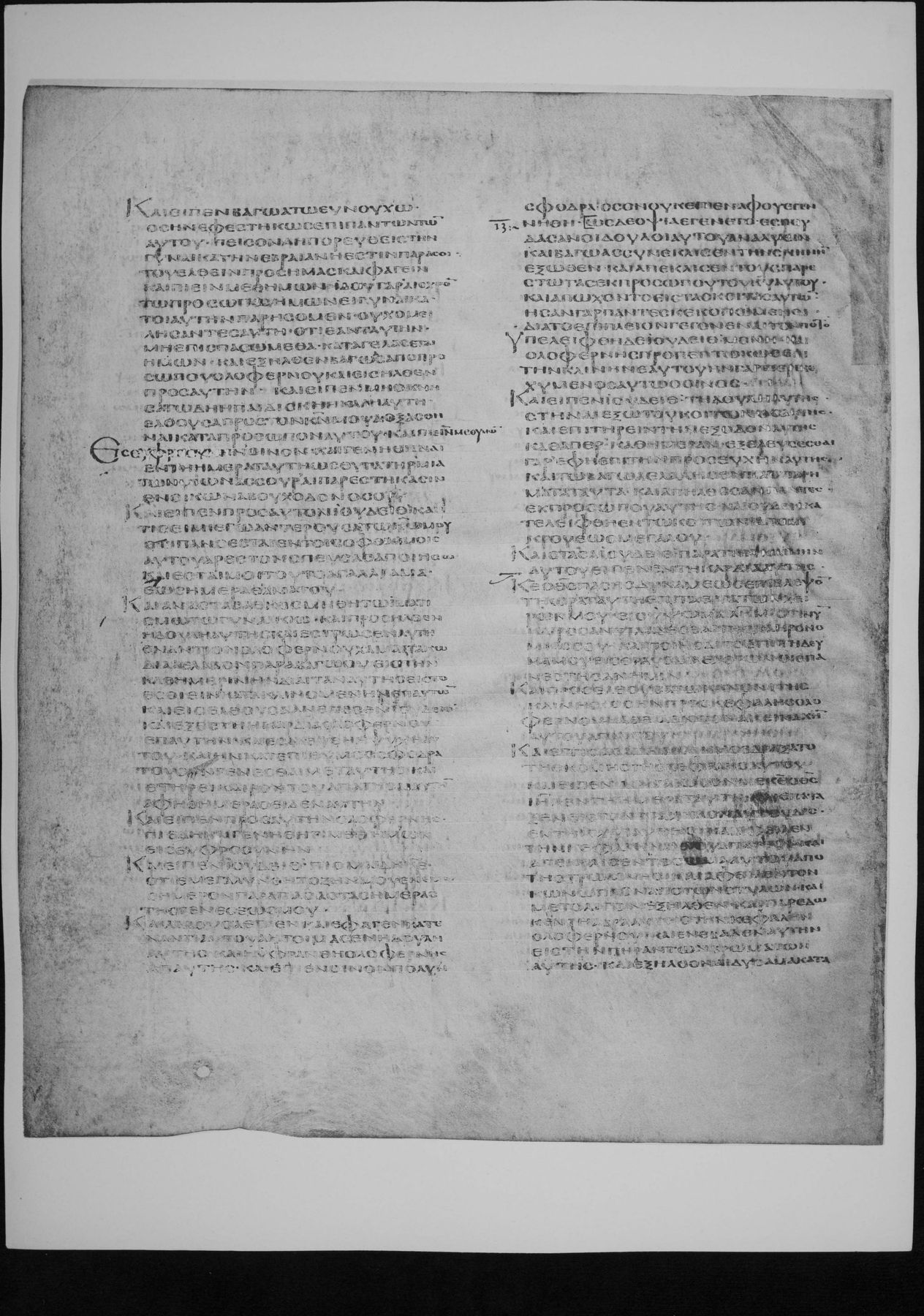
Judith 13:1-8 is on fol. 435v (full-size facsimile of 1879-83, Internet Archive codex-alexandrinus leaf 895). The 1936 reduced facsimile prints beneath this page: Judith xii. 11-xiii. 10. Checked on the plate: the page begins at the start of Judith 12:11 (first words read: ΚΑΙ ΕΙΠΕΝ ΒΑΓΩΑ ΤΩ ΕΥΝΟΥΧΩ ΟΣ ΗΝ ΕΦΕΣΤΗΚΩΣ ΕΠΙ ΠΑΝΤΩΝ ΤΩΝ ΑΥΤΟΥ).
1Ὡς δὲ ὀψία ἐγένετο, ἐσπούδασαν οἱ δοῦλοι αὐτοῦ ἀναλύειν· καὶ Βαγώας συνέκλεισεν τὴν σκηνὴν ἔξωθεν, καὶ ἀπέκλεισεν τοὺς παρεστῶτας ἐκ προσώπου τοῦ κυρίου αὐτοῦ, καὶ ἀπῴχοντο εἰς τὰς κοίτας αὐτῶν· ἦσαν γὰρ πάντες κεκοπωμένοι διὰ τὸ ἐπὶ πλεῖον γεγονέναι τὸν πότον. 2ὑπελείφθη δὲ Ἰουδεὶθ μόνη ἐν τῇ σκηνῇ, καὶ Ὀλοφέρνης προπεπτωκὼς ἐπὶ τὴν κλίνην ἑαυτοῦ· ἦν γὰρ περικεχυμένος αὐτῷ ὁ οἶνος. 3καὶ εἶπεν Ἰουδεὶθ τῇ δούλῃ αὐτῆς στῆναι ἔξω τοῦ κοιτῶνος αὐτῆς καὶ ἐπιτηρεῖν τὴν ἔξοδον αὐτῆς καθάπερ καθ᾽ ἡμέραν, ἐξελεύσεσθαι γὰρ ἔφη ἐπὶ τὴν προσευχὴν αὐτῆς· καὶ τῷ Βαγώᾳ ἐλάλησεν κατὰ τὰ ῥήματα ταῦτα. 4καὶ ἀπήλθοσαν πάντες ἐκ προσώπου, καὶ οὐδεὶς κατελείφθη ἐν τῷ κοιτῶνι ἀπὸ μικροῦ ἕως μεγάλου· καὶ στᾶσα Ἰουδεὶθ παρὰ τὴν κλίνην αὐτοῦ εἶπεν ἐν τῇ καρδίᾳ ἑαυτῆς Κύριε ὁ θεὸς πάσης δυνάμεως, ἐπίβλεψον ἐν τῇ ὥρᾳ ταύτῃ ἐπὶ τὰ ἔργα τῶν χειρῶν μου, εἰς ὕψωμα Ἰερουσαλήμ· 5ὅτι νῦν καιρὸς ἀντιλαβέσθαι τῆς κληρονομίας σου καὶ ποιῆσαι τὸ ἐπιτήδευμά μου εἰς θραῦμα ἐχθρῶν οἳ ἐπανέστησαν ἡμῖν. 6καὶ προσελθοῦσα τῷ κανόνι τῆς κλίνης ὃς ἦν πρὸς κεφαλῆς Ὀλοφέρνου καθεῖλεν τὸν ἀκινάκην αὐτοῦ ἀπ᾽ αὐτοῦ, 7καὶ ἐγγίσασα τῆς κλίνης ἐδράξατο τῆς κόμης τῆς κεφαλῆς αὐτοῦ, καὶ εἶπεν Κραταίωσόν με, ὁ θεὸς Ἰσραήλ, ἐν τῇ ἡμέρᾳ ταύτῃ. 8καὶ ἐπάταξεν εἰς τὸν τράχηλον αὐτοῦ δὶς ἐν τῇ ἰσχύι αὐτῆς, καὶ ἀφεῖλεν τὴν κεφαλὴν αὐτοῦ,
1Now when the evening was come, his servants made haste to depart, and Bagoas shut his tent without, and dismissed the waiters from the presence of his lord; and they went to their beds: for they were all weary, because the feast had been long. 2And Judith was left alone in the tent, and Holofernes lying along on his bed: for he was filled with wine. 3Now Judith had commanded her maid to stand without her bedchamber, and to wait for her coming forth, as she did daily: for she said she would go forth to her prayers, and she spake to Bagoas according to the same purpose. 4So all went forth, and none was left in the bedchamber, neither little nor great. Then Judith, standing by his bed, said in her heart, O Lord God of all power, look at this present upon the work of mine hands for the exaltation of Jerusalem. 5For now is the time to help thine inheritance, and to execute my enterprise to the destruction of the enemies which are risen against us. 6Then she came to the pillar of the bed, which was at Holofernes' head, and took down his fauchion from thence, 7and approached to his bed, and took hold of the hair of his head, and said, Strengthen me, O Lord God of Israel, this day. 8And she smote twice upon his neck with all her might, and she took away his head from him,
Where on the image
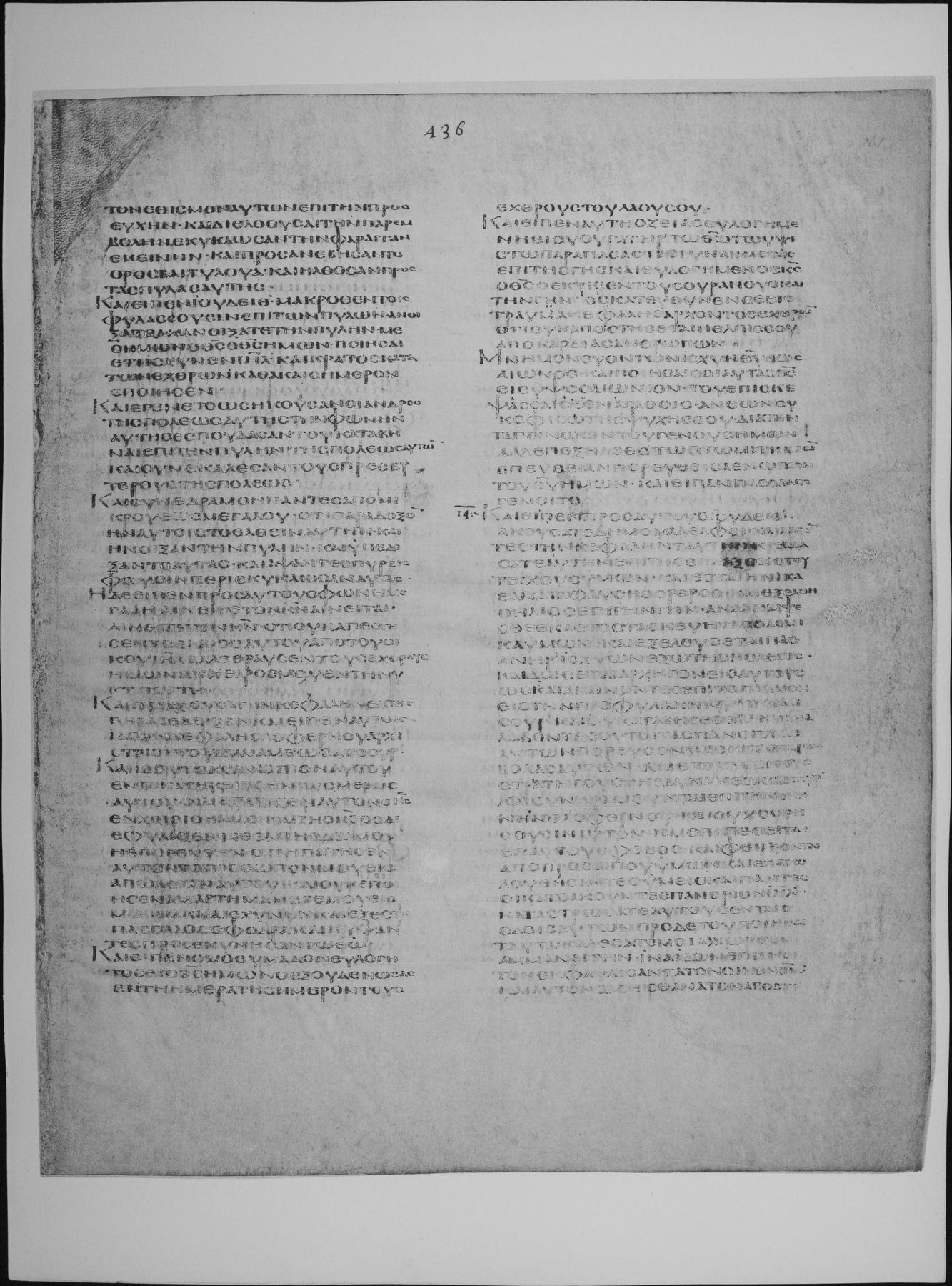
Judith 13:9-10 is on fol. 435v (full-size facsimile of 1879-83, Internet Archive codex-alexandrinus leaf 895). The 1936 reduced facsimile prints beneath this page: Judith xii. 11-xiii. 10. Checked on the plate: the page begins at the start of Judith 12:11 (first words read: ΚΑΙ ΕΙΠΕΝ ΒΑΓΩΑ ΤΩ ΕΥΝΟΥΧΩ ΟΣ ΗΝ ΕΦΕΣΤΗΚΩΣ ΕΠΙ ΠΑΝΤΩΝ ΤΩΝ ΑΥΤΟΥ). Judith 13:10-16 is on fol. 436r (full-size facsimile of 1879-83, Internet Archive codex-alexandrinus leaf 896). The 1936 reduced facsimile prints beneath this page: Judith xiii. 10-xiv. 5. Checked on the plate: the page begins inside Judith 13:10 (first words read: ΤΟΝ ΕΘΙΣΜΟΝ ΑΥΤΩΝ ΕΠΙ ΤΗΝ ΠΡΟΣΕΥΧΗΝ ΚΑΙ ΔΙΕΛΘΟΥΣΑΙ ΤΗΝ ΠΑΡΕΜΒΟΛΗΝ ΕΚΥΚΛΩΣΑΝ ΤΗΝ ΦΑΡΑΓΓΑ). Note: Codex Alexandrinus adds ΕΠΙ ΤΗΝ ΠΡΟΣΕΥΧΗΝ after ΤΟΝ ΕΘΙΣΜΟΝ ΑΥΤΩΝ (Jdt. 13:10), words that Swete's text (Codex Vaticanus) lacks; the rest of the line matches 13:10.
9καὶ ἀπεκύλισε τὸ σῶμα αὐτοῦ ἀπὸ τῆς στρωμνῆς, καὶ ἀφεῖλε τὸ κωνώπιον ἀπὸ τῶν στύλων· καὶ μετ᾽ ὀλίγον ἐξῆλθεν καὶ παρέδωκεν τῇ ἅβρᾳ αὐτῆς τὴν κεφαλὴν Ὀλοφέρνου, 10καὶ ἐνέβαλεν αὐτὴν εἰς τὴν πήραν τῶν βρωμάτων αὐτῆς· καὶ ἐξῆλθον αἱ δύο ἅμα κατὰ τὸν ἐθισμὸν αὐτῶν. καὶ διελθοῦσαι τὴν παρεμβολὴν ἐκύκλωσαν τὴν φάραγγα ἐκείνην, καὶ προσανέβησαν τὸ ὄρος Βαιτυλουά, καὶ ἤλθοσαν πρὸς τὰς πύλας αὐτῆς. 11Καὶ εἶπεν Ἰουδεὶθ μακρόθεν τοῖς φυλάσσουσιν ἐπὶ τῶν πυλῶν Ἀνοίξατε, ἀνοίξατε δὴ τὴν πύλην· μεθ᾽ ἡμῶν ὁ θεὸς ὁ θεὸς ἡμῶν ποιῆσαι ἔτι ἰσχὺν ἐν Ἰσραὴλ καὶ κράτος κατὰ τῶν ἐχθρῶν ἡμῶν, καθὰ καὶ σήμερον ἐποίησεν. 12καὶ ἐγένετο ὡς ἤκουσαν οἱ ἄνδρες τῆς πόλεως αὐτῆς τὴν φωνὴν αὐτῆς, ἐσπούδασαν τοῦ καταβῆναι ἐπὶ τὴν πύλην τῆς πόλεως αὐτῶν, καὶ συνεκάλεσαν τοὺς πρεσβυτέρους τῆς πόλεως. 13καὶ συνέδραμον πάντες ἀπὸ μικροῦ ἕως μεγάλου αὐτῶν, ὅτι παράδοξον ἦν αὐτοῖς τοῦ ἐλθεῖν αὐτήν, καὶ ἤνοιξαν τὴν πύλην καὶ ἀπεδέξαντο αὐτάς· ἅψαντες πῦρ εἰς φαῦσιν περιεκύκλωσαν αὐτάς. 14ἡ δὲ εἶπεν πρὸς αὐτοὺς φωνῇ μεγάλῃ Αἰνεῖτε τὸν θεόν, αἰνεῖτε· αἰνεῖτε τὸν θεὸν ὃς οὐκ ἀπέστησεν τὸ ἔλεος αὐτοῦ ἀπὸ τοῦ οἴκου Ἰσραήλ, ἀλλ᾽ ἔθραυσε τοὺς ἐχθροὺς ἡμῶν διὰ χειρός μου ἐν τῇ νυκτὶ ταύτῃ. 15καὶ προελοῦσα τὴν κεφαλὴν ἐκ τῆς πήρας ἔδειξεν καὶ εἶπεν αὐτοῖς Ἰδοὺ ἡ κεφαλὴ Ὀλοφέρνου ἀρχιστρατήγου δυνάμεως Ἀσσούρ, καὶ ἰδοὺ τὸ κωνώπιον ἐν ᾧ κατέκειτο ἐν ταῖς μέθαις αὐτοῦ· καὶ ἐπάταξεν αὐτὸν ὁ κύριος ἐν χειρὶ θηλείας. 16καὶ ζῇ Κύριος ὃς διεφύλαξέν με ἐν τῇ ὁδῷ μου ᾗ ἐπορεύθην, ὅτι ἠπάτησεν αὐτὸν τὸ πρόσωπόν μου εἰς ἀπώλειαν αὐτοῦ, καὶ οὐκ ἐποίησεν ἁμάρτημα μετ᾽ ἐμοῦ εἰς μίασμα καὶ αἰσχύνην.
9and tumbled his body down from the bed, and pulled down the canopy from the pillars; and anon after she went forth, and gave Holofernes his head to her maid; 10and she put it in her bag of meat: so they twain went together according to their custom unto prayer: and when they passed the camp, they compassed the valley, and went up the mountain of Bethulia, and came to the gates thereof. 11Then said Judith afar off to the watchmen at the gate, Open, open now the gate: God, even our God, is with us, to shew his power yet in Israel, and his strength against the enemy, as he hath even done this day. 12Now when the men of her city heard her voice, they made haste to go down to the gate of their city, and they called the elders of the city. 13And then they ran all together, both small and great, for it was strange unto them that she was come: so they opened the gate, and received them, and made a fire for a light, and stood round about them. 14Then she said to them with a loud voice, Praise, praise God, praise God, I say, for he hath not taken away his mercy from the house of Israel, but hath destroyed our enemies by mine hands this night. 15So she took the head out of the bag, and shewed it, and said unto them, Behold the head of Holofernes, the chief captain of the army of Assur, and behold the canopy, wherein he did lie in his drunkenness; and the Lord hath smitten him by the hand of a woman. 16As the Lord liveth, who hath kept me in my way that I went, my countenance hath deceived him to his destruction, and yet hath he not committed sin with me, to defile and shame me.
Where on the image
Judith 13:17-20 is on fol. 436r (full-size facsimile of 1879-83, Internet Archive codex-alexandrinus leaf 896). The 1936 reduced facsimile prints beneath this page: Judith xiii. 10-xiv. 5. Checked on the plate: the page begins inside Judith 13:10 (first words read: ΤΟΝ ΕΘΙΣΜΟΝ ΑΥΤΩΝ ΕΠΙ ΤΗΝ ΠΡΟΣΕΥΧΗΝ ΚΑΙ ΔΙΕΛΘΟΥΣΑΙ ΤΗΝ ΠΑΡΕΜΒΟΛΗΝ ΕΚΥΚΛΩΣΑΝ ΤΗΝ ΦΑΡΑΓΓΑ). Note: Codex Alexandrinus adds ΕΠΙ ΤΗΝ ΠΡΟΣΕΥΧΗΝ after ΤΟΝ ΕΘΙΣΜΟΝ ΑΥΤΩΝ (Jdt. 13:10), words that Swete's text (Codex Vaticanus) lacks; the rest of the line matches 13:10.
17καὶ ἐξέστη πᾶς ὁ λαὸς σφόδρα, καὶ κύψαντες προσεκύνησαν τῷ θεῷ καὶ εἶπαν ὁμοθυμαδόν Εὐλογητὸς εἶ ὁ θεὸς ἡμῶν ὁ ἐξουδενώσας ἐν τῇ ἡμέρᾳ τῇ σήμερον τοὺς ἐχθροὺς τοῦ λαοῦ σου. 18καὶ εἶπεν αὐτῇ Ὀζείας Εὐλογητὴ σύ, θυγάτηρ, τῷ θεῷ τῷ ὑψίστῳ παρὰ πάσας τὰς γυναῖκας τὰς ἐπὶ τῆς γῆς, καὶ εὐλογημένος Κύριος ὁ θεὸς ὃς ἔκτισεν τοὺς οὐρανοὺς καὶ τὴν γῆν, ὃς κατεύθυνέν σε εἰς τραῦμα κεφαλῆς ἄρχοντος ἐχθρῶν ἡμῶν· 19ὅτι οὐκ ἀποστήσεται ἡ ἐλπίς σου ἀπὸ καρδίας ἀνθρώπων μνημονευόντων ἰσχὺν θεοῦ ἕως αἰῶνος. 20καὶ ποιήσαι σοι αὐτὰ ὁ θεὸς εἰς ὕψος αἰώνιον, τοῦ ἐπισκέψασθαί σε ἐν ἀγαθοῖς, ἀνθ᾽ ὧν οὐκ ἐφείσω τῆς ψυχῆς σου διὰ τὴν ταπείνωσιν τοῦ γένους ἡμῶν, ἀλλ᾽ ἐπεξῆλθες πτώματι ἡμῶν, ἐπ᾽ εὐθεῖαν πορευθεῖσα ἐνώπιον τοῦ θεοῦ ἡμῶν. καὶ εἶπαν πᾶς ὁ λαός Γένοιτο, γένοιτο.
17Then all the people were wonderfully astonished, and bowed themselves, and worshipped God, and said with one accord, Blessed be thou, O our God, which hast this day brought to nought the enemies of thy people. 18Then said Ozias unto her, O daughter, blessed art thou of the most high God above all the women upon the earth; and blessed be the Lord God, which hath created the heavens and the earth, which hath directed thee to the cutting off of the head of the chief of our enemies. 19For this thy confidence shall not depart from the heart of men, which remember the power of God for ever. 20And God turn these things to thee for a perpetual praise, to visit thee in good things, because thou hast not spared thy life for the affliction of our nation, but hast revenged our ruin, walking a straight way before our God. And all the people said, So be it, so be it.
Cite
Sources
- Source: Codex Alexandrinus (British Library Royal MS 1 D. VI) via the British Museum photographic facsimiles of 1879-83 and 1936 (Internet Archive) + Swete's Septuagint + Brenton's English (holding institution)
- Critical edition: H. B. Swete, The Old Testament in Greek according to the Septuagint (1909)
← previous · → next · v cycle view · l back to library