Judith, Chapter 14 (Codex Alexandrinus)
Introduction
Judith 14 in the Greek Old Testament (the Septuagint) as written in Codex Alexandrinus, a Greek Bible copied in the fifth century, probably in Egypt, and now in the British Library (Royal MS 1 D. VI, the second of its four volumes). It is one of the three great early codices of the whole Greek Bible, with Codex Vaticanus and Codex Sinaiticus.
This entry meets the strict three-criteria standard of the Theosis Library:
- Manuscript scan: the pages of Codex Alexandrinus carrying this chapter (fol. 436r, fol. 436v), from the full-size photographic (autotype) facsimile published by the British Museum in 1879-1883, as digitised on the Internet Archive. The verse range of every page comes from the reduced photographic facsimile of 1936, which prints it beneath each plate, and the opening words of every page were read on the plate to confirm the page and the verse it begins with. Each section links to the page or pages that hold its verses. Folio numbers are those written at the head of each leaf and visible on the plates.
- Original text: Swete's edition, which here prints the text of Codex Vaticanus (Vat. gr. 1209), the base of his edition, and gives the readings of Alexandrinus only in his apparatus. The Greek column is therefore Vaticanus' text; where Alexandrinus differs, the plate shows what Alexandrinus reads.
- English translation: Sir Lancelot C. L. Brenton, The Septuagint Version of the Old Testament (1844; 1851 edition), a translation of the Greek, public domain, from the eBible.org text.
How was this verified? (Provenance)
Where on the image
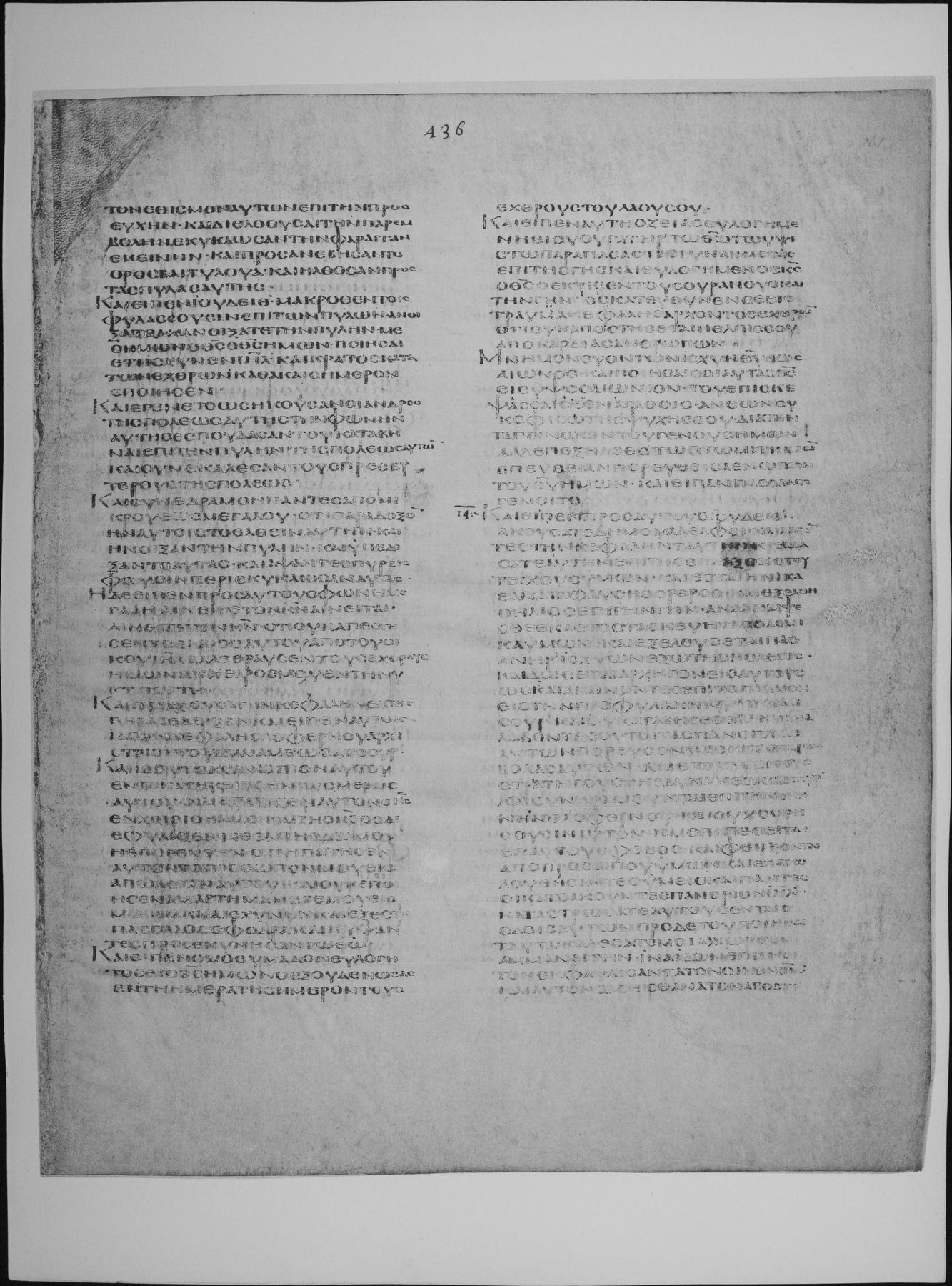
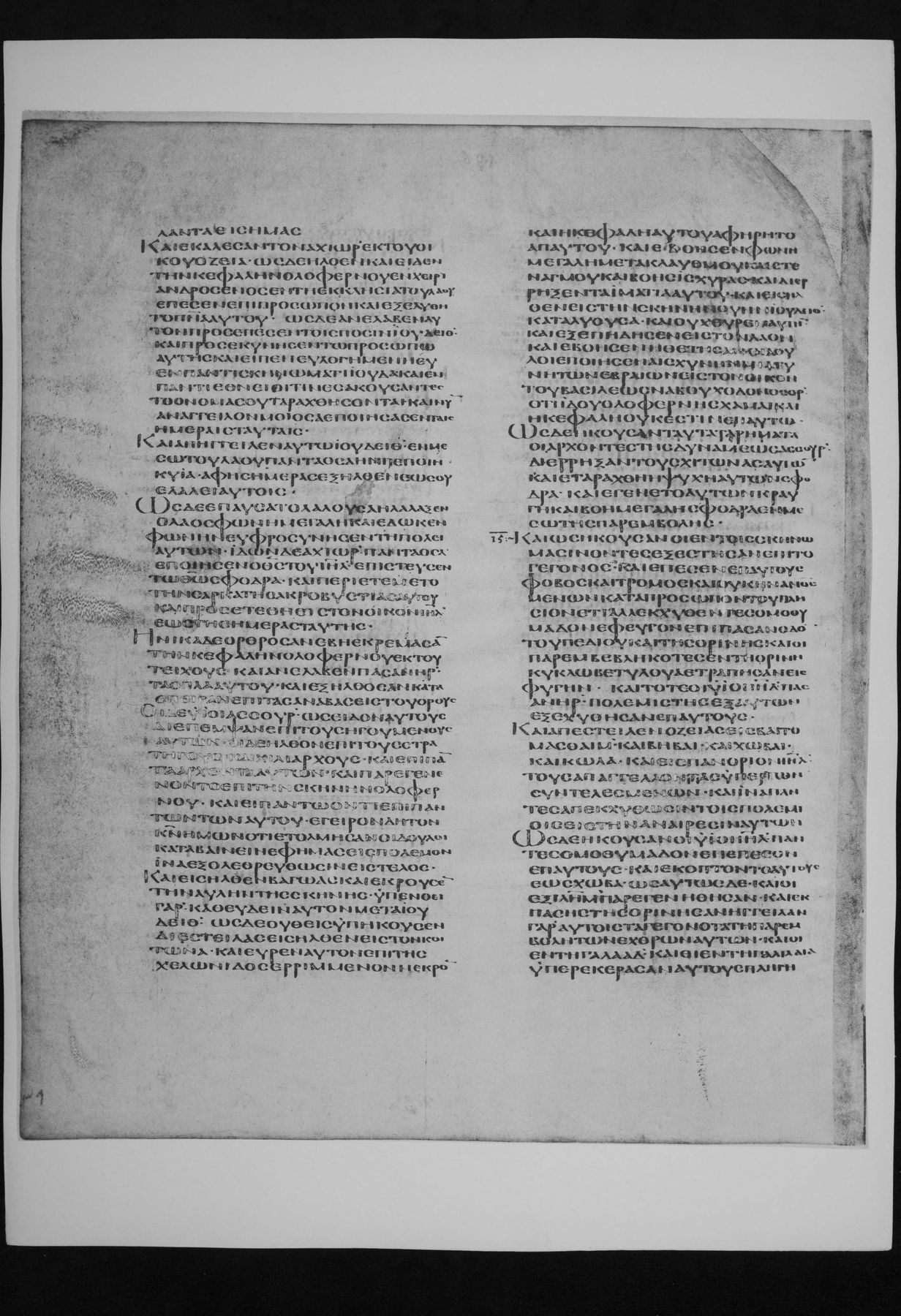
Judith 14:1-5 is on fol. 436r (full-size facsimile of 1879-83, Internet Archive codex-alexandrinus leaf 896). The 1936 reduced facsimile prints beneath this page: Judith xiii. 10-xiv. 5. Checked on the plate: the page begins inside Judith 13:10 (first words read: ΤΟΝ ΕΘΙΣΜΟΝ ΑΥΤΩΝ ΕΠΙ ΤΗΝ ΠΡΟΣΕΥΧΗΝ ΚΑΙ ΔΙΕΛΘΟΥΣΑΙ ΤΗΝ ΠΑΡΕΜΒΟΛΗΝ ΕΚΥΚΛΩΣΑΝ ΤΗΝ ΦΑΡΑΓΓΑ). Note: Codex Alexandrinus adds ΕΠΙ ΤΗΝ ΠΡΟΣΕΥΧΗΝ after ΤΟΝ ΕΘΙΣΜΟΝ ΑΥΤΩΝ (Jdt. 13:10), words that Swete's text (Codex Vaticanus) lacks; the rest of the line matches 13:10. Judith 14:5-8 is on fol. 436v (full-size facsimile of 1879-83, Internet Archive codex-alexandrinus leaf 897). The 1936 reduced facsimile prints beneath this page: Judith xiv. 5-xv. 5. Checked on the plate: the page begins inside Judith 14:5 (first words read: ΛΑΝΤΑ ΕΙΣ ΗΜΑΣ ΚΑΙ ΕΚΑΛΕΣΑΝ ΤΟΝ ΑΧΙΩΡ ΕΚ ΤΟΥ ΟΙΚΟΥ ΟΖΕΙΑ).
1Καὶ εἶπεν πρὸς αὐτοὺς Ἰουδείθ Ἀκούσατε δή μου, ἀδελφοί, καὶ λαβόντες τὴν κεφαλὴν ταύτην κρεμάσατε αὐτὴν ἐπὶ τῆς ἐπάλξεως τοῦ τείχους ὑμῶν. 2καὶ ἔσται ἡνίκα ἐὰν διαφαύσῃ ὁ ὄρθρος καὶ ἐξέλθῃ ὁ ἥλιος ἐπὶ τὴν γῆν, ἀναλήμψεσθε ἕκαστος τὰ σκεύη τὰ πολεμικὰ ὑμῶν καὶ ἐξελεύσεσθε πᾶς ἀνὴρ ἰσχύων ἔξω τῆς πόλεως, καὶ δώσετε ἀρχηγὸν εἰς αὐτούς, ὡς καταβαίνοντες ἐπὶ τὸ πεδίον εἰς τὴν προφυλακὴν υἱῶν Ἀσσούρ· καὶ οὐ καταβήσεσθε. 3καὶ ἀναλαβόντες οὗτοι τὰς πανοπλίας αὐτῶν πορεύσονται εἰς τὴν παρεμβολὴν αὐτῶν καὶ ἐγεροῦσι τοὺς στρατηγοὺς τῆς δυνάμεως Ἀσσούρ· καὶ συνδραμοῦνται ἐπὶ τὴν σκηνὴν Ὀλοφέρνου, καὶ οὐχ εὑρήσουσιν αὐτόν· καὶ ἐπιπεσεῖται ἐπ᾽ αὐτοὺς φόβος, καὶ φεύξονται ἀπὸ προσώπου ὑμῶν. 4καὶ ἐπακολουθήσαντες ὑμεῖς καὶ πάντες οἱ κατοικοῦντες πᾶν ὅριον Ἰσραὴλ καταστρώσατε αὐτοὺς ἐν ταῖς ὁδοῖς αὐτῶν. 5πρὸ δὲ τοῦ ποιῆσαι ταῦτα καλέσατέ μοι Ἀχιὼρ τὸν Ἀμμανείτην, ἵνα ἰδὼν ἐπιγνοῖ τὸν ἐκφαυλίσαντα τὸν οἶκον τοῦ Ἰσραήλ, καὶ αὐτὸν ὡς εἰς θάνατον ἀποστείλαντα εἰς ἡμᾶς. 6Καὶ ἐκάλεσαν τὸν Ἀχιὼρ ἐκ τοῦ οἴκου Ὀζεία· ὡς δὲ ἦλθεν καὶ ἴδεν τὴν κεφαλὴν Ὀλοφέρνου ἐν χειρὶ ἀνδρὸς ἑνὸς ἐν τῇ ἐκκλησίᾳ τοῦ λαοῦ, ἔπεσεν ἐπὶ πρόσωπον, καὶ ἐξελύθη τὸ πνεῦμα αὐτοῦ. 7ὡς δὲ ἀνέλαβον αὐτόν, προσέπεσεν τοῖς ποσὶν Ἰουδεὶθ καὶ προσεκύνησεν τῷ προσώπῳ αὐτῆς καὶ εἶπεν Εὐλογημένη σὺ ἐν παντὶ σκηνώματι Ἰούδα καὶ ἐν παντὶ ἔθνει, οἵτινες ἀκούσαντες τὸ ὄνομά σου ταραχθήσονται. 8καὶ νῦν ἀνάγγειλόν μοι ὅσα ἐποίησας ἐν ταῖς ἡμέραις ταύταις. καὶ ἀπήγγειλεν αὐτῷ Ἰουδεὶθ ἐν μέσῳ τοῦ λαοῦ πάντα ὅσα ἦν πεποιηκυῖα, ἀφ᾽ ἧς ἡμέρας ἐξῆλθεν ἕως οὗ ἐλάλει αὐτοῖς.
1Then said Judith unto them, Hear me now, my brethren, and take this head, and hang it upon the highest place of your walls. 2And so soon as the morning shall appear, and the sun shall come forth upon the earth, take ye every one his weapons, and go forth every valiant man out of the city, and set ye a captain over them, as though ye would go down into the field toward the watch of the Assyrians; but go not down. 3Then they shall take their armour, and shall go into their camp, and raise up the captains of the army of Assur, and they shall run to the tent of Holofernes, but shall not find him: then fear shall fall upon them, and they shall flee before your face. 4So ye, and all that inherit the coast of Israel, shall pursue them, and overthrow them as they go. 5But before ye do these things, call me Achior the Ammonite, that he may see and know him that despised the house of Israel, and that sent him to us, as it were to his death. 6Then they called Achior out of the house of Ozias; and when he was come, and saw the head of Holofernes in a man's hand in the assembly of the people, he fell down on his face, and his spirit failed. 7But when they had recovered him, he fell at Judith's feet, and reverenced her, and said, Blessed art thou in all the tabernacle of Juda, and in all nations, which hearing thy name shall be astonished. 8Now therefore tell me all the things that thou hast done in these days. Then Judith declared unto him in the midst of the people all that she had done, from the day that she went forth until that hour she spake unto them.
Where on the image
Judith 14:9-16 is on fol. 436v (full-size facsimile of 1879-83, Internet Archive codex-alexandrinus leaf 897). The 1936 reduced facsimile prints beneath this page: Judith xiv. 5-xv. 5. Checked on the plate: the page begins inside Judith 14:5 (first words read: ΛΑΝΤΑ ΕΙΣ ΗΜΑΣ ΚΑΙ ΕΚΑΛΕΣΑΝ ΤΟΝ ΑΧΙΩΡ ΕΚ ΤΟΥ ΟΙΚΟΥ ΟΖΕΙΑ).
9ὡς δὲ ἐπαύσατο λαλοῦσα, ἠλάλαξεν ὁ λαὸς φωνῇ μεγάλῃ καὶ ἔδωκεν φωνὴν εὐφρόσυνον ἐν τῇ πόλει αὐτῶν. 10ἰδὼν δὲ Ἀχιὼρ πάντα ὅσα ἐποίησεν ὁ θεὸς τοῦ Ἰσραήλ, ἐπίστευσεν τῷ θεῷ σφόδρα, καὶ περιετέμετο τὴν σάρκα τῆς ἀκροβυστίας αὐτοῦ, καὶ προσετέθη πρὸς τὸν οἶκον Ἰσραὴλ ἕως τῆς ἡμέρας ταύτης. 11Ἡνίκα δὲ ὁ ὄρθρος ἀνέβη, καὶ ἐκρέμασαν τὴν κεφαλὴν Ὀλοφέρνου ἐκ τοῦ τείχους, καὶ ἀνέλαβεν πᾶς ἀνὴρ Ἰσραὴλ τὰ ὅπλα αὐτοῦ καὶ ἐξήλθοσαν κατὰ σπείρας ἐπὶ τὰς ἀναβάσεις. 12οἱ δὲ υἱοὶ Ἀσσοὺρ ὡς ἴδον αὐτούς, διέπεμψαν ἐπὶ τοὺς ἡγουμένους αὐτῶν· οἱ δὲ ἦλθον ἐπὶ τοὺς στρατηγοὺς καὶ χιλιάρχους καὶ ἐπὶ πάντα ἄρχοντα αὐτῶν. 13καὶ παρεγένοντο ἐπὶ τὴν σκηνὴν Ὀλοφέρνου, καὶ εἶπαν τῷ ὄντι ἐπὶ πάντων τῶν αὐτοῦ Ἔγειρον δὴ τὸν κύριον ἡμῶν, ὅτι ἐτόλμησαν οἱ δοῦλοι καταβαίνειν ἐφ᾽ ἡμᾶς εἰς πόλεμον, ἵνα ἐξολεθρευθῶσιν εἰς τέλος. 14καὶ εἰσῆλθεν Βαγώας καὶ ἔκρουσε τὴν αὐλαίαν τῆς σκηνῆς· ὑπενοεῖτο γὰρ καθεύδειν αὐτὸν μετὰ Ἰουδείθ. 15ὡς δ᾽ οὐθεὶς ἐπήκουσεν, διαστείλας εἰσῆλθεν εἰς τὸν κοιτῶνα, καὶ εὗρεν αὐτὸν ἐπὶ τῆς χελωνίδος ἐριμμένον νεκρόν, καὶ ἡ κεφαλὴ αὐτοῦ ἀφῄρητο ἀπ᾽ αὐτοῦ. 16καὶ ἐβόησεν φωνῇ μεγάλῃ μετὰ κλαυθμοῦ καὶ στεναγμοῦ καὶ βοῆς ἰσχυρᾶς, καὶ διέρρηξεν τὰ ἱμάτια αὐτοῦ.
9And when she had left off speaking, the people shouted with a loud voice, and made a joyful noise in their city. 10And when Achior had seen all that the God of Israel had done, he believed in God greatly, and circumcised the flesh of his foreskin, and was joined unto the house of Israel unto this day. 11And as soon as the morning arose, they hanged the head of Holofernes upon the wall, and every man took his weapons, and they went forth by bands unto the straits of the mountain. 12But when the Assyrians saw them, they sent to their leaders, which came to their captains and tribunes, and to every one of their rulers. 13So they came to Holofernes' tent, and said to him that had the charge of all his things, Waken now our lord: for the slaves have been bold to come down upon us to battle, that they may be utterly destroyed. 14Then went in Bagoas, and knocked at the door of the tent; for he thought that he had slept with Judith. 15But because none answered, he opened it, and went into the bedchamber, and found him cast upon the floor dead, and his head was taken from him. 16Therefore he cried with a loud voice, with weeping, and sighing, and a mighty cry, and rent his garments.
Where on the image
Judith 14:17-19 is on fol. 436v (full-size facsimile of 1879-83, Internet Archive codex-alexandrinus leaf 897). The 1936 reduced facsimile prints beneath this page: Judith xiv. 5-xv. 5. Checked on the plate: the page begins inside Judith 14:5 (first words read: ΛΑΝΤΑ ΕΙΣ ΗΜΑΣ ΚΑΙ ΕΚΑΛΕΣΑΝ ΤΟΝ ΑΧΙΩΡ ΕΚ ΤΟΥ ΟΙΚΟΥ ΟΖΕΙΑ).
17καὶ εἰσῆλθεν εἰς τὴν σκηνὴν οὗ ἦν Ἰουδεὶθ καταλύουσα, καὶ οὐχ εὗρεν αὐτήν· καὶ ἐξεπήδησεν εἰς τὸν λαὸν κράζων 18Ἠθέτησαν οἱ δοῦλοι, ἐποίησεν αἰσχύνην μία γυνὴ τῶν Ἐβραίων εἰς τὸν οἶκον τοῦ βασιλέως Ναβουχοδονοσόρ· ὅτι ἰδοὺ Ὀλοφέρνης χαμαί, καὶ ἡ κεφαλὴ οὐκ ἔστιν ἐπ᾽ αὐτῷ. 19ὡς δὲ ἤκουσαν τὰ ῥήματα οἱ ἄρχοντες τῆς δυνάμεως Ἀσσούρ, τοὺς χιτῶνας αὐτῶν διέρρηξαν, καὶ ἐταράχθη αὐτῶν ἡ ψυχὴ σφόδρα, καὶ ἐγένετο αὐτῶν κραυγὴ καὶ βοὴ μεγάλη σφόδρα ἐν μέσῳ τῆς παρεμβολῆς.
17After he went into the tent where Judith lodged: and when he found her not, he leaped out to the people, and cried, 18These slaves have dealt treacherously; one woman of the Hebrews hath brought shame upon the house of king Nabuchodonosor: for, behold, Holofernes lieth upon the ground without a head. 19When the captains of the Assyrians' army heard these words, they rent their coats, and their minds were wonderfully troubled, and there was a cry and a very great noise throughout the camp.
Cite
Sources
- Source: Codex Alexandrinus (British Library Royal MS 1 D. VI) via the British Museum photographic facsimiles of 1879-83 and 1936 (Internet Archive) + Swete's Septuagint + Brenton's English (holding institution)
- Critical edition: H. B. Swete, The Old Testament in Greek according to the Septuagint (1909)
← previous · → next · v cycle view · l back to library