Judith, Chapter 6 (Codex Alexandrinus)
Introduction
Judith 6 in the Greek Old Testament (the Septuagint) as written in Codex Alexandrinus, a Greek Bible copied in the fifth century, probably in Egypt, and now in the British Library (Royal MS 1 D. VI, the second of its four volumes). It is one of the three great early codices of the whole Greek Bible, with Codex Vaticanus and Codex Sinaiticus.
This entry meets the strict three-criteria standard of the Theosis Library:
- Manuscript scan: the pages of Codex Alexandrinus carrying this chapter (fol. 431r, fol. 431v, fol. 432r), from the full-size photographic (autotype) facsimile published by the British Museum in 1879-1883, as digitised on the Internet Archive. The verse range of every page comes from the reduced photographic facsimile of 1936, which prints it beneath each plate, and the opening words of every page were read on the plate to confirm the page and the verse it begins with. Each section links to the page or pages that hold its verses. Folio numbers are those written at the head of each leaf and visible on the plates.
- Original text: Swete's edition, which here prints the text of Codex Vaticanus (Vat. gr. 1209), the base of his edition, and gives the readings of Alexandrinus only in his apparatus. The Greek column is therefore Vaticanus' text; where Alexandrinus differs, the plate shows what Alexandrinus reads.
- English translation: Sir Lancelot C. L. Brenton, The Septuagint Version of the Old Testament (1844; 1851 edition), a translation of the Greek, public domain, from the eBible.org text.
How was this verified? (Provenance)
Where on the image
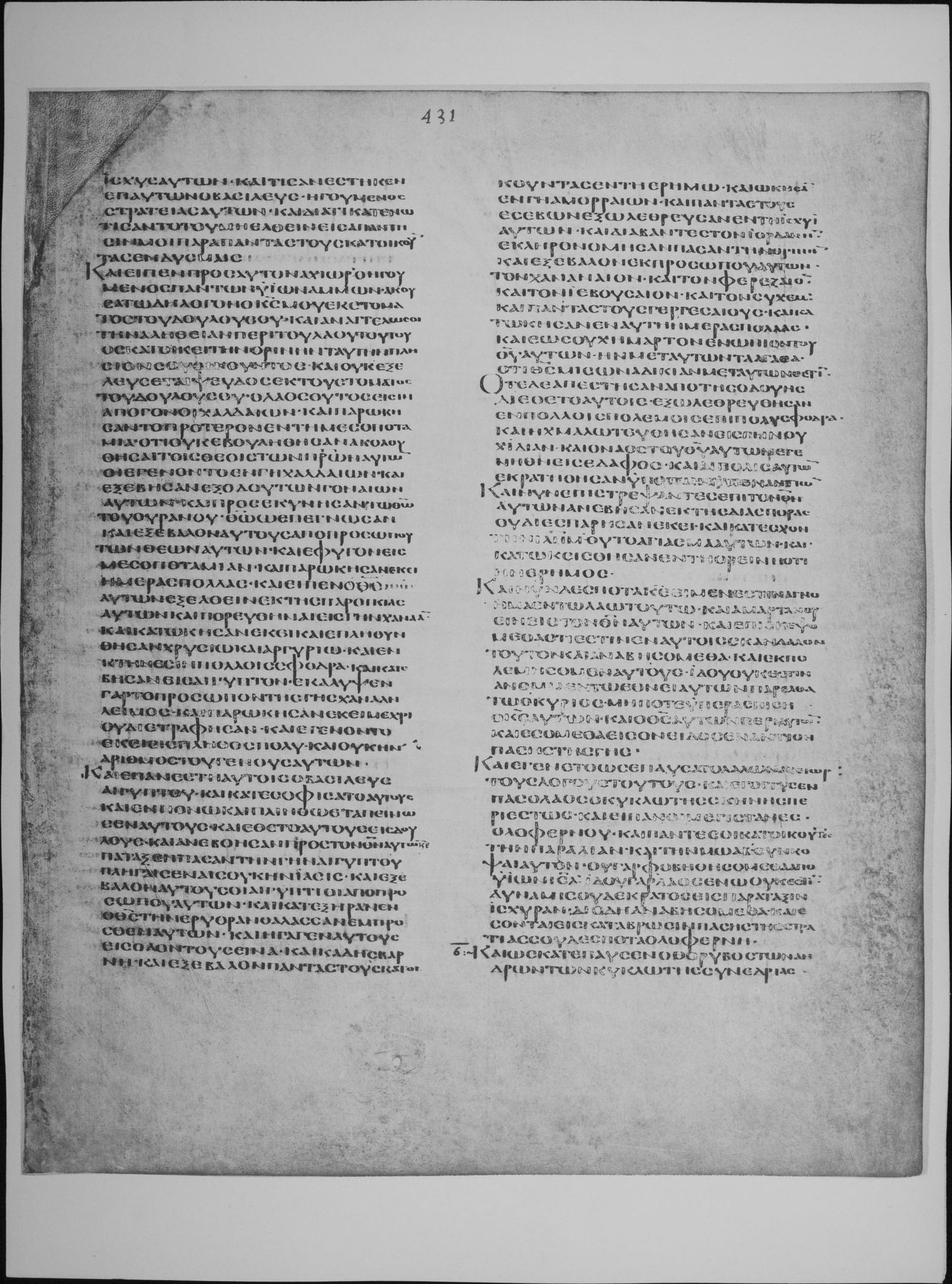
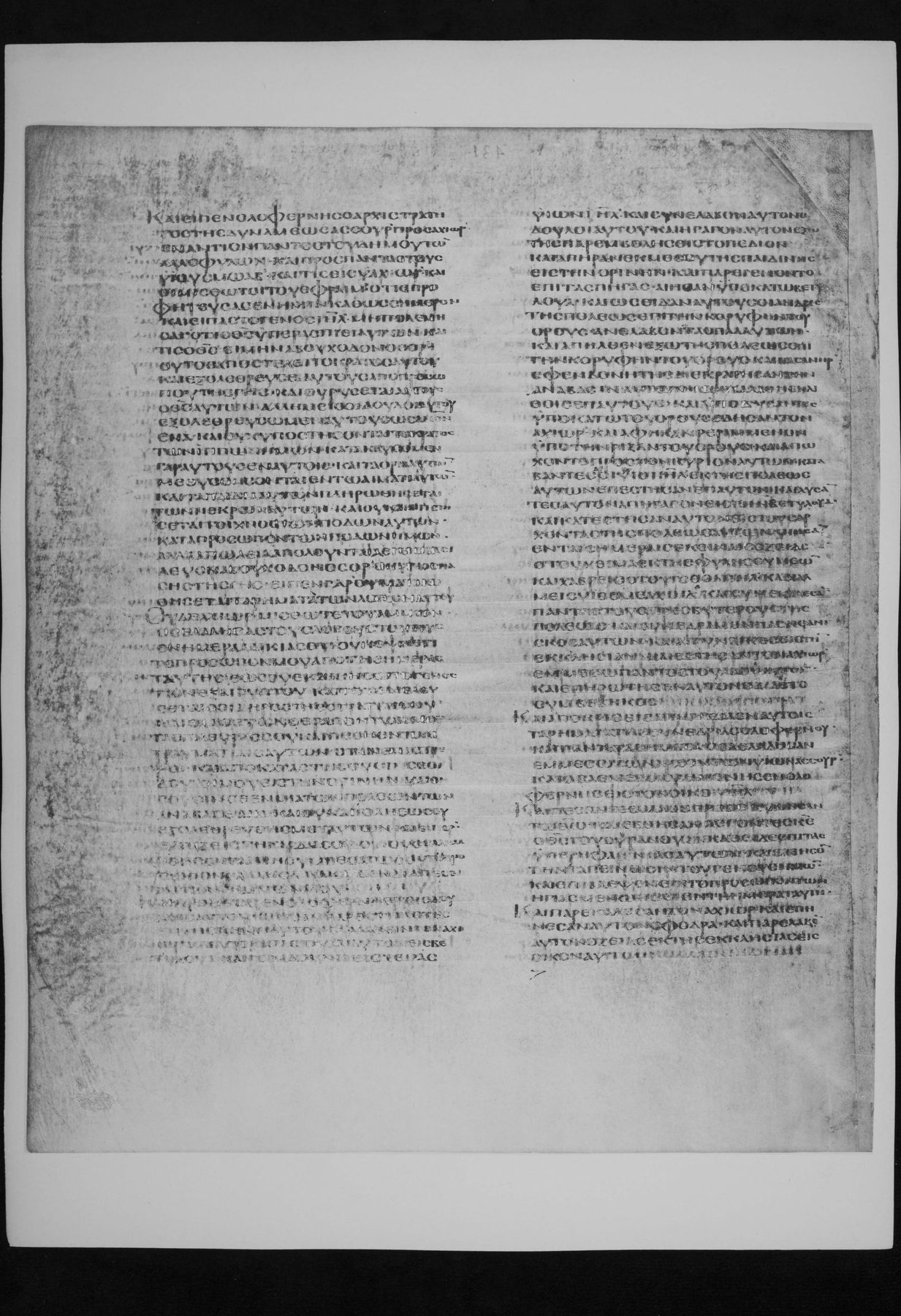
Judith 6:1 is on fol. 431r (full-size facsimile of 1879-83, Internet Archive codex-alexandrinus leaf 886). The 1936 reduced facsimile prints beneath this page: Judith v. 3-vi. 1. Checked on the plate: the page begins inside Judith 5:3 (first words read: ΙΣΧΥΣ ΑΥΤΩΝ ΚΑΙ ΤΙΣ ΑΝΕΣΤΗΚΕΝ ΕΠ ΑΥΤΩΝ ΒΑΣΙΛΕΥΣ ΗΓΟΥΜΕΝΟΣ ΣΤΡΑΤΕΙΑΣ ΑΥΤΩΝ). Judith 6:1-8 is on fol. 431v (full-size facsimile of 1879-83, Internet Archive codex-alexandrinus leaf 887). The 1936 reduced facsimile prints beneath this page: Judith vi. 1-21. Checked on the plate: the page begins inside Judith 6:1 (first words read: ΚΑΙ ΕΙΠΕΝ ΟΛΟΦΕΡΝΗΣ ΑΡΧΙΣΤΡΑΤΗΓΟΣ ΤΗΣ ΔΥΝΑΜΕΩΣ ΑΣΣΟΥΡ ΠΡΟΣ ΑΧΙΩΡ).
1Καὶ ὡς κατέπαυσεν ὁ θόρυβος τῶν ἀνδρῶν τῶν κύκλῳ τῆς συνεδρίας, εἶπεν Ὀλοφέρνης ἀρχιστράτηγος δυνάμεως Ἀσσοὺρ πρὸς Ἀχιὼρ ἐναντίον παντὸς τοῦ δήμου ἀλλοφύλων 2Καὶ τίς εἶ σὺ Ἀχιὼρ καὶ πρὸς πάντας υἱοὺς Μωὰβ καὶ οἱ μισθωτοὶ Ἐφράιμ, ὅτι ἐπροφήτευσας ἐν ἡμῖν καθὼς σήμερον, καὶ εἶπας τὸ γένος Ἰσραὴλ μὴ πολεμῆσαι, ὅτι θεὸς αὐτῶν ὑπερασπιεῖ αὐτῶν; καὶ τίς ὁ θεὸς εἰ μὴ Ναβουχοδονοσόρ; οὗτος ἀποστελεῖ τὸ κράτος αὐτοῦ καὶ ἐξολεθρεύσει αὐτοὺς ἀπὸ προσώπου τῆς γῆς, καὶ οὐ ῥύσεται αὐτοὺς ὁ θεὸς αὐτῶν· 3ἀλλ᾽ ἡμεῖς οἱ δοῦλοι αὐτοῦ πατάξομεν αὐτοὺς ὡς ἄνθρωπον ἕνα, καὶ οὐχ ὑποστήσονται τὸ κράτος τῶν ἵππων ἡμῶν. 4κατακαύσομεν γὰρ αὐτοὺς ἐν αὐτοῖς, καὶ τὰ ὅρια αὐτῶν μεθυσθήσεται ἐν τῷ αἵματι αὐτῶν, καὶ τὰ πεδία αὐτῶν πληρωθήσεται νεκρῶν αὐτῶν· καὶ οὐκ ἀντιστήσεται τὸ ἴχνος τῶν ποδῶν αὐτῶν κατὰ πρόσωπον ἡμῶν, ἀλλ᾽ ἀπωλείᾳ ἀπολοῦνται, λέγει ὁ βασιλεὺς Ναβουχοδονοσόρ, κύριος πάσης τῆς γῆς. εἶπεν γάρ· οὐ ματαιωθήσεται τὰ ῥήματα τῶν λόγων αὐτοῦ. 5σὺ δὲ Ἀχιώρ, μισθωτὲ τοῦ Ἀμμών, ὅς ἐλάλησας τοὺς λόγους τούτους ἐν ἡμέρᾳ ἀδικίας σου, οὐκ ὄψῃ ἔτι τὸ πρόσωπόν μου ἀπὸ τῆς ἡμέρας ταύτης ἕως οὗ ἐκδικήσω τὸ γένος τῶν ἐξ Αἰγύπτου· 6καὶ τότε διελεύσεται ὁ σίδηρος τῆς στρατείας μου καὶ ὁ λαὸς τῶν θεραπόντων μου τὰς πλευράς σου, καὶ πεσῇ ἐν τοῖς τραυματίαις αὐτῶν ὅταν ἐπιστρέψωσιν· 7καὶ ἀποκαταστήσουσίν σε οἱ δοῦλοί μου εἰς τὴν ὀρινὴν καὶ θήσουσίν σε ἐν μιᾷ τῶν πόλεων τῶν ἀναβάσεων, 8καὶ οὐκ ἀπολῇ ἕως οὗ ἐξολεθρευθῇς μετ᾽ αὐτῶν.
1And when the tumult of men that were about the council was ceased, Holofernes the chief captain of the army of Assur said unto Achior and all the Moabites before all the company of other nations, 2And who art thou, Achior, and the hirelings of Ephraim, that thou hast prophesied among us as to day, and hast said, that we should not make war with the people of Israel, because their God will defend them? and who is God but Nabuchodonosor? 3He will send his power, and will destroy them from the face of the earth, and their God shall not deliver them: but we his servants will destroy them as one man; for they are not able to sustain the power of our horses. 4For with them we will tread them under foot, and their mountains shall be drunken with their blood, and their fields shall be filled with their dead bodies, and their footsteps shall not be able to stand before us, for they shall utterly perish, saith king Nabuchodonosor, lord of all the earth: for he said, None of my words shall be in vain. 5And thou, Achior, an hireling of Ammon, which hast spoken these words in the day of thine iniquity, shalt see my face no more from this day, until I take vengeance of this nation that came out of Egypt. 6And then shall the sword of mine army, and the multitude of them that serve me, pass through thy sides, and thou shalt fall among their slain, when I return. 7Now therefore my servants shall bring thee back into the hill country, and shall set thee in one of the cities of the passages: 8and thou shalt not perish, till thou be destroyed with them.
Where on the image
Judith 6:9-16 is on fol. 431v (full-size facsimile of 1879-83, Internet Archive codex-alexandrinus leaf 887). The 1936 reduced facsimile prints beneath this page: Judith vi. 1-21. Checked on the plate: the page begins inside Judith 6:1 (first words read: ΚΑΙ ΕΙΠΕΝ ΟΛΟΦΕΡΝΗΣ ΑΡΧΙΣΤΡΑΤΗΓΟΣ ΤΗΣ ΔΥΝΑΜΕΩΣ ΑΣΣΟΥΡ ΠΡΟΣ ΑΧΙΩΡ).
9καὶ εἴπερ ἐλπίζεις τῇ καρδίᾳ σου ὅτι οὐ λημφθήσονται, μὴ συμπεσέτω σου τὸ πρόσωπον. ἐλάλησα, καὶ οὐδὲν διαπεσεῖται τῶν ῥημάτων μου. 10Καὶ προσέταξεν Ὀλοφέρνης τοῖς δούλοις αὐτοῦ, οἳ ἦσαν παρεστηκότες ἐν τῇ σκηνῇ αὐτοῦ, συλλαβεῖν τὸν Ἀχιὼρ καὶ ἀποκαταστῆσαι αὐτὸν εἰς Βετυλουὰ καὶ παραδοῦναι εἰς χεῖρας υἱῶν Ἰσραήλ. 11καὶ συνέλαβον αὐτὸν οἱ δοῦλοι αὐτοῦ καὶ ἤγαγον αὐτὸν ἔξω τῆς παρεμβολῆς εἰς τὸ πεδίον, καὶ ἀπῆραν ἐκ μέσου τῆς πεδινῆς εἰς τὴν ὀρινήν, καὶ παρεγένοντο ἐπὶ τὰς πηγὰς αἳ ἦσαν ὑποκάτω Βετυλουά. 12καὶ ὡς ἴδαν αὐτοὺς οἱ ἄνδρες τῆς πόλεως ἐπὶ τὴν κορυφὴν τοῦ ὄρους, ἀνέλαβον τὰ ὅπλα αὐτῶν καὶ ἐπῆλθον ἔξω τῆς πόλεως ἐπὶ τὴν κορυφὴν τοῦ ὄρους· καὶ πᾶς ἀνὴρ σφενδονήτης διεκράτησαν τὴν ἀνάβασιν αὐτῶν καὶ ἔβαλλον ἐν λίθοις ἐπ᾽ αὐτούς. 13καὶ ὑποδύσαντες ὑποκάτω τοῦ ὄρους ἔδησαν τὸν Ἀχιὼρ καὶ ἀφῆκαν ἐρριμμένον ὑπὸ τὴν ῥίζαν τοῦ ὄρους, καὶ ἀπῴχοντο πρὸς τὸν κύριον αὐτῶν. 14καταβάντες δὲ οἱ υἱοὶ Ἰσραὴλ ἐκ τῆς πόλεως αὐτῶν ἐπέστησαν αὐτῷ, καὶ λύσαντες αὐτὸν ἀπήγαγον εἰς τὴν Βετυλουά, καὶ κατέστησαν αὐτὸν ἐπὶ τοὺς ἄρχοντας τῆς πόλεως αὐτῶν, 15οἳ ἦσαν ἐν ταῖς ἡμέραις ἐκείναις Ὀζείας ὁ τοῦ Μειχὰ ἐκ τῆς φυλῆς Συμεὼν καὶ Χαβρεὶς ὁ τοῦ Γοθονιὴλ καὶ Χαρμεὶς υἱὸς Μελχειήλ. 16καὶ συνεκάλεσεν πάντας τοὺς πρεσβυτέρους τῆς πόλεως, καὶ συνέδραμον πᾶς νεανίσκος αὐτῶν καὶ αἱ γυναῖκες εἰς τὴν ἐκκλησίαν, καὶ ἔστησαν τὸν Ἀχιὼρ ἐν μέσῳ παντὸς τοῦ λαοῦ αὐτῶν, καὶ ἐπηρώτησεν αὐτὸν Ὀζείας τὸ συμβεβηκός.
9And if thou persuade thyself in thy mind that they shall not be taken, let not thy countenance fall: I have spoken it, and none of my words shall be in vain. 10Then Holofernes commanded his servants, that waited in his tent, to take Achior, and bring him to Bethulia, and deliver him into the hands of the children of Israel. 11So his servants took him, and brought him out of the camp into the plain, and they went from the midst of the plain into the hill country, and came unto the fountains that were under Bethulia. 12And when the men of the city saw them, they took up their weapons, and went out of the city to the top of the hill: and every man that used a sling kept them from coming up by casting of stones against them. 13Nevertheless having gotten privily under the hill, they bound Achior, and cast him down, and left him at the foot of the hill, and returned to their lord. 14But the Israelites descended from their city, and came unto him, and loosed him, and brought him into Bethulia, and presented him to the governors of the city: 15which were in those days Ozias the son of Micha, of the tribe of Simeon, and Chabris the son of Gothoniel, and Charmis the son of Melchiel. 16And they called together all the ancients of the city, and all their youth ran together, and their women, to the assembly, and they set Achior in the midst of all their people. Then Ozias asked him of that which was done.
Where on the image
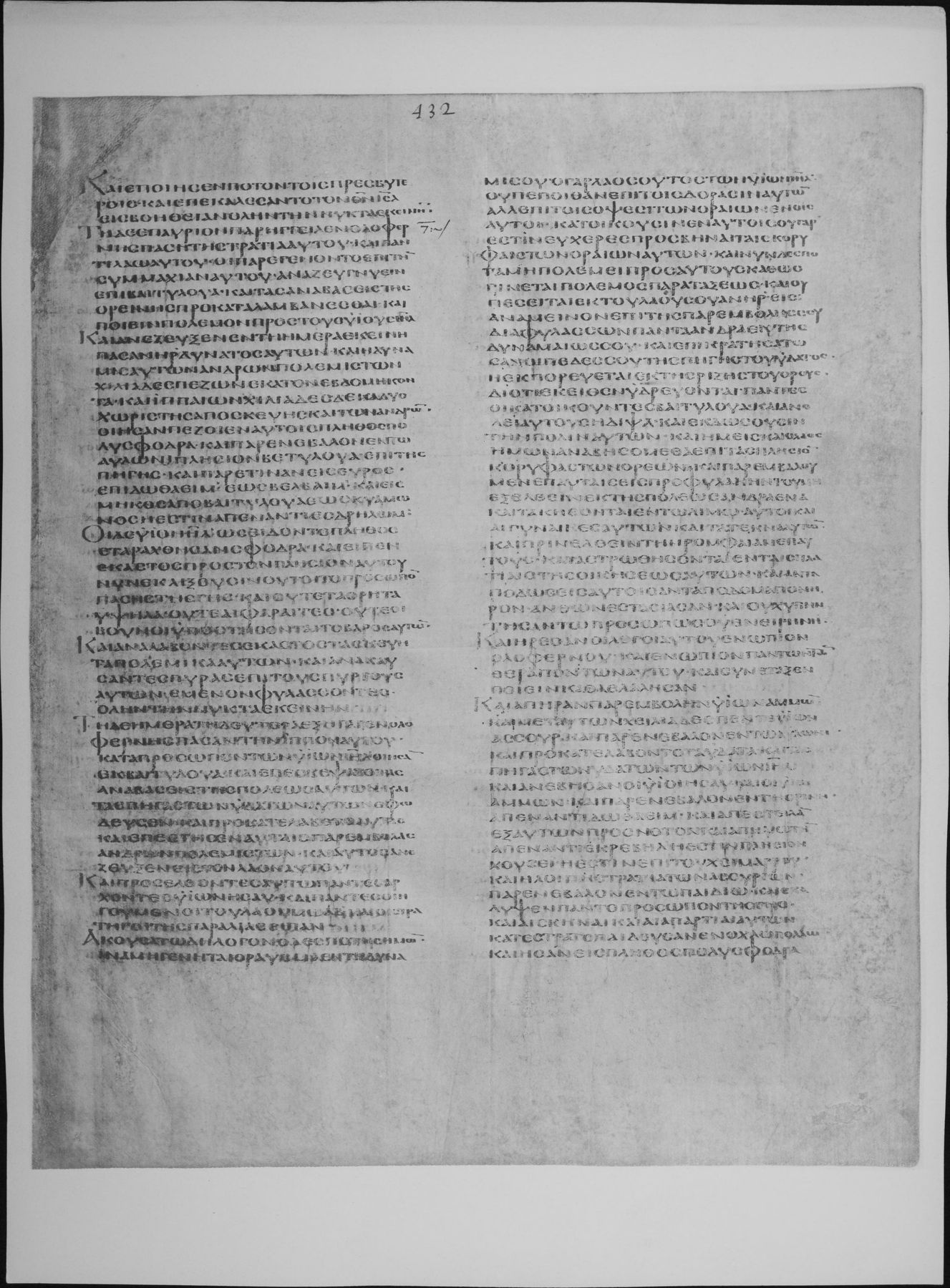
Judith 6:17-21 is on fol. 431v (full-size facsimile of 1879-83, Internet Archive codex-alexandrinus leaf 887). The 1936 reduced facsimile prints beneath this page: Judith vi. 1-21. Checked on the plate: the page begins inside Judith 6:1 (first words read: ΚΑΙ ΕΙΠΕΝ ΟΛΟΦΕΡΝΗΣ ΑΡΧΙΣΤΡΑΤΗΓΟΣ ΤΗΣ ΔΥΝΑΜΕΩΣ ΑΣΣΟΥΡ ΠΡΟΣ ΑΧΙΩΡ). Judith 6:21 is on fol. 432r (full-size facsimile of 1879-83, Internet Archive codex-alexandrinus leaf 888). The 1936 reduced facsimile prints beneath this page: Judith vi. 21-vii. 18. Checked on the plate: the page begins inside Judith 6:21 (first words read: ΚΑΙ ΕΠΟΙΗΣΕΝ ΠΟΤΟΝ ΤΟΙΣ ΠΡΕΣΒΥΤΕΡΟΙΣ ΚΑΙ ΕΠΕΚΑΛΕΣΑΝΤΟ ΤΟΝ ΘΝ ΙΣΡΑΗΛ).
17καὶ ἀποκριθεὶς ἀπήγγειλεν αὐτοῖς τὰ ῥήματα τῆς συνεδρείας Ὀλοφέρνου, καὶ πάντα τὰ ῥήματα ὅσα ἐλάλησεν ἐν μέσῳ τῶν ἀρχόντων υἱῶν Ἀσσούρ, καὶ ὅσα ἐμεγαλορημόνησεν Ὀλοφέρνης εἰς τὸν οἶκον Ἰσραήλ. 18καὶ πεσόντες ὁ λαὸς προσεκύνησαν τῷ θεῷ, καὶ ἐβόησαν λέγοντες 19Κύριε ὁ θεὸς τοῦ οὐρανοῦ, κάτιδε ἐπὶ τὰς ὑπερηφανίας αὐτῶν, καὶ ἐλέησον τὴν ταπείνωσιν τοῦ γένους ἡμῶν, καὶ ἐπίβλεψον ἐπὶ τὸ πρόσωπον τῶν ἡγιασμένων σοι ἐν τῇ ἡμέρᾳ ταύτῃ. 20καὶ παρεκάλεσαν τὸν Ἀχιώρ, καὶ ἐπῄνεσαν αὐτὸν σφόδρα. 21καὶ παρέλαβεν αὐτὸν Ὀζείας ἐκ τῆς ἐκκλησίας εἰς οἶκον αὐτοῦ, καὶ ἐποίησεν πότον τοῖς πρεσβυτέροις· καὶ ἐπεκαλέσαντο τὸν θεὸν Ἰσραὴλ εἰς βοήθειαν ὅλην τὴν νύκτα ἐκείνην.
17And he answered and declared unto them the words of the council of Holofernes, and all the words that he had spoken in the midst of the princes of Assur, and whatsoever Holofernes had spoken proudly against the house of Israel. 18Then the people fell down and worshipped God, and cried unto God, saying, 19O Lord God of heaven, behold their pride, and pity the low estate of our nation, and look upon the face of those that are sanctified unto thee this day. 20And they comforted Achior, and praised him greatly. 21And Ozias took him out of the assembly unto his house, and made a feast to the elders; and they called on the God of Israel all that night for help.
Cite
Sources
- Source: Codex Alexandrinus (British Library Royal MS 1 D. VI) via the British Museum photographic facsimiles of 1879-83 and 1936 (Internet Archive) + Swete's Septuagint + Brenton's English (holding institution)
- Critical edition: H. B. Swete, The Old Testament in Greek according to the Septuagint (1909)
← previous · → next · v cycle view · l back to library