Judith, Chapter 5 (Codex Alexandrinus)
Introduction
Judith 5 in the Greek Old Testament (the Septuagint) as written in Codex Alexandrinus, a Greek Bible copied in the fifth century, probably in Egypt, and now in the British Library (Royal MS 1 D. VI, the second of its four volumes). It is one of the three great early codices of the whole Greek Bible, with Codex Vaticanus and Codex Sinaiticus.
This entry meets the strict three-criteria standard of the Theosis Library:
- Manuscript scan: the pages of Codex Alexandrinus carrying this chapter (fol. 430v, fol. 431r), from the full-size photographic (autotype) facsimile published by the British Museum in 1879-1883, as digitised on the Internet Archive. The verse range of every page comes from the reduced photographic facsimile of 1936, which prints it beneath each plate, and the opening words of every page were read on the plate to confirm the page and the verse it begins with. Each section links to the page or pages that hold its verses. Folio numbers are those written at the head of each leaf and visible on the plates.
- Original text: Swete's edition, which here prints the text of Codex Vaticanus (Vat. gr. 1209), the base of his edition, and gives the readings of Alexandrinus only in his apparatus. The Greek column is therefore Vaticanus' text; where Alexandrinus differs, the plate shows what Alexandrinus reads.
- English translation: Sir Lancelot C. L. Brenton, The Septuagint Version of the Old Testament (1844; 1851 edition), a translation of the Greek, public domain, from the eBible.org text.
How was this verified? (Provenance)
Where on the image
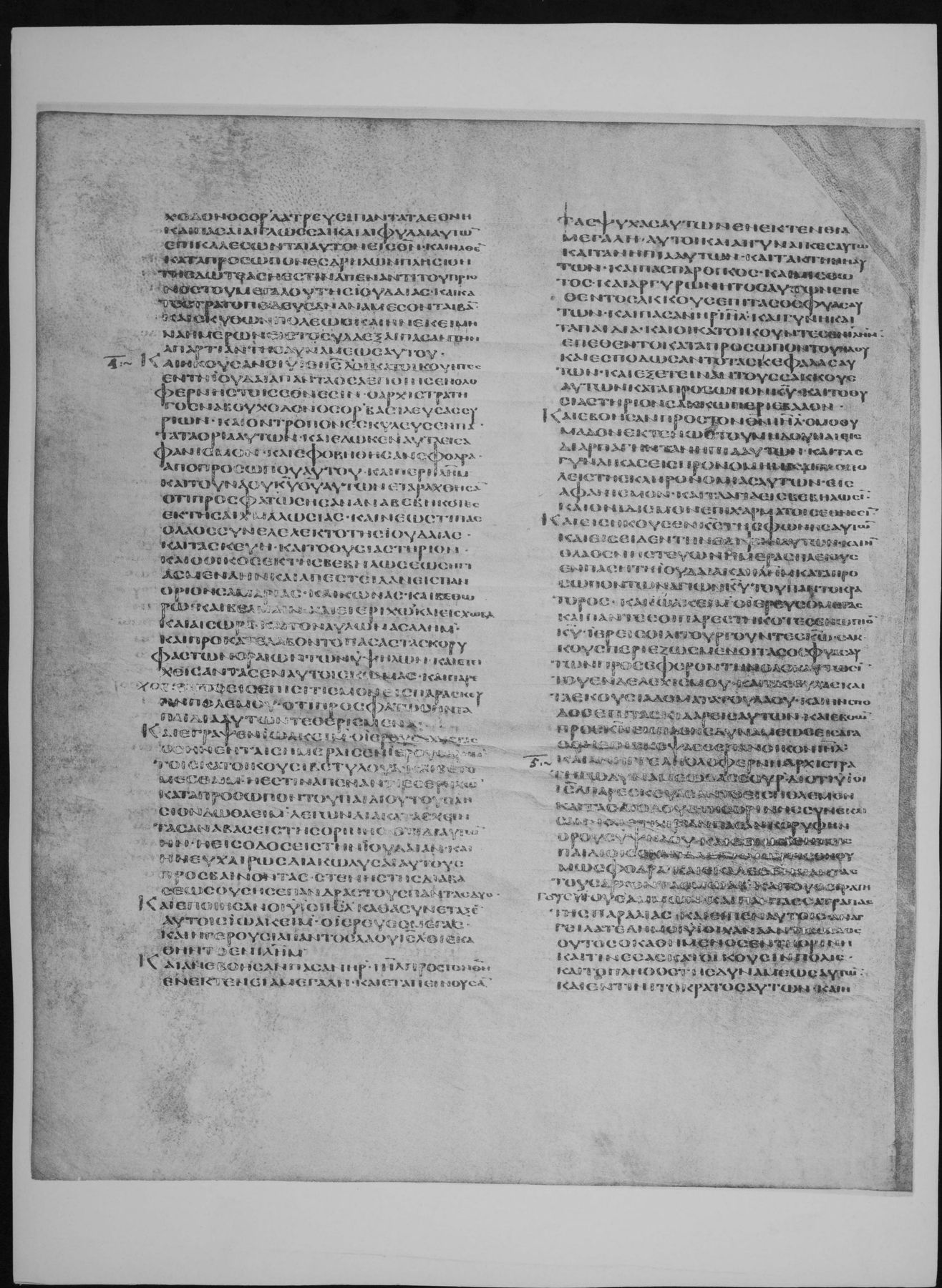
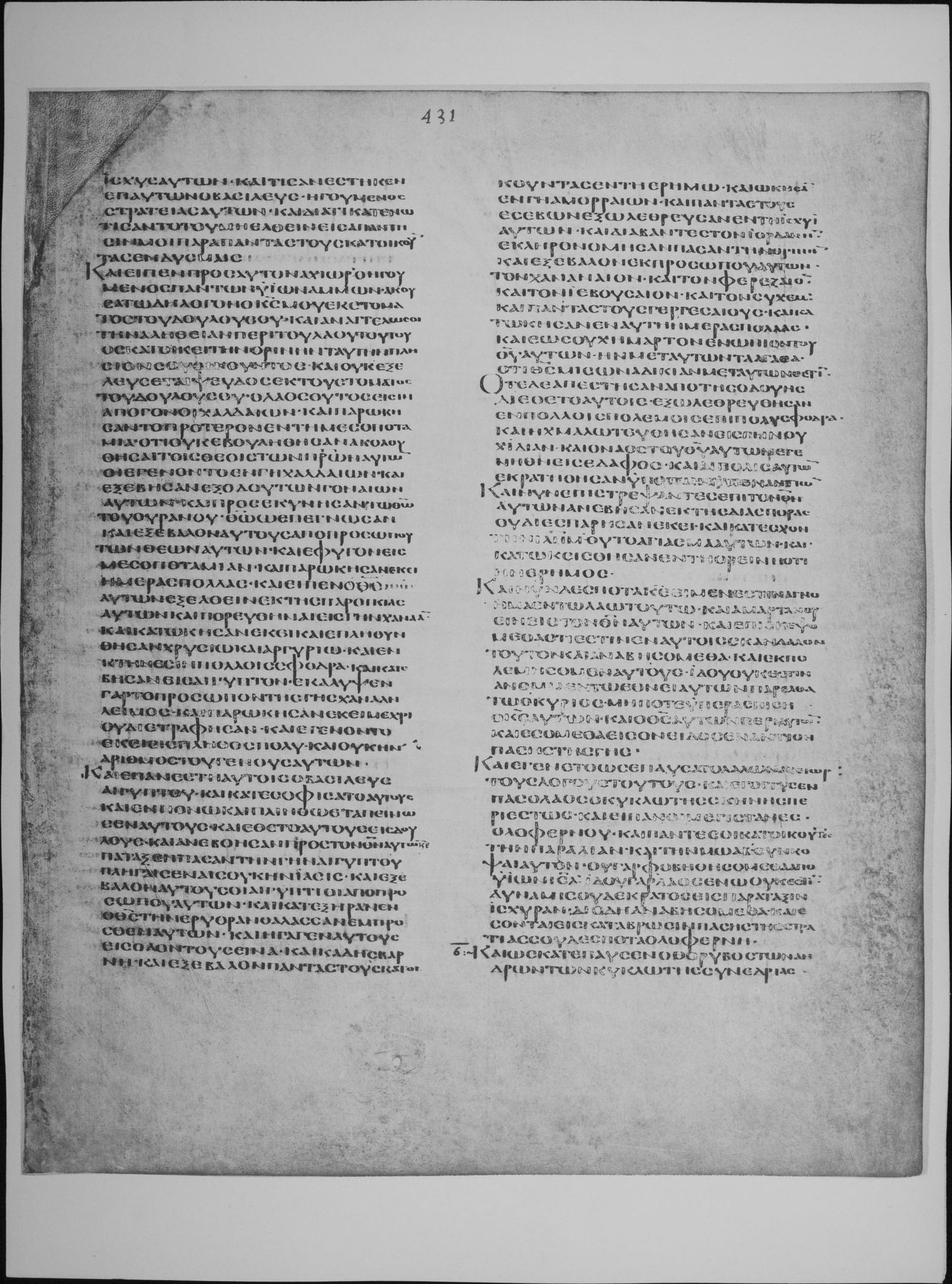
Judith 5:1-3 is on fol. 430v (full-size facsimile of 1879-83, Internet Archive codex-alexandrinus leaf 885). The 1936 reduced facsimile prints beneath this page: Judith iii. 8-v. 3. Checked on the plate: the page begins inside Judith 3:8 (first words read: ΧΟΔΟΝΟΣΟΡ ΛΑΤΡΕΥΣΙ ΠΑΝΤΑ ΤΑ ΕΘΝΗ ΚΑΙ ΠΑΣΑΙ ΑΙ ΓΛΩΣΣΑΙ ΚΑΙ ΑΙ ΦΥΛΑΙ ΑΥΤΩΝ). Judith 5:3-8 is on fol. 431r (full-size facsimile of 1879-83, Internet Archive codex-alexandrinus leaf 886). The 1936 reduced facsimile prints beneath this page: Judith v. 3-vi. 1. Checked on the plate: the page begins inside Judith 5:3 (first words read: ΙΣΧΥΣ ΑΥΤΩΝ ΚΑΙ ΤΙΣ ΑΝΕΣΤΗΚΕΝ ΕΠ ΑΥΤΩΝ ΒΑΣΙΛΕΥΣ ΗΓΟΥΜΕΝΟΣ ΣΤΡΑΤΕΙΑΣ ΑΥΤΩΝ).
1Καὶ ἀνηγγέλη Ὀλοφέρνῃ ἀρχιστρατήγῳ δυνάμεως Ἀσσοὺρ διότι οἱ υἱοὶ Ἰσραὴλ παρεσκευάσαντο εἰς πόλεμον, καὶ τὰς διόδους τῆς ὀρινῆς συνέκλεισαν καὶ ἐτείχισαν πᾶσαν κορυφὴν ὄρους ὑψηλοῦ, καὶ ἔθηκαν ἐν τοῖς πεδίοις σκάνδαλα. 2καὶ ὠργίσθη θυμῷ σφόδρα, καὶ ἐκάλεσεν πάντας τοὺς ἄρχοντας Μωὰβ καὶ τοὺς στρατηγοὺς Ἀμμὼν καὶ πάντας σατράπας τῆς παραλίας, 3καὶ εἶπεν αὐτοῖς Ἀναγγείλατε δή μοι, υἱοὶ Χανάαν, τίς ὁ λαὸς οὗτος ὁ καθήμενος ἐν τῇ ὀρινῇ, καὶ τίνες ἃς κατοικοῦσιν πόλεις, καὶ τὸ πλῆθος τῆς δυνάμεως αὐτῶν, καὶ ἐν τίνι τὸ κράτος αὐτῶν καὶ ἡ ἰσχὺς αὐτῶν, καὶ τίς ἀνέστηκεν ἐπ᾽ αὐτῶν βασιλεὺς ἡγούμενος στρατιᾶς αὐτῶν, 4καὶ διὰ τί κατενωτίσαντο τοῦ μὴ ἐλθεῖν εἰς ἀπάντησίν μοι παρὰ πάντας τοὺς κατοικοῦντας ἐν δυσμαῖς. 5Καὶ εἶπεν πρὸς αὐτὸν Ἀχιὼρ ὁ ἡγούμενος πάντων υἱῶν Ἀμμών Ἀκουσάτω δὴ λόγον ὁ κύριός μου ἐκ στόματος τοῦ δούλου σου, καὶ ἀναγγελῶ σοι τὴν ἀλήθειαν περὶ τοῦ λαοῦ ὃς κατοικεῖ τὴν ὀρινὴν ταύτην πλησίον σοῦ οἰκοῦντος, καὶ οὐκ ἐξελεύσεται ψεῦδος ἐκ τοῦ στόματος τοῦ δούλου σου. 6ὁ λαὸς οὗτός εἰσιν ἀπόγονοι Χαλδαίων· 7καὶ παρῴκησαν τὸ πρότερον ἐν τῇ Μεσοποταμίᾳ, ὅτι οὐκ ἐβουλήθησαν ἀκολουθῆσαι τοῖς θεοῖς τῶν πατέρων αὐτῶν οἳ ἐγένοντο ἐν γῇ Χαλδαίων. 8ἐξέβησαν ἐξ ὁδοῦ τῶν γονέων αὐτῶν καὶ προσεκύνησαν τῷ θεῷ τοῦ οὐρανοῦ, θεῷ ᾧ ἐπέγνωσαν· καὶ ἐξέβαλον αὐτοὺς ἀπὸ προσώπου τῶν θεῶν αὐτῶν, καὶ ἔφυγον εἰς Μεσοποταμίαν, καὶ παρῴκησαν ἐκεῖ ἡμέρας πολλάς.
1Then was it declared to Holofernes, the chief captain of the army of Assur, that the children of Israel had prepared for war, and had shut up the passages of the hill country, and had fortified all the tops of the high hills, and had laid impediments in the champaign countries: 2wherewith he was very angry, and called all the princes of Moab, and the captains of Ammon, and all the governors of the sea coast, 3and he said unto them, Tell me now, ye sons of Chanaan, who this people is, that dwelleth in the hill country, and what are the cities that they inhabit, and what is the multitude of their army, and wherein is their power and strength, and what king is set over them, or captain of their army; 4and why have they determined not to come and meet me, more than all the inhabitants of the west? 5Then said Achior, the captain of all the sons of Ammon, Let my lord now hear a word from the mouth of thy servant, and I will declare unto thee the truth concerning this people, which dwelleth near thee, and inhabiteth the hill countries: and there shall no lie come out of the mouth of thy servant. 6This people are descended of the Chaldeans: 7and they sojourned heretofore in Mesopotamia, because they would not follow the gods of their fathers, which were in the land of Chaldea. 8For they left the way of their ancestors, and worshipped the God of heaven, the God whom they knew: so they cast them out from the face of their gods, and they fled into Mesopotamia, and sojourned there many days.
Where on the image
Judith 5:9-16 is on fol. 431r (full-size facsimile of 1879-83, Internet Archive codex-alexandrinus leaf 886). The 1936 reduced facsimile prints beneath this page: Judith v. 3-vi. 1. Checked on the plate: the page begins inside Judith 5:3 (first words read: ΙΣΧΥΣ ΑΥΤΩΝ ΚΑΙ ΤΙΣ ΑΝΕΣΤΗΚΕΝ ΕΠ ΑΥΤΩΝ ΒΑΣΙΛΕΥΣ ΗΓΟΥΜΕΝΟΣ ΣΤΡΑΤΕΙΑΣ ΑΥΤΩΝ).
9καὶ εἶπεν ὁ θεὸς αὐτῶν ἐξελθεῖν ἐκ τῆς παροικίας αὐτῶν καὶ πορευθῆναι εἰς γῆν Χανάαν· καὶ κατῴκησαν ἐκεῖ, καὶ ἐπληθύνθησαν χρυσίῳ καὶ ἀργυρίῳ καὶ ἐν κτήνεσιν πολλοῖς σφόδρα. 10καὶ κατέβησαν εἰς Αἴγυπτον, ἐκάλυψεν γὰρ τὸ πρόσωπον τῆς γῆς Χανάαν λιμός, καὶ παρῴκησαν ἐκεῖ μέχρις οὗ διετράφησαν· καὶ ἐγένοντο ἐκεῖ εἰς πλῆθος πολύ, καὶ οὐκ ἦν ἀριθμὸς τοῦ γένους αὐτῶν. 11καὶ ἐπανέστη αὐτοῖς ὁ βασιλεὺς Αἰγύπτου, καὶ κατεσοφίσαντο αὐτοὺς ἐν πόνῳ καὶ πλίνθῳ, ἐταπείνωσαν αὐτοὺς καὶ ἔθεντο αὐτοὺς εἰς δούλους. 12καὶ ἀνεβόησαν πρὸς τὸν θεὸν αὐτῶν, καὶ ἐπάταξεν γῆν Αἰγύπτου πληγαῖς ἐν αἷς οὐκ ἦν ἴασις· καὶ ἐξέβαλον αὐτοὺς οἱ Αἰγύπτιοι ἀπὸ προσώπου αὐτῶν. 13καὶ κατεξήρανεν ὁ θεὸς τὴν ἐρυθρὰν θάλασσαν ἔμπροσθεν αὐτῶν, 14καὶ ἤγαγεν αὐτοὺς εἰς ὁδὸν τοῦ Σεινὰ καὶ Καδὴς Βαρνή· καὶ ἐξέβαλον πάντας τοὺς κατοικοῦντας ἐν τῇ ἐρήμῳ, 15καὶ ᾤκησαν ἐν γῇ Ἀμορραίων, καὶ πάντας τοὺς Ἑσεβωνείτας ἐξωλέθρευσαν ἐν τῇ ἰσχύι αὐτῶν· καὶ διαβάντες τὸν Ἰορδάνην ἐκληρονόμησαν πᾶσαν τὴν ὀρινήν. 16καὶ ἐξέβαλον ἐκ προσώπου αὐτῶν τὸν Χανανῖον καὶ τὸν Φερεζαῖον καὶ τὸν Ἰεβουσαῖον καὶ τὸν Συχὲμ καὶ πάντας τοὺς Γεργεσαίους, καὶ κατῴκησαν ἐν αὐτῇ ἡμέρας πολλάς.
9Then their God commanded them to depart from the place where they sojourned, and to go into the land of Chanaan: where they dwelt, and were increased with gold and silver, and with very much cattle. 10But when a famine covered all the land of Chanaan, they went down into Egypt, and sojourned there, while they were nourished, and became there a great multitude, so that one could not number their nation. 11Therefore the king of Egypt rose up against them, and dealt subtilly with them, and brought them low with labouring in brick, and made them slaves. 12Then they cried unto their God, and he smote all the land of Egypt with incurable plagues: so the Egyptians cast them out of their sight. 13And God dried the Red sea before them, 14and brought them to mount Sina, and Cades-Barne, and cast forth all that dwelt in the wilderness. 15So they dwelt in the land of the Amorites, and they destroyed by their strength all them of Esebon, and passing over Jordan they possessed all the hill country. 16And they cast forth before them the Chanaanite, the Pherezite, the Jebusite, and the Sychemite, and all the Gergesites, and they dwelt in that country many days.
Where on the image
Judith 5:17-24 is on fol. 431r (full-size facsimile of 1879-83, Internet Archive codex-alexandrinus leaf 886). The 1936 reduced facsimile prints beneath this page: Judith v. 3-vi. 1. Checked on the plate: the page begins inside Judith 5:3 (first words read: ΙΣΧΥΣ ΑΥΤΩΝ ΚΑΙ ΤΙΣ ΑΝΕΣΤΗΚΕΝ ΕΠ ΑΥΤΩΝ ΒΑΣΙΛΕΥΣ ΗΓΟΥΜΕΝΟΣ ΣΤΡΑΤΕΙΑΣ ΑΥΤΩΝ).
17καὶ ἕως οὐχ ἥμαρτον ἐνώπιον τοῦ θεοῦ αὐτῶν, ἦν μετ᾽ αὐτῶν τὰ ἀγαθά, ὅτι θεὸς μισῶν ἀδικίαν μετ᾽ αὐτῶν ἐστίν· 18ὅτε δὲ ἀπέστησαν ἀπὸ τῆς ὁδοῦ ἧς διέθετο αὐτοῖς, ἐξωλεθρεύθησαν ἐν πολλοῖς πολέμοις ἐπὶ πολὺ σφόδρα, καὶ ᾐχμαλωτεύθησαν εἰς γῆν οὐκ ἰδίαν, καὶ ὁ ναὸς τοῦ θεοῦ αὐτῶν ἐγενήθη εἰς ἔδαφος, καὶ αἱ πόλεις αὐτῶν ἐκρατήθησαν ὑπὸ τῶν ὑπεναντίων. 19καὶ νῦν ἐπιστρέψαντες ἐπὶ τὸν θεὸν αὐτῶν ἀνέβησαν ἐκ τῆς διασπορᾶς οὗ διεσπάρησαν ἐκεῖ, κατέσχον τὴν Ἰερουσαλὴμ οὗ τὸ ἁγίασμα αὐτῶν, καὶ κατῳκίσθησαν ἐν τῇ ὀρινῇ, ὅτι ἦν ἔρημος. 20καὶ νῦν, δέσποτα κύριε, εἰ μέν ἐστιν ἀγνόημα ἐν τῷ λαῷ τούτῳ καὶ ἁμαρτάνουσιν εἰς τὸν θεὸν αὐτῶν, καὶ ἐπισκεψόμεθα ὅτι ἐστὶν ἐν αὐτοῖς σκάνδαλον τοῦτο, καὶ ἀναβησόμεθα καὶ ἐκπολεμήσομεν αὐτούς· 21εἰ δ᾽ οὐκ ἔστιν ἀνομία ἐν τῷ ἔθνει αὐτῶν, παρελθέτω δὴ ὁ κύριος, μή ποτε ὑπερασπίσῃ ὁ κύριος αὐτῶν καὶ ὁ θεὸς αὐτῶν ὑπὲρ αὐτῶν, καὶ ἐσόμεθα εἰς ὀνειδισμὸν ἐναντίον πάσης τῆς γῆς. 22Καὶ ἐγένετο ὡς ἐπαύσατο Ἀχιὼρ λαλῶν τοὺς λόγους τούτους, καὶ ἐγόγγυσεν πᾶς ὁ λαὸς ὁ κυκλῶν τὴν σκηνὴν καὶ περιεστώς· καὶ εἶπαν οἱ μεγιστᾶνες Ὀλοφέρνου καὶ πάντες οἱ κατοικοῦντες τὴν παραλίαν καὶ τὴν Μωὰβ συγκόψαι αὐτόν 23Οὐ γὰρ φοβηθησόμεθα ἀπὸ υἱῶν Ἰσραήλ· ἰδοὺ γὰρ λαὸς ἐν ᾧ οὐκ ἔστιν δύναμις οὐδὲ κράτος εἰς παράταξιν ἰσχυράν. 24διὸ δὴ ἀναβησόμεθα, καὶ ἔσονται εἰς κατάβρωμα πάσης τῆς στρατείας σου, δέσποτα Ὀλοφέρνη.
17And whilst they sinned not before their God, they prospered, because the God that hateth iniquity was with them. 18But when they departed from the way which he appointed them, they were destroyed in many battles very sore, and were led captives into a land that was not their's, and the temple of their God was cast to the ground, and their cities were taken by the enemies. 19But now are they returned to their God, and are come up from the places where they were scattered, and have possessed Jerusalem, where their sanctuary is, and are seated in the hill country; for it was desolate. 20Now therefore, my lord and governor, if there be any error in this people, and they sin against their God, let us consider that this shall be their ruin, and let us go up, and we shall overcome them. 21But if there be no iniquity in their nation, let my lord now pass by, lest their Lord defend them, and their God be for them, and we become a reproach before all the world. 22And when Achior had finished these sayings, all the people standing round about the tent murmured, and the chief men of Holofernes, and all that dwelt by the sea side, and in Moab, spake that he should kill him. 23For, say they, we will not be afraid of the face of the children of Israel: for, lo, it is a people that have no strength nor power for a strong battle. 24Now therefore, lord Holofernes, we will go up, and they shall be a prey to be devoured of all thine army.
Cite
Sources
- Source: Codex Alexandrinus (British Library Royal MS 1 D. VI) via the British Museum photographic facsimiles of 1879-83 and 1936 (Internet Archive) + Swete's Septuagint + Brenton's English (holding institution)
- Critical edition: H. B. Swete, The Old Testament in Greek according to the Septuagint (1909)
← previous · → next · v cycle view · l back to library