Lamentations, Chapter 1 (Codex Alexandrinus)
Introduction
Lamentations 1 in the Greek Old Testament (the Septuagint) as written in Codex Alexandrinus, a Greek Bible copied in the fifth century, probably in Egypt, and now in the British Library (Royal MS 1 D. VI, the second of its four volumes). It is one of the three great early codices of the whole Greek Bible, with Codex Vaticanus and Codex Sinaiticus.
This entry meets the strict three-criteria standard of the Theosis Library:
- Manuscript scan: the pages of Codex Alexandrinus carrying this chapter (fol. 364v, fol. 365r, fol. 365v), from the full-size photographic (autotype) facsimile published by the British Museum in 1879-1883, as digitised on the Internet Archive. The verse range of every page comes from the reduced photographic facsimile of 1936, which prints it beneath each plate, and the opening words of every page were read on the plate to confirm the page and the verse it begins with. Each section links to the page or pages that hold its verses. Folio numbers are those written at the head of each leaf and visible on the plates.
- Original text: Swete's edition, which here prints the text of Codex Vaticanus (Vat. gr. 1209), the base of his edition, and gives the readings of Alexandrinus only in his apparatus. The Greek column is therefore Vaticanus' text; where Alexandrinus differs, the plate shows what Alexandrinus reads.
- English translation: Sir Lancelot C. L. Brenton, The Septuagint Version of the Old Testament (1844; 1851 edition), a translation of the Greek, public domain, from the eBible.org text.
How was this verified? (Provenance)
Where on the image
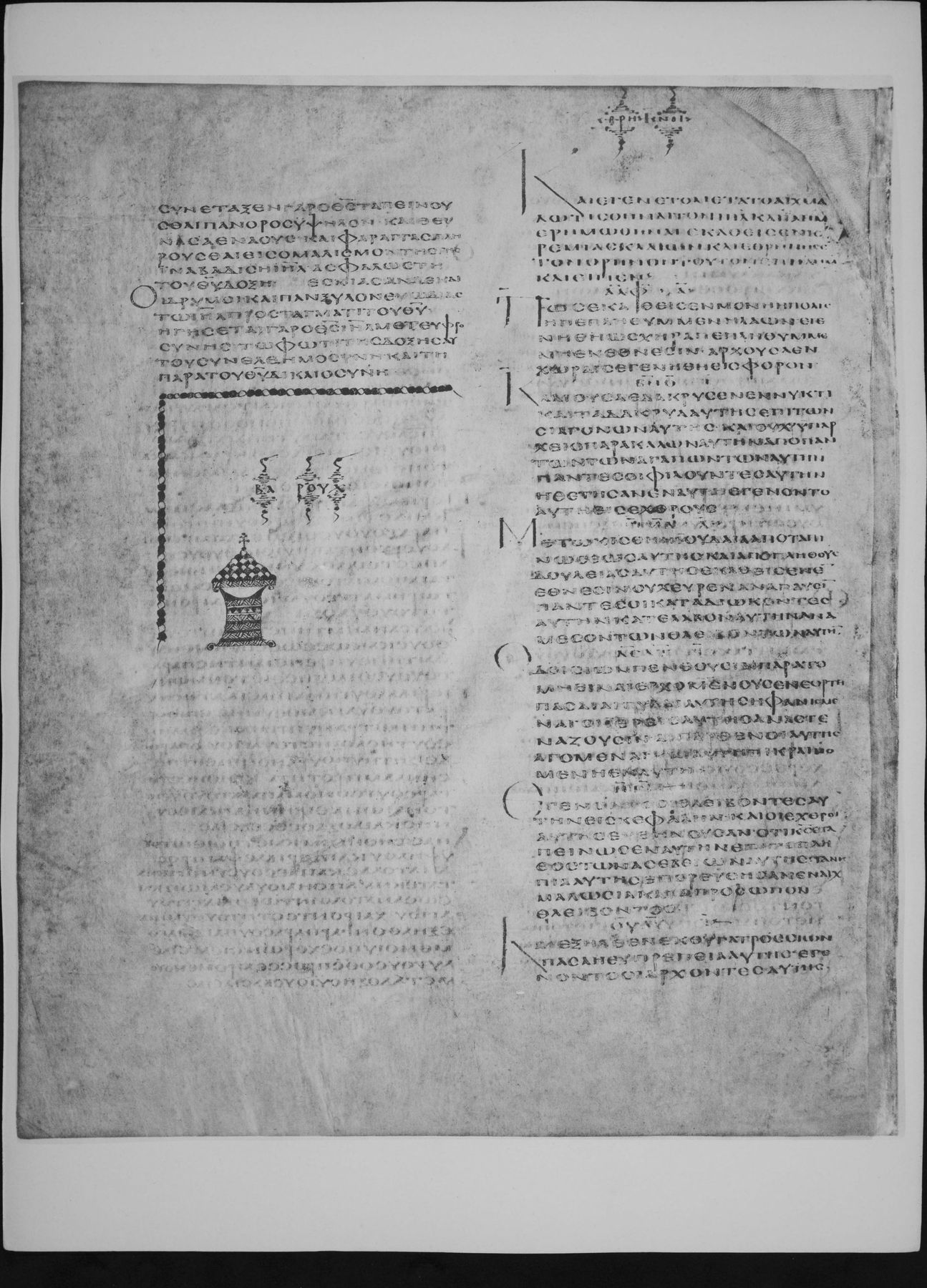
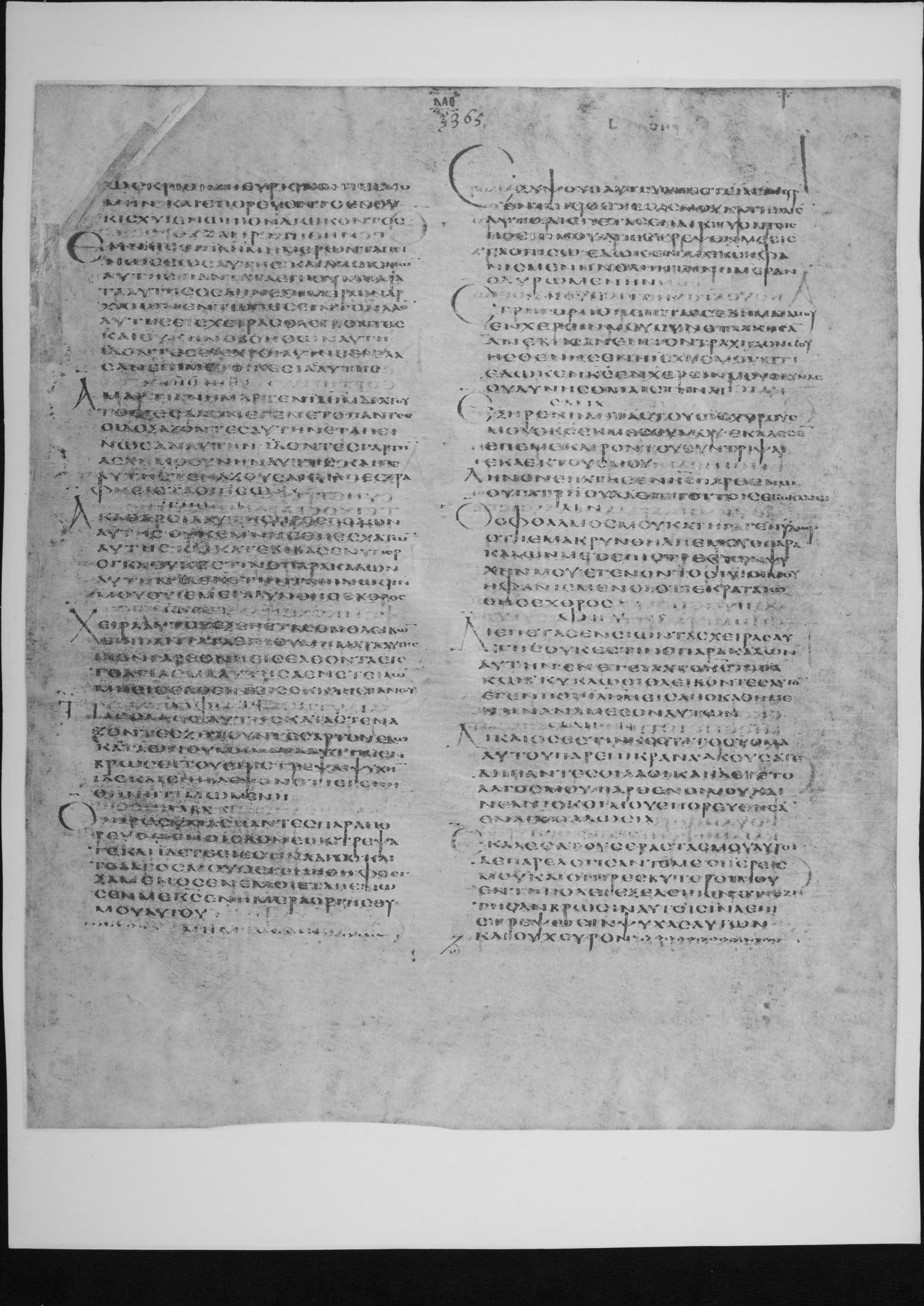
Lamentations 1:1-6 is on fol. 364v (full-size facsimile of 1879-83, Internet Archive codex-alexandrinus leaf 753). The 1936 reduced facsimile prints beneath this page: Bar. v. 7-9, Lam. i. 1-6. Checked on the plate: the page begins at the start of Bar 5:7 (first words read: ΣΥΝΕΤΑΞΕΝ ΓΑΡ Ο ΘΣ ΤΑΠΕΙΝΟΥΣΘΑΙ ΠΑΝ ΟΡΟΣ ΥΨΗΛΟΝ ΚΑΙ ΘΙΝΑΣ). Lamentations 1:6-8 is on fol. 365r (full-size facsimile of 1879-83, Internet Archive codex-alexandrinus leaf 754). The 1936 reduced facsimile prints beneath this page: Lam. i. 6-19. Checked on the plate: the page begins inside Lamentations 1:6 (first words read: ΩΣ ΚΡΙΟΙ ΟΥΧ ΕΥΡΙΣΚΟΝΤΕΣ ΝΟΜΗΝ ΚΑΙ ΕΠΟΡΕΥΟΝΤΟ ΕΝ ΟΥΚ ΙΣΧΥΙ ΚΑΤΑ ΠΡΟΣΩΠΟΝ ΔΙΩΚΟΝΤΟΣ).
1ΚΑΙ ἐγένετο μετὰ τὸ αἰχμαλωτισθῆναι τὸν Ἰσραὴλ καὶ Ἰερουσαλὴμ ἐρημωθῆναι ἐκάθισεν Ἰερεμίας κλαίων, καὶ ἐθρήνησεν τὸν θρῆνον τοῦτον ἐπὶ Ἰερουσαλὴμ καὶ εἶπεν Ἄλεφ. Πῶς ἐκάθισεν μόνη ἡ πόλις ἡ πεπληθυμμένη λαῶν; ἐγενήθη ὡς χήρα πεπληθυμμένη ἐν ἔθνεσιν, ἄρχουσα ἐν χώραις ἐγενήθη εἰς φόρον. 2Βήθ. Κλαίουσα ἔκλαυσεν ἐν νυκτί, καὶ τὰ δάκρυα αὐτῆς ἐπὶ τῶν σιαγόνων αὐτῆς, καὶ οὐχ ὑπάρχει ὁ παρακαλῶν αὐτὴν ἀπὸ πάντων τῶν ἀγαπώντων αὐτήν· πάντες οἱ φιλοῦντες αὐτὴν ἠθέτησαν ἐν αὐτῇ, ἐγένοντο αὐτῇ εἰς ἐχθρούς. 3Γίμελ. Μετῳκίσθη Ἰουδαία ἀπὸ ταπεινώσεως αὐτῆς καὶ ἀπὸ πλήθους δουλείας αὐτῆς· ἐκάθισεν ἐν ἔθνεσιν, οὐχ εὗρεν ἀνάπαυσιν· πάντες οἱ καταδιώκοντες αὐτὴν κατέλαβον αὐτὴν ἀνὰ μέσον τῶν θλιβόντων. 4Δάλεθ. Ὁδοὶ Σειὼν πενθοῦσιν παρὰ τὸ μὴ εἶναι ἐρχομένους ἐν ἑορτῇ· πᾶσαι αἱ πύλαι αὐτῆς ἠφανισμέναι, οἱ ἱερεῖς αὐτῆς ἀναστενάζουσιν, αἱ παρθένοι αὐτῆς ἀγόμεναι, καὶ αὐτὴ πικραινομένη ἐν ἑαυτῇ. 5Ἥ. Ἐγένοντο οἱ θλίβοντες αὐτὴν εἰς κεφαλήν, καὶ οἱ ἐχθροὶ αὐτῆς εὐθηνοῦσαν, ὅτι Κύριος ἐταπείνωσεν ἐπὶ τὸ πλῆθος τῶν ἀσεβειῶν αὐτῆς· τὰ νήπια αὐτῆς ἐπορεύθησαν ἐν αἰχμαλωσίᾳ κατὰ πρόσωπον θλίβοντος. 6Οὐαύ. Καὶ ἐξήρθη ἐκ θυγατρὸς Σειὼν πᾶσα ἡ εὐπρέπεια αὐτῆς· ἐγένοντο οἱ ἄρχοντες αὐτῆς ὡς κριοὶ οὐχ εὑρίσκοντες νομήν, καὶ ἐπορεύοντο ἐν οὐκ ἰσχύι κατὰ πρόσωπον διώκοντος. 7Ζάιν. Ἐμνήσθη Ἰερουσαλὴμ ἡμερῶν ταπεινώσεως αὐτῆς καὶ ἀπωσμῶν αὐτῆς, πάντα τὰ ἐπιθυμητὰ αὐτῆς ὅσα ἦν ἐξ ἡμερῶν ἀρχαίων, ἐν τῷ πεσεῖν τὸν λαὸν αὐτῆς εἰς χεῖρας θλίβοντος, καὶ οὐκ ἦν ὁ βοηθῶν αὐτῇ. ἰδόντες οἱ ἐχθροὶ αὐτῆς ἐγέλασαν ἐπὶ κατοικεσίᾳ αὐτῆς. 8Ἥθ. Ἁμαρτίαν ἥμαρτεν Ἰερουσαλήμ, διὰ τοῦτο εἰς σάλον ἐγένετο· πάντες οἱ δοξάζοντες αὐτὴν ἐταπείνωσαν αὐτήν· ἴδον γὰρ τὴν ἀσχημοσύνην αὐτῆς, καὶ γε αὐτὴ στενάζουσα καὶ ἀπεστράφη ὀπίσω.
1Aleph. How does the city that was filled with people sit solitary! she is become as a widow: she that was magnified among the nations, and princess among the provinces, has become tributary. 2Beth. She weeps sore in the night, and her tears are on her cheeks; and there is none of all her lovers to comfort her: all that were her friends have dealt deceitfully with her, they are become her enemies. 3Gimel. Judea is gone into captivity by reason of her affliction, and by reason of the abundance of her servitude: she dwells among the nations, she has not found rest: all her pursuers have overtaken her between her oppressors. 4Daleth. The ways of Sion mourn, because there are none that come to the feast: all her gates are ruined: her priests groan, her virgins are led captive, and she is in bitterness in herself. 5He. Her oppressors are become the head, and her enemies have prospered; for the Lord has afflicted her because of the multitude of her sins: her young children are gone into captivity before the face of the oppressor. 6Vau. And all her beauty has been taken away from the daughter of Sion: her princes were as rams finding no pasture, and are gone away in weakness before the face of the pursuer. 7Zain. Jerusalem remembered the days of her affliction, and her rejection; she thought on all her desirable things which were from the days of old, when her people fell into the hands of the oppressor, and there was none to help her: when her enemies saw it they laughed at her habitation. 8Heth. Jerusalem has sinned a great sin; therefore has she come into tribulation, all that used to honour her have afflicted her, for they have seen her shame: yea, she herself groaned, and turned backward.
Where on the image
Lamentations 1:9-16 is on fol. 365r (full-size facsimile of 1879-83, Internet Archive codex-alexandrinus leaf 754). The 1936 reduced facsimile prints beneath this page: Lam. i. 6-19. Checked on the plate: the page begins inside Lamentations 1:6 (first words read: ΩΣ ΚΡΙΟΙ ΟΥΧ ΕΥΡΙΣΚΟΝΤΕΣ ΝΟΜΗΝ ΚΑΙ ΕΠΟΡΕΥΟΝΤΟ ΕΝ ΟΥΚ ΙΣΧΥΙ ΚΑΤΑ ΠΡΟΣΩΠΟΝ ΔΙΩΚΟΝΤΟΣ).
9Τήθ. Ἀκαθαρσία αὐτῆς πρὸς ποδῶν αὐτῆς, οὐκ ἐμνήσθη ἔσχατα αὐτῆς καὶ κατεβίβασεν ὑπέρογκα· οὐκ ἔστιν ὁ παρακαλῶν αὐτήν. ἴδε, Κύριε, τὴν ταπείνωσίν μου, ὅτι ἐμεγαλύνθη ἐχθρός. 10Ἰώθ. Χεῖρα αὐτοῦ ἐξεπέτασεν θλίβων ἐπὶ πάντα τὰ ἐπιθυμήματα αὐτῆς, εἶδεν γὰρ ἔθνη εἰσελθόντα εἰς τὸ ἁγίασμα αὐτῆς, ἃ ἐνετείλω μὴ εἰσελθεῖν αὐτὰ εἰς ἐκκλησίαν σου. 11Χάφ. Πᾶς ὁ λαὸς αὐτῆς καταστενάζοντες, ζητοῦντες ἄρτον, ἔδωκαν τὰ ἐπιθυμήματα αὐτῆς ἐν βρώσει τοῦ ἐπιστρέψαι ψυχήν. ἴδε, Κύριε, καὶ ἐπίβλεψον, ὅτι ἐγενήθη ἠτιμωμένη. 12Λάμεδ. Οἱ πρὸς ὑμᾶς πάντες παραπορευόμενοι ὁδόν, ἐπιστρέψατε καὶ ἴδετε εἰ ἔστιν ἄλγος κατὰ τὸ ἄλγος μου ὃ ἐγενήθη· φθεγξάμενος ἐν ἐμοὶ ἐταπείνωσέν με Κύριος ἐν ἡμέρᾳ ὀργῆς θυμοῦ αὐτοῦ. 13Μήμ. Ἐξ ὕψους αὐτοῦ ἀπέστειλεν πῦρ, ἐν τοῖς ὀστέοις μου κατήγαγεν αὐτό· διεπέτασεν δίκτυον τοῖς ποσίν μου, ἀπέστρεψέν με εἰς τὰ ὀπίσω, ἔδωκέν με ἠφανισμένην, ὅλην τὴν ἡμέραν ὀδυνωμένην. 14Νούν. Ἐγρηγορήθη ἐπὶ τὰ ἀσεβήματά μου, ἐν χερσίν μου συνεπλάκησαν, ἀνέβησαν ἐπὶ τὸν τράχηλόν μου· ἠσθένησεν ἡ ἰσχύς μου, ὅτι ἔδωκεν Κύριος ἐν χερσίν μου ὀδύνας, οὐ δυνήσομαι στῆναι. 15Σάμχ. Ἐξῆρεν πάντας τοὺς ἰσχυρούς μου ὁ κύριος ἐκ μέσου μου, ἐκάλεσεν ἐπ᾽ ἐμὲ καιρὸν τοῦ συντρίψαι ἐκλεκτούς μου· ληνὸν ἐπάτησεν Κύριος παρθένῳ θυγατρὶ Ἰούδα, ἐπὶ τούτοις ἐγὼ κλαίω. 16Ἄιν. Ὁ ὀφθαλμὸς μου κατήγαγεν ὕδωρ, ὅτι ἐμακρύνθη ἀπ᾽ ἐμοῦ ὁ παρακαλῶν με, ὁ ἐπιστρέφων ψυχήν μου· ἐγένοντο οἱ υἱοὶ μου ἠφανισμένοι, ὅτι ἐκραταιώθη ὁ ἐχθρός.
9Teth. Her uncleanness is before her feet; she remembered not her last end; she has lowered her boasting tone, there is none to comfort her. Behold, O Lord, my affliction: for the enemy has magnified himself. 10Jod. The oppressor has stretched out his hand on all her desirable things: for she has seen the Gentiles entering into her sanctuary, concerning whom thou didst command that they should not enter into thy congregation. 11Chaph. All her people groan, seeking bread: they have given their desirable things for meat, to restore their soul: behold, Lord, and look; for she is become dishonoured. 12Lamed. All ye that pass by the way, turn, and see if there is sorrow like to my sorrow, which has happened to me. The Lord who spoke by me has afflicted me in the day of his fierce anger. 13Mem. He has sent fire from his lofty habitation, he has brought it into my bones: he has spread a net for my feet, he has turned me back: he has made me desolate and mourning all the day. 14Nun. He has watched over my sins, they are twined about my hands, they have come up on my neck: my strength has failed; for the Lord has laid pains on my hands, I shall not be able to stand. 15Samech. The Lord has cut off all my strong men from the midst of me: he has summoned against me a time for crushing my choice men: the Lord has trodden a wine-press for the virgin daughter of Juda: for these things I weep. 16Ain. Mine eye has poured out water, because he that should comfort me, that should restore my soul, has been removed far from me: my sons have been destroyed, because the enemy has prevailed.
Where on the image
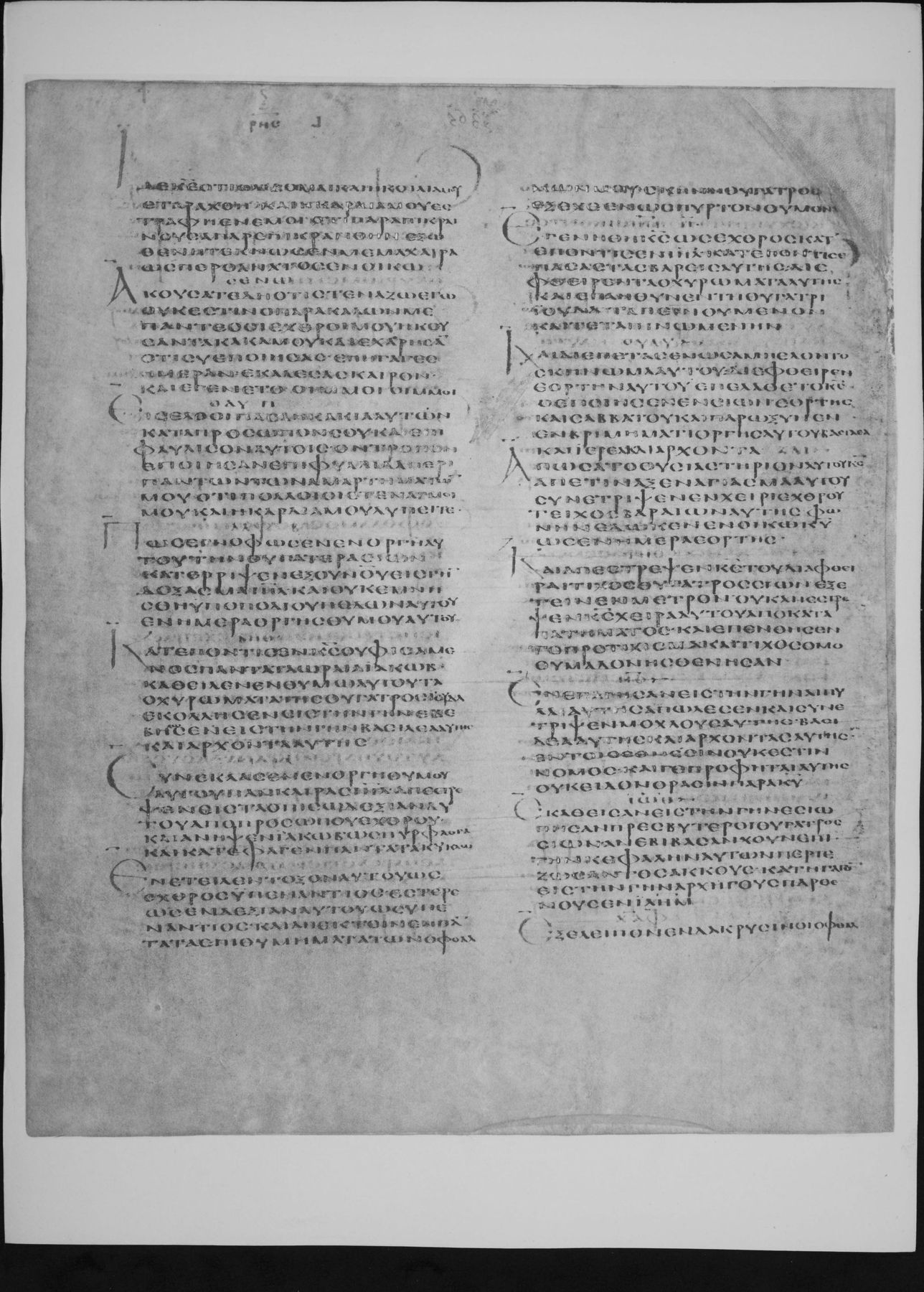
Lamentations 1:17-19 is on fol. 365r (full-size facsimile of 1879-83, Internet Archive codex-alexandrinus leaf 754). The 1936 reduced facsimile prints beneath this page: Lam. i. 6-19. Checked on the plate: the page begins inside Lamentations 1:6 (first words read: ΩΣ ΚΡΙΟΙ ΟΥΧ ΕΥΡΙΣΚΟΝΤΕΣ ΝΟΜΗΝ ΚΑΙ ΕΠΟΡΕΥΟΝΤΟ ΕΝ ΟΥΚ ΙΣΧΥΙ ΚΑΤΑ ΠΡΟΣΩΠΟΝ ΔΙΩΚΟΝΤΟΣ). Lamentations 1:20-22 is on fol. 365v (full-size facsimile of 1879-83, Internet Archive codex-alexandrinus leaf 755). The 1936 reduced facsimile prints beneath this page: Lam. i. 20-ii. 11. Checked on the plate: the page begins at the start of Lamentations 1:20 (first words read: ΙΔΕ ΚΕ ΟΤΙ ΘΛΙΒΟΜΑΙ Η ΚΟΙΛΙΑ ΜΟΥ ΕΤΑΡΑΧΘΗ ΚΑΙ Η ΚΑΡΔΙΑ ΜΟΥ). Note: the page begins at the start of Lam. 1:20, under the letter name ΡΗΧΣ that Swete prints at the head of the verse.
17Φή. Διεπέτασεν Σειὼν χεῖρας αὐτῆς, οὐκ ἔστιν ὁ παρακαλῶν αὐτήν. ἐνετείλατο Κύριος τῷ Ἰακώβ· κύκλῳ αὐτοῦ οἱ θλίβοντες αὐτόν, ἐγενήθη Ἰερουσαλὴμ εἰς ἀποκαθημένην ἀνὰ μέσον αὐτῶν. 18Τιαδή. Δίκαιός ἐστιν Κύριος, ὅτι στόμα αὐτοῦ παρεπίκρανα. ἀκούσατε δή, πάντες οἱ λαοί, καὶ ἴδετε τὸ ἄλγος μου· παρθένοι μου καὶ νεανίσκοι μου ἐπορεύθησαν ἐν αἰχμαλωσίᾳ. 19Κώφ. Ἐκάλεσα τοὺς ἐραστάς μου, αὐτοὶ δὲ παρελογίσαντό με· οἱ ἱερεῖς μου καὶ οἱ πρεσβύτεροί μου ἐν τῇ πόλει ἐξέλειπον, ὅτι ἐζήτησαν βρῶσιν αὐτοῖς ἵνα ἐπιστρέψωσιν ψυχὰς αὐτῶν, καὶ οὐχ εὗρον. 20Ῥήχς. Ἴδε, Κύριε, ὅτι θλίβομαι· ἡ κοιλία μου ἐταράχθη, καὶ ἡ καρδία μου ἐστράφη ἐν ἐμοί· ὅτι παραπικραίνουσα παρεπικράνθην, ἔξωθεν ἠτέκνωσεν μάχαιρα ὥσπερ θάνατος ἐν οἴκῳ. 21Χσέν. Ἀκούσατε δὴ ὅτι στενάζω ἐγώ, οὐκ ἔστιν ὁ παρακαλῶν με· πάντες οἱ ἐχθροί μου ἤκουσαν τὰ κακά μου καὶ ἐχάρησαν, ὅτι σὺ ἐποίησας· ἐπήγαγες ἡμέραν, ἐκάλεσας καιρόν, ἐγένοντο ὅμοιοι ἐμοί. 22Θαύ. Εἰσέλθοι πᾶσα ἡ κακία αὐτῶν κατὰ πρόσωπόν σου, καὶ ἐπιφύλλισον αὐτοῖς ὃν τρόπον ἐποίησαν ἐπιφυλλίδα περὶ πάντων τῶν ἁμαρτημάτων μου, ὅτι πολλοὶ οἱ στεναγμοί μου, καὶ ἡ καρδία μου λυπεῖται.
17Phe. Sion has spread out her hand, and there is none to comfort her: the Lord has commanded concerning Jacob, his oppressors are round about him: Jerusalem has become among them as a removed woman. 18Tsade. The Lord is righteous; for I have provoked his mouth: hear, I pray you, all people, and behold my grief: my virgins and my young men are gone into captivity. 19Koph. I called my lovers, but they deceived me: my priests and my elders failed in the city; for they sought meat that they might restore their souls, and found it not. 20Rhechs. Behold, O Lord; for I am afflicted: my belly is troubled, and my heart is turned within me; for I have been grievously rebellious: abroad the sword has bereaved me, even as death at home. 21Chsen. Hear, I pray you, for I groan: there is none to comfort me: all mine enemies have heard of mine afflictions, and rejoice because thou hast done it: thou hast brought on the day, thou hast called the time: they are become like to me. 22Thau. Let all their wickedness come before thy face; and strip them, as they have made a gleaning for all my sins: for my groans are many, and my heart is grieved.
Cite
Sources
- Source: Codex Alexandrinus (British Library Royal MS 1 D. VI) via the British Museum photographic facsimiles of 1879-83 and 1936 (Internet Archive) + Swete's Septuagint + Brenton's English (holding institution)
- Critical edition: H. B. Swete, The Old Testament in Greek according to the Septuagint (1909)
← previous · → next · v cycle view · l back to library