Lamentations, Chapter 2 (Codex Alexandrinus)
Introduction
Lamentations 2 in the Greek Old Testament (the Septuagint) as written in Codex Alexandrinus, a Greek Bible copied in the fifth century, probably in Egypt, and now in the British Library (Royal MS 1 D. VI, the second of its four volumes). It is one of the three great early codices of the whole Greek Bible, with Codex Vaticanus and Codex Sinaiticus.
This entry meets the strict three-criteria standard of the Theosis Library:
- Manuscript scan: the pages of Codex Alexandrinus carrying this chapter (fol. 365v, fol. 366r), from the full-size photographic (autotype) facsimile published by the British Museum in 1879-1883, as digitised on the Internet Archive. The verse range of every page comes from the reduced photographic facsimile of 1936, which prints it beneath each plate, and the opening words of every page were read on the plate to confirm the page and the verse it begins with. Each section links to the page or pages that hold its verses. Folio numbers are those written at the head of each leaf and visible on the plates.
- Original text: Swete's edition, which here prints the text of Codex Vaticanus (Vat. gr. 1209), the base of his edition, and gives the readings of Alexandrinus only in his apparatus. The Greek column is therefore Vaticanus' text; where Alexandrinus differs, the plate shows what Alexandrinus reads.
- English translation: Sir Lancelot C. L. Brenton, The Septuagint Version of the Old Testament (1844; 1851 edition), a translation of the Greek, public domain, from the eBible.org text.
How was this verified? (Provenance)
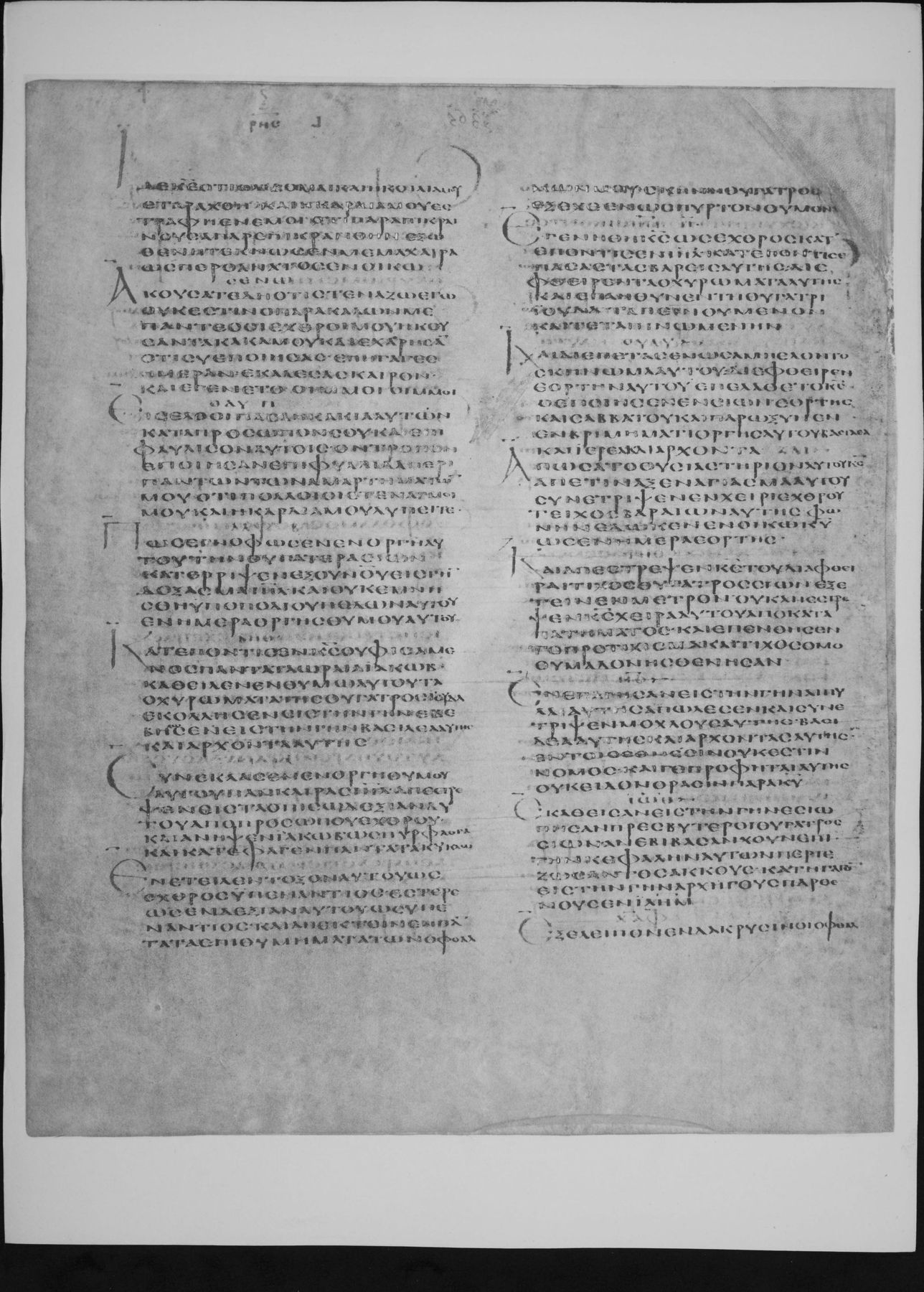
Where on the image
Lamentations 2:1-8 is on fol. 365v (full-size facsimile of 1879-83, Internet Archive codex-alexandrinus leaf 755). The 1936 reduced facsimile prints beneath this page: Lam. i. 20-ii. 11. Checked on the plate: the page begins at the start of Lamentations 1:20 (first words read: ΙΔΕ ΚΕ ΟΤΙ ΘΛΙΒΟΜΑΙ Η ΚΟΙΛΙΑ ΜΟΥ ΕΤΑΡΑΧΘΗ ΚΑΙ Η ΚΑΡΔΙΑ ΜΟΥ). Note: the page begins at the start of Lam. 1:20, under the letter name ΡΗΧΣ that Swete prints at the head of the verse.
1Ἄλεφ. Πῶς ἐγνόφωσεν ἐν ὀργῇ αὐτοῦ Κύριος τὴν θυγατέρα Σειών· κατέρριψεν ἐξ οὐρανοῦ εἰς γῆν δόξασμα Ἰσραήλ, καὶ οὐκ ἐμνήσθη ὑποποδίου ποδῶν αὐτοῦ. 2Βήθ. Ἐν ἡμέρᾳ ὀργῆς αὐτοῦ κατεπόντισεν Κύριος, οὐ φεισάμενος· πάντα τὰ ὡραῖα Ἰακὼβ καθεῖλεν ἐν θυμῷ αὐτοῦ, τὰ ὀχυρώματα τῆς θυγατρὸς Ἰούδα ἐκόλλησεν εἰς τὴν γῆν, ἐβεβήλωσεν βασιλέας αὐτῆς καὶ ἄρχοντας αὐτῆς. 3Γίμελ. Συνεκάλεσεν ἐν ὀργῇ θυμοῦ αὐτοῦ πᾶν κέρας Ἰσραήλ, ἀπέστρεψεν ὀπίσω δεξιὰν αὐτοῦ ἀπὸ προσώπου ἐχθροῦ, καὶ ἀνῆψεν ἐν Ἰακὼβ ὡς πῦρ φλόγα, καὶ κατέφαγεν πάντα τὰ κύκλῳ. 4Δάλεθ. Ἐνέτεινεν τόξον αὐτοῦ ὡς ἐχθρὸς ὑπεναντίος, ἐστερέωσεν δεξιὰν αὐτοῦ ὡς ὑπεναντίος, καὶ ἀπέκτεινεν πάντα τὰ ἐπιθυμήματα ὀφθαλμῶν μου ἐν σκηνῇ θυγατρὸς Σειών, ἐξέχεεν ὡς πῦρ τὸν θυμὸν αὐτοῦ. 5Ἥ. Ἐγενήθη Κύριος ὡς ἐχθρός, κατεπόντισεν Ἰσραήλ· κατεπόντισεν τὰς βάρεις αὐτῆς, διέφθειρεν τὰ ὀχυρώματα αὐτοῦ καὶ ἐπλήθυνεν τῇ θυγατρὶ Ἰούδα ταπεινουμένην καὶ τεταπεινωμένην. 6Οὐαύ. Καὶ διεπέτασεν ὡς ἄμπελον τὸ σκήνωμα αὐτοῦ, διέφθειρεν ἑορτὴν αὐτοῦ· ἐπελάθετο Κύριος ἃ ἐποίησεν ἐν Σειὼν ἑορτῆς καὶ σαββάτου, καὶ παρώξυνεν ἐνβριμήματι ὀργῆς αὐτοῦ βασιλέα καὶ ἱερέα καὶ ἄρχοντα. 7Ζάιν. Ἀπώσατο Κύριος θυσιαστήριον αὐτοῦ, ἀπετίναξεν ἁγίασμα αὐτοῦ, συνέτριψεν ἐν χειρὶ αὐτοῦ τεῖχος βάρεων αὐτῆς· φωνὴν ἔδωκαν ἐν οἴκῳ ὡς ἐν ἡμέρᾳ ἑορτῆς. 8Ἥθ. Καὶ ἐπέστρεψεν διαφθεῖραι τεῖχος θυγατρὸς Σειών· ἐξέτεινεν μέτρον, οὐκ ἐπέστρεψεν χεῖρα αὐτοῦ ἀπὸ καταπατήματος, καὶ ἐπένθησεν τὸ προτείχισμα, καὶ τεῖχος ὁμοθυμαδὸν ἠσθένησεν.
1Aleph. How has the Lord darkened in his wrath the daughter of Sion! he has cast down the glory of Israel from heaven to earth, and has not remembered his footstool. 2Beth. In the day of his wrath the Lord has overwhelmed her as in the sea, and not spared: he has brought down in his fury all the beautiful things of Jacob; he has brought down to the ground the strong-holds of the daughter of Juda: he has profaned her king and her princes. 3Gimel. He has broken in his fierce anger all the horn of Israel: he has turned back his right hand from the face of the enemy, and has kindled a flame in Jacob as fire, and it has devoured all things round about. 4Daleth. He has bent his bow as an opposing enemy: he has strengthened his right hand as an adversary, and has destroyed all the desirable things of my eyes in the tabernacle of the daughter of Sion: he has poured forth his anger as fire. 5He. The Lord is become as an enemy: he has overwhelmed Israel as in the sea, he has overwhelmed her palaces: he has destroyed his strong-holds, and has multiplied the afflicted and humbled ones to the daughter of Juda. 6Vau. And he has scattered his tabernacle as a vine, he has marred his feast: the Lord has forgotten the feast and the sabbath which he appointed in Sion, and in the fury of his wrath has vexed the king, and priest, and prince. 7Zain. The Lord has rejected his altar, he has cast off his sanctuary, he has broken by the hand of the enemy the wall of her palaces; they have uttered their voice in the house of the Lord as on a feast day. 8Heth. And he has turned to destroy the wall of the daughter of Zion: he has stretched out the measuring line, he has not turned back his hand from afflicting her: therefore the bulwark mourned, and the wall was weakened with it.
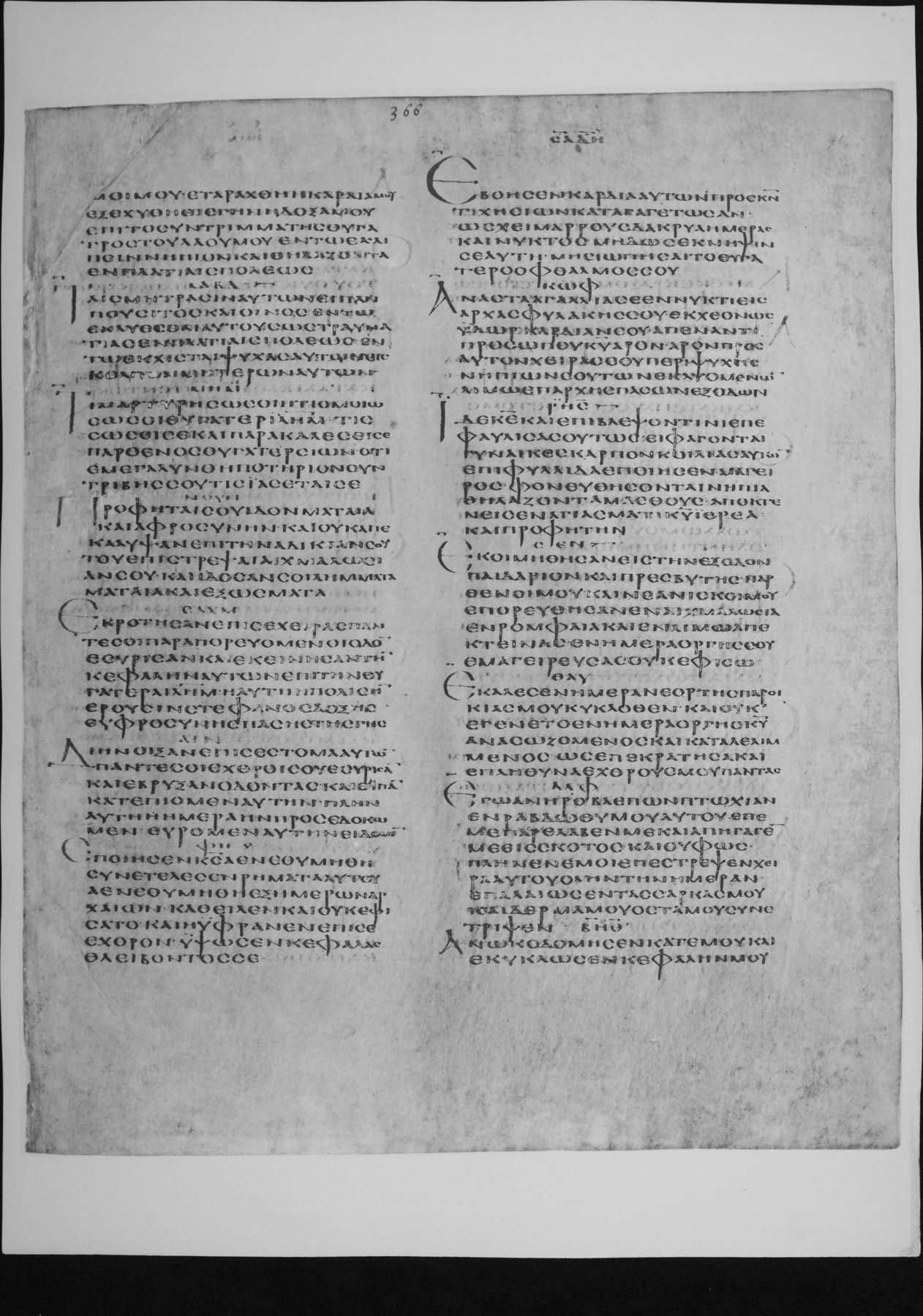
Where on the image
Lamentations 2:9-11 is on fol. 365v (full-size facsimile of 1879-83, Internet Archive codex-alexandrinus leaf 755). The 1936 reduced facsimile prints beneath this page: Lam. i. 20-ii. 11. Checked on the plate: the page begins at the start of Lamentations 1:20 (first words read: ΙΔΕ ΚΕ ΟΤΙ ΘΛΙΒΟΜΑΙ Η ΚΟΙΛΙΑ ΜΟΥ ΕΤΑΡΑΧΘΗ ΚΑΙ Η ΚΑΡΔΙΑ ΜΟΥ). Note: the page begins at the start of Lam. 1:20, under the letter name ΡΗΧΣ that Swete prints at the head of the verse. Lamentations 2:11-16 is on fol. 366r (full-size facsimile of 1879-83, Internet Archive codex-alexandrinus leaf 756). The 1936 reduced facsimile prints beneath this page: Lam. ii. 11-iii. 5. Checked on the plate: the page begins inside Lamentations 2:11 (first words read: ΜΟΙ ΜΟΥ ΕΤΑΡΑΧΘΗ Η ΚΑΡΔΙΑ ΜΟΥ ΕΞΕΧΥΘΗ ΕΙΣ ΓΗΝ Η ΔΟΞΑ ΜΟΥ).
9Τήθ. Ἐνεπάγησαν εἰς γῆν πύλαι αὐτῆς· ἀπώλεσεν καὶ συνέτριψεν μοχλοὺς αὐτῆς, βασιλέα αὐτῆς καὶ ἄρχοντας αὐτῆς ἐν τοῖς ἔθνεσιν· οὐκ ἔστιν νόμος, καί γε προφῆται αὐτῆς οὐκ εἶδον ὅρασιν παρὰ Κυρίου. 10Ἰώδ. Ἐκάθισαν εἰς τὴν γῆν, ἐσιώπησαν πρεσβύτεροι θυγατρὸς Σειών, ἀνεβίβασαν χοῦν ἐπὶ τὴν κεφαλὴν αὐτῶν, περιεζώσαντο σάκκους, κατήγαγον εἰς γῆν ἀρχηγοὺς παρθένους ἐν Ἰερουσαλήμ. 11Χάφ. Ἐξέλειπον ἐν δάκρυσιν οἱ ὀφθαλμοί μου, ἐταράχθη ἡ καρδία μου, ἐξεχύθη εἰς τὴν γῆν ἡ δόξα μου, ἐπὶ τὸ σύντριμμα τῆς θυγατρὸς λαοῦ μου, ἐν τῷ ἐκλιπεῖν νήπιον καὶ θηλάζοντα ἐν πλατείαις πόλεως. 12Λάβδ. Ταῖς μητράσιν αὐτῶν εἶπαν Ποῦ σῖτος καὶ οἶνος; ἐν τῷ ἐκλύεσθαι αὐτοὺς ὡς τραυματίας ἐν πλατείαις πόλεως, ἐν τῷ ἐκχεῖσθαι ψυχὰς αὐτῶν εἰς κόλπον μητέρων αὐτῶν. 13Μήμ. Τί μαρτυρήσω σοι ἢ τί ὁμοιώσω σοι, θύγατερ Ἰερουσαλήμ; τίς σώσει καὶ παρακαλέσει σε, παρθένος θύγατερ Σειών; ὅτι ἐμεγαλύνθη ποτήριον συντριβῆς σου· τίς ἰάσεταί σε; 14Νούν. Προφῆταί σου εἴδοσάν σοι μάταια καὶ ἀφροσύνην, καὶ οὐκ ἀπεκάλυψαν ἐπὶ τὴν ἀδικίαν σου τοῦ ἐπιστρέψαι αἰχμαλωσίαν σου, καὶ εἴδοσάν σοι λήμματα μάταια καὶ ἐξώσματα. 15Σάμχ. Ἐκρότησαν ἐπὶ σὲ χεῖρας πάντες οἱ παραπορευόμενοι ὁδόν, ἐσύρισαν καὶ ἐκίνησαν τὴν κεφαλὴν αὐτῶν ἐπὶ τὴν θυγατέρα Ἰερουσαλήμ· αὕτη ἡ πόλις, ἐροῦσιν, στέφανος εὐφροσύνης πάσης τῆς γῆς. 16Ἄιν. Διήνοιξαν ἐπὶ σὲ στόμα αὐτῶν πάντες οἱ ἐχθροί σου, ἐσύρισαν καὶ ἔβρυξαν ὀδόντας, καὶ εἶπαν Κατεπίομεν αὐτήν· πλὴν αὕτη ἡ ἡμέρα ἣν προσεδοκῶμεν, εὕρομεν αὐτήν, ἴδομεν.
9Teth. Her gates are sunk into the ground: he has destroyed and broken to pieces her bars, and her king and her prince among the Gentiles: there is no law, nay, her prophets have seen no vision from the Lord. 10Jod. The elders of the daughter of Sion have sat upon the ground, they have kept silence: they have cast up dust upon their heads; they have girded themselves with sackcloths: they have brought down to the ground the chief virgins in Jerusalem. 11Chaph. Mine eyes have failed with tears, my heart is troubled, my glory is cast down to the ground, for the destruction of the daughter of my people; while the infant and suckling swoon in the streets of the city. 12Lamed. They said to their mothers, Where is corn and wine? while they fainted like wounded men in the streets of the city, while their souls were poured out into their mother's bosom. 13Mem. What shall I testify to thee, or what shall I compare to thee, O daughter of Jerusalem? who shall save and comfort thee, O virgin daughter of Sion? for the cup of thy destruction is enlarged: who shall heal thee? 14Nun. Thy prophets have seen for thee vanities and folly: and they have not discovered thine iniquity, to turn back thy captivity; but they have seen for thee vain burdens, and worthless visions. 15Samech. All that go by the way have clapped their hands at thee; they have hissed and shaken their head at the daughter of Jerusalem. Is this the city, they say, the crown of joy of all the earth? 16Ain. All thine enemies have opened their mouth against thee: they have hissed and gnashed their teeth, and said, We have swallowed her up: moreover this is the day which we looked for; we have found it, we have seen it.
Where on the image
Lamentations 2:17-22 is on fol. 366r (full-size facsimile of 1879-83, Internet Archive codex-alexandrinus leaf 756). The 1936 reduced facsimile prints beneath this page: Lam. ii. 11-iii. 5. Checked on the plate: the page begins inside Lamentations 2:11 (first words read: ΜΟΙ ΜΟΥ ΕΤΑΡΑΧΘΗ Η ΚΑΡΔΙΑ ΜΟΥ ΕΞΕΧΥΘΗ ΕΙΣ ΓΗΝ Η ΔΟΞΑ ΜΟΥ).
17Φή. Ἐποίησεν Κύριος ἃ ἐνεθυμήθη, συνετέλεσεν ῥήματα αὐτοῦ, ἃ ἐνετείλατο ἐξ ἡμερῶν ἀρχαίων· καθεῖλεν καὶ οὐκ ἐφείσατο, καὶ ηὔφρανεν ἐπὶ σὲ ἐχθρόν, ὕψωσεν κέρας θλίβοντός σε. 18Τιαδή. Ἐβόησεν καρδία αὐτῶν πρὸς Κύριον Τείχη Σειών, καταγάγετε ὡς χειμάρρους δάκρυα ἡμέρας καὶ νυκτός· μὴ δῷς ἔκνηψιν σεαυτῇ, μὴ σιωπήσαιτο, θυγάτηρ, ὁ ὀφθαλμός σου. 19Κώφ. Ἀνάστα ἀγαλλίασαι ἐν νυκτὶ εἰς ἀρχὰς φυλακῆς σου, ἔκχεον ὡς ὕδωρ καρδίαν σου ἀπέναντι προσώπου Κυρίου, ἆρον πρὸς αὐτὸν χεῖράς σου περὶ ψυχῆς νηπίων τῶν ἐκλυομένων λιμῷ ἐπ᾽ ἀρχῆς πασῶν ἐξόδων. 20Ῥήχς. Ἴδε, Κύριε, καὶ ἐπίβλεψον τίνι ἐπεφύλλισας οὕτως· εἰ φάγονται γυναῖκες καρπὸν κοιλίας αὐτῶν; ἐπιφυλλίδα ἐποίησεν μάγειρος· φονευθήσονται νήπια θηλάζοντα μαστοὺς; ἀποκτενεῖς ἐν ἁγιάσματι Κυρίου ἱερέα καὶ προφήτην; 21Χσέν. Ἐκοιμήθησαν εἰς τὴν ἔξοδον παιδάριον καὶ πρεσβύτης· παρθένοι μου καὶ νεανίσκοι μου ἐπορεύθησαν ἐν αἰχμαλωσίᾳ· ἐν ῥομφαίᾳ καὶ ἐν λιμῷ ἀπέκτεινας, ἐν ἡμέρᾳ ὀργῆς σου ἐμαγείρευσας, οὐκ ἐφείσω. 22Θαύ. Ἐκάλεσεν ἡμέραν ἑορτῆς παροικίας μου κυκλόθεν, καὶ οὐκ ἐγένοντο ἐν ἡμέρᾳ ὀργῆς Κυρίου ἀνασωζόμενος καὶ καταλελειμμένος, ὡς ἐπεκράτησα καὶ ἐπλήθυνα ἐχθρούς μου πάντας.
17Phe. The Lord has done that which he purposed; he has accomplished his word, even the things which he commanded from the ancient days: he has thrown down, and has not spared: and he has caused the enemy to rejoice over thee, he has exalted the horn of him that afflicted thee. 18Tsade. Their heart cried to the Lord, Ye walls of Sion, pour down tears like torrents day and night: give thyself no rest; let not the apple of thine eyes cease. 19Koph. Arise, rejoice in the night at the beginning of thy watch: pour out thy heart as water before the face of the Lord: lift up thy hands to him for the life of thine infants, who faint for hunger at the top of all the streets. 20Rhechs. Behold, O Lord, and see for whom thou hast gathered thus. Shall the women eat the fruit of their womb? the cook has made a gathering: shall the infants sucking at the breasts be slain? wilt thou slay the priest and prophet in the sanctuary of the Lord? 21Chsen. The child and old man have lain down in the street: my virgins and my young men are gone into captivity: thou hast slain them with the sword and with famine; in the day of thy wrath thou hast mangled them, thou hast not spared. 22Thau. He has called my sojourners round about to a solemn day, and there was not in the day of the wrath of the Lord any one that escaped or was left; whereas I have strengthened and multiplied all mine enemies.
Cite
Sources
- Source: Codex Alexandrinus (British Library Royal MS 1 D. VI) via the British Museum photographic facsimiles of 1879-83 and 1936 (Internet Archive) + Swete's Septuagint + Brenton's English (holding institution)
- Critical edition: H. B. Swete, The Old Testament in Greek according to the Septuagint (1909)
← previous · → next · v cycle view · l back to library