Lamentations, Chapter 4 (Codex Alexandrinus)
Introduction
Lamentations 4 in the Greek Old Testament (the Septuagint) as written in Codex Alexandrinus, a Greek Bible copied in the fifth century, probably in Egypt, and now in the British Library (Royal MS 1 D. VI, the second of its four volumes). It is one of the three great early codices of the whole Greek Bible, with Codex Vaticanus and Codex Sinaiticus.
This entry meets the strict three-criteria standard of the Theosis Library:
- Manuscript scan: the pages of Codex Alexandrinus carrying this chapter (fol. 367r, fol. 367v), from the full-size photographic (autotype) facsimile published by the British Museum in 1879-1883, as digitised on the Internet Archive. The verse range of every page comes from the reduced photographic facsimile of 1936, which prints it beneath each plate, and the opening words of every page were read on the plate to confirm the page and the verse it begins with. Each section links to the page or pages that hold its verses. Folio numbers are those written at the head of each leaf and visible on the plates.
- Original text: Swete's edition, which here prints the text of Codex Vaticanus (Vat. gr. 1209), the base of his edition, and gives the readings of Alexandrinus only in his apparatus. The Greek column is therefore Vaticanus' text; where Alexandrinus differs, the plate shows what Alexandrinus reads.
- English translation: Sir Lancelot C. L. Brenton, The Septuagint Version of the Old Testament (1844; 1851 edition), a translation of the Greek, public domain, from the eBible.org text.
How was this verified? (Provenance)
Where on the image
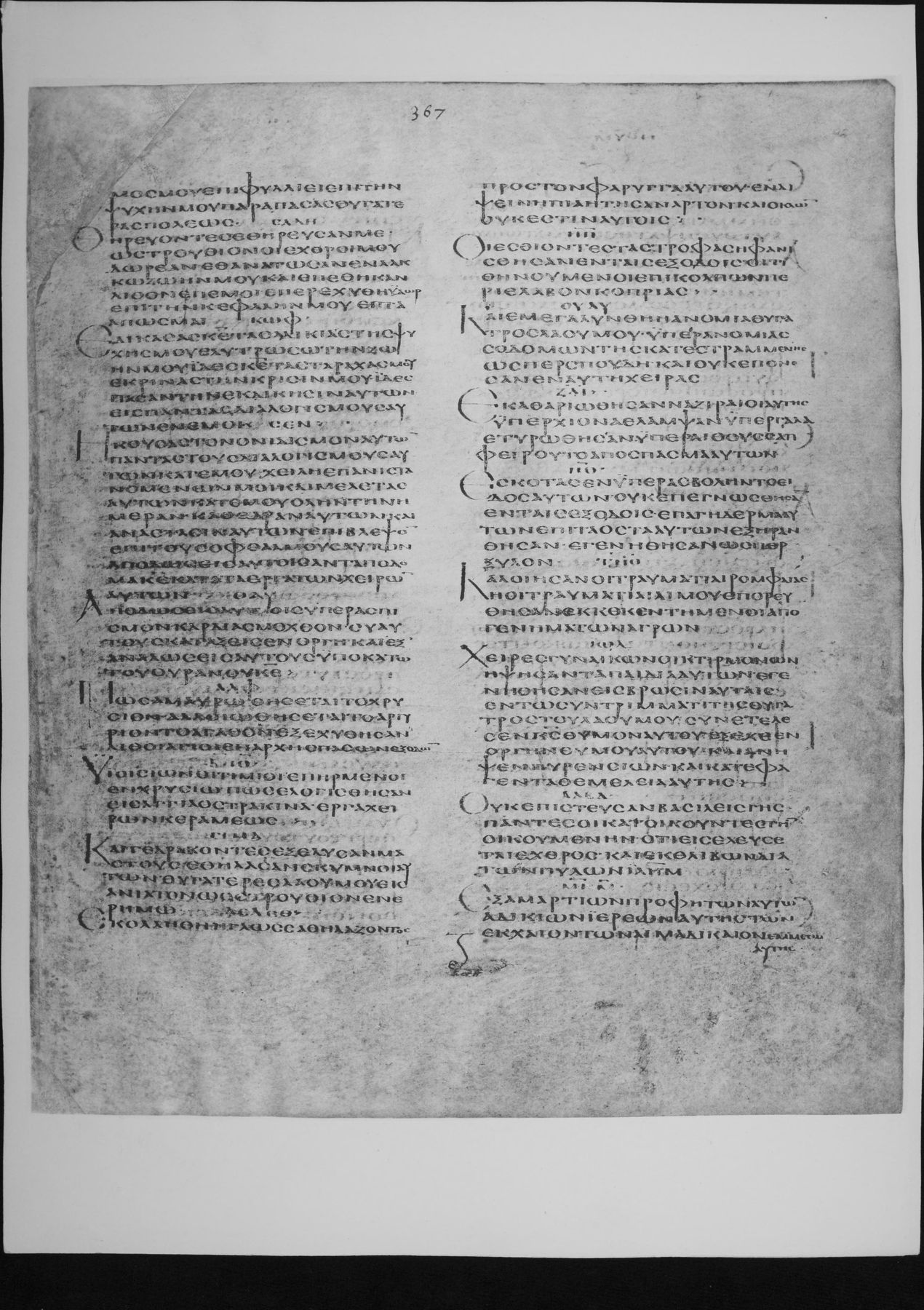
Lamentations 4:1-8 is on fol. 367r (full-size facsimile of 1879-83, Internet Archive codex-alexandrinus leaf 758). The 1936 reduced facsimile prints beneath this page: Lam. iii. 51-iv. 13. Checked on the plate: the page begins inside Lamentations 3:51 (first words read: ΚΟΣ ΜΟΥ ΕΠΙΦΥΛΛΙΕΙ ΕΠΙ ΤΗΝ ΨΥΧΗΝ ΜΟΥ ΠΑΡΑ ΠΑΣΑΣ ΘΥΓΑΤΕΡΑΣ).
1Ἄλεφ. Πῶς ἀμαυρωθήσεται χρυσίον, ἀλλοιωθήσεται τὸ ἀργύριον τὸ ἀγαθόν; ἐξεχύθησαν λίθοι ἅγιοι ἐπ᾽ ἀρχῆς πασῶν ἐξόδων. 2Βή. υἱοὶ Σειὼν οἱ τίμιοι οἱ ἐπηρμένοι ἐν χρυσίῳ, πῶς ἐλογίσθησαν εἰς ἄγγια ὀστράκινα, ἔργα χειρῶν κεραμέως; 3Γίμελ. Καί γε δράκοντες ἐξέδυσαν μαστούς, ἐθήλασαν σκύμνοι αὐτῶν θυγατέρας λαοῦ μου εἰς ἀνίατον, ὡς στρουθίον ἐν ἐρήμῳ. 4Δάλεθ. Ἐκολλήθη ἡ γλῶσσα θηλάζοντος πρὸς τὸν φάρυγγα αὐτοῦ ἐν δίψει· νήπια ᾔτησαν ἄρτον, ὁ διακλῶν οὐκ ἔστιν αὐτοῖς. 5Ἥ. Οἱ ἔσθοντες τὰς τροφὰς ἠφανίσθησαν ἐν ταῖς ἐξόδοις, οἱ τιθηνούμενοι ἐπὶ κόκκῳ περιεβάλοντο κοπρίας. 6Οὐαύ. Καὶ ἐμεγαλύνθη ἀνομία θυγατρὸς λαοῦ μου ὑπὲρ ἀνομίας Σοδόμων, τῆς κατεστραμμένης ὥσπερ σπουδῇ, καὶ οὐκ ἐπόνεσαν ἐν αὐτῇ χεῖρας. 7Ζάιν. Ἐκαθαριώθησαν Ναζειραῖοι αὐτῆς ὑπὲρ χιόνα, ἔλαμψαν ὑπὲρ γάλα, ἐπυρώθησαν ὑπὲρ λίθους, σαπφείρου τὸ ἀπόσπασμα αὐτῶν. 8Ἥθ. Ἐσκότασεν ὑπὲρ ἀσβόλην τὸ εἶδος αὐτῶν, οὐκ ἐπεγνώσθησαν ἐν ταῖς ἐξόδοις· ἐπάγη δέρμα αὐτῶν ἐπὶ τὰ ὀστέα αὐτῶν, ἐξηράνθησαν, ἐγενήθησαν ὥσπερ ξύλον.
1Aleph. How will the gold be tarnished, and the fine silver changed! the sacred stones have been poured forth at the top of all the streets. 2Beth. The precious sons of Zion, who were equalled in value with gold, how are they counted as earthen vessels, the works of the hands of the potter! 3Gimel. Nay, serpents have drawn out the breasts, they give suck to their young, the daughters of my people are incurably cruel, as an ostrich in a desert. 4Daleth. The tongue of the sucking child cleaves to the roof of its mouth for thirst: the little children ask for bread, and there is none to break it to them. 5He. They that feed on dainties are desolate in the streets: they that used to be nursed in scarlet have clothed themselves with dung. 6Vau. And the iniquity of the daughter of my people has been increased beyond the iniquities of Sodoma, the city that was overthrown very suddenly, and none laboured against her with their hands. 7Zain. Her Nazarites were made purer than snow, they were whiter than milk, they were purified as with fire, their polishing was superior to sapphire stone. 8Heth. Their countenance is become blacker than smoke; they are not known in the streets: their skin has cleaved to their bones; they are withered, they are become as a stick.
Where on the image
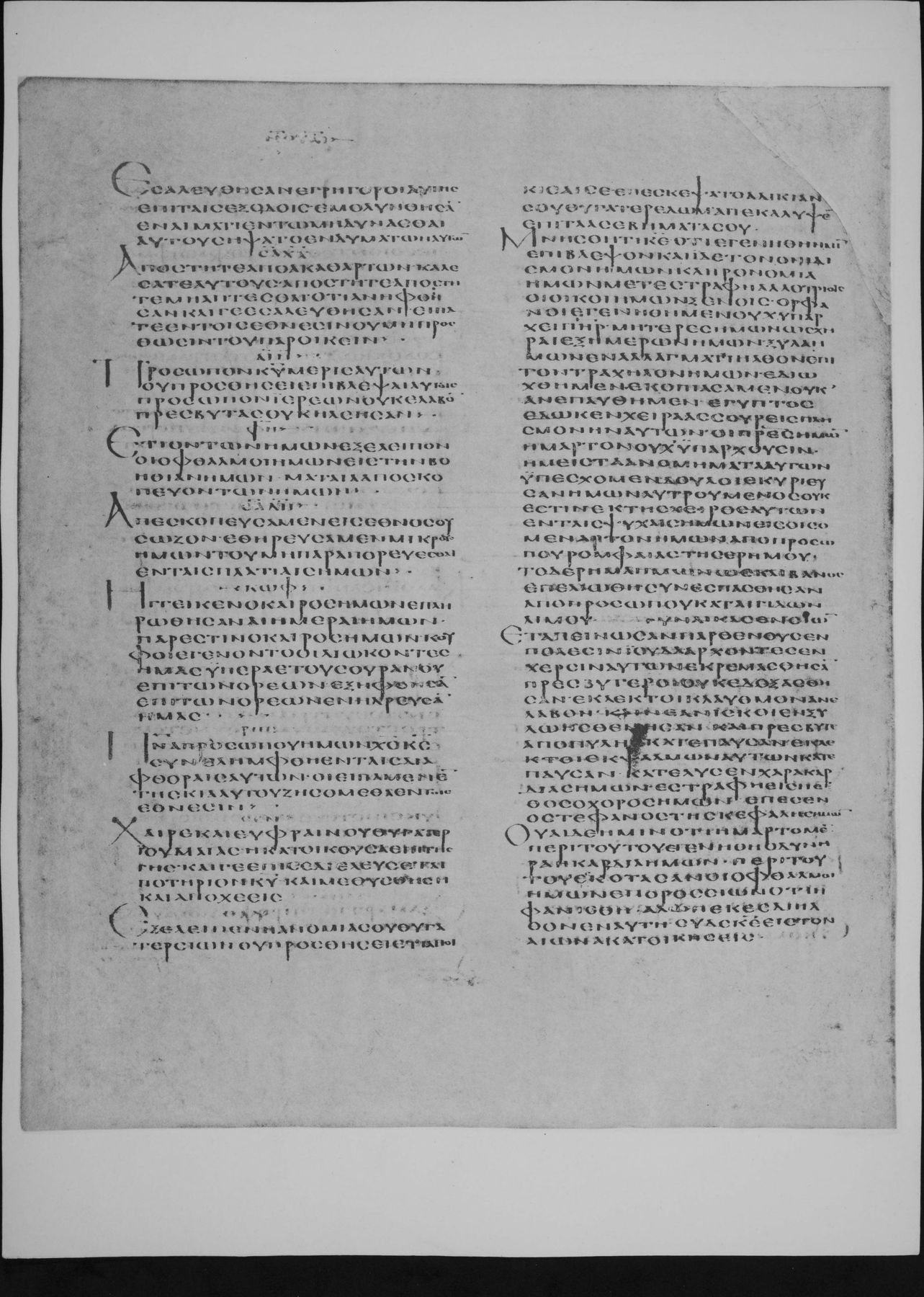
Lamentations 4:9-13 is on fol. 367r (full-size facsimile of 1879-83, Internet Archive codex-alexandrinus leaf 758). The 1936 reduced facsimile prints beneath this page: Lam. iii. 51-iv. 13. Checked on the plate: the page begins inside Lamentations 3:51 (first words read: ΚΟΣ ΜΟΥ ΕΠΙΦΥΛΛΙΕΙ ΕΠΙ ΤΗΝ ΨΥΧΗΝ ΜΟΥ ΠΑΡΑ ΠΑΣΑΣ ΘΥΓΑΤΕΡΑΣ). Lamentations 4:14-16 is on fol. 367v (full-size facsimile of 1879-83, Internet Archive codex-alexandrinus leaf 759). The 1936 reduced facsimile prints beneath this page: Lam. iv. 14-v. 19. Checked on the plate: the page begins at the start of Lamentations 4:14 (first words read: ΕΣΑΛΕΥΘΗΣΑΝ ΕΓΡΗΓΟΡΟΙ ΑΥΤΗΣ ΕΝ ΤΑΙΣ ΕΞΟΔΟΙΣ ΑΥΤΗΣ ΕΜΟΛΥΝΘΗΣΑΝ ΕΝ ΑΙΜΑΤΙ).
9Τήθ. Καλοὶ ἦσαν οἱ τραυματίαι ῥομφαίας ἢ οἱ τραυματίαι λιμοῦ· ἐπορεύθησαν ἐκκεκεντημένοι ἀπὸ γενημάτων ἀγρῶν. 10Ἰώδ. Χεῖρες γυναικῶν οἰκτειρμόνων ἥψησαν τὰ παιδία αὐτῶν, ἐγενήθησαν εἰς βρῶσιν αὐταῖς ἐν τῷ συντρίμματι τῆς θυγατρὸς λαοῦ μου. 11Χάφ. Συνετέλεσεν Κύριος θυμὸν αὐτοῦ, ἐξέχεεν θυμὸν ὀργῆς αὐτοῦ, καὶ ἀνῆψεν πῦρ ἐν Σειών, καὶ κατέφαγεν τὰ θεμέλια αὐτῆς. 12Λάβδ. Οὐκ ἐπίστευσαν βασιλεῖς γῆς, πάντες οἱ κατοικοῦντες τὴν οἰκουμένην, ὅτι εἰσελεύσεται ἐχθρὸς καὶ ἐκθλίβων διὰ τῶν πυλῶν Ἰερουσαλήμ. 13Μήμ. Ἐξ ἁμαρτιῶν προφητῶν αὐτῆς, ἀδικιῶν ἱερέων αὐτῆς, τῶν ἐκχεόντων αἷμα δίκαιον ἐν μέσῳ αὐτῆς. 14Νούν. Ἐσαλεύθησαν ἐγρήγοροι αὐτῆς ἐν ταῖς ἐξόδοις, ἐμολύνθησαν ἐν αἵματι ἐν τῷ μὴ δύνασθαι αὐτούς, ἥψαντο ἐνδυμάτων αὐτῶν. 15Σάμεχ. Ἀπόστητε ἀκαθάρτων, καλέσατε αὐτούς Ἀπόστητε ἀπόστητε, μὴ ἅπτεσθε, ὅτι ἀνήφθησαν καί γε ἐσαλεύθησαν· εἴπατε ἐν τοῖς ἔθνεσιν Οὐ μὴ προσθῶσιν τοῦ παροικεῖν. 16Ἄιν. Πρόσωπον Κυρίου μερὶς αὐτῶν, οὐ προσθήσει ἐπιβλέψαι αὐτοῖς· πρόσωπον ἱερέων οὐκ ἔλαβον, προφήτας οὐκ ἠλέησαν.
9Teth. The slain with the sword were better than they that were slain with hunger: they have departed, pierced through from want of the fruits of the field. 10Jod. The hands of tender-hearted women have sodden their own children: they became meat for them in the destruction of the daughter of my people. 11Chaph. The Lord has accomplished his wrath; he has poured out his fierce anger, and has kindled a fire in Sion, and it has devoured her foundations. 12Lamed. The kings of the earth, even all that dwell in the world, believed not that an enemy and oppressor would enter through the gates of Jerusalem. 13Mem. For the sins of her prophets, and iniquities of her priests, who shed righteous blood in the midst of her, 14Nun. her watchmen staggered in the streets, they were defiled with blood in their weakness, they touched their raiment with it. 15Samech. Depart ye from the unclean ones: call ye them: depart, depart, touch them not: for they are on fire, yea, they stagger: say ye among the nations, They shall no more sojourn there. 16Ain. The presence of the Lord was their portion; but he will not again look upon them: they regarded not the person of the priests, they pitied not the prophets.
Where on the image
Lamentations 4:17-22 is on fol. 367v (full-size facsimile of 1879-83, Internet Archive codex-alexandrinus leaf 759). The 1936 reduced facsimile prints beneath this page: Lam. iv. 14-v. 19. Checked on the plate: the page begins at the start of Lamentations 4:14 (first words read: ΕΣΑΛΕΥΘΗΣΑΝ ΕΓΡΗΓΟΡΟΙ ΑΥΤΗΣ ΕΝ ΤΑΙΣ ΕΞΟΔΟΙΣ ΑΥΤΗΣ ΕΜΟΛΥΝΘΗΣΑΝ ΕΝ ΑΙΜΑΤΙ).
17Φή. Ἔτι ὄντων ἡμῶν ἐξέλιπον οἱ ὀφθαλμοὶ ἡμῶν, εἰς τὴν βοήθειαν ἡμῶν μάταια ἀποσκοπευόντων ἡμῶν. 18Τιαδή. Ἀπεσκοπεύσαμεν εἰς ἔθνος οὐ σῶζον, ἐθηρεύσαμεν μικροὺς ἡμῶν τοῦ μὴ πορεύεσθαι ἐν ταῖς πλατείαις ἡμῶν. 19Κώφ. Ἤγγικεν ὁ καιρὸς ἡμῶν, ἐπληρώθησαν αἱ ἡμέραι ἡμῶν, πάρεστιν ὁ καιρὸς ἡμῶν· κοῦφοι ἐγένοντο οἱ διώκοντες ἡμᾶς ὑπὲρ ἀετοὺς οὐρανοῦ, ἐπὶ τῶν ὀρέων ἐξέπτησαν, ἐν ἐρήμῳ ἐνήδρευσαν ἡμᾶς. 20Ῥήχς. Πνεῦμα προσώπου ἡμῶν χριστὸς Κύριος συνελήμφθη ἐν ταῖς διαφθοραῖς αὐτῶν, οὗ εἴπαμεν Ἐν τῇ σκιᾷ αὐτοῦ ζησόμεθα ἐν τοῖς ἔθνεσιν. 21Χσέν. Χαῖρε καὶ εὐφραίνου, θύγατερ Ἰδουμαίας ἡ κατοικοῦσα ἐπὶ γῆς, καί γε ἐπὶ σὲ διελεύσεται τὸ ποτήριον Κυρίου, μεθυσθήσῃ καὶ ἀποχεεῖς. 22Θαύ. Ἐξέλιπεν ἡ ἀνομία σου, θύγατερ Σειών, οὐ προσθήσει ἀποικίσαι σε. ἐπεσκέψατο ἀνομίας σου, θυγάτηρ Ἐδώμ, ἀπεκάλυψεν ἐπὶ τὰ ἀσεβήματά σου.
17Phe. While we yet lived our eyes failed, while we looked in vain for our help. Tsade. We looked to a nation that could not save. 18We have hunted for our little ones, that they should not walk in our streets. Koph. Our time has drawn nigh, our days are fulfilled, our time is come. 19Our pursuers were swifter than the eagles of the sky, they flew on the mountains, in the wilderness they laid wait for us. 20Rechs. The breath of our nostrils, our anointed Lord, was taken in their destructive snares, of whom we said, In his shadow we shall live among the Gentiles. 21Chsen. Rejoice and be glad, O daughter of Idumea, that dwellest in the land: yet the cup of the Lord shall pass through to thee: thou shalt be drunken, and pour forth. 22Thau. O daughter of Sion, thine iniquity has come to an end; he shall no more carry thee captive: he has visited thine iniquities, O daughter of Edom; he has discovered thy sins.
Cite
Sources
- Source: Codex Alexandrinus (British Library Royal MS 1 D. VI) via the British Museum photographic facsimiles of 1879-83 and 1936 (Internet Archive) + Swete's Septuagint + Brenton's English (holding institution)
- Critical edition: H. B. Swete, The Old Testament in Greek according to the Septuagint (1909)
← previous · → next · v cycle view · l back to library