Leviticus, Chapter 12 (Codex Alexandrinus)
Introduction
Leviticus 12 in the Greek Old Testament (the Septuagint) as written in Codex Alexandrinus, a Greek Bible copied in the fifth century, probably in Egypt, and now in the British Library (Royal MS 1 D. V, the first of its four volumes). It is one of the three great early codices of the whole Greek Bible, with Codex Vaticanus and Codex Sinaiticus, and for Genesis 1:1-46:28, which Codex Vaticanus has lost, it is the oldest surviving complete Greek text (older papyri such as the Berlin Genesis papyrus and Chester Beatty 961 survive only in part).
This entry meets the strict three-criteria standard of the Theosis Library:
- Manuscript scan: the pages of Codex Alexandrinus carrying this chapter (fol. 65v, fol. 66r), from the full-size photographic (autotype) facsimile published by the British Museum in 1879-1883, as digitised on the Internet Archive. The verse range of every page comes from the reduced photographic facsimile of 1915, which prints it beneath each plate, and the opening words of every page were read on the plate to confirm the page and the verse it begins with. Each section links to the page or pages that hold its verses. Folio numbers are those written at the head of each leaf and visible on the plates.
- Original text: Swete's edition, which here prints the text of Codex Vaticanus (Vat. gr. 1209), the base of his edition, and gives the readings of Alexandrinus only in his apparatus. The Greek column is therefore Vaticanus' text; where Alexandrinus differs, the plate shows what Alexandrinus reads.
- English translation: Sir Lancelot C. L. Brenton, The Septuagint Version of the Old Testament (1844; 1851 edition), a translation of the Greek, public domain, from the eBible.org text.
How was this verified? (Provenance)
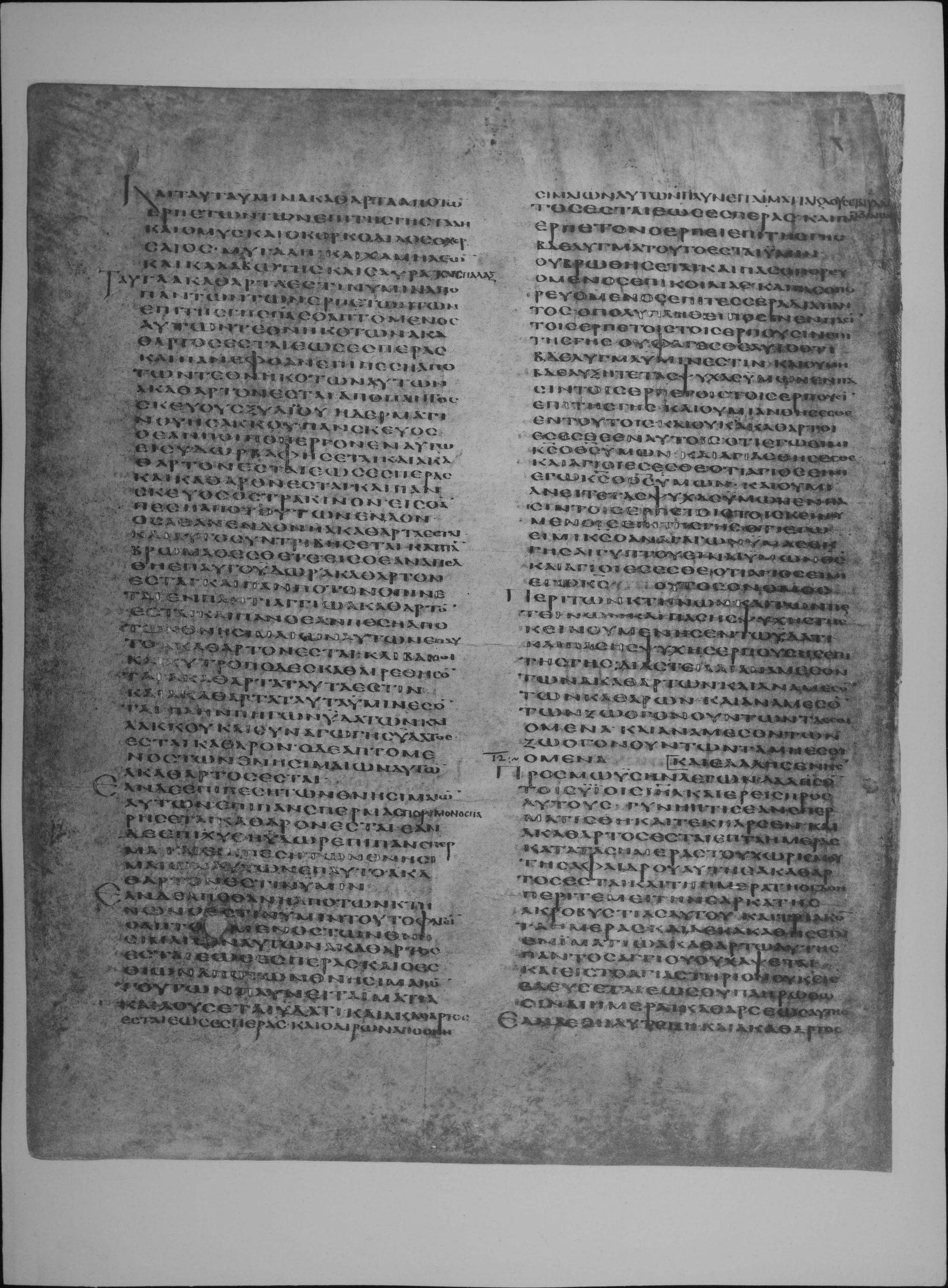
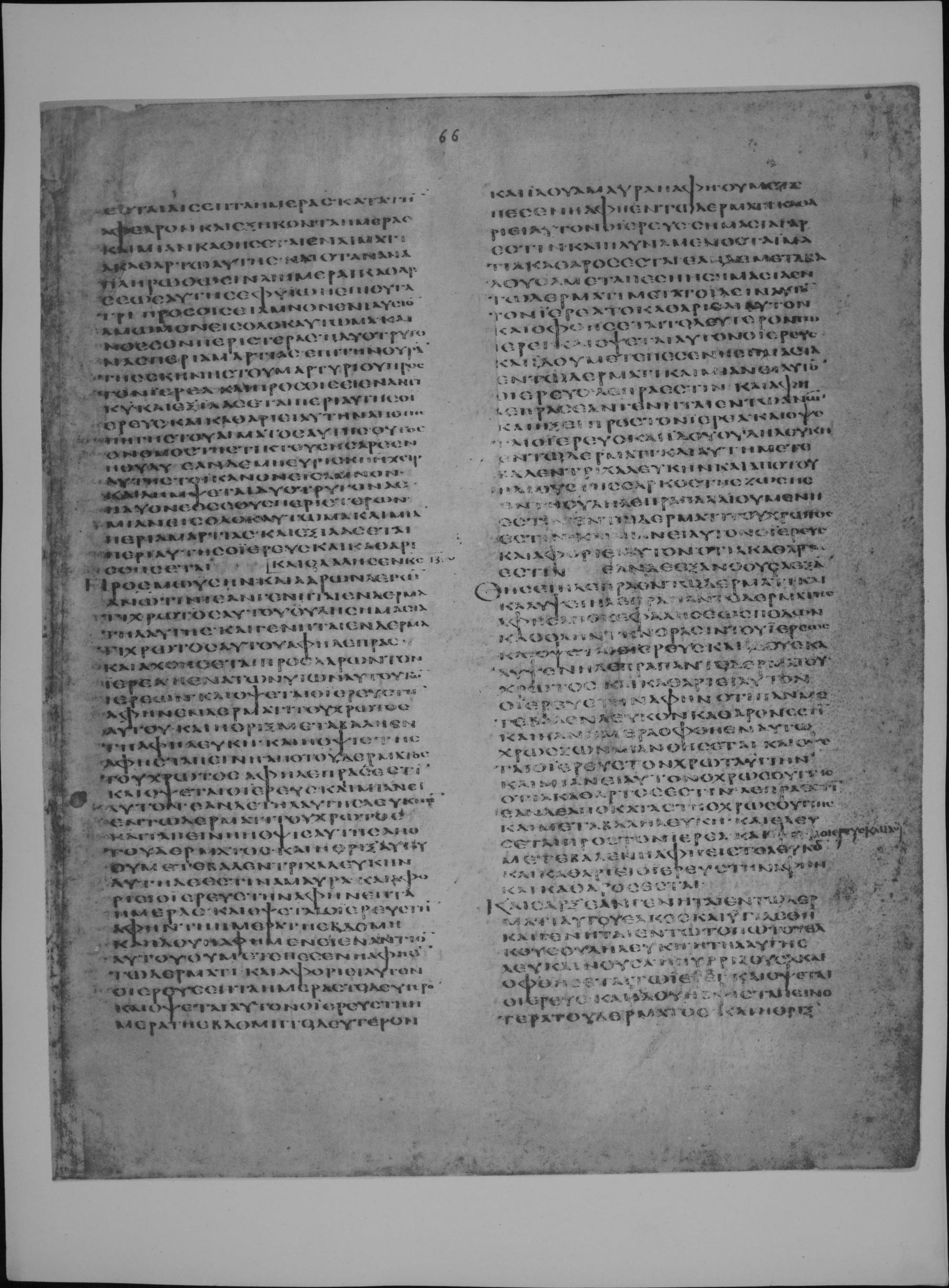
Where on the image
Leviticus 12:1-5 is on fol. 65v (full-size facsimile of 1879-83, Internet Archive codex-alexandrinus leaf 151). The 1915 reduced facsimile prints beneath this page: Levit. xi. 29-xii. 5. Checked on the plate: the page begins at the start of Leviticus 11:29 (first words read: ΚΑΙ ΤΑΥΤΑ ΥΜΙΝ ΑΚΑΘΑΡΤΑ ΑΠΟ ΤΩΝ ΕΡΠΕΤΩΝ ΤΩΝ ΕΡΠΟΝΤΩΝ ΕΠΙ ΤΗΣ ΓΗΣ). Leviticus 12:5-8 is on fol. 66r (full-size facsimile of 1879-83, Internet Archive codex-alexandrinus leaf 152). The 1915 reduced facsimile prints beneath this page: Levit. xii. 5-xiii. 20. Checked on the plate: the page begins inside Leviticus 12:5 (first words read: ΕΠΤΑ ΗΜΕΡΑΣ ΚΑΤΑ ΤΗΝ ΑΦΕΔΡΟΝ ΚΑΙ ΕΞΗΚΟΝΤΑ ΗΜΕΡΑΣ ΚΑΙ ΕΞ ΚΑΘΕΣΘΗΣΕΤΑΙ).
1Καὶ ἐλάλησεν Κύριος πρὸς Μωυσῆν λέγων 2Λάλησον τοῖς υἱοῖς Ἰσραὴλ καὶ ἐρεῖς πρὸς αὐτούς Γυνὴ ἥτις ἐὰν σπερματισθῇ καὶ τέκῃ ἄρσεν, καὶ ἀκάθαρτος ἔσται ἑπτὰ ἡμέρας, κατὰ τὰς ἡμέρας τοῦ χωρισμοῦ τῆς ἀφέδρου αὐτῆς ἀκάθαρτος ἔσται· 3καὶ τῇ ἡμέρᾳ τῇ ὀγδόῃ περιτεμεῖ τὴν σάρκα τῆς ἀκροβυστίας αὐτοῦ· 4καὶ τριάκοντα ἡμέρας καὶ τρεῖς καθίσεται ἐν αἵματι ἀκαθάρτῳ αὐτῆς· παντὸς ἀγγίου οὐχ ἅψεται, καὶ εἰς τὸ ἁγιαστήριον οὐκ εἰσελεύσεται, ἕως ἂν πληρωθῶσιν αἱ ἡμέραι καθάρσεως αὐτῆς. 5ἐὰν δὲ θῆλυ τέκῃ, καὶ ἀκάθαρτος ἔσται δὶς ἑπτὰ ἡμέρας κατὰ τὴν ἄφεδρον· καὶ ἑξήκοντα ἡμέρας καὶ ἓξ καθεσθήσεται ἐν αἵματι ἀκαθάρτῳ αὐτῆς. 6καὶ ὅταν ἀναπληρωθῶσιν αἱ ἡμέραι καθάρσεως αὐτῆς ἐφ᾽ υἱῷ ἢ ἐπὶ θυγατρί, προσοίσει ἀμνὸν ἐνιαύσιον ἄμωμον εἰς ὁλοκαύτωμα καὶ νοσσὸν περιστερᾶς ἢ τρυγόνα περὶ ἁμαρτίας ἐπὶ τὴν θύραν τῆς σκηνῆς τοῦ μαρτυρίου πρὸς τὸν ἱερέα· 7καὶ προσοίσει ἔναντι Κυρίου, καὶ ἐξιλάσεται περὶ αὐτῆς ὁ ἱερεύς, καὶ καθαριεῖ αὐτὴν ἀπὸ τῆς πηγῆς τοῦ αἵματος αὐτῆς. οὗτος ὁ νόμος τῆς τικτούσης ἄρσεν ἢ θῆλυ. 8ἐὰν δὲ μὴ εὑρίσκῃ ἡ χεὶρ αὐτῆς τὸ ἱκανὸν εἰς ἀμνόν, καὶ λήμψεται δύο τρυγόνας ἢ δύο νοσσοὺς περιστερῶν, μίαν εἰς ὁλοκαύτωμα καὶ μίαν περὶ ἁμαρτίας· καὶ ἐξιλάσεται περὶ αὐτῆς ὁ ἱερεύς, καὶ καθαρισθήσεται.
1And the Lord spoke to Moses, saying, 2Speak to the children of Israel, and thou shalt say to them, Whatsoever woman shall have conceived and born a male child shall be unclean seven days, she shall be unclean according to the days of separation for her monthly courses. 3And on the eighth day she shall circumcise the flesh of his foreskin. 4And for thirty-three days she shall continue in her unclean blood; she shall touch nothing holy, and shall not enter the sanctuary, until the days of her purification be fulfilled. 5But if she should have born a female child, then she shall be unclean twice seven days, according to the time of her monthly courses; and for sixty-six days shall she remain in her unclean blood. 6And when the days of her purification shall have been fulfilled for a son or a daughter, she shall bring a lamb of a year old without blemish for a whole-burnt-offering, and a young pigeon or turtle-dove for a sin-offering to the door of the tabernacle of witness, to the priest. 7And he shall present it before the Lord, and the priest shall make atonement for her, and shall purge her from the fountain of her blood; this is the law of her who bears a male or a female. 8And if she cannot afford a lamb, then shall she take two turtle-doves or two young pigeons, one for a whole-burnt-offering, and one for a sin-offering; and the priest shall make atonement for her, and she shall be purified.
Cite
Sources
- Source: Codex Alexandrinus (British Library Royal MS 1 D. V) via the British Museum photographic facsimiles of 1879-83 and 1915 (Internet Archive) + Swete's Septuagint + Brenton's English (holding institution)
- Critical edition: H. B. Swete, The Old Testament in Greek according to the Septuagint (1909)
← previous · → next · v cycle view · l back to library