Leviticus, Chapter 13 (Codex Alexandrinus)
Introduction
Leviticus 13 in the Greek Old Testament (the Septuagint) as written in Codex Alexandrinus, a Greek Bible copied in the fifth century, probably in Egypt, and now in the British Library (Royal MS 1 D. V, the first of its four volumes). It is one of the three great early codices of the whole Greek Bible, with Codex Vaticanus and Codex Sinaiticus, and for Genesis 1:1-46:28, which Codex Vaticanus has lost, it is the oldest surviving complete Greek text (older papyri such as the Berlin Genesis papyrus and Chester Beatty 961 survive only in part).
This entry meets the strict three-criteria standard of the Theosis Library:
- Manuscript scan: the pages of Codex Alexandrinus carrying this chapter (fol. 66r, fol. 66v, fol. 67r), from the full-size photographic (autotype) facsimile published by the British Museum in 1879-1883, as digitised on the Internet Archive. The verse range of every page comes from the reduced photographic facsimile of 1915, which prints it beneath each plate, and the opening words of every page were read on the plate to confirm the page and the verse it begins with. Each section links to the page or pages that hold its verses. Folio numbers are those written at the head of each leaf and visible on the plates.
- Original text: Swete's edition, which here prints the text of Codex Vaticanus (Vat. gr. 1209), the base of his edition, and gives the readings of Alexandrinus only in his apparatus. The Greek column is therefore Vaticanus' text; where Alexandrinus differs, the plate shows what Alexandrinus reads.
- English translation: Sir Lancelot C. L. Brenton, The Septuagint Version of the Old Testament (1844; 1851 edition), a translation of the Greek, public domain, from the eBible.org text.
How was this verified? (Provenance)
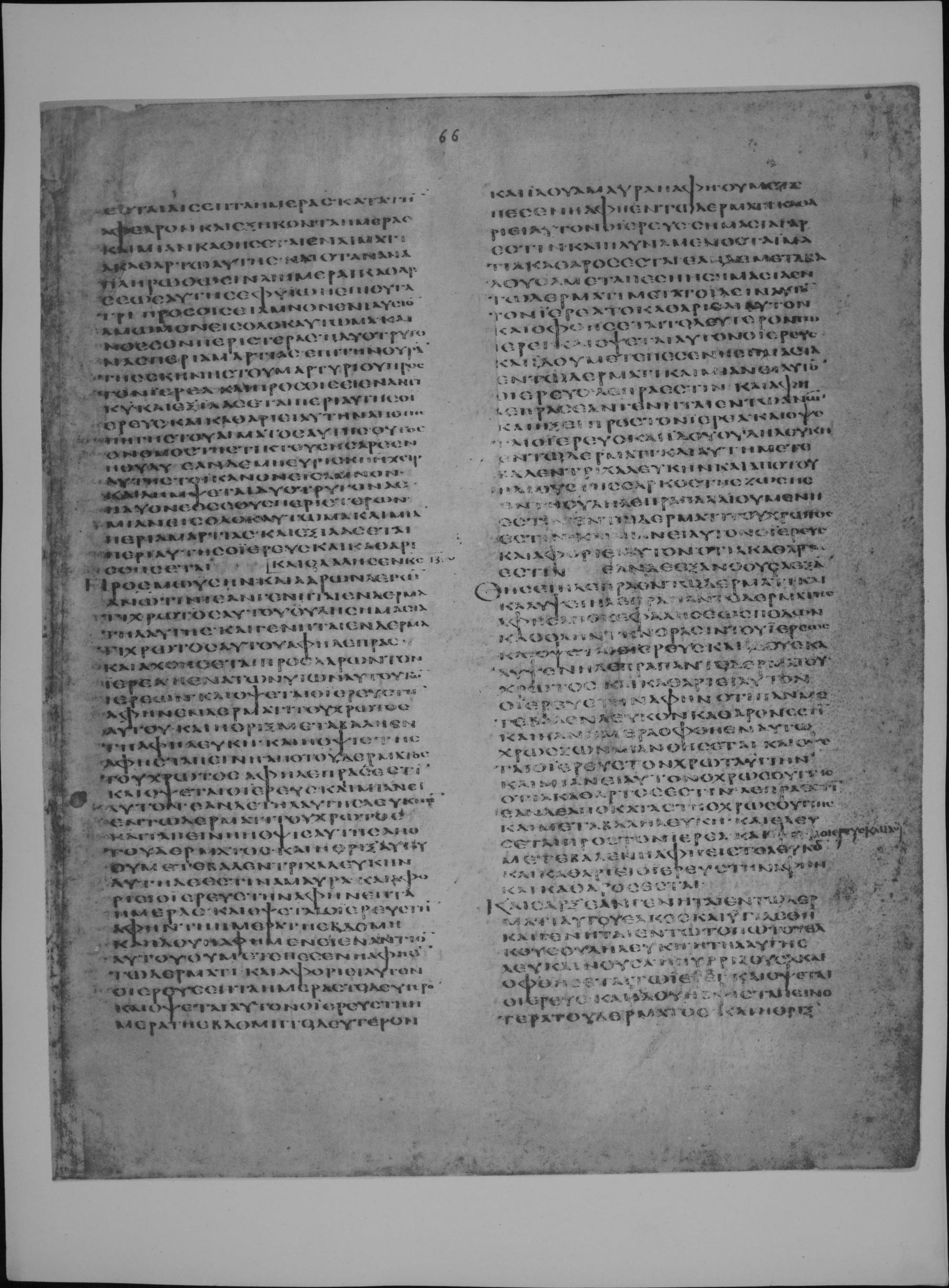
Where on the image
Leviticus 13:1-8 is on fol. 66r (full-size facsimile of 1879-83, Internet Archive codex-alexandrinus leaf 152). The 1915 reduced facsimile prints beneath this page: Levit. xii. 5-xiii. 20. Checked on the plate: the page begins inside Leviticus 12:5 (first words read: ΕΠΤΑ ΗΜΕΡΑΣ ΚΑΤΑ ΤΗΝ ΑΦΕΔΡΟΝ ΚΑΙ ΕΞΗΚΟΝΤΑ ΗΜΕΡΑΣ ΚΑΙ ΕΞ ΚΑΘΕΣΘΗΣΕΤΑΙ).
1Καὶ ἐλάλησεν Κύριος πρὸς Μωυσῆν καὶ Ἀαρὼν λέγων 2Ἀνθρώπῳ ἐάν τινι γένηται ἐν δέρματι χρωτὸς αὐτοῦ οὐλὴ σημασίας τηλαυγής, καὶ γένηται ἐν δέρματι χρωτὸς αὐτοῦ ἁφὴ λέπρας, καὶ ἀχθήσεται πρὸς Ἀαρὼν τὸν ἱερέα ἢ ἕνα τῶν υἱῶν αὐτοῦ τῶν ἱερέων. 3καὶ ὄψεται ὁ ἱερεὺς τὴν ἁφὴν ἐν δέρματι τοῦ χρωτὸς αὐτοῦ, καὶ ἡ θρὶξ ἐν τῇ ἁφῇ μεταβάλῃ λευκή, καὶ ἡ ὄψις τῆς ἁφῆς ταπεινὴ ἀπὸ τοῦ δέρματος τοῦ χρωτός, ἁφὴ λέπρας ἐστίν· καὶ ὄψεται ὁ ἱερεύς, καὶ μιανεῖ αὐτόν. 4ἐὰν δὲ τηλαυγὴς λευκὴ ἦν ἐν τῷ δέρματι τοῦ χρωτὸς αὐτῆς, καὶ ταπεινὴ μὴ ἦν ἡ ὄψις αὐτῆς ἀπὸ τοῦ δέρματος αὐτῆς, καὶ ἡ θρὶξ αὐτοῦ οὐ μετέβαλεν τρίχα λευκήν, αὐτὴ δέ ἐστιν ἀμαυρά, καὶ ἀφοριεῖ ὁ ἱερεὺς τὴν ἁφὴν ἑπτὰ ἡμέρας. 5καὶ ὄψεται ὁ ἱερεὺς τὴν ἁφὴν τῇ ἡμέρᾳ τῇ ἑβδόμῃ, καὶ ἰδοὺ ἡ ἁφὴ μένει ἐναντίον αὐτοῦ, οὐ μετέπεσεν ἡ ἁφὴ ἐν τῷ δέρματι, καὶ ἀφοριεῖ αὐτὸν ὁ ἱερεὺς ἑπτὰ ἡμέρας τὸ δεύτερον. 6καὶ ὄψεται αὐτὸν ὁ ἱερεὺς τῇ ἡμέρᾳ τῇ ἑβδόμῃ τὸ δεύτερον, καὶ ἰδοὺ ἀμαυρὰ ἡ ἁφή, οὐ μετέπεσεν ἡ ἁφὴ ἐν τῷ δέρματι, καθαριεῖ αὐτὸν ὁ ἱερεύς· σημασία γάρ ἐστιν· καὶ πλυνάμενος τὰ ἱμάτια καθαρὸς ἔσται. 7ἐὰν δὲ μεταβαλοῦσα μεταπέσῃ ἡ σημασία ἐν τῷ δέρματι μετὰ τὸ ἰδεῖν αὐτὸν τὸν ἱερέα τοῦ καθαρίσαι αὐτόν, καὶ ὀφθήσεται τὸ δεύτερον τῷ ἱερεῖ· 8καὶ ὄψεται αὐτὸν ὁ ἱερεύς, καὶ ἰδοὺ μετέπεσεν ἡ σημασία ἐν τῷ δέρματι, καὶ μιανεῖ αὐτὸν ὁ ἱερεύς· λέπρα ἐστίν.
1And the Lord spoke to Moses and Aaron, saying, 2If any man should have in the skin of his flesh a bright clear spot, and there should be in the skin of his flesh a plague of leprosy, he shall be brought to Aaron the priest, or to one of his sons the priests. 3And the priest shall view the spot in the skin of his flesh; and if the hair in the spot be changed to white, and the appearance of the spot be below the skin of the flesh, it is a plague of leprosy; and the priest shall look upon it, and pronounce him unclean. 4But if the spot be clear and white in the skin of his flesh, yet the appearance of it be not deep below the skin, and its hair have not changed itself for white hair, but it is dark, then the priest shall separate him that has the spot seven days; 5and the priest shall look on the spot the seventh day; and, behold, if the spot remains before him, if the spot has not spread in the skin, then the priest shall separate him the second time seven days. 6And the priest shall look upon him the second time on the seventh day; and, behold, if the spot be dark, and the spot have not spread in the skin, then the priest shall pronounce him clean; for it is a mere mark, and the man shall wash his garments and be clean. 7But if the bright spot should have changed and spread in the skin, after the priest has seen him for the purpose of purifying him, then shall he appear the second time to the priest, 8and the priest shall look upon him; and, behold, if the mark have spread in the skin, then the priest shall pronounce him unclean: it is a leprosy.
Where on the image
Leviticus 13:9-16 is on fol. 66r (full-size facsimile of 1879-83, Internet Archive codex-alexandrinus leaf 152). The 1915 reduced facsimile prints beneath this page: Levit. xii. 5-xiii. 20. Checked on the plate: the page begins inside Leviticus 12:5 (first words read: ΕΠΤΑ ΗΜΕΡΑΣ ΚΑΤΑ ΤΗΝ ΑΦΕΔΡΟΝ ΚΑΙ ΕΞΗΚΟΝΤΑ ΗΜΕΡΑΣ ΚΑΙ ΕΞ ΚΑΘΕΣΘΗΣΕΤΑΙ).
9Καὶ ἁφὴ λέπρας ἐὰν γένηται ἐν ἀνθρώπῳ, καὶ ἥξει πρὸς τὸν ἱερέα· 10καὶ ὄψεται ὁ ἱερεύς, καὶ ἰδοὺ οὐλὴ λευκὴ ἐν τῷ δέρματι, καὶ αὕτη μετέβαλεν τρίχα λευκήν, καὶ ἀπὸ τοῦ ὑγιοῦς τῆς σαρκὸς τῆς ζώσης ἐν τῇ οὐλῇ, 11λέπρα παλαιουμένη ἐστίν· ἐν τῷ δέρματι τοῦ χρωτός ἐστιν· καὶ μιανεῖ αὐτὸν ὁ ἱερεὺς καὶ ἀφοριεῖ αὐτόν, ὅτι ἀκάθαρτός ἐστιν. 12ἐὰν δὲ ἐξανθοῦσα ἐξανθήσῃ ἡ λέπρα ἐν τῷ δέρματι, καὶ καλύψῃ ἡ λέπρα πᾶν τὸ δέρμα τῆς ἁφῆς ἀπὸ κεφαλῆς ἕως ποδῶν καθ᾽ ὅλην τὴν ὅρασιν τοῦ ἱερέως, 13καὶ ὄψεται ὁ ἱερεύς, καὶ ἰδοὺ ἐκάλυψεν ἡ λέπρα πᾶν τὸ δέρμα τοῦ χρωτός, καὶ καθαριεῖ αὐτὸν ὁ ἱερεὺς τὴν ἁφήν· ὅτι πᾶν μετέβαλεν λευκόν, καθαρόν ἐστιν. 14καὶ ᾗ ἂν ἡμέρᾳ ὀφθῇ ἐν αὐτῷ χρὼς ζῶν, μιανθήσεται· 15καὶ ὄψεται ὁ ἱερεὺς τὸν χρῶτα τὸν ὑγιῆ, καὶ μιανεῖ αὐτὸν ὁ χρὼς ὁ ὑγιής, ὅτι ἀκάθαρτός ἐστιν· λέπρα ἐστίν. 16ἐὰν δὲ ἀποκαταστῇ ὁ χρὼς ὁ ὑγιὴς καὶ μεταβάλῃ λευκή, καὶ ἐλεύσεται πρὸς τὸν ἱερέα·
9And if a man have a plague of leprosy, then he shall come to the priest; 10and the priest shall look, and, behold, if it is a white spot in the skin, and it has changed the hair to white, and there be some of the sound part of the quick flesh in the sore— 11it is a leprosy waxing old in the skin of the flesh; and the priest shall pronounce him unclean, and shall separate him, because he is unclean. 12And if the leprosy should have come out very evidently in the skin, and the leprosy should cover all the skin of the patient from the head to the feet, wheresoever the priest shall look; 13then the priest shall look, and, behold, the leprosy has covered all the skin of the flesh; and the priest shall pronounce him clean of the plague, because it has changed all to white, it is clean. 14But on whatsoever day the quick flesh shall appear on him, he shall be pronounced unclean. 15And the priest shall look upon the sound flesh, and the sound flesh shall prove him to be unclean; for it is unclean, it is a leprosy. 16But if the sound flesh be restored and changed to white, then shall he come to the priest;
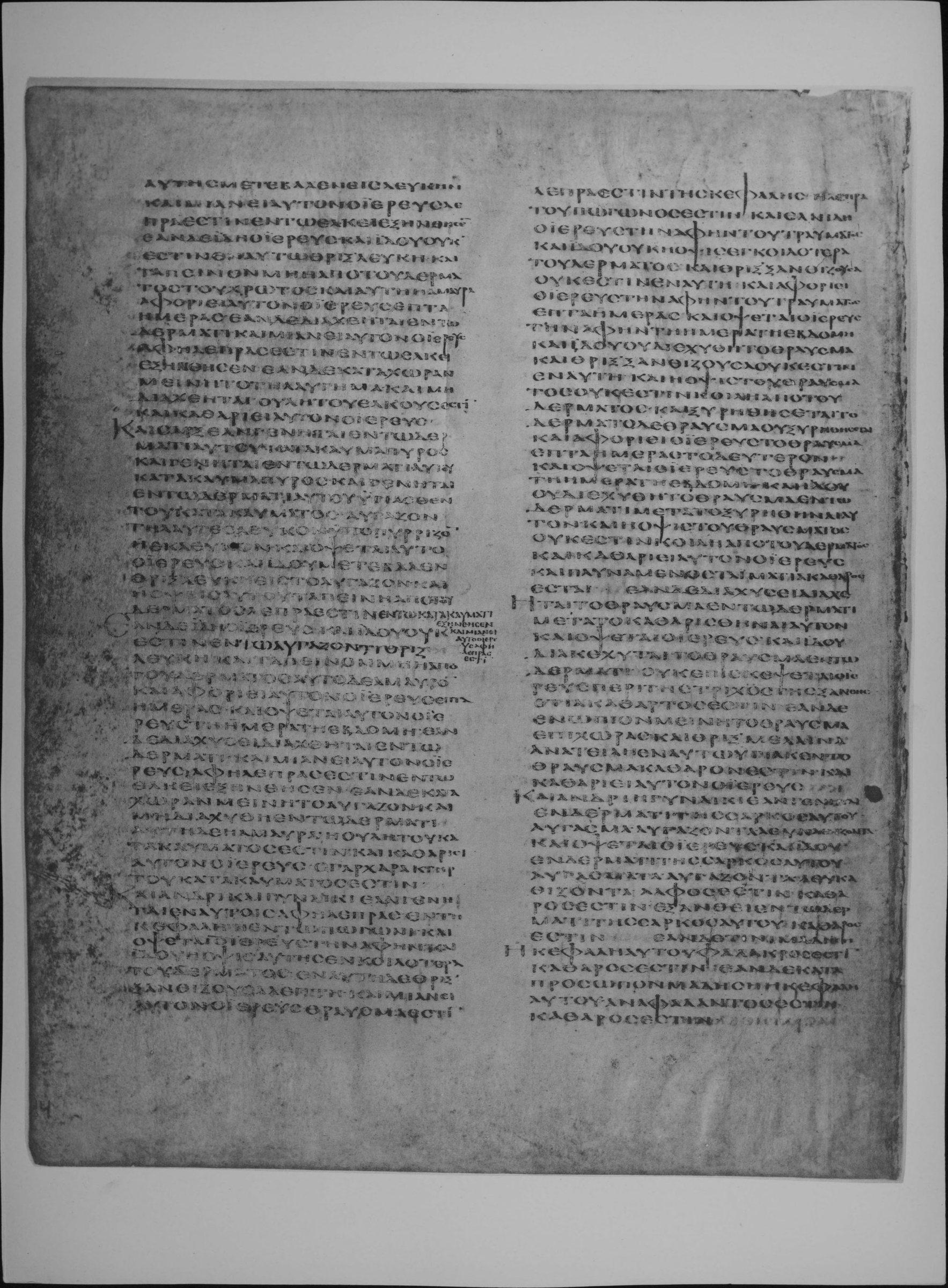
Where on the image
Leviticus 13:17-20 is on fol. 66r (full-size facsimile of 1879-83, Internet Archive codex-alexandrinus leaf 152). The 1915 reduced facsimile prints beneath this page: Levit. xii. 5-xiii. 20. Checked on the plate: the page begins inside Leviticus 12:5 (first words read: ΕΠΤΑ ΗΜΕΡΑΣ ΚΑΤΑ ΤΗΝ ΑΦΕΔΡΟΝ ΚΑΙ ΕΞΗΚΟΝΤΑ ΗΜΕΡΑΣ ΚΑΙ ΕΞ ΚΑΘΕΣΘΗΣΕΤΑΙ). Leviticus 13:20-24 is on fol. 66v (full-size facsimile of 1879-83, Internet Archive codex-alexandrinus leaf 153). The 1915 reduced facsimile prints beneath this page: Levit. xiii. 20-41. Checked on the plate: the page begins inside Leviticus 13:20 (first words read: ΑΥΤΗΣ ΜΕΤΕΒΑΛΕΝ ΕΙΣ ΛΕΥΚΗΝ ΚΑΙ ΜΙΑΝΕΙ ΑΥΤΟΝ Ο ΙΕΡΕΥΣ ΛΕΠΡΑ ΕΣΤΙΝ).
17καὶ ὄψεται ὁ ἱερεύς, καὶ ἰδοὺ μετέβαλεν ἡ ἁφὴ εἰς τὸ λευκόν, καὶ καθαριεῖ ὁ ἱερεὺς τὴν ἁφήν· καθαρός ἐστιν. 18Καὶ σὰρξ ἐὰν γένηται ἐν τῷ δέρματι αὐτοῦ ἕλκος, καὶ ὑγιασθῇ, 19καὶ γένηται ἐν τῷ τόπῳ τοῦ ἕλκους οὐλὴ λευκὴ ἢ τηλαυγὴς λευκαίνουσα ἢ πυρρίζουσα, καὶ ὀφθήσεται τῷ ἱερεῖ. 20καὶ ὄψεται ὁ ἱερεύς, καὶ ἰδοὺ ἡ ὄψις ταπεινοτέρα τοῦ δέρματος, καὶ θρὶξ αὐτῆς μετέβαλεν εἰς λευκήν, καὶ μιανεῖ αὐτὸν ὁ ἱερεύς· λέπρα ἐστίν, ἐν τῷ ἕλκει ἐξήνθησεν. 21ἐὰν δὲ ἴδῃ ὁ ἱερεύς, καὶ ἰδοὺ οὐκ ἔστιν ἐν αὐτῷ θρὶξ λευκή, καὶ ταπεινὸν μὴ ᾖ ἀπὸ τοῦ δέρματος τοῦ χρωτός, καὶ αὐτὴ ᾖ ἀμαυρά, ἀφοριεῖ αὐτὸν ὁ ἱερεὺς ἑπτὰ ἡμέρας. 22ἐὰν δὲ διαχέηται ἐν τῷ δέρματι, καὶ μιανεῖ αὐτὸν ὁ ἱερεύς· ἁφὴ λέπρας ἐστίν, ἐν τῷ ἕλκει ἐξήνθησεν· 23ἐὰν δὲ κατὰ χώραν μείνῃ τὸ τηλαύγημα καὶ μὴ διαχέηται, οὐλὴ τοῦ ἕλκους ἐστίν, καὶ καθαριεῖ αὐτὸν ὁ ἱερεύς. 24Καὶ σὰρξ ἐὰν γένηται ἐν τῷ δέρματι αὐτοῦ κατάκαυμα πυρός, καὶ γένηται ἐν τῷ δέρματι αὐτοῦ τὸ ὑγιασθὲν τοῦ κατακαύματος αὐγάζον τηλαυγὲς λευκόν, ὑποπυρρίζον ἢ ἔκλευκον,
17and the priest shall see him, and, behold, if the plague is turned white, then the priest shall pronounce the patient clean: he is clean. 18And if the flesh should have become an ulcer in his skin, and should be healed, 19and there should be in the place of the ulcer a white sore, or one looking white and bright, or fiery, and it shall be seen by the priest; 20then the priest shall look, and, behold, if the appearance be beneath the skin, and its hair has changed to white, then the priest shall pronounce him unclean; because it is a leprosy, it has broken out in the ulcer. 21But if the priest look, and behold there is no white hair on it, and it be not below the skin of the flesh, and it be dark-coloured; then the priest shall separate him seven days. 22But if it manifestly spread over the skin, then the priest shall pronounce him unclean: it is a plague of leprosy; it has broken out in the ulcer. 23But if the bright spot should remain in its place and not spread, it is the scar of the ulcer; and the priest shall pronounce him clean. 24And if the flesh be in his skin in a state of fiery inflammation, and there should be in his skin the part which is healed of the inflammation, bright, clear, and white, suffused with red or very white;
Where on the image
Leviticus 13:25-32 is on fol. 66v (full-size facsimile of 1879-83, Internet Archive codex-alexandrinus leaf 153). The 1915 reduced facsimile prints beneath this page: Levit. xiii. 20-41. Checked on the plate: the page begins inside Leviticus 13:20 (first words read: ΑΥΤΗΣ ΜΕΤΕΒΑΛΕΝ ΕΙΣ ΛΕΥΚΗΝ ΚΑΙ ΜΙΑΝΕΙ ΑΥΤΟΝ Ο ΙΕΡΕΥΣ ΛΕΠΡΑ ΕΣΤΙΝ).
25καὶ ὄψεται αὐτὸν ὁ ἱερεύς, καὶ ἰδοὺ μετέβαλεν θρὶξ λευκὴ εἰς τὸ αὐγάζον, καὶ ἡ ὄψις αὐτοῦ ταπεινὴ ἀπὸ τοῦ δέρματος, λέπρα ἐστίν, ἐν τῷ κατακαύματι ἐξήνθησεν· καὶ μιανεῖ αὐτὸν ὁ ἱερεύς, ἁφὴ λέπρας ἐστίν. 26ἐὰν δὲ ἴδῃ ὁ ἱερεύς, καὶ ἰδοὺ οὐκ ἔστιν ἐν τῷ αὐγάζοντι θρὶξ λευκή, καὶ ταπεινὸν μὴ ἦν ἀπὸ τοῦ δέρματος, αὐτὸ δὲ ἀμαυρόν, καὶ ἀφοριεῖ αὐτὸν ὁ ἱερεὺς ἑπτὰ ἡμέρας. 27καὶ ὄψεται αὐτὸν ὁ ἱερεὺς τῇ ἡμέρᾳ τῇ ἑβδόμῃ, ἐὰν δὲ διαχύσει διαχέηται ἐν τῷ δέρματι, καὶ μιανεῖ αὐτὸν ὁ ἱερεύς· ἁφὴ λέπρας ἐστίν, ἐν τῷ ἕλκει ἐξήνθησεν. 28ἐὰν δὲ κατὰ χώραν μείνῃ τὸ αὐγάζον καὶ μὴ διαχυθῇ ἐν τῷ δέρματι, αὐτὴ δὲ ᾖ ἀμαυρά, ἡ οὐλὴ τοῦ κατακαύματός ἐστιν, καὶ καθαριεῖ αὐτὸν ὁ ἱερεύς· ὁ γὰρ χαρακτὴρ τοῦ κατακαύματός ἐστιν. 29Καὶ ἀνδρὶ καὶ γυναικὶ ἐὰν γένηται ἐν αὐτοῖς ἁφὴ λέπρας ἐν τῇ κεφαλῇ ἢ ἐν τῷ πώγωνι, 30καὶ ὄψεται ὁ ἱερεὺς τὴν ἁφήν, καὶ ἰδοὺ ἡ ὄψις αὐτῆς ἐνκοιλοτέρα τοῦ δέρματος, ἐν αὐτῇ δὲ θρὶξ ξανθίζουσα λεπτή, καὶ μιανεῖ αὐτὸν ὁ ἱερεύς· θραῦσμά ἐστιν, λέπρα τῆς κεφαλῆς ἢ λέπρα τοῦ πώγωνός ἐστιν. 31καὶ ἐὰν ἴδῃ ὁ ἱερεὺς τὴν ἁφὴν τοῦ τραύματος, καὶ ἰδοὺ οὐχ ἡ ὄψις ἐνκοιλοτέρα τοῦ δέρματος, καὶ θρὶξ ξανθίζουσα οὐκ ἔστιν ἐν αὐτῇ, καὶ ἀφοριεῖ ὁ ἱερεὺς τὴν ἁφὴν τοῦ θραύσματος ἑπτὰ ἡμέρας· 32καὶ ὄψεται ὁ ἱερεὺς τὴν ἁφὴν τῇ ἡμέρᾳ τῇ ἑβδόμῃ, καὶ ἰδοὺ οὐ διεχύθη τὸ θραῦσμα, καὶ θρὶξ ξανθίζουσα οὐκ ἔστιν ἐν αὐτῇ, καὶ ἡ ὄψις τοῦ θραύσματος οὐκ ἔστιν κοίλη ἀπὸ τοῦ δέρματος,
25then the priest shall look upon him, and, behold, if the hair being white is changed to a bright colour, and its appearance is lower than the skin, it is a leprosy; it has broken out in the inflammation, and the priest shall pronounce him unclean: it is a plague of leprosy. 26But if the priest should look, and, behold, there is not in the bright spot any white hair, and it should not be lower than the skin, and it should be dark, then the priest shall separate him seven days. 27And the priest shall look upon him on the seventh day; and if the spot be much spread in the skin, then the priest shall pronounce him unclean: it is a plague of leprosy, it has broken out in the ulcer. 28But if the bright spot remain stationary, and be not spread in the skin, but the sore should be dark, it is a scar of inflammation; and the priest shall pronounce him clean, for it is the mark of the inflammation. 29And if a man or a woman have in them a plague of leprosy in the head or the beard; 30then the priest shall look on the plague, and, behold, if the appearance of it be beneath the skin, and in it there be thin yellowish hair, then the priest shall pronounce him unclean: it is a scurf, it is a leprosy of the head or a leprosy of the beard. 31And if the priest should see the plague of the scurf, and, behold, the appearance of it be not beneath the skin, and there is no yellowish hair in it, then the priest shall set apart him that has the plague of the scurf seven days. 32And the priest shall look at the plague on the seventh day; and, behold, if the scurf be not spread, and there be no yellowish hair on it, and the appearance of the scurf is not hollow under the skin;
Where on the image
Leviticus 13:33-40 is on fol. 66v (full-size facsimile of 1879-83, Internet Archive codex-alexandrinus leaf 153). The 1915 reduced facsimile prints beneath this page: Levit. xiii. 20-41. Checked on the plate: the page begins inside Leviticus 13:20 (first words read: ΑΥΤΗΣ ΜΕΤΕΒΑΛΕΝ ΕΙΣ ΛΕΥΚΗΝ ΚΑΙ ΜΙΑΝΕΙ ΑΥΤΟΝ Ο ΙΕΡΕΥΣ ΛΕΠΡΑ ΕΣΤΙΝ).
33καὶ ξυρηθήσεται τὸ δέρμα, τὸ δὲ θραῦσμα οὐ ξυρηθήσεται, καὶ ἀφοριεῖ ὁ ἱερεὺς τὸ θραῦσμα ἑπτὰ ἡμέρας τὸ δεύτερον. 34καὶ ὄψεται ὁ ἱερεὺς τὸ θραῦσμα τῇ ἡμέρᾳ τῇ ἑβδόμῃ, καὶ ἰδοὺ οὐ διεχύθη τὸ θραῦσμα ἐν τῷ δέρματι μετὰ τὸ ξυρηθῆναι αὐτόν, καὶ ἡ ὄψις τοῦ θραύσματος οὐκ ἔστιν κοίλη ἀπὸ τοῦ δέρματος, καὶ καθαριεῖ αὐτὸν ὁ ἱερεύς· καὶ πλυνάμενος τὰ ἱμάτια καθαρὸς ἔσται. 35ἐὰν δὲ διαχύσει διαχέηται τὸ θραῦσμα ἐν τῷ δέρματι μετὰ τὸ καθαρισθῆναι αὐτόν, 36καὶ ὄψεται ὁ ἱερεύς, καὶ ἰδοὺ διακέχυται τὸ θραῦσμα ἐν τῷ δέρματι, οὐκ ἐπισκέψεται ὁ ἱερεὺς περὶ τῆς τριχὸς τῆς ξανθῆς, ὅτι ἀκάθαρτός ἐστιν· 37ἐὰν δὲ ἐνώπιον μείνῃ τὸ θραῦσμα ἐπὶ χώρας καὶ θρὶξ μέλαινα ἀνατείλῃ ἐν αὐτῷ, ὑγίακεν τὸ θραῦσμα, καθαρόν ἐστιν, καὶ καθαριεῖ αὐτὸν ὁ ἱερεύς. 38Καὶ ἀνδρὶ ἢ γυναικὶ ἐὰν γένηται ἐν δέρματι τῆς σαρκὸς αὐτοῦ αὔγασμα, αὐγάζοντα λευκαθίζοντα, 39καὶ ὄψεται ὁ ἱερεύς, καὶ ἰδοὺ ἐν δέρματι τῆς σαρκὸς αὐτοῦ αὐγάσματα αὐγάζοντα λευκαθίζοντα, ἀλφός ἐστιν, καθαρός ἐστιν· ἐξανθήσει ἐν τῷ δέρματι τῆς σαρκὸς αὐτοῦ, καθαρός ἐστιν. 40ἐὰν δέ τινι μαδήσῃ ἡ κεφαλὴ αὐτοῦ, φαλακρός ἐστιν, καθαρός ἐστιν·
33then the skin shall be shaven, but the scurf shall not be shaven; and the priest shall set aside the person having the scurf the second time for seven days. 34And the priest shall see the scurf on the seventh day; and, behold, if the scurf is not spread in the skin after the man's being shaved, and the appearance of the scurf is not hollow beneath the skin, then the priest shall pronounce him clean; and he shall wash his garments, and be clean. 35But if the scurf be indeed spread in the skin after he has been purified, 36then the priest shall look, and, behold, if the scurf be spread in the skin, the priest shall not examine concerning the yellow hair, for he is unclean. 37But if the scurf remain before him in its place, and a dark hair should have arisen in it, the scurf is healed: he is clean, and the priest shall pronounce him clean. 38And if a man or woman should have in the skin of their flesh spots of a bright whiteness, 39then the priest shall look; and, behold, there being bright spots of a bright whiteness in the skin of their flesh, it is a tetter; it bursts forth in the skin of his flesh; he is clean. 40And if any one's head should lose the hair, he is only bald, he is clean.
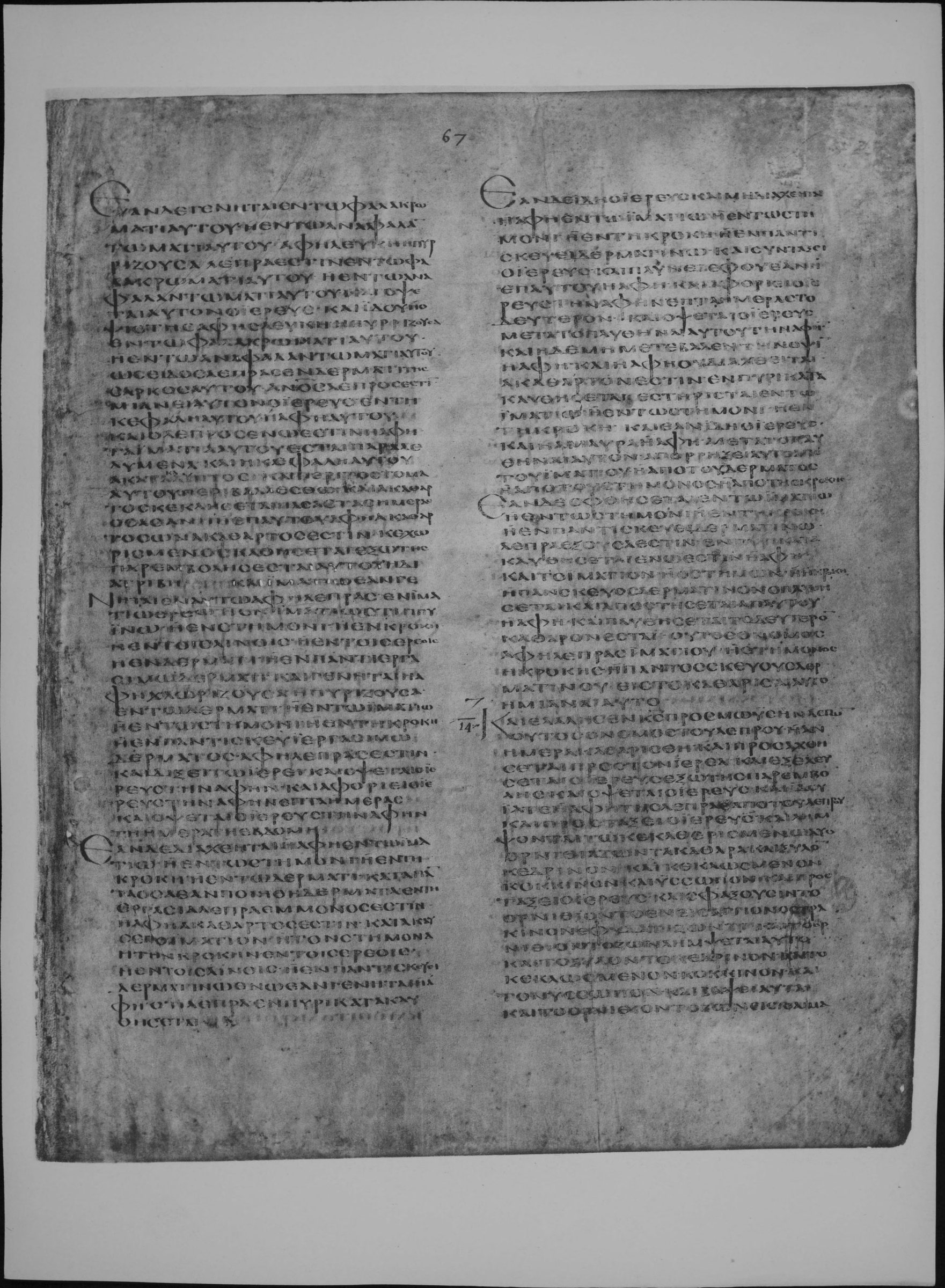
Where on the image
Leviticus 13:41 is on fol. 66v (full-size facsimile of 1879-83, Internet Archive codex-alexandrinus leaf 153). The 1915 reduced facsimile prints beneath this page: Levit. xiii. 20-41. Checked on the plate: the page begins inside Leviticus 13:20 (first words read: ΑΥΤΗΣ ΜΕΤΕΒΑΛΕΝ ΕΙΣ ΛΕΥΚΗΝ ΚΑΙ ΜΙΑΝΕΙ ΑΥΤΟΝ Ο ΙΕΡΕΥΣ ΛΕΠΡΑ ΕΣΤΙΝ). Leviticus 13:42-48 is on fol. 67r (full-size facsimile of 1879-83, Internet Archive codex-alexandrinus leaf 154). The 1915 reduced facsimile prints beneath this page: Levit. xiii. 42-xiv. 6. Checked on the plate: the page begins at the start of Leviticus 13:42 (first words read: ΕΑΝ ΔΕ ΓΕΝΗΤΑΙ ΕΝ ΤΩ ΦΑΛΑΚΡΩΜΑΤΙ ΑΥΤΟΥ Η ΕΝ ΤΩ ΑΝΑΦΑΛΑΝΤΩΜΑΤΙ).
41ἐὰν δὲ κατὰ πρόσωπον μαδήσῃ ἡ κεφαλὴ αὐτοῦ, ἀναφάλαντός ἐστιν, καθαρός ἐστιν. 42ἐὰν δὲ γένηται ἐν τῷ φαλακρώματι αὐτοῦ ἢ ἐν τῷ ἀναφαλαντώματι αὐτοῦ ἁφὴ λευκὴ ἢ πυρρίζουσα, λέπρα ἐστὶν ἐν τῷ φαλακρώματι αὐτοῦ ἤ ἐν τῷ ἀναφαλαντώματι αὐτοῦ· 43καὶ ὄψεται αὐτὸν ὁ ἱερεύς, καὶ ἰδοὺ ἡ ὄψις τῆς ἁφῆς λευκὴ πυρρίζουσα ἐν τῷ φαλακρώματι αὐτοῦ ἢ ἐν τῷ ἀναφαλαντώματι αὐτοῦ, ὡς εἶδος λέπρας ἐν δέρματι τῆς σαρκὸς αὐτοῦ, 44ἄνθρωπος λεπρός ἐστιν· μιάνσει μιανεῖ αὐτὸν ὁ ἱερεύς, ἐν τῇ κεφαλῇ αὐτοῦ ἡ ἁφὴ αὐτοῦ. 45Καὶ ὁ λεπρὸς ἐν ᾧ ἐστὶν ἡ ἁφή, τὰ ἱμάτια αὐτοῦ ἔστω παραλελυμένα καὶ ἡ κεφαλὴ αὐτοῦ ἀκάλυπτος καὶ περὶ τὸ στόμα αὐτοῦ περιβαλέσθω, καὶ ἀκάθαρτος κεκλήσεται· 46πάσας τὰς ἡμέρας ὅσας ἄν ᾖ ἐπ᾽ αὐτοῦ ἡ ἁφή, ἀκάθαρτος ὢν ἀκάθαρτος ἔσται· κεχωρισμένος καθήσεται, ἔξω τῆς παρεμβολῆς αὐτοῦ ἔσται ἡ διατριβή. 47Καὶ ἱματίῳ ἐὰν γένηται ἐν αὐτῷ ἁφὴ λέπρας, ἐν ἱματίῳ ἐρεῷ ἢ ἐν ἱματίῳ, στιππυίνῳ, 48ἢ ἐν στήμονι ἢ ἐν κρόκῃ, ἢ ἐν τοῖς λινοῖς ἢ ἐν τοῖς ἐρεοῖς, ἢ ἐν δέρματι ἢ ἐν παντὶ ἐργασίμῳ δέρματι,
41And if his head should lose the hair in front, he is forehead bald: he is clean. 42And if there should be in his baldness of head, or his baldness of forehead, a white or fiery plague, it is leprosy in his baldness of head, or baldness of forehead. 43And the priest shall look upon him, and, behold, if the appearance of the plague be white or inflamed in his baldness of head or baldness in front, as the appearance of leprosy in the skin of his flesh, 44he is a leprous man: the priest shall surely pronounce him unclean, his plague is in his head. 45And the leper in whom the plague is, let his garments be ungirt, and his head uncovered; and let him have a covering put upon his mouth, and he shall be called unclean. 46All the days in which the plague shall be upon him, being unclean, he shall be esteemed unclean; he shall dwell apart, his place of sojourn shall be without the camp. 47And if a garment have in it the plague of leprosy, a garment of wool, or a garment of flax, 48either in the warp or in the woof, or in the linen, or in the woollen threads, or in a skin, or in any workmanship of skin,
Where on the image
Leviticus 13:49-56 is on fol. 67r (full-size facsimile of 1879-83, Internet Archive codex-alexandrinus leaf 154). The 1915 reduced facsimile prints beneath this page: Levit. xiii. 42-xiv. 6. Checked on the plate: the page begins at the start of Leviticus 13:42 (first words read: ΕΑΝ ΔΕ ΓΕΝΗΤΑΙ ΕΝ ΤΩ ΦΑΛΑΚΡΩΜΑΤΙ ΑΥΤΟΥ Η ΕΝ ΤΩ ΑΝΑΦΑΛΑΝΤΩΜΑΤΙ).
49καὶ γένηται ἡ ἁφὴ χλωρίζουσα ἢ πυρρίζουσα ἐν τῷ δέρματι ἢ ἐν τῷ ἱματίῳ ἢ ἐν τῷ στήμονι ἢ ἐν τῇ κρόκῃ ἢ ἐν παντὶ σκεύει ἐργασίμῳ δέρματος, ἁφὴ λέπρας ἐστίν, καὶ δείξει τῷ ἱερεῖ. 50καὶ ὄψεται ὁ ἱερεὺς τὴν ἁφήν, καὶ ἀφοριεῖ ὁ ἱερεὺς τὴν ἁφὴν ἑπτὰ ἡμέρας. 51καὶ ὄψεται ὁ ἱερεὺς τὴν ἁφὴν τῇ ἡμέρᾳ τῇ ἑβδόμῃ· ἐὰν δὲ διαχέηται ἡ ἁφὴ ἐν τῷ ἱματίῳ ἢ ἐν τῷ στήμονι ἢ ἐν τῇ κρόκῃ ἢ ἐν τῷ δέρματι, κατὰ πάντα ὅσα ἂν ποιηθῇ δέρματα ἐν τῇ ἐργασίᾳ, λέπρα ἔμμονός ἐστιν ἡ ἁφή· ἀκάθαρτός ἐστιν. 52κατακαύσει τὸ ἱμάτιον ἢ τὸν στήμονα ἢ τὴν κρόκην, ἐν τοῖς ἐρεοῖς ἢ ἐν τοῖς λινοῖς ἢ ἐν παντὶ σκεύει δερματίνῳ ἐν ᾧ ἐὰν ᾖ ἐν αὐτῷ ἡ ἁφή· ὅτι λέπρα, ἐν πυρὶ κατακαυθήσεται. 53ἐὰν δὲ ἴδῃ ὁ ἱερεύς, καὶ μὴ διαχέηται ἡ ἁφὴ ἐν τῷ ἱματίῳ ἢ ἐν τῷ στήμονι ἢ ἐν τῇ κρόκῃ ἢ ἐν παντὶ σκεύει δερματίνῳ, 54καὶ συντάξει ὁ ἱερεύς, καὶ πλυνεῖ ἐφ᾽ οὗ ἐὰν ᾖ ἐπ᾽ αὐτοῦ ἡ ἁφή, καὶ ἀφοριεῖ ὁ ἱερεὺς τὴν ἁφὴν ἑπτὰ ἡμέρας τὸ δεύτερον. 55καὶ ὄψεται ὁ ἱερεὺς μετὰ τὸ πλυθῆναι αὐτὸ τὴν ἁφήν, καὶ ἥδε μὴ μετέβαλεν τὴν ὄψιν ἡ ἁφή, καὶ ἡ ἁφὴ οὐ διαχεῖται, ἀκάθαρτόν ἐστιν, ἐν πυρὶ κατακαυθήσεται· ἐστήρισται ἐν τῷ ἱματίῳ ἢ ἐν τῷ στήμονι ἢ ἐν τῇ κρόκῃ. 56καὶ ἐὰν ἴδῃ ὁ ἱερεύς, καὶ ᾖ ἀμαυρὰ ἡ ἁφὴ μετὰ τὸ πλυθῆναι αὐτό, ἀπορρήξει αὐτὸ ἀπὸ τοῦ ἱματίου ἢ ἀπὸ τοῦ δέρματος ἢ ἀπὸ τοῦ στήμονος ἢ ἀπὸ τῆς κρόκης.
49and the plague be greenish or reddish in the skin, or in the garment, either in the warp, or in the woof, or in any utensil of skin, it is a plague of leprosy, and he shall show it to the priest. 50And the priest shall look upon the plague, and the priest shall set apart that which has the plague seven days. 51And the priest shall look upon the plague on the seventh day; and if the plague be spread in the garment, either in the warp or in the woof, or in the skin, in whatsoever things skins may be used in their workmanship, the plague is a confirmed leprosy; it is unclean. 52He shall burn the garment, either the warp or woof in woollen garments or in flaxen, or in any utensil of skin, in which there may be the plague; because it is a confirmed leprosy; it shall be burnt with fire. 53And if the priest should see, and the plague be not spread in the garments, either in the warp or in the woof, or in any utensil of skin, 54then the priest shall give directions, and one shall wash that on which there may have been the plague, and the priest shall set it aside a second time for seven days. 55And the priest shall look upon it after the plague has been washed; and if this, even the plague, has not changed its appearance, and the plague does not spread, it is unclean; it shall be burnt with fire: it is fixed in the garment, in the warp, or in the woof. 56And if the priest should look, and the spot be dark after it has been washed, he shall tear it off from the garment, either from the warp or from the woof, or from the skin.
Where on the image
Leviticus 13:57-59 is on fol. 67r (full-size facsimile of 1879-83, Internet Archive codex-alexandrinus leaf 154). The 1915 reduced facsimile prints beneath this page: Levit. xiii. 42-xiv. 6. Checked on the plate: the page begins at the start of Leviticus 13:42 (first words read: ΕΑΝ ΔΕ ΓΕΝΗΤΑΙ ΕΝ ΤΩ ΦΑΛΑΚΡΩΜΑΤΙ ΑΥΤΟΥ Η ΕΝ ΤΩ ΑΝΑΦΑΛΑΝΤΩΜΑΤΙ).
57ἐὰν δὲ ὀφθῇ ἔτι ἐν τῷ ἱματίῳ ἢ ἐν τῷ στήμονι ἢ ἐν τῇ κρόκῃ ἢ ἐν παντὶ σκεύει δερματίνῳ, λέπρα ἐξανθοῦσά ἐστιν· ἐν πυρὶ κατακαυθήσεται ἐν ᾧ ἐστὶν ἡ ἁφή. 58καὶ τὸ ἱμάτιον ἢ ὁ στήμων ἢ ἡ κρόκη ἢ πᾶν σκεῦος δερμάτινον ὃ πλυθήσεται καὶ ἀποστήσεται ἀπ᾽ αὐτοῦ ἡ ἁφή, καὶ πλυθήσεται τὸ δεύτερον· καθαρὸν ἔσται. 59οὗτος ὁ νόμος ἁφῆς λέπρας ἱματίου ἐρεοῦ ἢ στιππυίνου ἢ στήμονος ἢ κρόκης ἢ παντὸς σκεύους δερματίνου, εἰς τὸ καθαρίσαι αὐτὸ ἢ μιᾶναι αὐτό.
57And if it should still appear in the garment, either in the warp or in the woof, or in any article of skin, it is a leprosy bursting forth: that wherein is the plague shall be burnt with fire. 58And the garment, or the warp, or the woof, or any article of skin, which shall be washed, and the plague depart from it, shall also be washed again, and shall be clean. 59This is the law of the plague of leprosy of a woollen or linen garment, either of the warp, or woof, or any leathern article, to pronounce it clean or unclean.
Cite
Sources
- Source: Codex Alexandrinus (British Library Royal MS 1 D. V) via the British Museum photographic facsimiles of 1879-83 and 1915 (Internet Archive) + Swete's Septuagint + Brenton's English (holding institution)
- Critical edition: H. B. Swete, The Old Testament in Greek according to the Septuagint (1909)
← previous · → next · v cycle view · l back to library