Leviticus, Chapter 2 (Codex Alexandrinus)
Introduction
Leviticus 2 in the Greek Old Testament (the Septuagint) as written in Codex Alexandrinus, a Greek Bible copied in the fifth century, probably in Egypt, and now in the British Library (Royal MS 1 D. V, the first of its four volumes). It is one of the three great early codices of the whole Greek Bible, with Codex Vaticanus and Codex Sinaiticus, and for Genesis 1:1-46:28, which Codex Vaticanus has lost, it is the oldest surviving complete Greek text (older papyri such as the Berlin Genesis papyrus and Chester Beatty 961 survive only in part).
This entry meets the strict three-criteria standard of the Theosis Library:
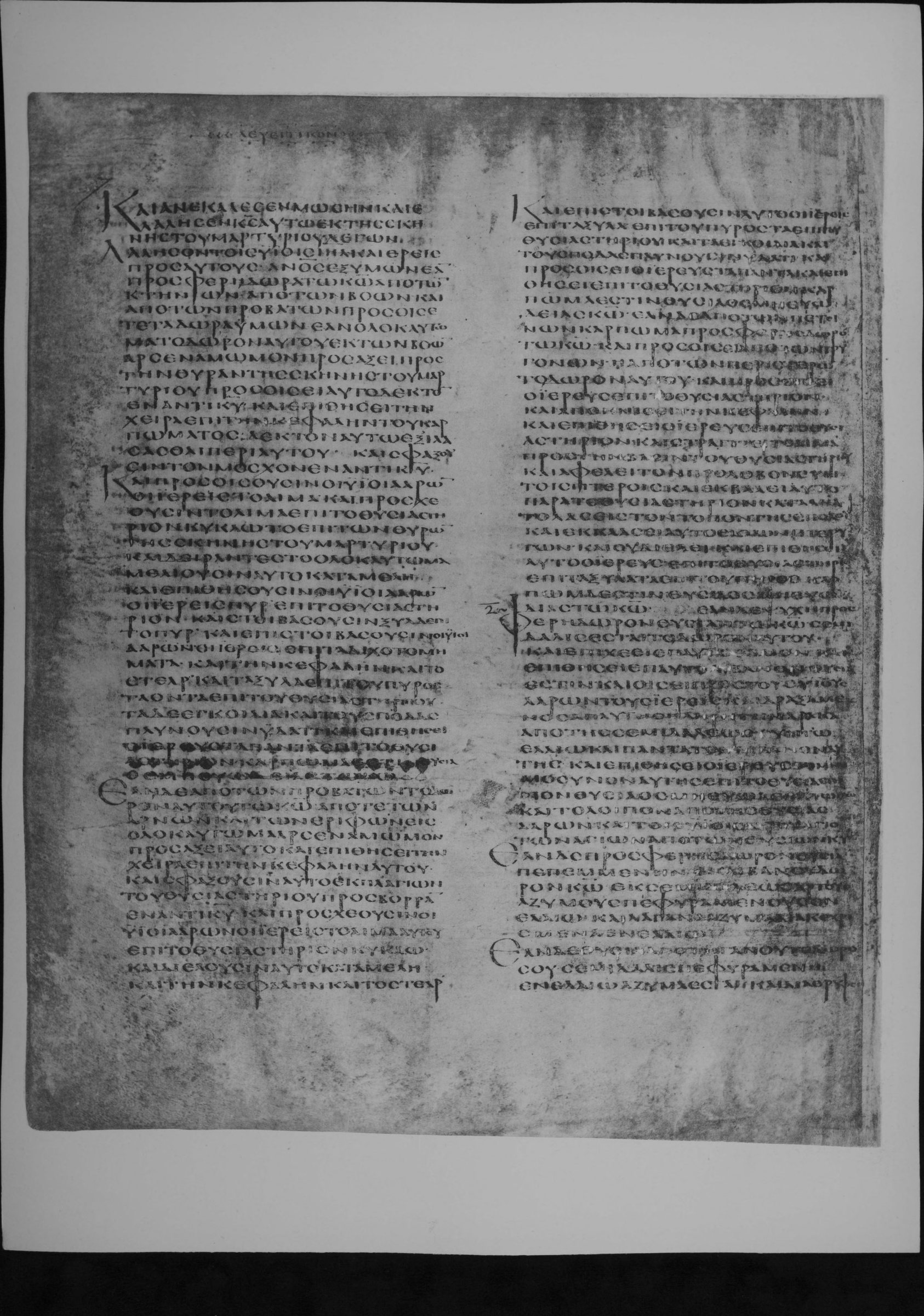
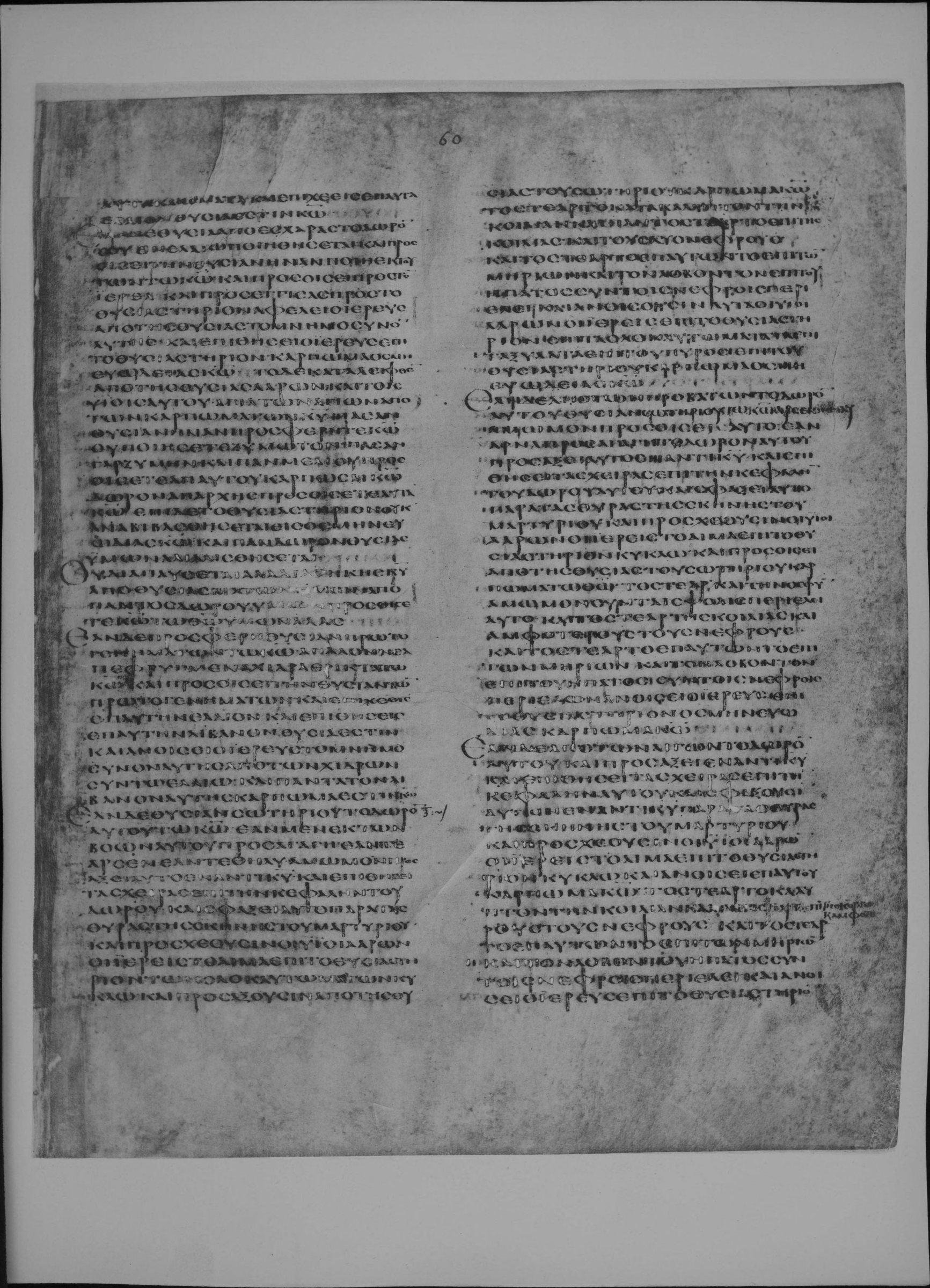
- Manuscript scan: the pages of Codex Alexandrinus carrying this chapter (fol. 59v, fol. 60r), from the full-size photographic (autotype) facsimile published by the British Museum in 1879-1883, as digitised on the Internet Archive. The verse range of every page comes from the reduced photographic facsimile of 1915, which prints it beneath each plate, and the opening words of every page were read on the plate to confirm the page and the verse it begins with. Each section links to the page or pages that hold its verses. Folio numbers are those written at the head of each leaf and visible on the plates.
- Original text: Swete's edition, which here prints the text of Codex Vaticanus (Vat. gr. 1209), the base of his edition, and gives the readings of Alexandrinus only in his apparatus. The Greek column is therefore Vaticanus' text; where Alexandrinus differs, the plate shows what Alexandrinus reads.
- English translation: Sir Lancelot C. L. Brenton, The Septuagint Version of the Old Testament (1844; 1851 edition), a translation of the Greek, public domain, from the eBible.org text.
How was this verified? (Provenance)
Where on the image
Leviticus 2:1-6 is on fol. 59v (full-size facsimile of 1879-83, Internet Archive codex-alexandrinus leaf 139). The 1915 reduced facsimile prints beneath this page: Levit. i. 1-ii. 6. Checked on the plate: the page begins at the start of Leviticus 1:1 (first words read: ΚΑΙ ΑΝΕΚΑΛΕΣΕΝ ΜΩΥΣΗΝ ΚΑΙ ΕΛΑΛΗΣΕΝ ΚΣ ΑΥΤΩ ΕΚ ΤΗΣ ΣΚΗΝΗΣ ΤΟΥ ΜΑΡΤΥΡΙΟΥ). Leviticus 2:6-8 is on fol. 60r (full-size facsimile of 1879-83, Internet Archive codex-alexandrinus leaf 140). The 1915 reduced facsimile prints beneath this page: Levit. ii. 6-iii. 16. Checked on the plate: the page begins inside Leviticus 2:6 (first words read: ΑΥΤΑ ΚΛΑΣΜΑΤΑ ΚΑΙ ΕΠΙΧΕΕΙΣ ΕΠ ΑΥΤΑ ΕΛΑΙΟΝ ΘΥΣΙΑ ΕΣΤΙΝ ΚΩ).
1Ἐὰν δὲ ψυχὴ προσφέρῃ δῶρον θυσίαν τῷ κυρίῳ, σεμίδαλις ἔσται τὸ δῶρον αὐτοῦ· καὶ ἐπιχεεῖ ἐπ᾽ αὐτὸ ἔλαιον, καὶ ἐπιθήσει ἐπ᾽ αὐτὸ λίβανον· θυσία ἐστίν. 2καὶ οἴσει πρὸς τοὺς υἱοὺς Ἀαρὼν τοὺς ἱερεῖς· καὶ δραξάμενος ἀπ᾽ αὐτῆς πλήρη τὴν δράκα ἀπὸ τῆς σεμιδάλεως σὺν τῷ ἐλαίῳ καὶ πάντα τὸν λίβανον αὐτῆς, καὶ ἐπιθήσει ὁ ἱερεὺς τὸ μνημόσυνον αὐτῆς ἐπὶ τὸ θυσιαστήριον· θυσία, ὀσμὴ εὐωδίας τῷ κυρίῳ. 3καὶ τὸ λοιπὸν ἀπὸ τῆς θυσίας Ἀαρὼν καὶ τοῖς υἱοῖς αὐτοῦ, ἅγιον τῶν ἁγίων ἀπὸ τῶν θυσιῶν Κυρίου. 4Ἐὰν δὲ προσφέρῃ δῶρον θυσίαν πεπεμμένην ἐκ λιβάνου, δῶρον Κυρίῳ ἐκ σεμιδάλεως, ἄρτους ἀζύμους πεφυραμένους ἐν ἐλαίῳ καὶ λάγανα ἄζυμα διακεχρισμένα ἐν ἐλαίῳ. 5ἐὰν δὲ θυσία ἀπὸ τηγάνου τὸ δῶρόν σου, σεμίδαλις πεφυραμένη ἐν ἐλαίῳ, ἄζυμά ἐστιν· 6καὶ διαθρύψεις αὐτὰ κλάσματα, καὶ ἐπιχεεῖς ἐπ᾽ αὐτὰ ἔλαιον· θυσία ἐστὶν Κυρίῳ. 7ἐὰν δὲ θυσία ἀπὸ ἐσχάρας τὸ δῶρόν σου, ἐν ἐλαίῳ ποιηθήσεται. 8καὶ προσοίσει τὴν θυσίαν ἣν ἂν ποιῇ ἐκ τούτων τῷ κυρίῳ, καὶ προσοίσει πρὸς τὸν ἱερέα· καὶ προσεγγίσας πρὸς τὸ θυσιαστήριον
1And if a soul bring a gift, a sacrifice to the Lord, his gift shall be fine flour; and he shall pour oil upon it, and shall put frankincense on it: it is a sacrifice. 2And he shall bring it to the priests the sons of Aaron: and having taken from it a handful of the fine flour with the oil, and all its frankincense, then the priest shall put the memorial of it on the altar: it is a sacrifice, an odour of sweet savour to the Lord. 3And the remainder of the sacrifice shall be for Aaron and his sons, a most holy portion from the sacrifices of the Lord. 4And if he bring as a gift a sacrifice baked from the oven, a gift to the Lord of fine flour, he shall bring unleavened bread kneaded with oil, and unleavened cakes anointed with oil. 5And if thy gift be a sacrifice from a pan, it is fine flour mingled with oil, unleavened offerings. 6And thou shalt break them into fragments and pour oil upon them: it is a sacrifice to the Lord. 7And if thy gift be a sacrifice from the hearth, it shall be made of fine flour with oil. 8And he shall offer the sacrifice which he shall make of these to the Lord, and shall bring it to the priest.
Where on the image
Leviticus 2:9-16 is on fol. 60r (full-size facsimile of 1879-83, Internet Archive codex-alexandrinus leaf 140). The 1915 reduced facsimile prints beneath this page: Levit. ii. 6-iii. 16. Checked on the plate: the page begins inside Leviticus 2:6 (first words read: ΑΥΤΑ ΚΛΑΣΜΑΤΑ ΚΑΙ ΕΠΙΧΕΕΙΣ ΕΠ ΑΥΤΑ ΕΛΑΙΟΝ ΘΥΣΙΑ ΕΣΤΙΝ ΚΩ).
9ἀφελεῖ ὁ ἱερεὺς ἀπὸ τῆς θυσίας τὸ μνημόσυνον αὐτῆς, καὶ ἐπιθήσει ὁ ἱερεὺς ἐπὶ τὸ θυσιαστήριον· κάρπωμα, ὀσμὴ εὐωδίας Κυρίῳ. 10τὸ δὲ καταλειφθὲν ἀπὸ τῆς θυσίας Ἀαρὼν καὶ τοῖς υἱοῖς αὐτοῦ, ἅγια τῶν ἁγίων ἀπὸ τῶν καρπωμάτων Κυρίου. 11πᾶσαν θυσίαν ἣν ἂν προσφέρητε Κυρίῳ οὐ ποιήσετε ζυμωτόν· πᾶσαν γὰρ ζύμην καὶ πᾶν μέλι, οὐ προσοίσετε ἀπ᾽ αὐτοῦ καρπῶσαι Κυρίῳ. 12δῶρον ἀπαρχῆς προσοίσετε αὐτὰ Κυρίῳ· ἐπὶ δὲ τὸ θυσιαστήριον οὐκ ἀναβιβασθήσεται εἰς ὀσμὴν εὐωδίας Κυρίῳ. 13καὶ πᾶν δῶρον θυσίας ὑμῶν ἁλὶ ἁλισθήσεται· οὐ διαπαύσετε ἅλα διαθήκης Κυρίου ἀπὸ θυσιασμάτων ὑμῶν· ἐπὶ παντὸς δώρου ὑμῶν προσοίσετε Κυρίῳ τῷ θεῷ ὑμῶν ἅλας. 14Ἐὰν δὲ προσφέρῃς θυσίαν πρωτογενημάτων τῷ κυρίῳ, ἁπαλόν, νέα πεφρυγμένα χίδρα ἐρικτὰ τῷ κυρίῳ· καὶ προσοίσεις τὴν θυσίαν τῶν πρωτογενημάτων· 15καὶ ἐπιχεεῖς ἐπ᾽ αὐτὴν ἔλαιον, καὶ ἐπιθήσεις ἐπ᾽ αὐτὴν λίβανον· θυσία ἐστίν. 16καὶ ἀνοίσει ὁ ἱερεὺς τὸ μνημόσυνον αὐτῆς ἀπὸ τῶν χίδρων σὺν τῷ ἐλαίῳ καὶ πάντα τὸν λίβανον αὐτῆς· κάρπωμά ἐστιν Κυρίῳ.
9And the priest shall approach the altar, and shall take away from the sacrifice a memorial of it, and the priest shall place it on the altar: a burnt offering, a smell of sweet savour to the Lord. 10And that which is left of the sacrifice shall be for Aaron and his sons, most holy from the burnt-offerings of the Lord. 11Ye shall not leaven any sacrifice which ye shall bring to the Lord; for as to any leaven, or any honey, ye shall not bring of it to offer a gift to the Lord. 12Ye shall bring them in the way of fruits to the Lord, but they shall not be offered on the altar for a sweet-smelling savour to the Lord. 13And every gift of your sacrifice shall be seasoned with salt; omit not the salt of the covenant of the Lord from your sacrifices: on every gift of yours ye shall offer salt to the Lord your God. 14And if thou wouldest offer a sacrifice of first-fruits to the Lord, it shall be new grains ground and roasted for the Lord; so shalt thou bring the sacrifice of the first-fruits. 15And thou shalt pour oil upon it, and shalt put frankincense on it: it is a sacrifice. 16And the priest shall offer the memorial of it taken from the grains with the oil, and all its frankincense: it is a burnt-offering to the Lord.
Cite
Sources
- Source: Codex Alexandrinus (British Library Royal MS 1 D. V) via the British Museum photographic facsimiles of 1879-83 and 1915 (Internet Archive) + Swete's Septuagint + Brenton's English (holding institution)
- Critical edition: H. B. Swete, The Old Testament in Greek according to the Septuagint (1909)
← previous · → next · v cycle view · l back to library