Leviticus, Chapter 20 (Codex Alexandrinus)
Introduction
Leviticus 20 in the Greek Old Testament (the Septuagint) as written in Codex Alexandrinus, a Greek Bible copied in the fifth century, probably in Egypt, and now in the British Library (Royal MS 1 D. V, the first of its four volumes). It is one of the three great early codices of the whole Greek Bible, with Codex Vaticanus and Codex Sinaiticus, and for Genesis 1:1-46:28, which Codex Vaticanus has lost, it is the oldest surviving complete Greek text (older papyri such as the Berlin Genesis papyrus and Chester Beatty 961 survive only in part).
This entry meets the strict three-criteria standard of the Theosis Library:
- Manuscript scan: the pages of Codex Alexandrinus carrying this chapter (fol. 71v, fol. 72r, fol. 72v), from the full-size photographic (autotype) facsimile published by the British Museum in 1879-1883, as digitised on the Internet Archive. The verse range of every page comes from the reduced photographic facsimile of 1915, which prints it beneath each plate, and the opening words of every page were read on the plate to confirm the page and the verse it begins with. Each section links to the page or pages that hold its verses. Folio numbers are those written at the head of each leaf and visible on the plates.
- Original text: Swete's edition, which here prints the text of Codex Vaticanus (Vat. gr. 1209), the base of his edition, and gives the readings of Alexandrinus only in his apparatus. The Greek column is therefore Vaticanus' text; where Alexandrinus differs, the plate shows what Alexandrinus reads.
- English translation: Sir Lancelot C. L. Brenton, The Septuagint Version of the Old Testament (1844; 1851 edition), a translation of the Greek, public domain, from the eBible.org text.
How was this verified? (Provenance)
Where on the image
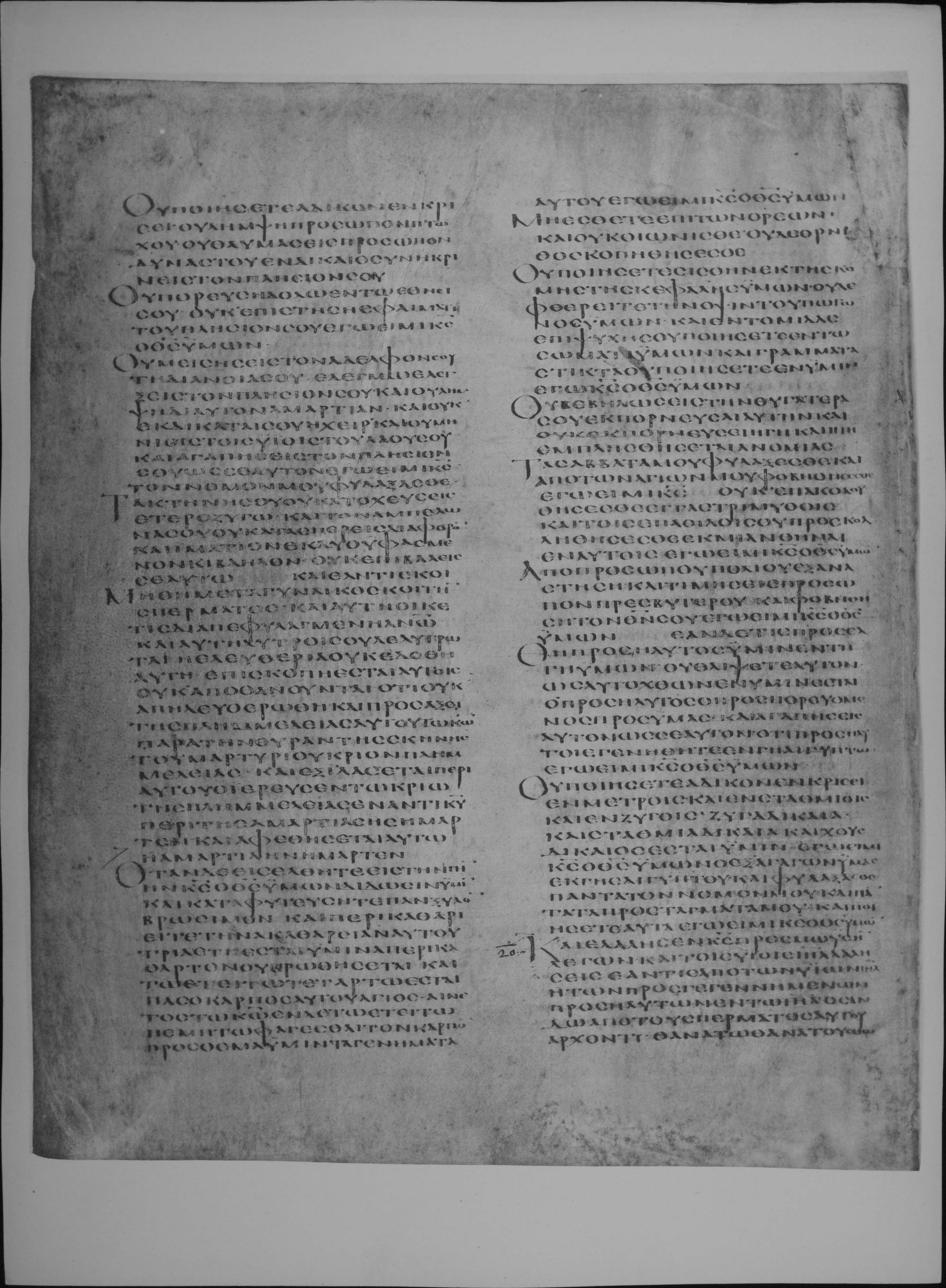
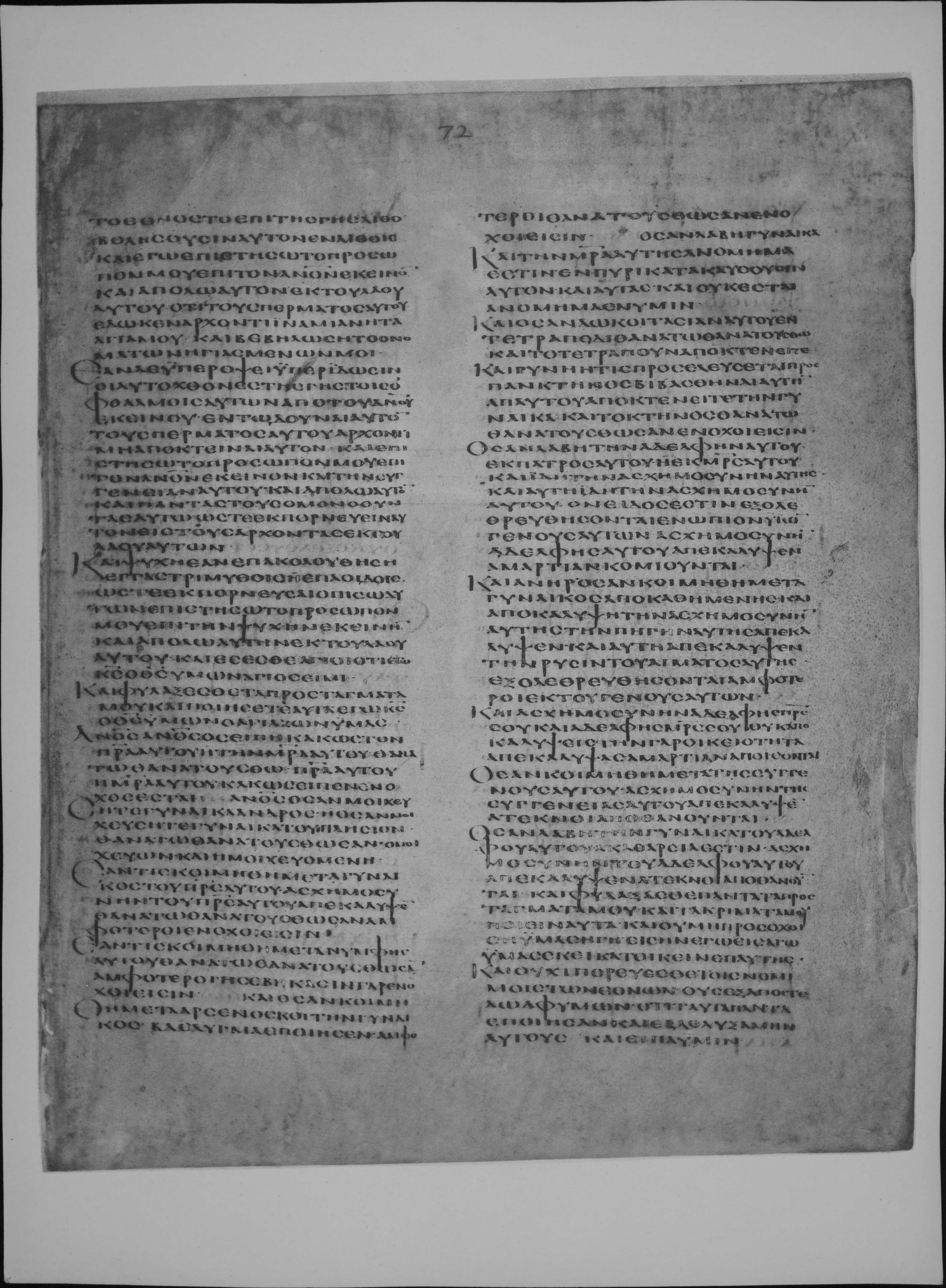
Leviticus 20:1-2 is on fol. 71v (full-size facsimile of 1879-83, Internet Archive codex-alexandrinus leaf 163). The 1915 reduced facsimile prints beneath this page: Levit. xix. 15-xx. 2. Checked on the plate: the page begins at the start of Leviticus 19:15 (first words read: ΟΥ ΠΟΙΗΣΕΤΕ ΑΔΙΚΟΝ ΕΝ ΚΡΙΣΕΙ ΟΥ ΛΗΜΨΗ ΠΡΟΣΩΠΟΝ ΠΤΩΧΟΥ). Leviticus 20:2-8 is on fol. 72r (full-size facsimile of 1879-83, Internet Archive codex-alexandrinus leaf 164). The 1915 reduced facsimile prints beneath this page: Levit. xx. 2-24. Checked on the plate: the page begins inside Leviticus 20:2 (first words read: ΤΟ ΕΘΝΟΣ ΤΟ ΕΠΙ ΤΗΣ ΓΗΣ ΛΙΘΟΒΟΛΗΣΟΥΣΙΝ ΑΥΤΟΝ ΕΝ ΛΙΘΟΙΣ ΚΑΙ ΕΓΩ ΕΠΙΣΤΗΣΩ ΤΟ ΠΡΟΣΩΠΟΝ ΜΟΥ).
1Καὶ ἐλάλησεν Κύριος πρὸς Μωυσῆν λέγων 2Καὶ τοῖς υἱοῖς Ἰσραὴλ λαλήσεις Ἐάν τις ἀπὸ τῶν υἱῶν Ἰσραὴλ ἢ ἀπὸ τῶν γεγενημένων προσηλύτων ἐν Ἰσραὴλ ὃς ἂν δῷ τοῦ σπέρματος αὐτοῦ ἄρχοντι, θανάτῳ θανατούσθω· τὸ ἔθνος τὸ ἐπὶ τῆς γῆς λιθοβολήσουσιν αὐτὸν ἐν λίθοις. 3καὶ ἐγὼ ἐπιστήσω τὸ πρόσωπόν μου ἐπὶ τὸν ἄνθρωπον ἐκεῖνον καὶ ἀπολῶ αὐτὸν ἐκ τοῦ λαοῦ αὐτοῦ, ὅτι τοῦ σπέρματος αὐτοῦ ἔδωκεν ἄρχοντι, ἵνα μιάνῃ τὰ ἅγιά μου καὶ βεβηλώσῃ τὸ ὄνομα τῶν ἡγιασμένων μοι. 4ἐὰν δὲ ὑπερόψει ὑπερίδωσιν οἱ αὐτόχθονες τῆς γῆς τοῖς ὀφθαλμοῖς αὐτῶν ἀπὸ τοῦ ἀνθρώπου ἐκείνου, ἐν τῷ δοῦναι αὐτὸν τοῦ σπέρματος αὐτοῦ ἄρχοντι, τοῦ μὴ ἀποκτεῖναι αὐτόν· 5καὶ ἐπιστήσω τὸ πρόσωπόν μου ἐπὶ τὸν ἄνθρωπον ἐκεῖνον καὶ τὴν συγγενίαν αὐτοῦ, καὶ ἀπολῶ αὐτὸν καὶ πάντας τοὺς ὁμονοοῦντας αὐτῷ, ὥστε ἐκπορνεύειν αὐτὸν εἰς τοὺς ἄρχοντας, ἐκ τοῦ λαοῦ αὐτῶν. 6καὶ ψυχὴ ἣ ἐὰν ἐπακολουθήσῃ ἐνγαστριμύθοις ἢ ἐπαοιδοῖς ὥστε ἐκπορνεῦσαι ὀπίσω αὐτῶν, ἐπιστήσω τὸ πρόσωπόν μου ἐπὶ τὴν ψυχὴν ἐκείνην καὶ ἀπολῶ αὐτὴν ἐκ τοῦ λαοῦ αὐτῆς. 7καὶ ἔσεσθε ἅγιοι, ὅτι ἅγιος ἐγὼ Κύριος ὁ θεὸς ὑμῶν· 8καὶ φυλάξεσθε τὰ προστάγματά μου καὶ ποιήσετε αὐτά, ἐγὼ Κύριος ὁ ἁγιάζων ὑμᾶς.
1And the Lord spoke to Moses, saying, 2Thou shalt also say to the children of Israel, If there shall be any of the children of Israel, or of those who have become proselytes in Israel, who shall give of his seed to Moloch, let him be surely put to death; the nation upon the land shall stone him with stones. 3And I will set my face against that man, and will cut him off from his people, because he has given of his seed to Moloch, to defile my sanctuary, and profane the name of them that are consecrated to me. 4And if the natives of the land should in anywise overlook that man in giving of his seed to Moloch, so as not to put him to death; 5then will I set my face against that man and his family, and I will destroy him, and all who have been of one mind with him, so that he should go a whoring to the princes, from their people. 6And the soul that shall follow those who have in them divining spirits, or enchanters, so as to go a whoring after them; I will set my face against that soul, and will destroy it from among its people. 7And ye shall be holy, for I the Lord your God am holy. 8And ye shall observe my ordinances, and do them: I am the Lord that sanctifies you.
Where on the image
Leviticus 20:9-16 is on fol. 72r (full-size facsimile of 1879-83, Internet Archive codex-alexandrinus leaf 164). The 1915 reduced facsimile prints beneath this page: Levit. xx. 2-24. Checked on the plate: the page begins inside Leviticus 20:2 (first words read: ΤΟ ΕΘΝΟΣ ΤΟ ΕΠΙ ΤΗΣ ΓΗΣ ΛΙΘΟΒΟΛΗΣΟΥΣΙΝ ΑΥΤΟΝ ΕΝ ΛΙΘΟΙΣ ΚΑΙ ΕΓΩ ΕΠΙΣΤΗΣΩ ΤΟ ΠΡΟΣΩΠΟΝ ΜΟΥ).
9ἄνθρωπος ἄνθρωπος ὃς ἂν κακῶς εἴπῃ τὸν πατέρα αὐτοῦ ἢ τὴν μητέρα αὐτοῦ θανάτῳ θανατούσθω· πατέρα αὐτοῦ ἢ μητέρα αὐτοῦ κακῶς εἶπεν, ἔνοχος ἔσται. 10ἄνθρωπος ὃς ἂν μοιχεύσηται γυναῖκα ἀνδρός, ἢ ὃς ἂν μοιχεύσηται γυναῖκα τοῦ πλησίον, θανάτῳ θανατούσθωσαν ὁ μοιχεύων καὶ ἡ μοιχευομένη. 11ἐάν τις κοιμηθῇ μετὰ γυναικὸς τοῦ πατρὸς αὐτοῦ, ἀσχημοσύνην τοῦ πατρὸς αὐτοῦ ἀπεκάλυψεν, θανατούσθω· ἀμφότεροι ἔνοχοί εἰσιν. 12καὶ ἐάν τις κοιμηθῇ μετὰ νύμφης αὐτοῦ, θανάτῳ θανατούσθωσαν ἀμφότεροι· ἠσεβήκασιν γάρ, ἔνοχοί εἰσιν. 13καὶ ὃς ἂν κοιμηθῇ μετὰ ἄρσενος κοίτην γυναικός, βδέλυγμα ἐποίησαν ἀμφότεροι· θανατούσθωσαν, ἔνοχοί εἰσιν. 14ὃς ἐὰν λάβῃ γυναῖκα καὶ τὴν μητέρα αὐτῆς, ἀνόμημά ἐστιν· ἐν πυρὶ κατακαύσουσιν αὐτὸν καὶ αὐτὰς, καὶ οὐκ ἔσται ἀνομία ἐν ὑμῖν. 15καὶ ὃς ἂν δῷ κοιτασίαν αὐτοῦ ἐν τετράποδι, θανάτῳ θανατούσθω, καὶ τὸ τετράπουν ἀποκτενεῖτε. 16καὶ γυνὴ ἥτις προσελεύσεται πρὸς πᾶν κτῆνος βιβασθῆναι αὐτὴν ὑπ᾽ αὐτοῦ, ἀποκτενεῖτε τὴν γυναῖκα καὶ τὸ κτῆνος· θανάτῳ θανατούσθω, ἔνοχοί εἰσιν.
9Every man who shall speak evil of his father or of his mother, let him die the death; has he spoken evil of his father or his mother? he shall be guilty. 10Whatever man shall commit adultery with the wife of a man, or whoever shall commit adultery with the wife of his neighbour, let them die the death, the adulterer and the adulteress. 11And if any one should lie with his father's wife, he has uncovered his father's nakedness: let them both die the death, they are guilty. 12And if any one should lie with his daughter-in-law, let them both be put to death; for they have wrought impiety, they are guilty. 13And whoever shall lie with a male as with a woman, they have both wrought abomination; let them die the death, they are guilty. 14Whosoever shall take a woman and her mother, it is iniquity: they shall burn him and them with fire; so there shall not be iniquity among you. 15And whosoever shall lie with a beast, let him die the death; and ye shall kill the beast. 16And whatever woman shall approach any beast, so as to have connexion with it, ye shall kill the woman and the beast: let them die the death, they are guilty.
Where on the image
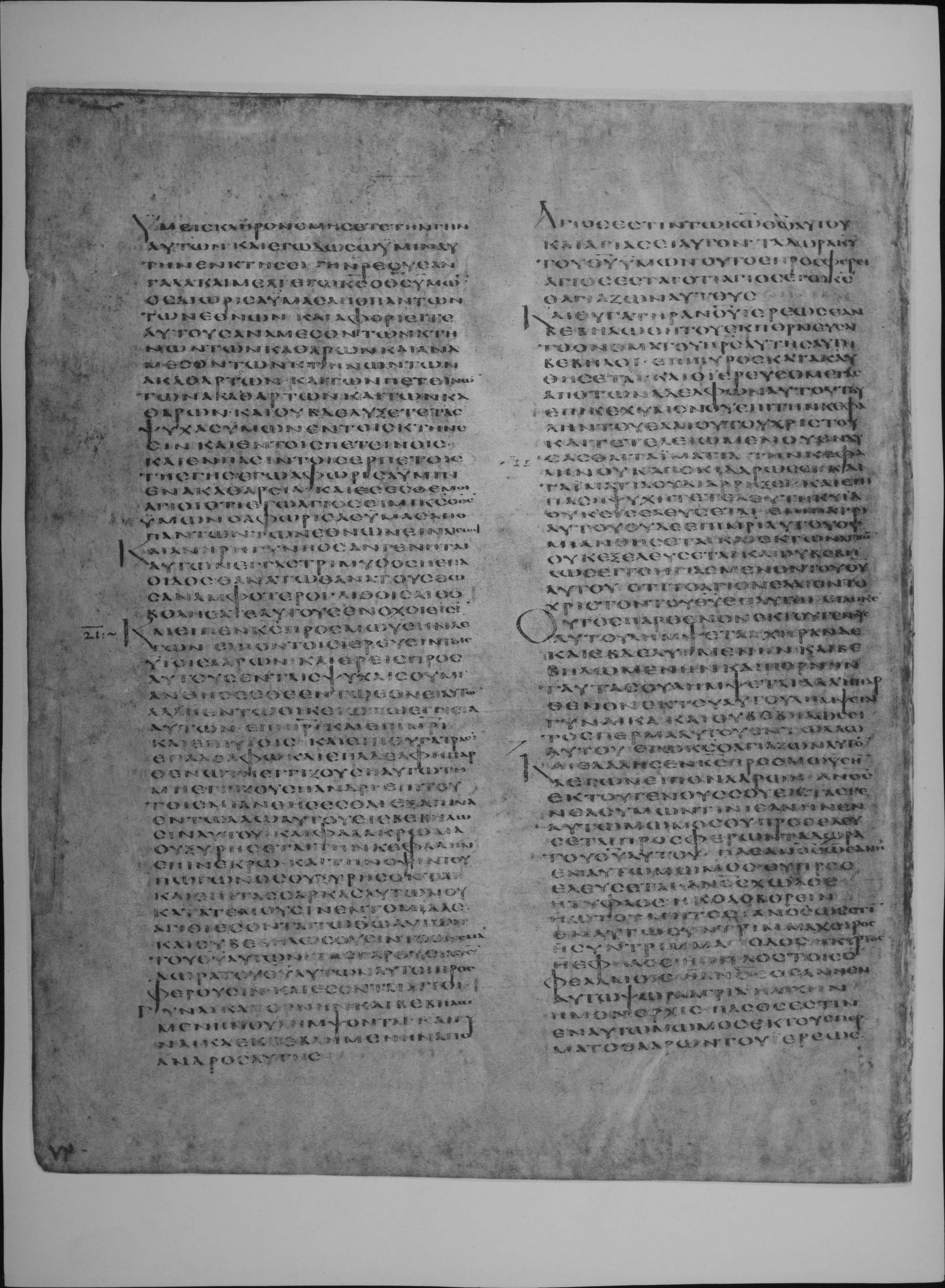
Leviticus 20:17-24 is on fol. 72r (full-size facsimile of 1879-83, Internet Archive codex-alexandrinus leaf 164). The 1915 reduced facsimile prints beneath this page: Levit. xx. 2-24. Checked on the plate: the page begins inside Leviticus 20:2 (first words read: ΤΟ ΕΘΝΟΣ ΤΟ ΕΠΙ ΤΗΣ ΓΗΣ ΛΙΘΟΒΟΛΗΣΟΥΣΙΝ ΑΥΤΟΝ ΕΝ ΛΙΘΟΙΣ ΚΑΙ ΕΓΩ ΕΠΙΣΤΗΣΩ ΤΟ ΠΡΟΣΩΠΟΝ ΜΟΥ). Leviticus 20:24 is on fol. 72v (full-size facsimile of 1879-83, Internet Archive codex-alexandrinus leaf 165). The 1915 reduced facsimile prints beneath this page: Levit. xx. 24-xxi. 21. Checked on the plate: the page begins inside Leviticus 20:24 (first words read: ΥΜΕΙΣ ΚΛΗΡΟΝΟΜΗΣΑΤΕ ΤΗΝ ΓΗΝ ΑΥΤΩΝ ΚΑΙ ΕΓΩ ΔΩΣΩ ΥΜΙΝ ΑΥΤΗΝ ΕΝ ΚΤΗΣΕΙ).
17ὃς ἐὰν λάβῃ τὴν ἀδελφὴν αὐτοῦ ἐκ πατρὸς αὐτοῦ ἢ ἐκ μητρὸς αὐτοῦ, καὶ ἴδῃ τὴν ἀσχημοσύνην αὐτῆς καὶ αὕτη ἴδῃ τὴν ἀσχημοσύνην αὐτοῦ, ὄνειδός ἐστιν, ἐξολεθρευθήσονται ἐνώπιον υἱῶν γένους αὐτῶν· ἀσχημοσύνην ἀδελφῆς αὐτοῦ ἀπεκάλυψεν, ἁμαρτίαν κομιοῦνται. 18καὶ ἀνὴρ ὃς ἂν κοιμηθῇ μετὰ γυναικὸς ἀποκαθημένης καὶ ἀποκαλύψῃ τὴν ἀσχημοσύνην αὐτῆς, τὴν πηγὴν αὐτῆς ἀπεκάλυψεν, καὶ αὕτη ἀπεκάλυψεν τὴν ῥύσιν τοῦ αἵματος αὐτῆς· ἐξολεθρευθήσονται ἀμφότεροι ἐκ τοῦ γένους αὐτῶν. 19καὶ ἀσχημοσύνην ἀδελφῆς πατρός σου καὶ ἀδελφῆς μητρός σου οὐκ ἀποκαλύψεις· τὴν γὰρ οἰκειότητα ἀπεκάλυψεν, ἁμαρτίαν ἀποίσονται. 20ὃς ἂν κοιμηθῇ μετὰ τῆς συγγενοῦς αὐτοῦ, ἀσχημοσύνην τῆς συγγενοῦς αὐτοῦ ἀπεκάλυψεν· ἄτεκνοι ἀποθανοῦνται. 21ὃς ἂν λάβῃ τὴν γυναῖκα τοῦ ἀδελφοῦ αὐτοῦ, ἀκαθαρσία αὐτοῦ ἐστίν· ἀσχημοσύνην ἀδελφοῦ αὐτοῦ ἀπεκάλυψεν, ἄτεκνοι ἀποθανοῦνται. 22Καὶ φυλάξασθε πάντα τὰ προστάγματά μου καὶ τὰ κρίματά μου, καὶ ποιήσετε αὐτά· καὶ οὐ μὴ προσοχθίσῃ ὑμῖν ἡ γῆ εἰς ἣν ἐγὼ εἰσάγω ὑμᾶς ἐκεῖ κατοικεῖν ἐπ᾽ αὐτῆς. 23καὶ οὐχὶ πορεύεσθε τοῖς νομίμοις τῶν ἐθνῶν, οὓς ἐξαποστέλλω ἀφ᾽ ὑμῶν· ὅτι ταῦτα πάντα ἐποίησαν, καὶ ἐβδελυξάμην αὐτούς. 24καὶ εἶπα ὑμῖν Ὑμεῖς κληρονομήσατε τὴν γῆν αὐτῶν, καὶ ἐγὼ δώσω ὑμῖν αὐτὴν ἐν κτήσει, γῆν ῥέουσαν γάλα καὶ μέλι· ἐγὼ Κύριος ὁ θεὸς ὑμῶν, ὃς διώρισα ὑμᾶς ἀπὸ πάντων τῶν ἐθνῶν.
17Whosoever shall take his sister by his father or by his mother, and shall see her nakedness, and she see his nakedness, it is a reproach: they shall be destroyed before the children of their family; he has uncovered his sister's nakedness, they shall bear their sin. 18And whatever man shall lie with a woman that is set apart for a flux, and shall uncover her nakedness, he has uncovered her fountain, and she has uncovered the flux of her blood: they shall both be destroyed from among their generation. 19And thou shalt not uncover the nakedness of thy father's sister, or of the sister of thy mother; for that man has uncovered the nakedness of one near akin: they shall bear their iniquity. 20Whosoever shall lie with his near kinswoman, has uncovered the nakedness of one near akin to him: they shall die childless. 21Whoever shall take his brother's wife, it is uncleanness; he has uncovered his brother's nakedness; they shall die childless. 22And keep ye all my ordinances, and my judgments; and ye shall do them, and the land shall not be aggrieved with you, into which I bring you to dwell upon it. 23And walk ye not in the customs of the nations which I drive out from before you; for they have done all these things, and I have abhorred them: 24and I said to you, Ye shall inherit their land, and I will give it to you for a possession, even a land flowing with milk and honey: I am the Lord your God, who have separated you from all people.
Where on the image
Leviticus 20:25-27 is on fol. 72v (full-size facsimile of 1879-83, Internet Archive codex-alexandrinus leaf 165). The 1915 reduced facsimile prints beneath this page: Levit. xx. 24-xxi. 21. Checked on the plate: the page begins inside Leviticus 20:24 (first words read: ΥΜΕΙΣ ΚΛΗΡΟΝΟΜΗΣΑΤΕ ΤΗΝ ΓΗΝ ΑΥΤΩΝ ΚΑΙ ΕΓΩ ΔΩΣΩ ΥΜΙΝ ΑΥΤΗΝ ΕΝ ΚΤΗΣΕΙ).
25καὶ ἀφοριεῖτε αὐτοὺς ἀνὰ μέσον τῶν κτηνῶν τῶν καθαρῶν καὶ ἀνὰ μέσον τῶν κτηνῶν τῶν ἀκαθάρτων, καὶ ἀνὰ μέσον τῶν πετεινῶν τῶν καθαρῶν καὶ τῶν ἀκαθάρτων· καὶ οὐ βδελύξετε τὰς ψυχὰς ὑμῶν ἐν τοῖς κτήνεσιν καὶ ἐν τοῖς πετεινοῖς καὶ ἐν πᾶσιν τοῖς ἑρπετοῖς τῆς γῆς, ἃ ἐγὼ ἀφώρισα ὑμῖν ἐν ἀκαθαρσίᾳ. 26καὶ ἔσεσθέ μοι ἅγιοι, ὅτι ἐγὼ ἅγιος, Κύριος ὁ θεὸς ὑμῶν, ὁ ἀφορίσας ὑμᾶς ἀπὸ πάντων τῶν ἐθνῶν εἶναι ἐμοί. 27Καὶ ἀνὴρ ἢ γυνὴ ὃς ἂν γένηται αὐτῶν ἐνγαστρίμυθος ἢ ἐπαοιδός, θανάτῳ θανατούσθωσαν ἀμφότεροι· λίθοις λιθοβολήσατε αὐτούς, ἔνοχοί εἰσιν.
25And ye shall make a distinction between the clean and the unclean cattle, and between clean and unclean birds; and ye shall not defile your souls with cattle, or with birds, or with any creeping things of the earth, which I have separated for you by reason of uncleanness. 26And ye shall be holy to me; because I the Lord your God am holy, who separated you from all nations, to be mine. 27And as for a man or woman whosoever of them shall have in them a divining spirit, or be an enchanter, let them both die the death: ye shall stone them with stones, they are guilty.
Cite
Sources
- Source: Codex Alexandrinus (British Library Royal MS 1 D. V) via the British Museum photographic facsimiles of 1879-83 and 1915 (Internet Archive) + Swete's Septuagint + Brenton's English (holding institution)
- Critical edition: H. B. Swete, The Old Testament in Greek according to the Septuagint (1909)
← previous · → next · v cycle view · l back to library