Leviticus, Chapter 21 (Codex Alexandrinus)
Introduction
Leviticus 21 in the Greek Old Testament (the Septuagint) as written in Codex Alexandrinus, a Greek Bible copied in the fifth century, probably in Egypt, and now in the British Library (Royal MS 1 D. V, the first of its four volumes). It is one of the three great early codices of the whole Greek Bible, with Codex Vaticanus and Codex Sinaiticus, and for Genesis 1:1-46:28, which Codex Vaticanus has lost, it is the oldest surviving complete Greek text (older papyri such as the Berlin Genesis papyrus and Chester Beatty 961 survive only in part).
This entry meets the strict three-criteria standard of the Theosis Library:
- Manuscript scan: the pages of Codex Alexandrinus carrying this chapter (fol. 72v, fol. 73r), from the full-size photographic (autotype) facsimile published by the British Museum in 1879-1883, as digitised on the Internet Archive. The verse range of every page comes from the reduced photographic facsimile of 1915, which prints it beneath each plate, and the opening words of every page were read on the plate to confirm the page and the verse it begins with. Each section links to the page or pages that hold its verses. Folio numbers are those written at the head of each leaf and visible on the plates.
- Original text: Swete's edition, which here prints the text of Codex Vaticanus (Vat. gr. 1209), the base of his edition, and gives the readings of Alexandrinus only in his apparatus. The Greek column is therefore Vaticanus' text; where Alexandrinus differs, the plate shows what Alexandrinus reads.
- English translation: Sir Lancelot C. L. Brenton, The Septuagint Version of the Old Testament (1844; 1851 edition), a translation of the Greek, public domain, from the eBible.org text.
How was this verified? (Provenance)
Where on the image
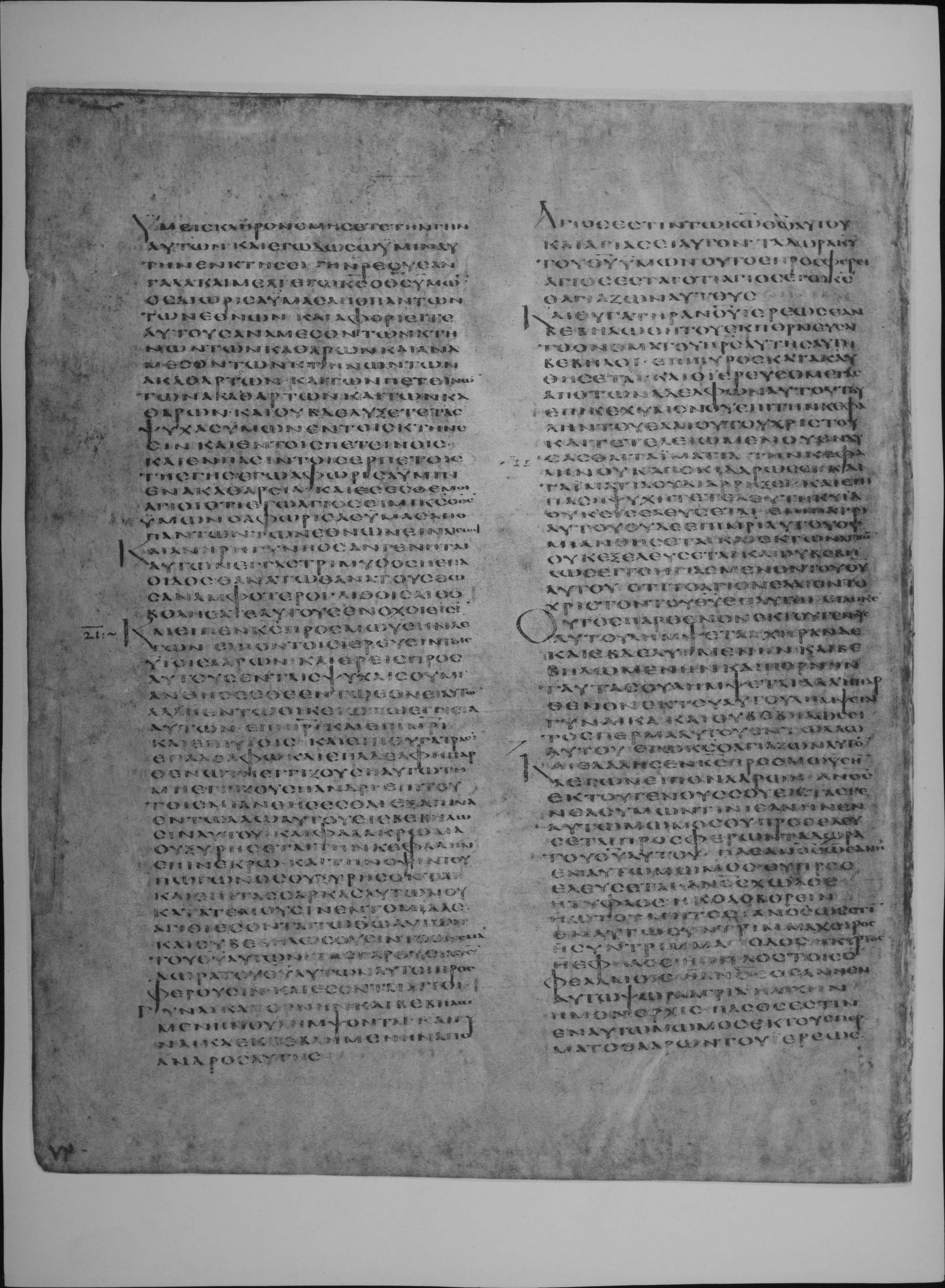
Leviticus 21:1-8 is on fol. 72v (full-size facsimile of 1879-83, Internet Archive codex-alexandrinus leaf 165). The 1915 reduced facsimile prints beneath this page: Levit. xx. 24-xxi. 21. Checked on the plate: the page begins inside Leviticus 20:24 (first words read: ΥΜΕΙΣ ΚΛΗΡΟΝΟΜΗΣΑΤΕ ΤΗΝ ΓΗΝ ΑΥΤΩΝ ΚΑΙ ΕΓΩ ΔΩΣΩ ΥΜΙΝ ΑΥΤΗΝ ΕΝ ΚΤΗΣΕΙ).
1Καὶ εἶπεν Κύριος πρὸς Μωυσῆν λέγων Εἰπὸν τοῖς ἱερεῦσιν τοῖς υἱοῖς Ἀαρὼν καὶ ἐρεῖς πρὸς αὐτούς Ἐν ταῖς ψυχαῖς οὐ μιανθήσονται ἐν τῷ ἔθνει αὐτῶν, 2ἀλλ᾽ ἢ ἐν τῷ οἰκείῳ τῷ ἔγγιστα αὐτῶν, ἐπὶ πατρὶ καὶ μητρί, καὶ υἱοῖς καὶ θυγατράσιν, ἐπ᾽ ἀδελφῷ 3καὶ ἀδελφῇ παρθένῳ τῇ ἐγγιζούσῃ αὐτῷ τῇ μὴ ἐκδεδομένῃ ἀνδρί, ἐπὶ τούτοις μιανθήσεται. 4οὐ μιανθήσεται ἐξάπινα ἐν τῷ λαῷ αὐτοῦ εἰς βεβήλωσιν αὐτοῦ. 5καὶ φαλάκρωμα οὐ ξυρηθήσεσθε τὴν κεφαλὴν ἐπὶ νεκρῷ, καὶ τὴν ὄψιν τοῦ πώγωνος οὐ ξυρήσονται, καὶ ἐπὶ τὰς σάρκας αὐτῶν οὐ κατατεμοῦσιν ἐντομίδας. 6ἅγιοι ἔσονται τῷ θεῷ αὐτῶν, καὶ οὐ βεβηλώσουσιν τὸ ὂνομα τοῦ θεοῦ αὐτῶν· τὰς γὰρ θυσίας Κυρίου δῶρα τοῦ θεοῦ αὐτῶν αὐτοὶ προσφέρουσιν, καὶ ἔσονται ἅγιοι. 7γυναῖκα πόρνην καὶ βεβηλωμένην οὐ λήμψονται, καὶ γυναῖκα ἐκβεβλημένην ἀπὸ ἀνδρὸς αὐτῆς. ἅγιός ἐστιν τῷ κυρίῳ θεῷ αὐτοῦ, 8καὶ ἁγιάσει αὐτόν· τὰ δῶρα Κυρίου θεοῦ ὑμῶν οὗτος προσφέρει· ἅγιος ἔσται, ὅτι ἅγιος ἐγὼ Κύριος ὁ ἁγιάζων αὐτούς.
1And the Lord spoke to Moses, saying, Speak to the priests the sons of Aaron, and thou shalt tell them that they shall not defile themselves in their nation for the dead, 2but they may mourn for a relative who is very near to them, for a father and mother, and sons and daughters, for a brother, 3and for a virgin sister that is near to one, that is not espoused to a man; for these one shall defile himself. 4He shall not defile himself suddenly among his people to profane himself. 5And ye shall not shave your head for the dead with a baldness on the top; and they shall not shave their beard, neither shall they make gashes on their flesh. 6They shall be holy to their God, and they shall not profane the name of their God; for they offer the sacrifices of the Lord as the gifts of their God, and they shall be holy. 7They shall not take a woman who is a harlot and profaned, or a woman put away from her husband; for he is holy to the Lord his God. 8And thou shalt hallow him; he offers the gifts of the Lord your God: he shall be holy, for I the Lord that sanctify them am holy.
Where on the image
Leviticus 21:9-16 is on fol. 72v (full-size facsimile of 1879-83, Internet Archive codex-alexandrinus leaf 165). The 1915 reduced facsimile prints beneath this page: Levit. xx. 24-xxi. 21. Checked on the plate: the page begins inside Leviticus 20:24 (first words read: ΥΜΕΙΣ ΚΛΗΡΟΝΟΜΗΣΑΤΕ ΤΗΝ ΓΗΝ ΑΥΤΩΝ ΚΑΙ ΕΓΩ ΔΩΣΩ ΥΜΙΝ ΑΥΤΗΝ ΕΝ ΚΤΗΣΕΙ).
9καὶ θυγάτηρ ἀνθρώπου ἱερέως ἐὰν βεβηλωθῇ τοῦ ἐκπορνεῦσαι, τὸ ὄνομα τοῦ πατρὸς αὐτῆς αὐτὴ βεβηλοῖ. ἐπὶ πυρὸς κατακαυθήσεται. 10Καὶ ὁ ἱερεὺς ὁ μέγας ἀπὸ τῶν ἀδελφῶν αὐτοῦ, τοῦ ἐπικεχυμένου ἐπὶ τὴν κεφαλὴν τοῦ ἐλαίου τοῦ χριστοῦ καὶ τετελειωμένου ἐνδύσασθαι τὰ ἱμάτια, τὴν κεφαλὴν οὐκ ἀποκιδαρώσει καὶ τὰ ἱμάτια οὐ διαρρήξει, 11καὶ ἐπὶ πάσῃ ψυχῇ τετελευτηκυίᾳ οὐκ εἰσελεύσεται, ἐπὶ πατρὶ αὐτοῦ οὐδὲ ἐπὶ μητρὶ αὐτοῦ οὐ μιανθήσεται, 12καὶ ἐκ τῶν ἁγίων οὐκ ἐξελεύσεται καὶ οὐ βεβηλώσει τὸ ἡγιασμένον τοῦ θεοῦ αὐτοῦ, ὃτι τὸ ἅγιον ἔλαιον τὸ χριστὸν τοῦ θεοῦ ἐπ᾽ αὐτῷ· ἐγὼ Κύριος. 13οὗτος παρθένον ἐκ τοῦ γένους αὐτοῦ λήμψεται· 14χήραν δὲ καὶ ἐκβεβλημένην καὶ βεβηλωμένην καὶ πόρνην, ταύτας οὐ λήμψεται, ἀλλ᾽ ἢ παρθένον ἐκ τοῦ λαοῦ αὐτοῦ λήμψεται γυναῖκα· 15καὶ οὐ βεβηλώσει τὸ σπέρμα αὐτοῦ ἐν τῷ λαῷ αὐτοῦ· ἐγὼ Κύριος ὁ ἁγιάζων αὐτόν. 16Καὶ ἐλάλησεν Κύριος πρὸς Μωυσῆν λέγων
9And if the daughter of a priest should be profaned to go a whoring, she profanes the name of her father: she shall be burnt with fire. 10And the priest that is chief among his brethren, the oil having been poured upon the head of the anointed one, and he having been consecrated to put on the garments, shall not take the mitre off his head, and shall not rend his garments: 11neither shall he go in to any dead body, neither shall he defile himself for his father or his mother. 12And he shall not go forth out of the sanctuary, and he shall not profane the sanctuary of his God, because the holy anointing oil of God is upon him: I am the Lord. 13He shall take for a wife a virgin of his own tribe. 14But a widow, or one that is put away, or profaned, or a harlot, these he shall not take; but he shall take for a wife a virgin of his own people. 15And he shall not profane his seed among his people: I am the Lord that sanctifies him. 16And the Lord spoke to Moses, saying,
Where on the image
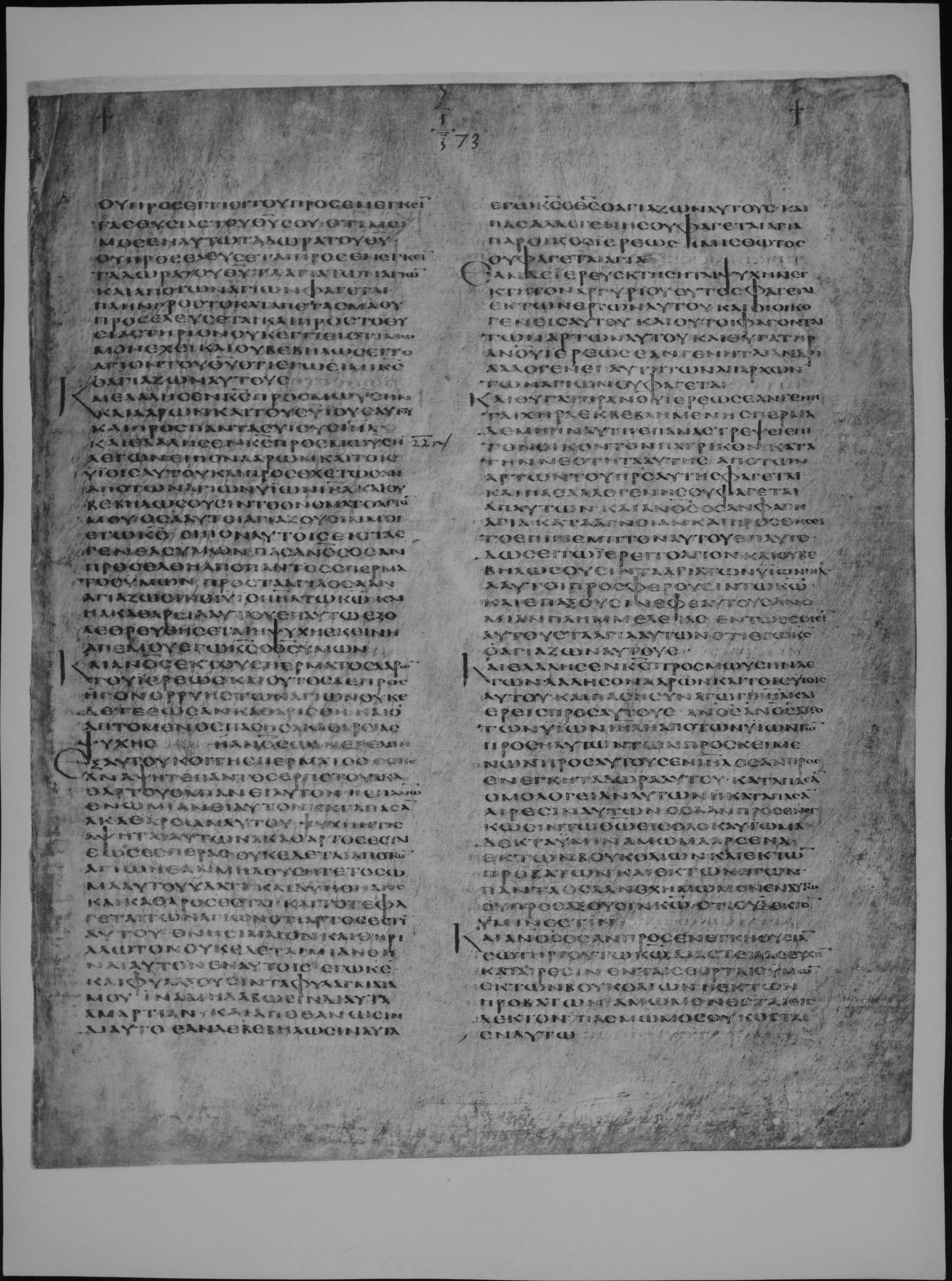
Leviticus 21:17-21 is on fol. 72v (full-size facsimile of 1879-83, Internet Archive codex-alexandrinus leaf 165). The 1915 reduced facsimile prints beneath this page: Levit. xx. 24-xxi. 21. Checked on the plate: the page begins inside Leviticus 20:24 (first words read: ΥΜΕΙΣ ΚΛΗΡΟΝΟΜΗΣΑΤΕ ΤΗΝ ΓΗΝ ΑΥΤΩΝ ΚΑΙ ΕΓΩ ΔΩΣΩ ΥΜΙΝ ΑΥΤΗΝ ΕΝ ΚΤΗΣΕΙ). Leviticus 21:21-24 is on fol. 73r (full-size facsimile of 1879-83, Internet Archive codex-alexandrinus leaf 166). The 1915 reduced facsimile prints beneath this page: Levit. xxi. 21-xxii. 21. Checked on the plate: the page begins inside Leviticus 21:21 (first words read: ΟΥ ΠΡΟΣΕΓΓΙΕΙ ΤΟΥ ΠΡΟΣΕΝΕΓΚΕΙΝ ΤΑΣ ΘΥΣΙΑΣ ΤΩ ΘΩ ΣΟΥ ΟΤΙ ΜΩΜΟΣ ΕΝ ΑΥΤΩ).
17Εἰπὸν Ἀαρών Ἄνθρωπος ἐκ τοῦ γένους σου εἰς τὰς γενεὰς ὑμῶν, τίνι ἐὰν ᾖ ἐν αὐτῷ μῶμος, οὐ προσελεύσεται προσφέρειν τὰ δῶρα τοῦ θεοῦ αὐτοῦ. 18πᾶς ἄνθρωπος ᾧ ἂν ᾖ ἐν αὐτῷ μῶμος οὐ προσελεύσεται· ἄνθρωπος χωλός ἢ τυφλὸς ἢ κολοβόριν ἢ ὠτότμητος, 19ἄνθρωπος ᾧ ἐστὶν ἐν αὐτῷ σύντριμμα χειρὸς ἢ σύντριμμα ποδός, 20ἢ κυρτὸς ἢ ἔφηλος ἢ πτίλος τοὺς ὀφθαλμούς, ἢ ἄνθρωπος ᾧ ἂν ᾖ ἐν αὐτῷ ψώρα ἀγρία ἢ λιχὴν ἢ μόνορχις, 21πᾶς ᾧ ἐστὶν ἐν αὐτῷ μῶμος ἐκ τοῦ σπέρματος Ἀαρὼν τοῦ ἱερέως οὐ προσεγγιεῖ τοῦ προσενεγκεῖν τὰς θυσίας τῷ θεῷ σου· ὅτι μῶμος ἐν αὐτῷ, τὰ δῶρα τοῦ θεοῦ οὐ προσελεύσεται προσενεγκεῖν. 22τὰ δῶρα τοῦ θεοῦ τὰ ἅγια τῶν ἁγίων καὶ ἀπὸ τῶν ἁγίων φάγεται· 23πλὴν πρὸς τὸ καταπέτασμα οὐ προσελεύσεται, καὶ πρὸς τὸ θυσιαστήριον οὐκ ἐγγιεῖ, ὅτι μῶμον ἔχει· καὶ οὐ βεβηλώσει τὸ ἅγιον τοῦ θεοῦ αὐτοῦ, ὅτι ἐγώ εἰμι Κύριος ὁ ἁγιάζων αὐτούς. 24καὶ ἐλάλησεν Μωυσῆς πρὸς Ἀαρὼν καὶ τοὺς υἱοὺς αὐτοῦ καὶ πρὸς πάντας υἱοὺς Ἰσραήλ.
17Say to Aaron, A man of thy tribe throughout your generations, who shall have a blemish on him, shall not draw nigh to offer the gifts of his God. 18No man who has a blemish on him shall draw nigh; a man lame, blind, with his nose disfigured, or his ears cut, 19a man who has a broken hand or a broken foot, 20or hump-backed, or blear-eyed, or that has lost his eye-lashes, or a man who has a malignant ulcer, or tetter, or one that has lost a testicle. 21Whoever of the seed of Aaron the priest has a blemish on him, shall not draw nigh to offer sacrifices to thy God, because he has a blemish on him; he shall not draw nigh to offer the gifts of God. 22The gifts of God are most holy, and he shall eat of the holy things. 23Only he shall not approach the veil, and he shall not draw nigh to the altar, because he has a blemish; and he shall not profane the sanctuary of his God, for I am the Lord that sanctifies them. 24And Moses spoke to Aaron and his sons, and to all the children of Israel.
Cite
Sources
- Source: Codex Alexandrinus (British Library Royal MS 1 D. V) via the British Museum photographic facsimiles of 1879-83 and 1915 (Internet Archive) + Swete's Septuagint + Brenton's English (holding institution)
- Critical edition: H. B. Swete, The Old Testament in Greek according to the Septuagint (1909)
← previous · → next · v cycle view · l back to library