Leviticus, Chapter 22 (Codex Alexandrinus)
Introduction
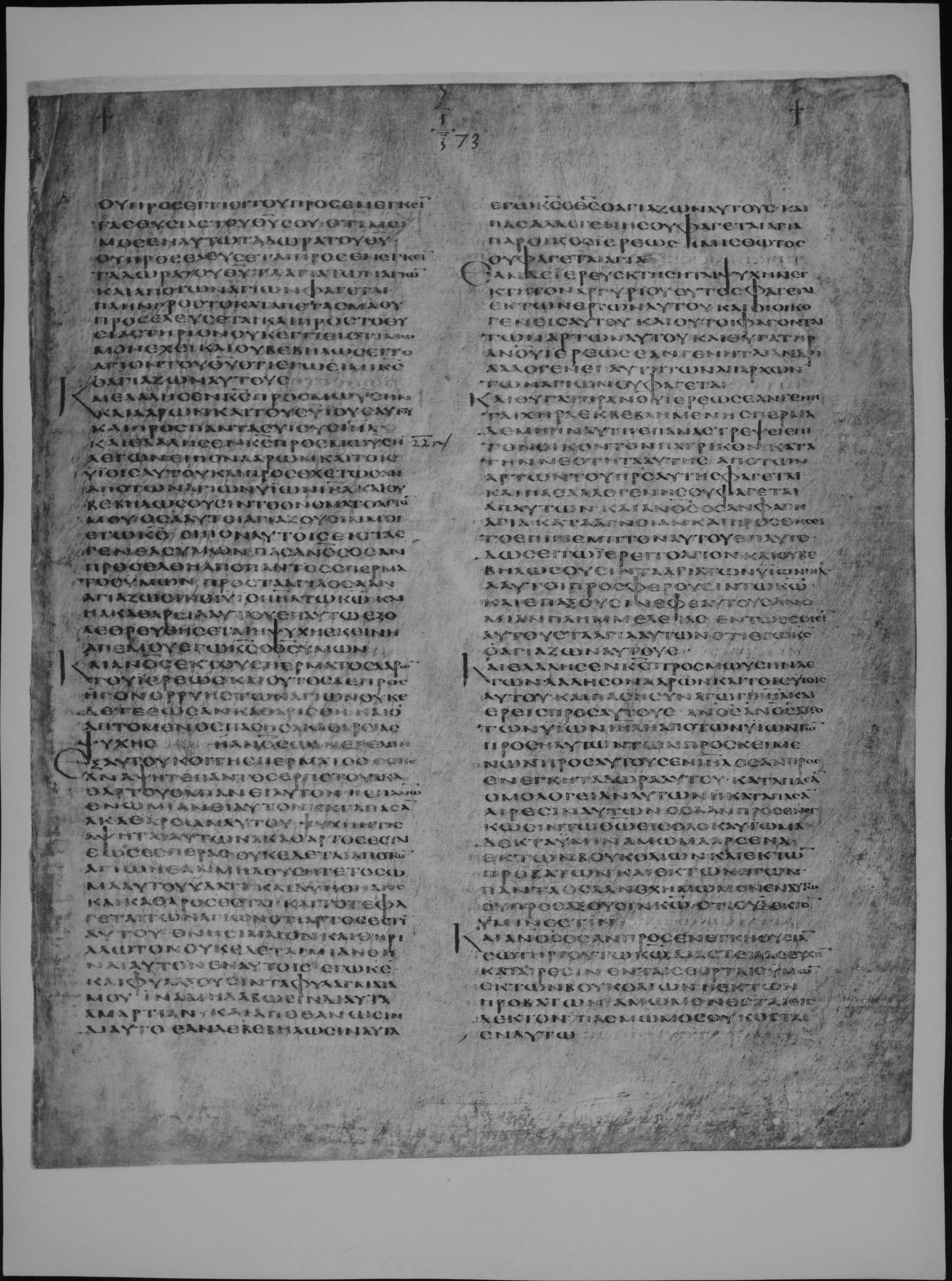
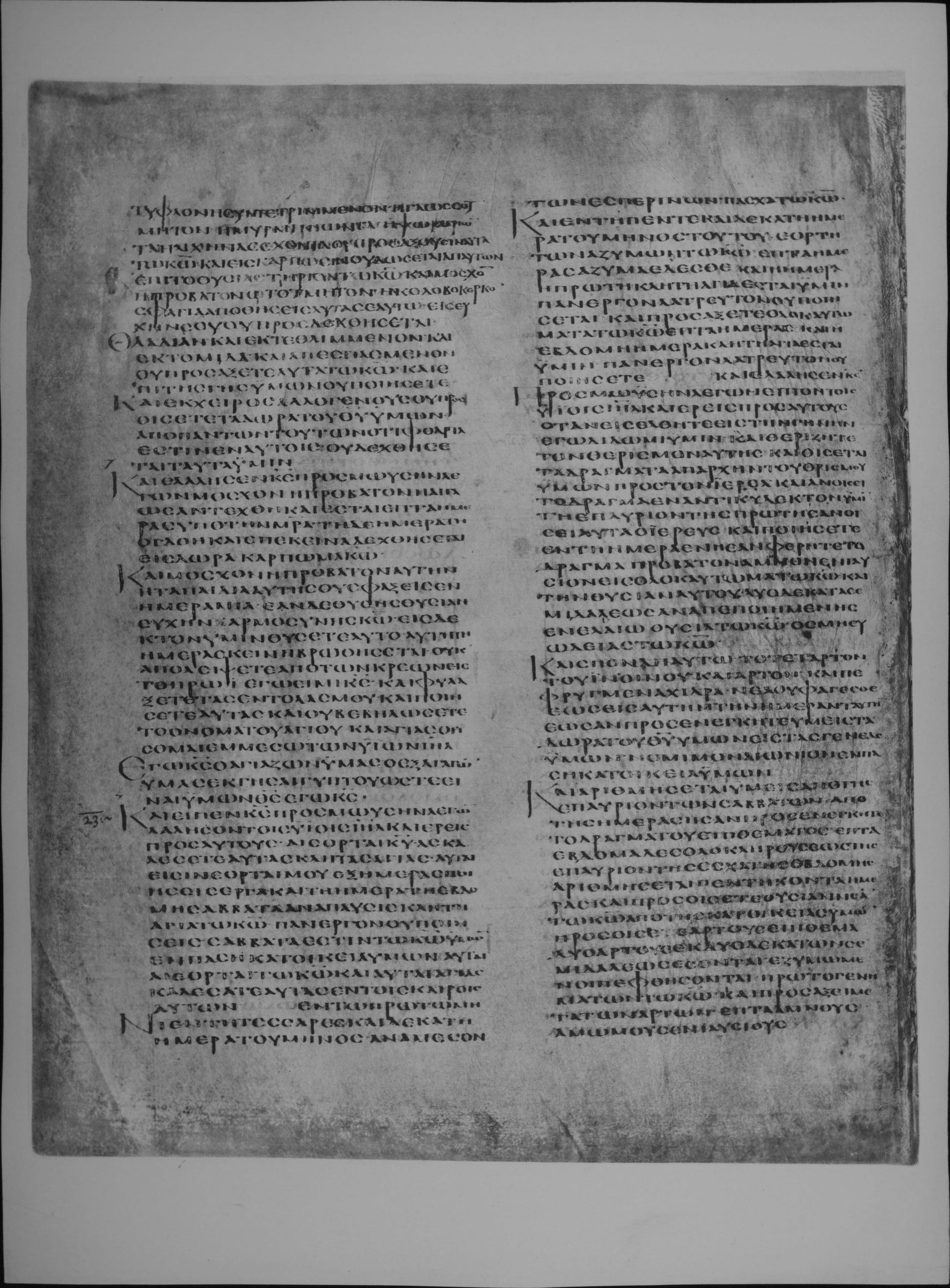
Leviticus 22 in the Greek Old Testament (the Septuagint) as written in Codex Alexandrinus, a Greek Bible copied in the fifth century, probably in Egypt, and now in the British Library (Royal MS 1 D. V, the first of its four volumes). It is one of the three great early codices of the whole Greek Bible, with Codex Vaticanus and Codex Sinaiticus, and for Genesis 1:1-46:28, which Codex Vaticanus has lost, it is the oldest surviving complete Greek text (older papyri such as the Berlin Genesis papyrus and Chester Beatty 961 survive only in part).
This entry meets the strict three-criteria standard of the Theosis Library:
- Manuscript scan: the pages of Codex Alexandrinus carrying this chapter (fol. 73r, fol. 73v), from the full-size photographic (autotype) facsimile published by the British Museum in 1879-1883, as digitised on the Internet Archive. The verse range of every page comes from the reduced photographic facsimile of 1915, which prints it beneath each plate, and the opening words of every page were read on the plate to confirm the page and the verse it begins with. Each section links to the page or pages that hold its verses. Folio numbers are those written at the head of each leaf and visible on the plates.
- Original text: Swete's edition, which here prints the text of Codex Vaticanus (Vat. gr. 1209), the base of his edition, and gives the readings of Alexandrinus only in his apparatus. The Greek column is therefore Vaticanus' text; where Alexandrinus differs, the plate shows what Alexandrinus reads.
- English translation: Sir Lancelot C. L. Brenton, The Septuagint Version of the Old Testament (1844; 1851 edition), a translation of the Greek, public domain, from the eBible.org text.
How was this verified? (Provenance)
Where on the image
Leviticus 22:1-8 is on fol. 73r (full-size facsimile of 1879-83, Internet Archive codex-alexandrinus leaf 166). The 1915 reduced facsimile prints beneath this page: Levit. xxi. 21-xxii. 21. Checked on the plate: the page begins inside Leviticus 21:21 (first words read: ΟΥ ΠΡΟΣΕΓΓΙΕΙ ΤΟΥ ΠΡΟΣΕΝΕΓΚΕΙΝ ΤΑΣ ΘΥΣΙΑΣ ΤΩ ΘΩ ΣΟΥ ΟΤΙ ΜΩΜΟΣ ΕΝ ΑΥΤΩ).
1Καὶ ἐλάλησεν Κύριος πρὸς Μωυσῆν λέγων 2Εἰπὸν Ἀαρὼν καὶ τοῖς υἱοῖς αὐτοῦ, καὶ προσεχέτωσαν ἀπὸ τῶν ἁγίων τῶν υἱῶν Ἰσραήλ, καὶ οὐ βεβηλώσουσιν τὸ ὄνομα τὸ ἅγιόν μου, ὅσα αὐτοὶ ἁγιάζουσίν μοι· ἐγὼ Κύριος. 3εἰπὸν αὐτοῖς Εἰς τὰς γενεὰς ὑμῶν πᾶς ἄνθρωπος ὃς ἂν προσέλθῃ ἀπὸ τοῦ σπέρματος ὑμῶν πρὸς τὰ ἅγια ὅσα ἂν ἁγιάζωσιν οἱ υἱοὶ Ἰσραὴλ τῷ κυρίῳ, καὶ ἡ ἀκαθαρσία αὐτοῦ ἐπ᾽ αὐτῷ ᾖ, ἐξολεθρευθήσεται ἡ ψυχὴ ἐκείνη ἀπ᾽ ἐμοῦ· ἐγὼ Κύριος ὁ θεὸς ὑμῶν. 4καὶ ἄνθρωπος ἐκ τοῦ σπέρματος Ἀαρὼν τοῦ ἱερέως, καὶ οὗτος λεπρᾷ ἢ γονορρυής, τῶν ἁγίων οὐκ ἔδεται ἕως ἂν καθαρισθῇ· καὶ ὁ ἁπτόμενος πάσης ἀκαθαρσίας ψυχῆς, ἢ ἄνθρωπος ᾧ ἂν ἐξέλθῃ ἐξ αὐτοῦ κοίτη σπέρματος, 5ὅστις ἂν ἅψηται παντὸς ἑρπετοῦ ἀκαθάρτου ὃ μιανεῖ αὐτόν, ἢ ἐπ᾽ ἀνθρώπῳ ἐν ᾧ μιανεῖ αὐτὸν κατὰ πᾶσαν ἀκαθαρσίαν αὐτοῦ, 6ψυχὴ ἥτις ἂν ἅψηται αὐτῶν ἀκάθαρτος ἔσται ἕως ἑσπέρας· οὐκ ἔδεται ἀπὸ τῶν ἁγίων, ἐὰν μὴ λούσηται τὸ σῶμα αὐτοῦ ὕδατι 7καὶ δύῃ ὁ ἥλιος, καὶ καθαρὸς ἔσται· καὶ τότε φάγεται τῶν ἁγίων, ὅτι ἄρτος ἐστὶν αὐτοῦ. 8θνησιμαῖον καὶ θηριάλωτον οὐ φάγεται, μιανθῆναι αὐτὸν ἐν αὐτοῖς· ἐγὼ Κύριος.
1And the Lord spoke to Moses, saying, 2Speak to Aaron and to his sons, and let them take heed concerning the holy things of the children of Israel, so they shall not profane my holy name in any of the things which they consecrate to me: I am the Lord. 3Say to them, Every man throughout your generations, whoever of all your seed shall approach to the holy things, whatsoever the children of Israel shall consecrate to the Lord, while his uncleanness is upon him, that soul shall be cut off from me: I am the Lord your God. 4And the man of the seed of Aaron the priest, if he should have leprosy or issue of the reins, shall not eat of the holy things, until he be cleansed; and he that touches any uncleanness of a dead body, or the man whose seed of copulation shall have gone out from him, 5or whosoever shall touch any unclean reptile, which will defile him, or who shall touch a man, whereby he shall defile him according to all his uncleanness: 6whatsoever soul shall touch them shall be unclean until evening; he shall not eat of the holy things, unless he bathe his body in water, 7and the sun go down, and then he shall be clean; and then shall he eat of all the holy things, for they are his bread. 8He shall not eat that which dies of itself, or is taken of beasts, so that he should be polluted by them: I am the Lord.
Where on the image
Leviticus 22:9-16 is on fol. 73r (full-size facsimile of 1879-83, Internet Archive codex-alexandrinus leaf 166). The 1915 reduced facsimile prints beneath this page: Levit. xxi. 21-xxii. 21. Checked on the plate: the page begins inside Leviticus 21:21 (first words read: ΟΥ ΠΡΟΣΕΓΓΙΕΙ ΤΟΥ ΠΡΟΣΕΝΕΓΚΕΙΝ ΤΑΣ ΘΥΣΙΑΣ ΤΩ ΘΩ ΣΟΥ ΟΤΙ ΜΩΜΟΣ ΕΝ ΑΥΤΩ).
9καὶ φυλάξονται τὰ φυλάγματά μου, ἵνα μὴ λάβωσιν δι᾽ αὐτὰ ἁμαρτίαν, καὶ ἀποθάνωσιν δι᾽ αὐτό· ἐὰν δὲ βεβηλώσουσιν αὐτά, ἐγὼ Κύριος ὁ θεὸς ὁ ἁγιάζων αὐτούς. 10Καὶ πᾶς ἀλλογενὴς οὐ φάγεται ἅγια· πάροικος ἱερέως ἢ μισθωτὸς οὐ φάγεται ἅγια. 11ἐὰν δὲ ἱερεὺς κτήσηται ψυχὴν ἔνκτητον ἀργυρίου, οὗτος φάγεται ἐκ τῶν ἄρτων αὐτοῦ· καὶ οἰκογενεῖς αὐτοῦ, καὶ οὗτοι φάγονται τῶν ἄρτων αὐτοῦ. 12καὶ θυγάτηρ ἀνθρώπου ἱερέως ἐὰν γένηται ἀνδρὶ ἀλλογενεῖ, αὐτὴ τῶν ἀπαρχῶν τοῦ ἁγίου οὐ φάγεται. 13καὶ θυγάτηρ ἱερέως ἐὰν γένηται χήρα ἐκβεβλημένη, σπέρμα δὲ μὴ ἦν αὐτῇ, ἐπαναστρέψει ἐπὶ τὸν οἶκον τὸν πατρικὸν κατὰ τὴν νεότητα αὐτῆς, ἀπὸ τῶν ἄρτων τοῦ πατρὸς αὐτῆς φάγεται. καὶ πᾶς ἀλλογενὴς οὐ φάγεται ἀπ᾽ αὐτῶν. 14καὶ ἄνθρωπος ὃς ἂν φάγῃ ἅγια κατὰ ἄγνοιαν, καὶ προσθήσει τὸ ἐπίπεμπτον αὐτοῦ ἐπ᾽ αὐτὸ καὶ δώσει τῷ ἱερεῖ τὸ ἅγιον. 15καὶ οὐ βεβηλώσουσιν τὰ ἅγια τῶν υἱῶν Ἰσραὴλ ἃ αὐτοὶ ἀφαιροῦσιν τῷ κυρίῳ, 16καὶ ἐπάξουσιν ἐφ᾽ ἑαυτοὺς ἀνομίαν πλημμελίας ἐν τῷ ἐσθίειν αὐτοὺς τὰ ἃγια αὐτῶν· ὅτι ἐγὼ Κύριος ὁ ἁγιάζων αὐτούς.
9And they shall keep my ordinances, that they do not bear iniquity because of them, and die because of them, if they shall profane them: I am the Lord God that sanctifies them. 10And no stranger shall eat the holy things: one that sojourns with a priest, or a hireling, shall not eat the holy things. 11But if a priest should have a soul purchased for money, he shall eat of his bread; and they that are born in his house, they also shall eat of his bread. 12And if the daughter of a priest should marry a stranger, she shall not eat of the offerings of the sanctuary. 13And if the daughter of a priest should be a widow, or put away, and have no seed, she shall return to her father's house, as in her youth: she shall eat of her father's bread, but no stranger shall eat of it. 14And the man who shall ignorantly eat holy things, shall add the fifth part to it, and give the holy thing to the priest. 15And they shall not profane the holy things of the children of Israel, which they offer to the Lord. 16So should they bring upon themselves the iniquity of trespass in their eating their holy things: for I am the Lord that sanctifies them.
Where on the image
Leviticus 22:17-21 is on fol. 73r (full-size facsimile of 1879-83, Internet Archive codex-alexandrinus leaf 166). The 1915 reduced facsimile prints beneath this page: Levit. xxi. 21-xxii. 21. Checked on the plate: the page begins inside Leviticus 21:21 (first words read: ΟΥ ΠΡΟΣΕΓΓΙΕΙ ΤΟΥ ΠΡΟΣΕΝΕΓΚΕΙΝ ΤΑΣ ΘΥΣΙΑΣ ΤΩ ΘΩ ΣΟΥ ΟΤΙ ΜΩΜΟΣ ΕΝ ΑΥΤΩ). Leviticus 22:22-24 is on fol. 73v (full-size facsimile of 1879-83, Internet Archive codex-alexandrinus leaf 167). The 1915 reduced facsimile prints beneath this page: Levit. xxii. 22-xxiii. 18. Checked on the plate: the page begins at the start of Leviticus 22:22 (first words read: ΤΥΦΛΟΝ Η ΣΥΝΤΕΤΡΙΜΜΕΝΟΝ Η ΓΛΩΣΣΟΤΜΗΤΟΝ Η ΜΥΡΜΗΚΙΩΝΤΑ).
17Καὶ ἐλάλησεν Κύριος πρὸς Μωυσῆν λέγων 18Λάλησον Ἀαρὼν καὶ τοῖς υἱοῖς αὐτοῦ καὶ πάσῃ συναγωγῇ Ἰσραὴλ καὶ ἐρεῖς πρὸς αὐτούς Ἄνθρωπος ἂνθρωπος ἀπὸ τῶν υἱῶν Ἰσραὴλ ἢ τῶν υἱῶν τῶν προσηλύτων τῶν προσκειμένων πρὸς αὐτοὺς ἐν Ἰσραὴλ ὃς ἂν προσενέγκῃ τὰ δῶρα αὐτοῦ κατὰ πᾶσαν ὁμολογίαν αὐτῶν ἢ κατὰ πᾶσαν αἵρέσιν αὐτῶν, ὅσα ἂν προσενέγκωσιν τῷ θεῷ εἰς ὁλοκαύτωμα, 19δεκτὰ ὑμῖν ἄμωμα ἄρσενα ἐκ τῶν βουκολίων καὶ ἐκ τῶν προβάτων καὶ ἐκ τῶν αἰγῶν. 20πάντα ὅσα ἂν ἔχῃ μῶμον ἐν αὐτῷ οὐ προσάξουσιν Κυρίῳ, διότι οὐ δεκτὸν ἔσται ὑμῖν. 21καὶ ἄνθρωπος ὃς ἂν προσενέγκῃ θυσίαν σωτηρίου τῷ κυρίῳ, διαστείλας εὐχὴν κατὰ αἵρεσιν ἢ ἐν ταῖς ἑορταῖς ὑμῶν, ἐκ τῶν βουκολίων ἢ ἐκ τῶν προβάτων, ἄμωμον ἔσται εἰσδεκτόν, πᾶς μῶμος οὐκ ἔσται ἐν αὐτῷ. 22τυφλὸν ἢ συντετριμμένον ἢ γλωσσότμητον ἢ μυρμηκιῶντα ἢ ψωραγριῶντα ἢ λιχῆνας ἔχοντα, οὐ προσάξουσιν ταῦτα τῷ κυρίῳ, καὶ εἰς κάρπωσιν οὐ δώσετε ἀπ᾽ αὐτῶν ἐπὶ τὸ θυσιαστήριον τῷ κυρίῳ. 23καὶ μόσχον ἢ πρόβατον ὠτότμητον ἢ κολοβόκερκον σφάγια ποιήσεις αὐτὰ σεαυτῷ, εἰς δὲ εὐχήν σου οὐ προσδεχθήσεται. 24θλαδίαν καὶ ἐκτεθλιμμένον καὶ ἐκτομίαν καὶ ἀπεσπασμένον, οὐ προσάξεις αὐτὰ τῷ κυρίῳ, καὶ ἐπὶ τῆς γῆς ὑμῶν οὐ ποιήσετε.
17And the Lord spoke to Moses, saying, 18Speak to Aaron and his sons, and to all the congregation of Israel, and thou shalt say to them, Any man of the children of Israel, or of the strangers that abide among them in Israel, who shall offer his gifts according to all their confession and according to all their choice, whatsoever they may bring to the Lord for whole-burnt-offerings— 19your free-will-offerings shall be males without blemish of the herds, or of the sheep, or of the goats. 20They shall not bring to the Lord anything that has a blemish in it, for it shall not be acceptable for you. 21And whatsoever man shall offer a peace-offering to the Lord, discharging a vow, or in the way of free-will-offering, or an offering in your feasts, of the herds or of the sheep, it shall be without blemish for acceptance: there shall be no blemish in it. 22One that is blind, or broken, or has its tongue cut out, or is troubled with warts, or has a malignant ulcer, or tetters, they shall not offer these to the Lord; neither shall ye offer any of them for a burnt-offering on the altar of the Lord. 23And a calf or a sheep with the ears cut off, or that has lost its tail, thou shalt slay them for thyself; but they shall not be accepted for thy vow. 24That which has broken testicles, or is crushed or gelt or mutilated,—thou shalt not offer them to the Lord, neither shall ye sacrifice them upon your land.
Where on the image
Leviticus 22:25-33 is on fol. 73v (full-size facsimile of 1879-83, Internet Archive codex-alexandrinus leaf 167). The 1915 reduced facsimile prints beneath this page: Levit. xxii. 22-xxiii. 18. Checked on the plate: the page begins at the start of Leviticus 22:22 (first words read: ΤΥΦΛΟΝ Η ΣΥΝΤΕΤΡΙΜΜΕΝΟΝ Η ΓΛΩΣΣΟΤΜΗΤΟΝ Η ΜΥΡΜΗΚΙΩΝΤΑ).
25καὶ ἐκ χειρὸς ἀλλογενοῦς οὐ προσοίσετε τὰ δῶρα τοῦ θεοῦ ὑμῶν ἀπὸ πάντων τούτων, ὅτι φθαρτά ἐστιν ἐν αὐτοῖς, μῶμος ἐν αὐτοῖς· οὐ δεχθήσεται ὑμῖν. 26Καὶ ἐλάλησεν Κύριος πρὸς Μωυσῆν λέγων 27Μόσχον ἢ πρόβατον ἢ αἶγα, ὡς ἂν τεχθῇ, καὶ ἔσται ἑπτὰ ἡμέρας ὑπὸ τὴν μητέρα· τῇ δὲ ἡμέρᾳ τῇ ὀγδόῃ καὶ ἐπέκεινα δεχθήσεται εἰς δῶρα, κάρπωμα Κυρίῳ. 28καὶ μόσχον ἢ πρόβατον, αὐτὴν καὶ τὰ παιδία αὐτῆς, οὐ σφάξεις ἐν ἡμέρᾳ μιᾷ. 29ἐὰν δὲ θύσῃς θυσίαν εὐχὴν χαρμοσύνης Κυρίῳ, εἰσδεκτὸν ὑμῖν θύσετε αὐτό· 30αὐτῇ τῇ ἡμέρᾳ ἐκείνῃ βρωθήσεται, οὐκ ἀπολείψετε ἀπὸ τῶν κρεῶν εἰς τὸ πρωί· ἐγώ εἰμι Κύριος. 31Καὶ φυλάξετε τὰς ἐντολάς μου καὶ ποιήσετε αὐτάς. 32καὶ οὐ βεβηλώσετε τὸ ὄνομα τοῦ ἁγίου, καὶ ἁγιασθήσομαι ἐν μέσῳ τῶν υἱῶν Ἰσραήλ· ἐγὼ Κύριος ὁ ἁγιάζων ὑμᾶς, 33ὁ ἐξαγαγὼν ὑμᾶς ἐκ γῆς Αἰγύπτου ὥστε εἶναι ὑμῶν θεός· ἐγὼ Κύριος.
25Neither shall ye offer the gifts of your God of all these things by the hand of a stranger, because there is corruption in them, a blemish in them: these shall not be accepted for you. 26And the Lord spoke to Moses, saying, 27As for a calf, or a sheep, or a goat, whenever it is born, then shall it be seven days under its mother; and on the eighth day and after they shall be accepted for sacrifices, a burnt-offering to the Lord. 28And a bullock and a ewe, it and its young, thou shalt not kill in one day. 29And if thou shouldest offer a sacrifice, a vow of rejoicing to the Lord, ye shall offer it so as to be accepted for you. 30In that same day it shall be eaten; ye shall not leave of the flesh till the morrow: I am the Lord. 31And ye shall keep my commandments and do them. 32And ye shall not profane the name of the Holy One, and I will be sanctified in the midst of the children of Israel. I am the Lord that sanctifies you, 33who brought you out of the land of Egypt, to be your God: I am the Lord.
Cite
Sources
- Source: Codex Alexandrinus (British Library Royal MS 1 D. V) via the British Museum photographic facsimiles of 1879-83 and 1915 (Internet Archive) + Swete's Septuagint + Brenton's English (holding institution)
- Critical edition: H. B. Swete, The Old Testament in Greek according to the Septuagint (1909)
← previous · → next · v cycle view · l back to library