Leviticus, Chapter 7 (Codex Alexandrinus)
Introduction
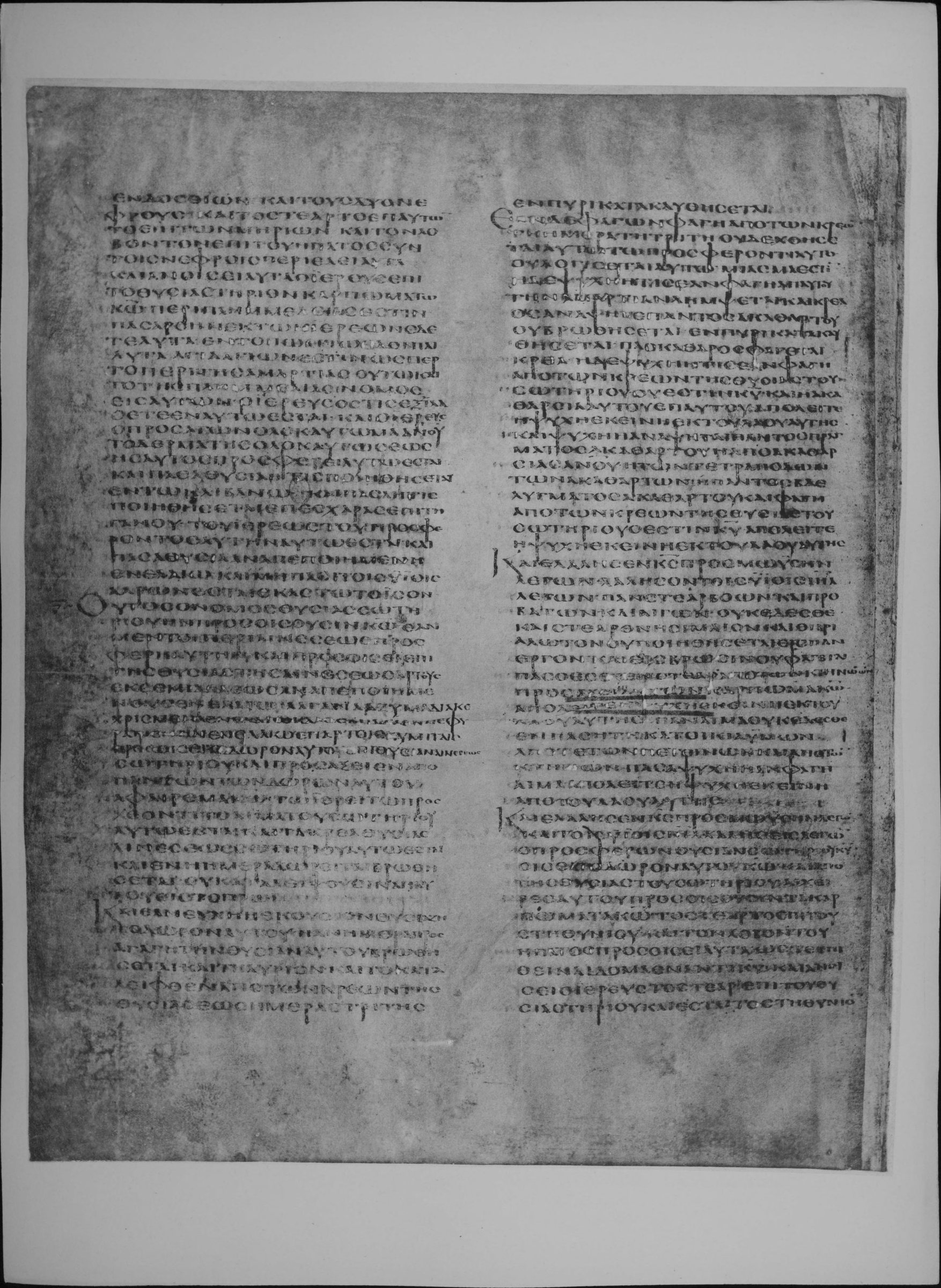
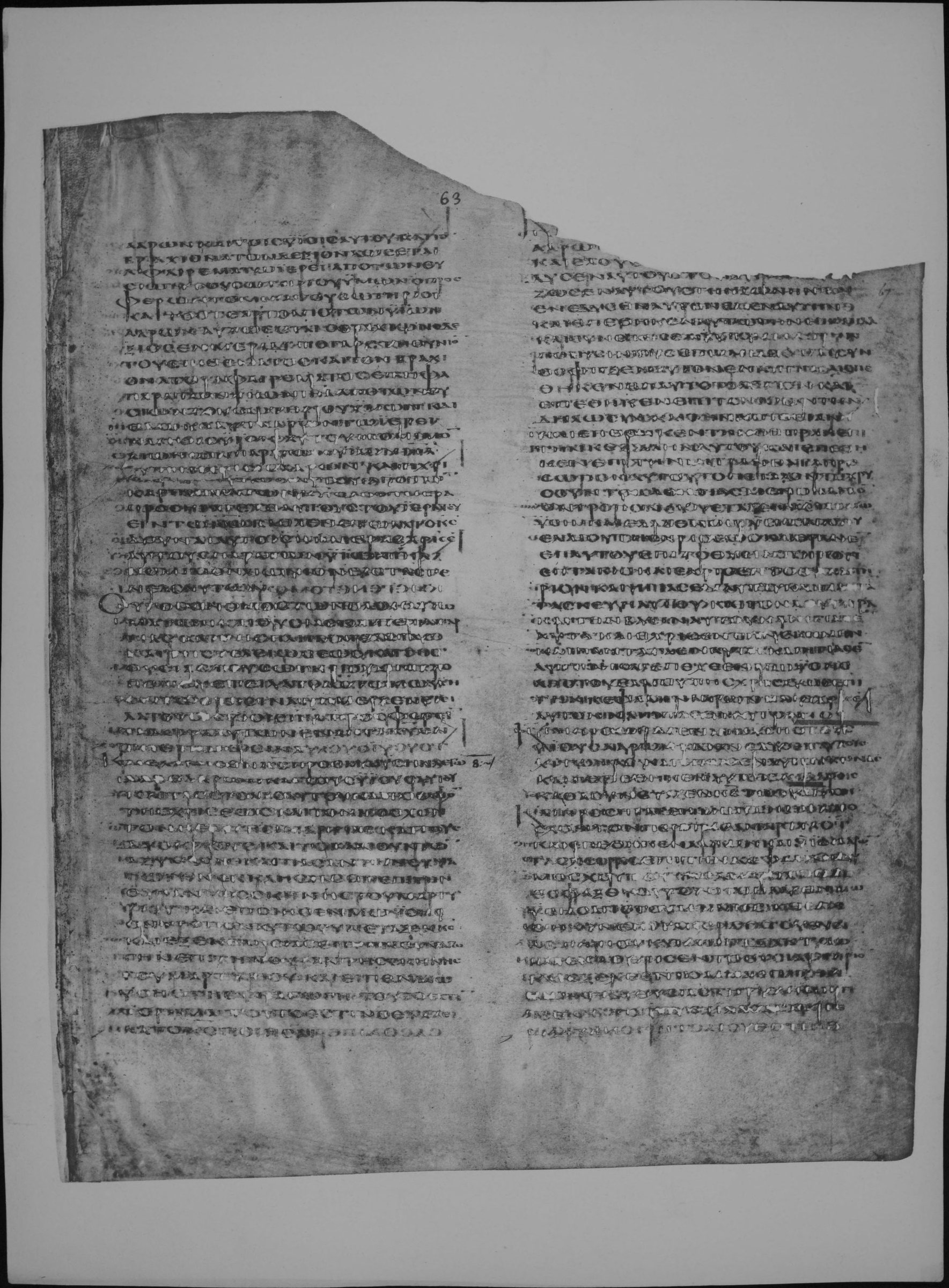
Leviticus 7 in the Greek Old Testament (the Septuagint) as written in Codex Alexandrinus, a Greek Bible copied in the fifth century, probably in Egypt, and now in the British Library (Royal MS 1 D. V, the first of its four volumes). It is one of the three great early codices of the whole Greek Bible, with Codex Vaticanus and Codex Sinaiticus, and for Genesis 1:1-46:28, which Codex Vaticanus has lost, it is the oldest surviving complete Greek text (older papyri such as the Berlin Genesis papyrus and Chester Beatty 961 survive only in part).
Numbering: Swete's Greek and Brenton's English number or divide some verses of this chapter differently (Swete 7:1-28 = Brenton 7:11-38). Each column keeps its own verse numbers, and sections are cut only where the two texts agree, so each section holds the same passage in both languages.
This entry meets the strict three-criteria standard of the Theosis Library:
- Manuscript scan: the pages of Codex Alexandrinus carrying this chapter (fol. 62v, fol. 63r), from the full-size photographic (autotype) facsimile published by the British Museum in 1879-1883, as digitised on the Internet Archive. The verse range of every page comes from the reduced photographic facsimile of 1915, which prints it beneath each plate, and the opening words of every page were read on the plate to confirm the page and the verse it begins with. Each section links to the page or pages that hold its verses. Folio numbers are those written at the head of each leaf and visible on the plates.
- Original text: Swete's edition, which here prints the text of Codex Vaticanus (Vat. gr. 1209), the base of his edition, and gives the readings of Alexandrinus only in his apparatus. The Greek column is therefore Vaticanus' text; where Alexandrinus differs, the plate shows what Alexandrinus reads.
- English translation: Sir Lancelot C. L. Brenton, The Septuagint Version of the Old Testament (1844; 1851 edition), a translation of the Greek, public domain, from the eBible.org text.
How was this verified? (Provenance)
Where on the image
Leviticus 7:1-8 is on fol. 62v (full-size facsimile of 1879-83, Internet Archive codex-alexandrinus leaf 145). The 1915 reduced facsimile prints beneath this page: Levit. vi. 33-vii. 21. Checked on the plate: the page begins inside Leviticus 6:33 (first words read: ΕΝΔΟΣΘΙΩΝ ΚΑΙ ΤΟΥΣ ΔΥΟ ΝΕΦΡΟΥΣ ΚΑΙ ΤΟ ΣΤΕΑΡ ΤΟ ΕΠ ΑΥΤΩΝ).
1Οὗτος ὁ νόμος θυσίας σωτηρίου ἣν προσοίσουσιν Κυρίῳ. 2ἐὰν μὲν περὶ αἰνέσεως προσφέρῃ αὐτήν, καὶ προσοίσει ἐπὶ τῆς θυσίας τῆς αἰνέσεως ἄρτους ἐκ σεμιδάλεως ἀναπεποιημένους ἐν ἐλαίῳ, λάγανα ἄζυμα διακεχρισμένα ἐν ἐλαίῳ, καὶ σεμίδαλιν πεφυραμένην ἐν ἐλαίῳ· 3ἐπ᾽ ἄρτοις ζυμίταις προσοίσει τὰ δῶρα αὐτοῦ ἐπὶ θυσίᾳ αἰνέσεως σωτηρίου. 4καὶ προσάξει ἓν ἀπὸ πάντων τῶν δώρων αὐτοῦ ἀφαίρεμα Κυρίῳ· τῷ ἱερεῖ τῷ προσχέοντι τὸ αἷμα τοῦ σωτηρίου, αὐτῷ ἔσται· 5καὶ τὰ κρέα θυσίας αἰνέσεως σωτηρίου, αὐτῷ ἔσται· καὶ ἐν ᾗ ἡμέρᾳ δωρεῖται, βρωθήσεται, οὐ καταλείψουσιν ἀπ᾽ αὐτοῦ εἰς τὸ πρωί. 6κἂν εὐχὴν ἢ ἑκούσιον θυσιάζῃ τὸ δῶρον αὐτοῦ, ᾗ ἂν ἡμέρᾳ προσαγάγῃ τὴν θυσίαν αὐτοῦ, βρωθήσεται, καὶ τῇ αὔριον· 7καὶ τὸ καταλειφθὲν ἀπὸ τῶν κρεῶν τῆς θυσίας ἕως ἡμέρας τρίτης ἐν πυρὶ κατακαυθήσεται. 8ἐὰν δὲ φαγὼν φάγῃ ἀπὸ τῶν κρεῶν τῇ ἡμέρᾳ τῇ τρίτῃ, οὐ δεχθήσεται αὐτῷ τῷ προσφέροντι αὐτό, οὐ λογισθήσεται αὐτῷ, μίασμά ἐστιν· ἡ δὲ ψυχὴ ἥτις ἐὰν φάγῃ ἀπ᾽ αὐτοῦ τὴν ἁμαρτίαν λήμψεται.
11This is the law of the sacrifice of peace-offering, which they shall bring to the Lord. 12If a man should offer it for praise, then shall he bring, for the sacrifice of praise, loaves of fine flour made up with oil, and unleavened cakes anointed with oil, and fine flour kneaded with oil. 13With leavened bread he shall offer his gifts, with the peace-offering of praise. 14And he shall bring one of all his gifts, a separate offering to the Lord: it shall belong to the priest who pours forth the blood of the peace-offering. 15And the flesh of the sacrifice of the peace-offering of praise shall be his, and it shall be eaten in the day in which it is offered: they shall not leave of it till the morning. 16And if it be a vow, or he offer his gift of his own will, on whatsoever day he shall offer his sacrifice, it shall be eaten, and on the morrow. 17And that which is left of the flesh of the sacrifice till the third day, shall be consumed with fire. 18And if he do at all eat of the flesh on the third day, it shall not be accepted for him that offers: it shall not be reckoned to him, it is pollution; and whatsoever soul shall eat of it, shall bear his iniquity.
Where on the image
Leviticus 7:9-16 is on fol. 62v (full-size facsimile of 1879-83, Internet Archive codex-alexandrinus leaf 145). The 1915 reduced facsimile prints beneath this page: Levit. vi. 33-vii. 21. Checked on the plate: the page begins inside Leviticus 6:33 (first words read: ΕΝΔΟΣΘΙΩΝ ΚΑΙ ΤΟΥΣ ΔΥΟ ΝΕΦΡΟΥΣ ΚΑΙ ΤΟ ΣΤΕΑΡ ΤΟ ΕΠ ΑΥΤΩΝ).
9καὶ κρέα ὅσα ἐὰν ἅψηται παντὸς ἀκαθάρτου, οὐ βρωθήσεται, ἐν πυρὶ κατακαυθήσεται· πᾶς καθαρὸς φάγεται κρέα. 10ἡ δὲ ψυχὴ ἥτις ἐὰν φάγῃ ἀπὸ τῶν κρεῶν τῆς θυσίας τοῦ σωτηρίου ὅ ἐστιν Κυρίου, καὶ ἡ ἀκαθαρσία αὐτοῦ ἐπ᾽ αὐτοῦ· ἀπολεῖται ἡ ψυχὴ ἐκείνη ἐκ τοῦ λαοῦ αὐτῆς. 11καὶ ψυχὴ ἣ ἂν ἅψηται παντὸς πράγματος ἀκαθάρτου, ἢ ἀπὸ ἀκαθαρσίας ἀνθρώπου ἢ τῶν τετραπόδων τῶν ἀκαθάρτων ἢ παντὸς βδελύγματος ἀκαθάρτου, καὶ φάγῃ ἀπὸ τῶν κρεῶν τῆς θυσίας τοῦ σωτηρίου ὅ ἐστιν Κυρίου, ἀπολεῖται ἡ ψυχὴ ἐκείνη ἐκ τοῦ λαοῦ αὐτῆς. 12Καὶ ἐλάλησεν Κύριος πρὸς Μωυσῆν λέγων 13Λάλησον τοῖς υἱοῖς Ἰσραήλ Πᾶν στέαρ βοῶν καὶ προβάτων καὶ αἰγῶν οὐκ ἔδεσθε. 14καὶ στέαρ θνησιμαίων καὶ θηριάλωτον ποιηθήσεται εἰς πᾶν ἔργον, καὶ εἰς βρῶσιν οὐ βρωθήσεται· 15πᾶς ὁ ἔσθων στέαρ ἀπὸ τῶν κτηνῶν ὧν προσάξει αὐτῶν κάρπωμα Κυρίου, ἀπολεῖται ἡ ψυχὴ ἐκείνη ἀπὸ τοῦ λαοῦ αὐτῆς. 16πᾶν αἷμα οὐκ ἔδεσθε ἐν πάσῃ τῇ γῇ κατοικίᾳ ὑμῶν ἀπό τε τῶν πετεινῶν καὶ ἀπὸ τῶν κτηνῶν.
19And whatsoever flesh shall have touched any unclean thing, it shall not be eaten, it shall be consumed with fire; every one that is clean shall eat the flesh. 20And whatsoever soul shall eat of the flesh of the sacrifice of the peace-offering which is the Lord's, and his uncleanness be upon him, that soul shall perish from his people. 21And whatsoever soul shall touch any unclean thing, either of the uncleanness of a man, or of unclean quadrupeds, or any unclean abominable thing, and shall eat of the flesh of the sacrifice of the peace-offering, which is the Lord's, that soul shall perish from his people. 22And the Lord spoke to Moses, saying, 23Speak to the children of Israel, saying, Ye shall eat no fat of oxen or sheep or goats. 24And the fat of such animals as have died of themselves, or have been seized of beasts, may be employed for any work; but it shall not be eaten for food. 25Every one that eats fat off the beasts, from which he will bring a burnt-offering to the Lord—that soul shall perish from his people. 26Ye shall eat no blood in all your habitations, either of beasts or of birds.
Where on the image
Leviticus 7:17-21 is on fol. 62v (full-size facsimile of 1879-83, Internet Archive codex-alexandrinus leaf 145). The 1915 reduced facsimile prints beneath this page: Levit. vi. 33-vii. 21. Checked on the plate: the page begins inside Leviticus 6:33 (first words read: ΕΝΔΟΣΘΙΩΝ ΚΑΙ ΤΟΥΣ ΔΥΟ ΝΕΦΡΟΥΣ ΚΑΙ ΤΟ ΣΤΕΑΡ ΤΟ ΕΠ ΑΥΤΩΝ). Leviticus 7:21-24 is on fol. 63r (full-size facsimile of 1879-83, Internet Archive codex-alexandrinus leaf 146). The 1915 reduced facsimile prints beneath this page: Levit. vii. 21-viii. 15. Checked on the plate: the page begins inside Leviticus 7:21 (first words read: ΑΑΡΩΝ ΚΑΙ ΕΣΤΑΙ ΤΟΙΣ ΥΙΟΙΣ ΑΥΤΟΥ ΚΑΙ ΤΟΝ ΒΡΑΧΙΟΝΑ ΤΟΝ ΔΕΞΙΟΝ ΔΩΣΕΤΕ ΑΦΑΙΡΕΜΑ).
17πᾶσα ψυχὴ ἣ ἂν φάγῃ αἷμα, ἀπολεῖται ἡ ψυχὴ ἐκείνη ἀπὸ τοῦ λαοῦ αὐτῆς. 18Καὶ ἐλάλησεν Κύριος πρὸς Μωυσῆν λέγων 19Καὶ τοῖς υἱοῖς Ἰσραὴλ λαλήσεις λέγων Ὁ προσφέρων θυσίαν σωτηρίου Κυρίῳ οἴσει τὸ δῶρον αὐτοῦ Κυρίῳ καὶ ἀπὸ τῆς θυσίας τοῦ σωτηρίου· 20αἱ χεῖρες αὐτοῦ προσοίσουσιν τὰ καρπώματα Κυρίῳ· τὸ στέαρ τὸ ἐπὶ τοῦ στηθυνίου καὶ τὸν λοβὸν τοῦ ἥπατος, προσοίσει αὐτὰ ὥστε ἐπιθεῖναι δόμα ἔναντι Κυρίου. 21καὶ ἀνοίσει ὁ ἱερεὺς τὸ στέαρ ἐπὶ τοῦ θυσιαστηρίου, καὶ ἔσται τὸ στηθύνιον Ἀαρὼν καὶ ἔσται τοῖς υἱοῖς αὐτοῦ. 22καὶ τὸν βραχίονα τὸν δεξιὸν δώσετε ἀφαίρεμα τῷ ἱερεῖ ἀπὸ τῶν θυσιῶν τοῦ σωτηρίου ὑμῶν· 23ὁ προσφέρων τὸ αἷμα τοῦ σωτηρίου καὶ τὸ στέαρ τὸ ἀπὸ τῶν υἱῶν Ἀαρών, αὐτῷ ἔσται ὁ βραχίων ὁ δεξιὸς ἐν μερίδι. 24τὸ γὰρ στηθύνιον τοῦ ἐπιθέματος καὶ τὸν βραχίονα τοῦ ἀφαιρέματος εἴληφα παρὰ τῶν υἱῶν Ἰσραὴλ ἀπὸ τῶν θυσιῶν τοῦ σωτηρίου ὑμῶν, καὶ ἔδωκα αὐτὰ Ἀαρὼν τῷ ἱερεῖ καὶ τοῖς υἱοῖς αὐτοῦ, νόμιμον αἰώνιον παρὰ τῶν υἱῶν Ἰσραήλ.
27Every soul that shall eat blood, that soul shall perish from his people. 28And the Lord spoke to Moses, saying, 29Thou shalt also speak to the children of Israel, saying, He that offers a sacrifice of peace-offering, shall bring his gift to the Lord also from the sacrifice of peace-offering. 30His hands shall bring the burnt-offerings to the Lord; the fat which is on the breast and the lobe of the liver, he shall bring them, so as to set them for a gift before the Lord. 31And the priest shall offer the fat upon the altar, and the breast shall be Aaron's and his sons, 32and ye shall give the right shoulder for a choice piece to the priest of your sacrifices of peace-offering. 33He that offers the blood of the peace-offering, and the fat, of the sons of Aaron, his shall be the right shoulder for a portion. 34For I have taken the wave-breast and shoulder of separation from the children of Israel from the sacrifices of your peace-offerings, and I have given them to Aaron the priest and his sons, a perpetual ordinance due from the children of Israel.
Where on the image
Leviticus 7:25-28 is on fol. 63r (full-size facsimile of 1879-83, Internet Archive codex-alexandrinus leaf 146). The 1915 reduced facsimile prints beneath this page: Levit. vii. 21-viii. 15. Checked on the plate: the page begins inside Leviticus 7:21 (first words read: ΑΑΡΩΝ ΚΑΙ ΕΣΤΑΙ ΤΟΙΣ ΥΙΟΙΣ ΑΥΤΟΥ ΚΑΙ ΤΟΝ ΒΡΑΧΙΟΝΑ ΤΟΝ ΔΕΞΙΟΝ ΔΩΣΕΤΕ ΑΦΑΙΡΕΜΑ).
25Αὕτη ἡ χρίσις Ἀαρὼν καὶ ἡ χρίσις τῶν υἱῶν αὐτοῦ ἀπὸ τῶν καρπωμάτων Κυρίου, ἐν ᾗ ἡμέρᾳ προσηγάγετο αὐτοὺς τοῦ ἱερατεύειν τῷ κυρίῳ, 26καθὰ ἐνετείλατο Κύριος δοῦναι αὐτοῖς ᾗ ἡμέρᾳ ἔχρισεν αὐτοὺς παρὰ τῶν υἱῶν Ἰσραήλ· νόμιμον αἰώνιον εἰς τὰς γενεὰς αὐτῶν. 27οὗτος ὁ νόμος τῶν ὁλοκαυτωμάτων καὶ θυσίας καὶ περὶ ἁμαρτίας καὶ τῆς πλημμελίας καὶ τῆς τελειώσεως καὶ τῆς θυσίας τοῦ σωτηρίου, 28ὃν τρόπον ἐνετείλατο Κύριος τῷ Μωυσῇ ἐν τῷ ὄρει Σεινά, ᾗ ἡμέρᾳ ἐνετείλατο τοῖς υἱοῖς Ἰσραὴλ προσφέρειν τὰ δῶρα αὐτῶν ἔναντι Κυρίου ἐν τῇ ἐρήμῳ Σεινά.
35This is the anointing of Aaron, and the anointing of his sons, their portion of the burnt-offerings of the Lord, in the day in which he brought them forward to minister as priests to the Lord; 36as the Lord commanded to give to them in the day in which he anointed them of the sons of Israel, a perpetual statute through their generations. 37This is the law of the whole-burnt-offerings, and of sacrifice, and of sin-offering, and of offering for transgression, and of the sacrifice of consecration, and of the sacrifice of peace-offering; 38as the Lord commanded Moses in the mount Sina, in the day in which he commanded the children of Israel to offer their gifts before the Lord in the wilderness of Sina.
Cite
Sources
- Source: Codex Alexandrinus (British Library Royal MS 1 D. V) via the British Museum photographic facsimiles of 1879-83 and 1915 (Internet Archive) + Swete's Septuagint + Brenton's English (holding institution)
- Critical edition: H. B. Swete, The Old Testament in Greek according to the Septuagint (1909)
← previous · → next · v cycle view · l back to library