Leviticus, Chapter 6 (Codex Alexandrinus)
Introduction
Leviticus 6 in the Greek Old Testament (the Septuagint) as written in Codex Alexandrinus, a Greek Bible copied in the fifth century, probably in Egypt, and now in the British Library (Royal MS 1 D. V, the first of its four volumes). It is one of the three great early codices of the whole Greek Bible, with Codex Vaticanus and Codex Sinaiticus, and for Genesis 1:1-46:28, which Codex Vaticanus has lost, it is the oldest surviving complete Greek text (older papyri such as the Berlin Genesis papyrus and Chester Beatty 961 survive only in part).
Numbering: Swete's Greek and Brenton's English number or divide some verses of this chapter differently (Swete 6:1-7 = Brenton 5:20-26; Swete 6:8-30 = Brenton 6:1-23; Swete 6:31-40 = Brenton 7:1-10). Each column keeps its own verse numbers, and sections are cut only where the two texts agree, so each section holds the same passage in both languages.
This entry meets the strict three-criteria standard of the Theosis Library:
- Manuscript scan: the pages of Codex Alexandrinus carrying this chapter (fol. 61v, fol. 62r, fol. 62v), from the full-size photographic (autotype) facsimile published by the British Museum in 1879-1883, as digitised on the Internet Archive. The verse range of every page comes from the reduced photographic facsimile of 1915, which prints it beneath each plate, and the opening words of every page were read on the plate to confirm the page and the verse it begins with. Each section links to the page or pages that hold its verses. Folio numbers are those written at the head of each leaf and visible on the plates.
- Original text: Swete's edition, which here prints the text of Codex Vaticanus (Vat. gr. 1209), the base of his edition, and gives the readings of Alexandrinus only in his apparatus. The Greek column is therefore Vaticanus' text; where Alexandrinus differs, the plate shows what Alexandrinus reads.
- English translation: Sir Lancelot C. L. Brenton, The Septuagint Version of the Old Testament (1844; 1851 edition), a translation of the Greek, public domain, from the eBible.org text.
How was this verified? (Provenance)
Where on the image
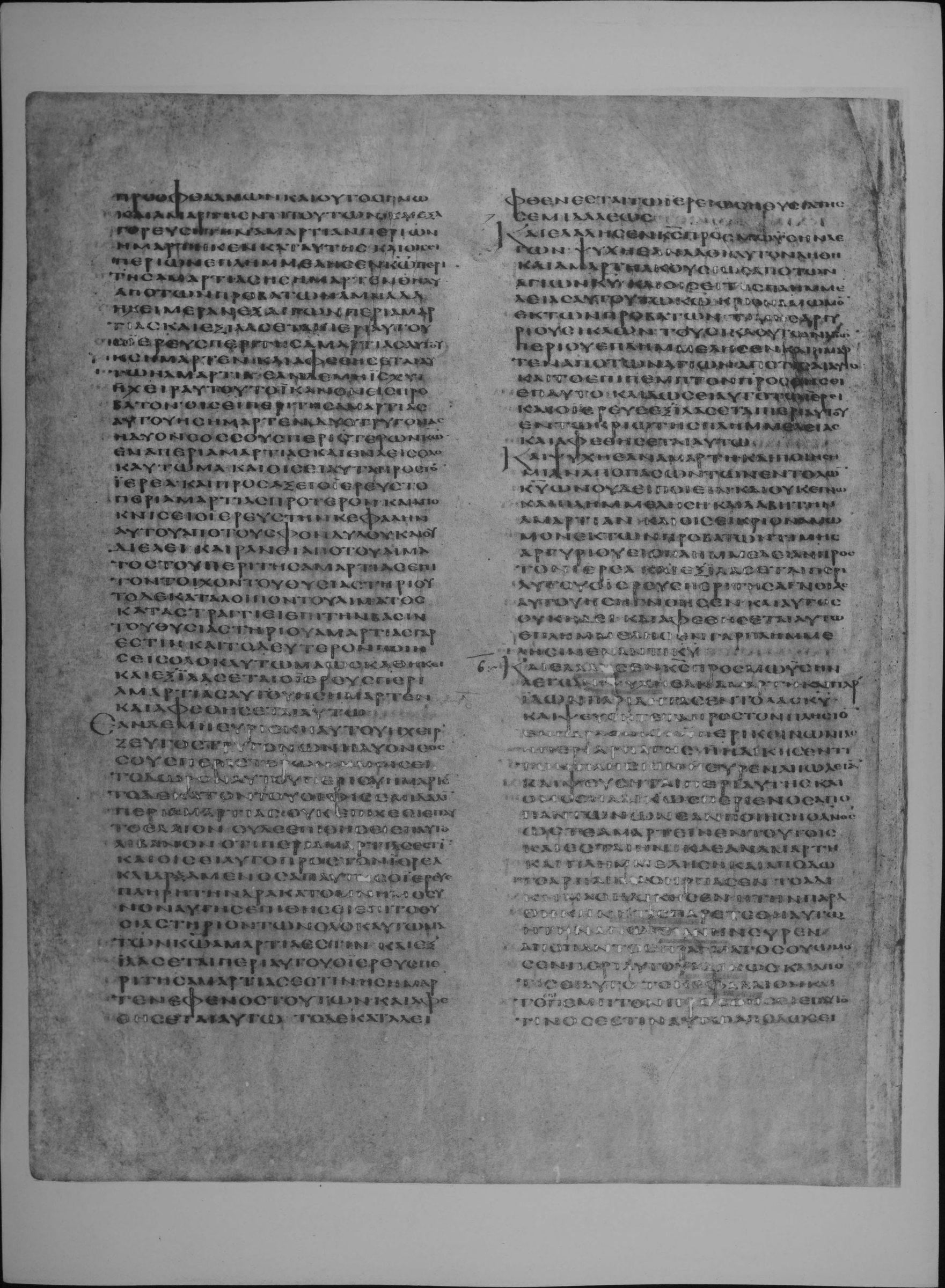
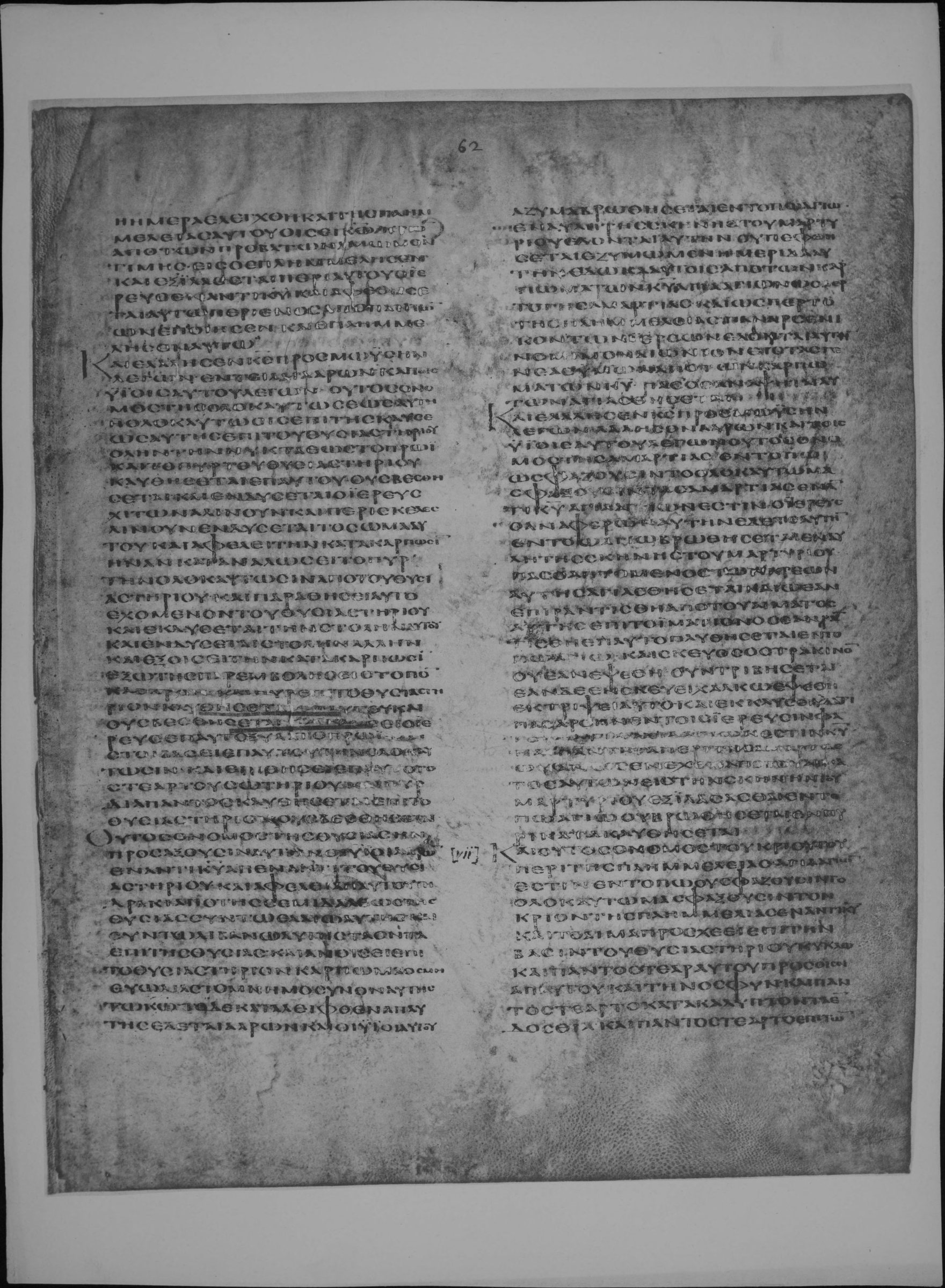
Leviticus 6:1-5 is on fol. 61v (full-size facsimile of 1879-83, Internet Archive codex-alexandrinus leaf 143). The 1915 reduced facsimile prints beneath this page: Levit. v. 4-vi. 5. Checked on the plate: the page begins inside Leviticus 5:4 (first words read: ΠΡΟ ΟΦΘΑΛΜΩΝ ΚΑΙ ΟΥΤΟΣ ΓΝΩ ΚΑΙ ΠΛΗΜΜΕΛΗΣΗ ΕΝ ΤΙ ΤΟΥΤΩΝ ΚΑΙ ΕΞΑΓΟΡΕΥΣΕΙ). Leviticus 6:5-8 is on fol. 62r (full-size facsimile of 1879-83, Internet Archive codex-alexandrinus leaf 144). The 1915 reduced facsimile prints beneath this page: Levit. vi. 5-33. Checked on the plate: the page begins inside Leviticus 6:5 (first words read: Η ΗΜΕΡΑ ΕΛΕΓΧΘΗ ΚΑΙ ΤΗΣ ΠΛΗΜΜΕΛΙΑΣ ΑΥΤΟΥ ΟΙΣΕΙ ΤΩ ΚΩ).
1Καὶ ἐλάλησεν κύριος πρὸς Μωυσῆν λέγων 2Ψυχὴ ἐὰν ἁμάρτῃ καὶ παριδὼν παρίδῃ τὰς ἐντολὰς Κυρίου, καὶ ψεύσηται τὰ πρὸς τὸν πλησίον ἐν παραθήκῃ ἢ περὶ κοινωνίας ἢ περὶ ἁρπαγῆς, ἢ ἠδίκησέν τι τὸν πλησίον, 3ἢ εὗρεν ἀπωλίαν καὶ ψεύσηται περὶ αὐτῆς, καὶ ὀμόσῃ ἀδίκως περὶ ἑνὸς ἀπὸ πάντων ὧν ἐὰν ποιήσῃ ὁ ἄνθρωπος ὥστε ἁμαρτεῖν ἐν τούτοις· 4καὶ ἔσται ἡνίκα ἐὰν ἁμάρτῃ καὶ πλημμελήσῃ, καὶ ἀποδῷ τὸ ἅρπαγμα ὃ ἥρπασεν, ἢ τὸ ἀδίκημα ὃ ἠδίκησεν, ἢ τὴν παραθήκην ἥτις παρετέθη αὐτῷ, ἢ τὴν ἀπωλίαν ἣν εὗρεν, 5ἀπὸ παντὸς πράγματος οὗ ὤμοσεν περὶ αὐτοῦ ἀδίκως, καὶ ἀποτίσει αὐτὸ τὸ κεφάλαιον, καὶ τὸ πέμπτον προσθήσει ἐπ᾽ αὐτό· τίνος ἐστίν, αὐτῷ ἀποδώσει ᾗ ἡμέρᾳ ἐλεγχθῇ. 6καὶ τῆς πλημμελίας αὐτοῦ οἴσει τῷ κυρίῳ κριὸν ἀπὸ τῶν προβάτων ἄμωμον τιμῆς εἰς ὃ ἐπλημμέλησεν αὐτῷ. 7καὶ ἐξιλάσεται περὶ αὐτοῦ ὁ ἱερεὺς ἔναντι Κυρίου, καὶ ἀφεθήσεται αὐτῷ περὶ ἑνὸς ἀπὸ πάντων ὧν ἐποίησεν καὶ ἐπλημμέλησεν αὐτῷ. 8Καὶ ἐλάλησεν Κύριος πρὸς Μωυσῆν λέγων
5:20And the Lord spoke to Moses, saying, 5:21The soul which shall have sinned, and wilfully overlooked the commandments of the Lord, and shall have dealt falsely in the affairs of his neighbour in the matter of a deposit, or concerning fellowship, or concerning plunder, or has in anything wronged his neighbour, 5:22or has found that which was lost, and shall have lied concerning it, and shall have sworn unjustly concerning any one of all the things, whatsoever a man may do, so as to sin hereby; 5:23it shall come to pass, whensoever he shall have sinned, and transgressed, that he shall restore the plunder which he has seized, or redress the injury which he has committed, or restore the deposit which was entrusted to him, or the lost article which he has found 5:24of any kind, about which he swore unjustly, he shall even restore it in full; and he shall add to it a fifth part besides; he shall restore it to him whose it is in the day in which he happens to be convicted. 5:25And he shall bring to the Lord for his trespass, a ram of the flock, without blemish, of value to the amount of the thing in which he trespassed. 5:26And the priest shall make atonement for him before the Lord, and he shall be forgiven for any one of all the things which he did and trespassed in it. 1And the Lord spoke to Moses, saying,
Where on the image
Leviticus 6:9-16 is on fol. 62r (full-size facsimile of 1879-83, Internet Archive codex-alexandrinus leaf 144). The 1915 reduced facsimile prints beneath this page: Levit. vi. 5-33. Checked on the plate: the page begins inside Leviticus 6:5 (first words read: Η ΗΜΕΡΑ ΕΛΕΓΧΘΗ ΚΑΙ ΤΗΣ ΠΛΗΜΜΕΛΙΑΣ ΑΥΤΟΥ ΟΙΣΕΙ ΤΩ ΚΩ).
9Ἔντειλαι Ἀαρὼν καὶ τοῖς υἱοῖς αὐτοῦ λέγων Οὗτος ὁ νόμος τῆς ὁλοκαυτώσεως· αὐτὴ ἡ ὁλοκαύτωσις ἐπὶ τῆς καύσεως αὐτῆς ἐπὶ τοῦ θυσιαστηρίου ὅλην τὴν νύκτα ἕως τὸ πρωί, καὶ τὸ πῦρ τοῦ θυσιαστηρίου καυθήσεται ἐπ᾽ αὐτοῦ, οὐ σβεσθήσεται. 10καὶ ἐνδύσεται ὁ ἱερεὺς χιτῶνα λινοῦν, καὶ περισκελὲς λινοῦν ἐνδύσεται περὶ τὸ σῶμα αὐτοῦ, καὶ ἀφελεῖ τὴν κατακάρπωσιν ἣν ἂν καταναλώσῃ τὸ πῦρ, τὴν ὁλοκαύτωσιν ἀπὸ τοῦ θυσιαστηρίου, καὶ παραθήσει αὐτὸ ἐχόμενον τοῦ θυσιαστηρίου. 11καὶ ἐκδύσεται τὴν στολὴν αὐτοὺ καὶ ἐνδύσεται στολὴν ἄλλην, καὶ ἐξοίσει τὴν κατακάρπωσιν ἔξω τῆς παρεμβολῆς εἰς τόπον καθαρόν. 12καὶ πῦρ ἐπὶ τὸ θυσιαστήριον καυθήσεται ἀπ᾽ αὐτοῦ, καὶ οὐ σβεσθήσεται· καὶ καύσει ὁ ἱερεὺς ἐπ᾽ αὐτὸ ξύλα τὸ πρωί, καὶ στοιβάσει ἐπ᾽ αὐτοῦ τὴν ὁλοκαύτωσιν, καὶ ἐπιθήσει ἐπ᾽ αὐτὸ τὸ στέαρ τοῦ σωτηρίου. 13καὶ πῦρ διὰ παντὸς καυθήσεται ἐπὶ τὸ θυσιαστήριον, οὐ σβεσθήσεται. 14Οὗτος ὁ νόμος τῆς θυσίας ἣν προσάξουσιν αὐτὴν οἱ υἱοὶ Ἀαρὼν ἔναντι Κυρίου ἀπέναντι τοῦ θυσιαστηρίου· 15καὶ ἀφελεῖ ἀπ᾽ αὐτοῦ τῇ δρακὶ ἀπὸ τῆς σεμιδάλεως τῆς θυσίας σὺν τῷ ἐλαίῳ αὐτῆς καὶ σὺν τῷ λιβάνῳ αὐτῆς, τὰ ὄντα ἐπὶ τῆς θυσίας, καὶ ἀνοίσει ἐπὶ τὸ θυσιαστήριον κάρπωμα· ὀσμὴ εὐωδίας, τὸ μνημόσυνον αὐτῆς τῷ κυρίῳ. 16τὸ δὲ καταλειφθὲν ἀπ᾽ αὐτῆς ἔδεται Ἀαρὼν καὶ οἱ υἱοὶ αὐτοῦ· ἄζυμα βρωθήσεται ἐν τόπῳ ἁγίῳ, ἐν αὐλῇ τῆς σκηνῆς τοῦ μαρτυρίου ἔδονται αὐτήν.
2Charge Aaron and his sons, saying, This is the law of whole-burnt-offering; this is the whole-burnt-offering in its burning on the altar all the night till the morning; and the fire of the altar shall burn on it, it shall not be put out. 3And the priest shall put on the linen tunic, and he shall put the linen drawers on his body; and shall take away that which has been thoroughly burnt, which the fire shall have consumed, even the whole-burnt-offering from the altar, and he shall put it near the altar. 4And he shall put off his robe, and put on another robe, and he shall take forth the offering that has been burnt without the camp into a clean place. 5And the fire on the altar shall be kept burning on it, and shall not be extinguished; and the priest shall burn on it wood every morning, and shall heap on it the whole-burnt-offering, and shall lay on it the fat of the peace-offering. 6And the fire shall always burn on the altar; it shall not be extinguished. 7This is the law of the sacrifice, which the sons of Aaron shall bring near before the Lord, before the altar. 8And he shall take from it a handful of the fine flour of the sacrifice with its oil, and with all its frankincense, which are upon the sacrifice; and he shall offer up on the altar a burnt-offering as a sweet-smelling savour, a memorial of it to the Lord. 9And Aaron and his sons shall eat that which is left of it: it shall be eaten without leaven in a holy place, they shall eat it in the court of the tabernacle of witness.
Where on the image
Leviticus 6:17-24 is on fol. 62r (full-size facsimile of 1879-83, Internet Archive codex-alexandrinus leaf 144). The 1915 reduced facsimile prints beneath this page: Levit. vi. 5-33. Checked on the plate: the page begins inside Leviticus 6:5 (first words read: Η ΗΜΕΡΑ ΕΛΕΓΧΘΗ ΚΑΙ ΤΗΣ ΠΛΗΜΜΕΛΙΑΣ ΑΥΤΟΥ ΟΙΣΕΙ ΤΩ ΚΩ).
17οὐ πεφθήσεται ἐζυμωμένη· μερίδα αὐτὴν ἔδωκα αὐτοῖς ἀπὸ τῶν καρπωμάτων Κυρίου· ἅγια ἁγίων, ὥσπερ τὸ τῆς ἁμαρτίας καὶ ὥσπερ τὸ τῆς πλημμελίας. 18πᾶν ἀρσενικὸν τῶν ἱερέων ἔδονται αὐτήν· νόμιμον αἰώνιον εἰς τὰς γενεὰς ὑμῶν ἀπὸ τῶν καρπωμάτων Κυρίου· πᾶς ὃς ἐὰν ἅψηται αὐτῶν ἁγιασθήσεται. 19Καὶ ἐλάλησεν Κύριος πρὸς Μωυσῆν λέγων 20Τοῦτο τὸ δῶρον Ἀαρὼν καὶ τῶν υἱῶν αὐτοῦ ὃ προσοίσουσιν Κυρίῳ ἐν τῇ ἡμέρᾳ ᾗ ἂν χρίσῃς αὐτόν, τὸ δέκατον τοῦ οἰφὶ σεμιδάλεως εἰς θυσίαν διὰ παντός, τὸ ἥμισυ αὐτῆς τὸ πρωὶ καὶ τὸ ἥμισυ αὐτῆς τὸ δειλινόν. 21ἐπὶ τηγάνου ἐν ἐλαίῳ ποιηθήσεται, πεφυραμένην οἴσει αὐτήν, ἑλικτά, θυσίαν ἐκ κλασμάτων, θυσίαν ὀσμὴν εὐωδίας Κυρίῳ. 22ὁ ἱερεὺς ὁ χριστὸς ἀντ᾽ αὐτοῦ ἐκ τῶν υἱῶν αὐτοῦ ποιήσει αὐτήν· νόμος αἰώνιος, ἅπαν ἐπιτελεσθήσεται. 23καὶ πᾶσα θυσία ἱερέως ὁλόκαυτος ἔσται, καὶ οὐ βρωθήσεται. 24Καὶ ἐλάλησεν Κύριος πρὸς Μωυσῆν λέγων
10It shall not be baked with leaven. I have given it as a portion to them of the burnt-offerings of the Lord: it is most holy, as the offering for sin, and as the offering for trespass. 11Every male of the priests shall eat it: it is a perpetual ordinance throughout your generations of the burnt-offerings of the Lord; whosoever shall touch them shall be hallowed. 12And the Lord spoke to Moses, saying, 13This is the gift of Aaron and of his sons, which they shall offer to the Lord in the day in which thou shalt anoint him; the tenth of an ephah of fine flour for a sacrifice continually, the half of it in the morning, and the half of it in the evening. 14It shall be made with oil in a frying-pan; he shall offer it kneaded and in rolls, an offering of fragments, an offering of a sweet savour unto the Lord. 15The anointed priest who is in his place, one of his sons, shall offer it: it is a perpetual statute, it shall all be consumed. 16And every sacrifice of a priest shall be thoroughly burnt, and shall not be eaten. 17And the Lord spoke to Moses, saying,
Where on the image
Leviticus 6:25-32 is on fol. 62r (full-size facsimile of 1879-83, Internet Archive codex-alexandrinus leaf 144). The 1915 reduced facsimile prints beneath this page: Levit. vi. 5-33. Checked on the plate: the page begins inside Leviticus 6:5 (first words read: Η ΗΜΕΡΑ ΕΛΕΓΧΘΗ ΚΑΙ ΤΗΣ ΠΛΗΜΜΕΛΙΑΣ ΑΥΤΟΥ ΟΙΣΕΙ ΤΩ ΚΩ).
25Λάλησον Ἀαρὼν καὶ τοῖς υἱοῖς αὐτοῦ λέγων Οὗτος ὁ νόμος τῆς ἁμαρτίας· ἐν τόπῳ οὗ σφάζουσιν τὸ ὁλοκαύτωμα σφάξουσιν τὰ περὶ τῆς ἁμαρτίας ἔναντι Κυρίου· ἅγια ἁγίων ἐστίν. 26ὁ ἱερεὺς ὁ ἀναφέρων αὐτὴν ἔδεται αὐτήν· ἐν τόπῳ ἁγίῳ βρωθήσεται, ἐν αὐλῇ τῆς σκηνῆς τοῦ μαρτυρίου. 27πᾶς ὁ ἁπτόμενος τῶν κρεῶν αὐτῆς ἁγιασθήσεται· καὶ ᾧ ἐὰν ἐπιραντισθῇ ἀπὸ τοῦ αἵματος αὐτῆς ἐπὶ τὸ ἱμάτιον, ὃς ἐὰν ῥαντισθῇ ἐπ᾽ αὐτό, πλυθήσεται ἐν τόπῳ ἁγίῳ. 28καὶ σκεῦος ὀστράκινον οὗ ἐὰν ἑψεθῇ ἐν αὐτῷ συντριβήσεται· ἐὰν δὲ ἐν σκεύει χαλκῷ ἑψεθῇ, ἐκτρίψει αὐτὸ καὶ ἐκκλύσει ὕδατι. 29πᾶς ἄρσην ἐν τοῖς ἱερεῦσιν φάγεται αὐτά· ἅγια ἁγίων ἐστὶν Κυρίου. 30καὶ πάντα τὰ περὶ τῆς ἁμαρτίας ὧν ἐὰν εἰσενεχθῇ ἀπὸ τοῦ αἵματος αὐτῶν εἰς τὴν σκηνὴν τοῦ μαρτυρίου ἐξιλάσασθαι ἐν τῷ ἁγίῳ, οὐ βρωθήσεται, ἐν πυρὶ κατακαυθήσεται. 31Καὶ οὗτος ὁ νόμος τοῦ κριοῦ τοῦ περὶ τῆς πλημμελίας· ἅγια ἁγίων ἐστίν. 32ἐν τόπῳ οὗ σφάζουσιν τὸ ὁλοκαύτωμα σφάξουσιν τὸν κριὸν τῆς πλημμελίας ἔναντι Κυρίου, καὶ τὸ αἷμα προσχεεῖ ἐπὶ τὴν βάσιν τοῦ θυσιαστηρίου κύκλῳ·
18Speak to Aaron and to his sons, saying, This is the law of the sin-offering;—in the place where they slay the whole-burnt-offering, they shall slay the sin-offerings before the Lord: they are most holy. 19The priest that offers it shall eat it: in a holy place it shall be eaten, in the court of the tabernacle of witness. 20Every one that touches the flesh of it shall be holy, and on whosesoever garment any of its blood shall have been sprinkled, whosoever shall have it sprinkled, shall be washed in the holy place. 21And the earthen vessel, in whichsoever it shall have been sodden, shall be broken; and if it shall have been sodden in a brazen vessel, he shall scour it and wash it with water. 22Every male among the priests shall eat it: it is most holy to the Lord. 23And no offerings for sin, of whose blood there shall be brought any into the tabernacle of witness to make atonement in the holy place, shall be eaten: they shall be burned with fire. 7:1And this is the law of the ram for the trespass-offering; it is most holy. 7:2In the place where they slay the whole-burnt-offering, they shall slay the ram of the trespass-offering before the Lord, and he shall pour out the blood at the bottom of the altar round about.
Where on the image
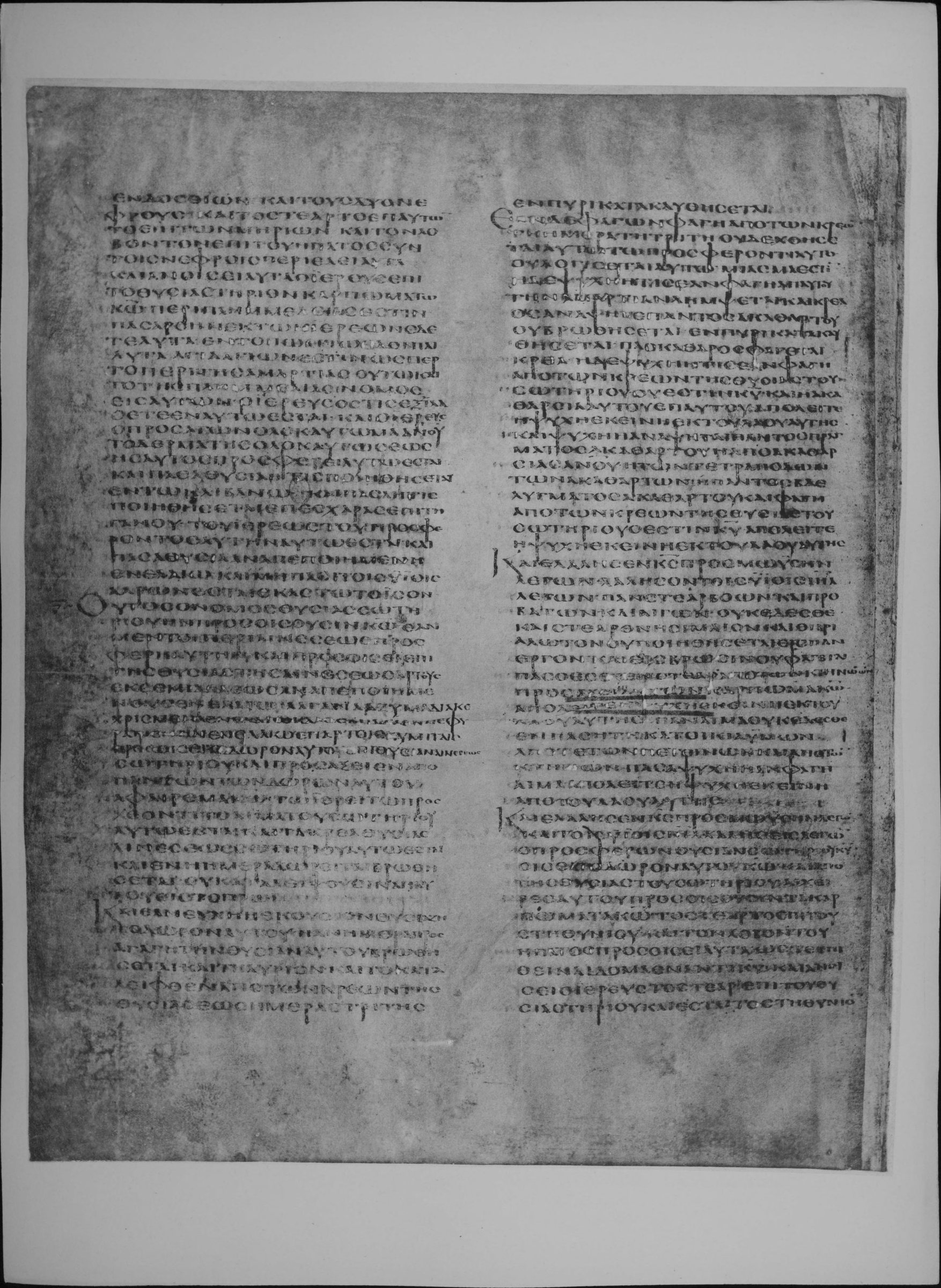
Leviticus 6:33 is on fol. 62r (full-size facsimile of 1879-83, Internet Archive codex-alexandrinus leaf 144). The 1915 reduced facsimile prints beneath this page: Levit. vi. 5-33. Checked on the plate: the page begins inside Leviticus 6:5 (first words read: Η ΗΜΕΡΑ ΕΛΕΓΧΘΗ ΚΑΙ ΤΗΣ ΠΛΗΜΜΕΛΙΑΣ ΑΥΤΟΥ ΟΙΣΕΙ ΤΩ ΚΩ). Leviticus 6:33-40 is on fol. 62v (full-size facsimile of 1879-83, Internet Archive codex-alexandrinus leaf 145). The 1915 reduced facsimile prints beneath this page: Levit. vi. 33-vii. 21. Checked on the plate: the page begins inside Leviticus 6:33 (first words read: ΕΝΔΟΣΘΙΩΝ ΚΑΙ ΤΟΥΣ ΔΥΟ ΝΕΦΡΟΥΣ ΚΑΙ ΤΟ ΣΤΕΑΡ ΤΟ ΕΠ ΑΥΤΩΝ).
33καὶ πᾶν τὸ στὲαρ αὐτοῦ προσοίσει ἀπ᾽ αὐτοῦ, καὶ τὴν ὀσφὺν καὶ πᾶν τὸ στέαρ τὸ κατακαλὺπτον τὰ ἐνδόσθια καὶ πᾶν τὸ στέαρ τὸ ἐπὶ τῶν ἐνδοσθίων, 34καὶ τοὺς δύο νεφροὺς καὶ τὸ στέαρ τὸ ἐπ᾽ αὐτῶν, τὸ ἐπὶ τῶν μηρίων, καὶ τὸν λοβὸν τὸν ἐπὶ τοῦ ἥπατος, σὺν τοῖς νεφροῖς περιελεῖ αὐτά· 35καὶ ἀνοίσει αὐτὰ ὁ ἱερεὺς ἐπὶ τὸ θυσιαστήριον κάρπωμα τῷ κυρίῳ· περὶ πλημμελίας ἐστίν. 36πᾶς ἄρσην ἐκ τῶν ἱερέων ἔδεται αὐτά, ἐν τόπῳ ἁγίῳ ἔδονται αὐτά· ἅγια ἁγίων ἐστίν. 37ὥσπερ τὸ περὶ τῆς ἁμαρτίας, οὕτω καὶ τὸ τῆς πλημμελίας, νόμος εἷς αὐτῶν· ὁ ἱερεὺς ὅστις ἐξιλάσεται, ἐν αὐτῷ ἔσται. 38καὶ ὁ ἱερεὺς ὁ προσάγων ὁλοκαύτωμα ἀνθρώπου, τὸ δέρμα τῆς ὁλοκαυτώσεως ἧς αὐτὸς προσφέρει αὐτῷ ἔσται. 39καὶ πᾶσα θυσία ἥτις ποιηθήσεται ἐν τῷ κλιβάνῳ, καὶ πᾶσα ἥτις ποιηθήσεται ἐπ᾽ ἐσχάρας ἢ ἐπὶ τηγάνου, τοῦ ἱερέως τοῦ προσφέροντος αὐτήν, αὐτῷ ἔσται. 40καὶ πᾶσα θυσία ἀναπεποιημένη ἐν ἐλαίῳ καὶ μὴ ἀναπεποιημένη πᾶσι τοῖς υἱοῖς Ἀαρὼν ἔσται, ἑκάστῳ τὸ ἴσον.
7:3And he shall offer all the fat from it; and the loins, and all the fat that covers the inwards, and all the fat that is upon the inwards, 7:4and the two kidneys, and the fat that is upon them, that which is upon the thighs, and the caul upon the liver with the kidneys, he shall take them away. 7:5And the priest shall offer them on the altar a burnt-offering to the Lord; it is for trespass. 7:6Every male of the priests shall eat them, in the holy place they shall eat them: they are most holy. 7:7As the sin-offering, so also is the trespass-offering. There is one law of them; the priest who shall make atonement with it, his it shall be. 7:8And as for the priest who offers a man's whole-burnt-offering, the skin of the whole-burnt-offering which he offers, shall be his. 7:9And every sacrifice which shall be prepared in the oven, and every one which shall be prepared on the hearth, or on a frying-pan, it is the property of the priest that offers it; it shall be his. 7:10And every sacrifice made up with oil, or not made up with oil, shall belong to the sons of Aaron, an equal portion to each.
Cite
Sources
- Source: Codex Alexandrinus (British Library Royal MS 1 D. V) via the British Museum photographic facsimiles of 1879-83 and 1915 (Internet Archive) + Swete's Septuagint + Brenton's English (holding institution)
- Critical edition: H. B. Swete, The Old Testament in Greek according to the Septuagint (1909)
← previous · → next · v cycle view · l back to library