Malachi, Chapter 1 (Codex Alexandrinus)
Introduction
Malachi 1 in the Greek Old Testament (the Septuagint) as written in Codex Alexandrinus, a Greek Bible copied in the fifth century, probably in Egypt, and now in the British Library (Royal MS 1 D. VI, the second of its four volumes). It is one of the three great early codices of the whole Greek Bible, with Codex Vaticanus and Codex Sinaiticus.
This entry meets the strict three-criteria standard of the Theosis Library:
- Manuscript scan: the pages of Codex Alexandrinus carrying this chapter (fol. 300v, fol. 301r), from the full-size photographic (autotype) facsimile published by the British Museum in 1879-1883, as digitised on the Internet Archive. The verse range of every page comes from the reduced photographic facsimile of 1936, which prints it beneath each plate, and the opening words of every page were read on the plate to confirm the page and the verse it begins with. Each section links to the page or pages that hold its verses. Folio numbers are those written at the head of each leaf and visible on the plates.
- Original text: Swete's edition, which here prints the text of Codex Vaticanus (Vat. gr. 1209), the base of his edition, and gives the readings of Alexandrinus only in his apparatus. The Greek column is therefore Vaticanus' text; where Alexandrinus differs, the plate shows what Alexandrinus reads.
- English translation: Sir Lancelot C. L. Brenton, The Septuagint Version of the Old Testament (1844; 1851 edition), a translation of the Greek, public domain, from the eBible.org text.
How was this verified? (Provenance)
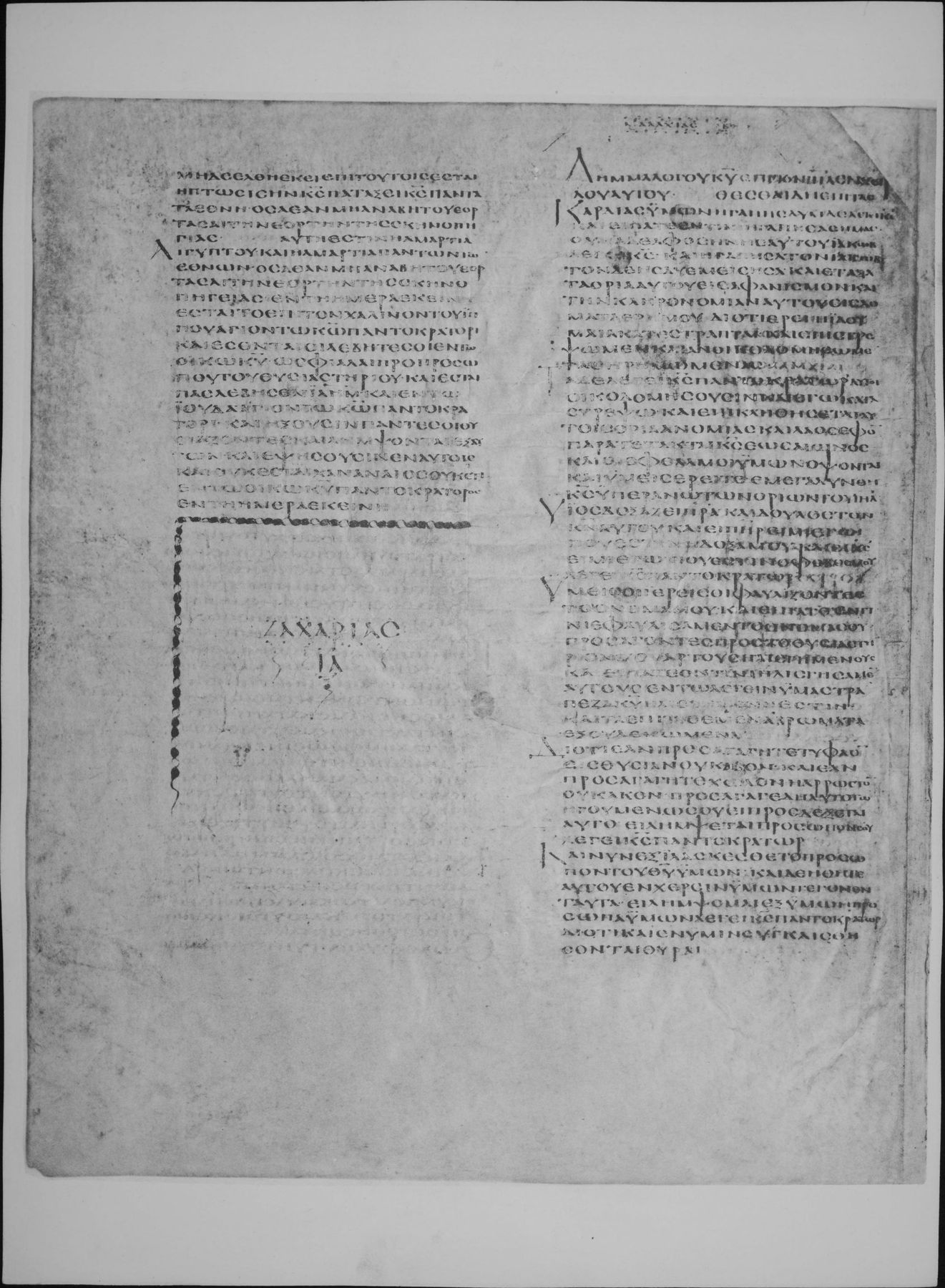
Where on the image
Malachi 1:1-8 is on fol. 300v (full-size facsimile of 1879-83, Internet Archive codex-alexandrinus leaf 625). The 1936 reduced facsimile prints beneath this page: Zech. xiv. 18-21, Mal. i. 1-10. Checked on the plate: the page begins inside Zec 14:18 (first words read: ΜΗ ΑΝΑΒΗ ΕΚΕΙ ΕΠΙ ΤΟΥΤΟΙΣ ΕΣΤΑΙ Η ΠΤΩΣΙΣ ΗΝ ΠΑΤΑΞΕΙ ΚΣ ΠΑΝΤΑ ΤΑ ΕΘΝΗ).
1ΛΗΜΜΑ λόγου Κυρίου ἐπὶ τὸν Ἰσραὴλ ἐν χειρὶ ἀγγέλου αὐτοῦ· θέσθε δὴ ἐπὶ τὰς καρδίας ὑμῶν. 2Ἠγάπησα ὑμᾶς, λέγει Κύριος· καὶ εἴπατε Ἐν τίνι ἠγάπησας ἡμᾶς; οὐκ ἀδελφὸς ἦν Ἠσαὺ τοῦ Ἰακώβ; λέγει Κύριος· καὶ ἠγάπησα τὸν Ἰακώβ, 3τὸν δὲ Ἠσαὺ ἐμίσησα, καὶ ἔταξα τὰ ὅρια αὐτοῦ εἰς ἀφανισμὸν καὶ τὴν κληρονομίαν αὐτοῦ εἰς δόματα ἐρήμου. 4διότι ἐρεῖ Ἡ Ἰδουμαία κατέστραπται, καὶ ἐπιστρέψωμεν καὶ ἀνοικοδομήσωμεν τὰς ἐρήμους. τάδε λέγει Κύριος Παντοκράτωρ Αὐτοὶ οἰκοδομήσουσιν καὶ ἐγὼ καταστρέψω· καὶ ἐπικληθήσεται αὐτοῖς ὅρια ἀνομίας, καὶ λαὸς ἐφ᾽ ὃν παρατέτακται Κύριος ἕως αἰῶνος. 5καὶ ὀφθαλμοὶ ὑμῶν ὄψονται, καὶ ὑμεῖς ἐρεῖτε Ἐμεγαλύνθη Κύριος ὑπεράνω τῶν ὁρίων τοῦ Ἰσραήλ. 6Υἱὸς δοξάζει πατέρα, καὶ δοῦλος τὸν κύριον αὐτοῦ. καὶ εἰ πατήρ εἰμι ἐγώ, ποῦ ἐστιν ἡ δόξα μου; καὶ εἰ κύριός εἰμι ἐγώ, ποῦ ἐστιν ὁ φόβος μου; λέγει Κύριος Παντοκράτωρ. ὑμεῖς οἱ ἱερεῖς οἱ φαυλίζοντες τὸ ὄνομά μου, καὶ εἴπατε Ἐν τίνι ἐφαυλίσαμεν τὸ ὄνομά σου; 7προσάγοντες πρὸς τὸ θυσιαστήριόν μου ἄρτους ἠλισγημένους. καὶ εἴπατε Ἐν τίνι ἠλισγήσαμεν αὐτούς; ἐν τῷ λέγειν ὑμᾶς Τράπεζα Κυρίου ἠλισγημένη ἐστίν, καὶ τὰ ἐπιτιθέμενα ἐξουδενώσατε. 8διότι ἐὰν προσαγάγητε τυφλὸν εἰς θυσίαν, οὐ κακόν; καὶ ἐὰν προσαγάγητε χωλὸν ἢ ἄρρωστον, οὐ κακόν; προσάγαγε δὴ αὐτὸ τῷ ἡγουμένῳ σου, εἰ προσδέξεταί σε, εἰ λήμψεται πρόσωπόν σου, λέγει Κύριος Παντοκράτωρ.
1The burden of the word of the Lord to Israel by the hand of his messenger. Lay it, I pray you, to heart. 2I have loved you, saith the Lord. And ye said, Wherein hast thou loved us? Was not Esau Jacob's brother? saith the Lord: yet I loved Jacob, 3and hated Esau, and laid waste his borders, and made his heritage as dwellings of the wilderness? 4Because one will say, Idumea has been overthrown, but let us return and rebuild the desolate places; thus saith the Lord Almighty, They shall build, but I will throw down; and they shall be called The borders of wickedness, and, The people against whom the Lord has set himself for ever. 5And your eyes shall see, and ye shall say, The Lord has been magnified upon the borders of Israel. 6A son honours his father, and a servant his master: if then I am a father, where is mine honour? and if I am a master, where is my fear? saith the Lord Almighty. Ye the priests are they that despise my name: yet ye said, Wherein have we despised thy name? 7In that ye bring to mine altar polluted bread; and ye said, Wherein have ye polluted it? In that ye say, The table of the Lord is polluted, and that which was set thereon ye have despised. 8For if ye bring a blind victim for sacrifices, is it not evil? and if ye bring the lame or the sick, is it not evil? offer it now to thy ruler, and see if he will receive thee, if he will accept thy person, saith the Lord Almighty.
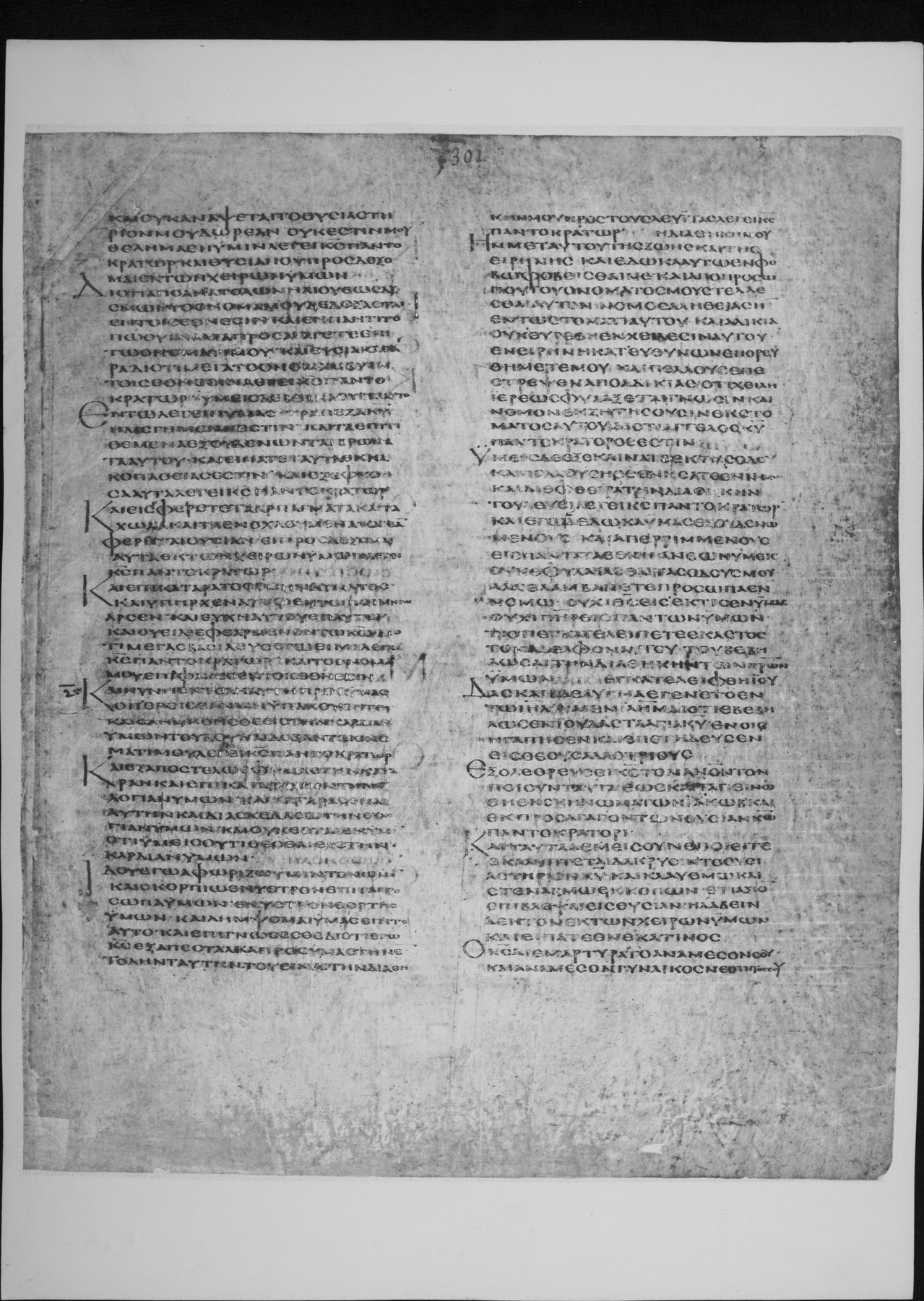
Where on the image
Malachi 1:9-10 is on fol. 300v (full-size facsimile of 1879-83, Internet Archive codex-alexandrinus leaf 625). The 1936 reduced facsimile prints beneath this page: Zech. xiv. 18-21, Mal. i. 1-10. Checked on the plate: the page begins inside Zec 14:18 (first words read: ΜΗ ΑΝΑΒΗ ΕΚΕΙ ΕΠΙ ΤΟΥΤΟΙΣ ΕΣΤΑΙ Η ΠΤΩΣΙΣ ΗΝ ΠΑΤΑΞΕΙ ΚΣ ΠΑΝΤΑ ΤΑ ΕΘΝΗ). Malachi 1:10-14 is on fol. 301r (full-size facsimile of 1879-83, Internet Archive codex-alexandrinus leaf 626). The 1936 reduced facsimile prints beneath this page: Mal. i. 10-ii. 14. Checked on the plate: the page begins inside Malachi 1:10 (first words read: ΚΑΙ ΟΥ ΚΑΝΘΗΣΕΤΑΙ ΤΟ ΘΥΣΙΑΣΤΗΡΙΟΝ ΜΟΥ ΔΩΡΕΑΝ ΟΥΚ ΕΣΤΙΝ ΜΟΥ ΘΕΛΗΜΑ ΕΝ ΥΜΙΝ).
9καὶ νῦν ἐξιλάσκεσθε τὸ πρόσωπον τοῦ θεοῦ ὑμῶν καὶ δεήθητε αὐτοῦ· ἐν χερσὶν ὑμῶν γέγονεν ταῦτα· εἰ λήμψομαι ἐξ ὑμῶν πρόσωπα ὑμῶν; λέγει Κύριος Παντοκράτωρ. 10διότι καὶ ἐν ὑμῖν συνκλεισθήσονται θύραι, καὶ οὐκ ἀνάψεται τὸ θυσιαστήριόν μου δωρεάν· οὐκ ἔστιν μου θέλημα ἐν ὑμῖν, λέγει Κύριος Παντοκράτωρ, καὶ θυσίαν οὐ προσδέξομαι ἐκ τῶν χειρῶν ὑμῶν. 11διότι ἀπ᾽ ἀνατολῶν ἡλίου καὶ ἕως δυσμῶν τὸ ὄνομά μου δεδόξασται ἐν τοῖς ἔθνεσιν, καὶ ἐν παντὶ τόπῳ θυμίαμα προσάγεται τῷ ὀνόματὶ μου καὶ θυσία καθαρά· διότι μέγα τὸ ὄνομά μου ἐν τοῖς ἔθνεσιν, λέγει Κύριος Παντοκράτωρ. 12ὑμεῖς δὲ βεβηλοῦτε αὐτὸ ἐν τῷ λέγειν ὑμᾶς Τράπεζα Κυρίου ἠλισγημένη ἐστίν, καὶ τὰ ἐπιτιθέμενα ἐξουδένωνται βρώματα αὐτοῦ. 13καὶ εἴπατε Ταῦτα ἐκ κακοπαθίας ἐστίν. καὶ ἐξεφύσησα αὐτά, λέγει Κύριος Παντοκράτωρ. καὶ εἰσεφέρετε ἁρπάγματα καὶ τὰ χωλὰ καὶ τὰ ἐνοχλούμενα· καὶ ἐὰν φέρητε τὴν θυσίαν, εἰ προσδέξομαι αὐτὰ ἐκ τῶν χειρῶν ὑμῶν; λέγει Κύριος Παντοκράτωρ. 14καὶ ἐπικατάρατος ὃς ἦν δυνατός, καὶ ὑπῆρχεν ἐν τῷ ποιμνίῳ αὐτοῦ ἄρσεν, καὶ εὐχὴ αὐτοῦ ἐπ᾽ αὐτῷ, καὶ θύει διεφθαρμένον τῷ κυρίῳ· διότι βασιλεὺς μέγας ἐγώ εἰμι, λέγει Κύριος Παντοκράτωρ, καὶ τὸ ὄνομά μου ἐπιφανὲς ἐν τοῖς ἔθνεσιν.
9And now intreat the face of your God, and make supplication to him. These things have been done by your hands; shall I accept you? saith the Lord Almighty. 10Because even among you the doors shall be shut, and one will not kindle the fire of mine altar for nothing, I have no pleasure in you, saith the Lord Almighty, and I will not accept a sacrifice at your hands. 11For from the rising of the sun even to the going down thereof my name has been glorified among the Gentiles; and in every place incense is offered to my name, and a pure offering: for my name is great among the Gentiles, saith the Lord Almighty. 12But ye profane it, in that ye say, The table of the Lord is polluted, and his meats set thereon are despised. 13And ye said, These services are troublesome: therefore I have utterly rejected them with scorn, saith the Lord Almighty: and ye brought in torn victims, and lame, and sick: if then ye should bring an offering, shall I accept them at your hands? saith the Lord Almighty. 14And cursed is the man who had the power, and possessed a male in his flock, and whose vow is upon him, and who sacrifices a corrupt thing to the Lord: for I am a great King, saith the Lord Almighty, and my name is glorious among the nations.
Cite
Sources
- Source: Codex Alexandrinus (British Library Royal MS 1 D. VI) via the British Museum photographic facsimiles of 1879-83 and 1936 (Internet Archive) + Swete's Septuagint + Brenton's English (holding institution)
- Critical edition: H. B. Swete, The Old Testament in Greek according to the Septuagint (1909)
← previous · → next · v cycle view · l back to library