Malachi, Chapter 2 (Codex Alexandrinus)
Introduction
Malachi 2 in the Greek Old Testament (the Septuagint) as written in Codex Alexandrinus, a Greek Bible copied in the fifth century, probably in Egypt, and now in the British Library (Royal MS 1 D. VI, the second of its four volumes). It is one of the three great early codices of the whole Greek Bible, with Codex Vaticanus and Codex Sinaiticus.
This entry meets the strict three-criteria standard of the Theosis Library:
- Manuscript scan: the pages of Codex Alexandrinus carrying this chapter (fol. 301r, fol. 301v), from the full-size photographic (autotype) facsimile published by the British Museum in 1879-1883, as digitised on the Internet Archive. The verse range of every page comes from the reduced photographic facsimile of 1936, which prints it beneath each plate, and the opening words of every page were read on the plate to confirm the page and the verse it begins with. Each section links to the page or pages that hold its verses. Folio numbers are those written at the head of each leaf and visible on the plates.
- Original text: Swete's edition, which here prints the text of Codex Vaticanus (Vat. gr. 1209), the base of his edition, and gives the readings of Alexandrinus only in his apparatus. The Greek column is therefore Vaticanus' text; where Alexandrinus differs, the plate shows what Alexandrinus reads.
- English translation: Sir Lancelot C. L. Brenton, The Septuagint Version of the Old Testament (1844; 1851 edition), a translation of the Greek, public domain, from the eBible.org text.
How was this verified? (Provenance)
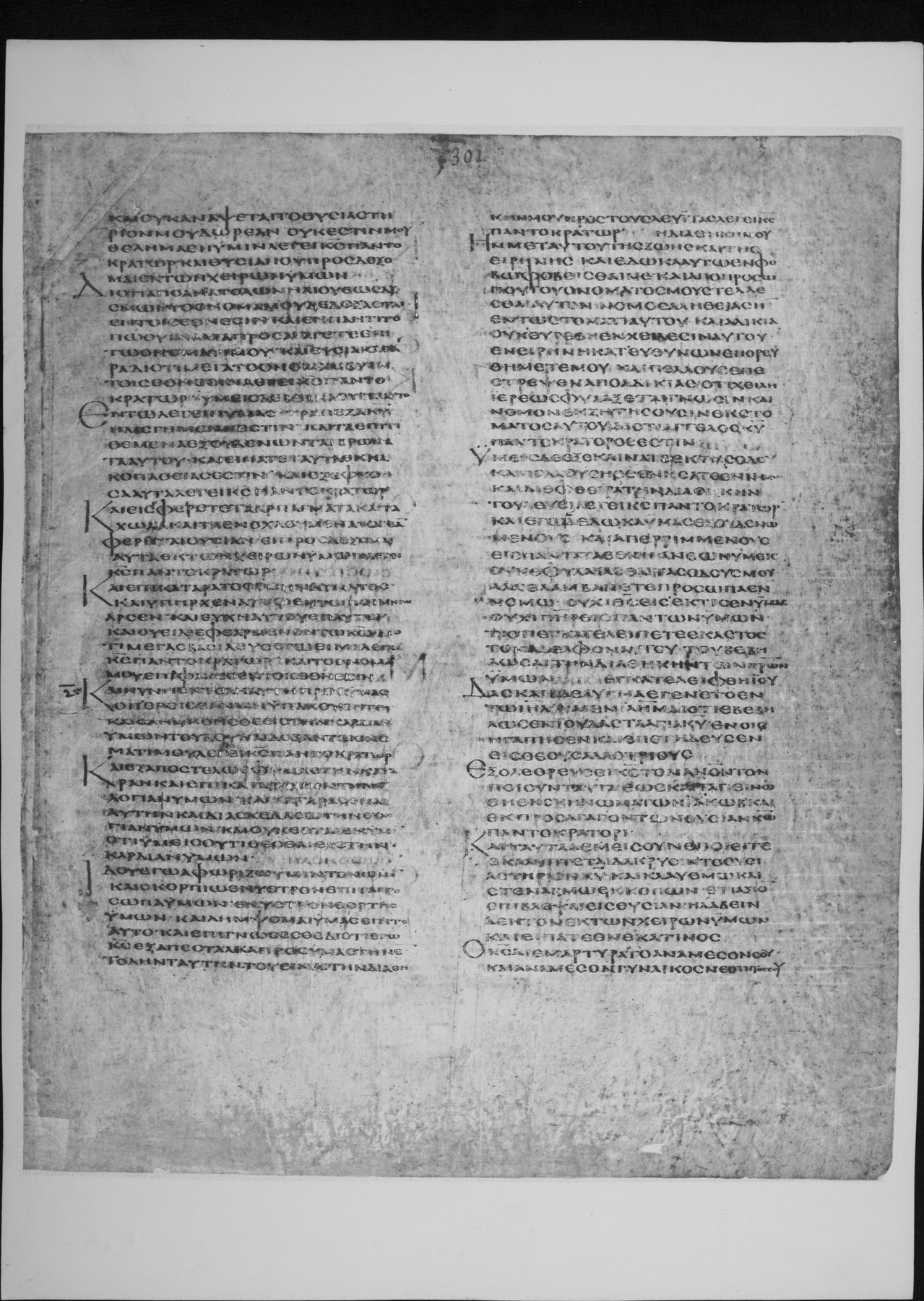
Where on the image
Malachi 2:1-8 is on fol. 301r (full-size facsimile of 1879-83, Internet Archive codex-alexandrinus leaf 626). The 1936 reduced facsimile prints beneath this page: Mal. i. 10-ii. 14. Checked on the plate: the page begins inside Malachi 1:10 (first words read: ΚΑΙ ΟΥ ΚΑΝΘΗΣΕΤΑΙ ΤΟ ΘΥΣΙΑΣΤΗΡΙΟΝ ΜΟΥ ΔΩΡΕΑΝ ΟΥΚ ΕΣΤΙΝ ΜΟΥ ΘΕΛΗΜΑ ΕΝ ΥΜΙΝ).
1Καὶ νῦν ἡ ἐντολὴ αὕτη πρὸς ὑμᾶς, οἱ ἱερεῖς. 2ἐὰν μὴ ἀκούσητε, καὶ ἐὰν μὴ θῆσθε εἰς τὴν καρδίαν ὑμῶν τοῦ δοῦναι δόξαν τῷ ὀνόματί μου, λέγει Κύριος Παντοκράτωρ, καὶ ἐξαποστελῶ ἐφ᾽ ὑμᾶς τὴν κατάραν, καὶ ἐπικαταράσομαι τὴν εὐλογίαν ὑμῶν, καὶ καταράσομαι αὐτήν· καὶ διασκεδάσω τὴν εὐλογίαν ὑμῶν, καὶ οὐκ ἔσται ἐν ὑμῖν, ὅτι ὑμεῖς οὐ τίθεσθε εἰς τὴν καρδίαν ὑμῶν. 3ἰδοὺ ἐγὼ ἀφορίζω ὑμῖν τὸν ὦμον, καὶ σκορπιῶ ἔνυστρον ἐπὶ τὰ πρόσωπα ὑμῶν, ἔνυστρον ἑορτῶν, καὶ λήμψομαι ὑμᾶς εἰς τὸ αὐτό· 4καὶ ἐπιγνώσεσθε διότι ἐγὼ ἐξαπέσταλκα πρὸς ὑμᾶς τὴν ἐντολὴν ταύτην, τοῦ εἶναι τὴν διαθήκην μου πρὸς τοὺς Λευείτας, λέγει Κύριος Παντοκράτωρ. 5ἡ διαθήκη μου ἦν μετ᾽ αὐτοῦ τῆς ζωῆς καὶ τῆς εἰρήνης, καὶ ἔδωκα αὐτῷ ἐν φόβῳ φοβεῖσθαι καὶ ἀπὸ προσώπου ὀνόματός μου στέλλεσθαι αὐτόν. 6νόμος ἀληθείας ἦν ἐν τῷ στόματι αὐτοῦ, καὶ ἀδικία οὐχ εὑρέθη ἐν χείλεσιν αὐτοῦ· ἐν εἰρήνῃ κατευθύνων ἐπορεύθη μετ᾽ ἐμοῦ, καὶ πολλοὺς ἐπέστρεψεν ἀπὸ ἀδικίας. 7ὅτι χείλη ἱερέως φυλάξεται γνῶσιν, καὶ νόμον ἐκζητήσουσιν ἐκ στόματος αὐτοῦ, διότι ἄγγελος Κυρίου Παντοκράτορός ἐστιν. 8ὑμεῖς δὲ ἐξεκλίνατε ἐκ τῆς ὁδοῦ καὶ ἠσθενήσατε πολλοὺς ἐν νόμῳ, διεφθείρατε τὴν διαθήκην τοῦ Λευί; λέγει Κύριος Παντοκράτωρ.
1And now, O priests, this commandment is to you. 2If ye will not hearken, and if ye will not lay it to heart, to give glory to my name, saith the Lord Almighty, then I will send forth the curse upon you, and I will bring a curse upon your blessing: yea, I will curse it, and I will scatter your blessing, and it shall not exist among you, because ye lay not this to heart. 3Behold, I turn my back upon you, and I will scatter dung upon your faces, the dung of your feasts, and I will carry you away at the same time. 4And ye shall know that I have sent this commandment to you, that my covenant might be with the sons of Levi, saith the Lord Almighty. 5My covenant of life and peace was with him, and I gave it him that he might reverently fear me, and that he might be awe-struck at my name. 6The law of truth was in his mouth, and iniquity was not found in his lips: he walked before me directing his way in peace, and he turned many from unrighteousness. 7For the priest's lips should keep knowledge, and they should seek the law at his mouth: for he is the messenger of the Lord Almighty. 8But ye have turned aside from the way, and caused many to fail in following the law: ye have corrupted the covenant of Levi, saith the Lord Almighty.
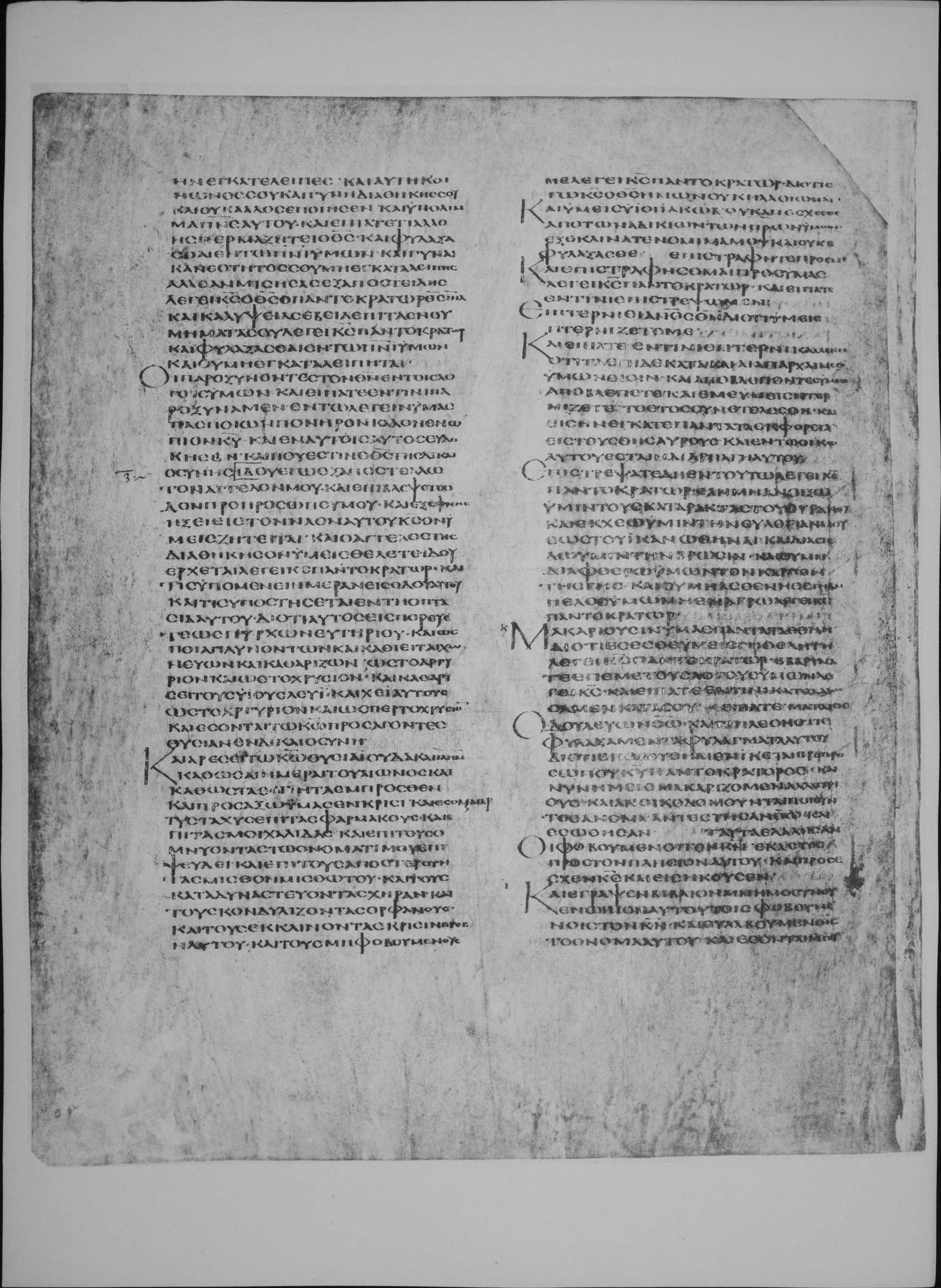
Where on the image
Malachi 2:9-14 is on fol. 301r (full-size facsimile of 1879-83, Internet Archive codex-alexandrinus leaf 626). The 1936 reduced facsimile prints beneath this page: Mal. i. 10-ii. 14. Checked on the plate: the page begins inside Malachi 1:10 (first words read: ΚΑΙ ΟΥ ΚΑΝΘΗΣΕΤΑΙ ΤΟ ΘΥΣΙΑΣΤΗΡΙΟΝ ΜΟΥ ΔΩΡΕΑΝ ΟΥΚ ΕΣΤΙΝ ΜΟΥ ΘΕΛΗΜΑ ΕΝ ΥΜΙΝ). Malachi 2:14-17 is on fol. 301v (full-size facsimile of 1879-83, Internet Archive codex-alexandrinus leaf 627). The 1936 reduced facsimile prints beneath this page: Mal. ii. 14-iii. 17. Checked on the plate: the page begins inside Malachi 2:14 (first words read: ΗΝ ΕΓΚΑΤΕΛΙΠΕΣ ΚΑΙ ΑΥΤΗ ΚΟΙΝΩΝΟΣ ΣΟΥ ΚΑΙ ΓΥΝΗ ΔΙΑΘΗΚΗΣ ΣΟΥ ΚΑΙ ΟΥΚ ΑΛΛΟΣ ΕΠΟΙΗΣΕΝ).
9κἀγὼ δέδωκα ὑμᾶς ἐξουδενωμένους καὶ ἀπερριμμένους εἰς πάντα τὰ ἔθνη, ἀνθ᾽ ὧν ὑμεῖς οὐ φυλάσσεσθε τὰς ὁδούς μου ἀλλὰ ἐλαμβάνετε πρόσωπα ἐν νόμῳ. 10Οὐχὶ θεὸς εἷς ἔκτισεν ὑμᾶς; οὐχὶ πατὴρ εἷς πάντων ὑμῶν; τί ὅτι ἐνκατελίπετε ἕκαστος τὸν ἀδελφὸν αὐτοῦ, τοῦ βεβηλῶσαι τὴν διαθήκην τῶν πατέρων ὑμῶν; 11ἐνκατελίφθη Ἰούδας, καὶ βδέλυγμα ἐγένετο ἐν τῷ Ἰσραὴλ καὶ ἐν Ἰερουσαλήμ, διότι ἐβεβήλωσεν Ἰούδας τὰ ἅγια Κυρίου, ἐν οἷς ἠγάπησεν καὶ ἐπετήδευσεν εἰς θεοὺς ἀλλοτρίους. 12ἐξολεθρεύσει Κύριος τὸν ἄνθρωπον τὸν ποιοῦντα ταῦτα, ἕως καὶ ταπεινωθῇ ἐκ σκηνωμάτων Ἰακὼβ καὶ ἐκ προσαγόντων θυσίαν τῷ κυρίῳ Παντοκράτορι. 13καὶ ταῦτα ἃ ἐμίσουν, ἐποιεῖτε· ἐκαλύπτετε δάκρυσιν τὸ θυσιαστήριον Κυρίου καὶ κλαυθμῷ καὶ στεναγμῷ ἐκ κόπων. ἔτι ἄξιον ἐπιβλέψαι εἰς θυσίαν ἢ λαβεῖν δεκτὸν ἐκ τῶν χειρῶν ὑμῶν; 14καὶ εἴπατε Ἕνεκεν τίνος; ὅτι Κύριος διεμαρτύρατο ἀνὰ μέσον σοῦ καὶ ἀνὰ μέσον γυναικὸς νεότητός σου, ἣν ἐνκατέλιπες· καὶ αὕτη κοινωνός σου καὶ γυνὴ διαθήκης σου. 15καὶ οὐ καλὸν ἐποίησεν καὶ ὑπόλιμμα πνεύματος αὐτοῦ; καὶ εἴπατε Τί ἄλλο ἢ σπέρμα ζητεῖ ὁ θεός; καὶ φυλάξασθε ἐν τῷ πνεύματι ὑμῶν, καὶ γυναῖκα νεότητός σου μὴ ἐνκαταλίπῃς· 16ἀλλὰ ἐὰν μισήσας ἐξαποστείλῃς, λέγει Κύριος ὁ θεὸς τοῦ Ἰσραήλ, καὶ καλύψει ἀσέβεια ἐπὶ τὰ ἐνθυμήματά σου, λέγει Κύριος Παντοκράτωρ. καὶ φυλάξασθε ἐν τῷ πνεύματι ὑμῶν καὶ οὐ μὴ ἐνκαταλίπητε, 17οἱ παροξύνοντες τὸν θεὸν ἐν τοῖς λόγοις ὑμῶν· καὶ εἴπατε Ἐν τίνι παρωξύναμεν αὐτόν; ἐν τῷ λέγειν ὑμᾶς Πᾶς ποιῶν πονηρόν, καλὸν ἐνώπιον Κυρίου, καὶ ἐν αὐτοῖς αὐτὸς εὐδόκησεν· καί Ποῦ ἐστιν ὁ θεὸς τῆς δικαιοσύνης;
9And I have made you despised and cast out among all the people, because ye have not kept my ways, but have been partial in the law. 10Have ye not all one father? Did not one God create you? why have ye forsaken every man his brother, to profane the covenant of your fathers? 11Juda has been forsaken, and an abomination has been committed in Israel and in Jerusalem; for Juda has profaned the holy things of the Lord, which he delighted in, and has gone after other gods. 12The Lord will utterly destroy the man that does these things, until he be even cast down from out of the tabernacles of Jacob, and from among them that offer sacrifice to the Lord Almighty. 13And these things which I hated, ye did: ye covered with tears the altar of the Lord, and with weeping and groaning because of troubles: is it meet for me to have respect to your sacrifice, or to receive anything from your hands as welcome? 14Yet ye said, Wherefore? Because the Lord has borne witness between thee and the wife of thy youth, whom thou hast forsaken, and yet she was thy partner, and the wife of thy covenant. 15And did he not do well? and there was the residue of his spirit. But ye said, What does God seek but a seed? But take ye heed to your spirit, and forsake not the wife of thy youth. 16But if thou shouldest hate thy wife and put her away, saith the Lord God of Israel, then ungodliness shall cover thy thoughts, saith the Lord Almighty: therefore take ye heed to your spirit, and forsake them not, 17ye that have provoked God with your words. But ye said, Wherein have we provoked him? In that ye say, Every one that does evil is a pleasing object in the sight of the Lord, and he takes pleasure in such; and where is the God of justice?
Cite
Sources
- Source: Codex Alexandrinus (British Library Royal MS 1 D. VI) via the British Museum photographic facsimiles of 1879-83 and 1936 (Internet Archive) + Swete's Septuagint + Brenton's English (holding institution)
- Critical edition: H. B. Swete, The Old Testament in Greek according to the Septuagint (1909)
← previous · → next · v cycle view · l back to library