Micah, Chapter 2 (Codex Alexandrinus)
Introduction
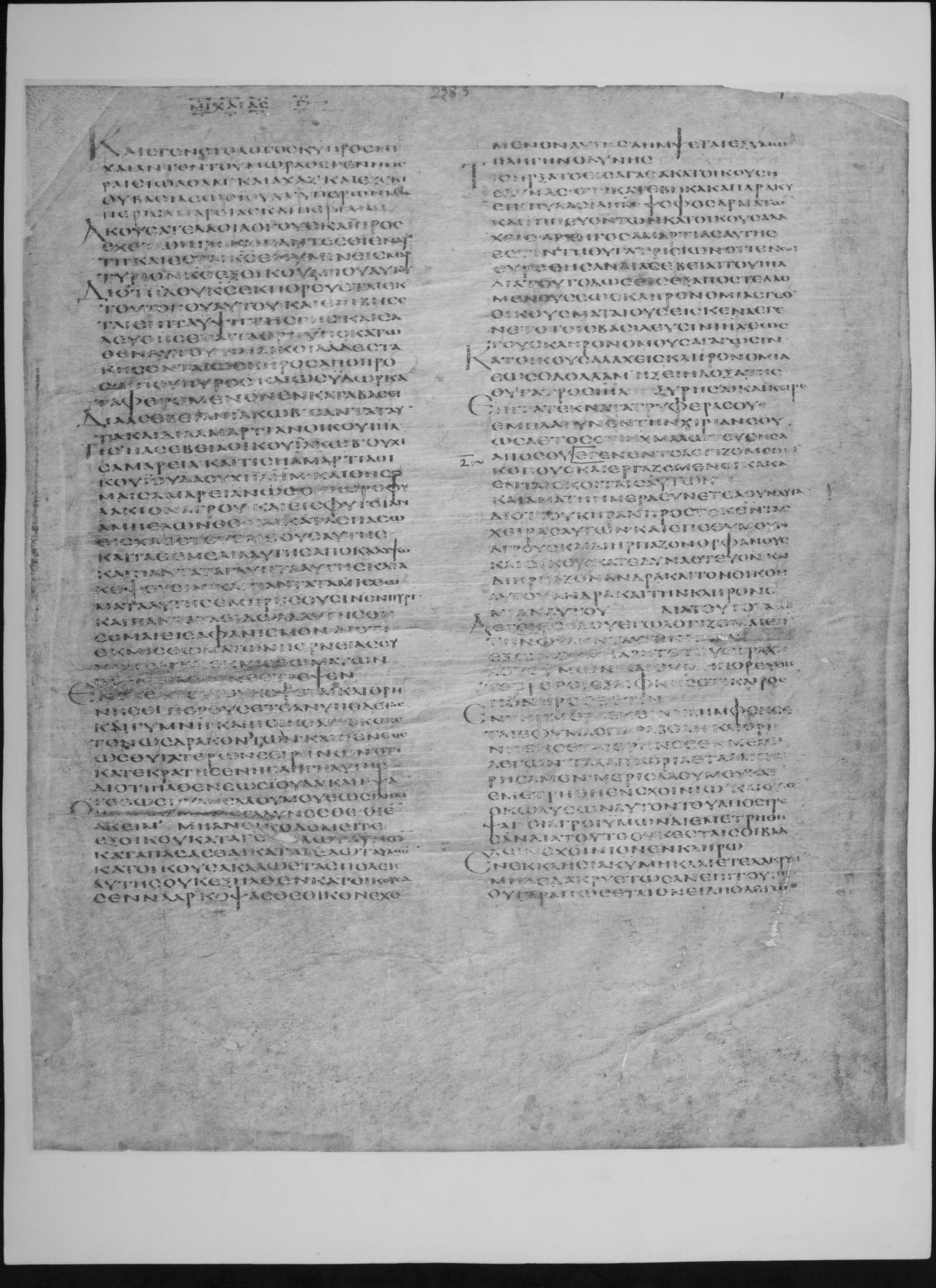
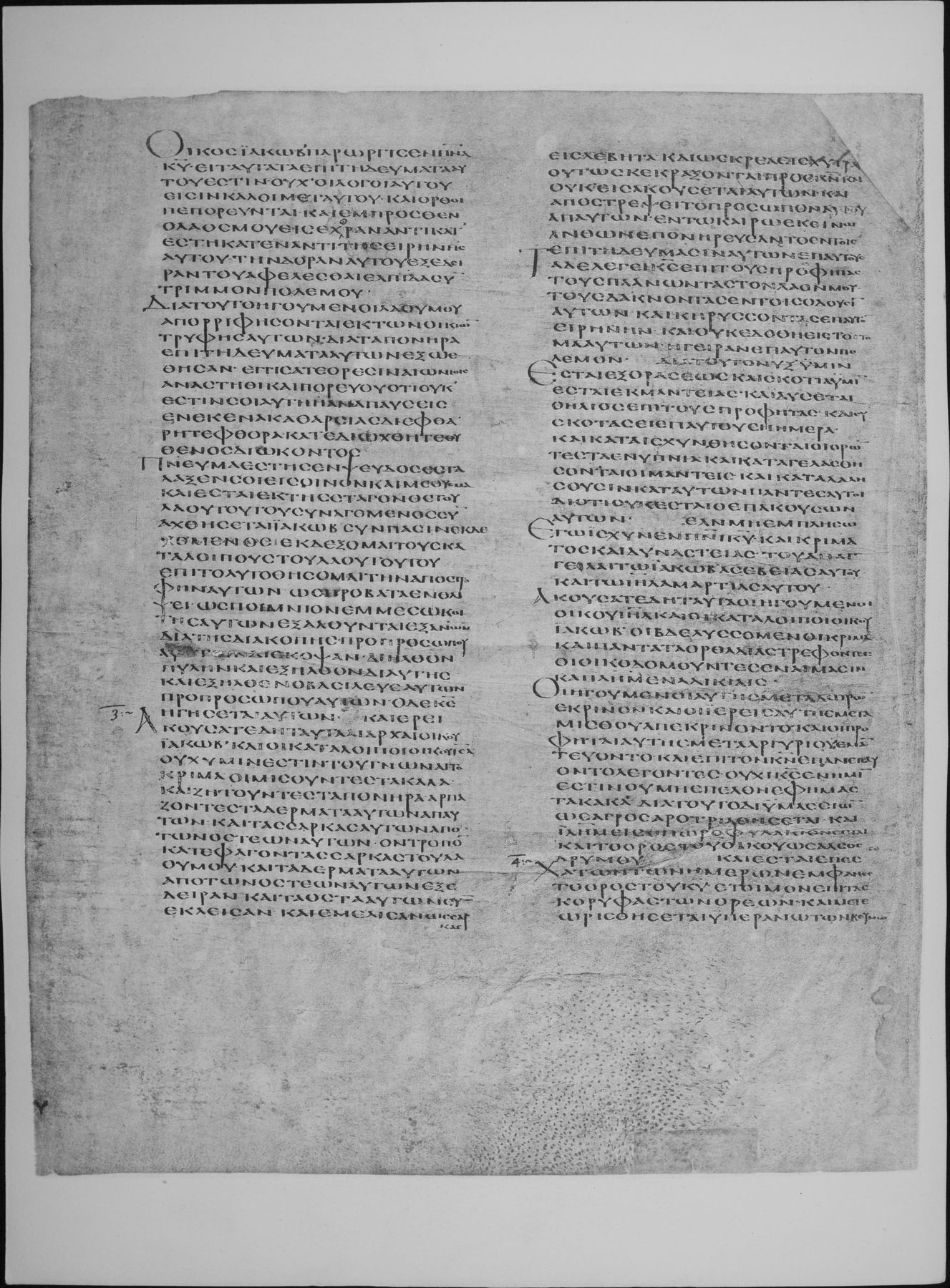
Micah 2 in the Greek Old Testament (the Septuagint) as written in Codex Alexandrinus, a Greek Bible copied in the fifth century, probably in Egypt, and now in the British Library (Royal MS 1 D. VI, the second of its four volumes). It is one of the three great early codices of the whole Greek Bible, with Codex Vaticanus and Codex Sinaiticus.
This entry meets the strict three-criteria standard of the Theosis Library:
- Manuscript scan: the pages of Codex Alexandrinus carrying this chapter (fol. 285r, fol. 285v), from the full-size photographic (autotype) facsimile published by the British Museum in 1879-1883, as digitised on the Internet Archive. The verse range of every page comes from the reduced photographic facsimile of 1936, which prints it beneath each plate, and the opening words of every page were read on the plate to confirm the page and the verse it begins with. Each section links to the page or pages that hold its verses. Folio numbers are those written at the head of each leaf and visible on the plates.
- Original text: Swete's edition, which here prints the text of Codex Vaticanus (Vat. gr. 1209), the base of his edition, and gives the readings of Alexandrinus only in his apparatus. The Greek column is therefore Vaticanus' text; where Alexandrinus differs, the plate shows what Alexandrinus reads.
- English translation: Sir Lancelot C. L. Brenton, The Septuagint Version of the Old Testament (1844; 1851 edition), a translation of the Greek, public domain, from the eBible.org text.
How was this verified? (Provenance)
Where on the image
Micah 2:1-7 is on fol. 285r (full-size facsimile of 1879-83, Internet Archive codex-alexandrinus leaf 594). The 1936 reduced facsimile prints beneath this page: Mic. i. 1-ii. 7. Checked on the plate: the page begins at the start of Micah 1:1 (first words read: ΚΑΙ ΕΓΕΝΕΤΟ ΛΟΓΟΣ ΚΥ ΠΡΟΣ ΜΙΧΑΙΑΝ ΤΟΝ ΤΟΥ ΜΩΡΑΣΘΕΙ ΕΝ ΗΜΕΡΑΙΣ ΙΩΑΘΑΜ ΚΑΙ ΑΧΑΖ). Micah 2:7-8 is on fol. 285v (full-size facsimile of 1879-83, Internet Archive codex-alexandrinus leaf 595). The 1936 reduced facsimile prints beneath this page: (caption not legible in the scan; range bounded by the captions of leaves 22 and 24). Checked on the plate: the page begins inside Micah 2:7 (first words read: Ο ΟΙΚΟΣ ΙΑΚΩΒ ΠΑΡΩΡΓΙΣΕΝ ΠΝΑ ΚΥ ΕΙ ΤΑΥΤΑ ΤΑ ΕΠΙΤΗΔΕΥΜΑΤΑ ΑΥΤΟΥ ΕΣΤΙΝ ΟΥΧ ΟΙ ΛΟΓΟΙ ΑΥΤΟΥ ΕΙΣΙΝ ΚΑΛΟΙ).
1Ἐγένοντο λογιζόμενοι κόπους καὶ ἐργαζόμενοι κακὰ ἐν ταῖς κοίταις αὐτῶν, καὶ ἅμα τῇ ἡμέρᾳ συνετέλουν αὐτά, διότι οὐκ ἦραν πρὸς τὸν θεὸν τὰς χεῖρας αὐτῶν· 2καὶ ἐπεθύμουν ἀγρούς, καὶ διήρπαζον ὀρφανούς, καὶ οἴκους κατεδυνάστευον, καὶ διήρπαζον ἄνδρα καὶ τὸν οἶκον αὐτοῦ, καὶ ἄνδρα καὶ τὴν κληρονομίαν αὐτοῦ. 3διὰ τοῦτο τάδε λέγει Κύριος Ἰδοὺ ἐγὼ λογίζομαι ἐπὶ τὴν φυλὴν ταύτην κακά, ἐξ ὧν οὐ μὴ ἄρητε τοὺς τραχήλους ὑμῶν, καὶ οὐ μὴ πορευθῆτε ὀρθοὶ ἐξαίφνης, ὅτι καιρὸς πονηρός ἐστιν. 4Ἐν τῇ ἡμέρᾳ ἐκείνῃ λημφθήσεται ἐφ᾽ ὑμᾶς παραβολή, καὶ θρηνηθήσεται θρῆνος ἐν μέλει λέγων Ταλαιπωρίᾳ ἐταλαιπωρήσαμεν· μερὶς λαοῦ μου κατεμετρήθη ἐν σχοινίῳ, καὶ οὐκ ἦν ὁ κωλύσων αὐτὸν τοῦ ἀποστρέψαι· οἱ ἀγροὶ ἡμῶν διεμερίσθησαν. 5διὰ τοῦτο οὐκ ἔσται σοι βάλλων σχοινίον ἐν κλήρῳ ἐν ἐκκλησίᾳ Κυρίου. 6μὴ κλαίετε δάκρυσιν, μηδὲ δακρυέτωσαν ἐπὶ τούτοις· οὐ γὰρ ἀπώσεται ὀνείδη 7ὁ λέγων Οἶκος Ἰακὼβ παρώργισεν πνεῦμα Κυρίου. εἰ ταῦτα τὰ ἐπιτηδεύματα αὐτοῦ ἐστίν; οὐχ οἱ λόγοι αὐτοῦ εἰσὶν καλοὶ μετ᾽ αὐτοῦ, καὶ ὀρθοὶ πεπόρευνται; 8καὶ ἔμπροσθεν ὁ λαός μου εἰς ἔχθραν ἀντέστη· κατὲναντι τῆς εἰρήνης αὐτοῦ τὴν δορὰν αὐτοῦ ἐξέδειραν, τοῦ ἀφελέσθαι ἐλπίδα συντριμμὸν πολέμου.
1They meditated troubles, and wrought wickedness on their beds, and they put it in execution with the daylight; for they have not lifted up their hands to God. 2And they desired fields, and plundered orphans, and oppressed families, and spoiled a man and his house, even a man and his inheritance. 3Therefore thus saith the Lord; Behold, I devise evils against this family, out of which ye shall not lift up your necks, neither shall ye walk upright speedily: for the time is evil. 4In that day shall a parable be taken up against you, and a plaintive lamentation shall be uttered, saying, We are thoroughly miserable: the portion of my people has been measured out with a line, and there was none to hinder him so as to turn him back; your fields have been divided. 5Therefore thou shalt have no one to cast a line for the lot. 6Weep not with tears in the assembly of the Lord, neither let any weep for these things; for he shall not remove the reproaches, 7who says, The house of Jacob has provoked the Spirit of the Lord; are not these his practices? Are not the Lord's words right with him? and have they not proceeded correctly? 8Even beforetime my people withstood him as an enemy against his peace; they have stripped off his skin to remove hope in the conflict of war.
Where on the image
Micah 2:9-13 is on fol. 285v (full-size facsimile of 1879-83, Internet Archive codex-alexandrinus leaf 595). The 1936 reduced facsimile prints beneath this page: (caption not legible in the scan; range bounded by the captions of leaves 22 and 24). Checked on the plate: the page begins inside Micah 2:7 (first words read: Ο ΟΙΚΟΣ ΙΑΚΩΒ ΠΑΡΩΡΓΙΣΕΝ ΠΝΑ ΚΥ ΕΙ ΤΑΥΤΑ ΤΑ ΕΠΙΤΗΔΕΥΜΑΤΑ ΑΥΤΟΥ ΕΣΤΙΝ ΟΥΧ ΟΙ ΛΟΓΟΙ ΑΥΤΟΥ ΕΙΣΙΝ ΚΑΛΟΙ).
9ἡγούμενοι λαοῦ μου ἀποριφήσονται ἐκ τῶν οἰκιῶν τρυφῆς αὐτῶν, διὰ τὰ πονηρὰ ἐπιτηδεύματα αὐτῶν ἐξώσθησαν. ἐγγίσατε ὄρεσιν αἰωνίοις· 10ἀνάστηθι καὶ πορεύου, ὅτι οὐκ ἔστιν σοι αὕτη ἀνάπαυσις ἕνεκεν ἀκαθαρσίας. διεφθάρητε φθορᾷ, 11κατεδιώχθητε οὐδενὸς διώκοντος· πνεῦμα ἔστησεν ψεῦδος, ἐστάλαξέν σοι εἰς οἶνον καὶ μέθυσμα. καὶ ἔσται ἐκ τῆς σταγόνος τοῦ λαοῦ τούτου 12συναγόμενος συναχθήσεται Ἰακὼβ σὺν πᾶσιν· ἐκδεχόμενος ἐκδέξομαι τοὺς καταλοίπους τοῦ Ἰσραήλ, ἐπὶ τὸ αὐτὸ θήσομαι τὴν ἀποστροφὴν αὐτοῦ· ὡς πρόβατα ἐν θλίψει, ὡς ποὶμνιον ἐν μέσῳ κοίτης αὐτῶν ἐξαλοῦνται ἐξ ἀνθρώπων· 13διὰ τῆς διακοπῆς πρὸ προσώπου αὐτῶν διέκοψαν, καὶ διῆλθον πύλην καὶ ἐξῆλθον δι᾽ αὐτῆς, καὶ ἐξῆλθεν ὁ βασιλεὺς αὐτῶν πρὸ προσώπου αὐτῶν, ὁ δὲ κύριος ἡγήσεται αὐτῶν.
9The leaders of my people shall be cast forth from their luxurious houses; they are rejected because of their evil practices; draw ye near to the everlasting mountains. 10Arise thou, and depart; for this is not thy rest because of uncleanness: ye have been utterly destroyed; 11ye have fled, no one pursuing you: thy spirit has framed falsehood, it has dropped on thee for wine and strong drink. But it shall come to pass, that out of the dropping of this people, 12Jacob shall be completely gathered with all his people: I will surely receive the remnant of Israel; I will cause them to return together, as sheep in trouble, as a flock in the midst of their fold: they shall rush forth from among men through the breach made before them: 13they have broken through, and passed the gate, and gone out by it: and their king has gone out before them, and the Lord shall lead them.
Cite
Sources
- Source: Codex Alexandrinus (British Library Royal MS 1 D. VI) via the British Museum photographic facsimiles of 1879-83 and 1936 (Internet Archive) + Swete's Septuagint + Brenton's English (holding institution)
- Critical edition: H. B. Swete, The Old Testament in Greek according to the Septuagint (1909)
← previous · → next · v cycle view · l back to library