Micah, Chapter 4 (Codex Alexandrinus)
Introduction
Micah 4 in the Greek Old Testament (the Septuagint) as written in Codex Alexandrinus, a Greek Bible copied in the fifth century, probably in Egypt, and now in the British Library (Royal MS 1 D. VI, the second of its four volumes). It is one of the three great early codices of the whole Greek Bible, with Codex Vaticanus and Codex Sinaiticus.
This entry meets the strict three-criteria standard of the Theosis Library:
- Manuscript scan: the pages of Codex Alexandrinus carrying this chapter (fol. 285v, fol. 286r), from the full-size photographic (autotype) facsimile published by the British Museum in 1879-1883, as digitised on the Internet Archive. The verse range of every page comes from the reduced photographic facsimile of 1936, which prints it beneath each plate, and the opening words of every page were read on the plate to confirm the page and the verse it begins with. Each section links to the page or pages that hold its verses. Folio numbers are those written at the head of each leaf and visible on the plates.
- Original text: Swete's edition, which here prints the text of Codex Vaticanus (Vat. gr. 1209), the base of his edition, and gives the readings of Alexandrinus only in his apparatus. The Greek column is therefore Vaticanus' text; where Alexandrinus differs, the plate shows what Alexandrinus reads.
- English translation: Sir Lancelot C. L. Brenton, The Septuagint Version of the Old Testament (1844; 1851 edition), a translation of the Greek, public domain, from the eBible.org text.
How was this verified? (Provenance)
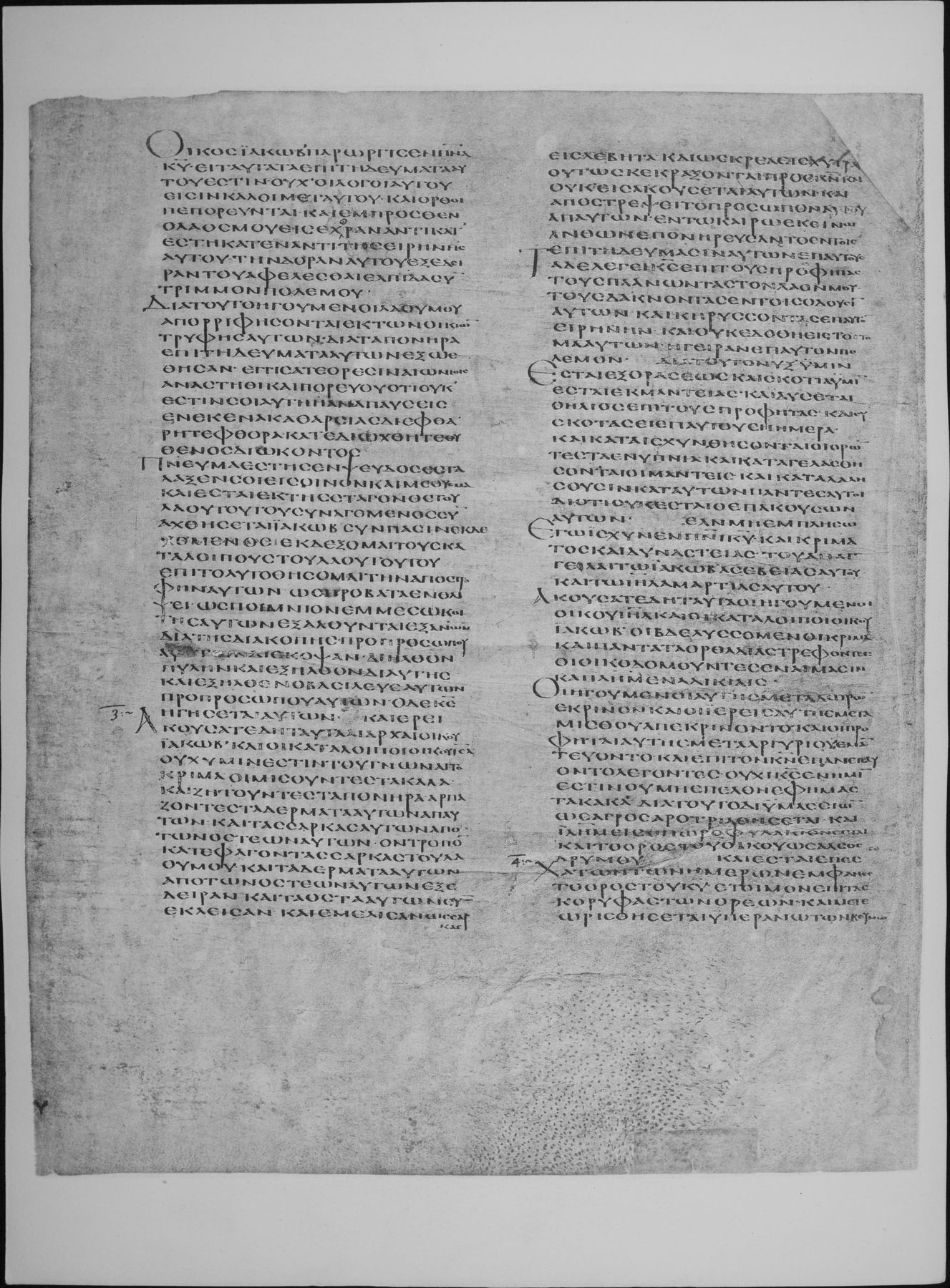
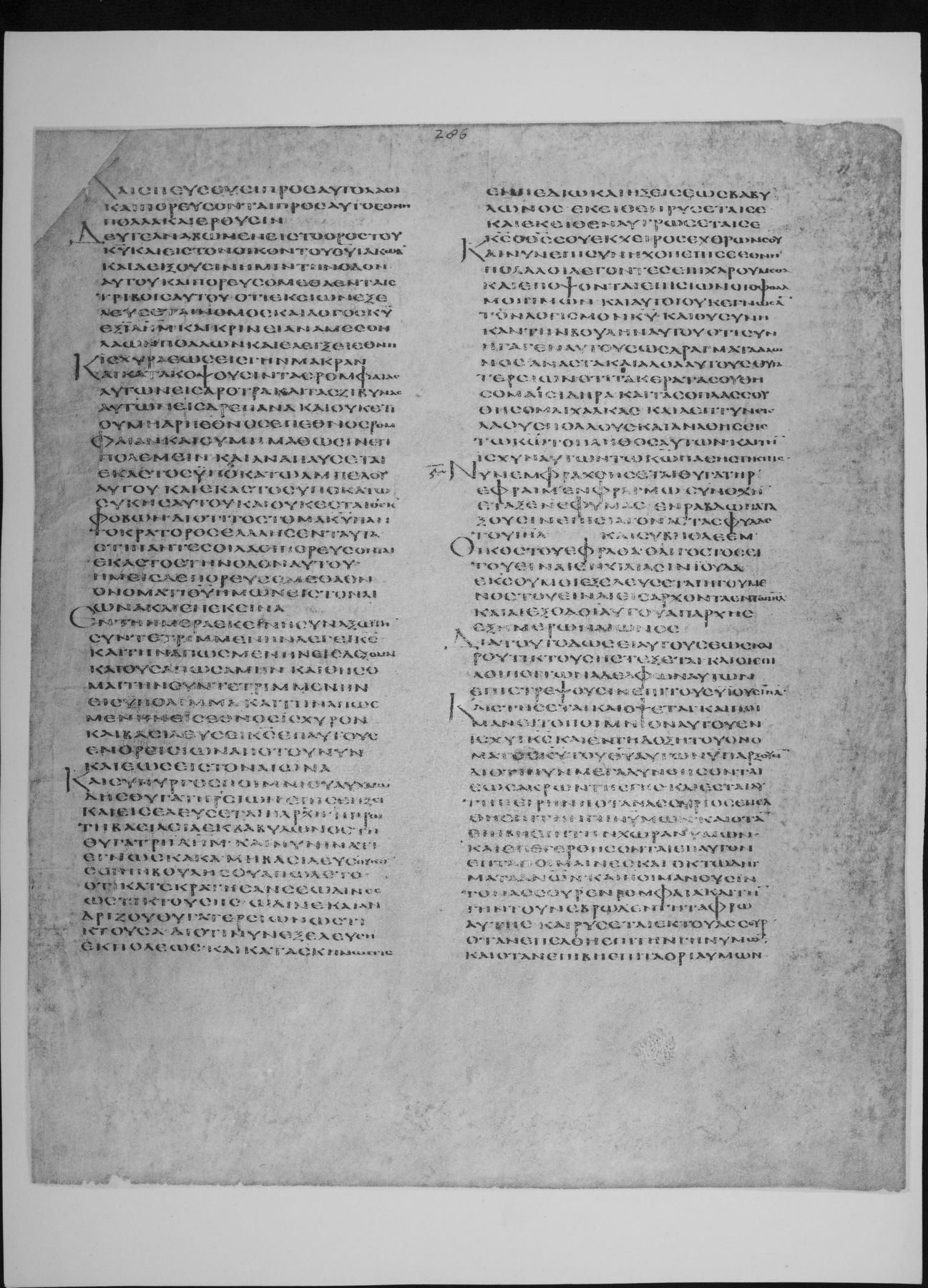
Where on the image
Micah 4:1 is on fol. 285v (full-size facsimile of 1879-83, Internet Archive codex-alexandrinus leaf 595). The 1936 reduced facsimile prints beneath this page: (caption not legible in the scan; range bounded by the captions of leaves 22 and 24). Checked on the plate: the page begins inside Micah 2:7 (first words read: Ο ΟΙΚΟΣ ΙΑΚΩΒ ΠΑΡΩΡΓΙΣΕΝ ΠΝΑ ΚΥ ΕΙ ΤΑΥΤΑ ΤΑ ΕΠΙΤΗΔΕΥΜΑΤΑ ΑΥΤΟΥ ΕΣΤΙΝ ΟΥΧ ΟΙ ΛΟΓΟΙ ΑΥΤΟΥ ΕΙΣΙΝ ΚΑΛΟΙ). Micah 4:1-8 is on fol. 286r (full-size facsimile of 1879-83, Internet Archive codex-alexandrinus leaf 596). The 1936 reduced facsimile prints beneath this page: Mic. iv. 1-v. 6. Checked on the plate: the page begins inside Micah 4:1 (first words read: ΚΑΙ ΣΠΕΥΣΟΥΣΙΝ ΠΡΟΣ ΑΥΤΟ ΛΑΟΙ ΚΑΙ ΠΟΡΕΥΣΟΝΤΑΙ ΕΘΝΗ ΠΟΛΛΑ ΚΑΙ ΕΡΟΥΣΙΝ ΔΕΥΤΕ ΑΝΑΒΩΜΕΝ).
1Καὶ ἔσται ἐπ᾽ ἐσχάτων τῶν ἡμερῶν ἐμφανὲς τὸ ὄρος τοῦ κυρίου, ἕτοιμον ἐπὶ τὰς κορυφὰς τῶν ὀρέων, καὶ μετεωρισθήσεται ὑπεράνω τῶν βουνῶν· καὶ σπεύσουσιν πρὸς αὐτὸ λαοί, 2καὶ πορεύσονται ἔθνη πολλὰ καὶ ἐροῦσιν Δεῦτε ἀναβῶμεν εἰς τὸ ὄρος Κυρίου καὶ εἰς τὸν οἶκον τοῦ θεοῦ Ἰακώβ· καὶ δείξουσιν ἡμῖν τὴν ὁδὸν αὐτοῦ, καὶ πορευσόμεθα ἐν ταῖς τρίβοις αὐτοῦ. ὅτι ἐκ Σειὼν ἐξελεύσεται νόμος, καὶ λόγος Κυρίου ἐξ Ἰερουσαλήμ, 3καὶ κρινεῖ ἀνὰ μέσον λαῶν πολλῶν, καὶ ἐξελέγξει ἔθνη ἰσχυρὰ ἕως εἰς μακράν· καὶ κατακόψουσιν τὰς ῥομφαίας αὐτῶν εἰς ἄροτρα καὶ τὰ δόρατα αὐτῶν εἰς δρέπανα, καὶ οὐκέτι μὴ ἀντάρῃ ἔθνος ἐπ᾽ ἔθνος ῥομφαίαν, καὶ οὐκέτι μὴ μάθωσιν πολεμεῖν· 4καὶ ἀναπαύσεται ἕκαστος ὑποκάτω ἀμπέλου αὐτοῦ, καὶ ἕκαστος ὑποκάτω συκῆς αὐτοῦ, καὶ οὐκ ἔσται ὁ ἐκφοβῶν, διότι τὸ στόμα Κυρίου Παντοκράτορος ἐλάλησεν ταῦτα· 5ὅτι πάντες οἱ λαοὶ πορεύσονται ἕκαστος τὴν ὁδὸν αὐτοῦ, ἡμεῖς δὲ πορευσόμεθα ἐν ὀνόματι Κυρίου θεοῦ ἡμῶν εἰς τὸν αἰῶνα καὶ ἐπέκεινα. 6ἐν τῇ ἡμέρᾳ ἐκείνῃ, λέγει Κύριος, συνάξω τὴν συντετριμμένην, καὶ τὴν ἐξωσμένην εἰσδέξομαι, καὶ οὓς ἀπωσάμην· 7καὶ θήσομαι τὴν συντετριμμένην εἰς ὑπόλιμμα, καὶ τήν ἀπωσμένην εἰς ἔθνος δυνατόν, καὶ βασιλεύσει Κύριος ἐπ᾽ αὐτοὺς ἐν ὄρει Σειὼν ἀπὸ τοῦ νῦν ἕως εἰς τὸν αἰῶνα. 8καὶ σύ, πύργος ποιμνίου αὐχμώδης, θυγάτηρ Σειών, ἐπὶ σὲ ἥξει, καὶ εἰσελεύσεται ἡ ἀρχὴ ἡ πρώτη, βασιλεία ἐκ Βαβυλῶνος τῇ θυγατρὶ Ἰερουσαλήμ.
1And at the last days the mountain of the Lord shall be manifest, established on the tops of the mountains, and it shall be exalted above the hills; and the peoples shall hasten to it. 2And many nations shall go, and say, Come, let us go up to the mountain of the Lord, and to the house of the God of Jacob; and they shall shew us his way, and we will walk in his paths: for out of Sion shall go forth a law, and the word of the Lord from Jerusalem. 3And he shall judge among many peoples, and shall rebuke strong nations afar off; and they shall beat their swords into ploughshares, and their spears into sickles; and nation shall no more lift up sword against nation, neither shall they learn to war any more. 4And every one shall rest under his vine, and every one under his fig-tree; and there shall be none to alarm them: for the mouth of the Lord Almighty has spoken these words. 5For all other nations shall walk every one in his own way, but we will walk in the name of the Lord our God for ever and ever. 6In that day, saith the Lord, I will gather her that is bruised, and will receive her that is cast out, and those whom I rejected. 7And I will make her that was bruised a remnant, and her that was rejected a mighty nation: and the Lord shall reign over them in mount Sion from henceforth, even for ever. 8And thou, dark tower of the flock, daughter of Sion, on thee the dominion shall come and enter in, even the first kingdom from Babylon to the daughter of Jerusalem.
Where on the image
Micah 4:9-13 is on fol. 286r (full-size facsimile of 1879-83, Internet Archive codex-alexandrinus leaf 596). The 1936 reduced facsimile prints beneath this page: Mic. iv. 1-v. 6. Checked on the plate: the page begins inside Micah 4:1 (first words read: ΚΑΙ ΣΠΕΥΣΟΥΣΙΝ ΠΡΟΣ ΑΥΤΟ ΛΑΟΙ ΚΑΙ ΠΟΡΕΥΣΟΝΤΑΙ ΕΘΝΗ ΠΟΛΛΑ ΚΑΙ ΕΡΟΥΣΙΝ ΔΕΥΤΕ ΑΝΑΒΩΜΕΝ).
9Καὶ νῦν ἵνα τί ἔγνως κακά; μὴ βασιλεὺς οὐκ ἦν σοι; ἢ ἡ βουλή σου ἀπώλετο ὅτι κατεκράτησάν σου ὠδῖνες ὡς τικτούσης; 10ὤδινε καὶ ἀνδρίζου καὶ ἔγγιζε, θυγάτηρ Σειών, ὡς τίκτουσα· διότι νῦν ἐξελεύσῃ ἐκ πόλεως, καὶ κατασκηνώσεις ἐν πεδίῳ, καὶ ἥξεις ἕως Βαβυλῶνος· ἐκεῖθεν ῥύσεταί σε Κύριος ὁ θεός σου ἐκ χειρὸς ἐχθρῶν σου. 11καὶ νῦν ἐπισυνήχθη ἐπὶ σὲ ἔθνη πολλὰ λέγοντες Ἐπιχαρούμεθα, καὶ ἐπόψονται ἐπὶ Σειὼν οἱ ὀφθαλμοὶ ἡμῶν. 12αὐτοὶ δὲ οὐκ ἔγνωσαν τὸν λογισμὸν Κυρίου, καὶ οὐ συνῆκαν τὴν βουλήν αὐτοῦ, ὅτι συνήγαγεν αὐτοὺς ὡς δράγματα ἅλωνος. 13ἀνάστηθι καὶ ἀλόα αὐτούς, θυγάτηρ Σειών, ὅτι τὰ κέρατά σου θήσομαι σιδηρᾶ, καὶ τὰς ὁπλάς σου θήσομαι χαλκᾶς· καὶ κατατήξεις λαοὺς πολλούς, καὶ ἀναθήσεις τῷ κυρίῳ τὸ πλῆθος αὐτῶν, καὶ τὴν ἰσχὺν αὐτῶν τῷ κυρίῳ πάσης τῆς γῆς.
9And now, why hast thou known calamities? was there not a king to thee? or has thy counsel perished that pangs as of a woman in travail have seized upon thee? 10Be in pain, and strengthen thyself, and draw near, O daughter of Sion, as a woman in travail: for now thou shalt go forth out of the city, and shalt lodge in the plain, and shalt reach even to Babylon: thence shall the Lord thy God deliver thee, and thence shall he redeem thee out of the hand of thine enemies. 11And now have many nations gathered against thee, saying, We will rejoice, and our eyes shall look upon Sion. 12But they know not the thought of the Lord, and have not understood his counsel: for he has gathered them as sheaves of the floor. 13Arise, and thresh them, O daughter of Sion: for I will make thine horns iron, and I will make thine hoofs brass: and thou shalt utterly destroy many nations, and shalt consecrate their abundance to the Lord, and their strength to the Lord of all the earth.
Cite
Sources
- Source: Codex Alexandrinus (British Library Royal MS 1 D. VI) via the British Museum photographic facsimiles of 1879-83 and 1936 (Internet Archive) + Swete's Septuagint + Brenton's English (holding institution)
- Critical edition: H. B. Swete, The Old Testament in Greek according to the Septuagint (1909)
← previous · → next · v cycle view · l back to library