2 Esdras (Nehemiah), Chapter 10 (Codex Alexandrinus)
Introduction
2 Esdras (Nehemiah) 10 in the Greek Old Testament (the Septuagint) as written in Codex Alexandrinus, a Greek Bible copied in the fifth century, probably in Egypt, and now in the British Library (Royal MS 1 D. VI, the second of its four volumes). It is one of the three great early codices of the whole Greek Bible, with Codex Vaticanus and Codex Sinaiticus.
2 Esdras: the Septuagint gives Ezra and Nehemiah as one book, 2 Esdras (Esdras B); its chapters 11-23 are the book of Nehemiah. This entry uses Nehemiah's chapter numbers, as the digital Swete text does (2 Esdras 11 = Nehemiah 1, and so on); the captions of the 1957 facsimile give both.
Numbering: Swete's Greek and Brenton's English number or divide some verses of this chapter differently (Swete 10:10 = Brenton 10:10-11). Each column keeps its own verse numbers, and sections are cut only where the two texts agree, so each section holds the same passage in both languages.
This entry meets the strict three-criteria standard of the Theosis Library:
- Manuscript scan: the pages of Codex Alexandrinus carrying this chapter (fol. 458r, fol. 458v, fol. 459r), from the full-size photographic (autotype) facsimile published by the British Museum in 1879-1883, as digitised on the Internet Archive. The verse range of every page comes from the reduced photographic facsimile of 1957, which prints it beneath each plate, and the opening words of every page were read on the plate to confirm the page and the verse it begins with. Each section links to the page or pages that hold its verses. Folio numbers are those written at the head of each leaf and visible on the plates.
- Original text: Swete's edition, which here prints the text of Codex Vaticanus (Vat. gr. 1209), the base of his edition, and gives the readings of Alexandrinus only in his apparatus. The Greek column is therefore Vaticanus' text; where Alexandrinus differs, the plate shows what Alexandrinus reads.
- English translation: Sir Lancelot C. L. Brenton, The Septuagint Version of the Old Testament (1844; 1851 edition), a translation of the Greek, public domain, from the eBible.org text.
How was this verified? (Provenance)
Where on the image
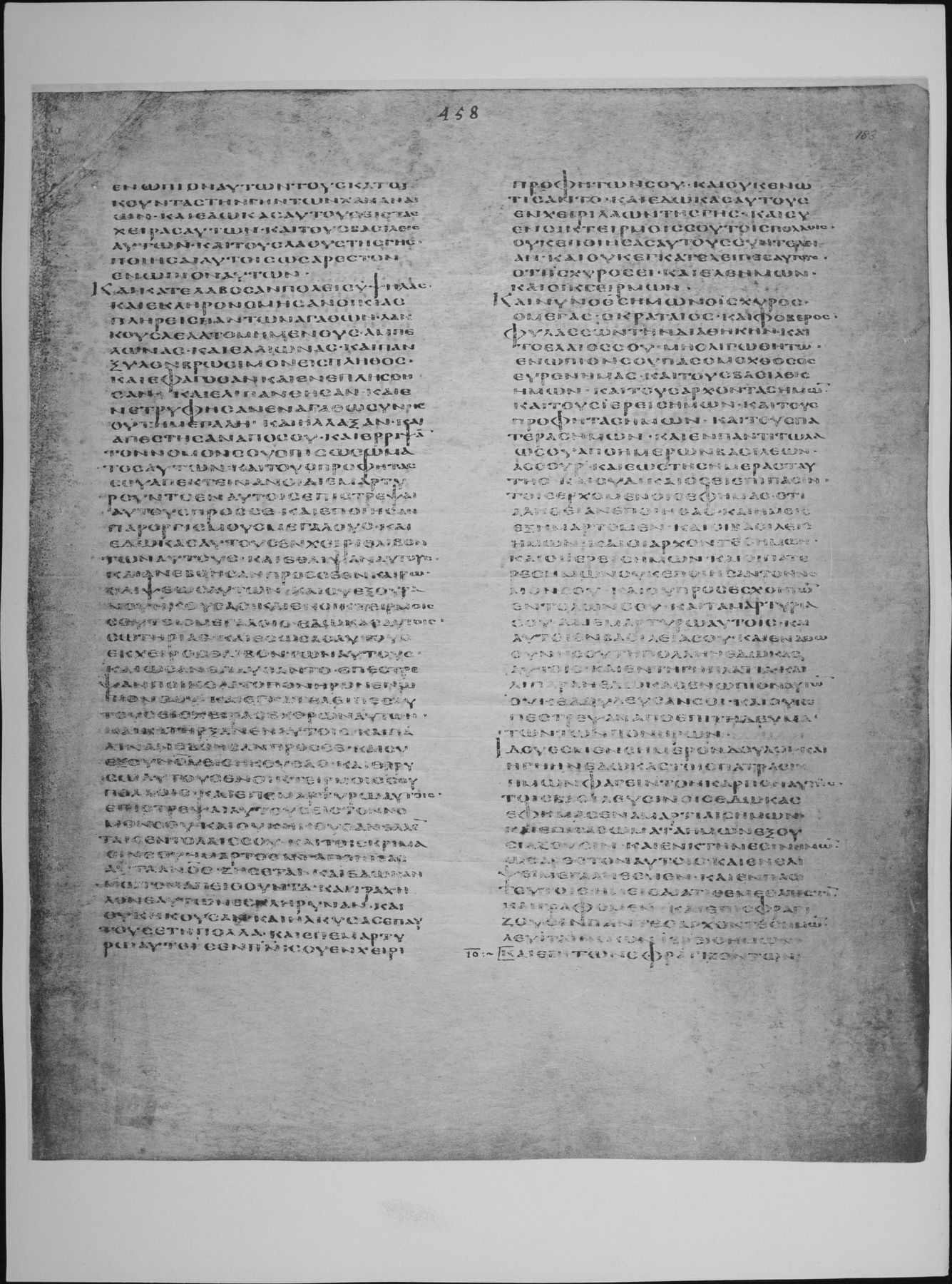
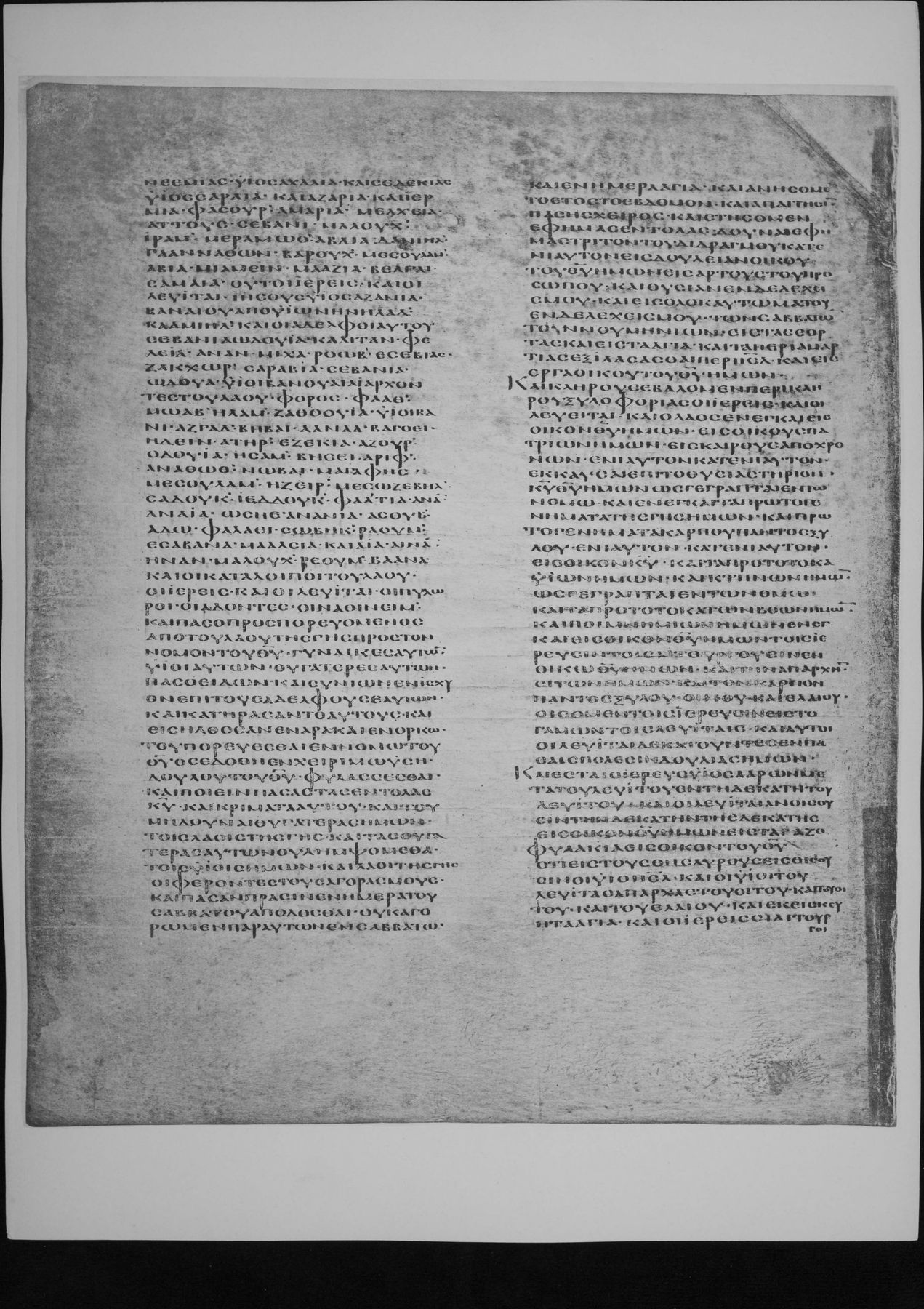
2 Esdras (Nehemiah) 10:1 is on fol. 458r (full-size facsimile of 1879-83, Internet Archive codex-alexandrinus leaf 940). The 1957 reduced facsimile prints beneath this page: 2 Esdras xix. 24-xx. 1 (Nehemiah ix. 24-x. 2). Checked on the plate: the page begins inside 2 Esdras (Nehemiah) 9:24 (first words read: ΕΝΩΠΙΟΝ ΑΥΤΩΝ ΤΟΥΣ ΚΑΤΟΙΚΟΥΝΤΑΣ ΤΗΝ ΓΗΝ ΤΩΝ ΧΑΝΑΝΑΙΩΝ). 2 Esdras (Nehemiah) 10:1-8 is on fol. 458v (full-size facsimile of 1879-83, Internet Archive codex-alexandrinus leaf 941). The 1957 reduced facsimile prints beneath this page: 2 Esdras xx. 1-xx. 39 (Nehemiah x. 2-x. 40). Checked on the plate: the page begins inside 2 Esdras (Nehemiah) 10:1 (first words read: ΝΕΕΜΙΑΣ ΥΙΟΣ ΑΧΑΛΙΑ ΚΑΙ ΣΕΔΕΚΙΑΣ ΥΙΟΣ ΣΑΡΑΙΑ ΚΑΙ ΑΖΑΡΙΑ ΚΑΙ ΙΕΡΜΙΑ).
1Καὶ ἐπὶ τῶν σφραγιζόντων Νεεμίας υἱὸς Ἁχελιά, καὶ Σεδεκίας 2υἱὸς Σαραιά, καὶ Ἀζαριά, καὶ Ἰερμιά, 3Φασούρ, Ἀμαριά, Μελχειά, 4Τούς, Ἐβανεί, Μαλούχ, 5Εἱράμ, Ἀμεραμώς, Ἀβδειά, 6Δανιήλ, Τνατόθ, Βαρούχ, 7Μεσουλάμ, Ἀβειά, Μιαμείμ, 8Ναδειά, Βελσειά, Σαμαιά, οὗτοι ἱερεῖς·
1And over them that sealed were Neemias the Artasastha, son of Achalia, and Zedekias, 2the son of Araea, and Azaria, and Jeremia, 3Phasur, Amaria, Melchia, 4Attus, Sebani, Maluch, 5Iram, Meramoth, Abdia, 6Daniel, Gannathon, Baruch, 7Mesulam, Abia, Miamin, 8Maazia, Belgai, Samaia; these were priests.
Where on the image
2 Esdras (Nehemiah) 10:9-17 is on fol. 458v (full-size facsimile of 1879-83, Internet Archive codex-alexandrinus leaf 941). The 1957 reduced facsimile prints beneath this page: 2 Esdras xx. 1-xx. 39 (Nehemiah x. 2-x. 40). Checked on the plate: the page begins inside 2 Esdras (Nehemiah) 10:1 (first words read: ΝΕΕΜΙΑΣ ΥΙΟΣ ΑΧΑΛΙΑ ΚΑΙ ΣΕΔΕΚΙΑΣ ΥΙΟΣ ΣΑΡΑΙΑ ΚΑΙ ΑΖΑΡΙΑ ΚΑΙ ΙΕΡΜΙΑ).
9καὶ οἱ Λευεῖται, Ἰησοῦς υἱὸς Ἀζανειά, Βαναιοὺ ἀπὸ υἱῶν Ἡναδάβ, Καδμιὴλ 10καὶ οἱ ἀδελφοὶ αὐτοῦ, Σαβανιά, Ὡδουιά, Καντά, 12Ζαχώρ, Ζαραβιά, Σεβανιά, 13Ὡδούμ, υἱοὶ Βενιαμείν· 14ἄρχοντες τοῦ λαοῦ Φόρος, Φααδμωάβ, Ἠλάμ, Ζαθουιά· υἱοὶ Βανί, 15Ἀσγάδ, Βηδαί, 16Ἐδανιά, Βαγοσί, Ἠδείν, 17Ἀδήρ, Ἑζεκιά, Ἀδούρ,
9And the Levites; Jesus the son of Azania, Banaiu of the sons of Enadad, Cadmiel 10and his brethren, Sabania, Oduia, Calitan, Phelia, Anan, 11Micha, Roob, Asebias, 12Zacchor, Sarabia, Sebania, 13Odum, the sons of Banuae. 14The heads of the people; Phoros, Phaath Moab, Elam, Zathuia, 15the sons of Bani, Asgad, Bebai, 16Adania, Bagoi, Hedin 17Ater, Ezekia, Azur,
Where on the image
2 Esdras (Nehemiah) 10:18-25 is on fol. 458v (full-size facsimile of 1879-83, Internet Archive codex-alexandrinus leaf 941). The 1957 reduced facsimile prints beneath this page: 2 Esdras xx. 1-xx. 39 (Nehemiah x. 2-x. 40). Checked on the plate: the page begins inside 2 Esdras (Nehemiah) 10:1 (first words read: ΝΕΕΜΙΑΣ ΥΙΟΣ ΑΧΑΛΙΑ ΚΑΙ ΣΕΔΕΚΙΑΣ ΥΙΟΣ ΣΑΡΑΙΑ ΚΑΙ ΑΖΑΡΙΑ ΚΑΙ ΙΕΡΜΙΑ).
18Ὁδουιά, Ἡσάμ, Βησεί, 19Ἁρείφ, Ἀναθώθ, Βωναί, 20Βαγαφής, Μεσουλάμ, Ἡζείρ, 21Μεσωζεβήλ, Σαδδούκ, 22Φαλτιά, Ἁνάν, Αἰά, 23Ὡσηθά, Ἁνανιά, Ἁσούθ, 24Ἁλωής, Φαδαείς, Σωβήκ, 25Ῥαούμ, Ἑσαβανά, Μαασαιὰ
18Oduia, Esam, Besi, 19Ariph, Anathoth, Nobai, 20Megaphes, Mesullam, Ezir, 21Mesozebel, Saduc, Jeddua, 22Phaltia, Anan, Anaea, 23Osee, Anania, Asub, 24Aloes, Phalai, Sobec, 25Reum, Essabana, Maasia,
Where on the image
2 Esdras (Nehemiah) 10:26-33 is on fol. 458v (full-size facsimile of 1879-83, Internet Archive codex-alexandrinus leaf 941). The 1957 reduced facsimile prints beneath this page: 2 Esdras xx. 1-xx. 39 (Nehemiah x. 2-x. 40). Checked on the plate: the page begins inside 2 Esdras (Nehemiah) 10:1 (first words read: ΝΕΕΜΙΑΣ ΥΙΟΣ ΑΧΑΛΙΑ ΚΑΙ ΣΕΔΕΚΙΑΣ ΥΙΟΣ ΣΑΡΑΙΑ ΚΑΙ ΑΖΑΡΙΑ ΚΑΙ ΙΕΡΜΙΑ).
26καὶ Ἀρά, Αἱνάν, Ἠνάμ, 27Μαλούχ, Ἡράμ, Βαανά. 28Καὶ οἱ κατάλοιποι τοῦ λαοῦ, οἱ ἱερεῖς, οἱ Λευεῖται, οἱ πυλωροί, οἱ ᾄδοντες, οἱ Ναθινείμ, καὶ πᾶς ὁ προσπορευόμενος ἀπὸ λαῶν τῆς γῆς πρὸς νόμον τοῦ θεοῦ, γυναῖκες αὐτῶν, υἱοὶ αὐτῶν, θυγατέρες αὐτῶν· πᾶς ὁ εἰδὼς καὶ συνίων 29ἐνίσχυον ἐπὶ τοὺς ἀδελφοὺς αὐτῶν, κατηράσαντο αὐτοὺς καὶ εἰσήλθοσαν ἐν ἀρᾷ καὶ ἐν ὅρκῳ Τοῦ πορεύεσθαι ἐν νόμῳ τοῦ θεοῦ ὃς ἐδόθη ἐν χειρὶ Μωυσῆ δούλου τοῦ θεοῦ, καὶ φυλάσσεσθαι καὶ ποιεῖν πάσας τὰς ἐντολὰς ἡμῶν καὶ κρίματα αὐτοῦ, 30καὶ τοῦ μὴ δοῦναι θυγατέρας ἡμῶν τοῖς λαοῖς τῆς γῆς, καὶ τὰς θυγατέρας αὐτῶν οὐ λημψόμεθα τοῖς υἱοῖς ἡμῶν· 31καὶ λαοὶ τῆς γῆς οἱ φέροντες τοὺς ἀγορασμοὺς καὶ πᾶσαν πρᾶσιν ἐν ἡμέρᾳ τοῦ σαββάτου ἀποδόσθαι, οὐκ ἀγορῶμεν παρ᾽ αὐτῶν ἐν σαββάτῳ καὶ ἐν ἡμέρᾳ ἁγίᾳ· καὶ ἀνήσομεν τὸ ἔτος τὸ ζ᾽ καὶ ἀπαίτησιν πάσης χειρός. 32καὶ ποιήσομεν ἐφ᾽ ἡμᾶς ἐντολάς, δοῦναι ἐφ᾽ ἡμᾶς τρίτον τοῦ διδράχμου κατ᾽ ἐνιαυτὸν εἰς δουλείαν οἴκου θεοῦ ἡμῶν, 33εἰς ἄρτους τοῦ προσώπου καὶ θυσίαν τοῦ ἐνδελεχισμοῦ, καὶ εἰς ὁλοκαύτωμα τοῦ ἐνδελεχισμοῦ τῶν σαββάτων, τῶν νουμηνιῶν, εἰς τὰς ἑορτὰς καὶ εἰς τὰ ἅγια, καὶ τὰ περὶ ἁμαρτίας ἐξιλάσασθαι περὶ Ἰσραήλ, καὶ εἰς ἔργα οἴκου θεοῦ ἡμῶν.
26and Aia, Aenan, Enam, 27Maluch, Eram, Baana. 28And the rest of the people, the priests, the Levites, the porters, the singers, the Nathinim, and every one who drew off from the nations of the land to the law of God, their wives, their sons, their daughters, every one who had knowledge and understanding, 29were urgent with their brethren, and bound them under a curse, and entered into a curse, and into an oath, to walk in the law of God, which was given by the hand of Moses, the servant of God; to keep and to do all the commandments of the Lord, and his judgments, and his ordinances; 30and that we will not, they said, give our daughters to the people of the land, nor will we take their daughters to our sons. 31And as for the people of the land who bring wares and all manner of merchandise to sell on the sabbath-day, we will not buy of them on the sabbath or on the holy day: and we will leave the seventh year, and the exaction of every debt. 32And we will impose ordinances upon ourselves, to levy on ourselves the third part of a didrachm yearly for the service of the house of our God; 33the shewbread, and the continual meat-offering, and for the continual whole-burnt-offering, of the sabbaths, of the new moon, for the feast, and for the holy things, and the sin-offerings, to make atonement for Israel, and for the works of the house of our God.
Where on the image
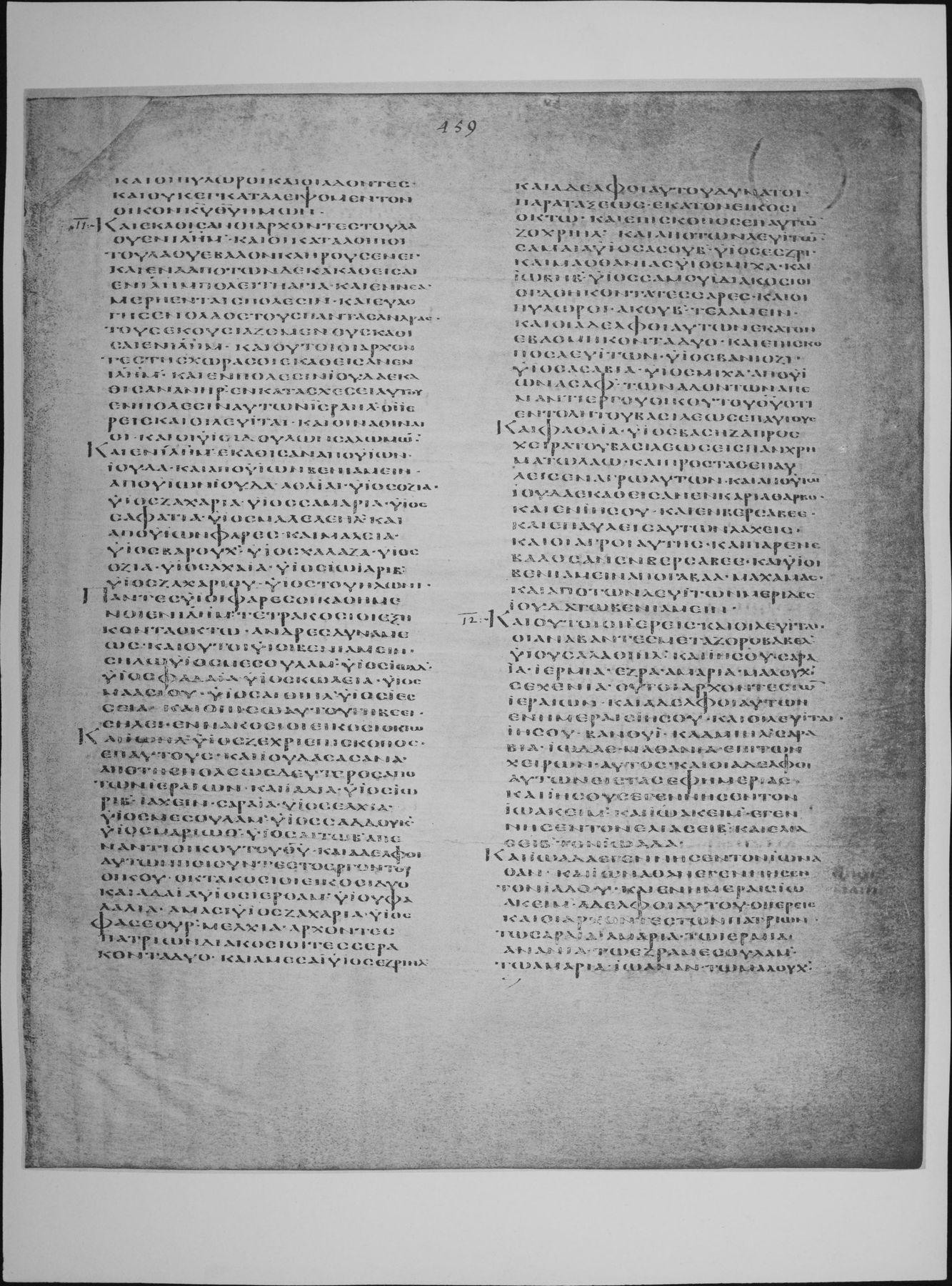
2 Esdras (Nehemiah) 10:34-39 is on fol. 458v (full-size facsimile of 1879-83, Internet Archive codex-alexandrinus leaf 941). The 1957 reduced facsimile prints beneath this page: 2 Esdras xx. 1-xx. 39 (Nehemiah x. 2-x. 40). Checked on the plate: the page begins inside 2 Esdras (Nehemiah) 10:1 (first words read: ΝΕΕΜΙΑΣ ΥΙΟΣ ΑΧΑΛΙΑ ΚΑΙ ΣΕΔΕΚΙΑΣ ΥΙΟΣ ΣΑΡΑΙΑ ΚΑΙ ΑΖΑΡΙΑ ΚΑΙ ΙΕΡΜΙΑ). 2 Esdras (Nehemiah) 10:39 is on fol. 459r (full-size facsimile of 1879-83, Internet Archive codex-alexandrinus leaf 942). The 1957 reduced facsimile prints beneath this page: 2 Esdras xx. 39-xxii. 14 (Nehemiah x. 40-xii. 14). Checked on the plate: the page begins inside 2 Esdras (Nehemiah) 10:39 (first words read: ΚΑΙ ΟΙ ΠΥΛΩΡΟΙ ΚΑΙ ΟΙ ΑΔΟΝΤΕΣ ΚΑΙ ΟΥΚ ΕΓΚΑΤΑΛΕΙΨΟΜΕΝ ΤΟΝ ΟΙΚΟΝ ΘΥ ΗΜΩΝ).
34καὶ κλήρους ἐβάλομεν περὶ κλήρου ξυλοφορίας οἱ ἱερεῖς καὶ οἱ Λευεῖται καὶ ὁ λαὸς ἐνέγκαι εἰς οἶκον θεοῦ ἡμῶν, εἰς οἶκον πατριῶν ἡμῶν, εἰς καιροὺς χρόνων ἐνιαυτὸν κατ᾽ ἐνιαυτόν, ἐκκαῦσαι περὶ τὸ θυσιαστήριον τοῦ θεοῦ ἡμῶν, ὡς γέγραπται ἐν βιβλίῳ· 35καὶ ἐνέγκαι τὰ πρωτογενήματα τῆς γῆς ἡμῶν καὶ πρωτογενήματα καρποῦ παντὸς ξύλου ἐνιαυτὸν κατ᾽ ἐνιαυτὸν εἰς οἶκον, 36καὶ τὰ πρωτότοκα υἱῶν ἡμῶν καὶ κτηνῶν ἡμῶν, ὡς γέγραπται ἐν τῷ νόμῳ, καὶ τὰ πρωτότοκα βοῶν ἡμῶν καὶ ποιμνίων ἡμῶν ἐνέγκαι εἰς οἶκον θεοῦ ἡμῶν τοῖς ἱερεῦσιν τοῖς λειτουργοῦσιν ἐν οἴκῳ θεοῦ ἡμῶν. 37καὶ τὴν ἀπαρχὴν σίτων ἡμῶν καὶ τὸν καρπὸν παντὸς ξύλου, οἴνου καὶ ἐλαίου, οἴσομεν τοῖς ἱερεῦσι, εἰς γαζοφυλάκιον οἴκου τοῦ θεοῦ, καὶ δεκάτην γῆς ἡμῶν τοῖς Λευείταις· καὶ αὐτοὶ οἱ Λευεῖται δεκατοῦντες ἐν πάσαις πόλεσιν δουλείας ἡμῶν. 38καὶ ἔσται ὁ ἱερεὺς Ἀαρὼν μετὰ τοῦ Λευείτου ἐν τῇ δεκάτῃ τοῦ Λευείτου, καὶ οἱ Λευεῖται ἀνοίσουσιν τὴν δεκάτην τῆς δεκάδος εἰς οἶκον θεοῦ ἡμῶν εἰς τὰ γαζοφυλάκια εἰς οἶκον τοῦ θεοῦ. 39ὅτι εἰς τοὺς θησαυροὺς οἴσουσιν οἱ υἱοὶ Ἰσραὴλ καὶ οἱ Λευεῖται ἀπαρχὰς τοῦ σίτου καὶ τοῦ οἴνου καὶ τοῦ ἐλαίου, καὶ ἐκεῖ σκεύη τὰ ἅγια καὶ οἱ ἱερεῖς καὶ οἱ λειτουργοὶ καὶ οἱ πυλωροὶ καὶ οἱ ᾄδοντες· καὶ οὐκ ἐνκαταλείψομεν τὸν οἶκον τοῦ θεοῦ ἡμῶν.
34And we cast lots for the office of wood-bearing, we the priests, and the Levites, and the people, to bring wood into the house of our God, according to the house of our families, at certain set times, year by year, to burn on the altar of the Lord our God, as it is written in the law: 35and to bring the first-fruits of our land, and the first-fruits of the fruit of every tree, year by year, into the house of the Lord: 36the first-born of our sons, and of our cattle, as it is written in the law, and the first-born of our herds and of our flocks, to bring to the house of our God, for the priests that minister in the house of our God. 37And the first-fruits of our corn, and the fruit of every tree, of wine, and of oil, will we bring to the priests to the treasury of the house of God; and a tithe of our land to the Levites: for the Levites themselves shall receive tithes in all the cities of the land we cultivate. 38And the priest the son of Aaron shall be with the Levites in the tithe of the Levite: and the Levites shall bring up the tenth part of their tithe to the house of our God, into the treasuries of the house of God. 39For the children of Israel and the children of Levi shall bring into the treasuries the first-fruits of the corn, and wine, and oil; and there are the holy vessels, and the priests, and the ministers, and the porters, and the singers: and we will not forsake the house of our God.
Cite
Sources
- Source: Codex Alexandrinus (British Library Royal MS 1 D. VI) via the British Museum photographic facsimiles of 1879-83 and 1957 (Internet Archive) + Swete's Septuagint + Brenton's English (holding institution)
- Critical edition: H. B. Swete, The Old Testament in Greek according to the Septuagint (1909)
← previous · → next · v cycle view · l back to library