2 Esdras (Nehemiah), Chapter 13 (Codex Alexandrinus)
Introduction
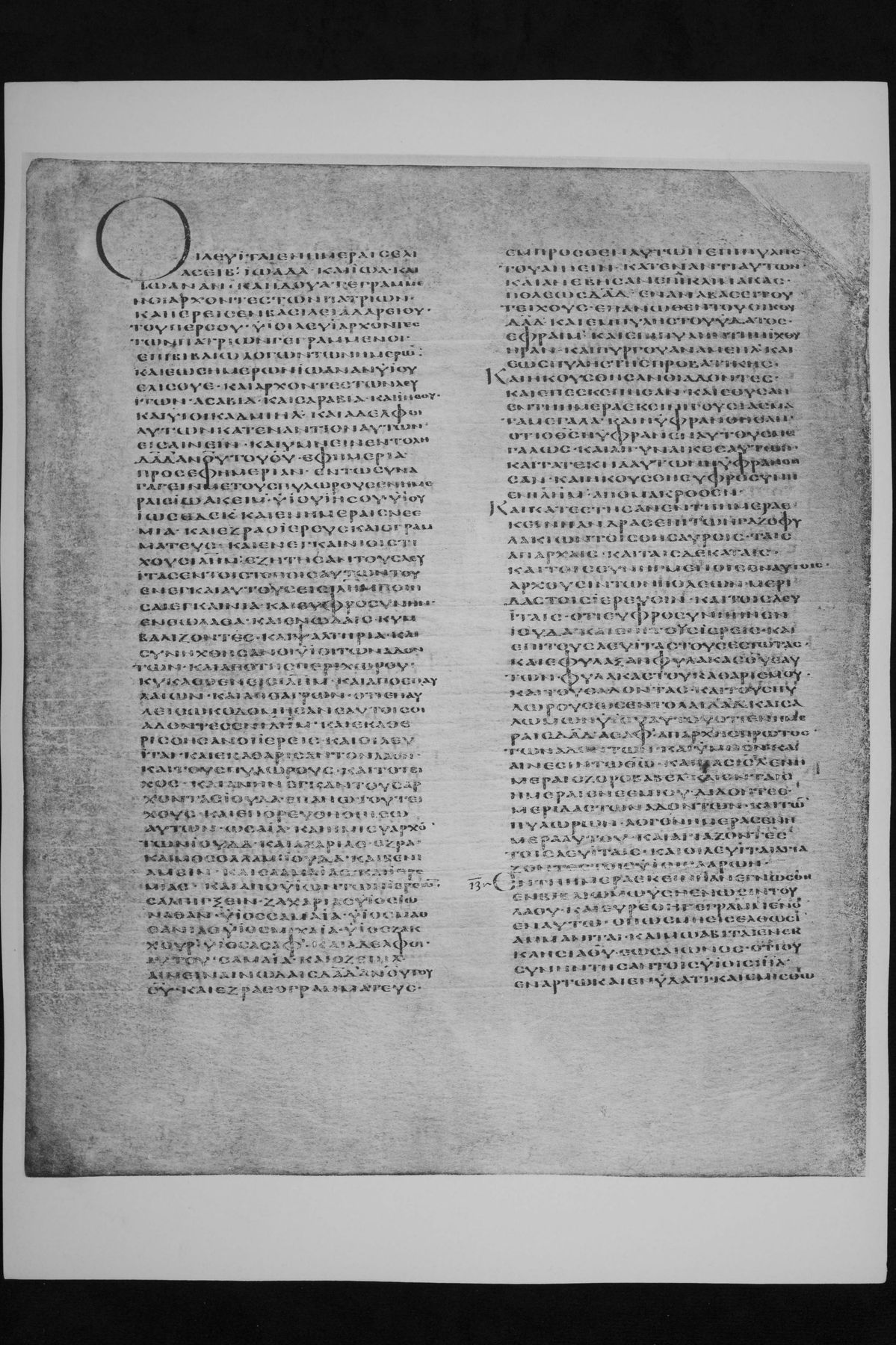
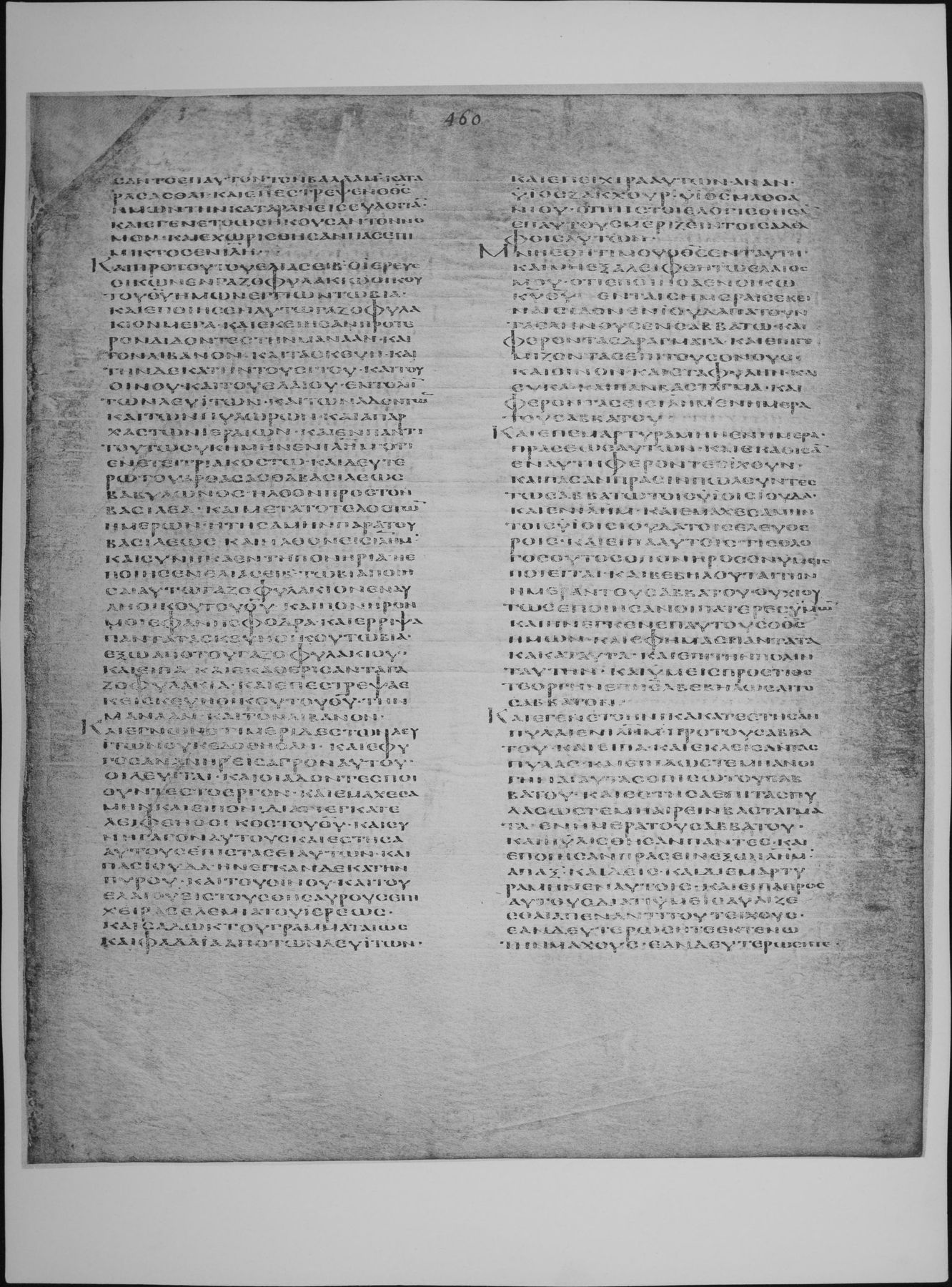
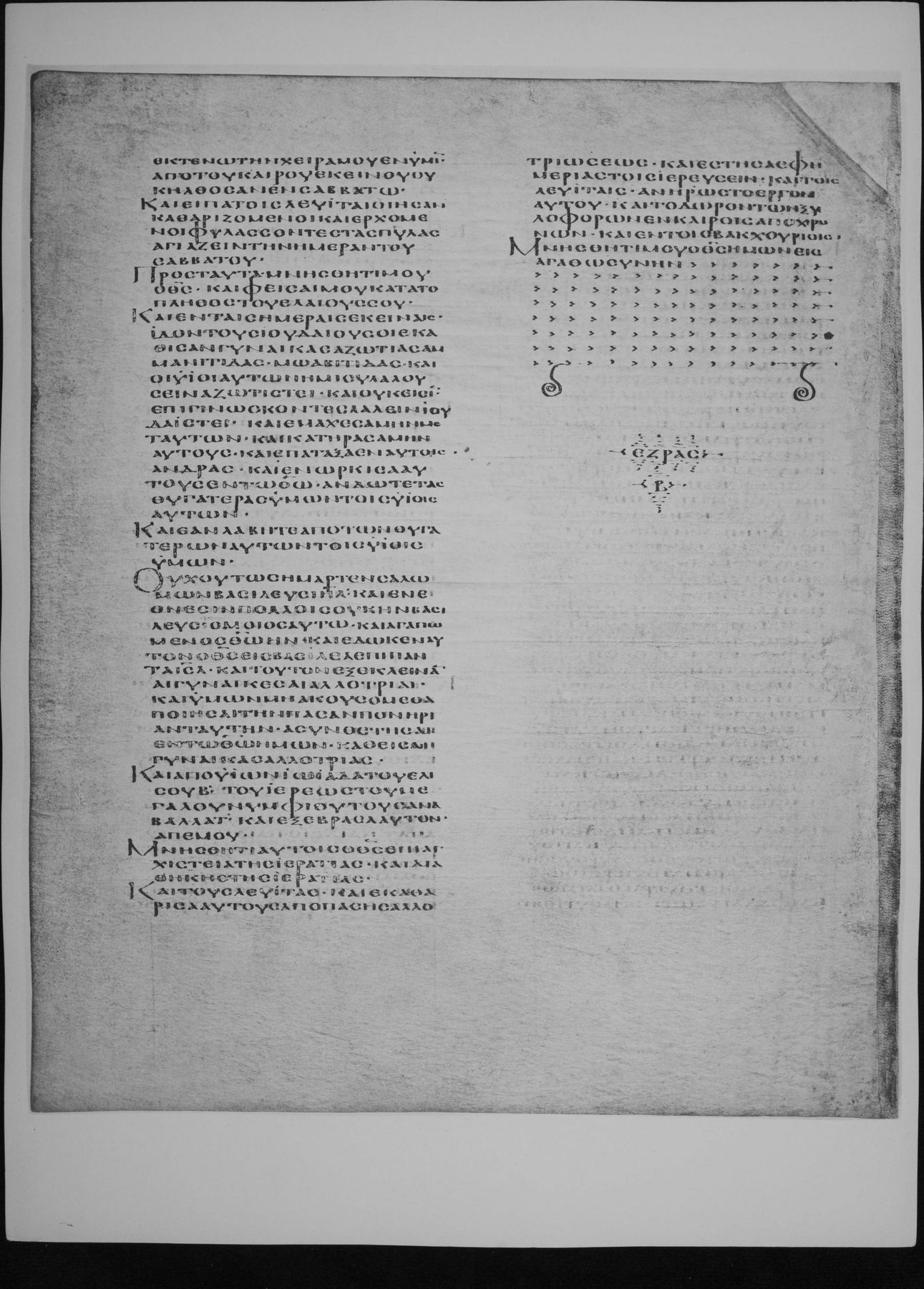
2 Esdras (Nehemiah) 13 in the Greek Old Testament (the Septuagint) as written in Codex Alexandrinus, a Greek Bible copied in the fifth century, probably in Egypt, and now in the British Library (Royal MS 1 D. VI, the second of its four volumes). It is one of the three great early codices of the whole Greek Bible, with Codex Vaticanus and Codex Sinaiticus.
2 Esdras: the Septuagint gives Ezra and Nehemiah as one book, 2 Esdras (Esdras B); its chapters 11-23 are the book of Nehemiah. This entry uses Nehemiah's chapter numbers, as the digital Swete text does (2 Esdras 11 = Nehemiah 1, and so on); the captions of the 1957 facsimile give both.
This entry meets the strict three-criteria standard of the Theosis Library:
- Manuscript scan: the pages of Codex Alexandrinus carrying this chapter (fol. 459v, fol. 460r, fol. 460v), from the full-size photographic (autotype) facsimile published by the British Museum in 1879-1883, as digitised on the Internet Archive. The verse range of every page comes from the reduced photographic facsimile of 1957, which prints it beneath each plate, and the opening words of every page were read on the plate to confirm the page and the verse it begins with. Each section links to the page or pages that hold its verses. Folio numbers are those written at the head of each leaf and visible on the plates.
- Original text: Swete's edition, which here prints the text of Codex Vaticanus (Vat. gr. 1209), the base of his edition, and gives the readings of Alexandrinus only in his apparatus. The Greek column is therefore Vaticanus' text; where Alexandrinus differs, the plate shows what Alexandrinus reads.
- English translation: Sir Lancelot C. L. Brenton, The Septuagint Version of the Old Testament (1844; 1851 edition), a translation of the Greek, public domain, from the eBible.org text.
How was this verified? (Provenance)
Where on the image
2 Esdras (Nehemiah) 13:1-2 is on fol. 459v (full-size facsimile of 1879-83, Internet Archive codex-alexandrinus leaf 943). The 1957 reduced facsimile prints beneath this page: 2 Esdras xxii. 22-xxiii. 2 (Nehemiah xii. 22-xiii. 2). Checked on the plate: the page begins at the start of 2 Esdras (Nehemiah) 12:22 (first words read: ΟΙ ΛΕΥΙΤΑΙ ΕΝ ΗΜΕΡΑΙΣ ΕΛΙΑΣΕΙΒ ΙΩΑΔΑ ΚΑΙ ΙΩΑ ΚΑΙ ΙΩΑΝΑΝ ΚΑΙ ΙΑΔΟΥΑ ΓΕΓΡΑΜΜΕΝΟΙ). 2 Esdras (Nehemiah) 13:2-8 is on fol. 460r (full-size facsimile of 1879-83, Internet Archive codex-alexandrinus leaf 944). The 1957 reduced facsimile prints beneath this page: 2 Esdras xxiii. 2-xxiii. 21 (Nehemiah xiii. 2-xiii. 21). Checked on the plate: the page begins inside 2 Esdras (Nehemiah) 13:2 (first words read: ΣΑΝΤΟ ΕΠ ΑΥΤΟΝ ΤΟΝ ΒΑΛΑΑΜ ΚΑΤΑΡΑΣΑΣΘΑΙ ΚΑΙ ΕΣΤΡΕΨΕΝ Ο ΘΣ ΗΜΩΝ ΤΗΝ ΚΑΤΑΡΑΝ).
1Ἐν τῇ ἡμέρᾳ ἐκείνῃ ἀνεγνώσθη ἐν βιβλίῳ Μωυσῆ ἐν ὠσὶν τοῦ λαοῦ· καὶ εὑρέθη γεγραμμένον ἐν αὐτῷ ὅπως μὴ εἰσέλθωσιν Ἀμμανεῖται καὶ Μωαβεῖται ἐν ἐκκλησίᾳ θεοῦ ἕως αἰῶνος, 2ὅτι οὐ συνήντησαν τοῖς υἱοῖς Ἰσραὴλ ἐν ἄρτῳ καὶ ἐν ὕδατι, καὶ ἐμισθώσαντο ἐπ᾽ αὐτὸν τὸν Βαλαὰμ καταράσασθαι, καὶ ἔστρεψεν ὁ θεὸς ἡμῶν τὴν κατάραν εἰς εὐλογίαν. 3καὶ ἐγένετο ὡς ἤκουσαν τὸν νόμον, καὶ ἐχωρίσθησαν πᾶς ἐπίμικτος ἐν Ἰσραήλ. 4Καὶ πρὸ τούτου Ἐλιασεὶβ ὁ ἱερεὺς οἰκῶν ἐν γαζοφυλακίῳ οἴκου θεοῦ ἡμῶν ἐγγίων Τωβιά. 5καὶ ἐποίησεν ἑαυτῷ γαζοφυλάκιον μέγα, καὶ ἐκεῖ ἦσαν τὸ πρότερον διδόντες τὴν μαναὰμ καὶ τὸν λίβανον καὶ τὰ σκεύη, καὶ τὴν δεκάτην τοῦ σίτου καὶ τοῦ οἴνου καὶ τοῦ ἐλαίου, ἐντολὴν τῶν Λευειτῶν καὶ τῶν ᾀδόντων καὶ τῶν πυλωρῶν, καὶ ἀπαρχαὶ τῶν ἱερέων. 6καὶ ἐν παντὶ τούτῳ οὐκ ἤμην ἐν Ἰερουσαλήμ, ὅτι ἐν ἔτει τριακοστῷ καὶ δευτέρῳ τοῦ Ἀρσασαθὰ βασιλέως Βαβυλῶνος ἦλθον πρὸς τὸν βασιλέα, καὶ μετὰ τέλος ἡμερῶν ᾐτησάμην τὸν βασιλέα, 7καὶ ἦλθον εἰς Ἰερουσαλήμ· καὶ συνῆκα ἐν πονηρίᾳ, ποιῆσαι αὐτῷ γαζοφυλάκιον ἐν αὐλῇ οἴκου τοῦ θεοῦ. 8καὶ πονηρόν μοι ἐφάνη σφόδρα, καὶ ἔρριψα πάντα τὰ σκεύη οἴκου Τωβιὰ ἀπὸ τοῦ γαζοφυλακίου·
1In that day they read in the book of Moses in the ears of the people; and it was found written in it, that the Ammonites and Moabites should not enter into the congregation of God for ever; 2because they met not the children of Israel with bread and water, but hired Balaam against them to curse them: but our God turned the curse into a blessing. 3And it came to pass, when they heard the law, that they were separated, even every alien in Israel. 4And before this time Eliasib the priest dwelt in the treasury of the house of our God, connected with Tobias; 5and he made himself a great treasury, and there they were formerly in the habit of bestowing the offerings, and the frankincense, and the vessels, and the tithe of the corn, and the wine, and the oil, the ordered portion of the Levites, and singers, and porters; and the first-fruits of the priests. 6But in all this time I was not in Jerusalem; for in the thirty-second year of Arthasastha king of Babylon I came to the king, and after a certain time I made my request of the king; 7and I came to Jerusalem, and I understood the mischief which Eliasib had done in the case of Tobias, in making for him a treasury in the court of the house of God. 8And it appeared very evil to me: so I cast forth all the furniture of the house of Tobias from the treasury.
Where on the image
2 Esdras (Nehemiah) 13:9-16 is on fol. 460r (full-size facsimile of 1879-83, Internet Archive codex-alexandrinus leaf 944). The 1957 reduced facsimile prints beneath this page: 2 Esdras xxiii. 2-xxiii. 21 (Nehemiah xiii. 2-xiii. 21). Checked on the plate: the page begins inside 2 Esdras (Nehemiah) 13:2 (first words read: ΣΑΝΤΟ ΕΠ ΑΥΤΟΝ ΤΟΝ ΒΑΛΑΑΜ ΚΑΤΑΡΑΣΑΣΘΑΙ ΚΑΙ ΕΣΤΡΕΨΕΝ Ο ΘΣ ΗΜΩΝ ΤΗΝ ΚΑΤΑΡΑΝ).
9καὶ εἶπα, καὶ ἐκαθάρισα τὰ γαζοφυλάκια, καὶ ἐπέστρεψα ἐκεῖ σκεύη οἴκου τοῦ θεοῦ, τὴν μαννὰ καὶ τὸν λίβανον. 10Καὶ ἔγνων ὅτι μερίδες τῶν Λευειτῶν οὐκ ἐδόθησαν, καὶ ἐφύγοσαν ἀνὴρ εἰς ἀγρὸν αὐτοῦ οἱ Λευεῖται καὶ οἱ ᾄδοντες ποιοῦντες τὸ ἔργον. 11καὶ ἐμαχεσάμην καὶ εἶπα Διὰ τί ἐγκατελείφθη ὁ οἶκος τοῦ θεοῦ; καὶ συνήγαγον αὐτούς, καὶ ἔστησαν αὐτοὺς ἐπὶ τῇ στάσει αὐτῶν. 12καὶ πᾶς Ἰούδας ἤνεγκαν δεκάτην τοῦ πυροῦ καὶ τοῦ οἴνου καὶ τοῦ ἐλαίου εἰς τοὺς θησαυρούς, 13ἐπὶ χεῖρα Σελεμιὰ τοῦ ἱερέως καὶ Σαδδοὺκ τοῦ γραμματέως καὶ Φαδαιὰ ἀπὸ τῶν Λευειτῶν· καὶ ἐπὶ χεῖρα αὐτῶν Ἁνὰν υἱὸς Ζακχοὺρ υἱὸς Ναθανιά, ὅτι πιστοὶ ἐλογίσθησαν ἐπ᾽ αὐτοὺς μερίζειν τοῖς ἀδελφοῖς αὐτῶν. 14μνήσθητί μου ὁ θεὸς ἐν αὐτῇ, καὶ μὴ ἐξαλειφθήτω ἔλεός μου ὃ ἐποίησα ἐν οἴκῳ Κυρίου τοῦ θεοῦ. 15Ἐν ταῖς ἡμέραις ἐκείναις εἶδον ἐν Ἰούδᾳ πατοῦντας ληνοὺς ἐν τῷ σαββάτῳ· καὶ φέροντες δράγματα καὶ ἐπιγεμίζοντες ἐπὶ τοὺς ὄνους καὶ οἶνον καὶ σταφυλὴν καὶ σῦκα καὶ πᾶν βάσταγμα, καὶ φέροντες εἰς Ἰερουσαλὴμ ἐν ἡμέρᾳ τοῦ σαββάτου· καὶ ἐπεμαρτυράμην ἐν ἡμέρᾳ πράσεως αὐτῶν. 16καὶ ἐκάθισαν ἐν αὐτῇ φέροντες ἰχθὺν καὶ πᾶσαν πρᾶσιν πωλοῦντες ἐν τῷ σαββάτῳ τοῖς υἱοῖς Ἰούδα καὶ ἐν Ἰερουσαλήμ.
9And I gave orders, and they purified the treasuries: and I restored thither the vessels of the house of God, and the offerings, and the frankincense. 10And I understood that the portion of the Levites had not been given: and they had fled every one to his field, the Levites and the singers doing the work. 11And I strove with the commanders, and said, Wherefore has the house of God been abandoned? and I assembled them, and set them in their place. 12And all Juda brought a tithe of the wheat and the wine and the oil into the treasuries, 13to the charge of Selemia the priest, and Sadoc the scribe, and Phadaea of the Levites: and next to them was Anan the son of Zacchur, son of Matthanias; for they were accounted faithful: it was their office to distribute to their brethren. 14Remember me, O God, in this, and let not my kindness be forgotten which I have wrought in regard to the house of the Lord God. 15In those days I saw in Juda men treading wine-presses on the sabbath, and carrying sheaves, and loading asses with both wine, and grapes, and figs, and every kind of burden, and bringing them into Jerusalem on the sabbath-day: 16and I testified in the day of their sale. Also their dwelt in it men bringing fish, and selling every kind of merchandise to the children of Juda and in Jerusalem on the sabbath.
Where on the image
2 Esdras (Nehemiah) 13:17-21 is on fol. 460r (full-size facsimile of 1879-83, Internet Archive codex-alexandrinus leaf 944). The 1957 reduced facsimile prints beneath this page: 2 Esdras xxiii. 2-xxiii. 21 (Nehemiah xiii. 2-xiii. 21). Checked on the plate: the page begins inside 2 Esdras (Nehemiah) 13:2 (first words read: ΣΑΝΤΟ ΕΠ ΑΥΤΟΝ ΤΟΝ ΒΑΛΑΑΜ ΚΑΤΑΡΑΣΑΣΘΑΙ ΚΑΙ ΕΣΤΡΕΨΕΝ Ο ΘΣ ΗΜΩΝ ΤΗΝ ΚΑΤΑΡΑΝ). 2 Esdras (Nehemiah) 13:21-24 is on fol. 460v (full-size facsimile of 1879-83, Internet Archive codex-alexandrinus leaf 945). The 1957 reduced facsimile prints beneath this page: 2 Esdras xxiii. 21-xxiii. 31 [end] (Nehemiah xiii. 21-xiii. 31). Checked on the plate: the page begins inside 2 Esdras (Nehemiah) 13:21 (first words read: ΕΚΤΕΝΩ ΤΗΝ ΧΕΙΡΑ ΜΟΥ ΕΝ ΥΜΙΝ ΑΠΟ ΤΟΥ ΚΑΙΡΟΥ ΕΚΕΙΝΟΥ ΟΥΚ ΗΛΘΟΣΑΝ ΕΝ ΣΑΒΒΑΤΩ).
17καὶ ἐμαχεσάμην τοῖς υἱοῖς Ἰούδα τοῖς ἐλευθέροις καὶ εἶπα αὐτοῖς Τίς ὁ λόγος ὁ πονηρὸς οὗτος ὃν ὑμεῖς ποιεῖτε, καὶ βεβηλοῦτε τὴν ἡμέραν τοῦ σαββάτου; 18οὐχὶ οὕτως ἐποίησαν οἱ πατέρες ὑμῶν, καὶ ἤνεγκεν ἐπ᾽ αὐτοὺς ὁ θεὸς ἡμῶν καὶ ἐφ᾽ ἡμᾶς πάντα τὰ κακὰ ταῦτα καὶ ἐπὶ τὴν πόλιν ταύτην; καὶ ὑμεῖς προστίθετε ὀργὴν ἐπὶ Ἰσραήλ, βεβηλῶσαι τὸ σάββατον; 19καὶ ἐγένετο ἡνίκα κατέστησαν πύλαι Ἰερουσαλὴμ πρὸ τοῦ σαββάτου, καὶ ἔκλεισα τὰς πύλας, καὶ εἶπα ὥστε μὴ ἀνοιγῆναι αὐτὰς ὀπίσω τοῦ σαββάτου· καὶ ἔστησα ἐπὶ τὰς πύλας, ὥστε μὴ αἴρειν βαστάγματα ἐν ἡμέρᾳ τοῦ σαββάτου. 20καὶ ηὐλίσθησαν πάντες καὶ ἐποίησαν πρᾶσιν ἔξω Ἰερουσαλὴμ ἅπαξ καὶ δίς. 21καὶ ἐπεμαρτυράμην ἐν αὐτοῖς καὶ εἶπα πρὸς αὐτούς Διὰ τί ὑμεῖς αὐλίζεσθε ἀπέναντι τοῦ τείχους; ἐὰν δευτερώσητε, ἐκτενῶ χεῖρά μου ἐν ὑμῖν. ἀπὸ τοῦ καιροῦ ἐκείνου οὐκ ἤλθοσαν ἐν σαββάτῳ. 22καὶ εἶπα τοῖς Λευείταις, οἳ ἦσαν καθαριζόμενοι καὶ ἐρχόμενοι φυλάσσοντες τὰς πύλας, ἁγιάζοντες τὴν ἡμέραν τοῦ σαββάτου. πρὸς ταῦτα μνήσθητί μου, ὁ θεός, καὶ φεῖσαί μου κατὰ τὸ πλῆθος τοῦ ἐλέους σου. 23Καὶ ἐν ταῖς ἡμέραις ἐκείναις εἶδον τοὺς Ἰουδαίους οἳ ἐκάθισαν γυναῖκας Ἀζωτίας, Ἀμμανείτιδας, Μωαβείτιδας, 24καὶ οἱ υἱοὶ αὐτῶν ἥμισυ λαλοῦντες Ἀζωτιστί, καὶ οὐκ εἰσὶν ἐπιγινώσκοντες λαλεῖν Ἰουδαιστί.
17And I strove with the free children of Juda, and said to them, What is this evil thing which ye do, and profane the sabbath-day? 18Did not your fathers thus, and our God brought upon them and upon us and upon this city all these evils? and do ye bring additional wrath upon Israel by profaning the sabbath? 19And it came to pass, when the gates were set up in Jerusalem, before the sabbath, that I spoke, and they shut the gates; and I gave orders that they should not be opened till after the sabbath: and I set some of my servants at the gates, that none should bring in burdens on the sabbath-day. 20So all the merchants lodged, and carried on traffic without Jerusalem once or twice. 21Then I testified against them, and said to them, Why do ye lodge in front of the wall? if ye do so again, I will stretch out my hand upon you. From that time they came not on the sabbath. 22and I told the Levites who were purifying themselves, and came and kept the gates, that they should sanctify the sabbath-day. Remember me, O God, for these things, and spare me according to the abundance of thy mercy. 23And in those days I saw the Jews who had married women of Ashdod, of Ammon, and of Moab: 24and their children spoke half in the language of Ashdod, and did not know how to speak in the Jewish language.
Where on the image
2 Esdras (Nehemiah) 13:25-31 is on fol. 460v (full-size facsimile of 1879-83, Internet Archive codex-alexandrinus leaf 945). The 1957 reduced facsimile prints beneath this page: 2 Esdras xxiii. 21-xxiii. 31 [end] (Nehemiah xiii. 21-xiii. 31). Checked on the plate: the page begins inside 2 Esdras (Nehemiah) 13:21 (first words read: ΕΚΤΕΝΩ ΤΗΝ ΧΕΙΡΑ ΜΟΥ ΕΝ ΥΜΙΝ ΑΠΟ ΤΟΥ ΚΑΙΡΟΥ ΕΚΕΙΝΟΥ ΟΥΚ ΗΛΘΟΣΑΝ ΕΝ ΣΑΒΒΑΤΩ).
25καὶ ἐμαχεσάμην μετ᾽ αὐτῶν καὶ ἐκαταρασάμην αὐτούς· καὶ ἐπάταξα ἐν αὐτοῖς ἄνδρας καὶ ὥρκισα αὐτοὺς ἐν τῷ θεῷ Ἐὰν δῶτε τὰς θυγατέρας ὑμῶν τοῖς υἱοῖς αὐτῶν, καὶ ἐὰν λάβητε ἀπὸ τῶν θυγατέρων αὐτῶν τοῖς υἱοῖς ὑμῶν. 26οὐχ οὕτως ἥμαρτεν Σαλωμὼν βασιλεὺς Ἰσραήλ; καὶ ἐν ἔθνεσιν πολλοῖς οὐκ ἦν βασιλεὺς ὅμοιος αὐτῷ, καὶ ἀγαπώμενος τῷ θεῷ ἦν, καὶ ἔδωκεν αὐτὸν ὁ θεὸς εἰς βασιλέα ἐπὶ πάντα Ἰσραήλ, καὶ τοῦτον ἐξέκλιναν αἱ γυναῖκες αἱ ἀλλότριαι. 27καὶ ὑμῶν μὴ ἀκουσόμεθα ποιῆσαι πᾶσαν πονηρίαν ταύτην, ἀσυνθετῆσαι ἐν τῷ θεῷ ἡμῶν, καθίσαι γυναῖκας ἀλλοτρίας. 28καὶ ἀπὸ υἱῶν Ἰωαδὰ τοῦ Ἐλεισοὺβ τοῦ ἱερέως τοῦ μεγάλου νυμφίου τοῦ Σαναβαλλάτ· καὶ ἐξέβρασα αὐτοὺς ἀπ᾽ ἐμοῦ. 29μνήσθητι αὐτοῖς ὁ θεὸς ἐπὶ ἀγχιστείᾳ τῆς ἱερατείας καὶ διαθήκης τῆς ἱερατείας καὶ τοὺς Λευείτας. 30καὶ ἐκαθάρισα αὐτοὺς ἀπὸ πάσης ἀλλοτριώσεως, καὶ ἔστησα ἐφημερίας τοῖς ἱερεῦσιν καὶ τοῖς Λευείταις, ἀνὴρ ὡς τὸ ἔργον αὐτοῦ, 31καὶ τὸ δῶρον τῶν ξυλοφόρων ἐν καιροῖς ἀπὸ χρόνων καὶ ἐν τοῖς βακχουρίοις. μνήσθητί μου ὁ θεὸς ἡμῶν εἰς ἀγαθωσύνην.
25And I strove with them and cursed them; and I smote some of them, and plucked off their hair, and made them swear by God, saying, Ye shall not give your daughters to their sons, and ye shall not take of their daughters to your sons. 26Did not Solomon king of Israel sin thus? though there was no king like him among many nations, and he was beloved of God, and God made him king over all Israel; yet strange women turned him aside. 27So we will not hearken to you to do all this evil, to break covenant with our God, —to marry strange wives. 28and Elisub the high priest, one of the sons of Joada, being son-in-law of Sanaballat the Uranite, I chased him away from me. 29Remember them, O God, for their false connection with the priesthood, and the breaking the covenant of the priesthood, and for defiling the Levites. 30So I purged them from all foreign connection, and established courses for the priests and the Levites, every man according to his work. 31And the offering of the wood-bearers was at certain set times, and in the times of the first-fruits. Remember me, O our God, for good.
Cite
Sources
- Source: Codex Alexandrinus (British Library Royal MS 1 D. VI) via the British Museum photographic facsimiles of 1879-83 and 1957 (Internet Archive) + Swete's Septuagint + Brenton's English (holding institution)
- Critical edition: H. B. Swete, The Old Testament in Greek according to the Septuagint (1909)
← previous · → next · v cycle view · l back to library