2 Esdras (Nehemiah), Chapter 12 (Codex Alexandrinus)
Introduction
2 Esdras (Nehemiah) 12 in the Greek Old Testament (the Septuagint) as written in Codex Alexandrinus, a Greek Bible copied in the fifth century, probably in Egypt, and now in the British Library (Royal MS 1 D. VI, the second of its four volumes). It is one of the three great early codices of the whole Greek Bible, with Codex Vaticanus and Codex Sinaiticus.
2 Esdras: the Septuagint gives Ezra and Nehemiah as one book, 2 Esdras (Esdras B); its chapters 11-23 are the book of Nehemiah. This entry uses Nehemiah's chapter numbers, as the digital Swete text does (2 Esdras 11 = Nehemiah 1, and so on); the captions of the 1957 facsimile give both.
Numbering: Swete's Greek and Brenton's English number or divide some verses of this chapter differently (Swete 12:8 = Brenton 12:8-9). Each column keeps its own verse numbers, and sections are cut only where the two texts agree, so each section holds the same passage in both languages.
English without Greek: Brenton's verse(s) 12:15-21 translate text that Swete's Greek (Codex Vaticanus) lacks at this point, so they are left out of the English column.
This entry meets the strict three-criteria standard of the Theosis Library:
- Manuscript scan: the pages of Codex Alexandrinus carrying this chapter (fol. 459r, fol. 459v), from the full-size photographic (autotype) facsimile published by the British Museum in 1879-1883, as digitised on the Internet Archive. The verse range of every page comes from the reduced photographic facsimile of 1957, which prints it beneath each plate, and the opening words of every page were read on the plate to confirm the page and the verse it begins with. Each section links to the page or pages that hold its verses. Folio numbers are those written at the head of each leaf and visible on the plates.
- Original text: Swete's edition, which here prints the text of Codex Vaticanus (Vat. gr. 1209), the base of his edition, and gives the readings of Alexandrinus only in his apparatus. The Greek column is therefore Vaticanus' text; where Alexandrinus differs, the plate shows what Alexandrinus reads.
- English translation: Sir Lancelot C. L. Brenton, The Septuagint Version of the Old Testament (1844; 1851 edition), a translation of the Greek, public domain, from the eBible.org text.
How was this verified? (Provenance)
Where on the image
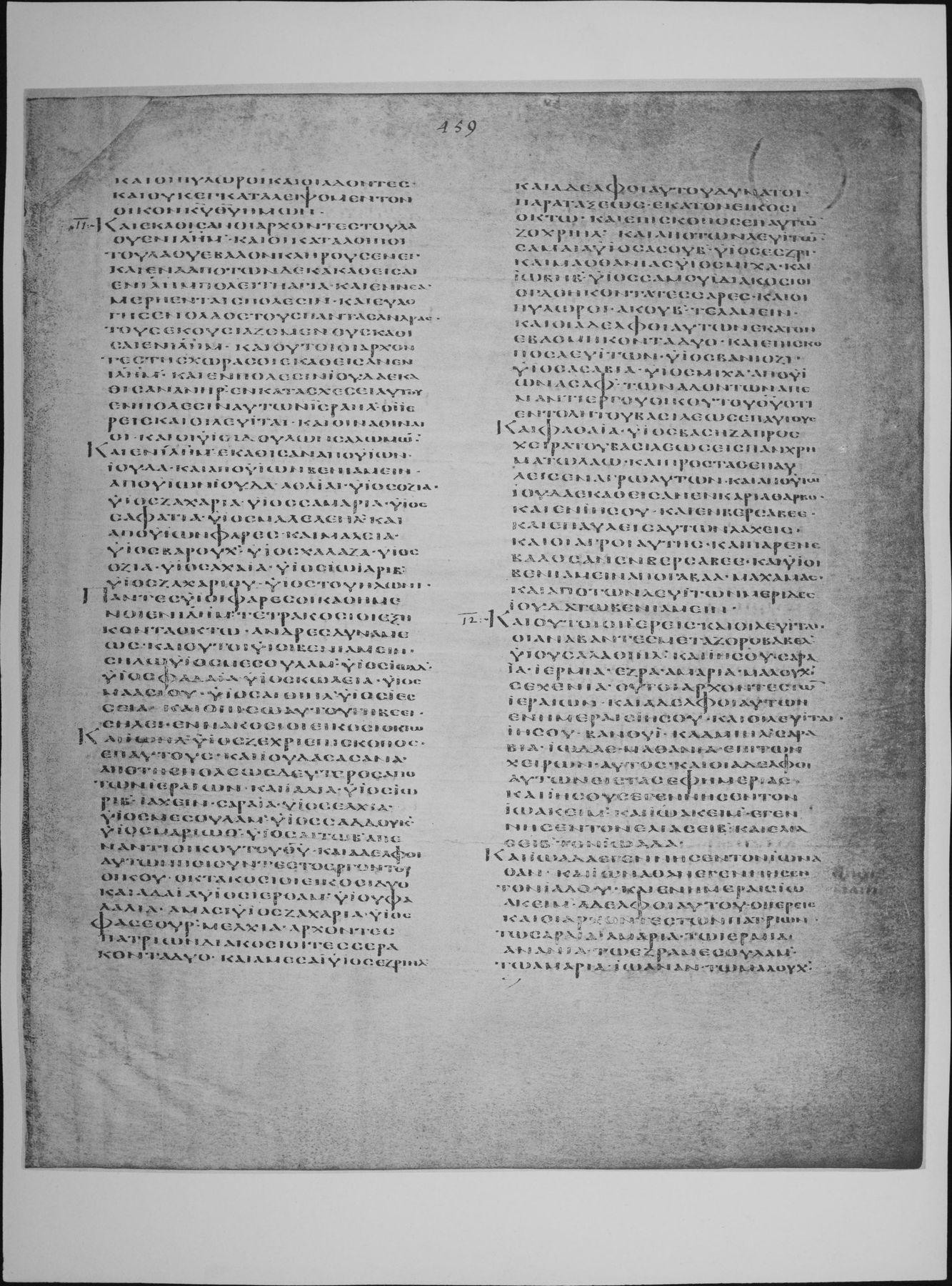
2 Esdras (Nehemiah) 12:1-12 is on fol. 459r (full-size facsimile of 1879-83, Internet Archive codex-alexandrinus leaf 942). The 1957 reduced facsimile prints beneath this page: 2 Esdras xx. 39-xxii. 14 (Nehemiah x. 40-xii. 14). Checked on the plate: the page begins inside 2 Esdras (Nehemiah) 10:39 (first words read: ΚΑΙ ΟΙ ΠΥΛΩΡΟΙ ΚΑΙ ΟΙ ΑΔΟΝΤΕΣ ΚΑΙ ΟΥΚ ΕΓΚΑΤΑΛΕΙΨΟΜΕΝ ΤΟΝ ΟΙΚΟΝ ΘΥ ΗΜΩΝ).
1Καὶ οὗτοι οἱ ἱερεῖς καὶ οἱ Λευεῖται οἱ ἀναβαίνοντες μετὰ Ζοροβαβὲλ υἱοῦ Σαλαθιὴλ καὶ Ἰησοῦ· Σαραιά, Ἰερμιά, Ἐσδρά, 2Μαριά, Μαλούλ, 3Σεχενιά· 7οὗτοι ἄρχοντες τῶν ἱερέων καὶ ἀδελφοὶ αὐτῶν ἐν ἡμέραις Ἰησοῖ. 8καὶ οἱ Λευεῖται· Ἰησού, Βανουί, Καδμιήλ, Σαραβιά, Ἰουδά, Μαχανιά· ἐπὶ τῶν χειρῶν αὐτὸς καὶ οἱ ἀδελφοὶ αὐτοῦ εἰς τὰς ἐφημερίας. 10καὶ Ἰησοῦς ἐγέννησεν τὸν Ἰωακείμ, καὶ Ἰωακεὶμ ἐγέννησεν τὸν Ἐλιασείβ, καὶ Ἐλειασεὶβ τὸν Ἰωδά, 11καὶ Ἰωδὰ ἐγέννησεν τὸν Ἰωναθάν, καὶ Ἰωναθὰν ἐγέννησεν τὸν Ἰαδού. 12καὶ ἐν ἡμέραις Ἰωακεὶμ ἀδελφοὶ αὐτοῦ οἱ ἱερεῖς καὶ οἱ ἄρχοντες τῶν πατριῶν· τῷ Σαραιὰ Μαρεά, τῷ Ἰερεμιά,
1Now these are the priests and the Levites that went up with Zorobabel the son of Salathiel and Jesus: Saraia, Jeremia, Esdra, 2Amaria, Maluch, 3Sechenia. 7These were the chiefs of the priests, and their brethren in the days of Jesus. 8And the Levites were, Jesus, Banui, Cadmiel, Sarabia, Jodae, Matthania: he was over the bands, 9and his brethren were appointed to the daily courses. 10And Jesus begot Joakim, and Joakim begot Eliasib, and Eliasib begot Jodae, 11and Jodae begot Jonathan, and Jonathan begot Jadu. 12And in the days of Joakim, his brethren the priests and the heads of families were, belonging to Saraia, Amaria; to Jeremia, Anania;
Where on the image
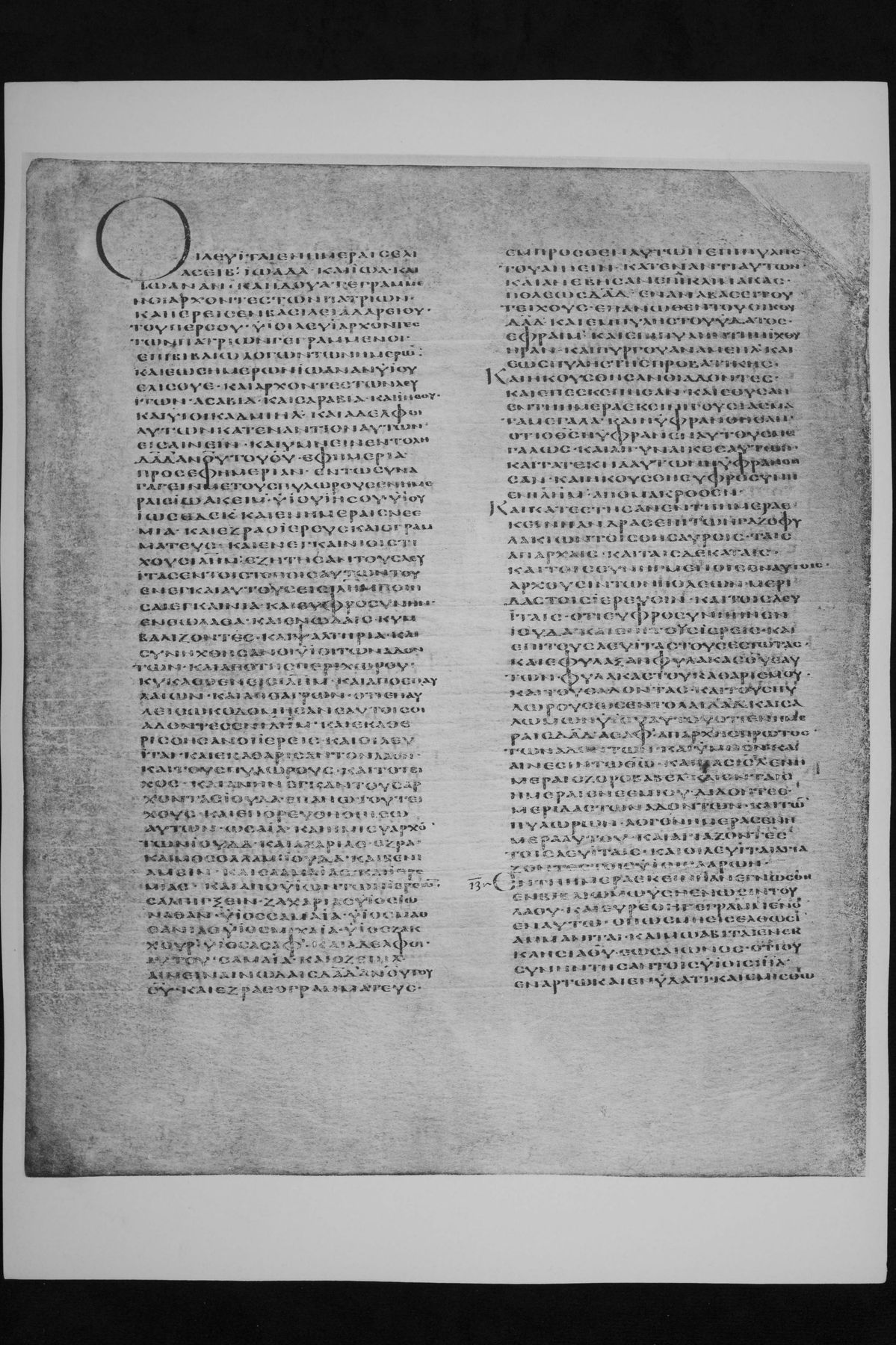
2 Esdras (Nehemiah) 12:13-14 is on fol. 459r (full-size facsimile of 1879-83, Internet Archive codex-alexandrinus leaf 942). The 1957 reduced facsimile prints beneath this page: 2 Esdras xx. 39-xxii. 14 (Nehemiah x. 40-xii. 14). Checked on the plate: the page begins inside 2 Esdras (Nehemiah) 10:39 (first words read: ΚΑΙ ΟΙ ΠΥΛΩΡΟΙ ΚΑΙ ΟΙ ΑΔΟΝΤΕΣ ΚΑΙ ΟΥΚ ΕΓΚΑΤΑΛΕΙΨΟΜΕΝ ΤΟΝ ΟΙΚΟΝ ΘΥ ΗΜΩΝ). 2 Esdras (Nehemiah) 12:22-27 is on fol. 459v (full-size facsimile of 1879-83, Internet Archive codex-alexandrinus leaf 943). The 1957 reduced facsimile prints beneath this page: 2 Esdras xxii. 22-xxiii. 2 (Nehemiah xii. 22-xiii. 2). Checked on the plate: the page begins at the start of 2 Esdras (Nehemiah) 12:22 (first words read: ΟΙ ΛΕΥΙΤΑΙ ΕΝ ΗΜΕΡΑΙΣ ΕΛΙΑΣΕΙΒ ΙΩΑΔΑ ΚΑΙ ΙΩΑ ΚΑΙ ΙΩΑΝΑΝ ΚΑΙ ΙΑΔΟΥΑ ΓΕΓΡΑΜΜΕΝΟΙ).
13τῷ Ἔσρᾳ Μεσουλάμ, τῷ Ἀμαρειὰ Ἰωανάν, 14τῷ Μαλούχ. 22οἱ Λευεῖται ἐν ἡμέραις Ἐλιασείβ, Ἰωαδὰ καὶ Ἰωὰ καὶ Ἰωανὰν καὶ Ἰαδού, γεγραμμένοι ἄρχοντες πατριῶν, καὶ οἱ ἱερεῖς ἐν βασιλείᾳ Δαρείου τοῦ Πέρσου· 23υἱοὶ Λευεὶ ἄρχοντες τῶν πατριῶν γεγραμμένοι ἐπὶ βιβλίῳ λόγων τῶν ἡμερῶν καὶ ἕως ἡμερῶν Ἰωανὰν υἱοῦ Ἐλεισοῦε. 24καὶ ἄρχοντες τῶν Λευειτῶν· Ἁβιὰ καὶ Σαραβιὰ καὶ Ἰησού, καὶ υἱοὶ Καδμιὴλ καὶ οἱ ἀδελφοὶ αὐτῶν κατεναντίον αὐτῶν εἰς ὑμνεῖν, αἰνεῖν, ἐντολῇ Δαυεὶδ ἀνθρώπου τοῦ θεοῦ, ἐφημερία πρὸς ἐφημερίαν, 25ἐν τῷ συναγαγεῖν με τοὺς πυλωροὺς 26ἐν ἡμέραις Ἰωακεὶμ υἱοῦ Ἰησοῦ Εἰωσεδέκ, ἐν ἡμέραις Νεεμία· καὶ Ἔσρας ὁ ἱερεὺς ὁ γραμματεύς. 27Καὶ ἐν ἐγκαινίοις τείχους Ἰερουσαλὴμ ἐζήτησαν τοὺς Λευείτας ἐν τοῖς τόποις αὐτῶν τοῦ ἐνέγκαι αὐτοὺς εἰς Ἰερουσαλήμ, ποιῆσαι ἐνκαίνια καὶ εὐφροσύνην ἐν θωλαθὰ καὶ ἐν ᾠδαῖς, κυμβαλίζοντες καὶ ψαλτήρια.
13to Esdra, Mesulam; to Amaria, Joanan; 14to Amaluch, Jonathan; to Sechenia, Joseph; 22The Levites in the days of Eliasib, Joada, and Joa, and Joanan, and Idua, were recorded heads of families: also the priests, in the reign of Darius the Persian. 23And the sons of Levi, heads of families, were written in the book of the chronicles, even to the days of Joanan son of Elisue. 24And the heads of the Levites were Asabia, and Sarabia, and Jesu: and the sons of Cadmiel, and their brethren over against them, were to sing hymns of praise, according to the commandment of David the man of God, course by course. 25When I gathered the porters, 26it was in the days of Joakim son of Jesus, son of Josedec, and in the days of Neemia: and Esdras the priest was scribe. 27And at the dedication of the wall of Jerusalem they sought the Levites in their places, to bring them to Jerusalem, to keep a feast of dedication and gladness with thanksgiving, and they sounded cymbals with songs, and had psalteries and harps.
Where on the image
2 Esdras (Nehemiah) 12:28-35 is on fol. 459v (full-size facsimile of 1879-83, Internet Archive codex-alexandrinus leaf 943). The 1957 reduced facsimile prints beneath this page: 2 Esdras xxii. 22-xxiii. 2 (Nehemiah xii. 22-xiii. 2). Checked on the plate: the page begins at the start of 2 Esdras (Nehemiah) 12:22 (first words read: ΟΙ ΛΕΥΙΤΑΙ ΕΝ ΗΜΕΡΑΙΣ ΕΛΙΑΣΕΙΒ ΙΩΑΔΑ ΚΑΙ ΙΩΑ ΚΑΙ ΙΩΑΝΑΝ ΚΑΙ ΙΑΔΟΥΑ ΓΕΓΡΑΜΜΕΝΟΙ).
28καὶ συνήχθησαν οἱ υἱοὶ τῶν ᾀδόντων καὶ ἀπὸ τῆς περιχώρου κυκλόθεν εἰς Ἰερουσαλὴμ καὶ ἀπὸ ἐπαύλεων 29καὶ ἀπὸ ἀγρῶν· ὅτι ἐπαύλεις οἰκοδόμησαν ἑαυτοῖς οἱ ᾄδοντες ἐν Ἰερουσαλήμ. 30καὶ ἐκαθαρίσθησαν οἱ ἱερεῖς καὶ οἱ Λευεῖται, καὶ ἐκαθάρισαν τὸν λαὸν καὶ τοὺς πυλωροὺς καὶ τὸ τεῖχος. 31καὶ ἀνήνεγκαν τοὺς ἄρχοντας Ἰούδα ἐπάνω τοῦ τείχους. 32καὶ ἐπορεύθη ὀπίσω αὐτῶν Ὡσαιὰ καὶ ἥμισυ ἀρχόντων Ἰούδα, 33καὶ Ζαχαρίας, Ἔσρας καὶ Μεσουλάμ, 34Ἰουδὰ καὶ Βενιαμεὶν καὶ Σαραιὰ καὶ Ἰερεμιά· 35καὶ ἀπὸ υἱῶν τῶν ἱερέων ἐν σάλπιγξιν Ζαχαρίας υἱὸς Ἰωανὰν υἱὸς Σαμαιὰ υἱὸς Ναθανιὰ υἱὸς Μειχαιὰ υἱὸς Ζακχοὺρ υἱὸς Ἀσάφ,
28And the sons of the singers were assembled both from the neighbourhood round about to Jerusalem, and from the villages, 29and from the country: for the singers built themselves villages by Jerusalem. 30And the priests and the Levites purified themselves, and they purified the people, and the porters, and the wall. 31And they brought up the princes of Juda on the wall, and they appointed two great companies for thanksgiving, and they passed on the right hand on the wall of the dung-gate. 32And after them went Osaia, and half the princes of Juda, 33and Azarias, and Esdras, and Mesollam, 34and Juda, and Benjamin, and Samaias and Jeremia. 35And some of the sons of the priest with trumpets, Zacharias son of Jonathan, son of Samaias, son of Matthania, son of Michaia, son of Zacchur, son of Asaph:
Where on the image
2 Esdras (Nehemiah) 12:36-47 is on fol. 459v (full-size facsimile of 1879-83, Internet Archive codex-alexandrinus leaf 943). The 1957 reduced facsimile prints beneath this page: 2 Esdras xxii. 22-xxiii. 2 (Nehemiah xii. 22-xiii. 2). Checked on the plate: the page begins at the start of 2 Esdras (Nehemiah) 12:22 (first words read: ΟΙ ΛΕΥΙΤΑΙ ΕΝ ΗΜΕΡΑΙΣ ΕΛΙΑΣΕΙΒ ΙΩΑΔΑ ΚΑΙ ΙΩΑ ΚΑΙ ΙΩΑΝΑΝ ΚΑΙ ΙΑΔΟΥΑ ΓΕΓΡΑΜΜΕΝΟΙ).
36καὶ ἀδελφοὶ αὐτοῦ Σαμαιὰ καὶ Ὀζειήλ, αἰνεῖν ἐν ᾠδαῖς Δαυεὶδ ἀνθρώπου τοῦ θεοῦ· καὶ Ἔσρας ὁ γραμματεὺς ἔμπροσθεν αὐτοῦ. 37ἐπὶ πύλης τοῦ αἰνεῖν κατέναντι αὐτῶν ἀνέβησαν ἐπὶ κλίμακας πόλεων Δαυείδ, ἐν ἀναβάσει τοῦ τείχους, ἐπάνωθεν τοῦ οἴκου Δαυεὶδ καὶ ἕως πύλης τοῦ ὕδατος 39Ἐφράιμ, καὶ ἐπὶ πύλην τὴν ἰχθυηρὰν καὶ πύργῳ Ἁνανεὴλ καὶ ἕως πύλης τῆς προβατικῆς. 42καὶ ἠκούσθησαν οἱ ᾄδοντες, καὶ ἐπεσκέπησαν. 43καὶ ἔθυσαν ἐν τῇ ἡμέρᾳ ἐκείνῃ θυσιάσματα μεγάλα καὶ ηὐφράνθησαν, ὅτι ὁ θεὸς ηὔφρανεν αὐτοὺς μεγάλως· καὶ αἱ γυναῖκες αὐτῶν καὶ τὰ τέκνα αὐτῶν ηὐφράνθησαν, καὶ ἠκούσθη ἡ εὐφροσύνη ἐν Ἰερουσαλὴμ ἀπὸ μακρόθεν. 44Καὶ κατέστησαν ἐν τῇ ἡμέρᾳ ἐκείνῃ ἄνδρας ἐπὶ τῶν γαζοφυλακίων, τοῖς θησαυροῖς, ταῖς ἀπαρχαῖς καὶ ταῖς δεκάταις καὶ τοῖς συνηγμένοις ἐν αὐτοῖς ἄρχουσιν τῶν πόλεων, μερίδας τοῖς ἱερεῦσι καὶ τοῖς Λευείταις, ὅτι εὐφροσύνη ἐν Ἰούδᾳ ἐπὶ τοὺς ἱερεῖς καὶ ἐπὶ τοὺς Λευείτας τοὺς ἑστῶτας. 45καὶ ἐφύλαξαν φυλακὰς θεοῦ αὐτῶν καὶ φυλακὰς τοῦ καθαρισμοῦ καὶ τοὺς ᾄδοντας καὶ τοὺς πυλωρούς, ὡς ἐντολαὶ Δαυεὶδ καὶ Σαλωμὼν υἱοῦ αὐτοῦ. 46ὅτι ἐν ἡμέραις Δαυεὶδ Ἀσὰφ ἀπ᾽ ἀρχῆς πρῶτος τῶν ᾀδόντων καὶ ὕμνον καὶ αἴνεσιν τῷ θεῷ. 47καὶ πᾶς Ἰσραὴλ ἐν ἡμέραις Ζοροβαβὲλ διδόντες μερίδας τῶν ᾀδόντων καὶ τῶν πυλωρῶν, λόγον ἡμέρας ἐν ἡμέρᾳ αὐτοῦ, καὶ ἁγιάζοντες τοῖς Λευείταις, καὶ οἱ Λευεῖται ἁγιάζοντες τοῖς υἱοῖς Ἀαρών.
36and his brethren, Samaia, and Oziel, Gelol, Jama, Aia, Nathanael, and Juda, Anani, to praise with the hymns of David the man of God; and Esdras the scribe was before them, 37at the gate, to praise before them, and they went up by the steps of the city of David, in the ascent of the wall, above the house of David, even to the water-gate 39of Ephraim, and to the fish-gate, and by the tower of Anameel, and as far as the sheep-gate. 42And the singers were heard, and were numbered. 43And in that day they offered great sacrifices, and rejoiced; for God had made them very joyful: and their wives and their children rejoiced: and the joy in Jerusalem was heard from afar off. 44And in that day they appointed men over the treasuries, for the treasures, the first-fruits, and the tithes, and for the chiefs of the cities who were assembled among them, to furnish portions for the priests and Levites: for there was joy in Juda over the priests and over the Levites that waited. 45And they kept the charges of their God, and the charges of the purification, and ordered the singers and the porters, according to the commandments of David and his son Solomon. 46For in the days of David Asaph was originally first of the singers, and they sang hymns and praise to God. 47And all Israel in the days of Zorobabel, and in the days of Neemias, gave the portions of the singers and the porters, a daily rate: and consecrated them to the Levites: and the Levites consecrated them to the sons of Aaron.
Cite
Sources
- Source: Codex Alexandrinus (British Library Royal MS 1 D. VI) via the British Museum photographic facsimiles of 1879-83 and 1957 (Internet Archive) + Swete's Septuagint + Brenton's English (holding institution)
- Critical edition: H. B. Swete, The Old Testament in Greek according to the Septuagint (1909)
← previous · → next · v cycle view · l back to library