2 Esdras (Nehemiah), Chapter 2 (Codex Alexandrinus)
Introduction
2 Esdras (Nehemiah) 2 in the Greek Old Testament (the Septuagint) as written in Codex Alexandrinus, a Greek Bible copied in the fifth century, probably in Egypt, and now in the British Library (Royal MS 1 D. VI, the second of its four volumes). It is one of the three great early codices of the whole Greek Bible, with Codex Vaticanus and Codex Sinaiticus.
2 Esdras: the Septuagint gives Ezra and Nehemiah as one book, 2 Esdras (Esdras B); its chapters 11-23 are the book of Nehemiah. This entry uses Nehemiah's chapter numbers, as the digital Swete text does (2 Esdras 11 = Nehemiah 1, and so on); the captions of the 1957 facsimile give both.
This entry meets the strict three-criteria standard of the Theosis Library:
- Manuscript scan: the pages of Codex Alexandrinus carrying this chapter (fol. 453v, fol. 454r), from the full-size photographic (autotype) facsimile published by the British Museum in 1879-1883, as digitised on the Internet Archive. The verse range of every page comes from the reduced photographic facsimile of 1957, which prints it beneath each plate, and the opening words of every page were read on the plate to confirm the page and the verse it begins with. Each section links to the page or pages that hold its verses. Folio numbers are those written at the head of each leaf and visible on the plates.
- Original text: Swete's edition, which here prints the text of Codex Vaticanus (Vat. gr. 1209), the base of his edition, and gives the readings of Alexandrinus only in his apparatus. The Greek column is therefore Vaticanus' text; where Alexandrinus differs, the plate shows what Alexandrinus reads.
- English translation: Sir Lancelot C. L. Brenton, The Septuagint Version of the Old Testament (1844; 1851 edition), a translation of the Greek, public domain, from the eBible.org text.
How was this verified? (Provenance)
Where on the image
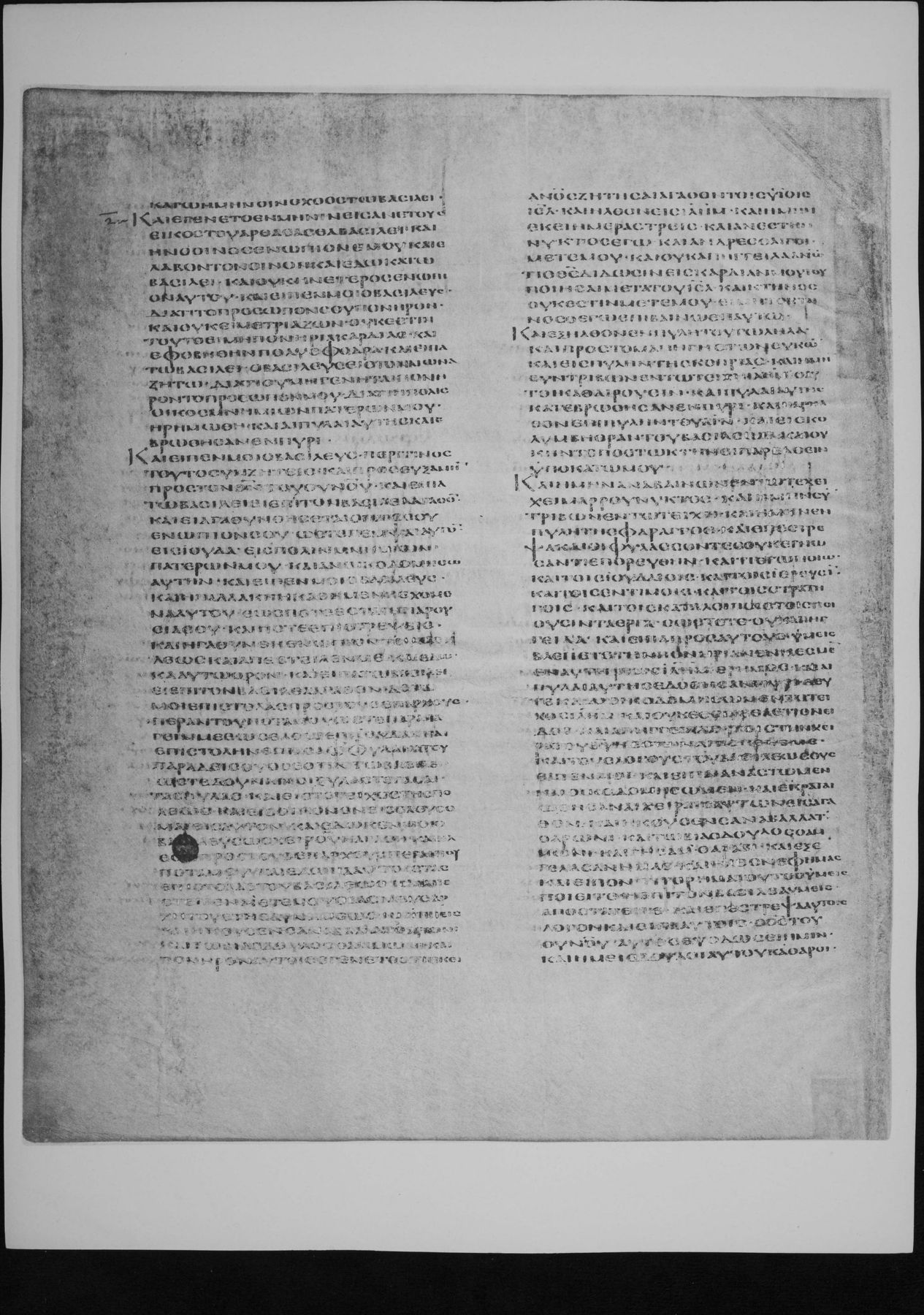
2 Esdras (Nehemiah) 2:1-8 is on fol. 453v (full-size facsimile of 1879-83, Internet Archive codex-alexandrinus leaf 931). The 1957 reduced facsimile prints beneath this page: 2 Esdras xi. 11-xii. 20 (Nehemiah i. 11-ii. 20). Checked on the plate: the page begins inside 2 Esdras (Nehemiah) 1:11 (first words read: ΚΑΙ ΕΓΩ ΗΜΗΝ ΟΙΝΟΧΟΟΣ ΤΩ ΒΑΣΙΛΕΙ ΚΑΙ ΕΓΕΝΕΤΟ ΕΝ ΜΗΝΙ ΝΕΙΣΑΝ).
1Καὶ ἐγένετο ἐν μηνὶ Νισὰν ἔτους εἰκοστοῦ Ἀρσαθερθὰ βασιλεῖ καὶ ἦν οἶνος ἐνώπιον ἐμοῦ, καὶ ἔλαβον τὸν οἶνον καὶ ἔδωκα τῷ βασιλεῖ, καὶ οὐκ ἦν ἕτερος ἐνώπιον αὐτοῦ, 2καὶ εἶπέν μοι ὁ βασιλεύς Διὰ τί τὸ πρόσωπόν σου πονηρόν, καὶ οὐκ εἶ μετριάζων; οὐκ ἔστιν τοῦτο εἰ μὴ πονηρία καρδίας. καὶ ἐφοβήθην πολὺ σφόδρα, 3καὶ εἶπα τῷ βασιλεῖ Ὁ βασιλεὺς εἰς τὸν αἰῶνα ζήτω. διὰ τί οὐ μὴ γένηται πονηρὸν τὸ πρόσωπόν μου, διότι ἡ πόλις, οἶκος μνημείων πατέρων μου, ἠρημώθη καὶ αἱ πύλαι αὐτῆς κατεβρώθησαν ἐν πυρί; 4καὶ εἶπέν μοι ὁ βασιλεύς Περὶ τίνος τοῦτο συνζητεῖς; καὶ προσηυξάμην πρὸς τὸν θεὸν τοῦ οὐρανοῦ, 5καὶ εἶπα τῷ βασιλεῖ Εἰ ἐπὶ τὸν βασιλέα ἀγαθόν, καὶ εἰ ἀγαθυνθήσεται ὁ παῖς σου ἐνώπιόν σου ὥστε πέμψαι αὐτὸν εἰς Ἰουδά, εἰς πόλιν μνημείων πατέρων μου, καὶ ἀνοικοδομήσω αὐτήν. 6καὶ εἶπέν μοι ὁ βασιλεὺς καὶ ἡ παλλακὴ ἡ καθημένη ἐχόμενα αὐτοῦ Ἕως πότε ἔσται ἡ πορεία σου, καὶ πότε ἐπιστρέψεις; καὶ ἠγαθύνθη ἐνώπιον τοῦ βασιλέως, καὶ ἀπέστειλέν με, καὶ ἔδωκα αὐτῷ ὅρον. 7καὶ εἶπα τῷ βασιλεῖ Εἰ ἐπὶ τὸν βασιλέα ἀγαθόν, ἐπιστολὰς δότω μοι πρὸς τοὺς ἐπάρχους πέραν τοῦ ποταμοῦ, ὥστε παραγαγεῖν με ἕως ἔλθω ἐπὶ Ἰουδά, 8καὶ ἐπιστολὴν ἐπὶ Ἀσὰφ φύλακα τοῦ παραδείσου ὅς ἐστιν τῷ βασιλεῖ, ὥστε δοῦναί μοι ξύλα στεγάσαι τὰς πύλας καὶ εἰς τὸ τεῖχος τῆς πόλεως καὶ εἰς οἶκον ὃν εἰσελεύσομαι εἰς αὐτόν. καὶ ἔδωκέν μοι ὁ βασιλεύς, ὡς χεὶρ θεοῦ ἡ ἀγαθή.
1And it came to pass in the month Nisan of the twentieth year of king Arthasastha, that the wine was before me: and I took the wine, and gave it to the king: and there was not another before him. 2And the king said to me, Why is thy countenance sad, and dost thou not control thyself? and now this is nothing but sorrow of heart. Then I was very much alarmed, 3and I said to the king, Let the king live for ever: why should not my countenance be said, forasmuch as the city, even the home of the sepulchres of my fathers, has been laid waste, and her gates have been devoured with fire? 4And the king said to me, For what dost thou ask thus? So I prayed to the God of heaven. 5And I said to the king, If it seem good to the king, and if thy servant shall have found favour in thy sight, I ask that thou wouldest send him into Juda, to the city of the sepulchres of my fathers; then will I rebuild it. 6And the king, and his concubine that sat next to him, said to me, For how long will thy journey be, and when wilt thou return? and the proposal was pleasing before the king, and he sent me away, and I appointed him a time. 7And I said to the king, If it seem good to the king, let him give me letters to the governors beyond the river, so as to forward me till I come to Juda; 8and a letter to Asaph the keeper of the garden which belongs to the king, that he may give me timber to cover the gates, and for the wall of the city, and for the house into which I shall enter. And the king gave to me, according as the good hand of God was upon me.
Where on the image
2 Esdras (Nehemiah) 2:9-16 is on fol. 453v (full-size facsimile of 1879-83, Internet Archive codex-alexandrinus leaf 931). The 1957 reduced facsimile prints beneath this page: 2 Esdras xi. 11-xii. 20 (Nehemiah i. 11-ii. 20). Checked on the plate: the page begins inside 2 Esdras (Nehemiah) 1:11 (first words read: ΚΑΙ ΕΓΩ ΗΜΗΝ ΟΙΝΟΧΟΟΣ ΤΩ ΒΑΣΙΛΕΙ ΚΑΙ ΕΓΕΝΕΤΟ ΕΝ ΜΗΝΙ ΝΕΙΣΑΝ).
9Καὶ ἦλθον πρὸς τοὺς ἐπάρχους πέραν τοῦ ποταμοῦ, καὶ ἔδωκα αὐτοῖς τὰς ἐπιστολὰς τοῦ βασιλέως· καὶ ἀπέστειλεν μετ᾽ ἐμοῦ ὁ βασιλεὺς ἀρχηγοὺς δυνάμεως καὶ ἱππεῖς. 10καὶ ἤκουσεν Σαναβαλλὰτ Ἁρωνεί, καὶ πονηρὸν αὐτοῖς ἐγένετο ὅτι ἥκει ἄνθρωπος ζητῆσαι ἀγαθὸν τοῖς υἱοῖς Ἰσραήλ. 11καὶ ἦλθον εἰς Ἰερουσαλήμ, καὶ ἤμην ἐκεῖ ἡμέρας τρεῖς. 12καὶ ἀνέστην νυκτὸς ἐγὼ καὶ ἄνδρες ὀλίγοι μετ᾽ ἐμοῦ, καὶ οὐκ ἀπήγγειλα ἀνθρώπῳ τί ὁ θεὸς δίδωσιν εἰς καρδίαν μου τοῦ ποιῆσαι μετὰ τοῦ Ἰσραήλ, καὶ κτῆνος οὐκ ἔστιν μετ᾽ ἐμοῦ εἰ μὴ τὸ κτῆνος ᾧ ἐγὼ ἐπιβαίνω ἐπ᾽ αὐτῷ. 13καὶ ἐξῆλθον ἐν πύλῃ τοῦ γωληλὰ καὶ πρὸς στόμα πηγῆς τῶν συκῶν καὶ εἰς πύλην τῆς κοπρίας· καὶ ἤμην συντρίβων ἐν τῷ τείχει Ἰερουσαλὴμ ὃ αὐτοὶ καθαιροῦσιν, καὶ πύλαι αὐτῆς κατεβρώθησαν πυρί. 14καὶ παρῆλθον ἐπὶ πύλην τοῦ Αἰνὰ καὶ εἰς κολυμβήθραν τοῦ βασιλέως, καὶ οὐκ ἦν τόπος τῷ κτήνει παρελθεῖν ὑποκάτω μου. 15καὶ ἤμην ἀναβαίνων ἐν τῷ τείχει χειμάρρους νυκτός, καὶ ἤμην συντρίβων ἐν τῷ τείχει· καὶ ἤμην ἐν πύλῃ τῆς φάραγγος, καὶ ἐπέστρεψα. 16καὶ οἱ φυλάσσοντες οὐκ ἔγνωσαν τί ἐπορεύθην καὶ τί ἐγὼ ποιῶ· καὶ τοῖς Ἰουδαίοις καὶ τοῖς ἱερεῦσιν καὶ τοῖς ἐντίμοις καὶ τοῖς καταλοίποις τοῖς ποιοῦσιν τὰ ἔργα ἕως τότε οὐκ ἀπήγγειλα.
9And I came to the governors beyond the river, and I gave them the king's letters. (Now the king had sent with me captains of the army and horsemen.) 10And Sanaballat the Aronite heard it, and Tobia the servant, the Ammonite, and it was grievous to them that a man was come to seek good for the children of Israel. 11So I came to Jerusalem, and was there three days. 12And I rose up by night, I and a few men with me; and I told no man what God put into my heart to do with Israel; and there was no beast with me, except the beast which I rode upon. 13And I went forth by the gate of the valley by night, and to the mouth of the well of fig trees, and to the dung-gate: and I mourned over the wall of Jerusalem which they were destroying, and her gates were devoured with fire. 14And I passed on to the fountain gate, and to the king's pool; and there was no room for the beast to pass under me. 15And I went up by the wall of the brook by night, and mourned over the wall, and passed through the gate of the valley, and returned. 16And the sentinels knew not why I went, nor what I was doing; and until that time I told it not to the Jews, or to the priests, or to the nobles, or to the captains, or to the rest of the men who wrought the works.
Where on the image
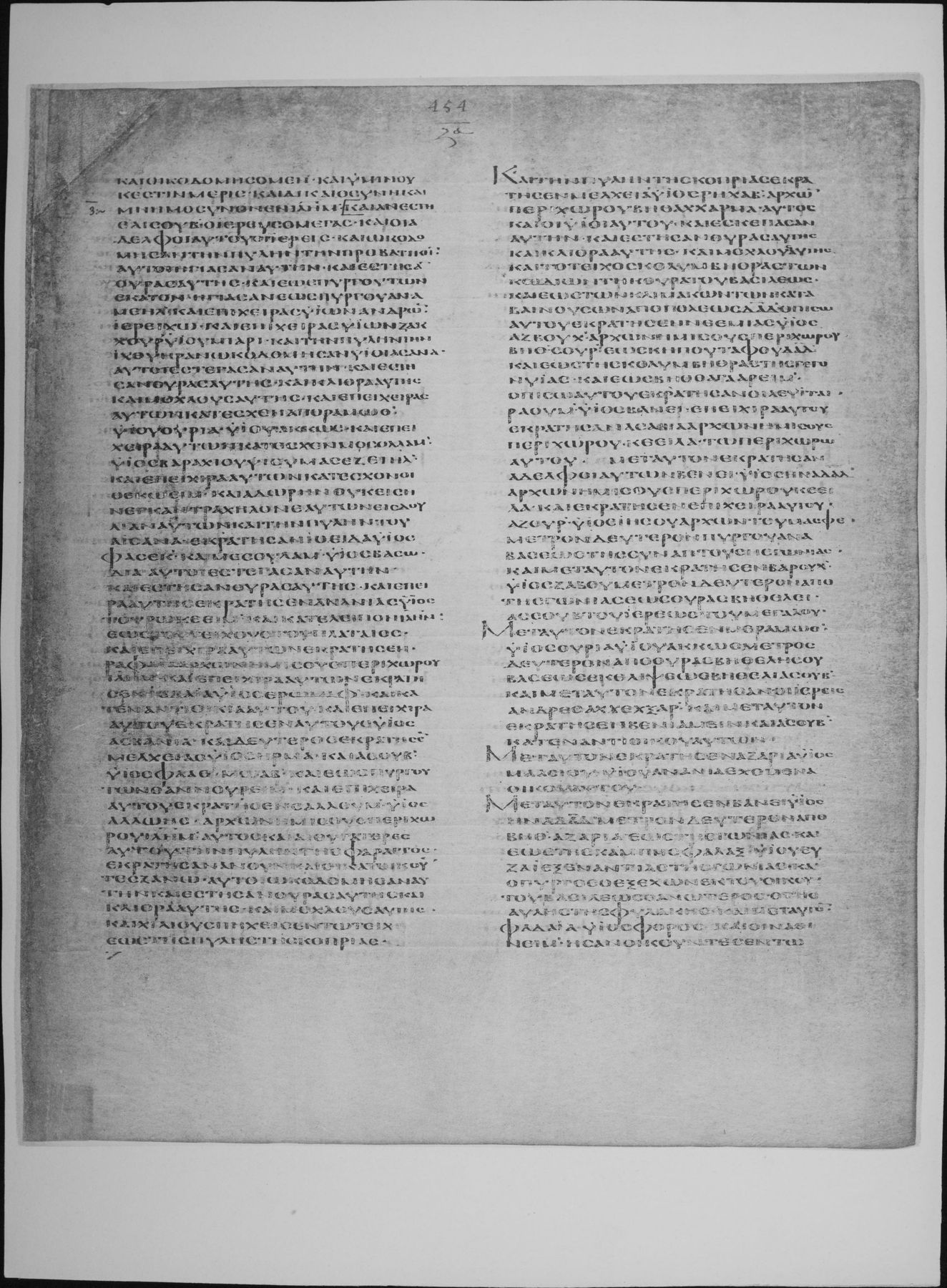
2 Esdras (Nehemiah) 2:17-20 is on fol. 453v (full-size facsimile of 1879-83, Internet Archive codex-alexandrinus leaf 931). The 1957 reduced facsimile prints beneath this page: 2 Esdras xi. 11-xii. 20 (Nehemiah i. 11-ii. 20). Checked on the plate: the page begins inside 2 Esdras (Nehemiah) 1:11 (first words read: ΚΑΙ ΕΓΩ ΗΜΗΝ ΟΙΝΟΧΟΟΣ ΤΩ ΒΑΣΙΛΕΙ ΚΑΙ ΕΓΕΝΕΤΟ ΕΝ ΜΗΝΙ ΝΕΙΣΑΝ). 2 Esdras (Nehemiah) 2:20 is on fol. 454r (full-size facsimile of 1879-83, Internet Archive codex-alexandrinus leaf 932). The 1957 reduced facsimile prints beneath this page: 2 Esdras xii. 20-xiii. 26 (Nehemiah ii. 20-iii. 26). Checked on the plate: the page begins inside 2 Esdras (Nehemiah) 2:20 (first words read: ΚΑΙ ΟΙΚΟΔΟΜΗΣΟΜΕΝ ΚΑΙ ΥΜΙΝ ΟΥΚ ΕΣΤΙΝ ΜΕΡΙΣ ΚΑΙ ΔΙΚΑΙΟΣΥΝΗ ΚΑΙ ΜΝΗΜΟΣΥΝΟΝ ΕΝ ΙΛΗΜ).
17καὶ εἶπα πρὸς αὐτούς Ὑμεῖς βλέπετε τὴν πονηρίαν ἐν ᾗ ἐσμεν ἐν αὐτῇ, πῶς Ἰερουσαλὴμ ἔρημος καὶ αἱ πύλαι αὐτῆς ἐδόθησαν πυρί· δεῦτε καὶ διοικοδομήσωμεν τὸ τεῖχος Ἰερουσαλήμ, καὶ οὐκ ἐσόμεθα ἔτι ὄνειδος. 18καὶ ἀπήγγειλα αὐτοῖς τὴν χεῖρα τοῦ θεοῦ ἥ ἐστιν ἀγαθὴ ἐπ᾽ ἐμέ, καὶ πρὸς λόγους τοῦ βασιλέως οὓς εἶπέν μοι· καὶ εἶπα Ἀναστῶμεν καὶ οἰκοδομήσωμεν. καὶ ἐκραταιώθησαν αἱ χεῖρες αὐτῶν εἰς ἀγαθόν. 19καὶ ἤκουσεν Σαναβαλλὰτ ὁ Ἁρωνεὶ καὶ Τωβιὰ ὁ δοῦλος Ἀμμωνεὶ καὶ Γῆσαμ ὁ Ἀραβεί, καὶ ἐξεγέλασαν ἡμᾶς, καὶ ἦλθον ἐφ᾽ ἡμᾶς καὶ εἶπαν Τί τὸ ῥῆμα τοῦτο ὑμεῖς ποιεῖτε; ἢ ἐπὶ τὸν βασιλέα ὑμεῖς ἀποστατεῖτε; 20καὶ ἐπέστρεψα αὐτοῖς λόγον καὶ εἶπα αὐτοῖς Ὁ θεὸς τοῦ οὐρανοῦ, αὐτὸς εὐοδώσει ἡμᾶς, καὶ ἡμεῖς δοῦλοι αὐτοῦ καθαροί, καὶ οἰκοδομήσωμεν· καὶ ὑμῖν οὐκ ἔστιν μερὶς καὶ δικαιοσύνη καὶ μνημόσυνον ἐν Ἰερουσαλήμ.
17Then I said to them, Ye see this evil, in which we are, how Jerusalem is desolate, and her gates have been set on fire: come, and let us build throughout the wall of Jerusalem, and we shall be no longer a reproach. 18And I told them of the hand of God which was good upon me, also about the words of the king which he spoke to me: and I said, Let us arise and build. And their hands were strengthened for the good work. 19And Sanaballat the Aronite, and Tobia the servant, the Ammonite, and Gesam the Arabian, heard it, and they laughed us to scorn, and came to us, and said, What is this thing that ye are doing? are ye revolting against the king? 20And I answered them, and said to them, The God of heaven, he shall prosper us, and we his servants are pure, and we will build: but ye have no part, nor right, nor memorial, in Jerusalem.
Cite
Sources
- Source: Codex Alexandrinus (British Library Royal MS 1 D. VI) via the British Museum photographic facsimiles of 1879-83 and 1957 (Internet Archive) + Swete's Septuagint + Brenton's English (holding institution)
- Critical edition: H. B. Swete, The Old Testament in Greek according to the Septuagint (1909)
← previous · → next · v cycle view · l back to library