2 Esdras (Nehemiah), Chapter 1 (Codex Alexandrinus)
Introduction
2 Esdras (Nehemiah) 1 in the Greek Old Testament (the Septuagint) as written in Codex Alexandrinus, a Greek Bible copied in the fifth century, probably in Egypt, and now in the British Library (Royal MS 1 D. VI, the second of its four volumes). It is one of the three great early codices of the whole Greek Bible, with Codex Vaticanus and Codex Sinaiticus.
2 Esdras: the Septuagint gives Ezra and Nehemiah as one book, 2 Esdras (Esdras B); its chapters 11-23 are the book of Nehemiah. This entry uses Nehemiah's chapter numbers, as the digital Swete text does (2 Esdras 11 = Nehemiah 1, and so on); the captions of the 1957 facsimile give both.
This entry meets the strict three-criteria standard of the Theosis Library:
- Manuscript scan: the pages of Codex Alexandrinus carrying this chapter (fol. 453r, fol. 453v), from the full-size photographic (autotype) facsimile published by the British Museum in 1879-1883, as digitised on the Internet Archive. The verse range of every page comes from the reduced photographic facsimile of 1957, which prints it beneath each plate, and the opening words of every page were read on the plate to confirm the page and the verse it begins with. Each section links to the page or pages that hold its verses. Folio numbers are those written at the head of each leaf and visible on the plates.
- Original text: Swete's edition, which here prints the text of Codex Vaticanus (Vat. gr. 1209), the base of his edition, and gives the readings of Alexandrinus only in his apparatus. The Greek column is therefore Vaticanus' text; where Alexandrinus differs, the plate shows what Alexandrinus reads.
- English translation: Sir Lancelot C. L. Brenton, The Septuagint Version of the Old Testament (1844; 1851 edition), a translation of the Greek, public domain, from the eBible.org text.
How was this verified? (Provenance)
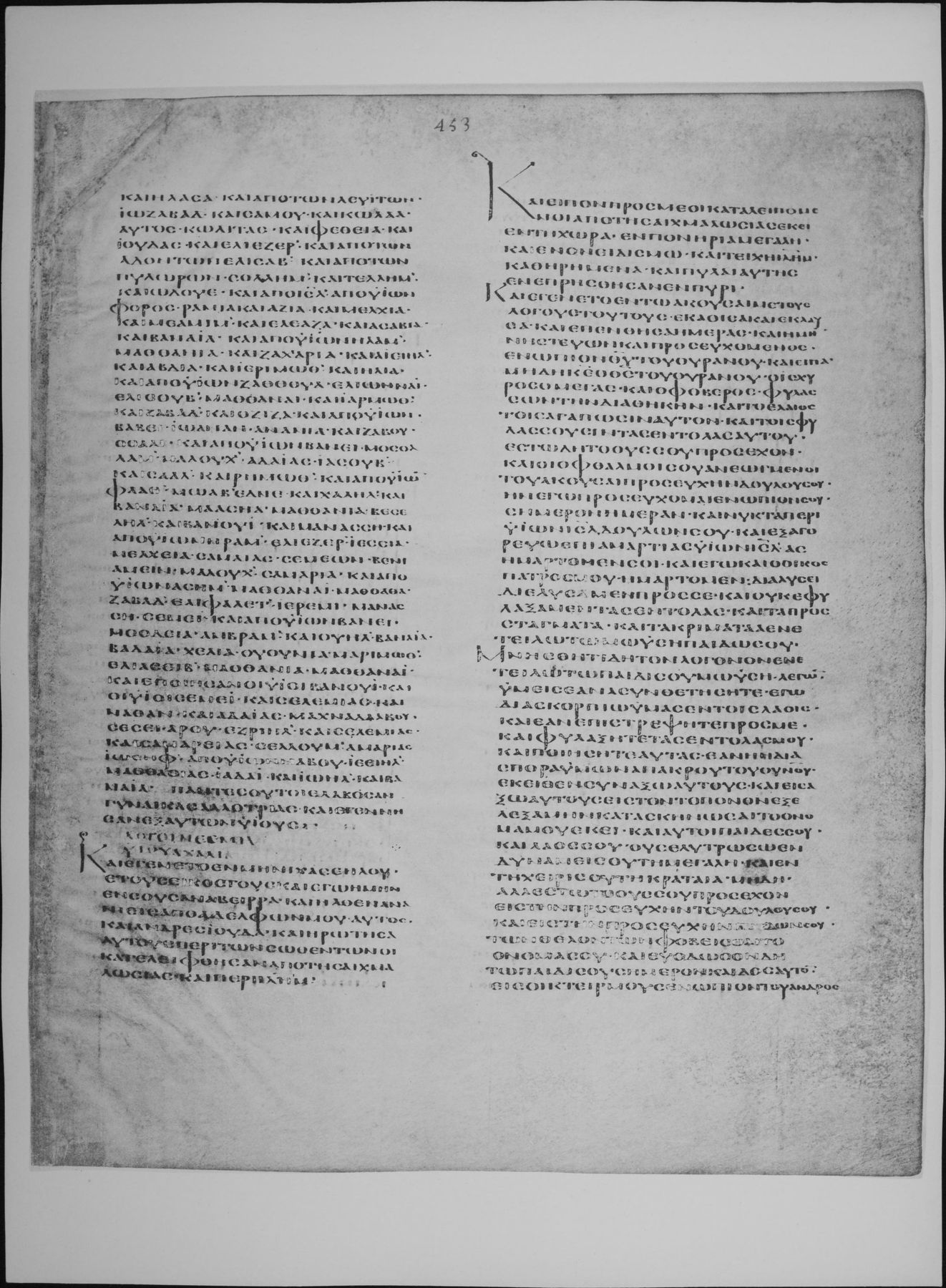
Where on the image
2 Esdras (Nehemiah) 1:1-8 is on fol. 453r (full-size facsimile of 1879-83, Internet Archive codex-alexandrinus leaf 930). The 1957 reduced facsimile prints beneath this page: 2 Esdras (Ezra) x. 22-2 Esdras xi. 11 (Nehemiah i. 11). Checked on the plate: the page begins inside Ezr 10:22 (first words read: ΚΑΙ ΗΛΑΣΑ ΚΑΙ ΑΠΟ ΤΩΝ ΛΕΥΙΤΩΝ ΙΩΖΑΒΑΔ ΚΑΙ ΣΑΜΟΥ ΚΑΙ ΚΩΛΙΑ).
1ΛΟΓΟΙ Νεεμία υἱοῦ Χελκειά. Καὶ ἐγένετο ἐν μηνὶ Σεχεηλοὺ ἔτους εἰκοστοῦ καὶ ἐγὼ ἤμην ἐν Σουσὰν ἁβειρά· 2καὶ ἦλθεν Ἁνανὶ εἷς ἀπὸ τῶν ἀδελφῶν μου, αὐτὸς καὶ ἄνδρες Ἰούδα, καὶ ἠρώτησα αὐτοὺς περὶ τῶν σωθέντων οἳ κατελίπησαν ἀπὸ τῆς αἰχμαλωσίας καὶ περὶ Ἰερουσαλήμ. 3καὶ εἴποσαν πρὸς μέ Οἱ καταλειπόμενοι οἱ καταλειφθέντες ἀπὸ τῆς αἰχμαλωσίας ἐκεῖ ἐν τῇ χώρᾳ, ἐν πόλει, ἐν πονηρίᾳ μεγάλῃ καὶ ἐν ὀνειδισμῷ, καὶ τείχη Ἰερουσαλὴμ καθῃρημένα, καὶ αἱ πύλαι αὐτῆς ἐνεπρήσθησαν ἐν πυρί. 4καὶ ἐγένετο ἐν τῷ ἀκοῦσαί με τοὺς λόγους τούτους ἐκάθισα καὶ ἔκλαυσα καὶ ἐπένθησα ἡμέρας, καὶ ἤμην νηστεύων καὶ προσευχόμενος ἐνώπιον θεοῦ τοῦ οὐρανοῦ. 5καὶ εἶπα Μὴ δή, Κύριε ὁ θεὸς τοῦ οὐρανοῦ ὁ ἰσχυρὸς ὁ μέγας καὶ φοβερός, φυλάσσων τὴν διαθήκην καὶ τὸ ἔλεός σου τοῖς ἀγαπῶσιν αὐτὸν καὶ τοῖς φυλάσσουσιν τὰς ἐντολὰς αὐτοῦ· 6ἔστω δὴ τὸ οὖς σου προσέχον καὶ οἱ ὀφθαλμοί σου ἀνεῳγμένοι τοῦ ἀκοῦσαι προσευχὴν δούλου σου, ἣν ἐγὼ προσεύχομαι ἐνώπιόν σου σήμερον ἡμέραν καὶ νύκτα περὶ υἱῶν Ἰσραὴλ δούλων σου, καὶ ἐξαγορεύων ἐπὶ ἁμαρτίαις υἱῶν Ἰσραὴλ ἃς ἡμάρτομέν σοι, καὶ ἐγὼ καὶ ὁ οἶκος πατρός μου ἡμάτομέν. 7διαλύσει διελύσαμεν, καὶ οὐκ ἐφυλάξαμεν τὰς ἐντολὰς καὶ τὰ προστάγματα καὶ τὰ κρίματα ἃ ἐνετείλω τῷ Μωυσῇ παιδί σου. 8μνήσθητι δὴ τὸν λόγον ὃν ἐνετείλω τῷ Μωυσῇ παιδί σου λέγων Ὑμεῖς ἐὰν ἀσυνθετήσητε, ἐγὼ διασκορπιῶ ὑμᾶς ἐν τοῖς λαοῖς·
1The words of Neemias the son of Chelcia. And it came to pass in the month Chaseleu, of the twentieth year, that I was in Susan the palace. 2And Anani, one of my brethren, came, he and some men of Juda; and I asked them concerning those that had escaped, who had been left of the captivity, and concerning Jerusalem. 3And they said to me, The remnant, even those that are left of the captivity, are there in the land, in great distress and reproach: and the walls of Jerusalem are thrown down, and its gates are burnt with fire. 4And it came to pass, when I heard these words, that I sat down and wept, and mourned for several days, and continued fasting and praying before the God of heaven. 5And I said, Nay, I pray thee, O Lord God of heaven, the mighty, the great and terrible, keeping thy covenant and mercy to them that love him, and to those that keep his commandments: 6let now thine ear be attentive, and thine eyes open, that thou mayest hear the prayer of thy servant, which I pray before thee at this time, this day both day and night, for the children of Israel thy servants, and make confession for the sins of the children of Israel, which we have sinned against thee: both I and the house of my father have sinned. 7We have altogether broken covenant with thee, and we have not kept the commandments, and the ordinances, and the judgments, which thou didst command thy servant Moses. 8Remember, I pray thee, the word wherewith thou didst charge thy servant Moses, saying, If ye break covenant with me, I will disperse you among the nations.
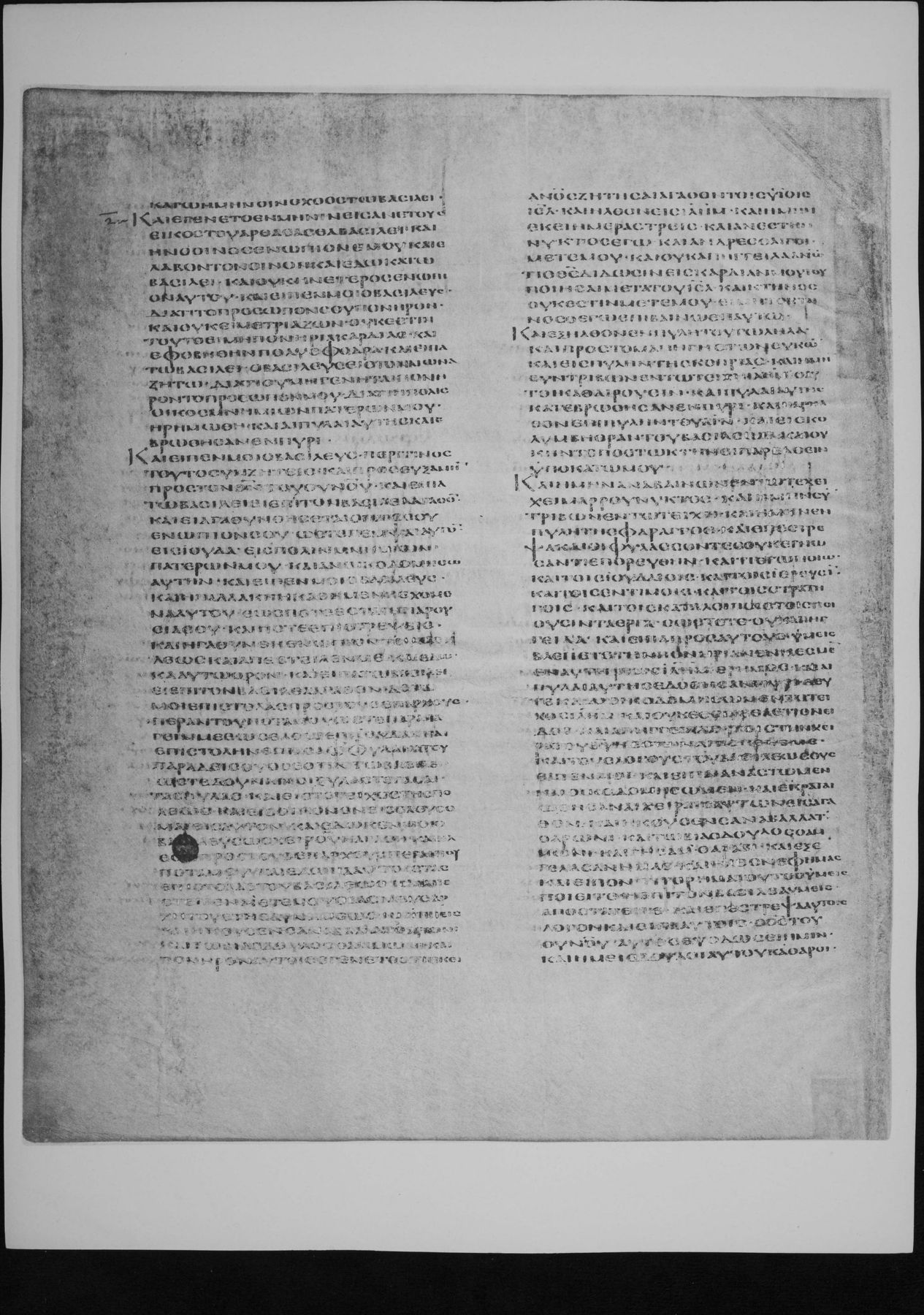
Where on the image
2 Esdras (Nehemiah) 1:9-11 is on fol. 453r (full-size facsimile of 1879-83, Internet Archive codex-alexandrinus leaf 930). The 1957 reduced facsimile prints beneath this page: 2 Esdras (Ezra) x. 22-2 Esdras xi. 11 (Nehemiah i. 11). Checked on the plate: the page begins inside Ezr 10:22 (first words read: ΚΑΙ ΗΛΑΣΑ ΚΑΙ ΑΠΟ ΤΩΝ ΛΕΥΙΤΩΝ ΙΩΖΑΒΑΔ ΚΑΙ ΣΑΜΟΥ ΚΑΙ ΚΩΛΙΑ). 2 Esdras (Nehemiah) 1:11 is on fol. 453v (full-size facsimile of 1879-83, Internet Archive codex-alexandrinus leaf 931). The 1957 reduced facsimile prints beneath this page: 2 Esdras xi. 11-xii. 20 (Nehemiah i. 11-ii. 20). Checked on the plate: the page begins inside 2 Esdras (Nehemiah) 1:11 (first words read: ΚΑΙ ΕΓΩ ΗΜΗΝ ΟΙΝΟΧΟΟΣ ΤΩ ΒΑΣΙΛΕΙ ΚΑΙ ΕΓΕΝΕΤΟ ΕΝ ΜΗΝΙ ΝΕΙΣΑΝ).
9καὶ ἐὰν ἐπιστρέψητε πρὸς μέ, καὶ φυλάξητε τὰς ἐντολάς μου καὶ ποιήσητε αὐτάς, ἐὰν ᾖ ἡ διασπορὰ ὑμῶν ἀπ᾽ ἄκρου τοῦ οὐρανοῦ, ἐκεῖθεν συνάξω αὐτούς, καὶ εἰσάξω αὐτοὺς εἰς τὸν τόπον ὃν ἐξελεξάμην κατασκηνῶσαι τὸ ὄνομά μου ἐκεῖ. 10καὶ αὐτοὶ παῖδές σου καὶ λαός σου, οὓς ἐλυτρώσω ἐν τῇ δυνάμει σου τῇ μεγάλῃ καὶ ἐν τῇ χειρί σου τῇ κραταιᾷ. 11μὴ δή, ἀλλ᾽ ἔστω τὸ οὖς σου προσέχον εἰς τὴν προσευχὴν τοῦ δούλου σου καὶ εἰς τὴν προσευχὴν παίδων σου τῶν θελόντων φοβεῖσθαι τὸ ὄνομά σου· καὶ εὐόδωσον δὴ τῷ παιδί σου σήμερον καὶ δὸς αὐτὸν εἰς οἰκτειρμοὺς ἐνώπιον τοῦ ἀνδρὸς τούτου. καὶ ἐγὼ ἤμην εὐνοῦχος τῷ βασιλεῖ.
9But if ye turn again to me, and keep my commandments, and do them; if ye should be scattered under the utmost bound of heaven, thence will I gather them, and I will bring them into the place which I have chosen to cause my name to dwell there. 10Now they are thy servants and thy people, whom thou hast redeemed with thy great power, and with thy strong hand. 11Turn not away, I pray thee, O Lord, but let thine ear be attentive to the prayer of thy servant, and to the prayer of thy servants, who desire to fear thy name: and prosper, I pray thee, thy servant this day, and cause him to find mercy in the sight of this man. Now I was the king's cup-bearer.
Cite
Sources
- Source: Codex Alexandrinus (British Library Royal MS 1 D. VI) via the British Museum photographic facsimiles of 1879-83 and 1957 (Internet Archive) + Swete's Septuagint + Brenton's English (holding institution)
- Critical edition: H. B. Swete, The Old Testament in Greek according to the Septuagint (1909)
← previous · → next · v cycle view · l back to library