2 Esdras (Nehemiah), Chapter 8 (Codex Alexandrinus)
Introduction
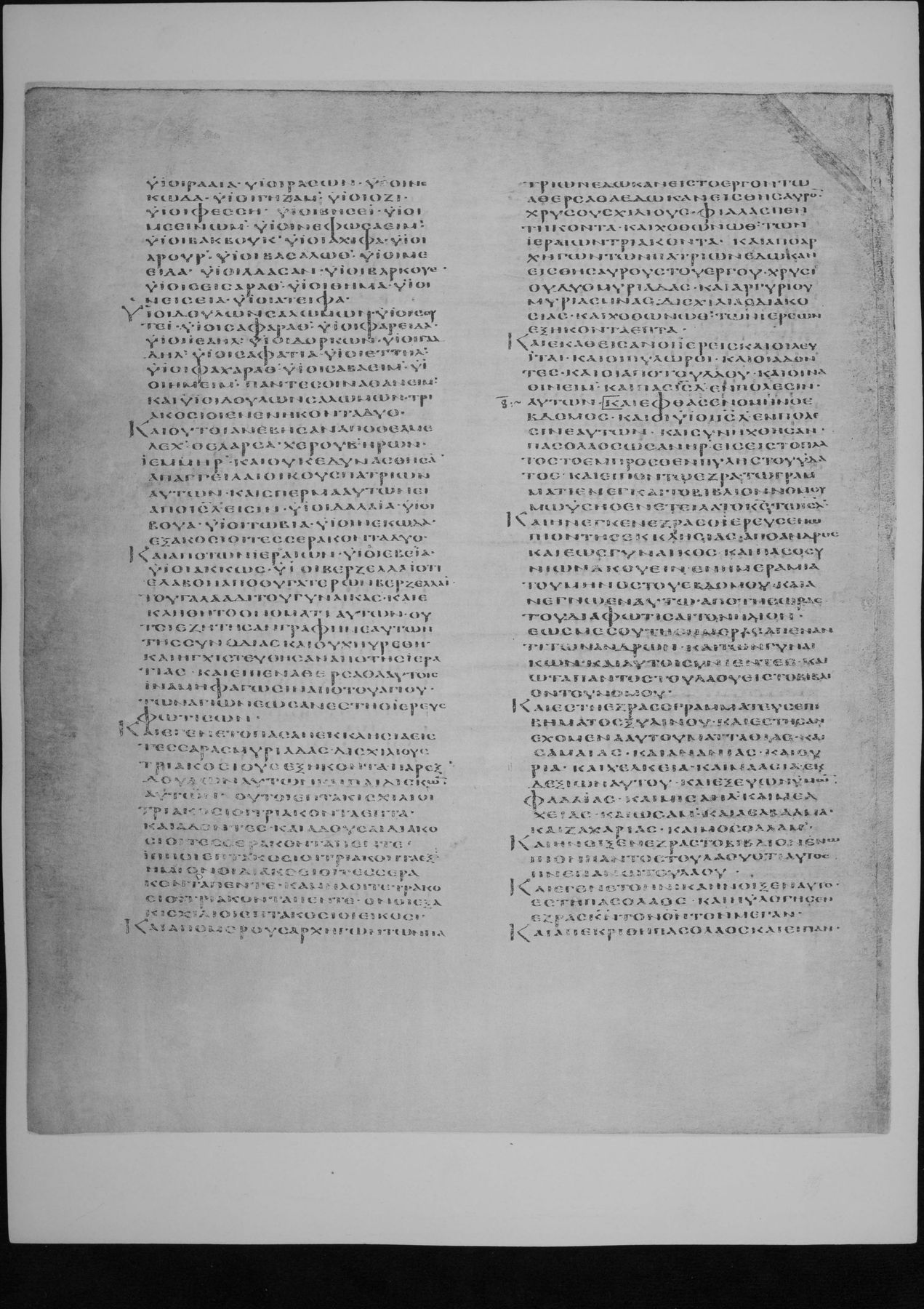
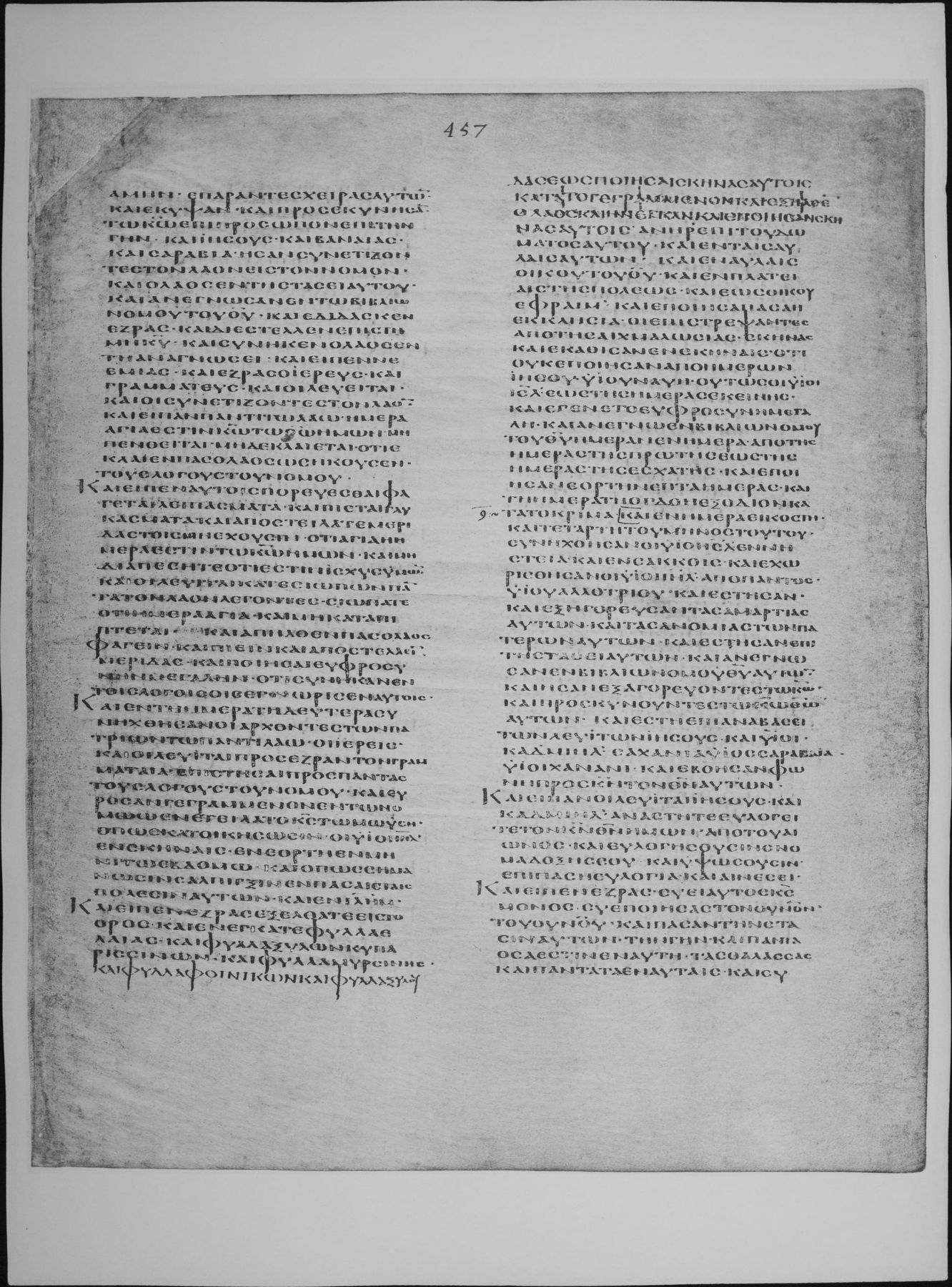
2 Esdras (Nehemiah) 8 in the Greek Old Testament (the Septuagint) as written in Codex Alexandrinus, a Greek Bible copied in the fifth century, probably in Egypt, and now in the British Library (Royal MS 1 D. VI, the second of its four volumes). It is one of the three great early codices of the whole Greek Bible, with Codex Vaticanus and Codex Sinaiticus.
2 Esdras: the Septuagint gives Ezra and Nehemiah as one book, 2 Esdras (Esdras B); its chapters 11-23 are the book of Nehemiah. This entry uses Nehemiah's chapter numbers, as the digital Swete text does (2 Esdras 11 = Nehemiah 1, and so on); the captions of the 1957 facsimile give both.
This entry meets the strict three-criteria standard of the Theosis Library:
- Manuscript scan: the pages of Codex Alexandrinus carrying this chapter (fol. 456v, fol. 457r), from the full-size photographic (autotype) facsimile published by the British Museum in 1879-1883, as digitised on the Internet Archive. The verse range of every page comes from the reduced photographic facsimile of 1957, which prints it beneath each plate, and the opening words of every page were read on the plate to confirm the page and the verse it begins with. Each section links to the page or pages that hold its verses. Folio numbers are those written at the head of each leaf and visible on the plates.
- Original text: Swete's edition, which here prints the text of Codex Vaticanus (Vat. gr. 1209), the base of his edition, and gives the readings of Alexandrinus only in his apparatus. The Greek column is therefore Vaticanus' text; where Alexandrinus differs, the plate shows what Alexandrinus reads.
- English translation: Sir Lancelot C. L. Brenton, The Septuagint Version of the Old Testament (1844; 1851 edition), a translation of the Greek, public domain, from the eBible.org text.
How was this verified? (Provenance)
Where on the image
2 Esdras (Nehemiah) 8:1-6 is on fol. 456v (full-size facsimile of 1879-83, Internet Archive codex-alexandrinus leaf 937). The 1957 reduced facsimile prints beneath this page: 2 Esdras xvii. 50-xviii. 6 (Nehemiah vii. 50-viii. 6). Checked on the plate: the page begins at the start of 2 Esdras (Nehemiah) 7:50 (first words read: ΥΙΟΙ ΡΑΑΙΑ ΥΙΟΙ ΡΑΣΩΝ ΥΙΟΙ ΝΕΚΩΔΑ ΥΙΟΙ ΓΗΖΑΜ ΥΙΟΙ ΟΖΙ). 2 Esdras (Nehemiah) 8:6-8 is on fol. 457r (full-size facsimile of 1879-83, Internet Archive codex-alexandrinus leaf 938). The 1957 reduced facsimile prints beneath this page: 2 Esdras xviii. 6-xix. 6 (Nehemiah viii. 6-ix. 6). Checked on the plate: the page begins inside 2 Esdras (Nehemiah) 8:6 (first words read: ΑΜΗΝ ΕΠΑΡΑΝΤΕΣ ΧΕΙΡΑΣ ΑΥΤΩΝ ΚΑΙ ΕΚΥΨΑΝ ΚΑΙ ΠΡΟΣΕΚΥΝΗΣΑΝ ΤΩ ΚΩ). Note: in Neh. 8:6 Codex Alexandrinus adds ΕΠΑΡΑΝΤΕΣ ΧΕΙΡΑΣ ΑΥΤΩΝ after ΑΜΗΝ, words that Swete's text (Codex Vaticanus) lacks.
1Καὶ ἔφθασεν ὁ μὴν ὁ ἕβδομος καὶ οἱ υἱοὶ Ἰσραὴλ ἐν πόλεσιν αὐτῶν, καὶ συνήχθησαν πᾶς ὁ λαὸς ὡς ἀνὴρ εἷς εἰς τὸ πλάτος τὸ ἔμπροσθεν πύλης τοῦ ὕδατος. καὶ εἶπαν τῷ Ἔσρᾳ τῷ γραμματεῖ ἐνέγκαι τὸ βιβλίον νόμου Μωυσῆ ὃ ἐνετείλατο τῷ Ἰσραήλ. 2καὶ ἤνεγκεν Ἔσρας ὁ ἱερεὺς τὸν νόμον ἐνώπιον τῆς ἐκκλησίας, ἀπὸ ἀνδρὸς ἕως γυναικὸς καὶ πᾶς ὁ συνίων ἀκούειν, ἐν ἡμέρᾳ μιᾷ τοῦ μηνὸς τοῦ ἑβδόμου· 3καὶ ἀνέγνω ἐν αὐτῷ ἀπὸ τῆς ὥρας τοῦ διαφωτίσαι τὸν ἥλιον ἕως ἡμίσους τῆς ἡμέρας ἀπέναντι τῶν ἀνδρῶν καὶ τῶν γυναικῶν, καὶ αὐτοὶ συνιέντες· καὶ ὦτα παντὸς τοῦ λαοῦ εἰς τὸ βιβλίον τοῦ νόμου. 4καὶ ἔστη Ἔσρας ὁ γραμματεὺς ἐπὶ βήματος ξυλίνου, καὶ ἔστησεν ἐχόμενα αὐτοῦ Ματταθίας καὶ Σαμαίας καὶ Ἀνανιὰ καὶ Οὐρειὰ καὶ Ἑλκειὰ καὶ Μαασσαιὰ ἐκ δεξιῶν αὐτοῦ, καὶ ἐξ ἀριστερῶν Φαδαίας καὶ Μεισαὴλ καὶ Μελχείας καὶ Ζαχαρίας. 5καὶ ἤνοιξεν Ἔσρας τὸ βιβλίον ἐνώπιον παντὸς τοῦ λαοῦ, ὅτι αὐτὸς ἦν ἐπάνω τοῦ λαοῦ· καὶ ἐγένετο ἡνίκα ἤνοιξεν αὐτό, ἔστη πᾶς ὁ λαός. 6καὶ ηὐλόγησεν τὸν κύριον τὸν θεὸν τὸν μέγαν, καὶ ἀπεκρίθη πᾶς ὁ λαὸς καὶ εἶπαν Ἀμήν, καὶ ἔκυψαν καὶ προσεκύνησαν τῷ κυρίῳ ἐπὶ πρόσωπον ἐπὶ τὴν γῆν. 7καὶ Ἰησοῦς καὶ Βαναιὰ καὶ Σαραβιὰ ἦσαν συνετίζοντες τὸν λαὸν εἰς τὸν νόμον· καὶ ὁ λαὸς ἐν τῇ στάσει αὐτοῦ. 8καὶ ἀνέγνωσαν ἐν βιβλίῳ νόμου τοῦ θεοῦ, καὶ ἐδίδασκεν Ἔσρας καὶ διέστελλεν ἐν ἐπιστήμῃ Κυρίου, καὶ συνῆκεν ὁ λαὸς ἐν τῇ ἀναγνώσει.
1And the seventh month arrived, and the children of Israel were settled in their cities; and all the people were gathered as one man to the broad place before the water-gate, and they told Esdras the scribe to bring the book of the law of Moses, which the Lord commanded Israel. 2So Esdras the priest brought the law before the congregation both of men and women, and every one who had understanding was present to hearken, on the first day of the seventh month. 3And he read in it from the time of sun-rise to the middle of the day, before the men and the women; and they understood it, and the ears of all the people were attentive to the book of the law. 4And Esdras the scribe stood on a wooden stage, and there stood next to him Mattathias, and Samaeas, and Ananias, and Urias, and Chelcia, and Massia, on his right hand; and on his left Phadaeas, and Misael, and Melchias, and Asom, and Asabadma, and Zacharias, and Mesollam. 5And Esdras opened the book before all the people, for he was above the people; and it came to pass when he had opened it, that all the people stood. 6And Esdras blessed the Lord, the great God: and all the people answered, and said, Amen, lifting up their hands: and they bowed down and worshipped the Lord with their face to the ground. 7And Jesus and Banaias and Sarabias instructed the people in the law, and the people stood in their place. 8And they read in the book of the law of God, and Esdras taught, and instructed them distinctly in the knowledge of the Lord, and the people understood the law in the reading.
Where on the image
2 Esdras (Nehemiah) 8:9-18 is on fol. 457r (full-size facsimile of 1879-83, Internet Archive codex-alexandrinus leaf 938). The 1957 reduced facsimile prints beneath this page: 2 Esdras xviii. 6-xix. 6 (Nehemiah viii. 6-ix. 6). Checked on the plate: the page begins inside 2 Esdras (Nehemiah) 8:6 (first words read: ΑΜΗΝ ΕΠΑΡΑΝΤΕΣ ΧΕΙΡΑΣ ΑΥΤΩΝ ΚΑΙ ΕΚΥΨΑΝ ΚΑΙ ΠΡΟΣΕΚΥΝΗΣΑΝ ΤΩ ΚΩ). Note: in Neh. 8:6 Codex Alexandrinus adds ΕΠΑΡΑΝΤΕΣ ΧΕΙΡΑΣ ΑΥΤΩΝ after ΑΜΗΝ, words that Swete's text (Codex Vaticanus) lacks.
9καὶ εἶπεν Νεεμίας, καὶ Ἔσρας ὁ ἱερεὺς καὶ γραμματεὺς καὶ οἱ Λευεῖται συνέτιζον τὸν λαόν, καὶ εἶπαν παντὶ τῷ λαῷ Ἡμέρα ἁγία ἐστὶν Κυρίῳ τῷ θεῷ ἡμῶν, μὴ πενθεῖτε μηδὲ κλαίετε· ὅτι ἔκλαιεν πᾶς ὁ λαός, ὡς ἤκουσαν τοὺς λόγους τοῦ νόμου. 10καὶ εἶπεν αὐτοῖς Πορεύεσθε, φάγετε λιπάσματα καὶ πίετε γλυκάσματα καὶ ἀποστείλατε μερίδα τοῖς μὴ ἔχουσιν, ὅτι ἁγία ἐστὶν ἡ ἡμέρα τῷ κυρίῳ ἡμῶν· καὶ μὴ διαπέσητε, ὅτι ἐστὶν ἰσχὺς ἡμῶν. 11καὶ οἱ Λευεῖται κατεσιώπων τὸν λαὸν λέγοντες Σιωπᾶτε, ὅτι ἡ ἡμέρα ἁγία, καὶ μὴ καταπίπτετε. 12καὶ ἀπῆλθεν πᾶς ὁ λαὸς φαγεῖν καὶ πιεῖν καὶ ἀποστέλλειν μερίδας καὶ ποιῆσαι εὐφροσύνην μεγάλην, ὅτι συνῆκαν ἐν τοῖς λόγοις οἷς ἐγνώρισεν αὐτοῖς. 13Καὶ ἐν τῇ ἡμέρᾳ τῇ δευτέρᾳ συνήχθησαν οἱ ἄρχοντες τῶν πατριῶν σὺν τῷ παντὶ λαῷ οἱ ἱερεῖς καὶ οἱ Λευεῖται πρὸς Ἔσραν τὸν γραμματέα, ἐπιστῆσαι πρὸς πάντας τοὺς λόγους τοῦ νόμου. 14καὶ εὕροσαν γεγραμμένον ἐν τῷ νόμῳ ᾧ ἐνετείλατο Κύριος τῷ Μωσῇ, ὅπως κατοικήσωσιν οἱ υἱοὶ Ἰσραὴλ ἐν σκηναῖς ἐν ἑορτῇ ἐν μηνὶ τῷ ἑβδόμῳ, 15καὶ ὅπως σημαίνωσιν σάλπιγξιν ἐν πάσαις ταῖς πόλεσιν αὐτῶν καὶ ἐν Ἰερουσαλήμ. καὶ εἶπεν Ἔσρας Ἐξέλθετε εἰς τὸ ὄρος καὶ ἐνέγκετε φύλλα ἐλαίας καὶ φύλλα ξύλων κυπαρισσίνων καὶ φύλλα μυρσίνης καὶ φύλλα φοινίκων καὶ φύλλα ξύλου δασέος, ποιῆσαι σκηνὰς κατὰ τὸ γεγραμμένον. 16καὶ ἐξῆλθεν ὁ λαὸς καὶ ἤνεγκαν, καὶ ἐποίησαν ἑαυτοῖς σκηνὰς ἀνὴρ ἐπὶ τοῦ δώματος αὐτοῦ καὶ ἐν ταῖς αὐλαῖς αὐτῶν καὶ ἐν ταῖς αὐλαῖς οἴκου τοῦ θεοῦ καὶ ἐν ταῖς πλατείαις τῆς πόλεως καὶ ἕως πύλης Ἐφράιμ. 17καὶ ἐποίησαν πᾶσα ἡ ἐκκλησία οἱ ἐπιστρέψαντες ἀπὸ τῆς αἰχμαλωσίας σκηνάς, καὶ ἐκάθισαν ἐν σκηναίς· ὅτι οὐκ ἐποίησαν ἀπὸ ἡμερῶν Ἰησοῦ υἱοῦ Ναυὴ οὕτως οἱ υἱοὶ Ἰσραὴλ ἕως τῆς ἡμέρας ἐκείνης· καὶ ἐγένετο εὐφροσύνη μεγάλη. 18καὶ ἀνέγνω ἐν βιβλίῳ νόμου τοῦ θεοῦ ἡμέραν ἐν ἡμέρᾳ ἀπὸ τῆς ἡμέρας τῆς πρώτης ἕως τῆς ἡμέρας τῆς ἐσχάτης· καὶ ἐποίησαν ἑορτὴν ἑπτὰ ἡμέρας, καὶ τῇ ἡμέρᾳ τῇ ὀγδόῃ ἐξόδιον.
9And Neemias, and Esdras the priest and scribe, and the Levites, and they that instructed the people, spoke and said to all the people, It is a holy day to the Lord our God; do not mourn, nor weep. For all the people wept when they heard the words of the law. 10And the governor said to them, Go, eat the fat, and drink the sweet, and send portions to them that have nothing; for the day is holy to our Lord: and faint not, for the Lord is our strength. 11And the Levites caused all the people to be silent, saying, Be silent, for it is a holy day, and despond not. 12So all the people departed to eat, and to drink, and to send portions, and to make great mirth, for they understood the words which he made known to them. 13And on the second day the heads of families assembled with all the people, also the priests and Levites, to Esdras the scribe, to attend to all the words of the law. 14And they found written in the law which the Lord commanded Moses, that the children of Israel should dwell in booths, in the feast in the seventh month: 15and that they should sound with trumpets in all their cities, and in Jerusalem. And Esdras said, Go forth to the mountain, and bring branches of olive, and branches of cypress trees, and branches of myrtle, and branches of palm trees, and branches of every thick tree, to make booths, according to that which was written. 16And the people went forth, and brought them, and made booths for themselves, each one upon his roof, and in their courts, and in the courts of the house of God, and in the streets of the city, and as far as the gate of Ephraim. 17And all the congregation who had returned from the captivity, made booths, and dwelt in booths: for the children of Israel had not done so from the days of Jesus the son of Naue until that day: and there was great joy. 18And Esdras read in the book of the law of God daily, from the first day even to the last day: and they kept the feast seven days; and on the eighth day a solemn assembly, according to the ordinance.
Cite
Sources
- Source: Codex Alexandrinus (British Library Royal MS 1 D. VI) via the British Museum photographic facsimiles of 1879-83 and 1957 (Internet Archive) + Swete's Septuagint + Brenton's English (holding institution)
- Critical edition: H. B. Swete, The Old Testament in Greek according to the Septuagint (1909)
← previous · → next · v cycle view · l back to library