Numbers, Chapter 13 (Codex Alexandrinus)
Introduction
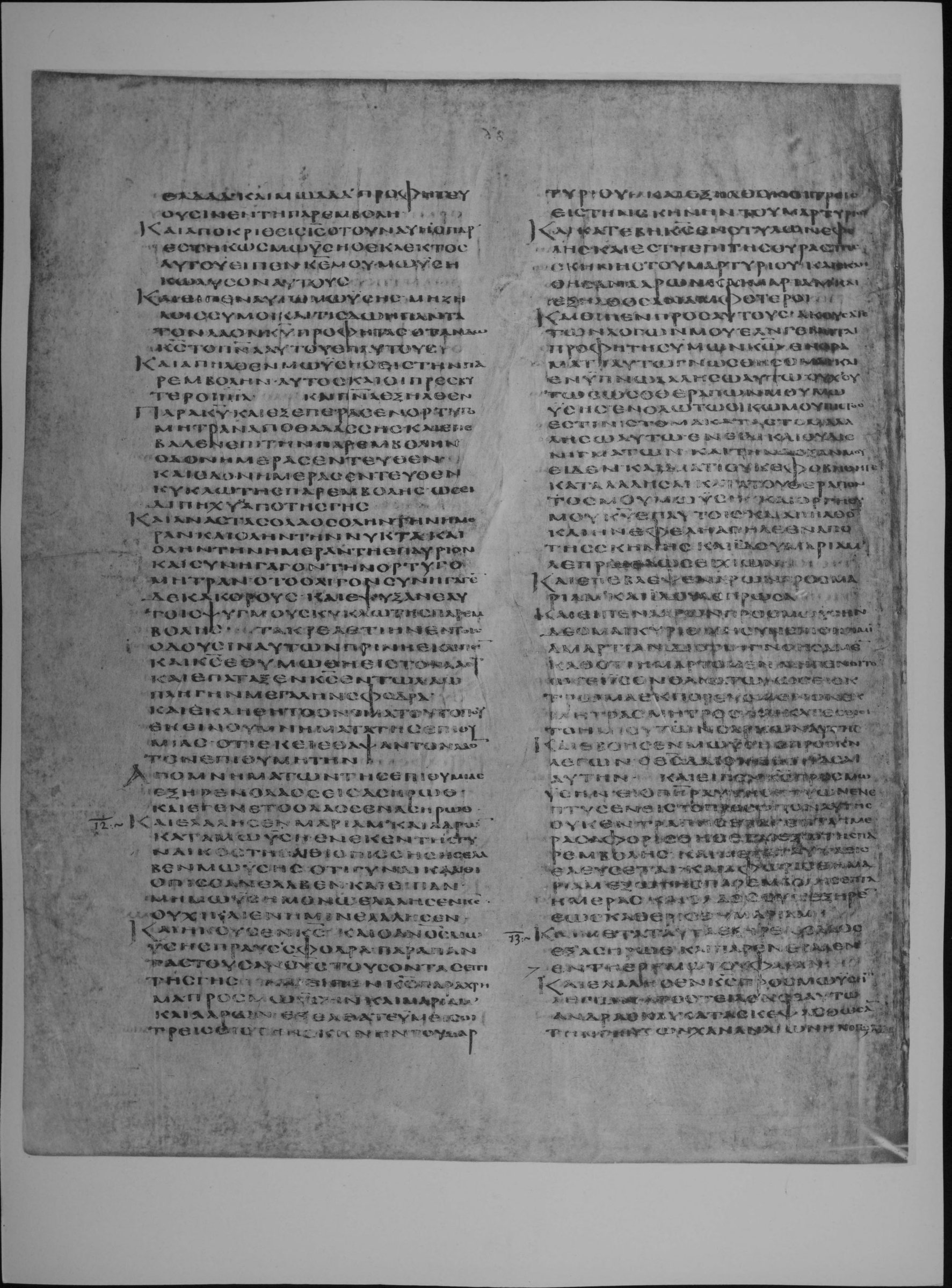
Numbers 13 in the Greek Old Testament (the Septuagint) as written in Codex Alexandrinus, a Greek Bible copied in the fifth century, probably in Egypt, and now in the British Library (Royal MS 1 D. V, the first of its four volumes). It is one of the three great early codices of the whole Greek Bible, with Codex Vaticanus and Codex Sinaiticus, and for Genesis 1:1-46:28, which Codex Vaticanus has lost, it is the oldest surviving complete Greek text (older papyri such as the Berlin Genesis papyrus and Chester Beatty 961 survive only in part).
Numbering: Swete's Greek and Brenton's English number or divide some verses of this chapter differently (Swete 13:1 = Brenton 12:16; Swete 13:2-34 = Brenton 13:1-33). Each column keeps its own verse numbers, and sections are cut only where the two texts agree, so each section holds the same passage in both languages.
This entry meets the strict three-criteria standard of the Theosis Library:
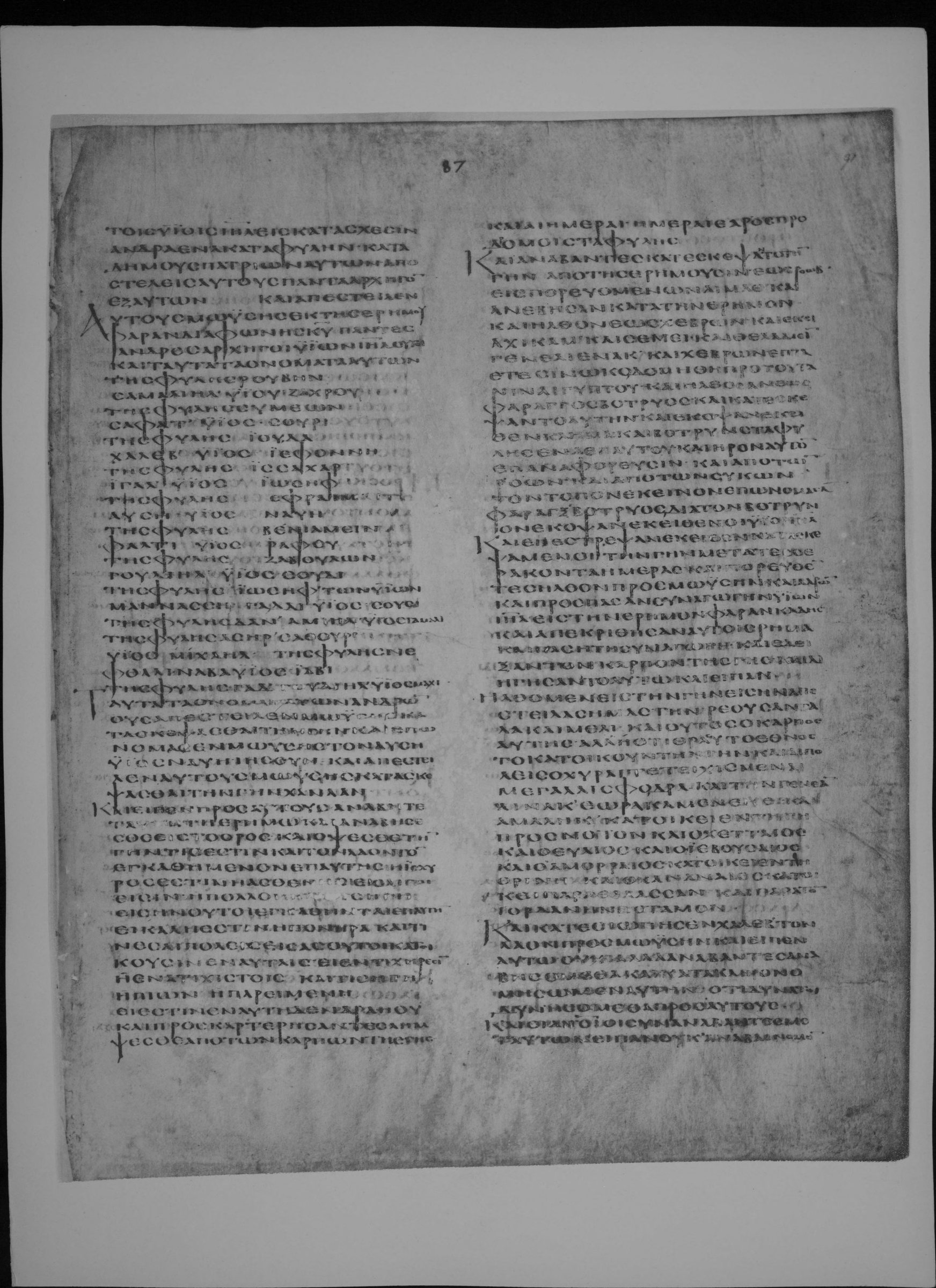
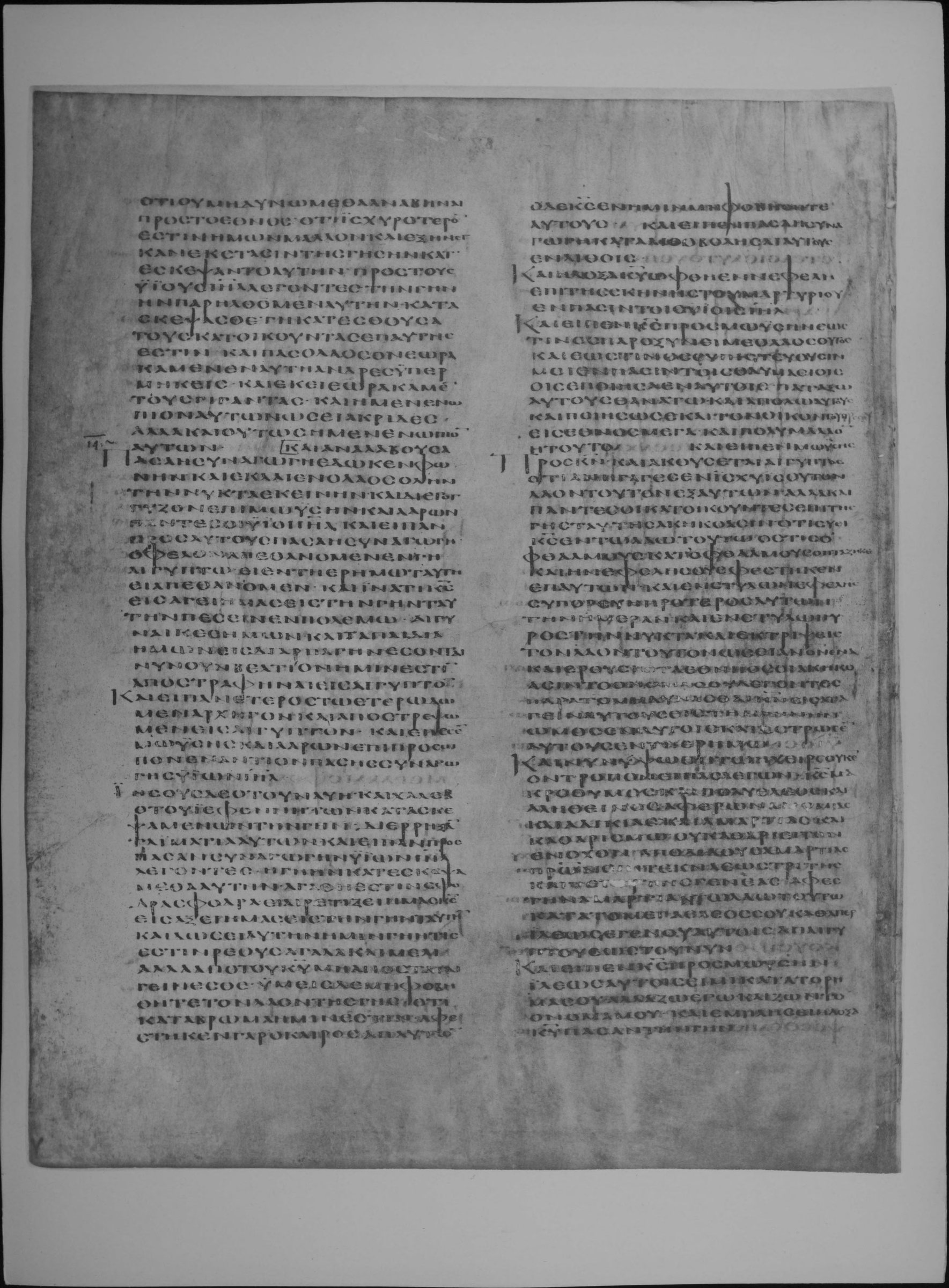
- Manuscript scan: the pages of Codex Alexandrinus carrying this chapter (fol. 86v, fol. 87r, fol. 87v), from the full-size photographic (autotype) facsimile published by the British Museum in 1879-1883, as digitised on the Internet Archive. The verse range of every page comes from the reduced photographic facsimile of 1915, which prints it beneath each plate, and the opening words of every page were read on the plate to confirm the page and the verse it begins with. Each section links to the page or pages that hold its verses. Folio numbers are those written at the head of each leaf and visible on the plates.
- Original text: Swete's edition, which here prints the text of Codex Vaticanus (Vat. gr. 1209), the base of his edition, and gives the readings of Alexandrinus only in his apparatus. The Greek column is therefore Vaticanus' text; where Alexandrinus differs, the plate shows what Alexandrinus reads.
- English translation: Sir Lancelot C. L. Brenton, The Septuagint Version of the Old Testament (1844; 1851 edition), a translation of the Greek, public domain, from the eBible.org text.
How was this verified? (Provenance)
Where on the image
Numbers 13:1-3 is on fol. 86v (full-size facsimile of 1879-83, Internet Archive codex-alexandrinus leaf 193). The 1915 reduced facsimile prints beneath this page: Num. xi. 27-xiii. 3. Checked on the plate: the page begins inside Numbers 11:27 (first words read: ΕΛΔΑΔ ΚΑΙ ΜΩΔΑΔ ΠΡΟΦΗΤΕΥΟΥΣΙΝ ΕΝ ΤΗ ΠΑΡΕΜΒΟΛΗ ΚΑΙ ΑΠΟΚΡΙΘΕΙΣ ΙΗΣΟΥΣ). Numbers 13:3-8 is on fol. 87r (full-size facsimile of 1879-83, Internet Archive codex-alexandrinus leaf 194). The 1915 reduced facsimile prints beneath this page: Num. xiii. 3-32. Checked on the plate: the page begins inside Numbers 13:3 (first words read: ΤΟΙΣ ΥΙΟΙΣ ΙΣΡΑΗΛ ΕΙΣ ΚΑΤΑΣΧΕΣΙΝ ΑΝΔΡΑ ΕΝΑ ΚΑΤΑ ΦΥΛΗΝ ΚΑΤΑ ΔΗΜΟΥΣ).
1καὶ μετὰ ταῦτα ἐξῆρεν ὁ λαὸς ἐξ Ἁσηρώθ, καὶ παρενέβαλον ἐν τῇ ἐρήμῳ Φαράν. 2Καὶ ἐλάλησεν Κύριος πρός Μωυσῆν λέγων 3Ἀπόστειλον σεαυτῷ ἄνδρας, καὶ κατασκεψάσθωσαν τὴν γῆν τῶν Χαναναίων, ἣν ἐγὼ δίδωμι τοῖς υἱοῖς Ἰσραὴλ εἰς κατάσχεσιν· ἄνδρα ἕνα κατὰ φυλήν, κατὰ δήμους πατριῶν αὐτῶν ἀποστείλας αὐτούς, πάντα ἀρχηγὸν ἐξ αὐτῶν. 4καὶ ἐξαπέστειλεν αὐτοὺς Μωυσῆς ἐκ τῆς ἐρήμου Φαρὰν διὰ φωνῆς Κυρίου· πάντες ἄνδρες ἀρχηγοὶ υἱῶν Ἰσραὴλ οὗτοι. 5καὶ ταῦτα τὰ ὀνόματα αὐτῶν· τῆς φυλῆς Ῥουβήν, Σαμουὴλ υἱὸς Ζάκχυρ. 6τῆς φυλῆς Συμεών, Σαφὰτ υἱὸς Σουρεί· 7τῆς φυλῆς Ἰούδα, Χαλὲβ υἱὸς Ἰεφοννή· 8τῆς φυλῆς Ἰσσαχάρ, Ἰλαὰλ υἱὸς Ἰωσήφ·
12:16And afterwards the people set forth from Aseroth, and encamped in the wilderness of Pharan. 1And the Lord spoke to Moses, saying, 2Send for thee men, and let them spy the land of the Chananites, which I give to the sons of Israel for a possession; one man for a tribe, thou shalt send them away according to their families, every one of them a prince. 3And Moses sent them out of the wilderness of Pharan by the word of the Lord; all these were the princes of the sons of Israel. 4And these are their names: of the tribe of Ruben, Samuel the son of Zachur. 5Of the tribe of Symeon, Saphat the son of Suri. 6Of the tribe of Judah, Chaleb the son of Jephonne. 7Of the tribe of Issachar, Ilaal the son of Joseph.
Where on the image
Numbers 13:9-16 is on fol. 87r (full-size facsimile of 1879-83, Internet Archive codex-alexandrinus leaf 194). The 1915 reduced facsimile prints beneath this page: Num. xiii. 3-32. Checked on the plate: the page begins inside Numbers 13:3 (first words read: ΤΟΙΣ ΥΙΟΙΣ ΙΣΡΑΗΛ ΕΙΣ ΚΑΤΑΣΧΕΣΙΝ ΑΝΔΡΑ ΕΝΑ ΚΑΤΑ ΦΥΛΗΝ ΚΑΤΑ ΔΗΜΟΥΣ).
9τῆς φυλῆς Ἐφράιμ, Αὑσὴ υἱὸς Ναυή· 10τῆς φυλῆς Βενιαμείν, Φαλτεὶ υἱὸς Ῥαφού· 11τῆς φυλῆς Ζαβουλών, Γουδιὴλ υἱὸς Σουδεί· 12τῆς φυλῆς Ἰωσὴφ τῶν υἱῶν Μανασσή, Γαδδεὶ υἱὸς Σουσεί· 13τῆς φυλῆς Δάν, Ἀμειὴλ υἱὸς Γαμαί· 14τῆς φυλῆς Ἀσήρ, Σαθοὺρ υἱὸς Μειχαήλ· 15τῆς φυλῆς Νεφθαλεί, Ναβεὶ υἱὸς Ἰαβεί· 16τῆς φυλῆς Γάδ, Γουδιὴλ υἱὸς Μακχί.
8Of the tribe of Ephraim, Ause the son of Naue. 9Of the tribe of Benjamin, Phalti the son of Raphu. 10Of the tribe of Zabulon, Gudiel the son of Sudi. 11Of the tribe of Joseph of the sons of Manasse, Gaddi the son of Susi. 12Of the tribe of Dan, Amiel the son of Gamali. 13Of the tribe of Aser, Sathur the son of Michael. 14Of the tribe of Nephthali, Nabi the son of Sabi. 15Of the tribe of Gad, Gudiel the son of Macchi.
Where on the image
Numbers 13:17-24 is on fol. 87r (full-size facsimile of 1879-83, Internet Archive codex-alexandrinus leaf 194). The 1915 reduced facsimile prints beneath this page: Num. xiii. 3-32. Checked on the plate: the page begins inside Numbers 13:3 (first words read: ΤΟΙΣ ΥΙΟΙΣ ΙΣΡΑΗΛ ΕΙΣ ΚΑΤΑΣΧΕΣΙΝ ΑΝΔΡΑ ΕΝΑ ΚΑΤΑ ΦΥΛΗΝ ΚΑΤΑ ΔΗΜΟΥΣ).
17ταῦτα τὰ ὀνόματα τῶν ἀνδρῶν οὓς ἀπέστειλεν Μωυσῆς κατασκέψασθαι τὴν γῆν. καὶ ἐπωνόμασεν Μωυσῆς τὸν Αὑσὴ υἱὸν Ναυὴ Ἰησοῦν. 18καὶ ἀπέστειλεν αὐτοὺς Μωυσῆς κατασκέψασθαι τὴν γῆν Χανάαν καὶ εἶπεν πρὸς αὐτούς Ἀνάβητε ταύτῃ τῇ ἐρήμῳ, καὶ ἀναβήσεσθε εἰς τὸ ὄρος· 19καὶ ὄψεσθε τὴν γῆν τίς ἐστιν, καὶ τὸν λαὸν τὸν ἐνκαθήμενον ἐπ᾽ αὐτῆς, εἰ ἰσχυρότερός ἐστιν ἢ ἀσθενής, ἢ ὀλίγοι εἰσὶν ἢ πολλοί· 20καὶ τίς ἡ γῆ εἰς ἣν οὗτοι ἐνκάθηνται ἐπ᾽ αὐτῆς, ἢ καλή ἐστιν ἢ πονηρά· καὶ τίνες αἱ πόλεις εἰς ἃς οὗτοι κατοικοῦσιν ἐν αὐταῖς, ἢ ἐν τειχήρεσιν ἢ ἐν ἀτειχίσταις· 21καὶ τίς ἡ γῆ, ἢ πίων ἢ παρειμένη, ἢ ἔστιν ἐν αὐτῇ δένδρα ἢ οὔ. καὶ προσκαρτερήσαντες λήμψεσθε ἀπὸ τῶν καρπῶν τῆς γῆς. καὶ αἱ ἡμέραι ἡμέραι ἔαρος, πρόδρομοι σταφυλῆς. 22καὶ ἀναβάντες κατεσκέψαντο τὴν γῆν ἀπὸ τῆς ἐρήμου Σεὶν ἕως Ῥαάβ, εἰσπορευομένων Ἑφαάθ. 23καὶ ἀνέβησαν κατὰ τὴν ἔρημον καὶ ἦλθον ἕως Χεβρών, καὶ ἐκεῖ Ἀχειμὰν καὶ Σεσσεὶ καὶ Θελαμείν, γενεαὶ Ἐνάχ· καὶ Χεβρὼν ἑπτὰ ἔτεσιν ᾠκοδομήθη πρὸ τοῦ Τάνιν Αἰγύπτου. 24καὶ ἦλθον ἕως Φάραγγος βότρυος, καὶ κατεσκέψαντο αὐτήν· καὶ ἔκοψαν ἐκεῖθεν κλήματα καὶ βότρυν σταφυλῆς ἕνα ἐπ᾽ αὐτοῦ, καὶ ἦραν αὐτὸν ἐπ᾽ ἀναφορεῦσιν, καὶ ἀπὸ τῶν ῥοῶν καὶ ἀπὸ τῶν σικύων.
16These are the names of the men whom Moses sent to spy out the land; and Moses called Ause the son of Naue, Joshua. 17And Moses sent them to spy out the land of Chanaan, and said to them, Go up by this wilderness; and ye shall go up to the mountain, 18and ye shall see the land, what it is, and the people that dwells on it, whether it is strong or weak, or whether they are few or many. 19And what the land is on which they dwell, whether it is good or bad; and what the cities are wherein these dwell, whether they dwell in walled cities or unwalled. 20And what the land is, whether rich or poor; whether there are trees in it or no: and ye shall persevere and take of the fruits of the land: and the days were the days of spring, the forerunners of the grape. 21And they went up and surveyed the land from the wilderness of Sin to Rhoob, as men go in to Æmath. 22And they went up by the wilderness, and departed as far as Chebron; and there was Achiman, and Sessi, and Thelami, the progeny of Enach. Now Chebron was built seven years before Tanin of Egypt. 23And they came to the valley of the cluster and surveyed it; and they cut down thence a bough and one cluster of grapes upon it, and bore it on staves, and they took of the pomegranates and the figs.
Where on the image
Numbers 13:25-32 is on fol. 87r (full-size facsimile of 1879-83, Internet Archive codex-alexandrinus leaf 194). The 1915 reduced facsimile prints beneath this page: Num. xiii. 3-32. Checked on the plate: the page begins inside Numbers 13:3 (first words read: ΤΟΙΣ ΥΙΟΙΣ ΙΣΡΑΗΛ ΕΙΣ ΚΑΤΑΣΧΕΣΙΝ ΑΝΔΡΑ ΕΝΑ ΚΑΤΑ ΦΥΛΗΝ ΚΑΤΑ ΔΗΜΟΥΣ). Numbers 13:32-34 is on fol. 87v (full-size facsimile of 1879-83, Internet Archive codex-alexandrinus leaf 195). The 1915 reduced facsimile prints beneath this page: Num. xiii. 32-xiv. 21. Checked on the plate: the page begins inside Numbers 13:32 (first words read: ΟΤΙ ΟΥ ΜΗ ΔΥΝΩΜΕΘΑ ΑΝΑΒΗΝΑΙ ΠΡΟΣ ΤΟ ΕΘΝΟΣ ΟΤΙ ΙΣΧΥΡΟΤΕΡΟΝ ΕΣΤΙΝ ΗΜΩΝ).
25τὸν τόπον ἐκεῖνον ἐπωνόμασαν Φάραγξ βότρυος, διὰ τὸν βότρυν ὃν ἔκοψαν ἐκεῖθεν οἱ υἱοὶ Ἰσραήλ. 26Καὶ ἀπέστρεψαν ἐκεῖθεν κατασκεψάμενοι τὴν γῆν μετὰ τεσσεράκοντα ἡμέρας. 27καὶ πορευθέντες ἦλθον πρὸς Μωυσῆν καὶ Ἀαρὼν καὶ πρὸς πᾶσαν συναγωγὴν υἱῶν Ἰσραὴλ εἰς τὴν ἔρημον Φαρὰν Καδής· καὶ ἀπεκρίθησαν αὐτοῖς ῥῆμα καὶ πάσῃ συναγωγῇ, καὶ ἔδειξαν τὸν καρπὸν τῆς γῆς. 28καὶ διηγήσαντο αὐτῷ καὶ εἶπαν Ἤλθαμεν εἰς τὴν γῆν ἣν ἀπέστειλας ἡμᾶς, γῆν ῥέουσαν γάλα καὶ μέλι, καὶ οὗτος ὁ καρπὸς αὐτῆς· 29ἀλλ᾽ ἢ ὃτι θρασὺ τὸ ἒθνος τὸ κατοικοῦν ἐπ᾽ αὐτῆς, καὶ πόλεις ὀχυραὶ τετειχισμέναι καὶ μεγάλαι σφόδρα, καὶ τὴν γενεὰν Ἐνὰχ ἑωράκαμεν ἐκεῖ· 30καὶ Ἀμαλὴκ κατοικεῖ ἐν τῇ γῇ τῇ πρὸς νότον, καὶ ὁ Χετταῖος καὶ ὁ Εὑαῖος καὶ ὁ Ἰεβουσαῖος καὶ ὁ Ἀμορραῖος κατοικεῖ ἐν τῇ ὀρεινῇ, καὶ ὁ Χαναναῖος κατοικεῖ παρὰ θάλασσαν. 31καὶ κατεσιώπησεν Χαλὲβ τὸν λαὸν πρὸς Μωυσῆν καὶ εἶπεν αὐτῷ Οὐχί, ἀλλὰ ἀναβάντες ἀναβησόμεθα καὶ κατακληρονομήσομεν αὐτήν, ὅτι δυνατοὶ δυνησόμεθα πρὸς αὐτούς. 32καὶ οἱ ἄνθρωποι οἱ συναναβάντες μετ᾽ αὐτοῦ εἶπαν Οὐκ ἀναβαίνομεν, ὅτι οὐ μὴ δυνώμεθα ἀναβῆναι πρὸς τὸ ἔθνος· ὅτι ἰσχυρότερόν ἐστιν ἡμῶν μᾶλλον. 33καὶ ἐξήνεγκαν ἔκστασιν ἐπὶ τῆς γῆς ἣν κατεσκέψαντο αὐτὴν πρὸς τοὺς υἱοὺς Ἰσραὴλ λέγοντες Τὴν γῆν ἣν παρήλθομεν αὐτὴν κατασκέψασθαι, γῆ κατέσθουσα τοὺς κατοικοῦντας ἐπ᾽ αὐτῆς ἐστίν· πᾶς ὁ λαὸς ὃν ἑωράκαμεν ἐν αὐτῇ ἄνδρες ὑπερμήκεις ἐκεῖ· 34καὶ ἐκεῖ ἑωράκαμεν τοὺς γίγαντας, καὶ ἦμεν ἐνώπιον αὐτῶν ὡσεὶ ἀκρίδες· ἀλλὰ καὶ οὕτως ἦμεν ἐνώπιον αὐτῶν.
24And they called that place, The valley of the cluster, because of the cluster which the children of Israel cut down from thence. 25And they returned from thence, having surveyed the land, after forty days. 26And they proceeded and came to Moses and Aaron and all the congregation of the children of Israel, to the wilderness of Pharan Cades; and they brought word to them and to all the congregation, and they shewed the fruit of the land: 27and they reported to him, and said, We came into the land into which thou sentest us, a land flowing with milk and honey; and this is the fruit of it. 28Only the nation that dwells upon it is bold, and they have very great and strong walled towns, and we saw there the children of Enach. 29And Amalec dwells in the land toward the south: and the Chettite and the Evite, and the Jebusite, and the Amorite dwells in the hill country: and the Chananite dwells by the sea, and by the river Jordan. 30And Chaleb stayed the people from speaking before Moses, and said to him, Nay, but we will go up by all means, and will inherit it, for we shall surely prevail against them. 31But the men that went up together with him said, We will not go up, for we shall not by any means be able to go up against the nation, for it is much stronger than we. 32And they brought a horror of that land which they surveyed upon the children of Israel, saying, The land which we passed by to survey it, is a land that eats up its inhabitants; and all the people whom we saw in it are men of extraordinary stature. 33And there we saw the giants; and we were before them as locusts, yea even so were we before them.
Cite
Sources
- Source: Codex Alexandrinus (British Library Royal MS 1 D. V) via the British Museum photographic facsimiles of 1879-83 and 1915 (Internet Archive) + Swete's Septuagint + Brenton's English (holding institution)
- Critical edition: H. B. Swete, The Old Testament in Greek according to the Septuagint (1909)
← previous · → next · v cycle view · l back to library