Numbers, Chapter 21 (Codex Alexandrinus)
Introduction
Numbers 21 in the Greek Old Testament (the Septuagint) as written in Codex Alexandrinus, a Greek Bible copied in the fifth century, probably in Egypt, and now in the British Library (Royal MS 1 D. V, the first of its four volumes). It is one of the three great early codices of the whole Greek Bible, with Codex Vaticanus and Codex Sinaiticus, and for Genesis 1:1-46:28, which Codex Vaticanus has lost, it is the oldest surviving complete Greek text (older papyri such as the Berlin Genesis papyrus and Chester Beatty 961 survive only in part).
Numbering: Swete's Greek and Brenton's English number or divide some verses of this chapter differently (Swete 21:19-20 = Brenton 21:19; Swete 21:21 = Brenton 21:20; Swete 21:22 = Brenton 21:21-22). Each column keeps its own verse numbers, and sections are cut only where the two texts agree, so each section holds the same passage in both languages.
This entry meets the strict three-criteria standard of the Theosis Library:
- Manuscript scan: the pages of Codex Alexandrinus carrying this chapter (fol. 92v, fol. 93r), from the full-size photographic (autotype) facsimile published by the British Museum in 1879-1883, as digitised on the Internet Archive. The verse range of every page comes from the reduced photographic facsimile of 1915, which prints it beneath each plate, and the opening words of every page were read on the plate to confirm the page and the verse it begins with. Each section links to the page or pages that hold its verses. Folio numbers are those written at the head of each leaf and visible on the plates.
- Original text: Swete's edition, which here prints the text of Codex Vaticanus (Vat. gr. 1209), the base of his edition, and gives the readings of Alexandrinus only in his apparatus. The Greek column is therefore Vaticanus' text; where Alexandrinus differs, the plate shows what Alexandrinus reads.
- English translation: Sir Lancelot C. L. Brenton, The Septuagint Version of the Old Testament (1844; 1851 edition), a translation of the Greek, public domain, from the eBible.org text.
How was this verified? (Provenance)
Where on the image
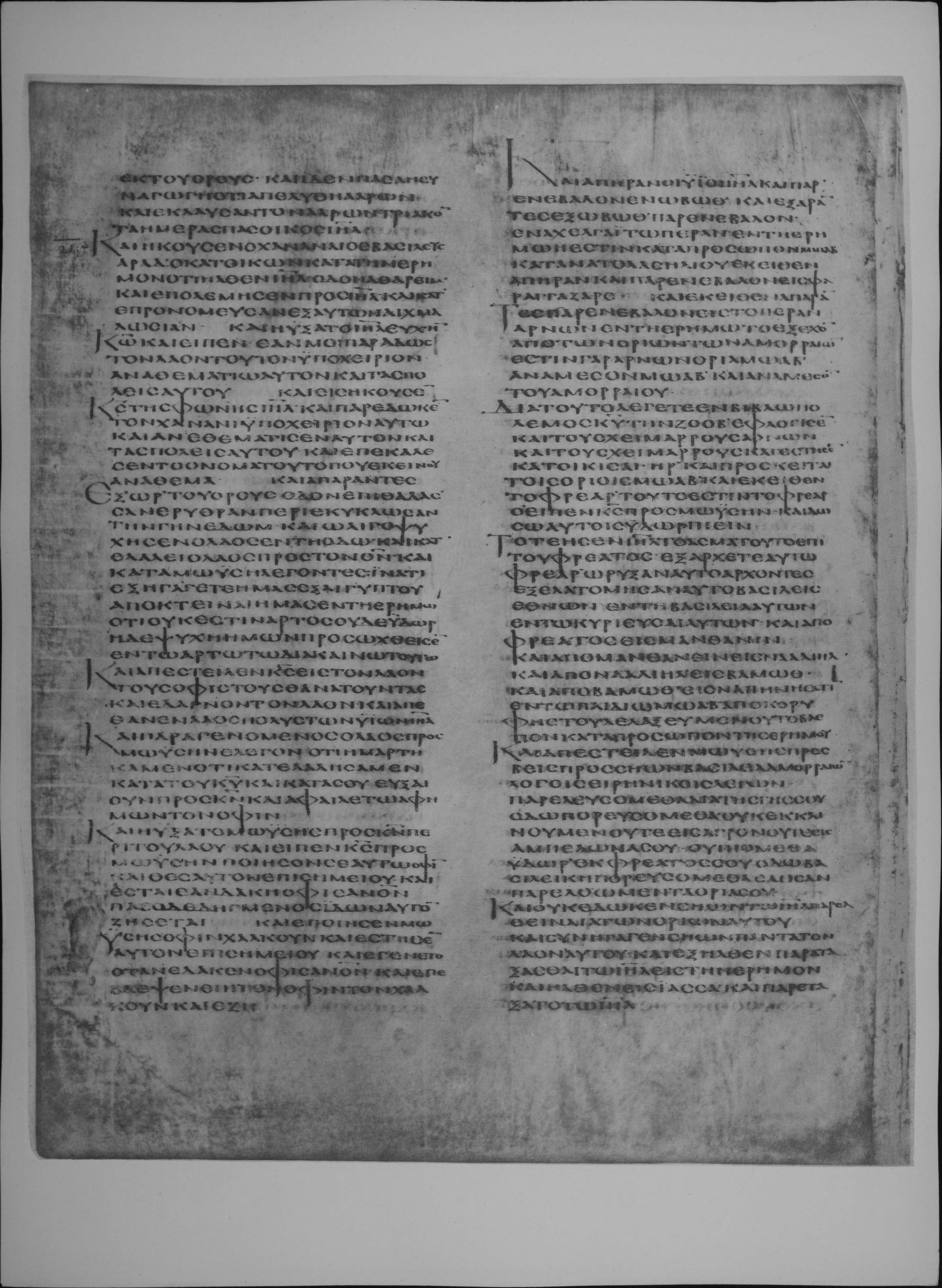
Numbers 21:1-8 is on fol. 92v (full-size facsimile of 1879-83, Internet Archive codex-alexandrinus leaf 205). The 1915 reduced facsimile prints beneath this page: Num. xx. 28-xxi. 23. Checked on the plate: the page begins inside Numbers 20:28 (first words read: ΕΚ ΤΟΥ ΟΡΟΥΣ ΚΑΙ ΕΙΔΕΝ ΠΑΣΑ Η ΣΥΝΑΓΩΓΗ ΟΤΙ ΑΠΕΛΥΘΗ ΑΑΡΩΝ).
1καὶ ἤκουσεν ὁ Χανανείς, βασιλεὺς Ἀράδ, ὁ κατοικῶν κατὰ τὴν ἔρημον· ἦλθεν γὰρ Ἰσραὴλ ὁδὸν Ἀθαρείν· καὶ ἐπολέμησεν πρὸς Ἰσραήλ, καὶ κατεπρονόμευσαν ἐξ αὐτῶν αἰχμαλωσίαν. 2καὶ ηὔξατο Ἰσραὴλ εὐχὴν Κυρίῳ καὶ εἶπεν Ἐάν μοι παραδῷς τὸν λαὸν τοῦτον ὑποχείριον, ἀναθεματιῶ αὐτὸν καὶ τὰς πόλεις αὐτοῦ. 3καὶ εἰσήκουσεν Κύριος τῆς φωνῆς Ἰσραὴλ καὶ παρέδωκεν τὸν Χανανεὶν ὑποχείριον αὐτοῦ· καὶ ἀνεθεμάτισεν αὐτὸν καὶ τὰς πόλεις αὐτοῦ, καὶ ἐπεκάλεσαν τὸ ὄνομα τοῦ τόπου ἐκείνου Ἀνάθεμα. 4Καὶ ἀπάραντες ἐξ Ὣρ τοῦ ὄρους ὁδὸν ἐπὶ θάλασσαν ἐρυθρὰν περιεκύκλωσαν γῆν Ἐδώμ· καὶ ὠλιγοψύχησεν ὁ λαὸς ἐν τῇ ὁδῷ. 5Καὶ κατελάλει ὁ λαὸς πρὸς τὸν θεὸν καὶ κατὰ Μωυσῆ λέγοντες Ἵνα τί τοῦτο ἐξήγαγες ἡμᾶς ἐξ Αἰγύπτου ἀποκτεῖναι ἐν τῇ ἐρήμῳ; ὅτι οὐκ ἔστιν ἄρτος οὐδὲ ὕδωρ, ἡ δὲ ψυχὴ ἡμῶν προσώχθισεν ἐν τῷ ἄρτῳ τῷ διακένῳ. 6καὶ ἀπέστειλεν Κύριος εἰς τὸν λαὸν τοὺς ὄφεις τοὺς θανατοῦντας, καὶ ἔδακνον τὸν λαόν· καὶ ἀπέθανεν λαὸς πολὺς τῶν υἱῶν Ἰσραήλ. 7καὶ παραγενόμενος ὁ λαὸς πρὸς Μωυσῆν ἔλεγον ὅτι Ἡμάρτομεν ὅτι κατελαλήσαμεν κατὰ τοῦ κυρίου καὶ κατὰ σοῦ· εὖξαι οὖν πρὸς Κύριον, καὶ ἀφελέτω ἀφ᾽ ἡμῶν τὸν ὄφιν. καὶ ηὔξατο Μωυσῆς πρὸς Κύριον περὶ τοῦ λαοῦ. 8καὶ εἶπεν Κύριος πρὸς Μωυσῆν Ποίησον σεαυτῷ ὄφιν, καὶ θὲς αὐτὸν ἐπὶ σημείου· καὶ ἔσται ἐὰν δάκῃ ὄφις ἄνθρωπον, πᾶς ὁ δεδηγμένος ἰδὼν αὐτὸν ζήσεται.
1And Arad the Chananitish king who dwelt by the wilderness, heard that Israel came by the way of Atharin; and he made war on Israel, and carried off some of them captives. 2And Israel vowed a vow to the Lord, and said, If thou wilt deliver this people into my power, I will devote it and its cities to thee. 3And the Lord hearkened to the voice of Israel, and delivered the Chananite into his power; and Israel devoted him and his cities, and they called the name of that place Anathema. 4And having departed from mount Or by the way leading to the Red Sea, they compassed the land of Edom, and the people lost courage by the way. 5And the people spoke against God and against Moses, saying, Why is this? Hast thou brought us ought of Egypt to slay us in the wilderness? for there is not bread nor water; and our soul loathes this light bread. 6And the Lord sent among the people deadly serpents, and they bit the people, and much people of the children of Israel died. 7And the people came to Moses and said, We have sinned, for we have spoken against the Lord, and against thee: pray therefore to the Lord, and let him take away the serpent from us. 8And Moses prayed to the Lord for the people; and the Lord said to Moses, Make thee a serpent, and put it on a signal- staff; and it shall come to pass that whenever a serpent shall bite a man, every one so bitten that looks upon it shall live.
Where on the image
Numbers 21:9-16 is on fol. 92v (full-size facsimile of 1879-83, Internet Archive codex-alexandrinus leaf 205). The 1915 reduced facsimile prints beneath this page: Num. xx. 28-xxi. 23. Checked on the plate: the page begins inside Numbers 20:28 (first words read: ΕΚ ΤΟΥ ΟΡΟΥΣ ΚΑΙ ΕΙΔΕΝ ΠΑΣΑ Η ΣΥΝΑΓΩΓΗ ΟΤΙ ΑΠΕΛΥΘΗ ΑΑΡΩΝ).
9καὶ ἐποίησεν Μωυσῆς ὄφιν χαλκοῦν, καὶ ἔστησεν αὐτὸν ἐπὶ σημείου· καὶ ἐγένετο ὅταν ἔδακνεν ὄφις ἄνθρωπον, καὶ ἐπέβλεψεν ἐπὶ τὸν ὄφιν τὸν χαλκοῦν, καὶ ἔζη. 10καὶ ἀπῆραν οἱ υἱοὶ Ἰσραήλ, καὶ παρενέβαλον ἐν Ὠβώθ. 11καὶ ἐξάραντες ἐξ Ὠβώθ, καὶ παρενέβαλον ἐν Χαλγαεὶ ἐκ τοῦ πέραν, ἐν τῇ ἐρήμῳ ἥ ἐστιν κατὰ πρόσωπον Μωὰβ κατὰ ἀνατολὰς ἡλίου. 12ἐκεῖθεν ἀπῆραν, καὶ παρενέβαλον εἰς φάραγγα Ζάρετ. 13ἐκεῖθεν ἀπάραντες παρενέβαλον εἰς τὸ πέραν Ἀρνὼν ἐν τῇ ἐρήμῳ, τὸ ἐξέχον ἀπὸ τῶν ὁρίων τῶν Ἀμορραίων· ἔστιν γὰρ Ἀρνὼν ὅρια Μωὰβ ἀνὰ μέσον Μωὰβ καὶ ἀνὰ μέσον τοῦ Ἀμορραίου. 14διὰ τοῦτο λέγεται ἐν βιβλίῳ Πόλεμος τοῦ κυρίου Τὴν Ζωὸβ ἐφλόγισεν καὶ τοὺς χειμάρρους Ἀρνών· 15καὶ τοὺς χειμάρρους κατέστησεν κατοικίσαι Ἤρ, καὶ πρόσκειται τοῖς ὁρίοις Μωάβ. 16καὶ ἐκεῖθεν τὸ φρέαρ· τοῦτο φρέαρ ὃ εἶπεν Κύριος πρὸς Μωυσῆν Συνάγαγε τὸν λαὸν, καὶ δώσω αὐτοῖς ὕδωρ πιεῖν.
9And Moses made a serpent of brass, and put it upon a signal- staff: and it came to pass that whenever a serpent bit a man, and he looked on the brazen serpent, he lived. 10And the children of Israel departed, and encamped in Oboth. 11And having departed from Oboth, they encamped in Achalgai, on the farther side in the wilderness, which is opposite Moab, toward the east. 12And thence they departed, and encamped in the valley of Zared. 13And they departed thence and encamped on the other side of Arnon in the wilderness, the country which extends from the coasts of the Amorites; for Arnon is the borders of Moab, between Moab and the Amorites. 14Therefore it is said in a book, A war of the Lord has set on fire Zoob, and the brooks of Arnon. 15And he has appointed brooks to cause Er to dwell there; and it lies near to the coasts of Moab. 16And thence they came to the well; this is the well of which the Lord said to Moses, Gather the people, and I will give them water to drink.
Where on the image
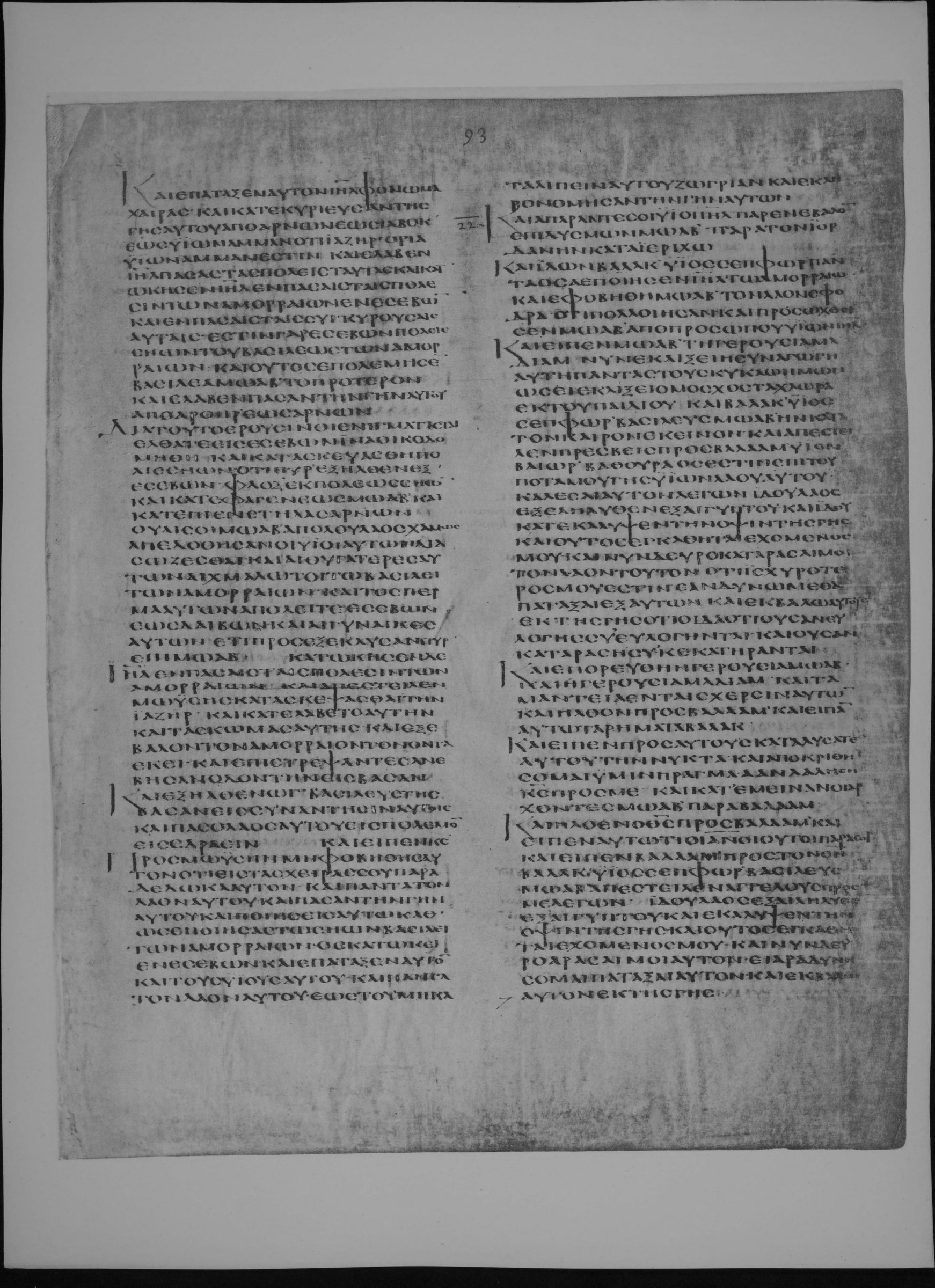
Numbers 21:17-23 is on fol. 92v (full-size facsimile of 1879-83, Internet Archive codex-alexandrinus leaf 205). The 1915 reduced facsimile prints beneath this page: Num. xx. 28-xxi. 23. Checked on the plate: the page begins inside Numbers 20:28 (first words read: ΕΚ ΤΟΥ ΟΡΟΥΣ ΚΑΙ ΕΙΔΕΝ ΠΑΣΑ Η ΣΥΝΑΓΩΓΗ ΟΤΙ ΑΠΕΛΥΘΗ ΑΑΡΩΝ). Numbers 21:24 is on fol. 93r (full-size facsimile of 1879-83, Internet Archive codex-alexandrinus leaf 206). The 1915 reduced facsimile prints beneath this page: Num. xxi. 24-xxii. 11. Checked on the plate: the page begins at the start of Numbers 21:24 (first words read: ΚΑΙ ΕΠΑΤΑΞΕΝ ΑΥΤΟΝ ΙΣΡΑΗΛ ΦΟΝΩ ΜΑΧΑΙΡΗΣ ΚΑΙ ΚΑΤΕΚΥΡΙΕΥΣΑΝ ΤΗΣ ΓΗΣ ΑΥΤΟΥ).
17τότε ᾖσεν Ἰσραὴλ τὸ ᾆσμα τοῦτο ἐπὶ τοῦ φρέατος Ἐξάρχετε αὐτῷ· 18φρέαρ, ὤρυξαν αὐτὸ ἄρχοντες, ἐξελατόμησαν αὐτὸ βασιλεῖς ἐθνῶν, ἐν τῇ βασιλείᾳ αὐτῶν, ἐν τῷ κυριεῦσαι αὐτῶν. καὶ ἀπὸ φρέατος εἰς Μανθαναείν· 19καὶ ἀπὸ Μανθαναεὶν εἰς Μαναήλ· καὶ ἀπὸ Μαναὴλ εἰς Βαμώθ· 20καὶ ἀπὸ Βαμὼθ εἰς Ἰανήν, ἥ ἐστιν ἐν τῷ πεδίῳ Μωὰβ ἀπὸ κορυφῆς τοῦ λελαξευμένου, τὸ βλέπον κατὰ πρόσωπον τῆς ἐρήμου. 21Καὶ ἀπέστειλεν Μωυσῆς πρέσβεις πρὸς Σηὼν βασιλέα Ἀμορραίων λόγοις εἰρηνικοῖς λέγων 22Παρελευσόμεθα διὰ τῆς γῆς σου· τῇ ὁδῷ πορευσόμεθα, οὐκ ἐκκλινοῦμεν οὔτε εἰς ἀγρὸν οὔτε εἰς ἀμπελῶνα, οὐ πιόμεθα ὕδωρ ἐκ φρέατός σου· ὁδῷ βασιλικῇ πορευσόμεθα ἕως παρέλθωμεν τὰ ὅριά σου. 23καὶ οὐκ ἔδωκεν Σηὼν τῷ Ἰσραὴλ παρελθεῖν διὰ τῶν ὁρίων αὐτοῦ· καὶ συνήγαγεν Σηὼν πάντα τὸν λαὸν αὐτοῦ, καὶ ἐξῆλθεν παρατάξασθαι Ἰσραὴλ εἰς τὴν ἔρημον· καὶ ἦλθεν εἰς Εἴσσα, καὶ παρετάξατο τῷ Ἰσραήλ. 24καὶ ἐπάταξεν αὐτὸν Ἰσραὴλ φόνῳ μαχαίρης, καὶ κατεκυρίευσαν τῆς γῆς αὐτοῦ ἀπὸ Ἀρνὼν ἕως Ἰαβόκ, ἕως υἱῶν Ἀμμάν· ὅτι Ἰαζὴρ ὅρια υἱῶν Ἀμμών ἐστιν.
17Then Israel sang this song at the well, Begin to sing of the well; 18the princes digged it, the kings of the nations in their kingdom, in their lordship sank it in the rock: and they went from the well to Manthanain, 19and from Manthanain to Naaliel, and from Naaliel to Bamoth, and from Bamoth to Janen, which is in the plain of Moab as seen from the top of the quarried rock that looks toward the wilderness. 20And Moses sent ambassadors to Seon king of the Amorites, with peaceable words, saying, 21We will pass through thy land, we will go by the road; we will not turn aside to the field or to the vineyard. 22We will not drink water out of thy well; we will go by the king's highway, until we have past thy boundaries. 23And Seon did not allow Israel to pass through his borders, and Seon gathered all his people, and went out to set the battle in array against Israel into the wilderness; and he came to Jassa, and set the battle in array against Israel. 24And Israel smote him with the slaughter of the sword, and they became possessors of his land, from Arnon to Jaboc, as far as the children of Amman, for Jazer is the borders of the children of Amman.
Where on the image
Numbers 21:25-32 is on fol. 93r (full-size facsimile of 1879-83, Internet Archive codex-alexandrinus leaf 206). The 1915 reduced facsimile prints beneath this page: Num. xxi. 24-xxii. 11. Checked on the plate: the page begins at the start of Numbers 21:24 (first words read: ΚΑΙ ΕΠΑΤΑΞΕΝ ΑΥΤΟΝ ΙΣΡΑΗΛ ΦΟΝΩ ΜΑΧΑΙΡΗΣ ΚΑΙ ΚΑΤΕΚΥΡΙΕΥΣΑΝ ΤΗΣ ΓΗΣ ΑΥΤΟΥ).
25καὶ ἔλαβεν Ἰσραὴλ πάσας τὰς πόλεις ταύτας· καὶ κατῴκησεν Ἰσραὴλ ἐν πάσαις ταῖς πόλεσιν τῶν Ἀμορραίων, ἐν Ἑσεβὼν καὶ ἐν πάσαις ταῖς συνκυρούσαις αὐτῇ. 26ἔστιν γὰρ Ἑσεβών, πόλις Σηὼν τοῦ βασιλέως τῶν Ἀμορραίων ἐστιν· καὶ οὗτος ἐπολέμησεν βασιλέα Μωὰβ τὸ πρότερον, καὶ ἔλαβον πᾶσαν τὴν γῆν αὐτοῦ ἀπὸ Ἀροὴρ ἕως Ἀρνών. 27διὰ τοῦτο ἐροῦσιν οἱ αἰνιγματισταί Ἔλθετε εἰς Ἑσεβών, ἵνα οἰκοδομηθῇ καὶ κατασκευασθῇ πόλις Σηών. 28ὅτι πῦρ ἐξῆλθεν ἐξ Ἑσεβών, φλὸξ ἐκ πόλεως Σηών· καὶ κατέφαγεν ἕως Μωάβ, καὶ κατέπιεν στήλας Ἀρνών. 29Οὐαί σοι, Μωάβ· ἀπώλου, λαὸς Χαμώς. ἀπεδόθησαν οἱ υἱοὶ αὐτῶν διασώζεσθαι, καὶ αἱ θυγατέρες αὐτῶν αἰχμάλωτοι, τῷ βασιλεῖ τῶν Ἀμορραίων Σηών. 30καὶ τὸ σπέρμα αὐτῶν ἀπολεῖται, Ἑσεβὼν ἕως Δαιβών, καὶ αἱ γυναῖκες ἔτι προσεξέκαυσαν πῦρ ἐπὶ Μωάβ. 31κατῴκησεν δὲ Ἰσραὴλ ἐν πάσαις ταῖς πόλεσιν τῶν Ἀμορραίων. 32καὶ ἀπέστειλεν Μωυσῆς κατασκέψασθαι τὴν Ἰαζήρ, καὶ κατελάβοντο αὐτὴν καὶ τὰς κώμας αὐτῆς, καὶ ἐξέβαλον τὸν Ἀμορραῖον τὸν κατοικοῦντα ἐκεῖ.
25And Israel took all their cities, and Israel dwelt in all the cities of the Amorites, in Esebon, and in all cities belonging to it. 26For Esebon is the city of Seon king of the Amorites; and he before fought against the king of Moab, and they took all his land, from Aroer to Arnon. 27Therefore say they who deal in dark speeches, Come to Esebon, that the city of Seon may be built and prepared. 28For a fire has gone forth from Esebon, a flame from the city of Seon, and has consumed as far as Moab, and devoured the pillars of Arnon. 29Woe to thee, Moab; thou art lost, thou people of Chamos: their sons are sold for preservation, and their daughters are captives to Seon king of the Amorites. 30And their seed shall perish from Esebon to Dæbon; and their women have yet farther kindled a fire against Moab. 31And Israel dwelt in all the cities of the Amorites. 32And Moses sent to spy out Jazer; and they took it, and its villages, and cast out the Amorite that dwelt there.
Where on the image
Numbers 21:33-35 is on fol. 93r (full-size facsimile of 1879-83, Internet Archive codex-alexandrinus leaf 206). The 1915 reduced facsimile prints beneath this page: Num. xxi. 24-xxii. 11. Checked on the plate: the page begins at the start of Numbers 21:24 (first words read: ΚΑΙ ΕΠΑΤΑΞΕΝ ΑΥΤΟΝ ΙΣΡΑΗΛ ΦΟΝΩ ΜΑΧΑΙΡΗΣ ΚΑΙ ΚΑΤΕΚΥΡΙΕΥΣΑΝ ΤΗΣ ΓΗΣ ΑΥΤΟΥ).
33καὶ ἐπιστρέψαντες ἀνέβησαν ὁδὸν τὴν εἰς Βασάν· καὶ ἐξῆλθεν Ὢγ βασιλεὺς τῆς Βασὰν εἰς συνάντησιν αὐτοῖς, καὶ πᾶς ὁ λαὸς αὐτοῦ εἰς πόλεμον εἰς Ἐδράειν. 34καὶ εἶπεν Κύριος πρὸς Μωυσῆν Μὴ φοβηθῇς αὐτόν, ὅτι εἰς τὰς χεῖράς σου παραδέδωκα αὐτὸν καὶ πάντα τὸν λαὸν αὐτοῦ καὶ πᾶσαν τὴν γῆν αὐτοῦ· καὶ ποιήσεις αὐτῷ καθὼς ἐποίησας τῷ Σηὼν βασιλεῖ τῶν Ἀμορραίων, ὃς κατῴκει ἐν Ἑσεβών. 35καὶ ἐπάταξεν αὐτὸν καὶ τοὺς υἱοὺς αὐτοῦ καὶ πάντα τὸν λαὸν αὐτοῦ, ἕως τοῦ μὴ καταλιπεῖν αὐτοῦ ζωγρείαν· καὶ ἐκληρονόμησαν τὴν γῆν αὐτῶν.
33And having returned, they went up the road that leads to Basan; and Og the king of Basan went forth to meet them, and all his people to war to Edrain. 34And the Lord said to Moses, Fear him not; for I have delivered him and all his people, and all his land, into thy hands; and thou shalt do to him as thou didst to Seon king of the Amorites, who dwelt in Esebon. 35And he smote him and his sons, and all his people, until he left none of his to be taken alive; and they inherited his land.
Cite
Sources
- Source: Codex Alexandrinus (British Library Royal MS 1 D. V) via the British Museum photographic facsimiles of 1879-83 and 1915 (Internet Archive) + Swete's Septuagint + Brenton's English (holding institution)
- Critical edition: H. B. Swete, The Old Testament in Greek according to the Septuagint (1909)
← previous · → next · v cycle view · l back to library