Numbers, Chapter 22 (Codex Alexandrinus)
Introduction
Numbers 22 in the Greek Old Testament (the Septuagint) as written in Codex Alexandrinus, a Greek Bible copied in the fifth century, probably in Egypt, and now in the British Library (Royal MS 1 D. V, the first of its four volumes). It is one of the three great early codices of the whole Greek Bible, with Codex Vaticanus and Codex Sinaiticus, and for Genesis 1:1-46:28, which Codex Vaticanus has lost, it is the oldest surviving complete Greek text (older papyri such as the Berlin Genesis papyrus and Chester Beatty 961 survive only in part).
This entry meets the strict three-criteria standard of the Theosis Library:
- Manuscript scan: the pages of Codex Alexandrinus carrying this chapter (fol. 93r, fol. 93v, fol. 94r), from the full-size photographic (autotype) facsimile published by the British Museum in 1879-1883, as digitised on the Internet Archive. The verse range of every page comes from the reduced photographic facsimile of 1915, which prints it beneath each plate, and the opening words of every page were read on the plate to confirm the page and the verse it begins with. Each section links to the page or pages that hold its verses. Folio numbers are those written at the head of each leaf and visible on the plates.
- Original text: Swete's edition, which here prints the text of Codex Vaticanus (Vat. gr. 1209), the base of his edition, and gives the readings of Alexandrinus only in his apparatus. The Greek column is therefore Vaticanus' text; where Alexandrinus differs, the plate shows what Alexandrinus reads.
- English translation: Sir Lancelot C. L. Brenton, The Septuagint Version of the Old Testament (1844; 1851 edition), a translation of the Greek, public domain, from the eBible.org text.
How was this verified? (Provenance)
Where on the image
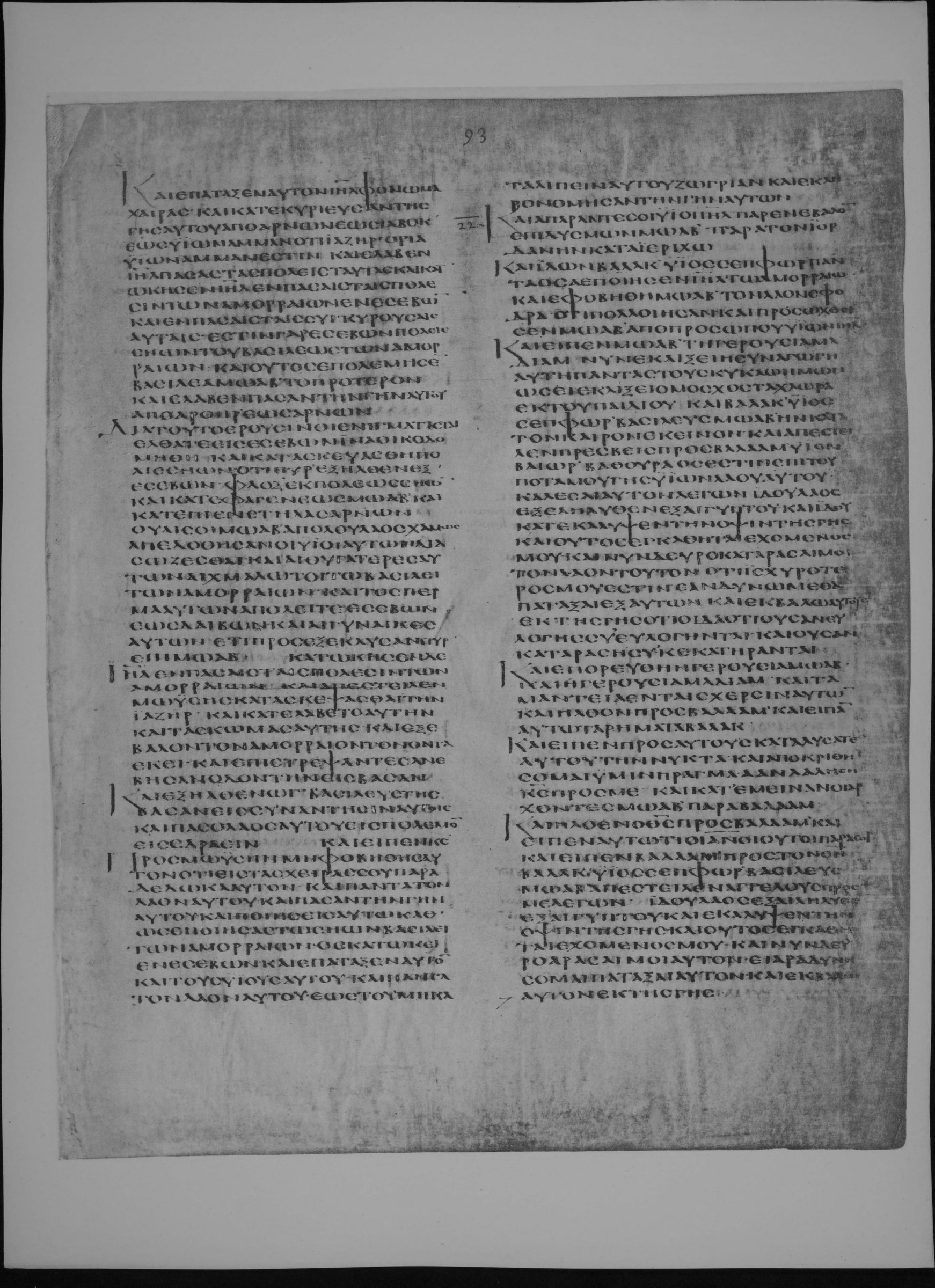
Numbers 22:1-8 is on fol. 93r (full-size facsimile of 1879-83, Internet Archive codex-alexandrinus leaf 206). The 1915 reduced facsimile prints beneath this page: Num. xxi. 24-xxii. 11. Checked on the plate: the page begins at the start of Numbers 21:24 (first words read: ΚΑΙ ΕΠΑΤΑΞΕΝ ΑΥΤΟΝ ΙΣΡΑΗΛ ΦΟΝΩ ΜΑΧΑΙΡΗΣ ΚΑΙ ΚΑΤΕΚΥΡΙΕΥΣΑΝ ΤΗΣ ΓΗΣ ΑΥΤΟΥ).
1καὶ ἀπάραντες οἱ υἱοὶ Ἰσραὴλ παρενέβαλον ἐπὶ δυσμῶν Μωὰβ παρὰ τὸν Ἰορδάνην κατὰ Ἰερειχώ. 2Καὶ ἰδὼν Βαλὰκ υἱὸς Σεπφὼρ πάντα ὅσα ἐποίησεν Ἰσραὴλ τῷ Ἀμορραίῳ, 3καὶ ἐφοβήθη Μωὰβ τὸν λαὸν σφόδρα, ὅτι πολλοὶ ἦσαν· καὶ προσώχθισεν Μωὰβ ἀπὸ προσώπου υἱῶν Ἰσραήλ. 4καὶ εἶπεν Μωὰβ τῇ γερουσίᾳ Μαδιάμ Νῦν ἐκλίξει ἡ συναγωγὴ αὕτη πάντας τοὺς κύκλῳ ἡμῶν, ὡς ἐκλίξαι ὁ μόσχος τὰ χλωρὰ ἐκ τοῦ πεδίου. καὶ Βαλὰκ υἱὸς Σεπφὼρ βασιλεὺς Μωὰβ ἦν κατὰ τὸν καιρὸν ἐκεῖνον. 5καὶ ἀπέστειλεν πρέσβεις πρὸς Βαλαὰμ υἱὸν Βεὼρ Φαθούρα, ὅ ἐστιν ἐπὶ τοῦ ποταμοῦ γῆς υἱῶν λαοῦ αὐτοῦ, καλέσαι αὐτὸν λέγων Ἰδοὺ λαὸς ἐξελήλυθεν ἐξ Αἰγύπτου, καὶ ἰδοὺ κατεκάλυψεν τὴν ὄψιν τῆς γῆς· καὶ οὗτος ἐνκάθηται ἐχόμενός μου. 6καὶ νῦν δεῦρο ἄρασαί μοι τὸν λαὸν τοῦτον, ὅτι ἰσχύει οὗτος ἢ ἡμεῖς, ἐὰν δυνώμεθα πατάξαι ἐξ αὐτῶν, καὶ ἐκβαλῶ αὐτοὺς ἐκ τῆς γῆς· ὅτι οἶδα οὓς ἐὰν εὐλογήσῃς σύ, εὐλόγηνται, καὶ οὓς ἐὰν καταράσῃ σύ, κεκατήρανται. 7καὶ ἐπορεύθη ἡ γερουσία Μωὰβ καὶ ἡ γερουσία Μαδιάμ, καὶ τὰ μαντεῖα ἐν ταῖς χερσὶν αὐτῶν· καὶ ἦλθον πρὸς Βαλαὰμ καὶ εἶπαν αὐτῷ τὰ ῥήματα Βαλάκ. 8καὶ εἶπεν πρὸς αὐτούς Καταλύσατε αὐτοῦ τὴν νύκτα, καὶ ἀποκριθήσομαι ὑμῖν πράγματα ἃ ἐὰν λαλήσῃ Κύριος πρὸς μέ. καὶ κατέμειναν οἱ ἄρχοντες Μωὰβ παρὰ Βαλαάμ.
1And the children of Israel departed, and encamped on the west of Moab by Jordan toward Jericho. 2And when Balac son of Sepphor saw all that Israel did to the Amorite, 3then Moab feared the people exceedingly because they were many; and Moab was grieved before the face of the children of Israel. 4And Moab said to the elders of Madiam, Now shall this assembly lick up all that are round about us, as a calf would lick up the green herbs of the field:—and Balac son of Sepphor was king of Moab at that time. 5And he sent ambassadors to Balaam the son of Beor, to Phathura, which is on a river of the land of the sons of his people, to call him, saying, Behold, a people is come out of Egypt, and behold it has covered the face of the earth, and it has encamped close to me. 6And now come, curse me this people, for it is stronger than we; if we may be able to smite some of them, and I will cast them out of the land: for I know that whomsoever thou dost bless, they are blessed, and whomsoever thou dost curse, they are cursed. 7And the elders of Moab went, and the elders of Madiam, and their divining instruments were in their hands; and they came to Balaam, and spoke to him the words of Balac. 8And he said to them, Tarry here the night, and I will answer you the things which the Lord shall say to me; and the princes of Moab stayed with Balaam.
Where on the image
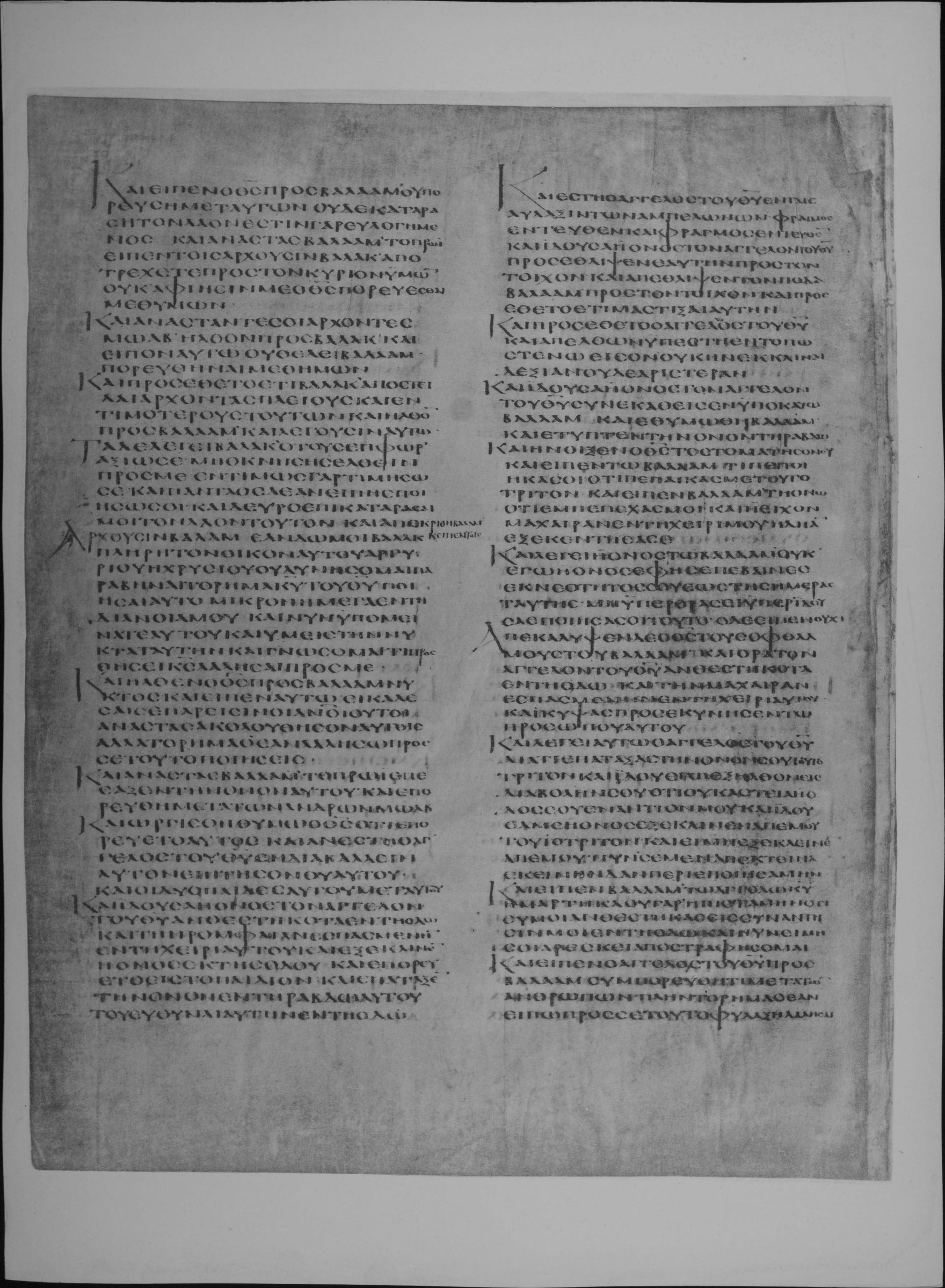
Numbers 22:9-11 is on fol. 93r (full-size facsimile of 1879-83, Internet Archive codex-alexandrinus leaf 206). The 1915 reduced facsimile prints beneath this page: Num. xxi. 24-xxii. 11. Checked on the plate: the page begins at the start of Numbers 21:24 (first words read: ΚΑΙ ΕΠΑΤΑΞΕΝ ΑΥΤΟΝ ΙΣΡΑΗΛ ΦΟΝΩ ΜΑΧΑΙΡΗΣ ΚΑΙ ΚΑΤΕΚΥΡΙΕΥΣΑΝ ΤΗΣ ΓΗΣ ΑΥΤΟΥ). Numbers 22:12-16 is on fol. 93v (full-size facsimile of 1879-83, Internet Archive codex-alexandrinus leaf 207). The 1915 reduced facsimile prints beneath this page: Num. xxii. 12-35. Checked on the plate: the page begins at the start of Numbers 22:12 (first words read: ΚΑΙ ΕΙΠΕΝ Ο ΘΣ ΠΡΟΣ ΒΑΛΑΑΜ ΟΥ ΠΟΡΕΥΣΗ ΜΕΤ ΑΥΤΩΝ ΟΥΔΕ ΚΑΤΑΡΑΣΗ ΤΟΝ ΛΑΟΝ).
9καὶ ἦλθεν ὁ θεὸς παρὰ Βαλαὰμ καὶ εἶπεν αὐτῷ Τί οἱ ἄνθρωποι οὗτοι παρὰ σοί; 10καὶ εἶπεν Βαλαὰμ πρὸς τὸν θεόν Βαλὰκ υἱὸς Σεπφὼρ βασιλεὺς Μωὰβ ἀπέστειλεν αὐτοὺς πρὸς μὲ λέγων 11Ἰδοὺ λαὸς ἐξελήλυθεν ἐξ Αἰγύπτου, καὶ ἰδοὺ κεκάλυφεν τὴν ὄψιν τῆς γῆς, καὶ οὗτος ἐνκάθηται ἐχόμενός μου· καὶ νῦν δεῦρο ἄρασαί μοι αὐτόν, εἰ ἄρα δυνήσομαι πατάξαι αὐτὸν καὶ ἐκβαλῶ αὐτὸν ἀπὸ τῆς γῆς. 12καὶ εἶπεν ὁ θεὸς πρὸς Βαλαάμ Οὐ πορεύσῃ μετ᾽ αὐτῶν οὐδὲ καταράσῃ τὸν λαόν· ἔστιν γὰρ εὐλογημένος. 13καὶ ἀναστὰς Βαλαὰμ τὸ πρωὶ εἶπεν τοῖς ἄρχουσιν Βαλάκ Ἀποτρέχετε πρὸς τὸν κύριον ὑμῶν· οὐκ ἀφίησίν με ὁ θεὸς πορεύεσθαι μεθ᾽ ὑμῶν. 14καὶ ἀναστάντες οἱ ἄρχοντες Μωὰβ ἦλθον πρὸς Βαλὰκ καὶ εἶπαν Οὐ θέλει Βαλαὰμ πορευθῆναι μεθ᾽ ἡμῶν. 15καὶ προσέθετο Βαλὰκ ἔτι ἀποστεῖλαι ἄρχοντας πλείους καὶ ἐντιμοτέρους τούτων. 16καὶ ἦλθον πρὸς Βαλαὰμ καὶ λέγουσιν αὐτῷ Τάδε λέγει Βαλὰκ ὁ τοῦ Σεπφώρ Ἀξιῶ σε, μὴ ὀκνήσῃς ἐλθεῖν πρὸς μέ.
9And God came to Balaam, and said to him, Who are these men with thee? 10And Balaam said to God, Balac son of Sepphor, king of Moab, sent them to me, saying, 11Behold, a people has come forth out of Egypt, and has covered the face of the land, and it has encamped near to me; and now come, curse it for me, if indeed I shall be able to smite it, and cast it out of the land. 12And God said to Balaam, Thou shalt not go with them, neither shalt thou curse the people; for they are blessed. 13And Balaam rose up in the morning, and said to the princes of Balac, Depart quickly to your lord; God does not permit me to go with you. 14And the princes of Moab rose, and came to Balac, and said, Balaam will not come with us. 15And Balac yet again sent more princes and more honourable than they. 16And they came to Balaam, and they say to him, Thus says Balac the son of Sepphor: I beseech thee, delay not to come to me.
Where on the image
Numbers 22:17-24 is on fol. 93v (full-size facsimile of 1879-83, Internet Archive codex-alexandrinus leaf 207). The 1915 reduced facsimile prints beneath this page: Num. xxii. 12-35. Checked on the plate: the page begins at the start of Numbers 22:12 (first words read: ΚΑΙ ΕΙΠΕΝ Ο ΘΣ ΠΡΟΣ ΒΑΛΑΑΜ ΟΥ ΠΟΡΕΥΣΗ ΜΕΤ ΑΥΤΩΝ ΟΥΔΕ ΚΑΤΑΡΑΣΗ ΤΟΝ ΛΑΟΝ).
17ἐντίμως γὰρ τιμήσω σε, καὶ ὅσα ἐὰν εἴπῃς ποιήσω σοι· καὶ δεῦρο ἐπικατάρασαί μοι τὸν λαὸν τοῦτον. 18καὶ ἀπεκρίθη Βαλαὰμ καὶ εἶπεν τοῖς ἄρχουσιν Βαλάκ Ἐὰν δῷ μοι Βαλὰκ πλήρη τὸν οἶκον αὐτοῦ ἀργυρίου καὶ χρυσίου, οὐ δυνήσομαι παραβῆναι τὸ ῥῆμα Κυρίου τοῦ θεοῦ, ποιῆσαι αὐτὸ μικρὸν ἢ μέγα ἐν τῇ διανοίᾳ μου. 19καὶ νῦν ὑπομείνατε αὐτοῦ καὶ ὑμεῖς τὴν νύκτα ταύτην, καὶ γνώσομαι τί προσθήσει Κύριος λαλῆσαι πρὸς μέ. 20καὶ ἦλθεν ὁ θεὸς πρὸς Βαλαὰμ καὶ εἶπεν αὐτῷ Εἰ καλέσαι σε πάρεισιν οἱ ἄνθρωποι οὗτοι, ἀναστὰς ἀκολούθησον αὐτοῖς· ἀλλὰ τὸ ῥῆμα ὃ ἂν λαλήσω πρὸς σέ, τοῦτο ποιήσεις. 21καὶ ἀναστὰς Βαλαὰμ τὸ πρωὶ ἐπέσαξεν τὴν ὄνον αὐτοῦ, καὶ ἐπορεύθη μετὰ τῶν ἀρχόντων Μωάβ. 22καὶ ὠργίσθη θυμῷ ὁ θεὸς ὅτι ἐπορεύθη αὐτός, καὶ ἀνέστη ὁ ἄγγελος τοῦ θεοῦ ἐνδιαβαλεῖν αὐτόν· καὶ αὐτὸς ἐπιβεβήκει ἐπὶ τῆς ὄνου αὐτοῦ, καὶ δύο παῖδες αὐτοῦ μετ᾽ αὐτοῦ. 23καὶ ἰδοῦσα ἡ ὄνος τὸν ἄγγελον τοῦ θεοῦ ἀνθεστηκότα ἐν τῇ ὁδῷ καὶ τὴν ῥομφαίαν ἐσπασμένην ἐν τῇ χειρὶ αὐτοῦ, καὶ ἐξέκλινεν ἡ ὄνος ἐκ τῆς ὁδοῦ αὐτῆς καὶ ἐπορεύετο εἰς τὸ πεδίον· καὶ ἐπάταξεν τὴν ὄνον τῇ ῥάβδῳ, τοῦ εὐθῦναι αὐτὴν ἐν τῇ ὁδῷ. 24καὶ ἔστη ὁ ἄγγελος τοῦ θεοῦ ἐν ταῖς αὔλαξιν τῶν ἀμπέλων, φραγμὸς ἐντεῦθεν καὶ φραγμὸς ἐντεῦθεν·
17For I will greatly honour thee, and will do for thee whatsoever thou shalt say; come then, curse me this people. 18And Balaam answered and said to the princes of Balac, If Balac would give me his house full of silver and gold, I shall not be able to go beyond the word of the Lord God, to make it little or great in my mind. 19And now do ye also tarry here this night, and I shall know what the Lord will yet say to me. 20And God came to Balaam by night, and said to him, If these men are come to call thee, rise and follow them; nevertheless the word which I shall speak to thee, it shalt thou do. 21And Balaam rose up in the morning, and saddled his ass, and went with the princes of Moab. 22And God was very angry because he went; and the angel of the Lord rose up to withstand him. Now he had mounted his ass, and his two servants were with him. 23And when the ass saw the angel of God standing opposite in the way, and his sword drawn in his hand, then the ass turned aside out of the way, and went into the field; and Balaam smote the ass with his staff to direct her in the way. 24And the angel of the Lord stood in the avenues of the vines, a fence being on this side and a fence on that.
Where on the image
Numbers 22:25-32 is on fol. 93v (full-size facsimile of 1879-83, Internet Archive codex-alexandrinus leaf 207). The 1915 reduced facsimile prints beneath this page: Num. xxii. 12-35. Checked on the plate: the page begins at the start of Numbers 22:12 (first words read: ΚΑΙ ΕΙΠΕΝ Ο ΘΣ ΠΡΟΣ ΒΑΛΑΑΜ ΟΥ ΠΟΡΕΥΣΗ ΜΕΤ ΑΥΤΩΝ ΟΥΔΕ ΚΑΤΑΡΑΣΗ ΤΟΝ ΛΑΟΝ).
25καὶ ἰδοῦσα ἡ ὄνος τὸν ἄγγελον τοῦ θεοῦ προσέθλιψεν αὐτὸν πρὸς τὸν τοῖχον, καὶ ἀπέθλιψεν τὸν πόδα Βαλαάμ, καὶ προσέθετο ἔτι μαστίξαι αὐτήν. 26καὶ προσέθετο ὁ ἄγγελος τοῦ θεοῦ καὶ ἀπελθὼν ὑπέστη ἐν τόπῳ στενῷ, εἰς ὃν οὐκ ἦν ἐκκλῖναι δεξιὰν οὐδὲ ἀριστεράν. 27καὶ ἰδοῦσα ἡ ὄνος τὸν ἄγγελον τοῦ θεοῦ συνεκάθισεν ὑποκάτω Βαλαάμ· καὶ ἐθυμώθη Βαλαὰμ καὶ ἔτυπτεν τὴν ὄνον τῇ ῥάβδῳ. 28καὶ ἤνοιξεν ὁ θεὸς τὸ στόμα τῆς ὄνου, καὶ λέγει τῷ Βαλαάμ Τί ἐποίησά σοι ὅτι πέπαικάς με τοῦτο τρίτον; 29καὶ εἶπεν Βαλαὰμ τῇ ὄνῳ Ὅτι ἐμπέπαιχάς μοι· καὶ εἰ εἶχον μάχαιραν ἐν τῇ χειρί, ἤδη ἂν ἐξεκέντησά σε. 30καὶ λέγει ἡ ὄνος τῷ Βαλαάμ Οὐκ ἐγὼ ἡ ὄνος σου, ἐφ᾽ ἧς ἐπέβαινες ἀπὸ νεότητός σου ἕως τῆς σήμερον ἡμέρας; μὴ ὑπεροράσει ὑπεριδοῦσα ἐποίησά σοι οὕτως; ὁ δὲ εἶπεν Οὐχί. 31ἀπεκάλυψεν δὲ ὁ θεὸς τοὺς ὀφθαλμοὺς Βαλαάμ, καὶ ὁρᾷ τὸν ἄγγελον Κυρίου ἀνθεστηκότα ἐν τῇ ὁδῷ καὶ τὴν μάχαιραν ἐσπασμένην ἐν τῇ χειρὶ αὐτοῦ, καὶ κύψας προσεκύνησεν τῷ προσώπῳ αὐτοῦ. 32καὶ εἶπεν αὐτῷ ὁ ἄγγελος τοῦ θεοῦ Διὰ τί ἐπάταξας τὴν ὄνον σου τοῦτο τρίτον; καὶ ἰδοὺ ἐγὼ ἐξῆλθον εἰς διαβολήν σου, ὅτι οὐκ ἀστεία ἡ ὁδός σου ἐναντίον μου.
25And when the ass saw the angel of God, she thrust herself against the wall, and crushed Balaam's foot against the wall, and he smote her again. 26And the angel of the Lord went farther, and came and stood in a narrow place where it was impossible to turn to the right or the left. 27And when the ass saw the angel of God, she lay down under Balaam; and Balaam was angry, and struck the ass with his staff. 28And God opened the mouth of the ass, and she says to Balaam, What have I done to thee, that thou hast smitten me this third time? 29And Balaam said to the ass, Because thou hast mocked me; and if I had had a sword in my hand, I would now have killed thee. 30And the ass says to Balaam, Am not I thine ass on which thou hast ridden since thy youth till this day? did I ever do thus to thee, utterly disregarding thee? and he said, No. 31And God opened the eyes of Balaam, and he sees the angel of the Lord withstanding him in the way, and his sword drawn in his hand, and he stooped down and worshipped on his face. 32And the angel of God said to him, Why hast thou smitten thine ass this third time? and, behold, I came out to withstand thee, for thy way was not seemly before me; and when the ass saw me, she turned away from me this third time.
Where on the image
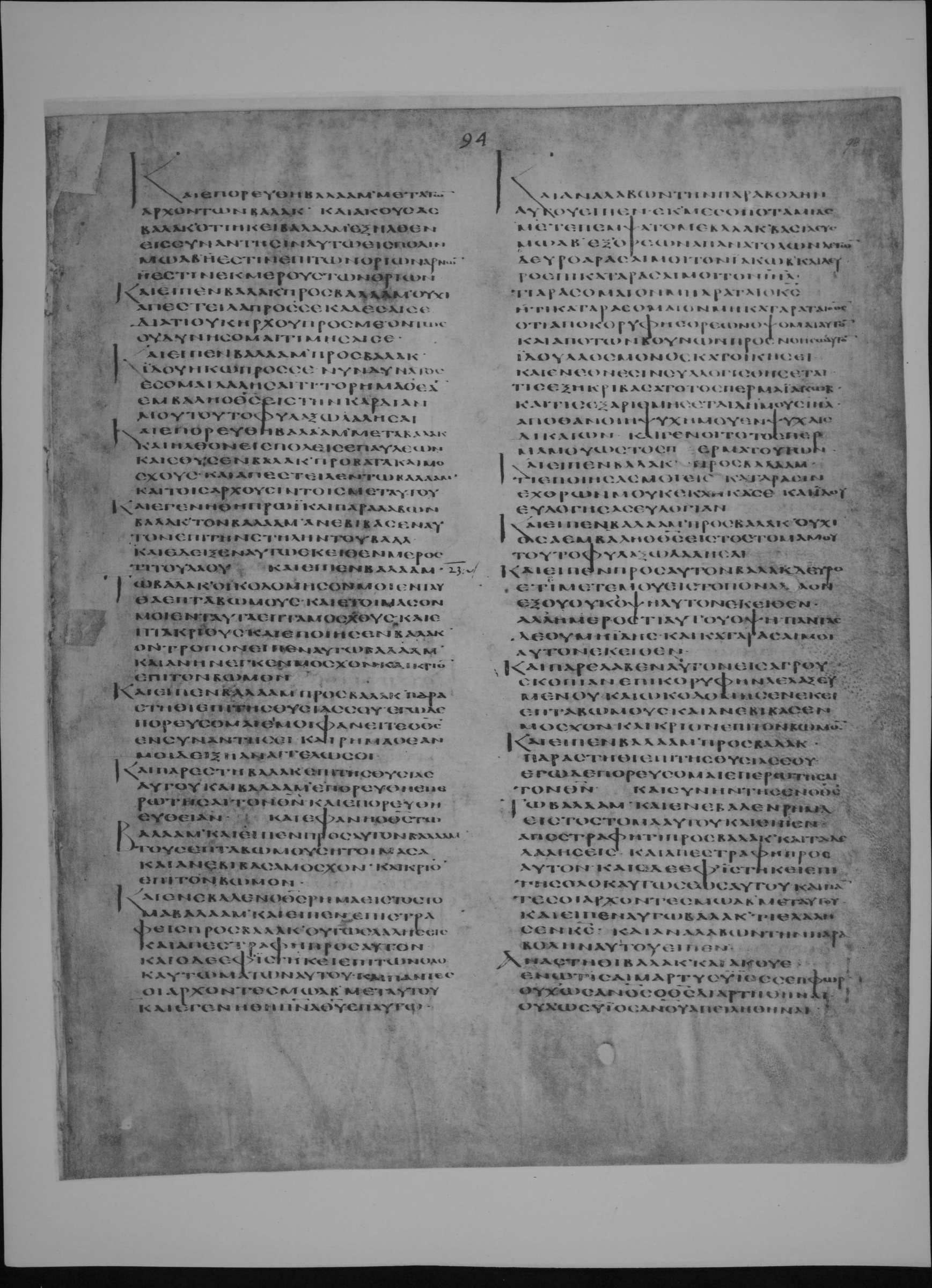
Numbers 22:33-35 is on fol. 93v (full-size facsimile of 1879-83, Internet Archive codex-alexandrinus leaf 207). The 1915 reduced facsimile prints beneath this page: Num. xxii. 12-35. Checked on the plate: the page begins at the start of Numbers 22:12 (first words read: ΚΑΙ ΕΙΠΕΝ Ο ΘΣ ΠΡΟΣ ΒΑΛΑΑΜ ΟΥ ΠΟΡΕΥΣΗ ΜΕΤ ΑΥΤΩΝ ΟΥΔΕ ΚΑΤΑΡΑΣΗ ΤΟΝ ΛΑΟΝ). Numbers 22:35-41 is on fol. 94r (full-size facsimile of 1879-83, Internet Archive codex-alexandrinus leaf 208). The 1915 reduced facsimile prints beneath this page: Num. xxii. 35-xxiii. 19. Checked on the plate: the page begins inside Numbers 22:35 (first words read: ΚΑΙ ΕΠΟΡΕΥΘΗ ΒΑΛΑΑΜ ΜΕΤΑ ΤΩΝ ΑΡΧΟΝΤΩΝ ΒΑΛΑΚ ΚΑΙ ΑΚΟΥΣΑΣ ΒΑΛΑΚ ΟΤΙ ΗΚΕΙ ΒΑΛΑΑΜ).
33καὶ ἰδοῦσά με ἡ ὄνος ἐξέκλινεν ἀπ᾽ ἐμοῦ τρίτον τοῦτο· καὶ εἰ μὴ ἐξέκλινεν, νῦν οὖν σὲ μὲν ἀπέκτεινα, ἐκείνην δὲ περιεποιησάμην. 34καὶ εἶπεν Βαλαὰμ τῷ ἀγγέλῳ Κυρίου Ἡμάρτηκα, οὐ γὰρ ἠπιστάμην ὅτι σύ μοι ἀνθέστηκας ἐν τῇ ὁδῷ εἰς συνάντησιν· καὶ νῦν εἰ μή σοι ἀρέσκει, ἀποστραφήσομαι. 35καὶ εἶπεν ὁ ἄγγελος τοῦ θεοῦ πρὸς Βαλαάμ Συνπορεύθητι μετὰ τῶν ἀνθρώπων· πλὴν τὸ ῥῆμα ὃ ἐὰν εἴπω πρὸς σέ, τοῦτο φυλάξῃ λαλῆσαι. καὶ ἐπορεύθη Βαλαὰμ μετὰ τῶν ἀρχόντων Βαλάκ. 36καὶ ἀκούσας Βαλὰκ ὅτι ἥκει Βαλαάμ, ἐξῆλθεν εἰς συνάντησιν αὐτῷ εἰς πόλιν Μωάβ, ἥτις ἐπὶ τῶν ὁρίων Ἀρνών, ὅ ἐστιν ἐκ μέρους τῶν ὁρίων. 37καὶ εἶπεν Βαλὰκ πρὸς Βαλαάμ Οὐχὶ ἀπέστειλα πρὸς σὲ καλέσαι σε; διὰ τί οὐκ ἤρχου πρὸς μέ; οὐ δυνήσομαι ὄντως τιμῆσαί σε; 38καὶ εἶπεν Βαλαὰμ πρὸς Βαλάκ Ἰδοὺ ἥκω πρὸς σὲ νῦν· δυνατὸς ἔσομαι λαλῆσαί τι; τὸ ῥῆμα ὃ ἐὰν βάλῃ ὁ θεὸς εἰς τὸ στόμα μου, τοῦτο λαλήσω. 39καὶ ἐπορεύθη Βαλαὰμ μετὰ Βαλάκ, καὶ ἦλθον εἰς Πόλεις ἐπαύλεων. 40καὶ ἔθυσεν Βαλὰκ πρόβατα καὶ μόσχους, καὶ ἀπέστειλεν τῷ Βαλαὰμ καὶ τοῖς ἄρχουσι τοῖς μετ᾽ αὐτοῦ. 41καὶ ἐγενήθη πρωί, καὶ παραλαβὼν Βαλὰκ τὸν Βαλαὰμ ἀνεβίβασεν αὐτὸν ἐπὶ τὴν στήλην τοῦ Βάαλ, καὶ ἔδειξεν αὐτῷ ἐκεῖθεν μέρος τι τοῦ λαοῦ.
33And if she had not turned out of the way, surely now, I should have slain thee, and should have saved her alive. 34And Balaam said to the angel of the Lord, I have sinned, for I did not know that thou wert standing opposite in the way to meet me; and now if it shall not be pleasing to thee for me to go on, I will return. 35And the angel of the Lord said to Balaam, Go with the men: nevertheless the word which I shall speak to thee, that thou shalt take heed to speak. And Balaam went with the princes of Balac. 36And when Balac heard that Balaam was come, he went out to meet him, to a city of Moab, which is on the borders of Arnon, which is on the extreme part of the borders. 37And Balac said to Balaam, Did I not send to thee to call thee? why hast thou not come to me? shall I not indeed be able to honour thee? 38And Balaam said to Balac, Behold, I am now come to thee: shall I be able to say anything? the word which God shall put into my mouth, that I shall speak. 39And Balaam went with Balac, and they came to the cities of streets. 40And Balac offered sheep and calves, and sent to Balaam and to his princes who were with him. 41And it was morning; and Balac took Balaam, and brought him up to the pillar of Baal, and shewed him thence a part of the people.
Cite
Sources
- Source: Codex Alexandrinus (British Library Royal MS 1 D. V) via the British Museum photographic facsimiles of 1879-83 and 1915 (Internet Archive) + Swete's Septuagint + Brenton's English (holding institution)
- Critical edition: H. B. Swete, The Old Testament in Greek according to the Septuagint (1909)
← previous · → next · v cycle view · l back to library