Numbers, Chapter 30 (Codex Alexandrinus)
Introduction
Numbers 30 in the Greek Old Testament (the Septuagint) as written in Codex Alexandrinus, a Greek Bible copied in the fifth century, probably in Egypt, and now in the British Library (Royal MS 1 D. V, the first of its four volumes). It is one of the three great early codices of the whole Greek Bible, with Codex Vaticanus and Codex Sinaiticus, and for Genesis 1:1-46:28, which Codex Vaticanus has lost, it is the oldest surviving complete Greek text (older papyri such as the Berlin Genesis papyrus and Chester Beatty 961 survive only in part).
Numbering: Swete's Greek and Brenton's English number or divide some verses of this chapter differently (Swete 30:4-5 = Brenton 30:4-5). Each column keeps its own verse numbers, and sections are cut only where the two texts agree, so each section holds the same passage in both languages.
This entry meets the strict three-criteria standard of the Theosis Library:
- Manuscript scan: the pages of Codex Alexandrinus carrying this chapter (fol. 98r, fol. 98v), from the full-size photographic (autotype) facsimile published by the British Museum in 1879-1883, as digitised on the Internet Archive. The verse range of every page comes from the reduced photographic facsimile of 1915, which prints it beneath each plate, and the opening words of every page were read on the plate to confirm the page and the verse it begins with. Each section links to the page or pages that hold its verses. Folio numbers are those written at the head of each leaf and visible on the plates.
- Original text: Swete's edition, which here prints the text of Codex Vaticanus (Vat. gr. 1209), the base of his edition, and gives the readings of Alexandrinus only in his apparatus. The Greek column is therefore Vaticanus' text; where Alexandrinus differs, the plate shows what Alexandrinus reads.
- English translation: Sir Lancelot C. L. Brenton, The Septuagint Version of the Old Testament (1844; 1851 edition), a translation of the Greek, public domain, from the eBible.org text.
How was this verified? (Provenance)
Where on the image
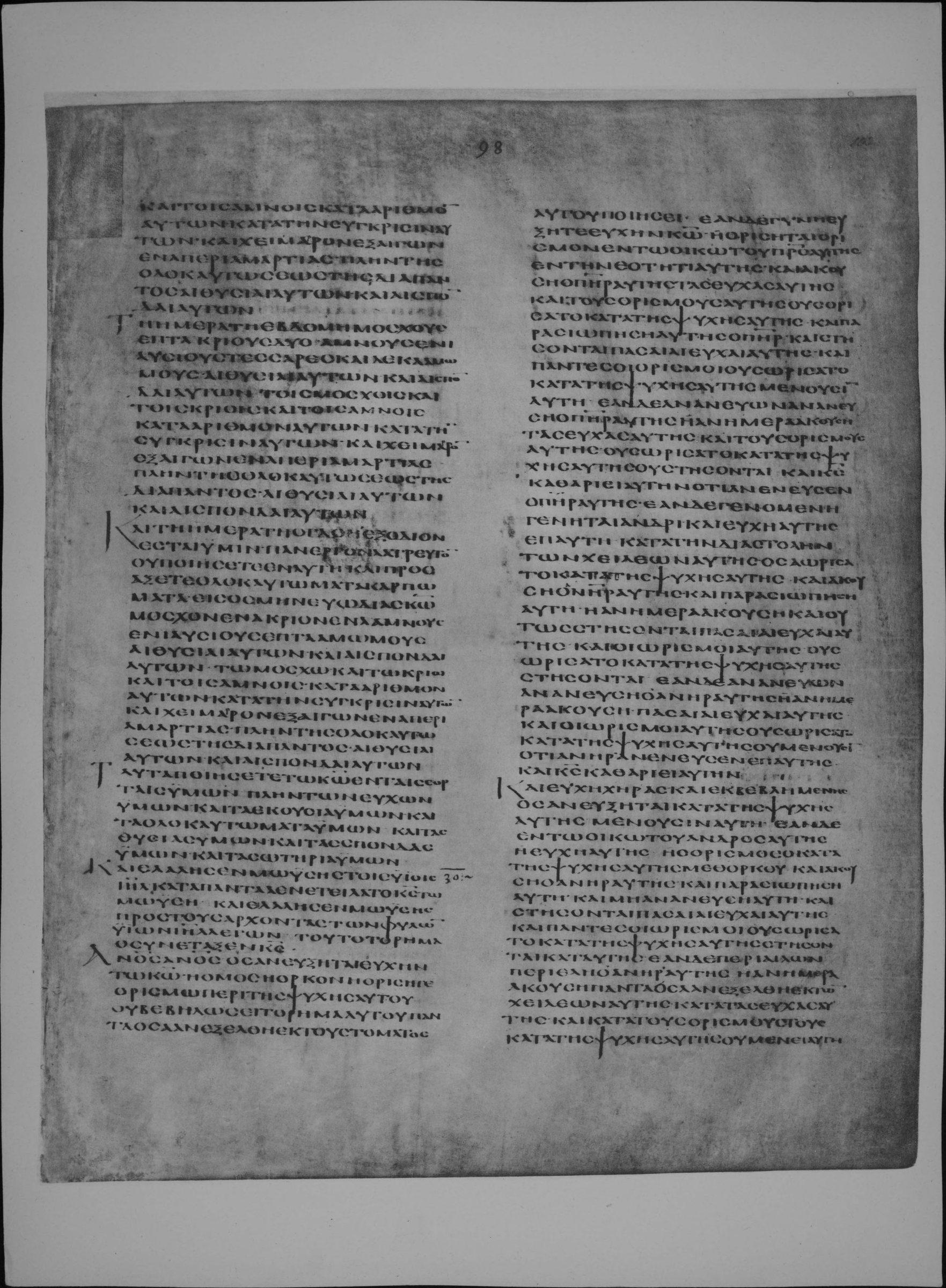
Numbers 30:1-8 is on fol. 98r (full-size facsimile of 1879-83, Internet Archive codex-alexandrinus leaf 216). The 1915 reduced facsimile prints beneath this page: Num. xxix. 27-xxx. 13. Checked on the plate: the page begins inside Numbers 29:27 (first words read: ΚΑΙ ΤΟΙΣ ΑΜΝΟΙΣ ΚΑΤΑ ΑΡΙΘΜΟΝ ΑΥΤΩΝ ΚΑΤΑ ΤΗΝ ΣΥΓΚΡΙΣΙΝ ΑΥΤΩΝ ΚΑΙ ΧΙΜΑΡΟΝ ΕΞ ΑΙΓΩΝ ΕΝΑ).
1Καὶ ἐλάλησεν Μωυσῆς τοῖς υἱοῖς Ἰσραὴλ κατὰ πάντα ὅσα ἐνετείλατο Κύριος τῷ Μωυσῇ. 2καὶ ἐλάλησεν Μωυσῆς πρὸς τοὺς ἄρχοντας τῶν φυλῶν Ἰσραὴλ λέγων Τοῦτο τὸ ῥῆμα ὃ συνέταξεν Κύριος· 3ἄνθρωπος ἄνθρωπος ὃς ἂν εὔξηται εὐχὴν Κυρίῳ ἢ ὀμόσῃ ὅρκον ὁρισμῷ ἢ ὁρίσηται περὶ τῆς ψυχῆς αὐτοῦ, οὐ βεβηλώσει τὸ ῥῆμα αὐτοῦ· πάντα ὅσα ἐὰν ἐξέλθῃ ἐκ τοῦ στόματος αὐτοῦ ποιήσει. 4ἐὰν δὲ γυνὴ εὔξηται εὐχὴν Κυρίῳ ἢ ὁρίσηται ὁρισμὸν ἐν τῷ οἴκῳ τοῦ πατρὸς αὐτῆς ἐν τῇ νεότητι αὐτῆς, 5καὶ ἀκούσῃ ὁ πατὴρ αὐτῆς τὰς εὐχὰς αὐτῆς καὶ τοὺς ὁρισμοὺς αὐτῆς οὓς ὡρίσατο κατὰ τῆς ψυχῆς αὐτῆς, καὶ παρασιωπήσῃ αὐτῆς ὁ πατήρ· καὶ στήσονται πᾶσαι αἱ εὐχαὶ αὐτῆς, καὶ πάντες οἱ ὁρισμοὶ οὓς ὡρίσατο κατὰ τῆς ψυχῆς αὐτῆς μενοῦσιν αὐτῇ. 6ἐὰν δὲ ἀνανεύων ἀνανεύσῃ ὁ πατὴρ αὐτῆς ᾗ ἂν ἡμέρᾳ ἀκούσῃ πάσας τὰς εὐχὰς αὐτῆς καὶ τοὺς ὁρισμοὺς οὓς ὡρίσατο κατὰ τῆς ψυχῆς αὐτῆς, οὐ στήσονται· καὶ Κύριος καθαριεῖ αὐτήν, ὅτι ἀνένευσεν ὁ πατὴρ αὐτῆς. 7ἐὰν δὲ γενομένη γένηται ἀνδρί, καὶ αἱ εὐχαὶ αὐτῆς ἐπ᾽ αὐτῇ κατὰ τὴν διαστολὴν τῶν χειλέων αὐτῆς, οὓς ὡρίσατο κατὰ τῆς ψυχῆς αὐτῆς, 8καὶ ἀκούσῃ ὁ ἀνὴρ αὐτῆς, καὶ παρασιωπήσῃ αὐτῇ ᾗ ἂν ἡμέρᾳ ἀκούσῃ· καὶ οὕτως στήσονται πᾶσαι αἱ εὐχαὶ αὐτῆς, καὶ οἱ ὁρισμοὶ αὐτῆς οὓς ὡρίσατο κατὰ τῆς ψυχῆς αὐτῆς στήσονται.
1And Moses spoke to the children of Israel according to all that the Lord commanded Moses. 2And Moses spoke to the heads of the tribes of the children of Israel, saying, This is the thing which the Lord has commanded. 3Whatsoever man shall vow a vow to the Lord, or swear an oath, or bind himself with an obligation upon his soul, he shall not break his word; all that shall come out of his mouth he shall do. 4And if a woman shall vow a vow to the Lord, or bind herself with an obligation in her youth in her father's house; and her father should hear her vows and her obligations, wherewith she has bound her soul, and her father should hold his peace at her, then all her vows shall stand, 5and all the obligations with which she has bound her soul, shall remain to her. 6But if her father straitly forbid her in the day in which he shall hear all her vows and her obligations, which she has contracted upon her soul, they shall not stand; and the Lord shall hold her guiltless, because her father forbade her. 7But if she should be indeed married, and her vows be upon her according to the utterance of her lips, in respect of the obligations which she has contracted upon her soul; 8and her husband should hear, and hold his peace at her in the day in which he should hear, then thus shall all her vows be binding, and her obligations, which she has contracted upon her soul shall stand.
Where on the image
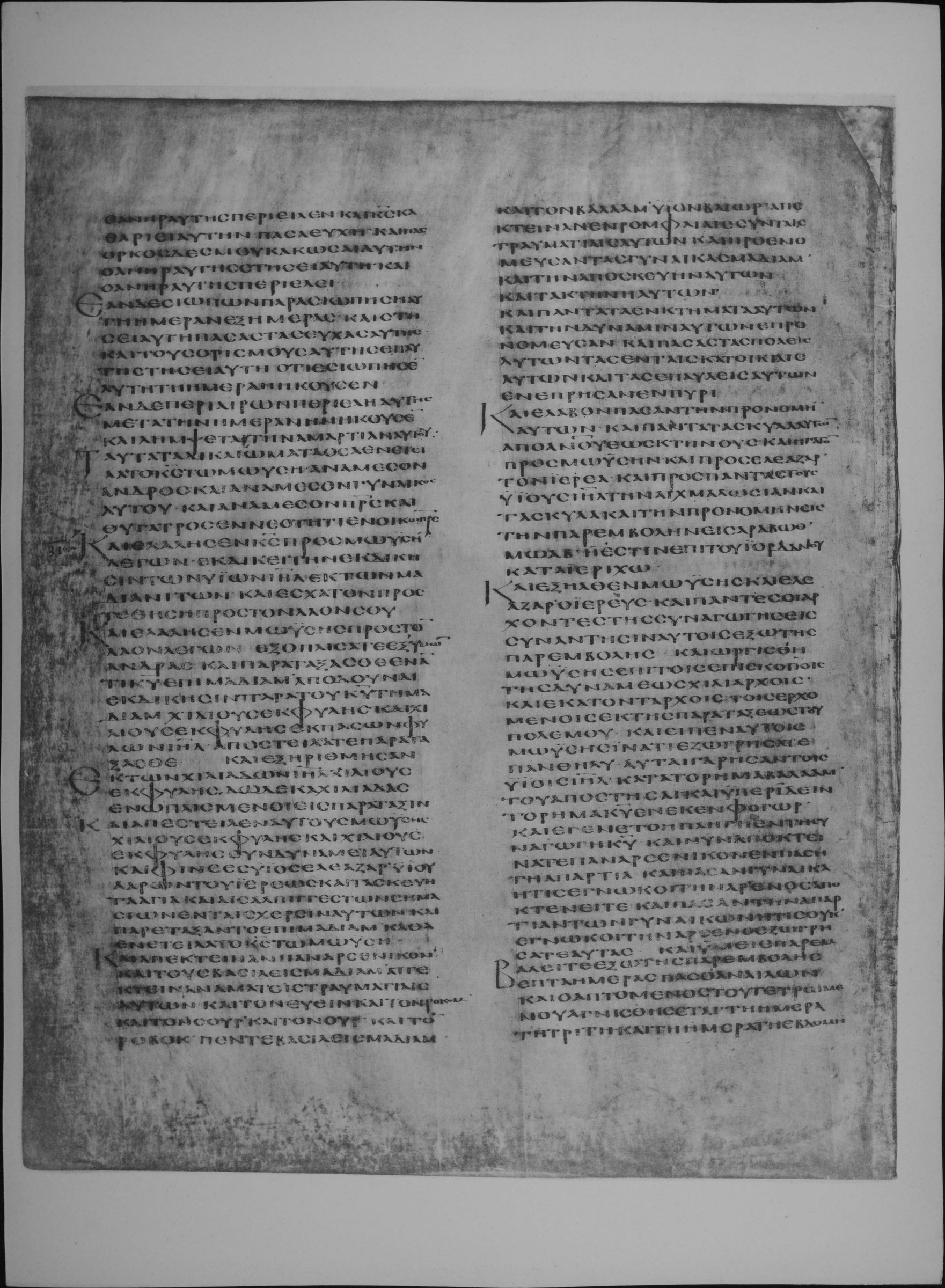
Numbers 30:9-13 is on fol. 98r (full-size facsimile of 1879-83, Internet Archive codex-alexandrinus leaf 216). The 1915 reduced facsimile prints beneath this page: Num. xxix. 27-xxx. 13. Checked on the plate: the page begins inside Numbers 29:27 (first words read: ΚΑΙ ΤΟΙΣ ΑΜΝΟΙΣ ΚΑΤΑ ΑΡΙΘΜΟΝ ΑΥΤΩΝ ΚΑΤΑ ΤΗΝ ΣΥΓΚΡΙΣΙΝ ΑΥΤΩΝ ΚΑΙ ΧΙΜΑΡΟΝ ΕΞ ΑΙΓΩΝ ΕΝΑ). Numbers 30:13-17 is on fol. 98v (full-size facsimile of 1879-83, Internet Archive codex-alexandrinus leaf 217). The 1915 reduced facsimile prints beneath this page: Num. xxx. 13-xxxi. 19. Checked on the plate: the page begins inside Numbers 30:13 (first words read: Ο ΑΝΗΡ ΑΥΤΗΣ ΠΕΡΙΕΙΛΕΝ ΚΑΙ ΚΣ ΚΑΘΑΡΙΕΙ ΑΥΤΗΝ ΠΑΣΑ ΕΥΧΗ ΚΑΙ ΠΑΣ ΟΡΚΟΣ ΔΕΣΜΟΥ).
9ἐὰν δὲ ἀνανεύων ἀνανεύσῃ ὁ ἀνὴρ αὐτῆς ᾗ ἐὰν ἡμέρᾳ ἀκούσῃ, πᾶσαι αἱ εὐχαὶ αὐτῆς καὶ οἱ ὁρισμοὶ αὐτῆς οὓς ὡρίσατο κατὰ τῆς ψυχῆς αὐτῆς οὐ μενοῦσιν, ὅτι ὁ ἀνὴρ ἀνένευσεν ἀπ᾽ αὐτῆς· καὶ Κύριος καθαριεῖ αὐτήν. 10καὶ εὐχὴ χήρας καὶ ἐκβεβλημένης, ὅσα ἂν εὔξηται κατὰ τῆς ψυχῆς αὐτῆς, μενοῦσιν αὐτῇ. 11ἐὰν δὲ ἐν τῷ οἴκῳ τοῦ ἀνδρὸς αὐτῆς ἡ εὐχὴ αὐτῆς ἢ ὁ ὁρισμὸς κατὰ τῆς ψυχῆς αὐτῆς μεθ᾽ ὅρκου, 12καὶ ἀκούσῃ ὁ ἀνὴρ αὐτῆς, καὶ παρασιωπήσῃ αὐτῇ καὶ μὴ ἀνανεύσῃ αὐτῇ· καὶ στήσονται πᾶσαι αἱ εὐχαὶ αὐτῆς, καὶ πάντες οἱ ὁρισμοὶ αὐτῆς οὓς ὡρίσατο κατὰ τῆς ψυχῆς αὐτῆς στήσονται κατ᾽ αὐτῆς. 13ἐὰν δὲ περιελὼν περιέλῃ ὁ ἀνὴρ αὐτῆς ᾗ ἂν ἡμέρᾳ ἀκούσῃ πάντα, ὅσα ἐὰν ἐξέλθῃ ἐκ τῶν χειλέων αὐτῆς κατὰ τὰς εὐχὰς αὐτῆς καὶ κατὰ τοὺς ὁρισμοὺς τοὺς κατὰ τῆς ψυχῆς αὐτῆς, οὐ μενεῖ αὐτῇ· ὁ ἀνὴρ αὐτῆς περιεῖλεν, καὶ Κύριος καθαρίσει αὐτήν. 14πᾶσα εὐχὴ καὶ πᾶς ὅρκος δεσμοῦ κακῶσαι ψυχήν, ὁ ἀνὴρ αὐτῆς στήσει αὐτῇ καὶ ὁ ἀνὴρ αὐτῆς περιελεῖ. 15ἐὰν δὲ σιωπῶν παρασιωπήσῃ αὐτῇ ἡμέραν ἐξ ἡμέρας, καὶ στήσει αὐτῇ πάσας τὰς εὐχὰς αὐτῆς, καὶ τοὺς ὁρισμοὺς τοὺς ἐπ᾽ αὐτῆς στήσει αὐτῇ, ὅτι ἐσιώπησεν αὐτῇ τῇ ἡμέρᾳ ἣν ἤκουσεν. 16ἐὰν δὲ περιελὼν περιέλῃ αὐτῆς μετὰ τὴν ἡμέραν ἣν ἤκουσεν, καὶ λήμψεται τὴν ἁμαρτίαν αὐτοῦ. 17ταῦτα τὰ δικαιώματα ὅσα ἐνετείλατο Κύριος τῷ Μωυσῇ ἀνὰ μέσον ἀνδρὸς καὶ γυναικὸς αὐτοῦ, καὶ ἀνὰ μέσον πατρὸς καὶ θυγατρὸς ἐν νεότητι ἐν οἴκῳ πατρός.
9But if her husband should straitly forbid her in the day in which he should hear her, none of her vows or obligations which she has contracted upon her soul shall stand, because her husband has disallowed her, and the Lord shall hold her guiltless. 10And the vow of a widow and of her that is put away, whatsoever she shall bind upon her soul, shall stand to her. 11And if her vow be made in the house of her husband, or the obligation upon her soul with an oath, 12and her husband should hear, and hold his peace at her, and not disallow her, then all her vows shall stand, and all the obligations which she contracted against her soul, shall stand against her. 13But if her husband should utterly cancel the vow in the day in which he shall hear it, none of the things which shall proceed out of her lips in her vows, and in the obligations contracted upon her soul, shall stand to her; her husband has cancelled them, and the Lord shall hold her guiltless. 14Every vow, and every binding oath to afflict her soul, her husband shall confirm it to her, or her husband shall cancel it. 15But if he be wholly silent at her from day to day, then shall he bind upon her all her vows; and he shall confirm to her the obligations which she has bound upon herself, because he held his peace at her in the day in which he heard her. 16And if her husband should in any wise cancel them after the day in which he heard them, then he shall bear his iniquity. 17These are the ordinances which the Lord commanded Moses, between a man and his wife, and between a father and daughter in her youth in the house of her father.
Cite
Sources
- Source: Codex Alexandrinus (British Library Royal MS 1 D. V) via the British Museum photographic facsimiles of 1879-83 and 1915 (Internet Archive) + Swete's Septuagint + Brenton's English (holding institution)
- Critical edition: H. B. Swete, The Old Testament in Greek according to the Septuagint (1909)
← previous · → next · v cycle view · l back to library