Numbers, Chapter 5 (Codex Alexandrinus)
Introduction
Numbers 5 in the Greek Old Testament (the Septuagint) as written in Codex Alexandrinus, a Greek Bible copied in the fifth century, probably in Egypt, and now in the British Library (Royal MS 1 D. V, the first of its four volumes). It is one of the three great early codices of the whole Greek Bible, with Codex Vaticanus and Codex Sinaiticus, and for Genesis 1:1-46:28, which Codex Vaticanus has lost, it is the oldest surviving complete Greek text (older papyri such as the Berlin Genesis papyrus and Chester Beatty 961 survive only in part).
This entry meets the strict three-criteria standard of the Theosis Library:
- Manuscript scan: the pages of Codex Alexandrinus carrying this chapter (fol. 81v, fol. 82r), from the full-size photographic (autotype) facsimile published by the British Museum in 1879-1883, as digitised on the Internet Archive. The verse range of every page comes from the reduced photographic facsimile of 1915, which prints it beneath each plate, and the opening words of every page were read on the plate to confirm the page and the verse it begins with. Each section links to the page or pages that hold its verses. Folio numbers are those written at the head of each leaf and visible on the plates.
- Original text: Swete's edition, which here prints the text of Codex Vaticanus (Vat. gr. 1209), the base of his edition, and gives the readings of Alexandrinus only in his apparatus. The Greek column is therefore Vaticanus' text; where Alexandrinus differs, the plate shows what Alexandrinus reads.
- English translation: Sir Lancelot C. L. Brenton, The Septuagint Version of the Old Testament (1844; 1851 edition), a translation of the Greek, public domain, from the eBible.org text.
How was this verified? (Provenance)
Where on the image
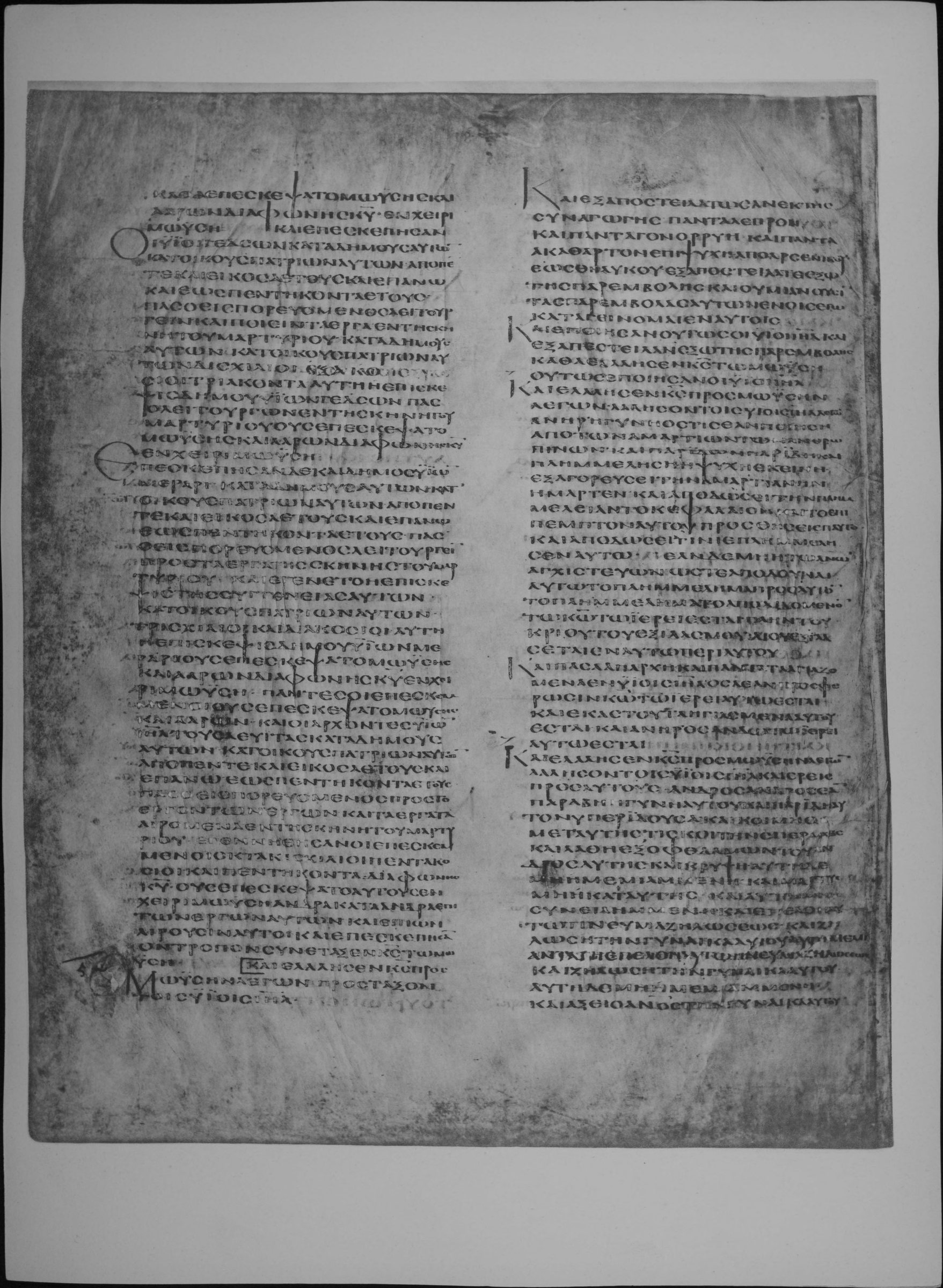
Numbers 5:1-8 is on fol. 81v (full-size facsimile of 1879-83, Internet Archive codex-alexandrinus leaf 183). The 1915 reduced facsimile prints beneath this page: Num. iv. 37-v. 15. Checked on the plate: the page begins inside Numbers 4:37 (first words read: ΚΑΘΑ ΕΠΕΣΚΕΨΑΤΟ ΜΩΥΣΗΣ ΚΑΙ ΑΑΡΩΝ ΔΙΑ ΦΩΝΗΣ ΚΥ ΕΝ ΧΕΙΡΙ ΜΩΥΣΗ ΚΑΙ ΕΠΕΣΚΕΠΗΣΑΝ ΥΙΟΙ ΓΕΔΣΩΝ).
1Καὶ ἐλάλησεν Κύριος πρὸς Μωυσῆν λέγων 2Πρόσταξον τοῖς υἱοῖς Ἰσραήλ, καὶ ἐξαποστειλάτωσαν ἐκ τῆς παρεμβολῆς πάντα λεπρὸν καὶ πάντα γονορρυῆ καὶ πάντα ἀκάθαρτον ἐπὶ ψυχῇ· 3ἀπὸ ἀρσενικοῦ ἕως θηλυκοῦ, ἐξαποστείλατε ἔξω τῆς παρεμβολῆς, καὶ οὐ μὴ μιανοῦσιν τὰς παρεμβολὰς αὐτῶν, ἐν οἷς ἐγὼ καταγίνομαι ἐν αὐτοῖς. 4καὶ ἐποίησαν οὕτως οἱ υἱοὶ Ἰσραήλ, καὶ ἐξαπέστειλαν αὐτοὺς ἔξω τῆς παρεμβολῆς· καθὰ ἐλάλησεν Κύριος Μωυσῇ, οὕτως ἐποίησαν οἱ υἱοὶ Ἰσραήλ. 5Καὶ ἐλάλησεν Κύριος πρὸς Μωυσῆν λέγων 6Λάλησον τοῖς υἱοῖς Ἰσραὴλ λέγων Ἀνὴρ ἢ γυνὴ ὅστις ἐὰν ποιήσῃ ἀπὸ τῶν ἁμαρτιῶν τῶν ἀνθρωπίνων, καὶ παριδὼν παρίδῃ καὶ πλημμελῶν πλημμελήσῃ ἡ ψυχὴ ἐκείνη, 7ἐξαγορεύσει τὴν ἁμαρτίαν ἣν ἐποίησεν, καὶ ἀποδώσει τὴν πλημμελίαν, τὸ κεφάλαιον, καὶ τὸ ἐπίπεμπτον αὐτοῦ προσθήσει ἐπ᾽ αὐτό, καὶ ἀποδώσει τίνι ἐπλημμέλησεν αὐτῷ. 8ἐὰν δὲ μὴ ᾖ τῷ ἀνθρώπῳ ὁ ἀγχιστεύων ὥστε ἀποδοῦναι αὐτῷ τὸ πλημμέλημα πρὸς αὐτόν, τὸ πλημμέλημα τὸ ἀποδιδόμενον Κυρίῳ τῷ ἱερεῖ ἔσται, πλὴν τοῦ κριοῦ τοῦ ἱλασμοῦ δι᾽ οὗ ἐξιλάσεται ἐν αὐτῷ περὶ αὐτοῦ.
1And the Lord spoke to Moses, saying, 2Charge the children of Israel, and let them send forth out of the camp every leper, and every one who has an issue of the reins, and every one who is unclean from a dead body. 3Whether male or female, send them forth out of the camp; and they shall not defile their camps in which I dwell among them. 4And the children of Israel did so, and sent them out of the camp: as the Lord said to Moses, so did the children of Israel. 5And the Lord spoke to Moses, saying, 6Speak to the children of Israel, saying, Every man or woman who shall commit any sin that is common to man, or if that soul shall in anywise have neglected the commandment and transgressed; 7that person shall confess the sin which he has committed, and shall make satisfaction for his trespass: he shall pay the principal, and shall add to it the fifth part, and shall make restoration to him against whom he has trespassed. 8But if a man have no near kinsman, so as to make satisfaction for his trespass to him, the trespass-offering paid to the Lord shall be for the priest, besides the ram of atonement, by which he shall make atonement with it for him.
Where on the image
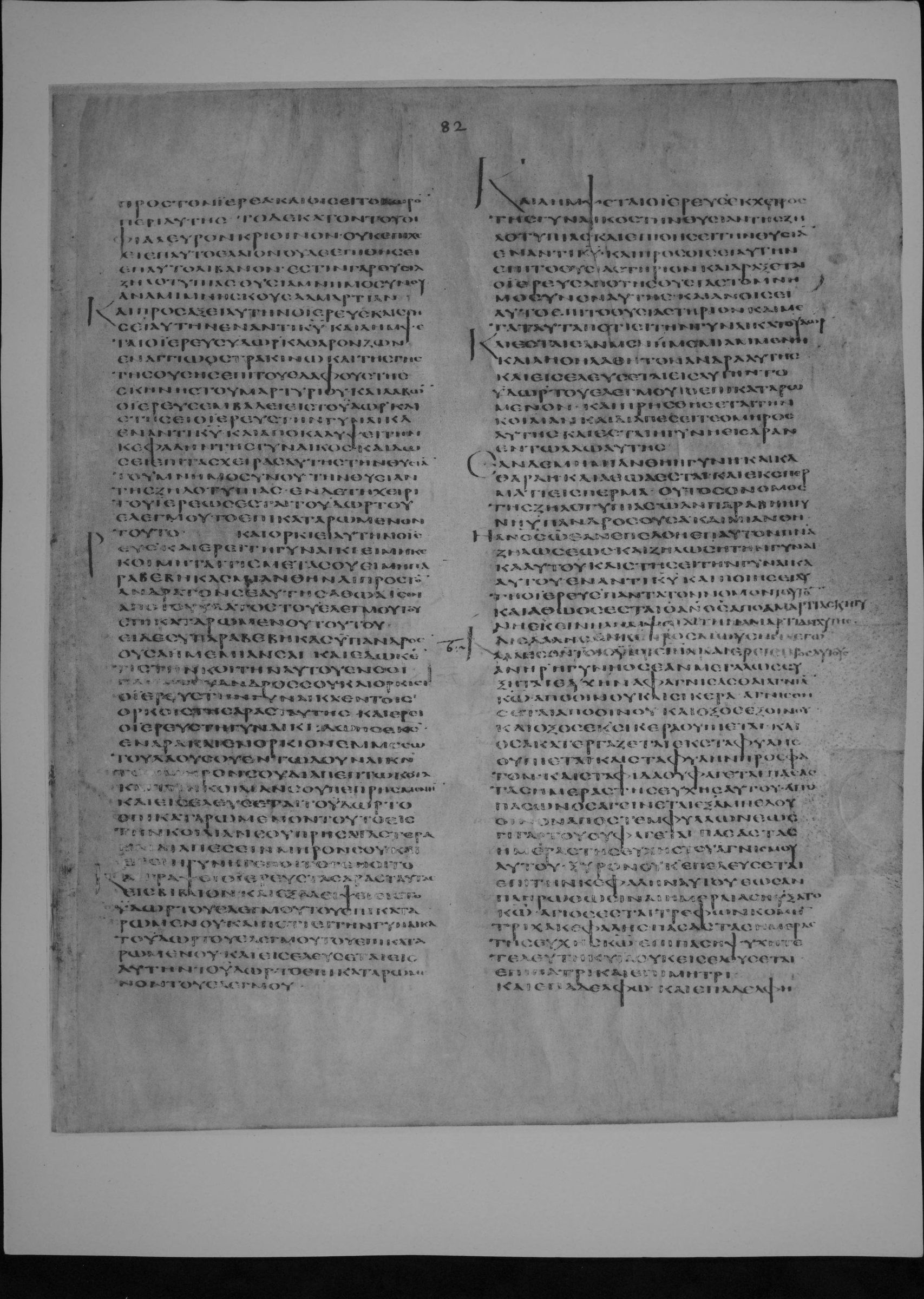
Numbers 5:9-15 is on fol. 81v (full-size facsimile of 1879-83, Internet Archive codex-alexandrinus leaf 183). The 1915 reduced facsimile prints beneath this page: Num. iv. 37-v. 15. Checked on the plate: the page begins inside Numbers 4:37 (first words read: ΚΑΘΑ ΕΠΕΣΚΕΨΑΤΟ ΜΩΥΣΗΣ ΚΑΙ ΑΑΡΩΝ ΔΙΑ ΦΩΝΗΣ ΚΥ ΕΝ ΧΕΙΡΙ ΜΩΥΣΗ ΚΑΙ ΕΠΕΣΚΕΠΗΣΑΝ ΥΙΟΙ ΓΕΔΣΩΝ). Numbers 5:15-16 is on fol. 82r (full-size facsimile of 1879-83, Internet Archive codex-alexandrinus leaf 184). The 1915 reduced facsimile prints beneath this page: Num. v. 15-vi. 7. Checked on the plate: the page begins inside Numbers 5:15 (first words read: ΠΡΟΣ ΤΟΝ ΙΕΡΕΑ ΚΑΙ ΠΡΟΣΟΙΣΕΙ ΤΟ ΔΩΡΟΝ ΠΕΡΙ ΑΥΤΗΣ ΤΟ ΔΕΚΑΤΟΝ ΤΟΥ ΟΙΦΙ).
9καὶ πᾶσα ἀπαρχὴ κατὰ πάντα τὰ ἁγιαζόμενα ἐν υἱοῖς Ἰσραήλ, ὅσα ἂν προσφέρωσιν τῷ κυρίῳ τῷ ἱερεῖ, αὐτῷ ἔσται. 10καὶ ἑκάστῳ τὰ ἡγιασμένα αὐτοῦ ἔσται· ἀνὴρ ὃς ἐὰν δῷ τῷ ἱερεῖ, αὐτῷ ἔσται. 11Καὶ ἐλάλησεν Κύριος πρὸς Μωυσῆν λέγων 12Λάλησον τοῖς υἱοῖς Ἰσραὴλ καὶ ἐρεῖς πρὸς αὐτούς Ἀνδρὸς ἀνδρὸς ἐὰν παραβῇ ἡ γυνὴ αὐτοῦ καὶ παρίδῃ αὐτὸν ὑπεριδοῦσα, 13καὶ κοιμηθῇ τις μετ᾽ αὐτῆς κοίτην σπέρματος, καὶ λάθῃ ἐξ ὀφθαλμῶν τοῦ ἀνδρὸς αὐτῆς καὶ κρύψῃ, αὐτὴ δὲ ᾖ μεμιαμμένη, καὶ μάρτυς μὴ ἦν μετ᾽ αὐτῆς καὶ αὐτὴ μὴ ᾖ συνειλημμένη· 14καὶ ἐπέλθῃ αὐτῷ πνεῦμα ζηλώσεως καὶ ζηλώσῃ τὴν γυναῖκα αὐτοῦ, αὐτὴ δὲ μεμίανται, ἢ ἐπέλθῃ αὐτῷ πνεῦμα ζηλώσεως καὶ ζηλώσῃ τὴν γυναῖκα αὐτοῦ, αὐτὴ δὲ μὴ ᾖ μεμιαμμένη· 15καὶ ἄξει ὁ ἄνθρωπος τὴν γυναῖκα αὐτοῦ πρὸς τὸν ἱερέα, καὶ προσοίσει τὸ δῶρον περὶ αὐτῆς, τὸ δέκατον τοῦ οἰφί, ἄλευρον κρίθινον· οὐκ ἐπιχεεῖ ἐπ᾽ αὐτὸ ἔλαιον οὐδὲ ἐπιθήσει ἐπ᾽ αὐτὸ λίβανον, ἔστιν γὰρ θυσία ζηλοτυπίας, θυσία μνημοσύνου ἀναμιμνήσκουσα ἁμαρτίαν. 16καὶ προσάξει αὐτὴν ὁ ἱερεύς, καὶ στήσει αὐτὴν ἔναντι Κυρίου·
9And every first-fruits in all the sanctified things among the children of Israel, whatsoever they shall offer to the Lord, shall be for the priest himself. 10And the hallowed things of every man shall be his; and whatever man shall give any thing to the priest, the gift shall be his. 11And the Lord spoke to Moses, saying, 12Speak to the children of Israel, and thou shalt say to them, Whosesoever wife shall transgress against him, and slight and despise him, 13and supposing any one shall lie with her carnally, and the thing shall be hid from the eyes of her husband, and she should conceal it and be herself defiled, and there be no witness with her, and she should not be taken; 14and there should come upon him a spirit of jealousy, and he should be jealous of his wife, and she be defiled; or there should come upon him a spirit of jealousy, and he should be jealous of his wife, and she should not be defiled; 15then shall the man bring his wife to the priest, and shall bring his gift for her, the tenth part of an ephah of barley-meal: he shall not pour oil upon it, neither shall he put frankincense upon it; for it is a sacrifice of jealousy, a sacrifice of memorial, recalling sin to remembrance. 16And the priest shall bring her, and cause her to stand before the Lord.
Where on the image
Numbers 5:17-24 is on fol. 82r (full-size facsimile of 1879-83, Internet Archive codex-alexandrinus leaf 184). The 1915 reduced facsimile prints beneath this page: Num. v. 15-vi. 7. Checked on the plate: the page begins inside Numbers 5:15 (first words read: ΠΡΟΣ ΤΟΝ ΙΕΡΕΑ ΚΑΙ ΠΡΟΣΟΙΣΕΙ ΤΟ ΔΩΡΟΝ ΠΕΡΙ ΑΥΤΗΣ ΤΟ ΔΕΚΑΤΟΝ ΤΟΥ ΟΙΦΙ).
17καὶ λήμψεται ὁ ἱερεὺς ὕδωρ καθαρὸν ζῶν ἐν ἀγγίῳ ὀστρακίνῳ, καὶ τῆς γῆς τῆς οὔσης ἐπὶ τοῦ ἐδάφους τῆς σκηνῆς τοῦ μαρτυρίου, καὶ λαβὼν ὁ ἱερεὺς ἐμβαλεῖ εἰς τὸ ὕδωρ· 18καὶ στήσει τὴν γυναῖκα ὁ ἱερεὺς ἔναντι Κυρίου, καὶ ἀποκαλύψει τὴν κεφαλὴν τῆς γυναικός, καὶ δώσει ἐπὶ τὰς χεῖρας αὐτῆς τὴν θυσίαν τοῦ μνημοσύνου, τὴν θυσίαν τῆς ζηλοτυπίας· ἐν δὲ τῇ χειρὶ τοῦ ἱερέως ἔσται τὸ ὕδωρ τοῦ ἐλεγμοῦ τοῦ ἐπικαταρωμένου τούτου. 19καὶ ὁρκιεῖ αὐτὴν ὁ ἱερεὺς καὶ ἐρεῖ τῇ γυναικί Εἰ μὴ κεκοίμηταί τις μετὰ σοῦ, εἰ μὴ παραβέβηκας μιανθῆναι ὑπὸ τὸν ἄνδρα τὸν σεαυτῆς, ἀθῴα ἴσθι ἀπὸ τοῦ ὕδατος τοῦ ἐλεγμοῦ τοῦ ἐπικαταρωμένου τούτου. 20εἰ δὲ σὺ παραβέβηκας ὕπανδρος οὖσα ἢ μεμίανσαι, καὶ ἔδωκέν τις τὴν κοίτην αὐτοῦ ἐν σοὶ πλὴν τοῦ ἀνδρός σου· 21καὶ ὁρκιεῖ ὁ ἱερεὺς τὴν γυναῖκα ἐν τοῖς λόγοις τῆς ἀρᾶς ταύτης, καὶ ἐρεῖ ὁ ἱερεὺς τῇ γυναικί Δῴη Κύριός σε ἐν ἀρᾷ καὶ ἐνόρκιον ἐν μέσῳ τοῦ λαοῦ σου, ἐν τῷ δοῦναι Κύριον τὸν μηρόν σου διαπεπτωκότα καὶ τὴν κοιλίαν σου πεπρησμένην· 22καὶ εἰσελεύσεται τὸ ὕδωρ τὸ ἐπικαταρώμενον τοῦτο εἰς τὴν κοιλίαν σου, πρῆσαι γαστέρα καὶ διαπεσεῖν μηρόν σου. καὶ ἐρεῖ ἡ γυνή Γένοιτο, γένοιτο. 23καὶ γράψει ὁ ἱερεὺς τὰς ἀρὰς ταύτας εἰς βιβλίον, καὶ ἐξαλείψει εἰς τὸ ὕδωρ τοῦ ἐλεγμοῦ τοῦ ἐπικαταρωμένου· 24καὶ ποτιεῖ τὴν γυναῖκα τὸ ὕδωρ τοῦ ἐλεγμοῦ τοῦ ἐπικαταρωμένου, καὶ εἰσελεύσεται εἰς αὐτὴν τὸ ὕδωρ τὸ ἐπικαταρώμενον τοῦ ἐλεγμοῦ.
17And the priest shall take pure running water in an earthen vessel, and he shall take of the dust that is on the floor of the tabernacle of witness, and the priest having taken it shall cast it into the water. 18And the priest shall cause the woman to stand before the Lord, and shall uncover the head of the woman, and shall put into her hands the sacrifice of memorial, the sacrifice of jealousy; and in the hand of the priest shall be the water of this conviction that brings the curse. 19And the priest shall adjure her, and shall say to the woman, If no one has lain with thee, and if thou hast not transgressed so as to be polluted, being under the power of thy husband, be free from this water of the conviction that causes the curse. 20But if being a married woman thou hast transgressed, or been polluted, and any one has lain with thee, beside thy husband: 21then the priest shall adjure the woman by the oaths of this curse, and the priest shall say to the woman, The Lord bring thee into a curse and under an oath in the midst of thy people, in that the Lord should cause thy thigh to rot and thy belly to swell; 22and this water bringing the curse shall enter into thy womb to cause thy belly to swell, and thy thigh to rot. And the woman shall say, So be it, So be it. 23And the priest shall write these curses in a book, and shall blot them out with the water of the conviction that brings the curse. 24And he shall cause the woman to drink the water of the conviction that brings the curse; and the water of the conviction that brings the curse shall enter into her.
Where on the image
Numbers 5:25-31 is on fol. 82r (full-size facsimile of 1879-83, Internet Archive codex-alexandrinus leaf 184). The 1915 reduced facsimile prints beneath this page: Num. v. 15-vi. 7. Checked on the plate: the page begins inside Numbers 5:15 (first words read: ΠΡΟΣ ΤΟΝ ΙΕΡΕΑ ΚΑΙ ΠΡΟΣΟΙΣΕΙ ΤΟ ΔΩΡΟΝ ΠΕΡΙ ΑΥΤΗΣ ΤΟ ΔΕΚΑΤΟΝ ΤΟΥ ΟΙΦΙ).
25καὶ λήμψεται ὁ ἱερεὺς ἐκ χειρὸς τῆς γυναικὸς τὴν θυσίαν τῆς ζηλοτυπίας, καὶ ἐπιθήσει τὴν θυσίαν ἔναντι Κυρίου καὶ προσοίσει αὐτὴν πρὸς τὸ θυσιαστήριον· 26καὶ δράξεται ὁ ἱερεὺς ἀπὸ τῆς θυσίας τὸ μνημόσυνον αὐτῆς καὶ ἀνοίσει αὐτὸ ἐπὶ τὸ θυσιαστήριον, καὶ μετὰ ταῦτα ποτιεῖ τὴν γυναῖκα τὸ ὕδωρ. 27καὶ ἔσται ἐὰν ᾖ μεμιαμμένη καὶ λήθῃ λάθῃ τὸν ἄνδρα αὐτῆς, καὶ εἰσελεύσεται εἰς αὐτὴν τὸ ὕδωρ τοῦ ἐλεγμοῦ τὸ ἐπικαταρώμενον, καὶ πρησθήσεται τὴν κοιλίαν, καὶ διαπεσεῖται ὁ μηρὸς αὐτῆς, καὶ ἔσται ἡ γυνὴ εἰς ἀρὰν τῷ λαῷ αὐτῆς· 28ἐὰν δὲ μὴ μιανθῇ ἡ γυνὴ καὶ καθαρὰ ᾖ, καὶ ἀθῴα ἔσται καὶ ἐκσπερματιεῖ σπέρμα. 29Οὗτος ὁ νόμος τῆς ζηλοτυπίας, ᾧ ἐὰν παραβῇ ἡ γυνὴ ὕπανδρος οὖσα καὶ μιανθῇ, 30ἢ ἄνθρωπος ᾧ ἐὰν ἐπέλθῃ ἐπ᾽ αὐτὸν πνεῦμα ζηλώσεως καὶ ζηλώσῃ τὴν γυναῖκα αὐτοῦ· καὶ στήσει τὴν γυναῖκα αὐτοῦ ἔναντι Κυρίου, καὶ ποιήσει αὐτῇ ὁ ἱερεὺς πάντα τὸν νόμον τοῦτον· 31καὶ ἀθῷος ἔσται ὁ ἄνθρωπος ἀπὸ ἁμαρτίας, καὶ ἡ γυνὴ ἐκείνη λήμψεται τὴν ἁμαρτίαν αὐτῆς.
25And the priest shall take from the hand of the woman the sacrifice of jealousy, and shall present the sacrifice before the Lord, and shall bring it to the altar. 26And the priest shall take a handful of the sacrifice as a memorial of it, and shall offer it up upon the altar; and afterwards he shall cause the woman to drink the water. 27And it shall come to pass, if she be defiled, and have altogether escaped the notice of her husband, then the water of the conviction that brings the curse shall enter into her; and she shall swell in her belly, and her thigh shall rot, and the woman shall be for a curse in the midst of her people. 28But if the woman have not been polluted, and be clean, then shall she be guiltless and shall conceive seed. 29This is the law of jealousy, wherein a married woman should happen to transgress, and be defiled; 30or in the case of a man on whomsoever the spirit of jealousy should come, and he should be jealous of his wife, and he should place his wife before the Lord, and the priest shall execute towards her all this law. 31Then the man shall be clear from sin, and that woman shall bear her sin.
Cite
Sources
- Source: Codex Alexandrinus (British Library Royal MS 1 D. V) via the British Museum photographic facsimiles of 1879-83 and 1915 (Internet Archive) + Swete's Septuagint + Brenton's English (holding institution)
- Critical edition: H. B. Swete, The Old Testament in Greek according to the Septuagint (1909)
← previous · → next · v cycle view · l back to library