Numbers, Chapter 6 (Codex Alexandrinus)
Introduction
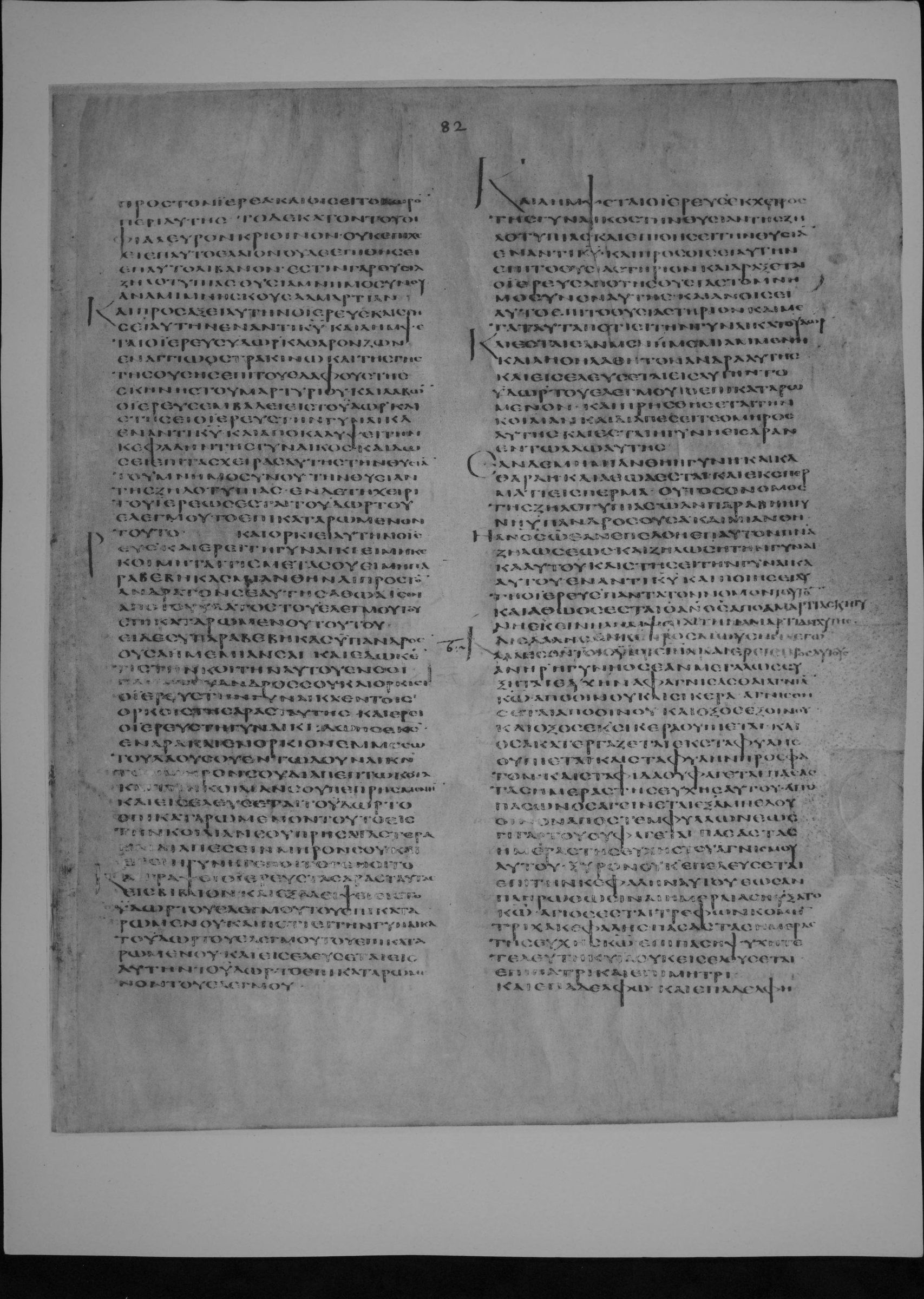
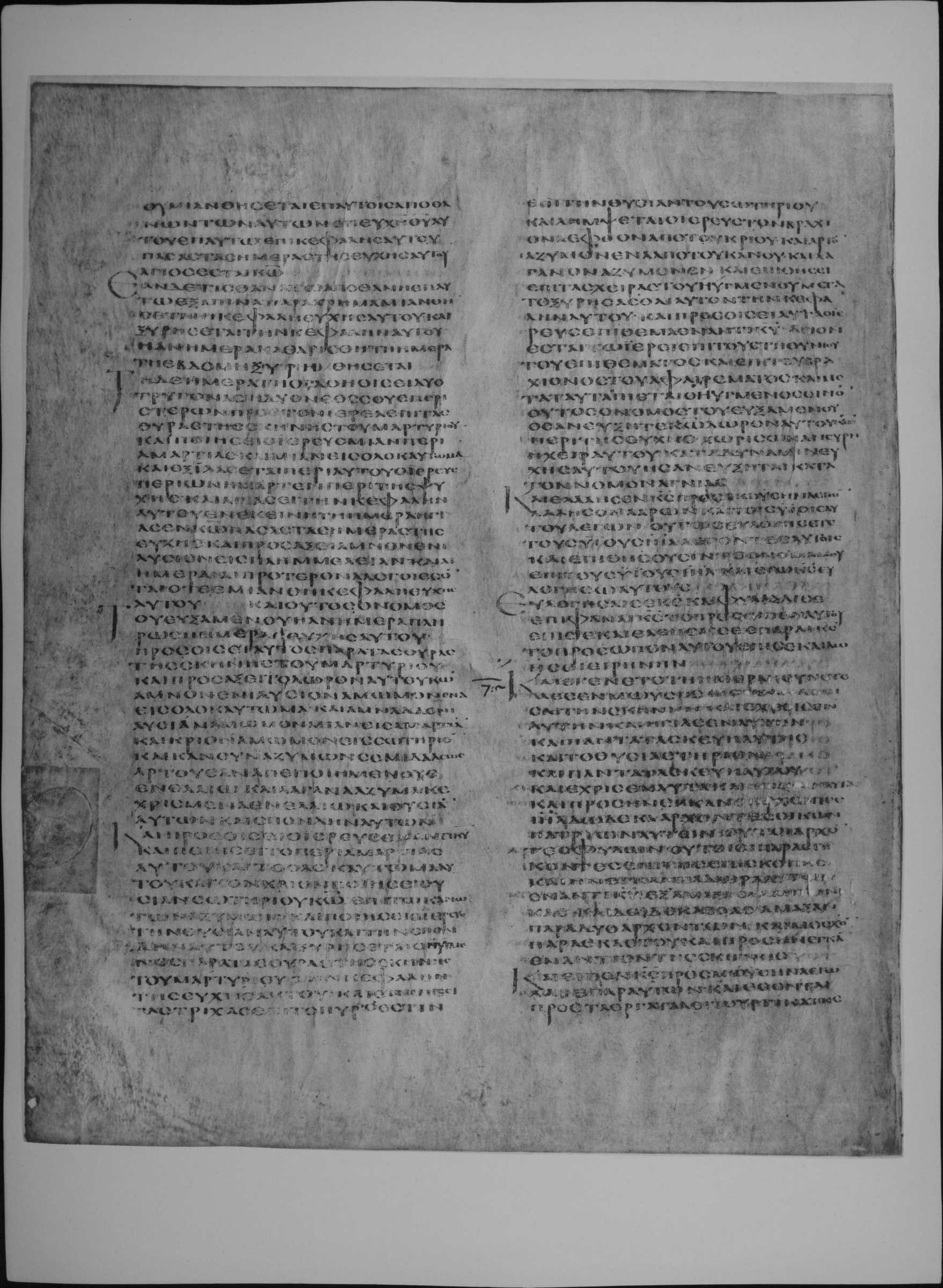
Numbers 6 in the Greek Old Testament (the Septuagint) as written in Codex Alexandrinus, a Greek Bible copied in the fifth century, probably in Egypt, and now in the British Library (Royal MS 1 D. V, the first of its four volumes). It is one of the three great early codices of the whole Greek Bible, with Codex Vaticanus and Codex Sinaiticus, and for Genesis 1:1-46:28, which Codex Vaticanus has lost, it is the oldest surviving complete Greek text (older papyri such as the Berlin Genesis papyrus and Chester Beatty 961 survive only in part).
This entry meets the strict three-criteria standard of the Theosis Library:
- Manuscript scan: the pages of Codex Alexandrinus carrying this chapter (fol. 82r, fol. 82v), from the full-size photographic (autotype) facsimile published by the British Museum in 1879-1883, as digitised on the Internet Archive. The verse range of every page comes from the reduced photographic facsimile of 1915, which prints it beneath each plate, and the opening words of every page were read on the plate to confirm the page and the verse it begins with. Each section links to the page or pages that hold its verses. Folio numbers are those written at the head of each leaf and visible on the plates.
- Original text: Swete's edition, which here prints the text of Codex Vaticanus (Vat. gr. 1209), the base of his edition, and gives the readings of Alexandrinus only in his apparatus. The Greek column is therefore Vaticanus' text; where Alexandrinus differs, the plate shows what Alexandrinus reads.
- English translation: Sir Lancelot C. L. Brenton, The Septuagint Version of the Old Testament (1844; 1851 edition), a translation of the Greek, public domain, from the eBible.org text.
How was this verified? (Provenance)
Where on the image
Numbers 6:1-7 is on fol. 82r (full-size facsimile of 1879-83, Internet Archive codex-alexandrinus leaf 184). The 1915 reduced facsimile prints beneath this page: Num. v. 15-vi. 7. Checked on the plate: the page begins inside Numbers 5:15 (first words read: ΠΡΟΣ ΤΟΝ ΙΕΡΕΑ ΚΑΙ ΠΡΟΣΟΙΣΕΙ ΤΟ ΔΩΡΟΝ ΠΕΡΙ ΑΥΤΗΣ ΤΟ ΔΕΚΑΤΟΝ ΤΟΥ ΟΙΦΙ). Numbers 6:7-8 is on fol. 82v (full-size facsimile of 1879-83, Internet Archive codex-alexandrinus leaf 185). The 1915 reduced facsimile prints beneath this page: Num. vi. 7-vii. 5. Checked on the plate: the page begins inside Numbers 6:7 (first words read: ΟΥ ΜΙΑΝΘΗΣΕΤΑΙ ΕΠ ΑΥΤΟΙΣ ΑΠΟΘΑΝΟΝΤΩΝ ΑΥΤΩΝ ΟΤΙ ΕΥΧΗ ΘΥ ΑΥΤΟΥ ΕΠ ΑΥΤΩ).
1Καὶ ἐλάλησεν Κύριος πρὸς Μωυσῆν λέγων 2Λάλησον τοῖς υἱοῖς Ἰσραὴλ καὶ ἐρεῖς πρὸς αὐτούς Ἀνὴρ ἢ γυνὴ ὃς ἐὰν μεγάλως εὔξηται εὐχὴν ἀφαγνίσασθαι ἁγνείαν Κυρίῳ 3ἀπὸ οἴνου καὶ σίκερα, ἁγνισθήσεται ἀπὸ οἴνου, καὶ ὄξος ἐξ οἴνου καὶ ὄξος ἐκ σίκερα οὐ πίεται, καὶ ὅσα κατεργάζεται ἐκ σταφυλῆς οὐ πίεται, καὶ σταφυλὴν πρόσφατον καὶ σταφίδα οὐ φάγεται. 4πάσας τὰς ἡμέρας τῆς εὐχῆς αὐτοῦ ἀπὸ πάντων ὅσα γίνεται ἐξ ἀμπέλου, οἶνον ἀπὸ στεμφύλλων ἕως γιγάρτου οὐ φάγεται. 5πάσας τὰς ἡμέρας τοῦ ἁγνισμοῦ ξυρὸν οὐκ ἐπελεύσεται ἐπὶ τὴν κεφαλὴν αὐτοῦ· ἕως ἂν πληρωθῶσιν αἱ ἡμέραι ὅσας ηὔξατο Κυρίῳ, ἅγιος ἔσται τρέφων κόμην τρίχα κεφαλῆς. 6πάσας τὰς ἡμέρας τῆς εὐχῆς Κυρίῳ ἐπὶ πάσῃ ψυχῇ τετελευτηκυίᾳ οὐκ εἰσελεύσεται. 7ἐπὶ πατρὶ καὶ ἐπὶ μητρὶ καὶ ἐπ᾽ ἀδελφῷ καὶ ἐπ᾽ ἀδελφῇ, οὐ μιανθήσεται ἐπ᾽ αὐτοῖς ἀποθανόντων αὐτῶν, ὅτι εὐχὴ θεοῦ αὐτοῦ ἐπ᾽ αὐτῷ ἐπὶ κεφαλῆς αὐτοῦ· 8πάσας τὰς ἡμέρας τῆς εὐχῆς αὐτοῦ ἅγιος ἔσται Κυρίῳ.
1And the Lord spoke to Moses, saying, 2Speak to the children of Israel, and thou shalt say to them, Whatsoever man or woman shall specially vow a vow to separate oneself with purity to the Lord, 3he shall purely abstain from wine and strong drink; and he shall drink no vinegar of wine or vinegar of strong drink; and whatever is made of the grape he shall not drink; neither shall he eat fresh grapes or raisins, 4all the days of his vow: he shall eat no one of all the things that come from the vine, wine from the grape-stones to the husk, 5all the days of his separation:—a razor shall not come upon his head, until the days be fulfilled which he vowed to the Lord: he shall be holy, cherishing the long hair of the head, 6all the days of his vow to the Lord: he shall not come nigh to any dead body, 7to his father or his mother, or to his brother or his sister; he shall not defile himself for them, when they have died, because the vow of God is upon him on his head. 8All the days of his vow he shall be holy to the Lord.
Where on the image
Numbers 6:9-16 is on fol. 82v (full-size facsimile of 1879-83, Internet Archive codex-alexandrinus leaf 185). The 1915 reduced facsimile prints beneath this page: Num. vi. 7-vii. 5. Checked on the plate: the page begins inside Numbers 6:7 (first words read: ΟΥ ΜΙΑΝΘΗΣΕΤΑΙ ΕΠ ΑΥΤΟΙΣ ΑΠΟΘΑΝΟΝΤΩΝ ΑΥΤΩΝ ΟΤΙ ΕΥΧΗ ΘΥ ΑΥΤΟΥ ΕΠ ΑΥΤΩ).
9ἐὰν δέ τις ἀποθάνῃ ἐξάπινα ἐπ᾽ αὐτῷ, παραχρῆμα μιανθήσεται ἡ κεφαλὴ εὐχῆς αὐτοῦ, καὶ ξυρήσεται τὴν κεφαλήν αὐτοῦ ᾗ ἂν ἡμέρᾳ καθαρισθῇ· τῇ ἡμέρᾳ τῇ ἑβδόμῃ ξυρηθήσεται. 10καὶ τῇ ἡμέρᾳ τῇ ὀγδόῃ οἴσει δύο τρυγόνας ἢ δύο νοσσοὺς περιστερῶν πρὸς τὸν ἱερέα ἐπὶ τὰς θύρας τῆς σκηνῆς τοῦ μαρτυρίου, 11καὶ ποιήσει ὁ ἱερεὺς μίαν περὶ ἁμαρτίας καὶ μίαν εἰς ὁλοκαύτωμα· καὶ ἐξιλάσεται περὶ αὐτοῦ ὁ ἱερεὺς περὶ ὧν ἥμαρτεν περὶ τῆς ψυχῆς, καὶ ἁγιάσει τὴν κεφαλὴν αὐτοῦ ἐν ἐκείνῃ τῇ ἡμέρᾳ 12ᾗ ἡγιάσθη Κυρίῳ τὰς ἡμέρας τῆς εὐχῆς, καὶ προσάξει ἀμνὸν ἐνιαύσιον εἰς πλημμελίαν· καὶ αἱ ἡμέραι αἱ πρότεραι ἄλογοι ἔσονται, ὅτι ἐμιάνθη κεφαλὴ εὐχῆς αὐτοῦ. 13Καὶ οὗτος ὁ νόμος τοῦ εὐξαμένου· ᾗ ἂν ἡμέρᾳ πληρώσῃ ἡμέρας εὐχῆς αὐτοῦ, προσοίσει αὐτὸς παρὰ τὰς θύρας τῆς σκηνῆς τοῦ μαρτυρίου· 14καὶ προσάξει τὸ δῶρον αὐτοῦ Κυρίῳ, ἀμνὸν ἐνιαύσιον ἄμωμον ἕνα εἰς ὁλοκαύτωσιν, καὶ ἀμνάδα ἐνιαυσίαν ἄμωμον μίαν εἰς ἁμαρτίαν, καὶ κριὸν ἕνα ἄμωμον εἰς σωτήριον, 15καὶ κανοῦν ἀζύμων σεμιδάλεως ἄρτους ἀναπεποιημένους ἐν ἐλαίῳ, καὶ λάγανα ἄζυμα κεχρισμένα ἐν ἐλαίῳ, καὶ θυσία αὐτῶν καὶ σπονδὴ αὐτῶν. 16καὶ προσοίσει ὁ ἱερεὺς ἔναντι Κυρίου, καὶ ποιήσει τὸ περὶ ἁμαρτίας αὐτοῦ καὶ τὸ ὁλοκαύτωμα αὐτοῦ·
9And if any one should die suddenly by him, immediately the head of his vow shall be defiled; and he shall shave his head in whatever day he shall be purified: on the seventh day he shall be shaved. 10And on the eighth day he shall bring two turtle-doves, or two young pigeons, to the priest, to the doors of the tabernacle of witness. 11And the priest shall offer one for a sin-offering; and the other for a whole-burnt-offering; and the priest shall make atonement for him in the things wherein he sinned respecting the dead body, and he shall sanctify his head in that day, 12in which he was consecrated to the Lord, all the days of his vow; and he shall bring a lamb of a year old for a trespass-offering; and the former days shall not be reckoned, because the head of his vow was polluted. 13And this is the law of him that has vowed: in whatever day he shall have fulfilled the days of his vow, he shall himself bring his gift to the doors of the tabernacle of witness. 14And he shall bring his gift to the Lord; one he-lamb of a year old without blemish for a whole-burnt-offering, and one ewe-lamb of a year old without blemish for a sin-offering, and one ram without blemish for a peace-offering; 15and a basket of unleavened bread of fine flour, even loaves kneaded with oil, and unleavened cakes anointed with oil, and their meat-offering, and their drink-offering. 16And the priest shall bring them before the Lord, and shall offer his sin-offering, and his whole-burnt-offering.
Where on the image
Numbers 6:17-24 is on fol. 82v (full-size facsimile of 1879-83, Internet Archive codex-alexandrinus leaf 185). The 1915 reduced facsimile prints beneath this page: Num. vi. 7-vii. 5. Checked on the plate: the page begins inside Numbers 6:7 (first words read: ΟΥ ΜΙΑΝΘΗΣΕΤΑΙ ΕΠ ΑΥΤΟΙΣ ΑΠΟΘΑΝΟΝΤΩΝ ΑΥΤΩΝ ΟΤΙ ΕΥΧΗ ΘΥ ΑΥΤΟΥ ΕΠ ΑΥΤΩ).
17καὶ τὸν κριὸν ποιήσει θυσίαν σωτηρίου Κυρίῳ ἐπὶ τῷ κανῷ τῶν ἀζύμων, καὶ ποιήσει ὁ ἱερεὺς τὴν θυσίαν αὐτοῦ καὶ τὴν σπονδὴν αὐτοῦ. 18καὶ ξυρήσεται ὁ ηὐγμένος παρὰ τὰς θύρας τῆς σκηνῆς τοῦ μαρτυρίου τὴν κεφαλὴν τῆς εὐχῆς αὐτοῦ, καὶ ἐπιθήσει τὰς τρίχας ἐπὶ τὸ πῦρ ὅ ἐστιν ὑπὸ τὴν θυσίαν τοῦ σωτηρίου. 19καὶ λήμψεται ὁ ἱερεὺς τὸν βραχίονα ἑφθὸν ἀπὸ τοῦ κριοῦ καὶ ἄρτον ἕνα ἄζυμον ἀπὸ τοῦ κανοῦ καὶ λάγανον ἄζυμον ἕν, καὶ ἐπιθήσει ἐπὶ τὰς χεῖρας τοῦ ηὐγμένου, μετὰ τὸ ξυρήσασθαι αὐτὸν τὴν εὐχὴν αὐτοῦ· 20καὶ προσοίσει αὐτὰ ὁ ἱερεὺς ἐπίθεμα ἔναντι Κυρίου· ἅγιον ἔσται τῷ ἱερεῖ ἐπὶ τοῦ στηθυνίου τοῦ ἐπιθέματος καὶ ἐπὶ τοῦ βραχίονος τοῦ ἀφαιρέματος· καὶ μετὰ ταῦτα πίεται ὁ ηὐγμένος οἶνον. 21οὗτος ὁ νόμος τοῦ εὐξαμένου ὃς ἂν εὔξηται Κυρίῳ δῶρον αὐτοῦ Κυρίῳ περὶ τῆς εὐχῆς, χωρὶς ὧν ἂν εὓρῃ ἡ χεὶρ αὐτοῦ, κατὰ δύναμιν τῆς εὐχῆς αὐτοῦ ἣν ἂν εὔξηται κατὰ νόμον ἁγνείας. 22Καὶ ἐλάλησεν Κύριος πρὸς Μωυσῆν λέγων 23Λάλησον Ἀαρὼν καὶ τοῖς υἱοῖς αὐτοῦ λέγων Οὕτως εὐλογήσετε τοὺς υἱοὺς Ἰσραὴλ λέγοντες αὐτοῖς· 24Εὐλογήσαι σε Κύριος καὶ φυλάξαι,
17And he shall offer the ram as a sacrifice of peace-offering to the Lord with the basket of unleavened bread; and the priest shall offer its meat-offering and its drink-offering. 18And he that has vowed shall shave the head of his consecration by the doors of the tabernacle of witness, and shall put the hairs on the fire which is under the sacrifice of peace-offering. 19And the priest shall take the sodden shoulder of the ram, and one unleavened loaf from the basket, and one unleavened cake, and shall put them on the hands of the votary after he has shaved off his holy hair. 20And the priest shall present them as an offering before the Lord; it shall be the holy portion for the priest beside the breast of the heave-offering, and beside the shoulder of the wave-offering: and afterwards the votary shall drink wine. 21This is the law of the votary who shall have vowed to the Lord his gift to the Lord, concerning his vow, besides what he may be able to afford according to the value of his vow, which he may have vowed according to the law of separation. 22And the Lord spoke to Moses, saying, 23Speak to Aaron and to his sons, saying, Thus ye shall bless the children of Israel, saying to them, 24The Lord bless thee and keep thee;
Where on the image
Numbers 6:25-27 is on fol. 82v (full-size facsimile of 1879-83, Internet Archive codex-alexandrinus leaf 185). The 1915 reduced facsimile prints beneath this page: Num. vi. 7-vii. 5. Checked on the plate: the page begins inside Numbers 6:7 (first words read: ΟΥ ΜΙΑΝΘΗΣΕΤΑΙ ΕΠ ΑΥΤΟΙΣ ΑΠΟΘΑΝΟΝΤΩΝ ΑΥΤΩΝ ΟΤΙ ΕΥΧΗ ΘΥ ΑΥΤΟΥ ΕΠ ΑΥΤΩ).
25καὶ ἐπιφάναι Κύριος τὸ πρόσωπον αὐτοῦ ἐπὶ σὲ καὶ ἐλεήσαι σε· 26ἐπάραι Κύριος τὸ πρόσωπον αὐτοῦ ἐπὶ σὲ καὶ δῴη σοι εἰρήνην. 27καὶ ἐπιθήσουσιν τὸ ὄνομά μου ἐπὶ τοὺς υἱοὺς Ἰσραήλ, καὶ ἐγὼ Κύριος εὐλογήσω αὐτούς·
25the Lord make his face to shine upon thee, and have mercy upon thee; 26the Lord lift up his countenance upon thee, and give thee peace. 27And they shall put my name upon the children of Israel, and I the Lord will bless them.
Cite
Sources
- Source: Codex Alexandrinus (British Library Royal MS 1 D. V) via the British Museum photographic facsimiles of 1879-83 and 1915 (Internet Archive) + Swete's Septuagint + Brenton's English (holding institution)
- Critical edition: H. B. Swete, The Old Testament in Greek according to the Septuagint (1909)
← previous · → next · v cycle view · l back to library