Tobit, Chapter 10 (Codex Alexandrinus)
Introduction
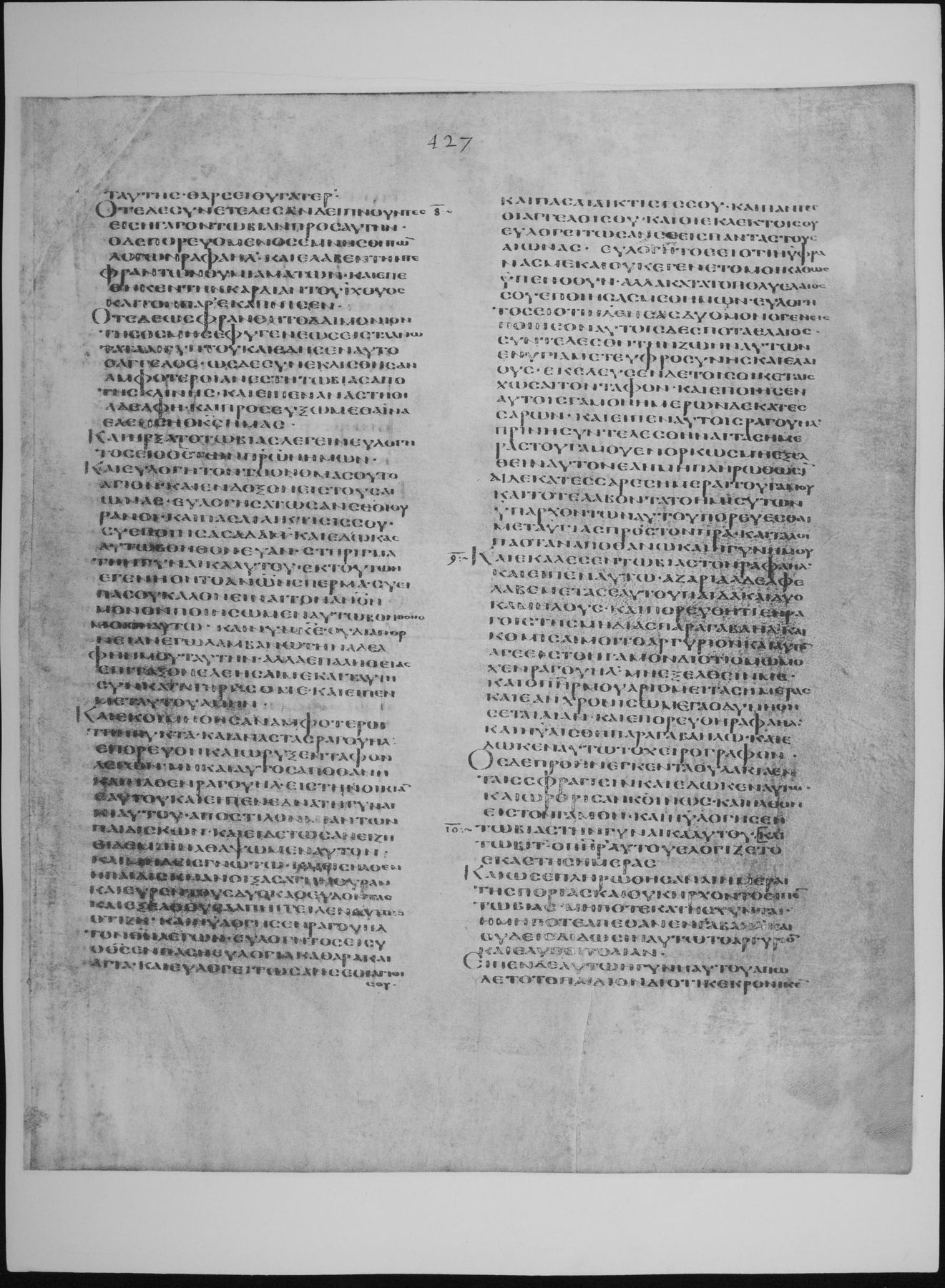
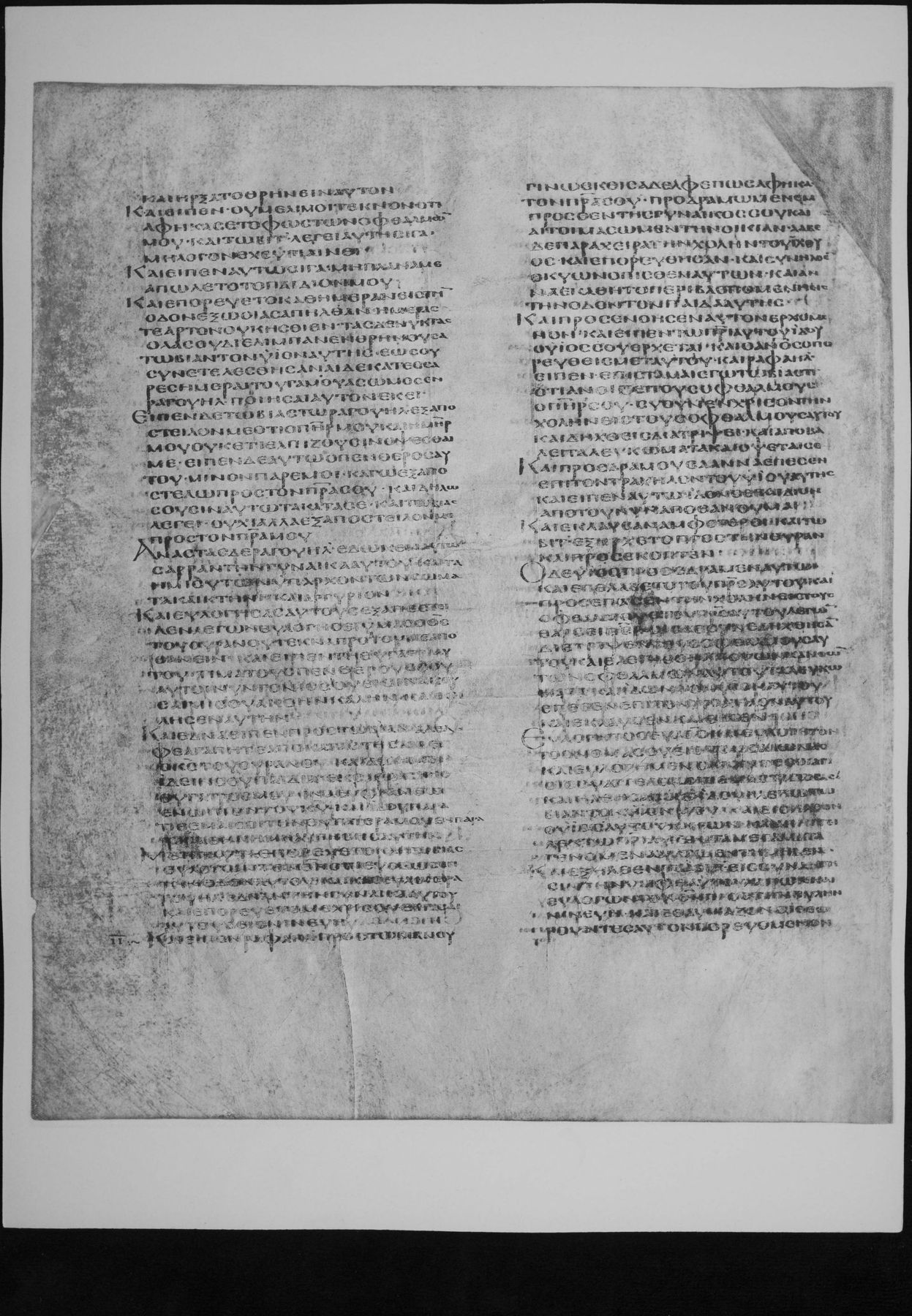
Tobit 10 in the Greek Old Testament (the Septuagint) as written in Codex Alexandrinus, a Greek Bible copied in the fifth century, probably in Egypt, and now in the British Library (Royal MS 1 D. VI, the second of its four volumes). It is one of the three great early codices of the whole Greek Bible, with Codex Vaticanus and Codex Sinaiticus.
Two Greek forms of Tobit: Tobit survives in a shorter and a longer Greek form. Codex Alexandrinus, like Codex Vaticanus, has the shorter form, which Swete prints from Vaticanus as his main text (he prints the longer form of Codex Sinaiticus beneath it; that form is not used here). Brenton's English also translates the shorter form.
Numbering: Swete's Greek and Brenton's English number or divide some verses of this chapter differently (Swete 10:7 = Brenton 10:7-8; Swete 10:8-12 = Brenton 10:9-13). Each column keeps its own verse numbers, and sections are cut only where the two texts agree, so each section holds the same passage in both languages.
This entry meets the strict three-criteria standard of the Theosis Library:
- Manuscript scan: the pages of Codex Alexandrinus carrying this chapter (fol. 427r, fol. 427v), from the full-size photographic (autotype) facsimile published by the British Museum in 1879-1883, as digitised on the Internet Archive. The verse range of every page comes from the reduced photographic facsimile of 1936, which prints it beneath each plate, and the opening words of every page were read on the plate to confirm the page and the verse it begins with. Each section links to the page or pages that hold its verses. Folio numbers are those written at the head of each leaf and visible on the plates.
- Original text: Swete's edition, which here prints the text of Codex Vaticanus (Vat. gr. 1209), the base of his edition, and gives the readings of Alexandrinus only in his apparatus. The Greek column is therefore Vaticanus' text; where Alexandrinus differs, the plate shows what Alexandrinus reads.
- English translation: Sir Lancelot C. L. Brenton, The Septuagint Version of the Old Testament (1844; 1851 edition), a translation of the Greek, public domain, from the eBible.org text.
How was this verified? (Provenance)
Where on the image
Tobit 10:1-4 is on fol. 427r (full-size facsimile of 1879-83, Internet Archive codex-alexandrinus leaf 878). The 1936 reduced facsimile prints beneath this page: Tobit vii. 17-x. 4. Checked on the plate: the page begins inside Tobit 7:17 (first words read: ΤΑΥΤΗΣ ΘΑΡΣΕΙ ΘΥΓΑΤΕΡ ΟΤΕ ΔΕ ΣΥΝΕΤΕΛΕΣΑΝ ΔΕΙΠΝΟΥΝΤΕΣ ΕΙΣΗΓΑΓΟΝ ΤΟΝ ΤΩΒΙΑΝ ΠΡΟΣ ΑΥΤΗΝ). Tobit 10:4-8 is on fol. 427v (full-size facsimile of 1879-83, Internet Archive codex-alexandrinus leaf 879). The 1936 reduced facsimile prints beneath this page: Tobit x. 4-xi. 17. Checked on the plate: the page begins inside Tobit 10:4 (first words read: ΚΑΙ ΗΡΞΑΤΟ ΘΡΗΝΕΙΝ ΑΥΤΟΝ ΚΑΙ ΕΙΠΕΝ ΟΥ ΜΕΛΕΙ ΜΟΙ ΤΕΚΝΟΝ ΟΤΙ ΑΦΗΚΑ ΣΕ ΤΟ ΦΩΣ ΤΩΝ ΟΦΘΑΛΜΩΝ ΜΟΥ).
1Καὶ Τωβεὶτ ὁ πατὴρ αὐτοῦ ἐλογίσατο ἑκάστης ἡμέρας· καὶ ὡς ἐπληρώθησαν αἱ ἡμέραι τῆς πορείας καὶ οὐκ ἤρχετο, 2εἶπεν Μή ποτε κατῄσχυνται; ἢ μή ποτε ἀπέθανεν Γαβαήλ, καὶ οὐδεὶς δίδωσιν αὐτῷ τὸ ἀργύριον; 3καὶ ἐλυπεῖτο λίαν. 4εἶπεν δὲ αὐτῷ ἡ γυνή Ἀπώλετο τὸ παιδίον, διότι κεχρόνικεν· καὶ ἤρξατο θρηνεῖν αὐτὸν καὶ εἶπεν 5Οὐ μέλει μοι, τέκνον, ὅτι ἀφῆκά σε τὸ φῶς τῶν ὀφθαλμῶν μου; 6καὶ Τωβεὶτ λέγει αὐτῇ Σίγα, μὴ λόγον ἔχε, ὑγιαίνει. 7καὶ εἶπεν αὐτῷ Σίγα, μὴ πλάνα με· ἀπώλετο τὸ παιδίον μου. καὶ ἐπορεύετο καθ᾽ ἡμέραν εἰς τὴν ὁδὸν ἔξω οἵας ἀπῆλθεν, ἡμέρας τε ἄρτον οὐκ ἤσθιεν, τὰς δὲ νύκτας οὐ διελίμπανεν θρηνοῦσα Τωβείαν τὸν υἱὸν αὐτῆς, ἕως οὗ συνετελέσθησαν αἱ δέκα τέσσαρες ἡμέραι τοῦ γάμου ἃς ὤμοσεν Ῥαγουὴλ ποιῆσαι αὐτὸν ἐκεῖ. Εἶπεν δὲ Τωβείας τῷ Ῥαγουήλ Ἐξαπόστειλόν με, ὅτι ὁ πατήρ μου καὶ ἡ μήτηρ μου οὐκέτι ἐλπίζουσιν ὄψεσθαί με. 8εἶπεν δὲ αὐτῷ ὁ πενθερός Μεῖνον παρ᾽ ἐμοί, κἀγὼ ἐξαποστελῶ πρὸς τὸν πατέρα σου καὶ δηλώσουσιν αὐτῷ τὰ κατὰ σέ.
1Now Tobit his father counted every day: and when the days of the journey were expired, and they came not, 2then Tobit said, Are they detained? or is Gabael dead, and there is no man to give him the money? 3Therefore he was very sorry. 4Then his wife said unto him, My son is dead, seeing he stayeth long; and she began to bewail him, and said, 5Now I care for nothing, my son, since I have let thee go, the light of mine eyes. 6To whom Tobit said, Hold thy peace, take no care, for he is safe. 7But she said, Hold thy peace, and deceive me not; my son is dead. And she went out every day into the way which they went, and did eat no meat in the daytime, and ceased not whole nights to bewail her son Tobias, until the fourteen days of the wedding were expired, which Raguel had sworn that he should spend there. Then Tobias said to Raguel, 8Let me go, for my father and my mother look no more to see me. 9But his father in law said unto him, Tarry with me, and I will send to thy father, and they shall declare unto him how things go with thee.
Where on the image
Tobit 10:9-12 is on fol. 427v (full-size facsimile of 1879-83, Internet Archive codex-alexandrinus leaf 879). The 1936 reduced facsimile prints beneath this page: Tobit x. 4-xi. 17. Checked on the plate: the page begins inside Tobit 10:4 (first words read: ΚΑΙ ΗΡΞΑΤΟ ΘΡΗΝΕΙΝ ΑΥΤΟΝ ΚΑΙ ΕΙΠΕΝ ΟΥ ΜΕΛΕΙ ΜΟΙ ΤΕΚΝΟΝ ΟΤΙ ΑΦΗΚΑ ΣΕ ΤΟ ΦΩΣ ΤΩΝ ΟΦΘΑΛΜΩΝ ΜΟΥ).
9καὶ Τωβείας λέγει Ἐξαπόστειλόν με πρὸς τὸν πατέρα μου. 10ἀναστὰς δὲ Ῥαγουὴλ ἔδωκεν αὐτῷ Σάρραν τὴν γυναῖκα αὐτοῦ καὶ τὰ ἥμισυ τῶν ὑπαρχόντων, σώματα καὶ κτήνη, ἀργύριον· 11καὶ εὐλογήσας αὐτοὺς ἐξαπέστειλεν λέγων Εὐοδώσει ὑμᾶς, τέκνα, ὁ θεὸς τοῦ οὐρανοῦ πρὸ τοῦ μὲ ἀποθανεῖν. 12καὶ εἶπεν τῇ θυγατρὶ αὐτοῦ Τίμα τοὺς πενθερούς σου, αὐτοὶ νῦν γονεῖς σού εἰσιν· ἀκούσαιμί σου ἀκοὴν καλήν. καὶ ἐφίλησεν αὐτήν. καὶ Ἔδνα εἶπεν πρὸς Τωβείαν Ἀδελφὲ ἀγαπητέ, ἀποκαταστήσει σε ὁ κύριος τοῦ οὐρανοῦ, καὶ δῴη μοι ἰδεῖν σου παιδία ἐκ Σάρρας τῆς θυγατρός μου, ἵνα εὐφρανθῶ ἐνώπιον τοῦ κυρίου· καὶ ἰδοὺ παρατίθεμαί σοι τὴν θυγατέρα μου ἐν παρακαταθήκῃ, μὴ λυπήσῃς αὐτήν.
10But Tobias said, No; but let me go to my father. 11Then Raguel arose, and gave him Sara his wife, and half his goods, servants, and cattle, and money: 12and he blessed them, and sent them away, saying, The God of heaven give you a prosperous journey, my children. 13And he said to his daughter, Honour thy father and thy mother in law, which are now thy parents, that I may hear good report of thee. And he kissed her. Edna also said to Tobias, The Lord of heaven restore thee, my dear brother, and grant that I may see thy children of my daughter Sara before I die, that I may rejoice before the Lord: behold, I commit my daughter unto thee, of special trust; wherefore do not entreat her evil.
Cite
Sources
- Source: Codex Alexandrinus (British Library Royal MS 1 D. VI) via the British Museum photographic facsimiles of 1879-83 and 1936 (Internet Archive) + Swete's Septuagint + Brenton's English (holding institution)
- Critical edition: H. B. Swete, The Old Testament in Greek according to the Septuagint (1909)
← previous · → next · v cycle view · l back to library